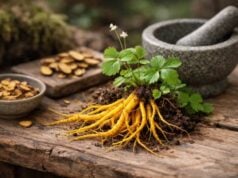
Cotton root—most often referring to the root bark of Gossypium hirsutum—sits at the intersection of folk medicine, reproductive history, and modern toxicology. While the cotton plant is globally familiar for fiber, its roots and seeds contain gossypol and related polyphenols that can strongly influence hormone signaling, smooth muscle tone, and fertility. Traditionally, cotton root bark has been used to support menstrual regularity, ease certain pelvic discomfort patterns, and, in some communities, as an herb believed to “move” delayed menses.
That reputation comes with a serious caveat: cotton root is not a gentle botanical. The same constituents that make it biologically active also raise legitimate safety concerns—especially for pregnancy, breastfeeding, electrolyte balance, and reproductive function. For most people today, the most practical value of learning about cotton root is knowing what it is, what it may do, and when to avoid it. A careful approach prioritizes evidence, conservative dosing (if used at all), and clear boundaries around high-risk uses.
Essential Insights on Cotton Root
- May influence uterine tone and menstrual patterns, but benefits are unpredictable and not suitable for self-treatment.
- Contains gossypol-related compounds linked to antifertility effects and reproductive toxicity with higher exposure.
- Patchwork evidence supports activity, but standardized human dosing for root bark is not well established.
- If used under qualified supervision, conservative traditional ranges are often around 1–3 g/day dried root bark for short periods.
- Avoid if pregnant or breastfeeding, trying to conceive, under 18, or with kidney disease, heart rhythm concerns, or electrolyte disorders.
Table of Contents
- What is cotton root?
- Key compounds in cotton root
- Cotton root medicinal properties
- Benefits and traditional uses
- How much cotton root per day?
- How to use it in practice
- Side effects, interactions, and warnings
What is cotton root?
“Cotton root” can mean different things depending on region and tradition, but in herbal practice it most often refers to cotton root bark—the outer portion of the root of Gossypium hirsutum (upland cotton). The bark is typically dried and used in decoctions (simmered teas), tinctures, or powdered preparations. Less commonly, people refer to the whole root, though the root bark is the part most associated with traditional reproductive uses.
The cotton plant belongs to the Malvaceae family. It produces specialized pigment glands in several tissues that can contain gossypol, a polyphenolic compound central to many discussions of cotton’s medicinal effects and toxicity. While gossypol is often associated with cottonseed, research also recognizes that cotton’s roots are a significant site of gossypol-related biosynthesis, which helps explain why root bark entered traditional medicine in the first place.
Historically, cotton root bark has been used in some communities as an herb to:
- Encourage the return of delayed menses
- Support postpartum recovery traditions (sometimes framed as “uterine tone”)
- Ease certain pelvic congestion or cramping patterns
- Address diarrhea-like patterns where astringent herbs are favored
It is important to state clearly: cotton root’s reproductive reputation includes use as an herb intended to stimulate uterine activity. That is exactly why modern safety guidance tends to be strict. If there is any chance of pregnancy, cotton root is not an appropriate self-care option.
From a decision-making standpoint, cotton root belongs in the category of high-responsibility botanicals—plants that may have real physiological effects but also carry outsized risk when used casually, sourced poorly, or taken at the wrong life stage. For many readers, the most useful outcome is not “how to take it,” but rather understanding what it does, what it contains, and when it is unsafe.
Key compounds in cotton root
Cotton root bark is chemically complex. Instead of one “active ingredient,” think in terms of compound families that can shift depending on plant variety, growing conditions, and extraction method. Still, several categories show up repeatedly in discussions of cotton’s activity.
Gossypol and gossypol-like polyphenols
Gossypol is a lipid-soluble polyphenol found in cotton tissues that contain pigment glands. It is widely studied because it can interact with:
- Reproductive signaling and gamete function
- Cellular energy processes and oxidative balance
- Proteins involved in cell survival pathways
This helps explain both the traditional reproductive associations and the modern toxicity concerns. Gossypol is also one reason cotton-derived products have been explored historically in nonhormonal male contraception research—an angle that underscores potency, not safety for casual use.
Tannins and astringent phenolics
Cotton root bark contains tannin-like compounds and other phenolics that can feel drying or tightening. This is relevant to traditional use for loose stools and to the “bark medicine” logic used in many herbal systems: barks often concentrate astringent, defensive chemistry.
Astringency can be helpful in very specific contexts, but it can also irritate sensitive digestive tracts when overused or taken too strong.
Flavonoids and antioxidant constituents
Flavonoids are broadly present in cotton as a plant species and contribute to antioxidant activity in lab models. Antioxidant activity is not the same as a guaranteed clinical outcome, but it can shape how inflammation and oxidative stress behave in tissues, especially when exposure is repeated.
Terpenoids, sterols, and supportive fractions
Depending on how the root bark is extracted (water simmer, alcohol tincture, mixed solvents), you may also see:
- Terpenoid-like compounds
- Plant sterols
- Sugars and mucilage-like fractions in gentler water preparations
These can influence tolerability and “feel” of a preparation. For example, a harsh, highly concentrated decoction may deliver more astringent phenolics and feel more irritating than a carefully prepared tincture taken in small measured doses.
Why preparation changes the effect
Cotton root is a good example of why “the herb” is not one thing:
- Decoctions (simmered) can concentrate tannins and certain phenolics.
- Tinctures can pull a broader spectrum of compounds, including more lipid-friendly constituents.
- Powders/capsules can deliver a larger absolute load quickly, which may raise side-effect risk.
This variability is one reason cotton root lacks a universally accepted “safe dose.” Without standardization, strength can swing widely—so conservative choices and professional oversight matter more than usual.
Cotton root medicinal properties
Cotton root bark is typically described through a small set of medicinal “properties”—terms that summarize how it behaves in traditional use and how its compounds act in experimental models. These properties also explain why it is often approached with caution.
Uterotonic and emmenagogue tendencies
The most consequential property attributed to cotton root bark is an influence on uterine tone. In traditional language, it may be labeled an emmenagogue (an herb used to encourage menstrual flow) or a uterine “mover.” In modern terms, this suggests activity on smooth muscle and reproductive signaling.
This is precisely why cotton root is generally treated as contraindicated in pregnancy and not appropriate for self-treatment of delayed periods. A late period can have many causes, including pregnancy, endocrine shifts, stress, and illness. Using a uterine-active herb without knowing why you’re late is a risk-heavy strategy.
Antifertility potential
Cotton-derived gossypol has a long scientific history because it can impair fertility under certain exposure patterns. That antifertility association is a double-edged sword: it signals real bioactivity, but also raises red flags for anyone trying to conceive or anyone who wants predictable reproductive outcomes.
Astringent and tightening effects
As a bark medicine, cotton root can show astringent behavior—often described as tightening, drying, or reducing excessive secretions. This underlies some traditional use for diarrhea-like patterns. The practical limitation is that too much astringency can:
- Irritate the stomach
- Worsen constipation tendencies
- Create a “too dry” effect in people already prone to dryness
Antimicrobial and protective potential
Across the cotton genus, extracts have shown antimicrobial activity in lab settings. That does not translate into cotton root bark being a reliable infection treatment in humans, but it helps explain why cotton preparations have appeared in folk medicine for respiratory, urinary, or skin-related complaints.
Anti-inflammatory and oxidative-stress modulation
Gossypol-related compounds interact with inflammatory and oxidative pathways in experimental systems. In practice, this does not mean cotton root is a general anti-inflammatory supplement. Instead, it means cotton’s chemistry can meaningfully affect cellular stress responses—sometimes in ways that are therapeutic targets in research, and sometimes in ways that reflect toxicity at higher exposure.
The practical takeaway: cotton root bark is pharmacologically “loud.” Its properties are not subtle, and the safest modern framing is to treat it as a botanical that demands careful context, not a casual wellness herb.
Benefits and traditional uses
When people search for cotton root benefits, they are often looking for clarity around two themes: reproductive uses and general folk-medicine uses. The most helpful approach is to separate what is historically claimed from what is realistically predictable today.
Menstrual pattern support (high caution)
Cotton root bark has been used traditionally to support delayed or “stuck” menses and to ease certain pelvic discomfort patterns. Some people interpret this as help with cramping, uterine atony, or postpartum uterine recovery. The problem is that menstrual irregularity can be caused by many factors, and cotton root’s uterine-active reputation makes it a risky tool—especially when pregnancy status is uncertain.
If your goal is simple cramp support, it is generally safer to explore less risky, better-tolerated options first, such as antispasmodic approaches discussed in cramp bark antispasmodic support, alongside hydration, magnesium sufficiency, and evaluation for causes like endometriosis or fibroids.
Digestive astringent use
In some traditions, cotton root bark is used for diarrhea-like patterns where an astringent bark is thought to “bind” and calm excessive looseness. Here, realism matters: acute diarrhea can be infectious, foodborne, or medication-related. Astringents may reduce symptoms, but they do not replace hydration, electrolyte management, or medical evaluation when red flags appear (fever, blood, severe pain, dehydration).
Folk uses for infections and inflammation
Ethnobotanical reviews of the cotton genus describe use for microbial diseases and symptoms in community medicine traditions. This is best interpreted as historical context, not as a recommendation to treat infections with cotton root at home. With infections, the cost of delay can be high, and cotton root is not a standardized antimicrobial therapy.
Research-driven interest: bioactivity rather than home use
Modern scientific interest often focuses on gossypol’s interactions with cellular pathways, including cancer-related targets and fertility-related mechanisms. This research interest highlights potency, but it does not automatically endorse the root bark as a supplement. In fact, research focus frequently reinforces the idea that cotton’s bioactive compounds are closer to “drug-like” behavior than “food-like” behavior.
Realistic outcome framing
A grounded way to think about cotton root is:
- It may influence smooth muscle and reproductive signaling, but results are not reliably predictable for self-care.
- It may act as an astringent in the gut, but symptom control is not the same as solving the cause.
- Its best-supported “benefit” in modern terms is simply that it contains compounds with measurable biological activity—paired with measurable risk.
For most people, cotton root is better approached as a plant to understand and respect than one to use casually.
How much cotton root per day?
Cotton root bark does not have a universally accepted, evidence-based dosing standard for over-the-counter use. That is not a minor inconvenience—it is a safety signal. Most modern discussion of cotton’s strongest bioactive constituent (gossypol) emphasizes that reproductive and systemic effects can occur with sufficient exposure, and individual sensitivity varies.
With that said, people still ask for practical ranges. The most responsible way to discuss dosage is to:
- Emphasize that professional supervision is strongly advised
- Offer conservative, tradition-based ranges only for non-pregnant adults
- Keep duration short and avoid “escalation” logic
- State clearly what cotton root should not be used for
Conservative tradition-based ranges (non-pregnant adults only)
In herbal practice where cotton root bark is used, conservative oral ranges often fall around:
- 1–3 g/day dried root bark, commonly as a decoction, divided into 1–2 servings
- If using a tincture prepared by a qualified herbalist, dosing commonly stays in small measured amounts such as 1–2 mL up to twice daily, depending on strength and individual factors
These are not endorsements—just a reflection of how conservative ranges are often described when the herb is used. Because potency varies, starting at the low end is essential.
Timing and duration
Because cotton root can be physiologically active, duration should be limited:
- Think days, not weeks
- A common conservative window is 3–7 days, then reassess and stop if there is no clear benefit
Long-term use is where cumulative risk becomes a larger concern, particularly for fertility and electrolyte stability.
What not to do
- Do not use cotton root to self-manage a late period when pregnancy is possible.
- Do not increase dose rapidly to “make it work.” That mindset is how adverse events happen.
- Do not combine cotton root with multiple hormonally active or uterine-active herbs.
Variables that change the effective dose
Cotton root bark preparations vary widely. Effective exposure can change with:
- Extraction strength (hard simmer vs gentle simmer; tincture ratio; capsule potency)
- Body size, liver metabolism, and gut tolerance
- Existing reproductive or endocrine conditions
- Concurrent medications and supplements
If nausea, dizziness, palpitations, unusual weakness, new pelvic pain, or any alarming symptom appears, stop and seek clinical guidance.
For nausea-prone people using any bitter or astringent decoction, a small supportive strategy—separately from cotton root—can be choosing gentler digestive aids like ginger-based digestive support rather than pushing a harsh brew.
How to use it in practice
If cotton root bark is used at all, it should be used with a “pharmacy mindset”: clear purpose, conservative exposure, and a plan for stopping. In modern wellness culture, herbs are sometimes treated like interchangeable teas. Cotton root does not fit that pattern.
Common forms
Cotton root bark is typically found as:
- Dried bark for decoction
- Alcohol tincture
- Powdered capsules (least forgiving for dosing errors)
For safety, tinctures and professionally prepared products can be easier to dose precisely than loose bark, but quality control still matters.
Decoction approach (general process, not a recommendation)
A decoction usually means simmering bark gently rather than steeping like a leaf tea. The general concept is:
- Measure a conservative amount of dried bark.
- Simmer gently (not a rolling boil) and reduce slightly.
- Strain carefully and cool.
Because cotton root bark has higher-risk reproductive associations, it is not appropriate to provide “targeted” instructions aimed at changing menstrual timing. If you are considering use for any reproductive goal, the safest next step is clinician guidance rather than DIY experimentation.
Practical guardrails that reduce risk
- Use the lowest effective dose, and stop early if you feel unwell.
- Avoid combining with other strong astringents or stimulants that can worsen gut irritation.
- Do not use if your hydration or electrolyte status is unstable (vomiting, diarrhea, heavy sweating).
- Avoid alcohol-based tinctures if alcohol is contraindicated for you.
When people choose alternatives instead
If the goal is pelvic comfort or cycle support, many people do better with approaches that don’t carry uterine-stimulation concerns. Lifestyle and nutrient basics (sleep, iron status, thyroid evaluation when appropriate, and stress load) often change cycle patterns more reliably than pushing an aggressive herb.
If the goal is soothing GI irritation, gentle demulcents and hydration strategies are usually safer than astringent bark experiments. A classic example is marshmallow root-style demulcent support, which is often used to soothe rather than tighten.
Quality and sourcing
Because cotton is a heavily cultivated crop, contamination risk matters:
- Pesticide exposure is a realistic concern if material is not sourced specifically for internal use.
- Misidentification and adulteration are possible with “root bark” products sold online.
- Storage conditions affect mold risk.
If you cannot verify sourcing and handling, the safest choice is to avoid internal use.
Side effects, interactions, and warnings
Safety is the defining issue for cotton root bark. Even when people discuss benefits, the responsible conversation quickly returns to who should avoid it, what to watch for, and why cotton’s chemistry raises caution.
Common side effects reported with strong bark preparations
Potential effects include:
- Nausea, stomach upset, abdominal cramping
- Headache or dizziness
- Fatigue or unusual weakness
- Loose stools or constipation (either can occur depending on dose and sensitivity)
Because cotton-derived compounds have been associated with reproductive toxicity at sufficient exposure, changes in cycle timing or unusual pelvic symptoms should be treated as a stop signal, not a success signal.
Major warnings and who should avoid it
Avoid cotton root bark if you are:
- Pregnant, breastfeeding, or trying to conceive
- Under 18
- Living with infertility concerns unless guided by a clinician (cotton chemistry can work against fertility goals)
- Managing kidney disease, heart rhythm conditions, or a known electrolyte disorder
- Taking medications where dehydration or potassium shifts are dangerous
If you are looking for hormone-pattern support that is better tolerated and more commonly used under supervision, options such as chaste tree hormone-pattern support are often discussed as gentler alternatives—though any hormone-active herb still deserves individualized guidance.
Medication and supplement interactions to consider
Be cautious with:
- Diuretics or laxatives (they can worsen electrolyte instability)
- Medications that affect heart rhythm or blood pressure
- Multiple “fertility” or “hormone support” supplements layered together
- Any regimen that already causes nausea, appetite loss, or dehydration
Red-flag symptoms that require medical attention
Stop and seek evaluation if you experience:
- Severe abdominal or pelvic pain
- Fainting, severe weakness, or palpitations
- Heavy bleeding, especially if unexpected
- Shortness of breath, swelling, hives, or facial/lip swelling
A note on high-risk reproductive use
Cotton root’s historical association with stimulating uterine activity is not a safe basis for self-treatment. If you are worried about pregnancy, a late period, or reproductive health decisions, the safest path is clinical care, accurate testing, and professional guidance. Using a potent herb to force a specific outcome can create avoidable harm and delay appropriate treatment.
The simplest safety summary is this: cotton root bark is not a casual wellness herb. When in doubt, avoid it.
References
- Ethnobotanical and antimicrobial activities of the Gossypium (Cotton) genus: A review 2021 (Review)
- Gossypol and Its Natural Derivatives: Multitargeted Phytochemicals as Potential Drug Candidates for Oncologic Diseases 2022 (Review)
- Nonhormonal Male Contraceptive Development—Strategies for Progress 2024 (Review)
- Effects of Gossypol Exposure on Ovarian Reserve Function: Comprehensive Risk Assessment Based on TRAEC Strategy 2025 (Risk Assessment)
Disclaimer
This article is for educational purposes only and does not provide medical advice, diagnosis, or treatment. Cotton root bark and cotton-derived compounds can have significant physiological effects, including potential reproductive and systemic risks. Product strength and purity vary widely, and individual factors such as pregnancy status, medications, and underlying health conditions can change safety. If you are pregnant, breastfeeding, trying to conceive, managing a medical condition, or considering cotton root for any reproductive goal, consult a qualified healthcare professional before use.
If this guide was useful, consider sharing it on Facebook, X (formerly Twitter), or your preferred platform so others can make safer, better-informed choices.