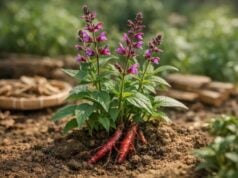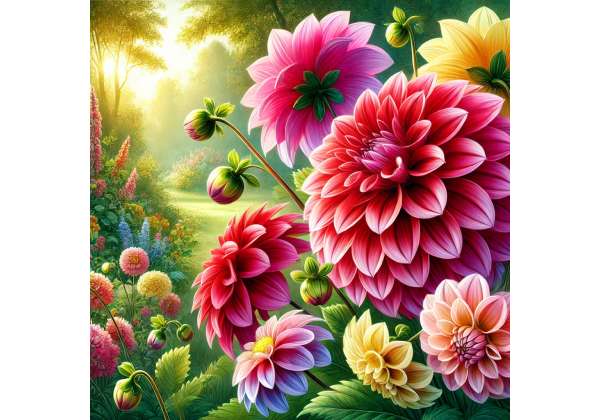
Dahlia (Dahlia pinnata) is best known as a showy garden flower, yet its story goes beyond ornamentals. In traditional contexts, parts of the plant, especially the tubers, have been explored for wellness uses, largely because dahlias can be rich in inulin, a prebiotic fiber stored in the roots. The petals and tubers also contain colorful polyphenols and other plant compounds that, in laboratory settings, show antioxidant and anti-inflammatory activity.
If you are considering dahlia for health, it helps to separate what is promising from what is proven. Most “medicinal” claims are based on early research, traditional use, or the known effects of inulin rather than robust human trials of dahlia itself. This guide explains the key constituents, realistic benefits, practical ways people use dahlia, and how to think about dosage, tolerability, and safety, especially if you have allergies, digestive sensitivity, or take medications.
Quick Summary
- May support regularity and microbiome health when used as a source of inulin (a prebiotic fiber).
- Flower and tuber extracts show antioxidant and anti-inflammatory activity in early studies, but human evidence is limited.
- Typical inulin-style dosing: start 2–3 g/day and work up to 5–10 g/day as tolerated.
- Gas, bloating, or cramps can occur; stop and seek care if you develop rash, wheezing, or swelling.
- Avoid if pregnant or breastfeeding, allergic to Asteraceae plants, or highly sensitive to FODMAPs or in an active inflammatory bowel disease flare.
Table of Contents
- What is Dahlia pinnata
- Key ingredients in dahlia
- Potential benefits of dahlia
- How to use dahlia
- How much dahlia per day
- Dahlia safety and interactions
- What evidence supports it
What is Dahlia pinnata
Dahlia pinnata is a flowering plant in the daisy family (Asteraceae). Modern dahlias are heavily hybridized, and the name “Dahlia pinnata” is often used broadly in horticulture to describe cultivated forms rather than a single, uniform wild plant. This matters for health use because chemical makeup can vary by cultivar, growing conditions, and which plant part you use (petals, leaves, stems, or tubers).
Historically, dahlias have roots in Mexico and Central America, where tubers were used as a food source in some regions. The tubers store carbohydrates, and one of the main storage fibers can be inulin, a chain of fructose units that humans do not digest like starch. Instead, it acts more like a soluble fiber and becomes food for gut microbes.
In contemporary wellness circles, most “medicinal” interest falls into two categories:
- Tuber-focused use: leveraging dahlia tubers as a potential inulin source for digestive and metabolic support.
- Flower-focused use: using petals for their pigments and polyphenols, sometimes as a tea, culinary garnish, or gentle topical rinse.
At the same time, dahlias are not widely standardized as a therapeutic herb. That means product quality and dosing guidance are inconsistent, and safety can depend on factors that have nothing to do with “herbalism,” such as pesticide residues on ornamental flowers. If you plan to ingest dahlia (especially petals), it is essential that it is grown for edible or medicinal use, not treated as a decorative plant.
A practical way to approach dahlia is as a plant with interesting constituents and some emerging research, but not a replacement for evidence-based care. Its best-supported “health angle” is likely the inulin story, because inulin has broader human research than dahlia itself.
Key ingredients in dahlia
Inulin (tubers)
The standout constituent in dahlia tubers is often inulin, a prebiotic fiber found in many plants. Inulin resists digestion in the small intestine and is fermented in the colon, where it can increase short-chain fatty acids and shift the gut ecosystem toward species associated with better bowel function. Because inulin is the main reason people explore dahlia tubers for wellness, it is useful to understand how inulin behaves in the body and how to dose it conservatively (see inulin dosing and tolerance guidance for a deeper look).
Not every dahlia tuber will have the same inulin content or chain length, and these details affect both benefits and side effects. Shorter-chain fructans tend to ferment faster (more gas for some people), while longer chains may be gentler at the same dose.
Polyphenols and pigments (flowers and sometimes tubers)
Dahlia petals get their colors from plant pigments, including anthocyanins (often in red, purple, and magenta cultivars) and other flavonoids. These compounds can act as antioxidants in test systems and may support anti-inflammatory signaling pathways in early research. In real-world terms, antioxidant-rich flowers are mostly used as a gentle “supportive” food or tea rather than as a high-potency medicine.
Phenolic acids and related compounds
Alongside flavonoids, dahlias can contain phenolic acids (a broad category that includes compounds commonly found across many plants). These molecules are frequently associated with antimicrobial and anti-inflammatory activity in laboratory models. The key limitation is that concentration and bioavailability in humans vary widely.
Sesquiterpene lactones (family-related consideration)
Because dahlia belongs to Asteraceae, it may contain (or be associated with) compounds that can trigger contact allergy in sensitive people. This is a safety-relevant “ingredient category,” even if you never see it listed on a label. If you react to plants like ragweed or certain daisies, the family connection is worth taking seriously.
Minerals and other nutrients
As with many edible flowers and tubers, dahlias may provide small amounts of minerals and trace nutrients, but they are not typically used as a primary nutrient source. If you want nutrition, think of dahlia as an occasional functional food rather than a dietary cornerstone.
Overall, dahlia’s “key ingredients” picture is split: tubers are about inulin and fiber physiology, while petals are about polyphenols and culinary or gentle topical use. Mixing these two narratives is where many online claims become confusing, so it helps to keep them distinct.
Potential benefits of dahlia
Dahlia benefits are best described as potential because most direct evidence is early-stage. Still, there are a few realistic, defensible ways people use dahlia in wellness, especially when the goal is incremental support rather than treatment.
May support bowel regularity and gut comfort (tuber inulin)
If you use dahlia tuber as an inulin source, the most plausible benefit is improved stool consistency and regularity, particularly if your baseline fiber intake is low. Many people notice changes within 1–2 weeks after increasing fermentable fibers, though the first days can bring gas or bloating if the dose rises too fast.
A practical takeaway: if your goal is constipation support, inulin-type fibers can help, but they are not the only option. Some people tolerate gel-forming fibers better, which is why many clinicians recommend comparing approaches like psyllium husk dosing for regularity when fermentation-related bloating is a concern.
May modestly support metabolic markers (indirect, inulin-driven)
Inulin-type fibers have been studied for effects on fasting glucose, insulin resistance markers, and lipids in certain populations. If dahlia tuber is used primarily as an inulin vehicle, it is reasonable to expect similar directional effects, but you should avoid assuming that “dahlia” works like a drug. Any metabolic benefit is typically modest and depends on consistent use plus overall diet quality.
Antioxidant support (petals as a food or tea)
Pigmented petals contain polyphenols that can contribute to antioxidant intake. In practice, this is more like adding berries or colorful herbs to your routine: a small, food-level contribution that may complement a broader diet pattern. It is unlikely to create dramatic changes on its own.
Anti-inflammatory activity (early research, not a guarantee)
Some dahlia extracts have shown anti-inflammatory signaling effects in laboratory models. This is scientifically interesting, but it is not the same as proven symptom relief in humans. If you are dealing with inflammatory conditions, you should treat dahlia as experimental and avoid replacing prescribed therapies.
Potential topical comfort (with important caveats)
People sometimes use cooled flower infusions as a gentle rinse. If you try this, patch test first, because Asteraceae-related contact reactions are possible. For many common skin goals (minor irritation, oil control, post-shave calming), better-studied options exist, so dahlia should not be your first-line choice.
The most honest summary is that dahlia’s “benefits” are either inulin-style fiber effects (more evidence) or extract-based antioxidant and anti-inflammatory signals (less evidence). If you keep that lens, you can make safer, more realistic decisions.
How to use dahlia
Because dahlia is not a standardized medicinal herb, “how to use it” is really about choosing a form that fits your goal while managing the two biggest risks: contamination (ornamental pesticides, unknown handling) and tolerance (fermentable fiber effects or allergy).
1) Dahlia tuber as a fiber or functional food
Common approaches include:
- Dried tuber powder blended into smoothies or yogurt (treated like a fiber supplement).
- Roasted tuber pieces used as a beverage base (similar in spirit to roasted chicory-style drinks).
- Measured inulin extract derived from dahlia tubers (more controlled, but less common commercially).
If your goal is digestive support, prioritize measured dosing and gradual titration. The more “food-like” the preparation, the harder it is to know how much inulin you are actually taking.
2) Petals as an edible flower
Edible petals are typically used:
- As a garnish in salads or desserts
- In light infusions where color and aroma are the main features
Only consume petals that are confirmed edible and free of sprays. If the flowers come from a florist, a decorative garden center, or an unknown supplier, do not assume they are safe to ingest.
3) Gentle infusion for topical use
Some people make a mild infusion, cool it, and use it as a rinse or compress. If you do this:
- Steep a small amount of petals in hot water, then cool fully.
- Patch test on the inner forearm for 24 hours.
- Avoid broken skin and mucous membranes at first.
If your goal is skin soothing or mild inflammation support, consider better-established botanical options first, such as calendula for skin comfort, and treat dahlia as a secondary experiment.
4) What to avoid
- Concentrated homemade extracts without clear dosing
- Essential oils or harsh alcohol extractions applied to skin (irritation risk)
- Using ornamental plant material for teas or tinctures
In short: use dahlia like a cautious functional food or gentle botanical, not as a high-potency medicine. Choose clean sourcing, go slow, and stop promptly if you react.
How much dahlia per day
Dahlia dosing depends on what form you are using and why. Because there are no widely accepted clinical dosing standards for Dahlia pinnata preparations, the safest approach is to anchor dosing around the best-understood component (inulin) and keep other forms conservative.
For tuber-based use (inulin-style dosing)
If you are using dahlia tuber powder or an inulin-rich preparation for gut support:
- Start low: 2–3 g per day (inulin-equivalent if known) for 3–4 days.
- Increase gradually: add 2–3 g every 3–4 days as tolerated.
- Typical range: 5–10 g/day, often split into two doses.
- Upper practical range: some people tolerate more, but benefits often plateau while gas increases.
If your product is not standardized, you may not know “inulin-equivalent” grams. In that case, start with very small amounts (for example, 1 teaspoon of powder daily) and increase slowly while tracking symptoms. Hydration and meal timing matter: taking fermentable fiber with food and water is usually gentler than taking it on an empty stomach.
For flower tea (food-level use)
For a mild infusion intended for flavor and a small polyphenol contribution:
- 1–2 teaspoons dried petals (or a small pinch of fresh petals) per cup
- Steep 10–15 minutes
- 1–2 cups per day, then reassess
If you are new to Asteraceae-family botanicals, start with a half-cup test serving first. If your goal is relaxation or bedtime comfort, it can help to compare your routine to well-known gentle teas such as chamomile tea dosing patterns, while keeping in mind that dahlia has less tradition and less human research.
For tinctures and extracts
Without standardized products and human trials, it is hard to give responsible dosing. If you use a commercial extract, follow the label and choose products that provide:
- Plant part used (tuber vs flower)
- Extraction ratio or concentration
- Suggested serving size in mL or mg
Avoid “mega-dosing” and do not combine multiple dahlia products at once until you know how you respond.
Timing and duration
- Digestive goals: expect 1–2 weeks for bowel changes; adjust gradually.
- Metabolic goals: any meaningful change typically requires consistent daily use over many weeks, and should be coordinated with your clinician if you have diabetes or take glucose-lowering medications.
- Cycling: many people do best with steady, moderate dosing rather than aggressive cycles.
When in doubt, choose the lowest effective dose, increase slowly, and stop if side effects outweigh benefits.
Dahlia safety and interactions
Safety deserves extra attention with dahlia because it sits at the intersection of edible flowers, fermentable fiber, and plant-family allergy risk. Most problems come from either digestive intolerance (especially with inulin) or hypersensitivity reactions (especially with Asteraceae-family plants).
Common side effects (mostly dose-related)
For tuber or inulin-focused use, the most common issues are:
- Gas and bloating
- Abdominal cramping
- Loose stools (if you increase too quickly)
- Occasional constipation (if fiber increases without enough fluid)
These effects are usually improved by lowering the dose, splitting the dose, and increasing more slowly.
Allergy and skin reactions
Because dahlia is in the Asteraceae family, people with sensitivities to related plants may be more likely to react. Reactions can include:
- Itchy rash after handling petals or sap
- Worsening eczema-like irritation
- Rarely, respiratory symptoms in highly sensitized individuals
Patch test any topical use, and do not ignore early signs of allergy. If you develop facial swelling, wheezing, or widespread hives, treat it as urgent.
Who should avoid dahlia
Avoid dahlia ingestion (or use only with clinician guidance) if you are:
- Pregnant or breastfeeding (insufficient safety data)
- Known to react to Asteraceae plants (ragweed-type allergies, contact dermatitis history)
- Highly sensitive to FODMAPs or fructans
- In an active inflammatory bowel disease flare
- Recovering from major GI surgery or dealing with unexplained GI bleeding
Medication and supplement interactions
Potential interactions depend on the form:
- Fiber effects: inulin-type fibers can change GI transit and may affect absorption timing of oral medications. A conservative practice is to separate dahlia-tuber fiber doses from medications by about 2 hours.
- Blood sugar medications: if you have diabetes and use glucose-lowering drugs, adding fermentable fiber may change glucose patterns for some people. Monitor and coordinate with a clinician.
- Topicals and skin products: combining multiple botanicals on irritated skin can increase dermatitis risk. If you want an astringent-style topical with a clearer track record, consider witch hazel topical use guidance rather than experimenting broadly.
Quality and contamination risks
A major, under-discussed risk is pesticide residue on ornamental flowers. Do not use florist dahlias for tea or food. Choose edible-grade sources and wash thoroughly, and avoid using petals if you cannot verify how they were grown.
Safety is not about fear; it is about appropriate caution. Start low, source carefully, and treat any allergic signal as a reason to stop.
What evidence supports it
The evidence for dahlia as a “medicinal plant” is uneven. A helpful way to evaluate it is to separate component evidence (especially inulin) from whole-plant evidence (Dahlia pinnata extracts).
1) Stronger evidence: inulin-type fructans (component-level)
Inulin and related fructans have a substantial body of human research. Across trials, they can:
- Increase beneficial gut bacteria and short-chain fatty acid production
- Improve stool frequency in some constipation patterns
- Produce modest improvements in certain cardiometabolic markers in select groups
If you use dahlia tuber primarily as a source of inulin, you are essentially borrowing from this broader evidence base. The caveat is that dahlia tuber powders vary, and you may not get consistent dosing or chain length profiles.
2) Moderate-to-early evidence: dahlia tuber preparations (food and animal data)
Research on inulin extracted from dahlia tubers includes preclinical work suggesting metabolic effects in animal models. These findings are encouraging, but translation to humans depends on dose, duration, and context. Animal doses are often much higher (relative to body weight) than typical human supplement use.
3) Early evidence: Dahlia pinnata extracts (lab and mechanistic studies)
Some studies on Dahlia pinnata extracts explore anti-inflammatory signaling in human cells and other mechanistic pathways. These are valuable for understanding potential, but they are not the same as proving symptom relief, safety, or long-term outcomes in people.
4) What is missing
For most real-world health questions, the missing pieces are:
- Well-designed human trials of standardized dahlia preparations
- Clear safety data in pregnancy, lactation, and chronic illness
- Standardization of plant part, cultivar, and extraction method
- Practical dosing studies that connect “what worked in the lab” to typical human use
How to make evidence-informed decisions anyway
If you want to use dahlia responsibly, base your expectations on what is actually supported:
- For gut and metabolic goals, treat dahlia tuber as an inulin source and dose it like a fiber.
- For antioxidant “wellness,” treat petals as an edible flower, not a therapeutic extract.
- If you want a flower-based tea with more human research behind it, consider options like hibiscus tea benefits and culinary uses, and keep dahlia as an occasional, carefully sourced addition.
In the current state of research, the safest conclusion is that dahlia is interesting, potentially useful in specific ways, and not yet a clinically established remedy.
References
- Traditional Medicinal Plant Dahlia pinnata Selectively Suppresses TNF-α Expression Through Modulation of NF-κB and p38 Signaling 2026 (Cell Study)
- Effect of inulin from dahlia tubers (Dahlia variabilis) extract on insulitis severity and insulin expression in diabetic rats 2024 (Animal Study)
- Techno-Functional Properties and Applications of Inulin in Food Systems 2025 (Review)
- The effects of inulin-type fructans on cardiovascular disease risk factors: systematic review and meta-analysis of randomized controlled trials 2024 (Systematic Review and Meta-Analysis)
- Allergic Potential of Medicinal Plants From the Asteraceae Family 2025 (Review)
Disclaimer
This article is for educational purposes and does not provide medical advice, diagnosis, or treatment. Dahlia (Dahlia pinnata) is not a standardized medicinal herb, and evidence for many uses is limited or based on early research. Do not use dahlia as a substitute for professional care or prescribed medication. If you are pregnant or breastfeeding, have allergies (especially to Asteraceae plants), have inflammatory bowel disease, or take medications (including for diabetes), speak with a qualified clinician before using dahlia or inulin-rich preparations. Stop use immediately if you develop signs of allergy such as hives, swelling, wheezing, or severe rash.
If you found this guide useful, consider sharing it on Facebook, X (formerly Twitter), or your favorite platform so others can make safer, better-informed decisions.