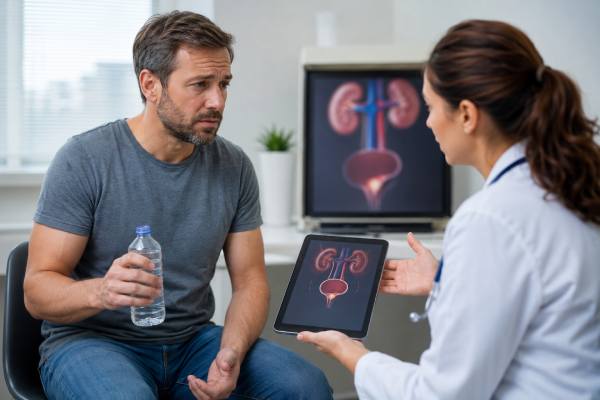
Yes, dehydration and frequent urination can happen at the same time. It sounds backward because most people expect dehydration to mean “not peeing enough.” That is often true in more obvious dehydration, but the bladder does not respond only to urine volume. It also responds to urine concentration, caffeine, alcohol, salt intake, stress hormones, medications, blood sugar, infection, and how well the bladder empties.
A dehydrated person might pass small amounts often, feel a strong urge, wake at night to pee, or feel bladder burning even though the total amount of urine is low. Someone else might feel thirsty, notice dark urine, and still run to the bathroom because concentrated urine is irritating the bladder lining. The key question is not only “How often am I going?” but also “How much comes out each time, what color is it, what else am I feeling, and what changed?”
Table of Contents
- Can Dehydration and Frequency Happen Together?
- Why Dehydration Changes Bladder Signals
- Common Patterns That Explain Both
- How to Read Your Urine Pattern
- What Else Causes Frequent Urination?
- What to Do at Home
- When to Get Checked
- Bottom Line
Can Dehydration and Frequency Happen Together?
Dehydration and urinary frequency fit together when the bladder is being irritated, not simply filled. In true dehydration, the kidneys usually conserve water by making less urine. That urine becomes darker, more concentrated, and stronger-smelling. Even a small amount of concentrated urine can trigger urgency in a sensitive bladder.
This is why someone can say, “I barely drank anything today, but I keep needing to pee.” The trips might be frequent, but each void is small. That is different from producing large volumes of pale urine all day, which points more toward high fluid intake, uncontrolled blood sugar, certain medications, or a hormonal water-balance problem.
A practical way to separate the two is to think in volume, not just bathroom trips. Going eight times in a day with small, dark voids is a different pattern from going eight times with large, clear voids. The first pattern often reflects irritation, low intake, caffeine, sweating, or a urinary condition. The second pattern often means the body is getting rid of extra fluid or extra dissolved substances, such as glucose.
Frequent urination also has several meanings. Some people mean they pee more often during the day. Others mean they wake up repeatedly at night, leak before reaching the toilet, or feel pressure again right after peeing. Those details matter. A person with dehydration-related bladder irritation usually feels urgency with small amounts. A person with incomplete emptying feels like the bladder never fully empties. A person with a urinary tract infection often has burning, pelvic discomfort, cloudy urine, or blood.
The most useful first step is to notice the pattern for one or two days. Track fluid intake, caffeine, alcohol, exercise, sweating, urine color, how much comes out, and whether pain or urgency is present. A simple bladder diary often reveals the answer faster than guessing.
Why Dehydration Changes Bladder Signals
When fluid intake drops or fluid loss rises, the body protects blood circulation first. The kidneys respond by holding onto water and producing more concentrated urine. That concentrated urine contains a higher level of waste products and salts in a smaller amount of water. The bladder then receives urine that is chemically stronger than usual.
For some people, that stronger urine feels like urgency, stinging, pressure, or a constant need to go. The bladder lining is sensitive tissue. It reacts not only to stretch but also to irritation. Concentrated urine is one reason urinary symptoms often worsen after a long hot day, intense workout, skipped meals, too much coffee, or travel day with little water.
Dehydration also changes the rest of the body in ways that affect bathroom habits. If you sweat heavily, eat salty food, drink coffee instead of water, and then sit for hours, several triggers stack up. Your blood volume drops slightly, urine becomes concentrated, and caffeine stimulates the bladder. The result is a confusing mix: dry mouth and dark urine, but also urgency.
Small amounts can still feel urgent
The bladder does not need to be full to send an urgent signal. In overactive bladder, bladder irritation, pelvic floor tension, or inflammation, the signal arrives too early. A person might rush to the bathroom and pass only a few tablespoons. That small output does not mean the urge was imaginary. It means the bladder sent the signal before it needed to.
This pattern is common after too much caffeine, during stress, during constipation, and with bladder pain conditions. It also happens with dehydration because concentrated urine irritates the bladder more than diluted urine.
Dark urine is useful, but not perfect
Urine color gives a quick clue, especially when it is consistently pale yellow, dark yellow, amber, or tea-colored. Darker urine after sweating or low fluid intake usually means the urine is concentrated. Strong smell often points in the same direction.
Color is not a diagnosis by itself. B vitamins, beets, some medications, laxatives, food dyes, and liver or blood conditions also change urine color. Morning urine is naturally more concentrated because you have gone hours without drinking. The pattern matters more than one bathroom trip.
The body can lose water faster than you notice
Dehydration is not always dramatic. You do not need to feel faint or severely ill for urine to become concentrated. Mild dehydration shows up after exercise, heat exposure, air travel, fever, diarrhea, vomiting, heavy sweating, alcohol, or a long workday with few drink breaks. Older adults, people taking diuretics, and people with kidney or heart conditions need more caution because fluid balance shifts more easily.
For everyday hydration guidance, the goal is steady intake, not force-drinking huge amounts at once. A broader guide to kidney-friendly hydration is useful when you are trying to balance urine concentration, kidney stone risk, and medical conditions that affect fluid needs.
Common Patterns That Explain Both
The combination of dehydration and urinary frequency usually follows a recognizable pattern. The details below help you match symptoms to the most likely cause.
Low fluid intake plus concentrated urine
This is the simplest pattern. You drink little, sweat more than usual, or skip fluids for hours. Later, you feel bladder pressure and pee small amounts of dark urine. The urge feels real, but the bladder is not holding much.
This often happens to teachers, drivers, healthcare workers, retail workers, and anyone who avoids drinking because bathroom breaks are inconvenient. It also happens during travel, when people intentionally limit fluids to avoid public restrooms.
The fix is not to chug a large bottle at night. That often causes nighttime urination. A better approach is to spread fluids through the day, add a glass with meals, and drink more before and after sweating.
Caffeine or alcohol replacing water
Coffee, energy drinks, strong tea, and alcohol complicate the picture. They add fluid, but they also irritate the bladder in some people and increase urgency. Coffee is a common trigger because caffeine affects bladder muscle activity and the drink itself is acidic.
A person who drinks three coffees before noon and little water afterward might feel both dehydrated and bladder-active. The urine might be darker later in the day, while the bladder still feels jumpy from caffeine. If urgency follows coffee, gradual reduction works better than suddenly quitting and dealing with headaches. A guide to caffeine and bladder urgency can help you test that trigger without making mornings miserable.
Alcohol creates another version of the same problem. It increases urine production at first, then contributes to dehydration later, especially when paired with salty food, dancing, heat, or poor sleep. The next day, urine might be dark and the bladder more irritable.
Overactive bladder worsened by fluid restriction
Some people with urgency restrict water because they believe less fluid means fewer bathroom trips. Sometimes that lowers total urine volume, but it often makes urgency sharper. The bladder receives concentrated urine, and the person still runs to the toilet often.
This creates a frustrating loop: urgency leads to drinking less, drinking less concentrates urine, concentrated urine worsens urgency, and the person becomes more afraid of fluids. The better goal is not “as little fluid as possible.” It is enough fluid, spread evenly, while reducing bladder irritants and training the bladder gradually.
Constipation and dehydration together
Constipation is a common hidden reason for urinary frequency. A full rectum presses near the bladder and makes it feel full sooner. Dehydration makes stool harder, which worsens constipation, which then worsens urgency.
This pattern often includes bloating, straining, incomplete bowel movements, and a bladder that feels better after a good bowel movement. More water alone will not fix every case of constipation, but steady fluids, fiber from food, walking, and a regular bathroom routine often reduce both bowel and bladder pressure.
Exercise, heat, and salty meals
After a sweaty workout or hot day, the body loses water and salt. If you replace that loss with only a small drink, urine becomes concentrated. If you also eat a salty meal, the body has more sodium to handle. Some people then feel thirsty, notice darker urine, and wake at night to pee after drinking a lot close to bedtime.
During heavy sweating, rehydration works better when it starts earlier. Drink before activity, sip during longer sessions, and replace fluid afterward. For long workouts, heat exposure, vomiting, or diarrhea, fluids with electrolytes are sometimes useful. People with kidney disease, heart failure, high blood pressure, or potassium restrictions should ask a clinician before using electrolyte powders regularly.
How to Read Your Urine Pattern
A bathroom pattern tells more than one symptom alone. Frequency, volume, color, urgency, pain, and timing work together like clues.
| Pattern | What it often means | What to notice next |
|---|---|---|
| Small, frequent, dark-yellow voids | Concentrated urine, fluid restriction, sweating, bladder irritation | Fluid timing, caffeine, heat exposure, burning, urgency |
| Large, frequent, pale voids | High fluid intake, diuretics, high blood sugar, water-balance disorder | Thirst, weight change, diabetes symptoms, medication changes |
| Urgency with only drops or a weak stream | Bladder spasm, incomplete emptying, obstruction, pelvic floor tension | Trouble starting, dribbling, lower belly fullness |
| Burning, cloudy urine, pelvic pain | Possible UTI or irritation | Fever, back pain, blood, new sexual exposure, pregnancy |
| Nighttime urination after evening fluids | Late fluid loading, alcohol, sleep issues, swelling shifting at night | Leg swelling, snoring, timing of drinks, salt intake |
The most important distinction is “small and urgent” versus “large and frequent.” Small frequent urination usually points to bladder signaling or irritation. Large frequent urination means the body is producing a lot of urine.
Track total amount, not just trips
If you pee ten times but only pass a little each time, your total urine output might still be low. That fits dehydration or bladder irritation. If you pee ten times and each void is large, you are producing more urine than usual. That deserves a different explanation.
You do not need special equipment for a basic check. For one day, write down the time, fluid intake, caffeine or alcohol, urine color, and whether each void was small, medium, or large. Also note urgency, burning, leaks, and nighttime waking. Patterns often appear quickly.
Use urine color the right way
Pale yellow usually suggests good hydration. Dark yellow or amber suggests concentrated urine, especially if paired with thirst, dry mouth, headache, fatigue, or low output. Completely clear urine all day can mean high fluid intake. Tea-colored, cola-colored, pink, red, or orange urine needs more caution, especially if it does not match a food or medicine.
Dark urine with very low output is more concerning than dark urine once in the morning. If you are barely peeing despite drinking, or you feel dizzy, confused, weak, or very dry, do not treat it as a routine hydration issue. Very low urine output has a separate set of warning signs, and a guide to low urine output explains when it becomes urgent.
Notice timing
Timing often reveals the trigger. Urgency 30–90 minutes after coffee points toward caffeine. Frequency after a long run points toward heat and fluid shifts. Nighttime urination after a salty dinner and two large glasses of water at bedtime points toward timing rather than a bladder disease. Burning that starts suddenly and persists across the day points more toward infection or inflammation.
What Else Causes Frequent Urination?
Dehydration is only one explanation. Frequent urination also comes from infections, bladder conditions, prostate problems, high blood sugar, pregnancy, medications, anxiety, and sleep disorders. The safest approach is to match the symptom pattern instead of assuming every bathroom trip is caused by water intake.
Urinary tract infection is one of the first possibilities when frequency comes with burning, pelvic pain, cloudy urine, foul odor, blood, or a feeling that you need to pee again right after finishing. UTIs do not always cause fever, especially when limited to the bladder. Fever, chills, nausea, or flank pain raises concern for kidney infection and needs prompt care.
Overactive bladder causes urgency, frequency, and sometimes leaks, usually without infection. The urge comes suddenly and feels hard to postpone. Triggers often include caffeine, cold weather, running water, arriving home, or anxiety. Dehydration can worsen this pattern by making urine more irritating, but it is not the root cause for everyone.
Bladder irritants also matter. Carbonated drinks, citrus, artificial sweeteners, spicy foods, alcohol, and coffee trigger symptoms in some people. The reaction is individual. One person tolerates sparkling water but not orange juice. Another handles tea but not energy drinks. If symptoms flare after certain drinks or foods, a focused look at common bladder irritants helps you test changes without cutting out everything.
High blood sugar is an important cause of large-volume frequent urination. When glucose is high, the kidneys pull extra water into the urine to remove it. This often comes with unusual thirst, fatigue, blurry vision, weight change, or waking at night to pee large amounts. This pattern is different from dehydrated bladder irritation because the urine volume is high.
Medications also change urination. Diuretics, lithium, some blood pressure medicines, some psychiatric medicines, SGLT2 diabetes medications, and high-dose supplements affect urine volume or bladder behavior. Decongestants and antihistamines can make it harder to empty the bladder, especially in men with an enlarged prostate. Incomplete emptying can feel like frequency because the bladder refills sooner.
Anxiety and stress can create repeated urges even when urine volume is low. Stress hormones heighten body signals, tighten the pelvic floor, and make the bladder feel more urgent. This does not mean symptoms are “all in your head.” It means the nervous system and bladder are connected.
If you are unsure which cause fits, start with the basics: urine volume, urine color, pain, fever, thirst, caffeine, new medications, and whether symptoms began suddenly or gradually. A broader review of frequent urination causes is useful when the pattern does not clearly match dehydration.
What to Do at Home
For mild symptoms without red flags, focus on steady hydration and bladder calm, not extreme water intake. The goal is to dilute urine enough that it stops irritating the bladder while avoiding sudden fluid loading that creates more urgency.
Start by drinking a moderate amount of water spread across the day. A practical plan is a glass with breakfast, lunch, and dinner, plus small amounts between meals. Add extra fluids around sweating, hot weather, fever, vomiting, diarrhea, or exercise. If urine stays dark after several hours and you are not taking color-changing vitamins or medications, increase fluids gradually.
Do not try to “flush” the bladder by drinking huge amounts quickly. That can worsen frequency and, in extreme cases, dilute blood sodium. People with heart failure, advanced kidney disease, liver disease, or fluid restrictions should follow their clinician’s fluid plan instead of general advice.
Reduce likely bladder triggers for a few days. The easiest trial is to cut caffeine by half, avoid alcohol, skip energy drinks, and replace acidic or carbonated drinks with water or a low-acid option. Keep the trial short and specific. If you remove ten foods and drinks at once, you will not know what mattered.
Try this simple two-day reset:
- Drink fluids steadily from morning through early evening.
- Limit coffee or tea to a smaller serving earlier in the day.
- Avoid alcohol and energy drinks.
- Do not save most fluids for bedtime.
- Treat constipation with food-based fiber, walking, and regular meals.
- Write down bathroom trips, urine color, urgency, and pain.
If symptoms improve, reintroduce one trigger at a time. For example, add one coffee back and watch what happens over the next few hours. If urgency returns, caffeine is likely part of your pattern.
For urgency without pain, bladder training sometimes helps. This means gradually increasing the time between bathroom trips instead of going “just in case” every time you feel a small urge. Start gently. If you usually go every hour, try waiting 10 extra minutes when the urge is mild. Use slow breathing, sit down, relax the pelvic floor, and let the first wave of urgency pass. A structured bladder training plan works best when infection and retention have been ruled out.
Avoid overcorrecting in the opposite direction. If dehydration caused concentrated urine, drinking too little will keep the cycle going. If late fluid loading caused nocturia, drinking most of your water at night will keep waking you up. Spread fluids earlier and taper in the last two to three hours before bed unless you are thirsty, ill, or replacing sweat losses.
When to Get Checked
Get medical advice promptly if frequent urination comes with burning that lasts more than a day, blood in the urine, fever, chills, flank pain, vomiting, pregnancy, new back pain, new leakage, or symptoms in a child, older adult, or person with kidney disease, diabetes, immune suppression, or a urinary catheter.
Seek urgent care now for confusion, fainting, severe weakness, very low urine output, severe dehydration after vomiting or diarrhea, inability to pee despite bladder pressure, or fever with back or side pain. These patterns need more than at-home hydration.
Testing is often simple. A urinalysis checks for signs such as white blood cells, nitrites, blood, protein, glucose, ketones, and urine concentration. It gives quick clues about infection, dehydration, diabetes-related changes, kidney stress, or inflammation. A clear explanation of urinalysis results helps you understand why one urine test can point in several directions.
A urine culture is different. It looks for bacteria that grow from the sample and helps guide antibiotic choice when infection is suspected, symptoms recur, or the first treatment fails. Culture matters because urgency and burning are not always caused by a simple UTI. Irritation, vaginal infections, STIs, stones, bladder pain syndrome, and pelvic floor problems can mimic infection.
Blood tests are sometimes needed when symptoms suggest dehydration, kidney strain, electrolyte problems, or high blood sugar. These tests might include sodium, potassium, creatinine, blood urea nitrogen, glucose, and serum osmolality. If urine output is unusually high, a clinician might ask about thirst, medications, diabetes, and rare water-balance disorders.
Men with weak stream, hesitancy, dribbling, or a feeling of incomplete emptying should be checked for retention or prostate-related obstruction. Frequency from incomplete emptying is different from frequency caused by producing too much urine. The bladder keeps asking to empty because it never fully emptied the first time.
Women with recurrent urgency, burning, or pelvic pain but negative infection tests should be evaluated for bladder pain syndrome, pelvic floor dysfunction, vaginal estrogen changes after menopause, irritant exposure, and other causes. Repeated antibiotics without confirmed infection can delay the right diagnosis.
Bottom Line
Dehydration and frequent urination can be true at the same time, especially when the urine is concentrated and irritating the bladder. The most common pattern is frequent small voids, urgency, darker urine, and symptoms after low fluid intake, sweating, caffeine, alcohol, constipation, or heat.
The question to ask is not only “Am I peeing often?” Ask, “How much comes out?” Large amounts of pale urine point toward a different problem than small amounts of dark urine. Pain, fever, blood, flank pain, pregnancy, very low output, or inability to pee changes the situation and deserves prompt medical attention.
For mild symptoms, spread fluids through the day, reduce caffeine and alcohol, avoid late fluid loading, address constipation, and track symptoms for a short period. If frequency continues, if urine symptoms are painful, or if your pattern does not clearly improve with steady hydration, testing is the next practical step.
References
- Adult Dehydration 2025 (Review)
- The AUA/SUFU Guideline on the Diagnosis and Treatment of Idiopathic Overactive Bladder 2024 (Guideline)
- Total fluid intake, caffeine, and other bladder irritant avoidance among adults having urinary urgency with and without urgency incontinence: The Symptoms of Lower Urinary Tract Dysfunction Research Network (LURN) 2022 (Clinical Study)
- The Validity of Urine Color as a Hydration Biomarker within the General Adult Population and Athletes: A Systematic Review 2021 (Systematic Review)
- Serum Osmolality 2024 (Review)
- Effect of Fluid and Caffeine Management on Quality of Life in Older Women with Overactive Bladder in Rural Korea: A Pilot Study 2024 (Pilot Study)
Disclaimer
This article is for education about hydration and urinary symptoms. It cannot diagnose dehydration, UTI, diabetes, kidney disease, urinary retention, or overactive bladder. Seek medical care promptly for blood in urine, fever, flank pain, pregnancy, inability to urinate, very low urine output, severe weakness, confusion, or symptoms that persist despite reasonable hydration changes.