
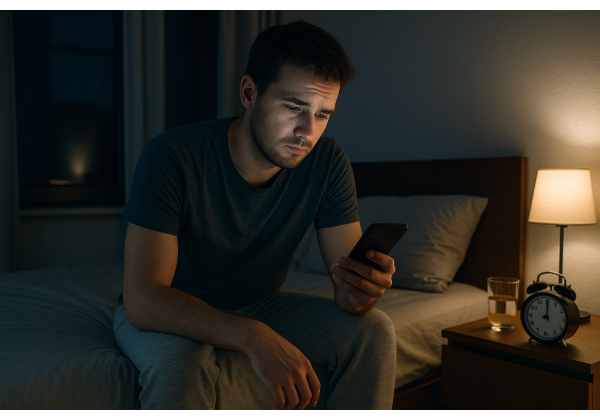
Delayed sleep phase disorder is a circadian rhythm sleep-wake condition in which a person’s natural sleep timing is shifted much later than the schedule they need or want to follow. The current clinical term is often delayed sleep-wake phase disorder, but many people still know it as delayed sleep phase disorder or delayed sleep phase syndrome.
The key issue is not simply “staying up too late.” In this condition, the body’s internal timing system is delayed, so sleepiness, sleep onset, waking, alertness, body temperature rhythms, and melatonin timing may all run late. A person may sleep well when allowed to follow their preferred late schedule, yet struggle significantly when school, work, caregiving, or appointments require earlier wake times. That mismatch can affect mood, concentration, attendance, safety, and daily functioning.
Table of Contents
- Delayed Sleep Phase Disorder Overview
- Symptoms and Signs
- Causes and Body Clock Changes
- Risk Factors
- Diagnostic Context and Lookalikes
- Daily Effects
- Complications and Urgent Concerns
Delayed Sleep Phase Disorder Overview
Delayed sleep phase disorder is best understood as a persistent mismatch between a person’s internal sleep timing and the clock time expected by daily life. The person’s main sleep period is delayed, often by two hours or more, and the pattern causes real distress or impairment.
Someone with this disorder may not feel sleepy until 1 a.m., 2 a.m., 3 a.m., or later, even when they are tired and want to sleep earlier. If they must wake at 6 or 7 a.m., they may get too little sleep and feel exhausted, foggy, irritable, or physically unwell during the day. But if they are allowed to sleep from, for example, 3 a.m. to 11 a.m., sleep quality and total sleep time may be much closer to normal.
That feature helps separate delayed sleep phase disorder from many forms of insomnia. In insomnia, the problem may be difficulty sleeping even when the timing is appropriate and there is enough opportunity to sleep. In delayed sleep phase disorder, sleep can be relatively normal once it occurs, but it occurs too late for the person’s required schedule. Some people have both circadian delay and insomnia symptoms, which can make the picture harder to sort out.
The condition often appears in adolescence or young adulthood, partly because puberty is associated with a natural shift toward later sleep timing. A late chronotype, sometimes described as being a “night owl,” is not automatically a disorder. A chronotype becomes clinically important when the sleep timing is difficult to shift, lasts for months, and interferes with school, work, relationships, health, or safety. For a broader explanation of natural sleep timing differences, see night owl and morning lark chronotypes.
The term can be confusing because several names are used. “Delayed sleep phase disorder,” “delayed sleep phase syndrome,” and “delayed sleep-wake phase disorder” generally refer to the same clinical pattern. “Delayed sleep-wake phase disorder” is more precise because it describes both sleep and waking as shifted later. A related article on delayed sleep phase syndrome and 3 a.m. sleep timing may be useful when the main concern is a very late sleep onset.
This condition also belongs to a larger group called circadian rhythm sleep-wake disorders. Circadian rhythms are roughly 24-hour biological cycles that influence sleep, alertness, hormone release, appetite, body temperature, and other body systems. Light exposure, darkness, activity, meals, school or work schedules, stress, and social timing all interact with this internal clock. In delayed sleep phase disorder, those signals and the body’s timing system do not align with the schedule the person is trying to live by.
Symptoms and Signs
The main symptoms are chronic difficulty falling asleep at a socially expected time and difficulty waking at the required time. The most recognizable sign is a stable pattern of late sleep and late waking that improves when the person can follow their natural schedule.
Common symptoms include:
- Trouble falling asleep until very late at night, even with enough time in bed
- Extreme difficulty waking for school, work, appointments, or family responsibilities
- Repeated oversleeping, lateness, missed classes, missed shifts, or morning conflicts
- Daytime sleepiness, fatigue, low energy, or “sleep inertia” after forced early waking
- Poor concentration, slowed thinking, forgetfulness, or reduced academic or work performance
- Irritability, low mood, anxiety, or feeling emotionally more reactive after short sleep
- A strong preference for late-night alertness and productivity
- Better sleep duration and quality on weekends, vacations, school breaks, or flexible schedules
The pattern can look contradictory to others. A person may seem unable to wake at 7 a.m. but fully alert at midnight. They may appear “lazy” in the morning yet function well later in the day. This mismatch can lead to frustration, blame, and misunderstanding, especially in teens and young adults who are expected to match early school or work schedules.
A typical sign is a large difference between required days and free days. On required days, the person may sleep too little because they must wake early. On free days, they may sleep much later and longer, partly because their body clock is delayed and partly because they are catching up on sleep debt. This “weekday restriction, weekend recovery” pattern can make the rhythm even more uneven.
Delayed sleep phase disorder may also create physical symptoms. Some people report morning headaches, nausea, poor appetite early in the day, heavy grogginess, or feeling as if their body has not fully “turned on.” These symptoms are not specific to delayed sleep phase disorder, but they can occur when the person is repeatedly waking during their biological night.
The condition may overlap with daytime problems often blamed on attention, motivation, or mood. Chronic sleep loss can impair working memory, emotional regulation, and focus, which can resemble or worsen ADHD-like symptoms. A careful distinction matters because sleep loss, circadian delay, anxiety, depression, ADHD, and learning issues can influence one another. For a related diagnostic comparison, see sleep deprivation versus ADHD.
The symptoms also need to be persistent. One late night, a few weeks of disrupted sleep, exam-season bedtime drift, or temporary holiday sleep changes do not necessarily mean someone has delayed sleep phase disorder. The concern rises when the delayed timing becomes stable, lasts for months, and causes meaningful impairment.
Causes and Body Clock Changes
Delayed sleep phase disorder usually develops from several interacting biological, developmental, behavioral, and environmental factors. It is rarely explained by one cause, and it should not be reduced to poor discipline or a simple preference for staying up late.
The body’s circadian system is regulated by a master clock in the brain, closely linked to light-dark signals from the eyes. In the evening, the body normally shifts toward sleep readiness, with changes in melatonin timing, temperature, alertness, and other rhythms. In delayed sleep phase disorder, that sleep-ready window occurs later than expected.
Several mechanisms may contribute:
- A longer or later-running internal circadian period
- A delayed rise in evening melatonin signaling
- Increased sensitivity to evening light in some people
- Reduced exposure to strong morning light
- Developmental shifts in adolescence that favor later sleep timing
- Genetic variations affecting circadian clock pathways
- Social or academic schedules that conflict with the person’s biological timing
- Repeated late-night activity that reinforces the delayed rhythm
Light is especially important because it is one of the strongest timing signals for the circadian clock. Evening and nighttime light can push the rhythm later, while morning light helps anchor the clock to the daytime. This does not mean every person with delayed sleep phase disorder caused it by using screens, and it does not mean screens are the whole explanation. It means the modern light environment can amplify a biological tendency toward late sleep.
Screen use may matter because phones, tablets, laptops, games, and streaming media combine several delaying influences: light exposure, mental stimulation, social engagement, emotional arousal, and loss of time awareness. For some people, these are habits layered on top of an already delayed clock. For others, they may be part of a broader pattern of sleep timing drift. The relationship between blue light and sleep timing is one important piece of the larger circadian picture.
Genetics can also play a role. Delayed sleep timing tends to run in families, and research has identified variants in circadian clock-related genes in some familial cases. Having a family pattern does not mean the disorder is inevitable, but it can make the body clock harder to align with early schedules.
Adolescence is a particularly vulnerable period. Puberty is associated with a natural shift toward later sleep timing, while early school start times and heavy academic or social demands often require early waking. This creates a conflict between biology and schedule at the exact stage when sleep is important for learning, emotional regulation, growth, and mental health.
Psychological and behavioral factors can also maintain the delay. Anxiety about not sleeping, avoidance of stressful daytime obligations, depression-related withdrawal, late-night social connection, or a sense of finally feeling alert and in control at night may all contribute. These factors do not make the condition “not real.” They show why delayed sleep phase disorder often needs careful assessment rather than quick assumptions.
Risk Factors
Risk is higher when biological late timing, environmental reinforcement, and schedule pressure occur together. A person may be more vulnerable if their natural clock runs late and their life requires early, rigid waking.
Important risk factors include:
- Adolescence or young adulthood
- A strong evening chronotype or family history of late sleep timing
- A history of difficulty waking early since childhood or puberty
- Heavy evening light exposure or late-night screen use
- Irregular sleep-wake schedules, especially large weekday-weekend differences
- Early school, work, or training schedules that restrict sleep
- Psychiatric or neurodevelopmental conditions, including depression, anxiety, ADHD, and autism
- Reduced daytime structure, social withdrawal, or long periods without fixed morning obligations
- Certain sleep disorders, medical conditions, or medications that alter sleep timing or alertness
The condition is often discussed in adolescents, but adults can have it too. Adults may be affected when job schedules, parenting responsibilities, commuting, or social expectations conflict with their delayed rhythm. Some adults choose evening or night work because it fits their clock better, while others remain trapped in early schedules that leave them chronically sleep deprived.
Neurodevelopmental differences may increase risk or complicate recognition. ADHD can involve time blindness, difficulty disengaging from stimulating activities, and inconsistent routines. Autism may involve sensory differences, anxiety, rigid routines, or atypical sleep patterns. These factors can coexist with a true circadian delay. They can also lead to mislabeling if the sleep pattern is not assessed directly.
Mood and anxiety symptoms are also relevant. Depression can be associated with irregular sleep, late waking, low motivation, and daytime fatigue. Anxiety can keep the mind alert at night. Bipolar disorder can involve reduced need for sleep during mood episodes, which is different from delayed sleep phase disorder but may be confused with it if the clinical history is incomplete. A sleep timing history should therefore include mood patterns, energy changes, and whether the person feels sleepy but unable to sleep or unusually energized despite little sleep.
Environmental risk factors matter most when they are repeated. A few nights of late gaming, study, or social media do not establish a disorder. But months of late-night light exposure, low morning light, irregular wake times, and flexible obligations can help stabilize a delayed pattern. Modern life can make this easy: bright indoor lighting, late work messages, streaming platforms, social media, and global online communities all make nighttime more active and reinforcing.
Risk can also rise after major schedule disruption. School breaks, remote work, unemployment, illness recovery, travel, or periods of social isolation can remove morning anchors. For someone with a late biological tendency, the sleep period may drift later and then become difficult to reverse once regular obligations return.
Diagnostic Context and Lookalikes
Diagnosis depends on the pattern, duration, impairment, and whether sleep improves when the person can follow a delayed schedule. A clinician usually considers sleep history, weekday and free-day timing, daytime effects, other sleep disorders, medical factors, mental health symptoms, and sometimes sleep logs or actigraphy.
A typical evaluation looks for several features: the delayed sleep-wake pattern has been present for at least several months, the person has difficulty falling asleep and waking at desired times, functioning is affected, and sleep quality or duration improves when the person is allowed to sleep on the delayed schedule. Sleep logs are often used to document timing across required days and free days. Actigraphy, a wrist-worn movement-based measure, may help show sleep-wake patterns over one to two weeks or longer.
Polysomnography, or an overnight sleep study, is not automatically required for delayed sleep phase disorder. It may be considered when another sleep disorder is suspected, such as sleep apnea, periodic limb movements, narcolepsy, unusual nighttime behaviors, or unexplained excessive sleepiness. For readers comparing test types, what a sleep study measures explains how polysomnography differs from sleep timing records.
Several conditions can resemble delayed sleep phase disorder:
| Pattern | How it can resemble delayed sleep phase disorder | Important distinction |
|---|---|---|
| Insomnia disorder | Difficulty falling asleep at night | Sleep may remain poor even when the person has a preferred schedule and enough sleep opportunity |
| Insufficient sleep syndrome | Daytime sleepiness and short sleep on weekdays | The main issue is regularly not allowing enough time for sleep, rather than a stable delayed body clock |
| Shift work disorder | Sleepiness, insomnia, and circadian misalignment | The timing problem is driven mainly by work hours that overlap the usual sleep period |
| Depression | Late waking, fatigue, low motivation, and poor concentration | Mood symptoms may be primary, secondary to sleep loss, or both |
| Narcolepsy or hypersomnolence disorders | Severe daytime sleepiness | Sleep attacks, cataplexy, REM-related symptoms, or abnormal daytime sleep testing may point elsewhere |
Insomnia screening may be relevant when the person lies awake for long periods even on their preferred schedule, wakes frequently, or develops anxiety around sleep. An overview of how chronic sleep problems are evaluated may help clarify that insomnia and circadian delay can overlap but are not identical.
Sleep apnea is another important lookalike because it can cause morning headaches, unrefreshing sleep, daytime fatigue, concentration problems, and mood symptoms. A person can have both a delayed sleep phase and disrupted breathing during sleep. Clues such as loud snoring, witnessed pauses in breathing, gasping, high blood pressure, or marked unrefreshing sleep may shift the evaluation toward sleep-disordered breathing.
Diagnostic context is especially important in teens. School refusal, repeated lateness, irritability, poor grades, and family conflict can be mistaken for defiance or lack of effort. Those explanations may miss the central sleep timing problem. At the same time, delayed sleep phase disorder should not be used to ignore depression, anxiety, substance use, bullying, trauma, or other concerns that can also affect attendance and sleep.
Daily Effects
The main daily burden comes from living on a schedule that repeatedly cuts sleep short. When the person must wake during their biological night, the result can be chronic partial sleep deprivation, even if they spend many hours in bed at the wrong circadian time.
School and work are often the first areas affected. Students may miss first-period classes, arrive late, fall asleep in the morning, or perform far below their ability on early exams. Adults may struggle with punctuality, commuting, morning meetings, safety-sensitive tasks, or performance reviews. The problem may be misunderstood because the same person can seem alert, creative, and productive late at night.
Cognition can suffer. Short sleep and circadian misalignment can affect attention, processing speed, working memory, decision-making, and emotional control. A person may describe “brain fog,” slow starts, careless mistakes, or difficulty retaining information learned early in the day. The relationship between sleep, memory, focus, and mood is especially relevant when the main complaint is poor daytime functioning rather than bedtime itself.
Mood effects are also common. Repeated sleep restriction can make people more irritable, anxious, emotionally sensitive, or discouraged. Some people begin to feel demoralized because they are repeatedly told they are irresponsible or unmotivated. Others develop shame around sleep, especially when family members, teachers, employers, or clinicians minimize the pattern as a bad habit.
Relationships may become strained. Parents may spend mornings trying to wake a teen who appears unreachable. Partners may keep different schedules. Roommates may be disturbed by late-night activity. Friends may interpret missed daytime plans as disinterest. Over time, the disorder can narrow social life toward late-night contacts and reduce participation in daytime activities.
Physical routines can be affected as well. Late waking can shift meals, caffeine intake, exercise, medication timing, and exposure to daylight. The person may skip breakfast, eat late at night, rely heavily on caffeine, or experience irregular appetite. These patterns may not be the cause of the disorder, but they can become part of the daily disruption.
Safety is another practical issue. Severe sleepiness after forced early waking can increase risk during driving, cycling, operating equipment, or performing tasks that require sustained attention. Daytime sleepiness should be taken seriously when it creates near-misses, drowsy driving, workplace errors, or accidents.
A subtle effect is loss of opportunity. A person may avoid morning classes, certain jobs, sports, medical appointments, social events, or family responsibilities because the schedule feels impossible. This can shape educational paths, employment choices, and self-confidence. The condition may therefore affect not only sleep but also identity, independence, and long-term planning.
Complications and Urgent Concerns
Complications usually come from chronic sleep loss, circadian misalignment, and the social consequences of not meeting required schedules. The disorder can affect mental health, academic and work functioning, safety, and quality of life.
Common complications include:
- Chronic sleep debt on school or work days
- Poor attendance, lateness, academic decline, or job problems
- Daytime sleepiness and reduced alertness
- Drowsy driving or accident risk
- Worsening anxiety, depression, irritability, or emotional instability
- Social withdrawal, family conflict, or reduced participation in daytime activities
- Increased use of caffeine, nicotine, alcohol, cannabis, or other substances to manage sleepiness or late-night wakefulness
- Reduced physical activity and irregular meal timing
- Misdiagnosis or delayed recognition of coexisting mental health or sleep disorders
Research has found meaningful links between delayed sleep-wake phase disorder and depressive symptoms in young people. This does not prove that one always causes the other. The relationship may run in both directions: a delayed sleep rhythm can worsen mood through sleep loss and social disruption, while depression can make sleep timing more irregular and daytime obligations harder to meet.
The condition can also complicate ADHD, autism, anxiety disorders, bipolar disorder, and substance use concerns. When sleep timing is not assessed, clinicians and families may focus only on daytime behavior. When mental health is not assessed, they may focus only on sleep timing. A balanced view considers both.
Urgent professional evaluation may be needed when sleep problems occur with severe depression, suicidal thoughts, self-harm, psychosis, mania-like symptoms, sudden confusion, fainting, seizures, chest pain, breathing pauses during sleep, or dangerous daytime sleepiness. Drowsy driving, falling asleep in unsafe situations, or being unable to stay awake during essential duties should be treated as safety concerns, not ordinary tiredness. For broader warning signs, see when to seek urgent care for mental health or neurological symptoms.
In children and teens, urgent concern also rises when sleep disruption is paired with rapid functional decline, school refusal with severe distress, substance use, self-harm statements, aggression, or major mood changes. These situations may involve more than a circadian delay and deserve timely professional assessment.
Delayed sleep phase disorder can be frustrating because the person may be told to “just go to bed earlier,” while their body is not ready for sleep at that time. At the same time, the disorder is not defined only by preference. It is defined by a persistent delayed sleep-wake pattern, difficulty functioning on required schedules, and improvement when the person can sleep at their delayed biological time. Recognizing that distinction helps reduce blame and makes the condition easier to discuss accurately with clinicians, families, schools, and workplaces.
References
- The Association Between Delayed Sleep-Wake Phase Disorder and Depression Among Young Individuals: A Systematic Review and Meta-Analysis: Association entre le syndrome de retard de phase et la dépression parmi les jeunes : revue systématique et méta-analyse 2025 (Systematic Review and Meta-Analysis)
- Delayed sleep wake phase disorder in adolescents: an updated review 2024 (Review)
- Delayed sleep–wake phase disorder and its related sleep behaviors in the young generation 2023 (Review)
- Circadian rhythms and disorders of the timing of sleep 2022 (Review)
- Circadian Rhythms 2025 (Government Health Resource)
Disclaimer
This article is for general educational purposes only and is not a substitute for professional medical advice, diagnosis, or treatment. Persistent delayed sleep timing, severe daytime sleepiness, major mood changes, or safety concerns should be discussed with a qualified healthcare professional.
Thank you for taking the time to read this resource; sharing it may help someone recognize that a persistent late sleep rhythm can be a real health concern, not simply a character flaw.





