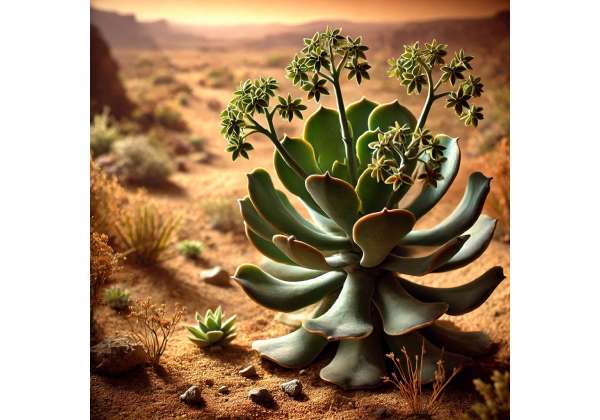
Devil’s Backbone (Kalanchoe daigremontiana) is a striking succulent best known for producing tiny plantlets along the edges of its leaves—one reason it’s also called “mother of thousands.” It has a long folk reputation in parts of the world for wound care, inflammation, and even serious conditions, but it also carries an important caution: this plant contains naturally occurring cardiac glycosides (bufadienolides) that can be toxic if taken the wrong way.
A balanced approach starts with two truths. First, the plant’s chemistry is genuinely interesting—researchers have identified multiple bioactive compounds that can affect inflammation signaling, microbial growth, and cell behavior in laboratory settings. Second, human-quality evidence and standardized dosing guidance are limited, and safety concerns are real, especially for oral use.
This guide explains what Devil’s Backbone is, what’s inside it, what benefits are realistic, how people use it today, and how to think about dosage and safety so you can make informed, low-risk choices.
Quick Overview
- May offer mild topical soothing for irritated skin, but evidence in humans is limited.
- Contains bufadienolides (cardiac glycosides) that can be toxic, especially if ingested.
- If used topically, typical botanical formulations range from 0.5–5% extract, 1–2 times daily.
- Avoid use if pregnant, breastfeeding, under 18, or living with heart rhythm disorders.
- Keep away from pets and livestock; ingestion can cause serious poisoning.
Table of Contents
- Devil’s Backbone plant overview
- Key ingredients and how they work
- Potential health benefits and limits
- How people use it today
- How much is safe to use?
- Side effects, interactions, and who should avoid
- What the evidence really says
Devil’s Backbone plant overview
Devil’s Backbone is the common name many people use for Kalanchoe daigremontiana, a succulent in the Crassulaceae family. You may also see it sold as “mother of thousands,” “Mexican hat plant,” or under older botanical names such as Bryophyllum daigremontianum. One complication: “devil’s backbone” is sometimes used for other plants (and even place names), so it helps to confirm you have the right species. The hallmark feature of K. daigremontiana is its ability to produce small plantlets along the leaf margins that drop off and root easily.
From a practical standpoint, the plant sits in a tricky category. It is widely grown as an ornamental houseplant and is easy to propagate. At the same time, it can be invasive outdoors in suitable climates, and it has a well-documented toxicity risk for animals due to cardioactive compounds.
In traditional and home settings, people have used crushed leaves, fresh juice, or improvised poultices for skin issues and inflammation. Those practices help explain why it appears in “natural remedy” discussions. But folk use is not the same as safety or effectiveness—especially when the plant contains compounds that act on the same biological targets as prescription cardiac drugs.
If you’re approaching Devil’s Backbone as a potential medicinal herb, the most important framing is this: it is chemically active, not “gentle,” and that’s exactly why caution matters. Many safer plants exist for common goals like minor skin irritation or digestive comfort. Devil’s Backbone should be treated as a high-uncertainty, higher-risk botanical until proven otherwise in well-controlled human research.
Key ingredients and how they work
Devil’s Backbone contains a mix of secondary plant compounds—molecules plants make for defense, signaling, and stress resilience. The two most talked-about categories are bufadienolides (cardiac glycosides) and polyphenols (including flavonoids). Understanding these compounds helps you interpret both the potential benefits and the safety concerns.
1) Bufadienolides (cardiac glycosides)
These are steroid-like molecules that can affect the sodium-potassium pump (Na+/K+-ATPase) in cell membranes. That mechanism matters because it can influence intracellular calcium levels and change how heart muscle cells contract and conduct electrical signals. In medicine, related compounds are used in tightly controlled doses for specific cardiac indications. In a plant context, the concern is variability: different leaves, growing conditions, and preparation methods can change the dose dramatically.
Bufadienolides are also studied for cell-signaling effects beyond the heart, including pathways involved in inflammation and cell survival. In laboratory studies, certain bufadienolides isolated from Kalanchoe species show cytotoxic activity against cancer cell lines. That is not the same as “treats cancer” in humans—it means the compounds are biologically potent and worth studying, while also reminding us they can be harmful.
2) Flavonoids and other polyphenols
These include antioxidant and anti-inflammatory candidates such as quercetin- and kaempferol-related compounds (often present as glycosides), along with phenolic acids. In general, plant polyphenols can influence oxidative stress markers and inflammatory signaling (for example, pathways involving NF-κB, COX, or LOX enzymes in early-stage research). Practically, these compounds are often used to explain why some botanical extracts feel “calming” on irritated skin.
3) Organic acids, sterols, and other constituents
Depending on extraction method (water vs alcohol vs other solvents), you may also capture organic acids, plant sterols, and various minor metabolites. This is one reason people get inconsistent results: a tea, a juice, and an alcohol extract can be chemically very different.
The most important takeaway is a simple one: Devil’s Backbone is not “just a plant.” It contains compounds that can meaningfully interact with human physiology. That fact can support research interest—but it also raises the bar for responsible use.
Potential health benefits and limits
When people search for Devil’s Backbone benefits, they usually want to know whether it can help with inflammation, pain, skin problems, infections, or chronic diseases. The honest answer is nuanced: there are plausible mechanisms and promising lab findings, but the leap to reliable, safe human benefit is not yet well established.
Topical skin comfort and minor irritation
Traditional use often centers on the leaves for cuts, minor burns, swelling, rashes, and insect bites. The “why” is easy to understand: succulents contain water-rich tissue, and leaf-based preparations can feel cooling. On top of that, polyphenols may support a mild anti-inflammatory effect on the skin surface.
The limit is equally important: raw plant juice can irritate sensitive skin, and applying plant material to broken skin increases the chance of unwanted absorption or infection. For common goals like sunburn comfort or mild irritation, many people choose better-studied options such as aloe vera for minor burns and skin irritation, which has clearer safety conventions and more standardized products.
Antimicrobial and infection-related claims
Extracts of Kalanchoe species have shown antimicrobial activity in vitro (in a dish). That can mean inhibition of certain bacteria or fungi under controlled conditions. But lab antimicrobial results often fail to translate into real-world treatment because the concentrations required may be high, the skin environment is complex, and human infections need targeted diagnosis and care.
Inflammation and pain
Anti-inflammatory activity is one of the more consistent themes in early research across Kalanchoe species. That may involve downregulation of inflammatory mediators and oxidative stress markers in cell or animal models. The realistic expectation, if anything, would be mild symptomatic relief—not a replacement for medical evaluation of persistent pain, autoimmune disease, or severe inflammation.
Cancer-related interest
This is where misinformation spreads fastest. Some bufadienolides show cytotoxic effects against cancer cells in vitro, and that has led to dramatic claims online. Cytotoxicity in a lab does not prove a therapy is effective or safe in humans. Many substances kill cells in a dish, including ones that are far too toxic for human use. Until there are well-designed clinical trials with standardized dosing, “anticancer” claims should be treated as unproven and potentially dangerous.
In summary, Devil’s Backbone has legitimate bioactivity, and that makes it scientifically interesting. But for personal health use, benefits should be framed as experimental and uncertain, while safety concerns—especially for oral use—should be treated as high priority.
How people use it today
People interact with Devil’s Backbone in three main ways: as an ornamental plant, as a folk topical remedy, and as an ingredient in extracts discussed in research settings. How you choose to engage with it should match your risk tolerance and the level of evidence you expect.
1) As a houseplant (lowest risk, most practical)
For many households, the safest “use” is simply growing it as a decorative succulent. It’s drought-tolerant, visually distinctive, and easy to propagate. The main caution here is containment: the plantlets can spread quickly, and in some regions it can establish outdoors. If you live in a climate where it survives outside year-round, treat it like a potentially invasive species and dispose of plantlets responsibly.
2) Folk topical use (higher uncertainty)
Common folk approaches include:
- Crushing a leaf and applying the pulp as a short-term compress
- Using diluted leaf juice on intact skin
- Rinsing with a weak infusion (less common)
If someone uses these methods, risk reduction matters more than “perfect technique.” Key safety-minded practices include:
- Use only on intact skin (avoid open wounds, ulcers, and active dermatitis flares).
- Patch test first (a small area for 24 hours).
- Use small amounts on a small area for a short time (think days, not weeks).
- Stop immediately if burning, rash, dizziness, nausea, or palpitations occur.
For goals like oil control, razor bumps, or temporary astringent feel, a more standard topical may be a better fit; for context on that category, see witch hazel topical uses and skin considerations.
3) Oral use (not recommended for self-care)
Some traditions describe eating leaves, drinking juice, or using tea. With K. daigremontiana, this is where the risk rises sharply because bufadienolides can affect the heart and electrolytes, and the concentration is not predictable. Without clinical supervision and standardized preparations, oral use is not a responsible DIY choice.
4) Research-style extracts (not a home project)
Scientific studies typically use defined extraction methods and quantify at least some compounds. At-home extraction does the opposite: it creates an unknown dose of potentially cardiotoxic molecules. If you see claims tied to “extracts,” understand that they may reflect laboratory conditions rather than safe, replicable home use.
The most helpful decision rule is straightforward: if your intended use involves swallowing the plant, treat that as a stop sign unless you are under qualified medical guidance in a controlled context.
How much is safe to use?
Dosage is the hardest part of Devil’s Backbone to answer responsibly because standardized human dosing guidelines are not established for Kalanchoe daigremontiana, and safety margins are unclear. Rather than pretending there is a reliable “mg per day” number, it’s safer to think in tiers: avoid oral dosing, and if using topical products, use conservative, formulation-based ranges.
Oral dosing: avoid self-dosing
There is no well-validated, widely accepted safe oral dose for raw leaves, juice, or tea. The key problem is variability: bufadienolide levels can differ by plant part, maturity, growing conditions, and extraction. A “small” amount in one plant may be very different in another. For this reason, oral use should be considered unsafe for casual supplementation.
Topical use: if used, keep it low and short
If you choose to use Devil’s Backbone topically, the most defensible approach is to use a commercial formulation that lists Kalanchoe extract and provides a consistent base. In botanical skincare, extract concentrations commonly fall in a broad range, and a cautious working range is:
- 0.5–2% extract to start (once daily for 2–3 days)
- If well tolerated, up to 5% extract (1–2 times daily)
- Duration: keep it short—about 3–10 days for a specific, minor goal
Additional practical dosing variables:
- Area matters: treat a small area, not “whole-body” application.
- Skin integrity matters: avoid broken skin and mucous membranes.
- Occlusion increases exposure: avoid covering with airtight bandages unless a clinician advises it.
Why these ranges are conservative
Topical use is generally lower risk than oral use, but “lower risk” is not “no risk.” Some bufadienolides may penetrate skin to a degree, and irritation can increase absorption. That’s why patch testing and short duration are not optional details—they are the core of safer use.
If your goal is pain or bruising
People sometimes reach for Devil’s Backbone when they want a topical botanical for sprains or bruises. Consider that better-characterized topical herbs exist; one example category is comfrey cream for sprains and bruises with safe-use tips, which has its own cautions but is at least discussed with clearer topical conventions.
If you are pregnant, have heart disease, take cardiac medications, or are treating a child, the safest “dose” is no use at all.
Side effects, interactions, and who should avoid
Safety is the most important section for Devil’s Backbone, because the plant’s chemistry can plausibly cause harm—especially when used internally. The goal here is not to create fear, but to give you a clear decision framework.
Possible side effects
Side effects depend on route of exposure:
- Topical (skin): stinging, redness, rash, itching, worsening dermatitis, or blister-like irritation in sensitive individuals.
- Oral (higher risk): nausea, vomiting, abdominal pain, diarrhea, dizziness, weakness, confusion, and—most concerning—heart rhythm changes (palpitations, slow heart rate, irregular heartbeat).
Because bufadienolides act on mechanisms involved in cardiac conduction, symptoms like fainting, chest pain, severe weakness, or persistent palpitations should be treated as urgent.
Who should avoid Devil’s Backbone
Avoid all medicinal use (especially oral use) if you are:
- Pregnant, trying to conceive, or breastfeeding
- Under 18
- Diagnosed with heart rhythm disorders, heart failure, or significant cardiovascular disease
- Managing kidney disease or electrolyte imbalance
- Taking medications where small shifts in potassium, heart rate, or conduction could be dangerous
Medication interaction risks (especially with oral use)
Potentially higher-risk categories include:
- Cardiac glycosides (such as digoxin): additive effects and toxicity risk
- Antiarrhythmics and heart rate–lowering drugs: unpredictable rhythm effects
- Diuretics: electrolyte shifts can increase arrhythmia risk
- Calcium-modifying therapies: may worsen rhythm instability in susceptible people
- Anticoagulants or antiplatelets: some extracts show activity related to clotting pathways in early research, so caution is warranted
This does not mean everyone will have an interaction. It means the downside can be high, and the benefit is uncertain—an unfavorable trade for self-treatment.
Pets and household safety
Keep Devil’s Backbone away from cats, dogs, and grazing animals. If a pet chews the leaves, treat it as a potential poisoning and contact a veterinary professional promptly.
A practical alternative for “detox” narratives
Some people are drawn to this plant because of broad wellness or “detox” claims. If your real goal is liver support, it’s smarter to choose options with clearer safety norms and a more established evidence discussion, such as milk thistle constituents and liver-support strategies, while still checking with a clinician if you take medications.
If accidental ingestion occurs (human or animal), contact local poison support or emergency services rather than waiting for symptoms to “pass.”
What the evidence really says
Devil’s Backbone sits at an unusual intersection: it is widely used in folk contexts, contains well-characterized bioactive compounds, and yet still lacks the type of human evidence needed to make confident claims about effectiveness and safe dosing. Understanding what research can and cannot tell you will keep expectations grounded.
Most evidence is preclinical
A large share of published work on Kalanchoe daigremontiana involves:
- Chemical profiling (identifying bufadienolides and phenolic compounds)
- Cell studies (testing antimicrobial, anti-inflammatory, antioxidant, cytotoxic, or antiviral effects in vitro)
- Animal studies (exploring physiological changes under controlled dosing)
These studies are valuable for hypothesis-building. They do not prove a health outcome in humans, because the doses, delivery methods, and metabolic pathways can differ dramatically.
Species confusion is common
The genus Kalanchoe includes many species used under overlapping common names. Some research focuses on K. pinnata or other species and is later misattributed online to K. daigremontiana. Even within the correct species, differences in plant material and extraction method can change the chemical profile substantially.
Safety data is not as strong as people assume
A common misconception is that “traditional use” guarantees safety. With cardioactive glycosides, the opposite can be true: tradition may reflect availability, not proven safety margins. Without standardized preparation and clinical monitoring, a plant with cardiac glycosides is inherently higher risk than a typical culinary herb.
What a responsible conclusion looks like
Based on the current research landscape, a cautious summary is:
- The plant contains compounds with real biological activity.
- Some topical or lab-based findings are promising, but do not equal proven clinical benefit.
- Oral self-treatment is not justified by the evidence given the toxicity concerns and dosing uncertainty.
- If someone insists on experimenting, topical-only, low concentration, short duration, and patch testing are the minimum safeguards.
If your primary interest is immune support or infection prevention, it’s worth comparing Devil’s Backbone to herbs with more direct human discussion and clearer safety conventions, such as echinacea for immune support and common use cases. The point is not that echinacea is perfect—it’s that evidence quality and safety clarity matter when you’re making personal health decisions.
Devil’s Backbone may eventually yield standardized compounds with therapeutic potential. Until then, the safest personal-health posture is conservative: treat it as an ornamental plant first, and a medicinal herb only with professional oversight.
References
- Biological properties of different extracts of the Kalanchoe daigremontiana (‘Mother of thousands’): a review 2022 (Systematic Review)
- Bioactive Compounds from Kalanchoe Genus Potentially Useful for the Development of New Drugs 2023 (Review)
- A Review of the Popular Uses, Anatomical, Chemical, and Biological Aspects of Kalanchoe (Crassulaceae): A Genus of Plants Known as “Miracle Leaf” 2023 (Review)
- Bufadienolide Penetration Through the Skin Membrane and Antiaging Properties of Kalanchoe spp. Juices in Dermal Applications 2025 (Experimental Study)
Disclaimer
This article is for educational purposes only and does not provide medical advice, diagnosis, or treatment. Devil’s Backbone (Kalanchoe daigremontiana) contains cardioactive compounds that may be toxic, particularly if ingested, and it may interact with medications that affect the heart or electrolytes. Do not use this plant as a substitute for professional care, and do not self-treat serious symptoms or chronic conditions with it. If you are pregnant, breastfeeding, have heart or kidney disease, take prescription medications, or are considering use for a child, consult a licensed clinician first. If accidental ingestion or poisoning is suspected in a person or pet, contact local poison services or emergency care promptly.
If you found this guide helpful, consider sharing it with friends or community groups on Facebook, X (formerly Twitter), or your preferred platform so others can make safer, more informed choices.