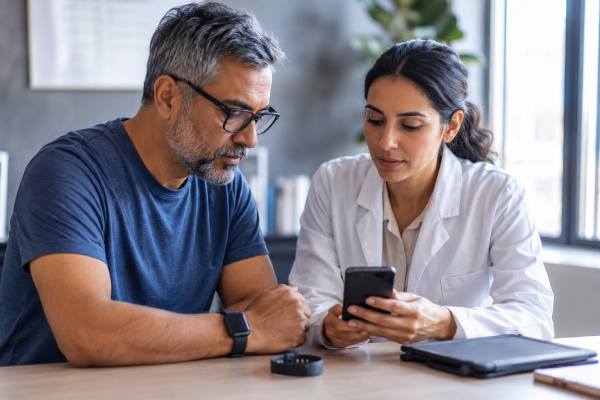
Wearables, smartphones, and health apps can now collect large amounts of information about sleep, movement, heart rate, speech, typing, activity patterns, and daily routines. Some of these data streams may become “digital biomarkers” when they are measured reliably, linked to meaningful health states, and interpreted in the right clinical context.
For brain health, this is both promising and easy to misunderstand. A smartwatch cannot diagnose Alzheimer’s disease, ADHD, depression, concussion, or anxiety on its own. An app score is not the same as a medical evaluation. But digital measures may help reveal changes over time, add real-world context to symptoms, support research, and prompt a more timely conversation with a clinician when something seems off.
The most useful way to think about digital biomarkers is not as replacements for doctors or established tests, but as possible extra signals. They may help answer questions such as: Is sleep becoming more fragmented? Is daily activity dropping? Are cognitive tasks getting slower over months? Is stress physiology changing alongside mood symptoms? The value is usually in patterns, trends, and context rather than one isolated number.
Table of Contents
- Digital Biomarkers and Brain Health
- Wearables, Apps, and Passive Monitoring
- Clinical Uses for Digital Biomarkers
- Limits of Digital Biomarker Diagnosis
- Validation, Accuracy, and Clinical Meaning
- Privacy, Equity, and Data Quality
- Using Brain Health Data Safely
Digital Biomarkers and Brain Health
A digital biomarker is a measurable health-related signal collected through digital technology, such as a wearable sensor, smartphone, tablet, keyboard, microphone, or connected device. For brain health, the signal may reflect cognition, sleep, motor function, mood-related behavior, speech, social activity, attention, or daily functioning.
A traditional biomarker might come from blood, cerebrospinal fluid, imaging, genetics, or another biological source. A digital biomarker comes from data generated during activity, behavior, or physiology. The word “biomarker” matters because it implies more than a simple app feature. A true biomarker should be measured consistently, connected to a clinically meaningful concept, and validated for a specific purpose.
For example, step count alone is not automatically a brain health biomarker. But a sustained change in gait speed, daily movement, sleep-wake rhythm, or phone interaction pattern may become clinically relevant if it has been shown to track a condition, predict risk, or reflect functional change. The same distinction applies to heart rate variability, reaction time, typing speed, voice features, or digital memory tasks.
This is why the broader concept of brain and mental health biomarkers is helpful. A marker is not useful simply because it is measurable. It becomes useful when it improves understanding, decision-making, monitoring, or care.
Digital biomarkers are often grouped into several types:
- Physiological signals, such as heart rate, heart rate variability, skin temperature, oxygen saturation, and sleep-related measures.
- Motor signals, such as gait, tremor, balance, reaction time, fine motor speed, and activity level.
- Cognitive signals, such as response speed, memory task performance, attention variability, error patterns, or digital clock drawing.
- Behavioral signals, such as mobility patterns, screen use, communication frequency, routine stability, and sleep-wake timing.
- Speech and language signals, such as pauses, word-finding patterns, speech rate, prosody, or voice quality.
- Self-reported signals, such as mood ratings, symptom check-ins, fatigue scores, or perceived memory changes.
In brain health, the strongest promise often comes from combining signals. A person’s sleep, movement, mood ratings, cognitive task performance, and routine stability may tell a more meaningful story together than any one measure alone. Still, more data does not automatically mean better insight. Poorly collected, poorly validated, or overinterpreted data can create confusion, false alarms, and unnecessary worry.
Wearables, Apps, and Passive Monitoring
Wearables and apps collect brain-relevant data in two main ways: active measurement, where the person completes a task or survey, and passive monitoring, where sensors collect information in the background. Both approaches can be useful, but they answer different kinds of questions.
Active measurement is familiar. A person opens an app and completes a memory task, reaction-time test, mood questionnaire, sleep diary, or symptom check-in. This can be structured and easier to interpret because the task is known. It also requires effort, attention, and regular participation. If someone is tired, distracted, anxious, unmotivated, or unfamiliar with the task, the result may reflect those factors as much as brain function.
Passive monitoring collects data with little or no active input. A smartwatch may track sleep timing, heart rate, activity, or walking patterns. A smartphone may record screen interaction patterns, mobility changes, typing rhythm, or general phone use. Some research tools analyze speech, language, or social behavior patterns, usually with consent and privacy safeguards. Passive data can be valuable because it reflects real life rather than a clinic visit, but it can also be messy. Devices are removed, batteries die, sensors vary, and daily routines change for reasons unrelated to health.
The table below shows common digital data sources and what they may contribute.
| Digital source | Possible brain health signal | Main caution |
|---|---|---|
| Smartwatch or fitness tracker | Sleep duration, activity level, heart rate, heart rate variability, walking patterns | Consumer devices vary in accuracy and may miss context such as illness, travel, or shift work |
| Smartphone app | Memory tasks, attention tasks, mood check-ins, medication reminders, symptom tracking | Results depend on task design, user engagement, and validation for the intended population |
| Passive phone sensing | Routine stability, mobility changes, communication patterns, screen interaction trends | Privacy concerns are substantial, and behavior can change for social or practical reasons |
| Speech or voice tools | Speech rate, pauses, articulation, word-finding patterns, vocal energy | Language, accent, microphone quality, hearing, fatigue, and mood can affect results |
| Computerized cognitive tasks | Reaction time, processing speed, working memory, learning, attention variability | Practice effects, device differences, and testing conditions can influence performance |
Many of these tools overlap with computerized cognitive testing, but digital biomarkers are broader. A computerized test may measure performance during a defined task. A digital biomarker system may also incorporate sleep, activity, behavior, and passive signals over time.
Heart rate variability is a useful example. It is often marketed as a stress or recovery metric, but it is not a direct readout of mood, resilience, or mental health. Trends in heart rate variability and stress recovery may be informative when interpreted with sleep, illness, fitness, medication, anxiety symptoms, and life context. A low value on one morning is rarely meaningful by itself.
The same is true for sleep tracking. Wearables can help identify patterns such as short sleep, irregular timing, or frequent awakenings. They cannot reliably replace a sleep study when sleep apnea, narcolepsy, seizures during sleep, or complex sleep disorders are suspected. They can also lead some people to become overly focused on sleep scores, especially when the device estimate conflicts with how they feel.
Clinical Uses for Digital Biomarkers
Digital biomarkers may be most useful when they help track change over time, add real-world context, or support follow-up between appointments. Their strongest role is usually monitoring and decision support, not stand-alone diagnosis.
In cognitive health, digital tools may help detect subtle changes in memory, attention, processing speed, daily routine, walking, or sleep-wake patterns. Research is especially active in mild cognitive impairment, Alzheimer’s disease, Parkinson’s disease, post-concussion symptoms, and other neurological conditions where changes may unfold gradually. A digital task repeated at home may show whether performance is stable, improving, or declining, while passive measures may show whether daily functioning is changing outside the clinic.
For mental health, digital biomarkers may help track patterns associated with depression, anxiety, bipolar disorder, stress, sleep disruption, social withdrawal, or relapse risk. A drop in daily activity, irregular sleep, reduced communication, or changed phone-use patterns may match a worsening mood episode for some people. For others, the same pattern may reflect travel, exams, caregiving, grief, a new job, or a temporary infection. Context is essential.
In concussion care, digital tools may support symptom tracking, reaction-time monitoring, sleep observation, and graded return-to-activity planning. They may complement formal concussion testing, but they should not override symptoms or clinical judgment. Headache, dizziness, worsening confusion, repeated vomiting, weakness, seizure, or unusual behavior after head injury needs medical attention rather than app-based reassurance.
In sleep and fatigue workups, wearable data can sometimes reveal irregular sleep schedules, short sleep, circadian disruption, or nighttime awakenings. If the concern is persistent brain fog, daytime sleepiness, snoring, witnessed breathing pauses, or poor concentration, a clinician may still recommend a formal sleep study for brain fog and fatigue. Consumer sleep scores can start a conversation, but they do not rule out clinically important sleep disorders.
Digital biomarkers may also improve clinical trials. Instead of relying only on clinic visits every few months, researchers may collect frequent home-based measures of movement, cognition, sleep, or function. This can make studies more convenient and may capture changes missed by occasional testing. It also raises important questions about device access, data quality, missing data, and whether digital outcomes truly reflect changes that matter to patients and families.
A practical way to understand the role of digital biomarkers is to ask what job the tool is supposed to do. Is it screening for possible risk? Tracking symptoms? Measuring treatment response? Supporting a clinical trial endpoint? Helping a person understand lifestyle patterns? Each use requires different evidence. A tool that is useful for tracking sleep habits may not be valid for diagnosing depression. A digital memory task that performs well in one study population may not work equally well across languages, ages, education levels, visual abilities, or device types.
Limits of Digital Biomarker Diagnosis
Digital biomarkers cannot diagnose most brain or mental health conditions by themselves. They may raise a question, support a pattern, or help monitor change, but diagnosis still depends on history, symptoms, functional impact, clinical examination, and appropriate testing.
This limitation is especially important because many brain and mental health conditions overlap. Poor sleep can look like ADHD. Depression can affect concentration and memory. Anxiety can change heart rate, sleep, breathing, dizziness, and attention. Medication side effects, thyroid disease, low vitamin B12, anemia, infection, substance use, menopause, grief, pain, and stress can all affect brain function. A device may detect a change, but it usually cannot explain why the change happened.
For memory concerns, an app-based task or passive monitoring pattern is not the same as a dementia diagnosis. Clinicians typically consider the timeline of symptoms, daily functioning, medication history, mood, sleep, neurological signs, lab tests, cognitive screening, and sometimes brain imaging or more specialized testing. A person worried about forgetfulness may benefit more from a structured evaluation than repeated checking of an app score. Formal cognitive testing measures specific abilities under standardized conditions, which is different from passive data collected during daily life.
For mental health, digital signals can be even more context-sensitive. Reduced movement may occur during depression, but also during injury, remote work, bad weather, caregiving, illness, or deliberate rest. Increased phone use may reflect anxiety, but also work demands, social connection, school deadlines, or entertainment. A high stress score may reflect exercise, caffeine, fever, pain, poor sleep, or normal physiological arousal.
This is one reason digital mental health tools need careful framing. Artificial intelligence may identify patterns humans would miss, but it can also find patterns that do not generalize outside the study setting. The same concerns apply to AI in mental health diagnosis: models may assist with triage or monitoring, but they can be wrong, biased, incomplete, or poorly matched to an individual’s situation.
Urgent symptoms should never be managed through passive monitoring alone. Immediate evaluation is appropriate for sudden confusion, new weakness or numbness, seizure, fainting with neurological symptoms, severe sudden headache, new trouble speaking, symptoms of stroke, suicidal thoughts with intent or plan, psychosis, mania with unsafe behavior, or a head injury with worsening symptoms. Digital data may be useful later, but it should not delay emergency care.
Validation, Accuracy, and Clinical Meaning
A digital biomarker is only useful if it is accurate enough for its intended purpose and clinically meaningful enough to guide interpretation. Validation is not a single checkbox; it includes whether the device measures correctly, whether the signal relates to the health question, and whether the result helps people make better decisions.
Several layers of validation matter:
- Technical validation: Does the device or app capture the signal accurately and consistently? For example, does it measure heart rate, movement, speech timing, or task response time reliably across devices and settings?
- Analytical validation: Can the data pipeline process the signal correctly? This includes filtering noise, handling missing data, detecting artifacts, and producing stable features.
- Clinical validation: Does the digital measure meaningfully relate to the condition, symptom, risk state, or functional outcome it claims to reflect?
- Usability and feasibility: Will people actually use the tool long enough and correctly enough for the data to be useful?
- Clinical utility: Does using the tool improve care, safety, decision-making, monitoring, or outcomes?
A common problem is that early research may show promising associations but not enough evidence for routine clinical use. A study might find that a digital feature differs between groups, such as people with mild cognitive impairment and people without impairment. That does not automatically mean the feature can diagnose an individual patient accurately. Group-level differences can be real while individual prediction remains uncertain.
Accuracy also depends on the population being tested. A cognitive app developed in highly educated, English-speaking, tech-comfortable adults may not perform the same in people with less education, visual impairment, low digital literacy, hearing loss, motor disability, different cultural backgrounds, or different first languages. A gait measure may be affected by arthritis, neuropathy, joint replacement, footwear, home layout, or fear of falling. Speech measures may be affected by accent, bilingualism, dentures, respiratory illness, medication, or microphone quality.
Machine learning adds another layer. Models may appear accurate in the dataset where they were developed but perform worse in real-world settings. Strong evidence requires independent validation, transparent reporting, clinically relevant comparison groups, and clear thresholds for action. For cognitive tools, the questions overlap with AI in cognitive testing: the model may be sophisticated, but the clinical value depends on the quality of the data, the fairness of the model, and the usefulness of the output.
Clinical meaning is just as important as statistical performance. A device may detect a small change in sleep or reaction time, but that change may not matter unless it is linked to symptoms, function, risk, or treatment decisions. Useful digital biomarkers should help answer practical questions: Is the person improving? Is a symptom pattern changing? Is follow-up needed? Does the result match the person’s lived experience? Is the signal strong enough to act on, or should it simply be watched?
Privacy, Equity, and Data Quality
Digital biomarkers can reveal sensitive information about routines, location, sleep, stress, social behavior, and possible health changes. Privacy and equity are not side issues; they are central to whether these tools can be trusted.
Passive monitoring can be especially sensitive because it may collect information continuously. Location patterns can reveal home, work, religious activity, medical visits, social isolation, or changes in routine. Communication metadata may reveal social patterns even without recording message content. Speech or voice tools may capture bystanders or sensitive conversations if not designed carefully. Even seemingly harmless data, such as sleep timing or movement, can become revealing when combined with other information.
Before using a digital brain health tool, it is reasonable to ask:
- What data are collected?
- Is collection active, passive, or both?
- Is raw audio, location, or message content collected, or only processed features?
- Who can access the data?
- Is the data sold, shared, or used for advertising?
- Can the user delete data?
- Is the tool regulated, clinically validated, or mainly a wellness product?
- What happens if the tool detects a concerning result?
Equity also matters. Digital tools may exclude people who do not own newer smartphones, cannot afford wearables, have limited internet access, speak languages not supported by the tool, or have disabilities that interfere with standard use. If research datasets are not diverse, the resulting models may work better for some groups than others. This can worsen existing gaps in diagnosis and care.
Data quality is another practical concern. Digital biomarkers often depend on long-term patterns, but real life creates missing and noisy data. A person may forget to wear a watch, switch phones, disable permissions, travel across time zones, change jobs, start exercising, become ill, or share a device with someone else. Algorithms can misread these changes if the system lacks context.
There is also a psychological risk. Continuous tracking can help some people feel informed and empowered. For others, it can increase checking, worry, reassurance-seeking, or sleep anxiety. People prone to health anxiety, obsessive checking, panic, or insomnia may need firmer boundaries around tracking. Sleep scores, readiness scores, and stress scores should not become the main judge of how someone is doing.
Digital biomarker tools are most ethical and useful when they are transparent, voluntary, proportionate, and clinically grounded. Users should understand what is being measured, what is not being measured, and what actions are appropriate. Clinicians should avoid overreacting to unvalidated signals, while also taking seriously consistent changes that match symptoms or functional decline.
Using Brain Health Data Safely
The safest way to use digital brain health data is to treat it as a pattern-tracking tool, not a diagnosis engine. Trends can be useful when they are combined with symptoms, daily function, medical history, and professional evaluation when needed.
A practical approach is to focus on a few meaningful signals rather than tracking everything. For many people, sleep timing, activity level, symptom notes, medication changes, and a brief cognitive or mood check-in are enough. More data can become less useful if it creates noise or anxiety.
Use these principles when reviewing digital brain health data:
- Look for trends, not isolated readings. One poor sleep score, low readiness score, or slow reaction-time result usually means little. A repeated pattern over weeks or months is more meaningful.
- Add context. Note illness, travel, stress, medication changes, alcohol use, caffeine, pain, menstrual or hormonal changes, work demands, and major life events.
- Track function, not just numbers. Ask whether the pattern affects daily life: missed appointments, unsafe driving, work errors, falls, withdrawal, mood changes, or difficulty managing tasks.
- Avoid self-diagnosis from app results. A digital score can support a conversation, but it should not become a label.
- Share concise summaries with clinicians. A simple timeline is usually more useful than pages of raw data.
- Set boundaries. If tracking increases worry, checking, or sleep pressure, reduce the frequency or stop using the tool.
For memory or cognitive concerns, it can help to bring a short written summary to an appointment: when symptoms started, whether they are worsening, examples of daily impact, sleep patterns, medications, alcohol or substance use, mood symptoms, family observations, and any digital trends. This gives the clinician a clearer starting point than an isolated app score. People using at-home cognitive tests should be especially careful to treat results as preliminary, since home testing conditions are not standardized.
Digital monitoring may be more useful when there is a specific question. For example, “Did my sleep regularity improve after changing my schedule?” is more actionable than “What does my brain score mean?” “Are my symptoms worse during weeks of poor sleep?” is more useful than checking a stress score several times a day. “Has walking speed declined over six months?” may be more clinically relevant than daily fluctuations.
Caregivers may also use digital tools to notice changes in sleep, wandering risk, activity, medication routines, or functional patterns in a person with cognitive impairment. This should be done with respect for consent, dignity, and privacy whenever possible. Monitoring should support safety and care, not become surveillance without a clear purpose.
Digital biomarkers are likely to become more common in brain health research and care. The most valuable tools will be those that are validated, explainable, accessible, privacy-conscious, and connected to meaningful next steps. Until then, the best use is measured and practical: use digital data to notice patterns, prepare better questions, and support timely care when symptoms or function change.
References
- Digital Health Technologies for Remote Data Acquisition in Clinical Investigations 2023 (Guideline)
- Smartwatch- and smartphone-based remote assessment of brain health and detection of mild cognitive impairment 2025 (Research Article)
- Passive Sensing for Mental Health Monitoring Using Machine Learning With Wearables and Smartphones: Scoping Review 2025 (Scoping Review)
- Digital phenotypes and digital biomarkers for health and diseases: a systematic review of machine learning approaches utilizing passive non-invasive signals collected via wearable devices and smartphones 2025 (Systematic Review)
- Digital Health Technologies for Alzheimer’s Disease and Related Dementias: Initial Results from a Landscape Analysis and Community Collaborative Effort 2024 (Review)
- Digital biomarkers in early Alzheimer’s disease from wearable or portable technology: A scoping review 2026 (Scoping Review)
Disclaimer
This article is for general educational purposes only and is not a substitute for professional medical advice, diagnosis, or treatment. Wearable, app-based, or passive monitoring data should not be used to diagnose brain or mental health conditions without evaluation by a qualified clinician. Seek urgent care for sudden neurological symptoms, severe confusion, suicidal thoughts with intent, seizures, stroke-like symptoms, or worsening symptoms after a head injury.
If you found this helpful, consider sharing it on Facebook, X, or your preferred platform so others can better understand the promise and limits of digital brain health tracking.