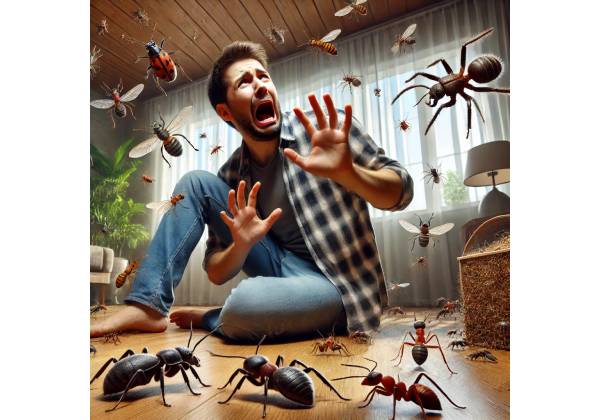
A sudden buzz near the ear, a beetle on a windowsill, a moth circling a light, or the thought of a wasp nest under the roof can make almost anyone tense for a moment. Entomophobia is different. It is an intense, persistent fear of insects that feels far larger than the actual risk and can quickly take over daily life. For some people, the fear is strongest around stinging or biting insects. For others, the trigger is movement, unpredictability, contamination, infestation, or the sight of legs, wings, and antennae. The reaction may look irrational from the outside, but to the person experiencing it, it can feel immediate and overwhelming. Understanding entomophobia matters because it is not simply a dislike of bugs. When the fear leads to panic, avoidance, and shrinking freedom, it fits a pattern that can be assessed and treated effectively.
Table of Contents
- What Entomophobia Is
- Signs and Symptoms
- Causes and Risk Factors
- How Diagnosis Works
- Daily Impact and Complications
- Treatment Options
- Coping and Self-Management
- When to Seek Help and Outlook
What Entomophobia Is
Entomophobia is an intense fear of insects. The fear may be triggered by seeing a live insect, finding one indoors, hearing buzzing, looking at pictures or videos, or even imagining an infestation. Some people react to a very wide range of insects, while others are mainly distressed by specific ones such as cockroaches, bees, wasps, flies, moths, beetles, or ants. The fear may center on being bitten or stung, but it can also be driven by disgust, surprise, movement, noise, contamination concerns, or the feeling that insects are impossible to control.
It helps to separate entomophobia from ordinary caution. A healthy respect for insects can be sensible. Venomous stings, allergic reactions, disease-carrying mosquitoes, ticks, and household infestations are real concerns. Entomophobia goes further. The emotional and physical response is out of proportion to the immediate danger, hard to manage, and often linked to avoidance that affects everyday life.
In clinical practice, entomophobia is usually understood as a type of specific phobia, most often within the animal subtype. That means the core problem is not that the person is overreacting on purpose. It is that the brain has learned to treat insects as a major threat, and the body responds accordingly. Even when the person knows a small moth or harmless beetle is unlikely to cause harm, their nervous system may react as if danger is urgent.
The condition can begin in childhood, adolescence, or adulthood. It may remain mild for years or worsen after a frightening event, repeated exposures, a bad sting, a household infestation, or horror-based media. Some people mainly avoid the outdoors. Others are most distressed by insects getting inside the home, onto clothing, or into food or bedding. The exact pattern matters because treatment works best when it targets the real trigger rather than a broad label.
Entomophobia can also be confused with related fears. Fear of spiders is more accurately called arachnophobia, since spiders are arachnids rather than insects. Some people fear all small crawling creatures and use the word “bugs” broadly, but a careful assessment often reveals a more specific pattern. That distinction can make therapy more precise.
The most important point is simple: entomophobia is real when it causes distress, avoidance, and loss of freedom. It is not a character flaw, and it is not too minor to deserve help.
Signs and Symptoms
The symptoms of entomophobia can appear suddenly and with surprising force. A person may feel fine one moment and then experience a sharp wave of fear as soon as they spot an insect, hear buzzing, or think something has landed on them. In severe cases, the response starts before any real exposure, such as before going to a garden, opening a window, visiting a park, or entering a garage or basement.
Physical symptoms often resemble a panic response. They may include:
- Racing heartbeat
- Sweating
- Shaking or trembling
- Tight chest
- Shortness of breath
- Dizziness
- Nausea
- Tingling
- Feeling faint or frozen
- Urgent need to escape
Emotional symptoms can be just as intense. A person may feel terror, disgust, revulsion, helplessness, or the sense that something terrible is about to happen. Some describe a burst of alarm that feels automatic and impossible to reason with. Others feel deep embarrassment because they know the insect is small or harmless but still cannot calm down.
Common thoughts during an episode include:
- “It is going to land on me.”
- “I cannot handle this.”
- “There might be more nearby.”
- “I will get stung, bitten, or contaminated.”
- “I need to get away now.”
Behavioral symptoms often make the phobia most disruptive. A person may:
- Avoid gardens, parks, hiking trails, sheds, attics, and basements
- Keep windows shut even in hot weather
- Refuse to eat outdoors
- Inspect rooms repeatedly for insects
- Shake out clothes and bedding over and over
- Ask others to remove insects for them
- Leave rooms, cars, or social events abruptly
Children may show the fear in a different way. They may scream, cry, cling, run, refuse outdoor play, or become preoccupied with checking corners, ceilings, and floors. A child might not say, “I am afraid of insects.” Instead, they may insist they cannot sleep, will not enter a room, or need constant reassurance that there are no bugs nearby.
Severity varies greatly. One person may be distressed only by cockroaches in the home. Another may react to butterflies, harmless flies, or even cartoon images. Symptoms become more concerning when they are consistent, last for months, and lead to significant avoidance or disruption. At that point, the problem is no longer just discomfort. It is a patterned fear response that may need treatment.
One useful clinical clue is whether the reaction remains intense even when the actual threat is low. Panic at the sight of a harmless insect on the far side of a window often suggests a phobic pattern rather than simple caution.
Causes and Risk Factors
Entomophobia rarely comes from one cause alone. It usually develops through a combination of biology, temperament, learning, and experience. That is why one child may brush off a beetle on the porch while another develops a powerful and lasting fear.
A direct frightening event is one common pathway. The person may have been stung, bitten, startled by a swarm, trapped in a room with insects, or distressed by an infestation at home. When an experience feels threatening enough, the brain can link insects with danger very quickly. After that, even small reminders such as buzzing, wing movement, or the look of certain body parts can trigger the same alarm response.
Learning from other people also matters. Children, in particular, can pick up fear from watching adults recoil, shout, or speak about insects as filthy, dangerous, or impossible to control. Repeated media exposure can have a similar effect. Horror imagery, infestation scenes, or exaggerated descriptions of insects as invaders can deepen an existing sensitivity.
Several psychological factors may increase risk:
- High baseline anxiety
- Strong disgust sensitivity
- Behavioral inhibition in childhood
- Previous panic attacks
- Sensitivity to bodily sensations such as racing heart or shortness of breath
- Tendency to overestimate danger and underestimate coping ability
Disgust plays a larger role in insect fear than many people realize. Some people are less afraid of being harmed than of the feeling insects create: crawling legs, sudden movement, proximity to skin, contamination, dirt, or disease. Fear and disgust can work together and make the reaction stronger. That mixture can explain why even harmless insects provoke intense distress.
The fear can also be shaped by what the insect seems to represent. For one person, a wasp means pain. For another, a cockroach means infestation and loss of control. For another, mosquitoes mean illness. The surface trigger may be similar, but the underlying meaning differs.
Risk can be increased by context as well. Living in a place with frequent insect exposure, having had repeated infestations, managing allergies to stings, or growing up in an environment where insects were treated as highly threatening can all reinforce the fear. Still, real-world risk alone does not explain everything. Many people who have had stings or seen infestations do not develop phobia. What matters is how the event was processed and what happened afterward.
Avoidance is often what keeps entomophobia alive. When a person escapes, checks excessively, or relies on others to remove every insect, they get fast relief. That relief teaches the brain that avoidance is necessary. Over time, the phobia becomes more entrenched, and the list of triggers may grow. A fear that began with wasps can spread to bees, flies, moths, and then almost any small moving creature.
In short, entomophobia is best understood as a learned fear response shaped by vulnerability, meaning, and repetition.
How Diagnosis Works
There is no blood test, scan, or single screening tool that diagnoses entomophobia by itself. Diagnosis is clinical. That means a qualified clinician listens closely to the person’s history, symptoms, triggers, and daily impairment and then decides whether the pattern fits a specific phobia or whether something else explains it better.
A good assessment usually starts with the details of the trigger. The clinician may ask:
- Which insects cause the strongest reaction?
Is the fear broad or limited to certain insects such as cockroaches, bees, or flies? - What happens during exposure?
Does the person feel disgust, fear, panic, or all three? - How long has the problem been present?
Has it been persistent for months or years? - What is the person avoiding?
Are they avoiding outdoor spaces, travel, school activities, open windows, sleeping alone, gardening, or parts of the home? - How much does it affect daily life?
Is the fear changing routines, relationships, work, childcare, or housing behavior?
The clinician also looks at proportionality. Many people would understandably feel alarm if they were surrounded by wasps or found a significant infestation in their home. A phobic pattern is more likely when the reaction is extreme even in low-risk situations, such as panic at the sight of a harmless insect on a screen, outside a closed window, or in a picture.
Differential diagnosis matters. Similar behavior can come from different conditions. Avoiding insects may be part of:
- Specific phobia
- Obsessive-compulsive disorder with contamination fears
- Post-traumatic stress after a severe sting, infestation, or frightening incident
- Panic disorder with situational triggers
- Delusional infestation or fixed false beliefs
- Sensory sensitivity in neurodevelopmental conditions
This is why a clinician does not stop at the word entomophobia. They ask what the person is actually afraid will happen and how convinced they are that danger is present. Someone who fears pain from stings needs a somewhat different treatment emphasis than someone whose main problem is contamination disgust or compulsive checking.
Assessment in children can be more nuanced. A child may not explain the fear clearly but may refuse school outings, outdoor sports, or bedtime if they think insects are nearby. Parents may be asked when the fear began, whether it followed a sting or infestation, and how adults usually respond.
A diagnosis can feel relieving because it gives shape to what may have seemed random or embarrassing. More importantly, it helps create a focused treatment plan. The aim is not merely to label the fear. It is to understand the mechanism: what triggers it, what maintains it, and what is most likely to reduce it.
Daily Impact and Complications
Entomophobia can reach far beyond the moment of seeing an insect. Because insects can appear in so many ordinary settings, the fear often spreads into routines that seem unrelated at first. What starts as distress around one trigger may gradually shape work, social life, sleep, exercise, travel, and home habits.
Common day-to-day effects include:
- Avoiding parks, patios, gardens, beaches, campsites, and trails
- Skipping picnics, sports, barbecues, and outdoor school events
- Refusing to open windows or use fans because insects might enter
- Checking ceilings, curtains, vents, and corners repeatedly
- Feeling unable to relax in summer or warm climates
- Relying on others to inspect rooms, remove insects, or handle trash and plants
The home can become a major focus. Some people spend large amounts of time spraying, sealing cracks, cleaning, shaking out laundry, or inspecting bedding. Practical pest prevention can be reasonable, but in entomophobia the behavior may go far beyond what the situation requires. Hours can be lost each week to checking and reassurance seeking.
Sleep is often affected. A single moth in a bedroom, the sound of buzzing, or the fear that an insect may appear at night can lead to insomnia, repeated checking, or refusal to sleep with lights off. Children may insist on sleeping with parents or avoiding certain rooms. Adults may dread summer evenings, vacations, or overnight stays away from home.
Relationships can also become strained. Family members may not understand why a person panics at a harmless insect. Some may tease, minimize, or become frustrated by repeated requests for checking and rescue. Others may unintentionally reinforce the fear by always stepping in. Over time, both conflict and dependence can grow.
Complications may include:
- Reduced physical activity from avoiding outdoor spaces
- Increased social isolation
- Missed school or work activities
- Ongoing anticipatory anxiety during insect-heavy seasons
- Greater shame and self-criticism
- Expansion of the fear to more types of insects and more settings
A further problem is generalization. The fear may begin with stinging insects but then spread to flies, moths, beetles, caterpillars, and even noninsect creatures that resemble them. It may also expand from live insects to pictures, buzzing sounds, shadows, or any unexplained sensation on the skin. This broadening makes life feel less predictable and harder to control.
The deepest complication is not usually the insect itself. It is the narrowing of life around the fear. The person starts making decisions based not on preference, enjoyment, or need, but on whether insects might appear. That is often the clearest sign that support would be useful. Treatment aims to restore ordinary flexibility, not to force someone to enjoy insects.
Treatment Options
The strongest evidence-based treatment for entomophobia is psychotherapy, especially treatment that directly targets avoidance and the fear response. In most cases, that means cognitive behavioral therapy with exposure. The aim is not to persuade the person that every insect is pleasant or harmless. The aim is to retrain the nervous system so that contact with ordinary, low-risk insect situations no longer triggers overwhelming fear.
Exposure therapy is usually the core treatment. This involves facing the feared stimulus in planned, gradual steps rather than escaping or avoiding it. The process is collaborative and structured. A therapist does not begin with the hardest task. Instead, treatment starts with exposures that are challenging but manageable, allowing the person to discover that anxiety can rise, peak, and fall without catastrophe.
A typical exposure ladder might move through steps such as:
- Saying or reading insect names
- Looking at simple drawings
- Viewing still photographs
- Watching short videos with the sound off
- Watching longer videos with sound
- Standing near an insect in a closed container
- Remaining in the same room without leaving
- Moving closer in stages
- Being outdoors in a controlled setting
- Handling highly feared situations only when ready and safe
Cognitive behavioral therapy often adds work on thoughts that fuel the panic, such as “I will lose control,” “It will definitely sting me,” “I cannot cope if it comes near me,” or “One insect means an infestation.” CBT also helps reduce safety behaviors that keep the fear active, such as compulsive checking, constant reassurance seeking, or immediate escape.
Disgust-focused work can be important in entomophobia. If revulsion is a major driver, treatment may include learning to tolerate disgust sensations, changing avoidance routines, and separating feeling contaminated from actually being unsafe.
Virtual reality and technology-assisted methods may help in some settings, especially when live exposure is difficult at the start. Images, videos, and simulations can provide intermediate steps between imagination and real-world contact.
Brief intensive treatment can be effective for some specific phobias, especially when the fear is well defined and the person is motivated. Children and adolescents may also benefit from structured, relatively brief treatment models that combine psychoeducation, coping skills, and graded exposure.
Medication is usually not the first-line treatment for specific phobia. In some cases, a clinician may use medication for broader anxiety symptoms or a rare unavoidable situation, but long-term progress usually comes from learning-based treatment rather than medication alone.
Successful treatment does not require becoming comfortable with insects in every context. A realistic goal is being able to function: sitting outdoors, sleeping without repeated checking, opening a window, entering a garden, or seeing an insect without panic taking over. For many people, that level of recovery is very achievable.
Coping and Self-Management
Self-management can reduce the burden of entomophobia, especially when it supports therapy instead of replacing it. The best coping methods help a person build tolerance, understand the fear pattern, and reduce unnecessary avoidance. The least helpful methods are usually the ones that bring instant relief but teach the brain to stay alarmed.
A useful first step is to define the problem precisely. Instead of saying, “I am afraid of bugs,” it helps to ask:
- Which insects trigger the strongest response?
- Is the main fear a sting, a bite, contamination, infestation, or the sensation of movement?
- Are indoor insects worse than outdoor ones?
- Does the fear rise most when I see an insect, hear buzzing, or imagine contact?
- What do I do to feel safe, and does that habit make the fear stronger later?
This kind of mapping often reveals a more workable pattern than the person first realized.
Helpful coping strategies include:
- Making a fear ladder from easiest to hardest exposures
- Practicing slow breathing during mild to moderate anxiety
- Staying in a manageable situation long enough for distress to begin dropping
- Limiting caffeine if it worsens physical anxiety symptoms
- Reducing excessive checking and reassurance asking
- Keeping windows screened and using sensible pest prevention without turning it into a ritual
- Tracking progress in small concrete terms
Physical calming skills matter, but they work best when they support facing the fear rather than escaping it. Breathing exercises, grounding, and muscle relaxation can help a person stay with an exposure instead of fleeing at the first wave of anxiety. They are less helpful when used as a way to avoid contact entirely.
It is also important to avoid common traps. These include:
- Flooding yourself with the hardest trigger too soon
- Leaving every situation the moment anxiety rises
- Depending on other people to rescue you every time
- Mistaking practical pest control for endless compulsive checking
- Using alcohol or sedatives as the main coping plan
For parents, the balance can be delicate. It helps to validate the child’s fear without making it the center of family life. Calm statements such as “I can see this feels scary, and we will handle it step by step” tend to work better than ridicule or overprotection. Adults should avoid forcing overwhelming exposure, but they should also avoid building the message that every insect must be eliminated immediately.
Self-help is most appropriate when the fear is mild to moderate and the person can stay engaged safely. If the fear is severe, linked to trauma, or causing major avoidance, professional treatment is usually the better route. Even then, daily self-management remains important, because recovery depends on repeated practice in ordinary life, not insight alone.
When to Seek Help and Outlook
It is time to seek help when entomophobia is doing more than causing a brief unpleasant reaction. The clearest sign is interference. If fear of insects is changing where you go, how you sleep, what you eat outdoors, whether you exercise, whether you let your children play outside, or how you manage your home, the problem is clinically meaningful even if the trigger seems narrow.
Consider professional help if:
- The fear has lasted for months and is not improving
- Panic symptoms happen when you see or expect insects
- You avoid outdoor spaces, travel, social events, or certain rooms at home
- Checking, cleaning, or pest-related routines are taking up significant time
- The fear is spreading to more insects or more situations
- Shame and self-criticism are becoming a burden
- A child’s fear is affecting school, sleep, or normal play
A primary care clinician can help rule out medical factors that might complicate anxiety symptoms and can refer to mental health care. A psychologist, psychiatrist, or therapist experienced in anxiety disorders and exposure-based treatment is often the most relevant specialist. Parents seeking help for a child may benefit from clinicians who routinely treat pediatric anxiety and specific phobias.
Urgent help is needed in different circumstances. Seek immediate local or emergency care if anxiety occurs with:
- Thoughts of self-harm
- Severe chest pain
- Trouble breathing that does not settle
- Fainting with injury
- Extreme agitation or inability to stay safe
The outlook for entomophobia is generally good, especially when the fear is treated directly rather than worked around for years. Specific phobias often respond well to structured exposure-based treatment. Some people improve in a relatively short course of therapy. Others need longer treatment if the fear is severe, linked to trauma, or tangled with obsessive rituals or panic symptoms.
Recovery does not usually mean becoming fond of insects. It more often means being able to see one without spiraling, go outside without scanning constantly, sleep without repeated checking, and respond proportionately instead of automatically. That is a major quality-of-life change.
Setbacks can happen, especially after long periods of avoidance or during seasons with heavy insect activity. A setback does not mean failure. It usually means the brain needs renewed practice. Many people do well with occasional booster sessions or by returning to earlier exposure steps before the fear grows again.
Entomophobia can feel small enough to hide and large enough to control a life. It deserves to be taken seriously for exactly that reason. When the fear is understood clearly and treated patiently, most people can regain much more freedom than they expected.
References
- Specific Phobia 2025
- Recent developments in the intervention of specific phobia among adults: a rapid review 2020 (Rapid Review)
- Virtual Reality Exposure Treatment in Phobias: a Systematic Review 2021 (Systematic Review)
- One session treatment (OST) is equivalent to multi-session cognitive behavioural therapy (CBT) in children with specific phobias (ASPECT): results from a national non-inferiority randomized controlled trial 2023 (RCT)
- Evolutionary psychology of entomophobia and its implications for insect conservation 2023 (Review)
Disclaimer
This article is for educational purposes only and is not a substitute for diagnosis, risk assessment, or treatment from a qualified medical or mental health professional. Fear of insects can overlap with allergy-related concerns, trauma reactions, obsessive-compulsive symptoms, panic disorder, and other conditions that require individual assessment. Seek urgent local or emergency care right away if anxiety is accompanied by severe chest pain, breathing trouble that does not improve, fainting, injury, or thoughts of self-harm.
If this article helped you, please share it on Facebook, X, or any other platform that is useful to your audience.