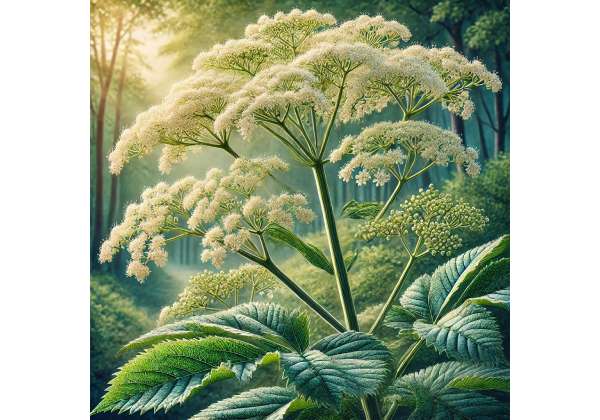
Elderflower, the fragrant cream-white blossom of Sambucus canadensis, has a long place in North American and European herbal practice. It is gentle in character, pleasant in tea, and widely used when a cold is just starting, when the nose feels stuffy, or when the body needs a warming, sweat-promoting herb. Unlike many trend-driven botanicals, elderflower is valued less for a single dramatic effect and more for its balanced profile: flavonoids, phenolic acids, aromatic compounds, and mild diaphoretic and soothing actions.
That combination helps explain why elderflower appears so often in teas, syrups, lozenges, and seasonal support formulas. It is commonly used for upper respiratory discomfort, catarrh, mild sinus pressure, and traditional “fever tea” blends. It also has a quieter reputation as a light diuretic and a pleasant support herb for irritated mucous membranes. Still, elderflower is not a cure-all, and much of its reputation rests on traditional use, monographs, and laboratory data rather than strong modern clinical trials. This guide explains what elderflower contains, what it may realistically help with, how to use it well, and where caution still matters.
Core Points
- Elderflower is most often used for early cold symptoms, nasal congestion, and warming diaphoretic tea blends.
- Its most relevant compounds include flavonoids, phenolic acids, triterpenes, sterols, and small amounts of volatile constituents.
- A common adult infusion range is 2 to 5 g dried flowers per cup, up to 3 times daily, or about 6 to 15 g per day.
- Pregnancy, breastfeeding, and use in children under 12 are best approached cautiously unless a suitable product or clinician guidance is available.
- Leaves, bark, stems, roots, and raw unripe berries should not be treated as interchangeable with the flower.
Table of Contents
- What Is Elderflower
- Key Ingredients and Actions
- What Does Elderflower Help With
- Best Ways to Use Elderflower
- How Much Elderflower Per Day
- Side Effects, Interactions, and Who Should Avoid It
- What Does the Research Show
What Is Elderflower
Elderflower is the blossom of the American elder, Sambucus canadensis, a shrub native to much of North America. It grows in moist soils, along streams, at woodland edges, and in disturbed sunny places, producing broad clusters of tiny white flowers in late spring to summer. These blossoms have a soft floral scent and are the part most often used in teas, cordials, syrups, vinegars, and traditional cold-season formulas.
What makes elderflower different from many stronger medicinal herbs is its tone. It is not usually described as harsh, bitter, or intensely stimulating. Instead, it is considered gently warming, slightly drying, and supportive to the upper respiratory tract. Traditional herbal systems use it to promote light sweating, loosen catarrh, soften the feel of a brewing cold, and ease a heavy, blocked head. It also appears in formulas for seasonal allergy discomfort, especially where watery discharge and sinus irritation are part of the picture.
The flower should be distinguished clearly from the rest of the elder plant. The blossoms are the safest and most commonly used medicinal part for simple home preparations. By contrast, leaves, bark, roots, and raw unripe berries are not used the same way and can contain higher levels of undesirable cyanogenic compounds. That distinction matters because people sometimes assume the whole shrub is equally edible or equally medicinal. It is not.
Fresh elderflowers are often harvested just as the clusters open fully, when aroma is strong but the petals are still bright and clean. They are then used fresh or dried carefully for later tea use. Because the flower clusters are delicate, they are best handled lightly and kept free of thick green stem material. A well-harvested elderflower should smell clean, lightly honeyed, and floral rather than grassy or sour.
From a practical herbal point of view, elderflower sits between food and medicine. It is pleasant enough for kitchen use, yet traditional enough to appear in official herbal monographs. It is also often paired with other seasonal herbs. In older formulas, it is commonly matched with yarrow and mint; in modern blends, it may sit beside herbs such as echinacea for seasonal wellness support. That pairing makes sense because elderflower is rarely used for brute force. Its role is usually to help the body respond more comfortably and more efficiently in the early stages of minor upper respiratory distress.
Key Ingredients and Actions
Elderflower works through a broad mix of plant compounds rather than one famous active ingredient. The most important group is flavonoids. These include rutin, quercetin derivatives, kaempferol compounds, and related flavonols that contribute to antioxidant activity, capillary support, and inflammation-modulating effects. Flavonoids are one reason elderflower is often discussed for irritated mucous membranes, seasonal discomfort, and gentle upper airway support.
Phenolic acids form the next major group. Chlorogenic, caffeic, ferulic, and p-coumaric acids show up often in elderflower chemistry. These compounds help explain the plant’s antioxidant activity and may also contribute to its mild antimicrobial and tissue-calming behavior. In practical terms, they support the traditional view of elderflower as a good herb for “hot and irritated but not deeply depleted” states, especially in the nose, throat, and sinuses.
Triterpenes and sterols are also part of the profile. Though less famous in popular herb writing, they may add to the plant’s anti-inflammatory and membrane-stabilizing effects. Small amounts of volatile aromatic compounds contribute to the flower’s scent and perhaps to some of its soothing respiratory appeal. Elderflower is not an essential-oil herb in the way lavender or thyme is, but its aromatic fraction still shapes the experience of drinking it.
Traditional herb books often describe elderflower with several overlapping actions:
- Diaphoretic, meaning it encourages light sweating
- Mildly decongesting, especially for catarrhal states
- Soothing to upper respiratory mucosa
- Gently diuretic
- Antioxidant and tissue-supportive
These actions fit both the chemistry and the traditional use pattern. If a person is chilly, stuffy, achy, and in the first phase of a common cold, elderflower makes sense. If a person wants a strong antimicrobial hit or a major bronchodilator effect, elderflower is probably too soft on its own.
One useful way to think about elderflower is that it acts more through regulation and comfort than force. It does not feel like a pungent respiratory herb, and it is not a heavy sedative. It is better described as a smart supporting herb that helps the body manage heat, moisture, and mild inflammation. That is one reason it blends well with plants such as chamomile in soothing flavonoid-rich herbal teas, where the goal is gentle support rather than a dramatic medicinal punch.
Its chemistry also explains why preparation matters. A simple infusion pulls out many of the compounds that matter most, especially the more water-friendly flavonoids and phenolic acids. That makes elderflower one of the rare medicinal herbs where a well-made tea is not a compromise. It is often the preferred form.
What Does Elderflower Help With
The strongest traditional use for elderflower is early cold support. When symptoms first begin, especially with nasal stuffiness, mild feverishness, watery catarrh, sore throat, or sinus pressure, elderflower is often used as part of a hot infusion. The aim is not to “kill” the illness directly. The aim is to support sweating, open the upper airways, and help the body move through the early phase more comfortably.
That is why elderflower is often described as best used early rather than late. It tends to fit the first one to three days of a cold better than a later deep chest infection or a prolonged lingering cough. Its effects are also more noticeable when the person is congested and uncomfortable than when symptoms are minimal.
A second common use is nasal and sinus support. Traditional and official herbal use recognize elderflower for nasal congestion and discharge associated with sinusitis and hay fever. In practical use, this means it may be helpful when the nose feels swollen, drainage is irritating, and the head feels heavy. Elderflower is not a replacement for medical care in severe sinus infection, but it can be a sensible supportive herb for uncomplicated upper airway discomfort.
A third benefit is its role in classic fever teas. By encouraging mild perspiration, elderflower may help the body release heat in a more comfortable way. This does not mean it replaces hydration, rest, or appropriate medical evaluation. It means that a warm elderflower tea can be part of a traditional care routine when someone feels chilled, achy, and just a bit feverish with a simple cold.
Other plausible benefits include:
- Mild throat comfort when taken as a warm tea
- Gentle diuretic support for short-term use
- Soft tissue-calming support for irritated mucous membranes
- Antioxidant intake from polyphenol-rich blossoms
- General support in seasonal herbal tea blends
There are also more speculative benefits, such as mild skin support or broader anti-inflammatory effects, but these are less central to how elderflower is actually used. The flower’s reputation is respiratory first, aromatic second, and systemic only after that.
It is helpful to separate elderflower from elderberry here. Elderberry gets most of the modern marketing for immune support, while elderflower has a stronger traditional identity for sweat promotion, upper respiratory comfort, and sinus symptoms. The two belong to the same plant tradition but are not identical tools. Elderflower can also be paired with herbs such as peppermint in cooling respiratory tea blends when a person wants both warmth and a clearer, fresher feel in the head and throat.
The most realistic expectation is not a miracle. Elderflower may help you feel less blocked, less clammy, and more comfortable during a minor upper respiratory illness. That is a modest promise, but it is also the kind of herbal promise that often proves useful in real life.
Best Ways to Use Elderflower
For most people, elderflower works best as an infusion. A properly made tea is simple, effective, and well matched to the herb’s chemistry. Dried flowers are placed in hot water, covered to keep the aromatic components from escaping, and steeped for about 10 to 15 minutes. This is the traditional preparation for colds, sinus discomfort, and light fever support.
Hot tea is especially useful when the goal is to encourage mild sweating. Warmth matters here. A cool elderflower drink can still be pleasant, but the classic herbal use leans toward warm infusions sipped slowly. Some people drink it plain, while others combine it with yarrow, mint, or thyme in more complex blends.
Common elderflower forms include:
- Infusion or tea
Best for early colds, sinus stuffiness, mild fever support, and throat comfort. - Tincture or fluid extract
More concentrated and easier to carry, but usually less comforting than a hot tea during respiratory illness. - Syrup or cordial
Pleasant and accessible, though often more culinary than medicinal unless the product is clearly standardized. - Lozenges and combination products
Practical for travel or sore throat support, but label quality matters. - Steam or aromatic household use
Less evidence-based, but sometimes used for comfort in stuffy indoor environments.
Preparation details can change the result. Elderflower should usually be covered while steeping, because the aromatic fraction is subtle and easily lost. It should also be strained well, since coarse green stem material can add a rougher, grassier taste and is not the part most people want medicinally.
Harvest quality matters too. Fresh blossoms should be gathered on a dry day after dew has lifted. Overwashed flowers lose both pollen and aroma, so many herbalists simply shake off insects and dry the blossoms promptly. If using dried elderflower, store it away from heat, light, and excess moisture. A faded brown flower with almost no fragrance is less likely to give a satisfying tea.
A few practical uses stand out:
- During a simple cold, drink the tea warm 2 to 3 times a day
- For sinus pressure, combine it with hydration and steam from a shower, not from boiling herbal water near the face
- For throat discomfort, sip slowly rather than drinking quickly
- For general use, favor short courses over daily indefinite intake
Elderflower is also often blended with thyme in throat-support and respiratory herbal formulas, especially when a person wants a more aromatic and penetrating tea. Even so, elderflower remains one of the more graceful herbs to use alone. It does not need much help to be pleasant or useful.
How Much Elderflower Per Day
Dosage for elderflower is more defined than for many traditional herbs because official herbal monographs give usable ranges. For adults, the most practical tea dose falls around 2 to 5 g of dried elderflower per cup, taken up to 3 times daily. That works out to roughly 6 to 15 g per day. This is the easiest range for home use because it matches how elderflower is traditionally prepared and how most people actually take it.
Another traditional oral range sometimes given for dried elderflower products is 1.5 to 15 g per day, depending on the form. The lower end makes sense for powders or extracts, while the 6 to 15 g daily range is more relevant for infusion-style use. A simple household measure is about 1 to 2 teaspoons of dried flower per cup, depending on density, though weighing the herb is more accurate.
For tinctures and fluid extracts, the dose depends heavily on the preparation. Traditional liquid ranges often sit around:
- 2 to 5 mL up to 3 times daily for certain liquid extracts
- 10 to 25 mL up to 3 times daily for some weaker tincture-style preparations
Because liquid products vary greatly, the label matters more than the plant name alone.
Timing also matters. Elderflower is usually taken:
- At the first sign of a cold
- During the day when sinus pressure is building
- In the evening as part of a warm bedtime tea
- For short stretches rather than long continuous use
One useful way to approach elderflower dosing is by purpose:
- For mild seasonal support, 1 to 2 cups daily may be enough
- For an active cold, 2 to 3 cups daily is more typical
- For concentrated products, stay within labeled dosing rather than guessing
Duration should also be sensible. If symptoms worsen, last more than about a week, or come with shortness of breath, persistent fever, chest pain, or thick discolored sputum, elderflower should no longer be the main plan. At that point, medical assessment matters more than herbal persistence.
Children are a special case. Some official monographs allow pediatric use in certain age groups, but the simplest home-safety rule is to avoid improvising adult tea doses for young children. Use age-appropriate labeled products or clinician guidance instead. Adults who are pregnant or breastfeeding should also avoid assuming that a culinary cordial equals a medicinally tested product.
The key point is that elderflower has a practical, tea-friendly dose range. It is one of the more approachable herbs to use correctly, provided you keep the course short, the plant part correct, and the reason for use realistic.
Side Effects, Interactions, and Who Should Avoid It
Elderflower is generally regarded as one of the gentler respiratory herbs, but gentle does not mean risk-free. The first safety point is plant-part awareness. The flowers are the part traditionally used in teas and official monographs. Leaves, bark, roots, stems, and raw unripe berries contain more problematic compounds and should not be treated as harmless substitutes.
For the flower itself, the most likely adverse effect is hypersensitivity or allergy. This is uncommon, but people who react to elder or closely related plant materials should stop use if itching, rash, mouth irritation, or unusual respiratory symptoms appear. A second possible issue is stomach upset if very strong tea is taken repeatedly or on an empty stomach.
Because elderflower can act as a mild diaphoretic and mild diuretic, it may not be the best choice for someone who is already dehydrated, fluid-restricted, or taking other agents that strongly increase urination. The interaction evidence here is not extensive, but caution makes sense. If a person is using prescription diuretics, managing kidney disease, or following a strict fluid plan, self-treatment should stay conservative.
People who should generally avoid medicinal use unless advised otherwise include:
- Pregnant adults
- Breastfeeding adults
- Children under 12 when using unsupervised adult-style preparations
- Anyone with a known elder allergy
- People with significant dehydration or fluid restriction
- Those using multiple herbal cold formulas at once without clear dosing
Another safety issue is product quality. Homemade or commercial elderflower items vary widely. A cordial made mainly for flavor is not the same as a medicinal infusion. Likewise, a dried flower product full of thick stems or mixed plant matter is less reliable and may be rougher on the stomach. Good elderflower should smell fresh and floral, not moldy, dusty, or fermented.
Common signs to stop using it include:
- New rash or itching
- Nausea or digestive irritation
- Worsening respiratory symptoms
- Fever that persists or becomes higher
- Any symptoms that suggest something more serious than a simple cold
A final point is worth making clearly: elderflower is a support herb, not a reason to delay care. If nasal congestion becomes severe sinus pain, if a sore throat becomes hard swallowing, or if a simple cold turns into breathlessness or chest symptoms, medical evaluation is the priority.
In practical terms, elderflower has a favorable safety profile when the correct plant part is used, the dose is reasonable, and expectations are modest. Problems tend to come less from the flower itself and more from confusion with other parts of the plant, poor sourcing, or using it too casually in situations that deserve more than home care.
What Does the Research Show
The research on elderflower is encouraging but uneven. There is solid support for its traditional use in official herbal monographs, and modern chemistry studies clearly show that the flowers contain meaningful bioactive compounds. What is still limited is strong human clinical evidence focused on elderflower alone.
The best-supported area is phytochemistry. Recent and recent-adjacent studies confirm that elderflower is rich in flavonoids, phenolic acids, triterpenes, sterols, and related polyphenolic components. These studies also show antioxidant activity and, in some cases, antimicrobial and anti-inflammatory potential in laboratory models. That means the plant’s traditional reputation is chemically plausible rather than purely folkloric.
A second useful layer comes from biological testing of aqueous and other extracts. Some studies show that elderflower extracts can inhibit certain microbes in laboratory settings and demonstrate free-radical scavenging activity. Other work suggests anti-inflammatory behavior, including effects that support its use in irritated upper respiratory states. These findings are helpful, but they are still one step removed from the question most readers care about: will a cup of elderflower tea measurably change how a person feels during a cold?
That is where the evidence becomes thinner. Official bodies such as the European Medicines Agency and Health Canada recognize elderflower mainly through traditional-use frameworks rather than robust modern clinical trial programs. In other words, elderflower has enough longstanding use and plausible supporting data to justify cautious medicinal recognition, but not enough modern trial evidence to claim strongly proven outcomes across the board.
The evidence picture can be summarized like this:
- Strongest support: traditional use for early cold symptoms and upper respiratory comfort
- Good laboratory support: antioxidant, phenolic richness, mild antimicrobial and anti-inflammatory activity
- Moderate practical support: tea and liquid preparations for short-term use
- Weakest area: large, well-controlled human trials focused on elderflower alone
There is also an important species issue. Much modern published work centers on Sambucus nigra, while the article topic here is Sambucus canadensis. These species are closely related in use and chemistry, and that is why medicinal discussions often overlap, but they are not always interchangeable in a strict research sense. The most careful interpretation is that American elderflower likely shares the broad medicinal pattern of elderflower research, while direct species-specific human data remain limited.
So does elderflower work? The fairest answer is yes, probably in the modest way traditional herbalists describe it. It is unlikely to be a dramatic antiviral agent or a stand-alone cure, but it is very plausible as a gentle, well-matched support herb for early colds, nasal congestion, and warm respiratory teas. That may sound modest, but it is also exactly the kind of use that has helped elderflower remain relevant for generations.
References
- From Elderflower to Bioactive Extracts: Phytochemical Characterization and Anti-Inflammatory Activity 2026 (Original Study)
- Elderflowers (Sambuci flos L.): A Potential Source of Health-Promoting Components 2024 (Review)
- Exploring American Elderberry Compounds for Antioxidant, Antiviral, and Antibacterial Properties Through High-Throughput Screening Assays Combined with Untargeted Metabolomics 2024 (Original Study)
- ELDER – SAMBUCUS 2025 (Official Monograph)
- European Union herbal monograph on Sambucus nigra L., flos 2018 (Official Monograph)
Disclaimer
This article is for educational purposes only and is not medical advice. Elderflower is a traditional herbal medicine with useful monograph support and promising laboratory data, but it is not a substitute for diagnosis or treatment of significant illness. Seek medical care for high fever, breathing difficulty, chest symptoms, severe sinus pain, dehydration, or symptoms that persist or worsen. Use extra caution during pregnancy, breastfeeding, and childhood, and do not substitute other elder plant parts for the flower.
If this article was helpful, please share it on Facebook, X, or your preferred platform.