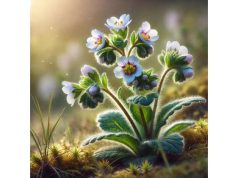
Epilobium, often called fireweed or rosebay willowherb, is a tall flowering plant best known in herbal medicine for urinary and prostate-related use. The species in this article, Epilobium angustifolium, is also listed in newer botanical sources as Chamaenerion angustifolium, a naming detail that matters when comparing studies and product labels. Unlike broad “wellness” herbs that are used for many unrelated goals, epilobium has a more focused reputation. It is most often discussed for lower urinary tract symptoms linked to benign prostatic hyperplasia, along with its anti-inflammatory, astringent, and antioxidant properties.
That narrow focus is useful. It means the strongest questions are practical ones: does it really help urinary symptoms, what compounds make it active, which form has been studied, and how safe is it for longer use? The answers are more nuanced than marketing suggests. Epilobium has a respectable traditional background and some promising human data, especially for prostate-related symptoms, but the clinical evidence is still limited and preparation-specific. Understanding the difference between tea, capsules, and standardized extracts is essential before expecting meaningful results.
Essential Insights
- Epilobium is used mainly for lower urinary tract symptoms and mild prostate-related complaints rather than as a general tonic herb.
- The most plausible benefits are modest support for urinary flow, nighttime urination, and inflammatory irritation, not treatment of serious prostate disease.
- Traditional tea use is often 1.5 to 2 g infused in 250 mL of boiling water twice daily, while one clinical trial used 500 mg of a characterized extract daily.
- People with blood in the urine, painful urination, fever, urinary retention, pregnancy, breastfeeding, or age under 18 should not self-treat with epilobium.
Table of Contents
- What is epilobium
- Which compounds matter most
- What benefits are most plausible
- How is epilobium used
- How much epilobium per day
- Side effects and who should avoid it
- What does the research actually show
What is epilobium
Epilobium in herbal medicine usually refers to willowherb species used for urinary and prostate complaints. The species here, Epilobium angustifolium, is widely known as fireweed. In some modern botanical systems it appears as Chamaenerion angustifolium, which can make labels and research papers look inconsistent even when they are describing the same plant. Common names such as fireweed, rosebay willowherb, and great willowherb add another layer of confusion, so the Latin name on the package matters more than usual.
The medicinal part is the aerial herb, meaning the leafy and flowering upper portions. Historically, European herbal practice used epilobium teas and infusions for prostate irritation, frequent urination, mild lower urinary tract symptoms, and other inflammatory complaints. That traditional use is still the main regulatory foundation in Europe. In other words, epilobium is not famous because of large modern clinical programs. It is famous because of long-standing use, later supported by interesting phytochemistry and a smaller number of human studies.
Its reputation is tied especially to benign prostatic hyperplasia, often shortened to BPH. BPH is a non-cancerous enlargement of the prostate that can cause weak urinary stream, incomplete emptying, dribbling, urgency, and nighttime waking to urinate. That symptom cluster is where epilobium is most often marketed, and it is the only area where the herb has a reasonably coherent traditional and research story. Claims outside that space, such as broad detox, hormone correction, or cancer treatment, go well beyond what the evidence can support.
Epilobium is also a useful example of a plant that sits between folk medicine and modern extract-based supplementation. A simple tea and a standardized capsule are both called epilobium, yet they are not equivalent. Tea reflects the traditional model. Extracts reflect the modern clinical model. If a person reads about benefits in one context and buys a completely different form, disappointment is almost built in.
Another important point is that epilobium is not a “cover every urinary symptom” herb. Urinary discomfort can come from infection, stones, medication side effects, prostate disease, bladder irritation, or neurologic problems. The classic epilobium use case is milder chronic lower urinary symptoms after more serious causes have been ruled out. That is why so many traditional monographs place medical evaluation up front rather than treating it as an afterthought. Used with that level of precision, epilobium is more interesting and more credible than its marketing language often suggests.
Which compounds matter most
Epilobium’s chemistry explains why the herb continues to attract attention even though the human evidence remains modest. The most important group of compounds is its polyphenols, especially ellagitannins. Among these, oenothein B is the standout. It is the best-known marker compound in Epilobium angustifolium and is often treated as the plant’s signature active constituent in prostate and inflammation research.
Oenothein B is not the whole story, though. Epilobium also contains oenothein A, tellimagrandins, gallic acid derivatives, ellagic acid derivatives, flavonoids, phenolic acids, and smaller amounts of triterpenes, sterols, and other secondary metabolites. Some recent phytochemical profiling papers describe more than 100 identified compounds in a single extract and more than 250 secondary metabolites reported for the species overall. That matters because herbal effects rarely come from one molecule acting alone. In epilobium, the likely effect is a layered one: tannin-rich astringency, anti-inflammatory signaling, antioxidant activity, and possible influence on androgen-related pathways.
The compounds most worth knowing are these:
- Oenothein B: a macrocyclic ellagitannin often used as a quality marker and frequently linked with anti-inflammatory, antioxidant, and anti-proliferative activity in laboratory studies.
- Quercetin glycosides: flavonoids that may contribute antioxidant and enzyme-related effects.
- Phenolic acids: including gallic and ellagic acid derivatives, which help explain the herb’s astringent and polyphenol-rich character.
- Triterpenes and sterols: present in smaller amounts but still relevant in the broader pharmacologic picture.
One reason epilobium is often compared with other polyphenol-rich plants is that its chemistry is dense rather than flashy. It is not an essential-oil herb, not a stimulant, and not a mucilage herb. It behaves more like a tannin- and flavonoid-heavy botanical with a distinct ellagitannin signature. Readers interested in how polyphenol-rich herbs are often assessed can compare that broader pattern with this green tea polyphenol overview, though epilobium’s ellagitannins are very different from green tea catechins.
There is also a practical lesson in the chemistry. Processing changes the final profile. Tea, powder, tincture, and concentrated extract do not deliver the same amount of oenothein B or related compounds. Some analyses suggest the upper plant parts and flowers can be especially rich in polyphenols, while fermentation and handling can reduce some key constituents. That means choosing a reliable preparation is part of choosing the herb itself.
In plain terms, epilobium’s medicinal profile comes from being a concentrated polyphenol plant with a strong ellagitannin identity. That chemistry is biologically plausible for inflammation and lower urinary tract support. What it does not do is guarantee large clinical effects. The compounds make the herb worth studying, but they do not excuse exaggerated claims.
What benefits are most plausible
The most plausible benefits of epilobium are not broad or dramatic. They cluster around lower urinary tract symptoms, prostate-related discomfort, and inflammatory support. That narrower benefit profile is actually a strength, because it aligns with both traditional use and the best modern human data.
For many readers, the first relevant question is whether epilobium may help symptoms linked to benign prostatic hyperplasia. Here the answer is cautious but not dismissive. Some evidence suggests a characterized extract may improve post-void residual urine, nighttime urination, and symptom scores in men with BPH. That is meaningful, especially for people whose main complaint is poor emptying or waking repeatedly at night. Still, epilobium should be seen as a symptom-support herb, not a proven shrink-the-prostate solution.
A second plausible benefit is anti-inflammatory support within the urinary and prostate context. This is where lab and mechanistic studies are helpful. Oenothein B and related polyphenols show anti-inflammatory, antioxidant, and anti-proliferative effects in experimental work. Those properties make epilobium a reasonable fit for irritated, inflamed, or congested tissues. What remains uncertain is how strongly those mechanisms translate into patient-important outcomes in day-to-day care.
A realistic benefits list looks like this:
- Mild improvement in lower urinary tract symptoms: especially frequency, incomplete emptying, and nocturia in selected people.
- Support for inflammatory discomfort: mainly as a plausible mechanism rather than a proven stand-alone treatment effect.
- Adjunct use in prostate-support formulas: especially when combined with more established prostate herbs.
That last point matters because epilobium is often used beside rather than instead of other botanicals. It frequently appears in products with nettle root or pygeum, and readers comparing urinary-support options often also look at saw palmetto for prostate symptoms. Compared with saw palmetto, epilobium has a smaller clinical evidence base but an interesting polyphenol profile and a more traditional tea identity.
What is less plausible? Strong claims for cancer treatment, major hormone modulation, detoxification, or broad kidney cleansing. Some of those ideas grow from the herb’s historical reputation, but modern evidence does not justify presenting them as established benefits. The same caution applies to skin, gut, or immune claims. There are preclinical hints in several of those areas, yet they remain far from proven clinical use.
A good way to frame epilobium is this: it may help some people with mild urinary and prostate-related symptoms, especially when the goal is support rather than replacement therapy. It is not a rapid reliever, not an emergency remedy, and not a substitute for evaluating blood in the urine, retention, or new urinary pain. Used that way, its benefits look modest but credible. Used as an all-purpose cure, they quickly become overstated.
How is epilobium used
Epilobium is used in two main ways: as a traditional herbal tea and as a modern extract. Those two paths overlap, but they should not be treated as identical. The tea reflects the classic European model of willowherb use. The extract reflects the newer supplement model, where manufacturers aim for a more reproducible amount of active compounds such as oenothein B.
Traditional use centers on the infusion. The herb is steeped in hot water and taken regularly, often for a sustained period rather than just for a few days. This style suits a plant used for ongoing lower urinary tract symptoms rather than acute relief. It also fits the astringent, tannin-rich nature of the herb. Many people describe the tea as earthy, slightly bitter, and drying rather than pleasant and aromatic.
Modern products include:
- Capsules of dried herb
- Standardized extracts
- Tinctures
- Combination prostate-support formulas
- Less often, powders or functional teas blended with other botanicals
The key practical issue is matching the product to the goal. A person choosing epilobium for traditional urinary support may reasonably use tea. A person trying to mirror the main human trial would need a characterized extract, not a random bulk herb. This is one of the biggest mistakes people make with epilobium: reading about one form and buying another.
Combination formulas are common because epilobium is often paired with plants that target similar symptom patterns. A frequent example is stinging nettle, which is also used in urinary and prostate-support products. These combinations may be sensible in practice, but they complicate the evidence. Once several herbs are in the same capsule, it becomes harder to know which one is actually helping.
A practical approach to use looks like this:
- Choose the form that matches your purpose.
- Use a consistent product rather than changing brands every week.
- Give it a fair trial rather than expecting overnight results.
- Reassess if symptoms are unchanged or worsening.
- Treat urinary red flags as medical issues, not herbal puzzles.
Timing is flexible, but many people take epilobium with meals or split doses morning and evening. Tea is often taken twice daily. Extracts follow their own label instructions. Because urinary symptoms can change slowly, the herb makes more sense when used regularly for weeks or months than when taken only on difficult days.
One more insight is easy to miss: epilobium is a better fit for “steady support” than for symptom firefighting. It is not like peppermint for immediate spasm relief or a decongestant for quick nasal opening. Its traditional role is quieter. That can make it seem underwhelming, but it also explains why long-term consistency matters more than one large dose.
How much epilobium per day
Dosing epilobium depends heavily on the form. The clearest traditional guidance comes from the European herbal monograph, which describes the herb as a tea rather than a standardized capsule. In that framework, the adult dose is 1.5 to 2.0 g of the comminuted herb infused in 250 mL of boiling water, taken twice daily. That is the most concrete traditional dose and the safest place to begin discussion.
Modern extract dosing is less uniform. The best-known human monotherapy trial used 500 mg daily of a chemically characterized Epilobium angustifolium extract containing a high level of oenothein B, taken for 6 months. That dose belongs to that specific extract, not to epilobium products in general. It should not be copied across unrelated tinctures, powders, or capsules without clear standardization.
A practical dosing guide looks like this:
- Traditional infusion: 1.5 to 2 g of dried herb in 250 mL boiling water, twice daily.
- Characterized extract: 500 mg daily in the main BPH trial.
- Combination products: follow the label carefully because epilobium may be only one component.
There are several important variables behind those numbers. First, tea and extract are not equivalent. Second, not every label states oenothein B content or even the drug-to-extract ratio. Third, urinary-support herbs are often taken for longer stretches, so tolerability and consistency matter more than aggressive starting doses.
Duration also deserves more attention than it usually gets. Epilobium is not typically used as a two-day intervention. Traditional sources allow long-term tea use, but they also emphasize medical evaluation if symptoms persist or worsen. The main extract trial ran for six months, which shows that research interest is not limited to very short courses. Still, long-term use only makes sense when the symptom pattern is stable and more serious disease has been excluded.
There is no relevant traditional use for children and adolescents under 18 in the European monograph, so adult self-dosing should not be casually adapted downward for younger users. Pregnancy and breastfeeding are also poor times for experimentation with concentrated urinary-support herbs.
For many adults, the most sensible plan is simple: choose either the traditional tea model or a clearly characterized extract, stay within the studied or monographed range, and evaluate whether the herb is doing anything useful after several weeks. If the answer is no, taking more is not automatically smarter. With epilobium, quality of preparation usually matters more than chasing a bigger number on the label.
Side effects and who should avoid it
Epilobium is generally considered a cautious, fairly gentle herb when used in the traditional way, but gentle does not mean consequence-free. Its safety profile is shaped as much by what it is used for as by what it contains. A person reaching for epilobium usually has urinary symptoms, and those symptoms can sometimes point to conditions that should not be self-treated.
Reported side effects are limited, which sounds reassuring but also reflects the fact that formal safety research is not extensive. Traditional monographs list no known undesirable effects for the herbal tea preparation, while clinical trials of a characterized extract did not report treatment-related adverse effects and did not show liver or kidney toxicity over the study period. A more recent combination study reported only mild gastrointestinal complaints in a small number of users. Taken together, this suggests epilobium is probably well tolerated in appropriate adults, but the database is still smaller than for mainstream medications.
The bigger safety questions are about context:
- Do not self-treat red-flag urinary symptoms.
- Do not assume frequent urination is automatically a prostate issue.
- Do not use it to delay evaluation for possible infection, stones, or malignancy.
People who should avoid or pause self-treatment include:
- Those with blood in the urine
- Those with painful urination
- Those with urinary retention
- Those with fever or spasms alongside urinary symptoms
- Pregnant or breastfeeding people
- Children and adolescents under 18
- Anyone with known hypersensitivity to the herb
The monograph-based safety message is especially important: worsening symptoms, fever, blood in the urine, painful urination, or retention are signals to contact a doctor. That is a stronger and more useful safety warning than the usual generic “talk to your healthcare provider” line because it tells you exactly what should change your plan.
Drug interactions are not well documented, and official sources report none. Even so, that does not prove they cannot occur. It only means meaningful interaction data are sparse. A cautious person using alpha blockers, 5-alpha-reductase inhibitors, or several other prostate-support supplements should still review the full regimen.
One final practical safety point is that epilobium should not be romanticized because it is a “tea herb.” Its traditional status can make it seem automatically harmless. In reality, the herb itself may be gentle, but the symptom pattern it is used for can be clinically significant. That is why the smartest safety habit is not fear of the herb. It is respect for the diagnosis.
What does the research actually show
The research on Epilobium angustifolium is promising, but still thinner than many supplement pages imply. The best summary is that epilobium has a strong traditional-use identity, a biologically interesting chemical profile, one notable placebo-controlled monotherapy trial in BPH, and a wider ring of preclinical and combination-formula studies. That is enough to justify interest, but not enough to claim settled efficacy.
A very important regulatory clue comes from Europe: willowherb is recognized as a traditional herbal medicinal product, not as a herb with well-established medicinal use supported by a robust clinical dossier. That distinction is easy to overlook, yet it captures the evidence honestly. The plant has historical continuity and plausible pharmacology, but the human data are still limited.
The main monotherapy clinical trial is encouraging. A six-month randomized, double-blind, placebo-controlled study in men with BPH used 500 mg daily of a characterized extract high in oenothein B. The treated group showed improvement in post-void residual urine, nocturia, and symptom scores, with no treatment-related adverse effects reported. For a single-herb study, that is valuable.
Still, several limits remain:
- It is one extract, not every epilobium product.
- It is one main trial, not a large body of replicated RCTs.
- It focuses on symptoms and related measures, not long-term disease outcomes.
- It does not prove that tea, tincture, and capsules all perform the same way.
Combination studies add another layer. Products combining epilobium with pygeum, nettle, or alpha-blocker therapy have shown encouraging symptom changes, but those results cannot isolate epilobium’s specific contribution. Reviews on natural approaches to BPH usually mention epilobium as promising but not definitive.
The preclinical literature is broader than the human literature. It supports anti-inflammatory, antioxidant, anti-proliferative, and possible antiandrogen-related mechanisms, especially around oenothein B. That helps explain why the herb remains relevant, but it should not be mistaken for clinical proof. Many herbs look impressive in cell systems and still deliver only modest real-world benefit.
So what is the fair conclusion? Epilobium is credible enough to discuss seriously, especially for mild lower urinary tract symptoms after serious causes have been ruled out. It has a better case than many internet-famous herbs because there is at least a traditional monograph, a relevant randomized trial, and coherent phytochemistry behind it. At the same time, it is not a first-line medical treatment, not a replacement for evaluation of urinary red flags, and not a herb whose benefits can be generalized far beyond its specific traditional niche. That middle ground is where the herb looks strongest.
References
- European Union herbal monograph on Epilobium angustifolium L. and/or Epilobium parviflorum Schreb., herba 2015 (Monograph). ([European Medicines Agency (EMA)][1])
- Epilobium angustifolium L. extract with high content in oenothein B on benign prostatic hyperplasia: A monocentric, randomized, double-blind, placebo-controlled clinical trial 2021 (RCT). ([PubMed][2])
- Treatment of Benign Prostatic Hyperplasia by Natural Drugs 2021 (Review). ([PMC][3])
- Exploring the Phytochemical Profile and Biological Insights of Epilobium angustifolium L. Herb 2025 (Open Access Research Article). ([MDPI][4])
- Phytochemical Insights and Therapeutic Potential of Chamaenerion angustifolium and Chamaenerion latifolium 2025 (Review). ([PMC][5])
Disclaimer
This article is for educational purposes only and is not medical advice, diagnosis, or treatment. Urinary symptoms can have several causes, including infection, stones, medication effects, neurologic problems, and prostate disease. Do not use epilobium to self-manage blood in the urine, painful urination, urinary retention, fever, or rapidly worsening symptoms. If you have ongoing urinary complaints, prostate concerns, or take prescription medicines for urinary or prostate conditions, speak with a qualified healthcare professional before using this herb.
Share this article on Facebook, X, or your preferred platform if it helped you sort out what epilobium can and cannot realistically do.