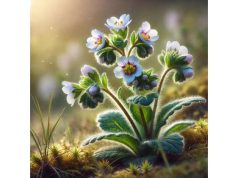
Erythronium americanum, better known as trout lily, yellow trout lily, dogtooth violet, or adder’s tongue, is a small North American woodland herb with a much larger folk reputation than its modern research profile. It appears in traditional records as a plant used for fever, stubborn wounds, swellings, and, in some communities, fertility regulation. That history makes it intriguing, but it also requires a careful reading. Unlike well-studied herbal medicines, trout lily has very limited modern clinical evidence, no standardized supplement tradition, and a safety profile shaped as much by caution as by benefit.
What makes this herb notable today is the contrast between old use and sparse modern proof. The plant contains a reactive lactone identified decades ago, and related dogtooth violet chemistry helps explain why skin irritation and gastrointestinal upset remain real concerns. In practice, erythronium is best understood as a historically important medicinal herb with narrow, cautious modern use. For most readers, the safest value of this plant lies in informed respect: knowing what it has been used for, what it may do, and where the limits begin.
Quick Overview
- Traditional use centers on fever, minor wounds, and localized swelling rather than broad daily wellness use.
- The strongest modern takeaway is caution: fresh plant material can irritate the skin and larger internal amounts may trigger vomiting.
- No validated oral dose exists; historical texts note that about 25 grains of fresh root or 40 grains of recently dried root can act as an emetic.
- Topical use has a stronger traditional case than unsupervised internal use.
- People who are pregnant, trying to conceive, breastfeeding, or sensitive to bulb plants should avoid self-treatment with this herb.
Table of Contents
- What is erythronium and what is in it
- Traditional uses and realistic benefits
- Does erythronium help fever and wounds
- How is trout lily used
- How much erythronium to use
- Side effects, interactions, and who should avoid it
- What the evidence really says
What is erythronium and what is in it
Erythronium americanum is a spring ephemeral, which means it rises, flowers, and fades before the forest canopy fully closes. It is native to eastern North America and is easy to recognize once you know the pattern: two mottled leaves that look a little like trout skin, a single nodding yellow flower on fertile plants, and a small underground corm that stores energy for the next season. That quiet life cycle matters because it shapes both the plant’s traditional harvesting pattern and its medicinal reputation. This is not a bulky hedge herb gathered in armfuls. It is a small woodland plant that has historically been used in small, careful amounts.
Common names can create confusion. “Dogtooth violet” sounds like a violet, but the plant is actually in the lily family tradition rather than the violet group. “Adder’s tongue” is another old name, though that label is also used for unrelated plants in other regions. For clear identification, the botanical name matters.
From a medicinal perspective, the most important point is that trout lily is not rich in the kind of broadly studied phytochemical profile seen in herbs such as turmeric, ginger, or ginkgo. Modern literature on its chemistry is thin. The standout documented constituent is a reactive lactone, alpha-methylene butyrolactone, identified from Erythronium americanum in older chemical work. That is significant because this class of compound helps explain two recurring themes around the herb: possible antimicrobial or biologically active behavior on one hand, and irritation risk on the other.
In practical terms, the plant seems to have been valued less for a long list of named compounds and more for its observed actions in traditional use. Historical and ethnobotanical descriptions emphasize that fresh material behaves differently from dried material. Fresh roots and leaves were sometimes described as emetic, meaning they could provoke vomiting, while external use focused on soothing or drawing actions when the plant was bruised or prepared into a poultice.
This creates a useful modern framework:
- Botanical identity matters. Trout lily is a specific woodland herb, not a general name for every erythronium species.
- Fresh and dried forms are not equivalent. Fresh material appears more reactive and more likely to irritate.
- The corm is medicinally potent but also riskier. Traditional texts often warn through action rather than through modern toxicology language.
- The herb is delicate in both ecology and use. Overharvesting wild stands is a poor idea, especially because colonies can take years to mature and only a fraction of plants flower in a given season.
For readers interested in herbs as living organisms rather than capsules, erythronium is a good reminder that medicinal value does not always come from a heavily mapped phytochemical profile. Sometimes it comes from a limited but persistent traditional pattern that deserves both curiosity and restraint.
Traditional uses and realistic benefits
The traditional uses of Erythronium americanum are specific enough to be meaningful but narrow enough to keep expectations grounded. Ethnobotanical records point most consistently to three practical themes: fever relief, wound care, and treatment of swellings or inflamed tissue. Some communities also recorded fertility-regulating use, especially as a plant to avoid conception, which makes the herb medically relevant even where evidence is thin. That last point is especially important because a plant does not need strong modern proof to deserve pregnancy-related caution.
When people search for “health benefits,” they often expect a modern supplement-style list: antioxidant support, immune support, detox support, and so on. Trout lily does not fit that template well. Its realistic benefits are better described as traditional actions rather than proven all-purpose health outcomes.
The benefits that have the best historical footing are:
- Topical support for difficult wounds: warmed or crushed leaves were used in folk practice on wounds that were slow to heal
- Use in fever remedies: root-based infusions appear in traditional reports for fever reduction
- Local swelling and tissue irritation: roots or fresh plant material were sometimes applied to swollen areas
- Possible reproductive effects: historical fertility-regulating use suggests caution, not a safe modern contraceptive strategy
These uses make sense when viewed through older herbal logic. A woodland spring plant that emerges early, feels moist and soft when fresh, and can provoke strong bodily reactions would naturally have been placed in the category of “active” medicine rather than gentle nourishment. That is very different from an herb you would casually add to a daily tea blend.
There is also an important distinction between benefit and appropriateness. A plant may have been used with purpose and still not be the best modern choice. For example, a fever herb with emetic potential is not automatically a good home remedy today, especially when hydration, diagnosis, and safer supportive care matter more. The same is true for wound use. Historically meaningful does not always mean clinically preferable. In many cases, a more established topical herb such as plantain for wound-focused skin support offers a clearer safety and use profile.
Still, trout lily’s traditional record should not be dismissed. Repeated use for the same kinds of problems across time usually tells us something. It may reflect mild anti-inflammatory action, a drawing or irritating effect that changes local circulation, or simply careful observation passed through generations. What it does not tell us is dose precision, long-term safety, or superiority over modern care.
A practical reader should come away with a balanced view. Erythronium has genuine historical medicinal significance. Its most plausible traditional benefits involve fever, wounds, and swellings. But those benefits are not backed by the kind of modern clinical evidence that would justify calling it a dependable self-care herb for everyday use. It is better approached as a regional medicinal plant with a narrow, historically interesting role, not as a broad-spectrum herbal staple.
Does erythronium help fever and wounds
This is the most practical question, and it is where trout lily sounds strongest in traditional accounts. The problem is that tradition and proof are not the same thing. If we separate the two carefully, the picture becomes clearer.
For fever, trout lily has a real historical use pattern. Roots were prepared as infusions for fever in some Native American traditions, and that use appears consistently enough to be treated seriously as ethnobotanical evidence. What we do not have is modern human trial data showing that Erythronium americanum reliably lowers body temperature, shortens illness, or compares well with established antipyretic herbs or medications. So the most honest answer is this: it was used for fever, but it is not proven as a modern fever treatment.
For wounds, the case is somewhat stronger in terms of practical plausibility. Crushed or warmed leaves were applied to wounds that would not heal, and folk herbal logic often reserved fresh leaf applications for herbs that were thought to soften tissue, draw out irritation, or encourage surface repair. That is a credible traditional pattern, especially for minor external problems. But again, modern evidence is lacking. There are no solid human wound-healing trials that let us estimate effect size, compare it with standard dressings, or define who benefits most.
For swellings, the story is similar. Historical reports mention poultices and local applications for swellings or inflamed areas. This is believable, especially for a plant with reactive fresh chemistry, but it also cuts both ways. An herb that stimulates the skin can sometimes be interpreted as “working” when it is actually just irritating the area.
That is why realistic interpretation matters. Trout lily may have helped in at least three ways:
- by creating a mild local stimulant effect on the skin
- by providing moisture and compression when applied as a fresh poultice
- by serving as part of a broader healing ritual that included rest, warmth, and observation
Those are not trivial factors. Many older topical remedies worked through a combination of chemistry, physical application, and context. But they do not prove a strong pharmacologic effect on their own.
Modern readers should also ask a second question: even if it helps a little, is it still the best option? For fever, a more established herb such as white willow for fever and pain traditions has a much better understood place in herbal history. For wounds, basic cleaning, bandaging, and monitoring for infection remain far more important than finding a rare woodland poultice.
So does erythronium help fever and wounds? Possibly, in the limited sense that traditional use suggests topical and fever-related value. But the outcome is uncertain, the preparation matters, and the safety margin is not generous enough to make it a casual modern remedy. For minor surface use, the historical logic is reasonable. For internal fever treatment, caution is the better instinct.
How is trout lily used
Trout lily has been used in several ways, but almost all of them come from traditional or historical practice rather than modern standardized herbal products. You are unlikely to find it sold as a mainstream commercial supplement, and that is part of the point. This herb remains closer to folk medicine and local plant knowledge than to today’s capsule market.
Traditional preparations fall into a few broad categories.
Leaf juice or leaf poultice is the most recognizable topical form. Fresh leaves were warmed, crushed, or bruised and then placed over a wound or irritated area. In practical terms, that creates a moist botanical dressing. This is the use most people can understand intuitively, and it is also the use that tends to make the most sense in a cautious herbal framework.
Root or corm infusion appears in fever traditions. This is the more controversial use because it moves from external to internal treatment. Once the plant is taken by mouth, the margin for dosing errors gets narrower and the risks become more relevant.
Fresh-plant preparations show up in older herbal texts for localized swellings, ulcers, or “scrofulous” conditions, a historical term often used for swollen glands or chronic neck lesions. These descriptions are important historically, but they do not translate neatly into modern self-treatment categories.
A modern use framework should keep two ideas front and center:
- External use is more defensible than internal experimentation.
- Wildcrafting is a poor default choice for this species.
Because trout lily is a spring ephemeral that often forms slow, long-lived colonies, harvesting corms is ecologically costly. Removing the underground storage organ kills the plant and can damage a colony that took years to establish. Ethical herbal practice matters here. A medicine with fragile habitat value should not be treated like an abundant weed.
If someone were studying historical methods rather than self-medicating, the most relevant forms to understand would be:
- fresh leaf application for minor topical problems
- cautious infusion traditions tied to fever
- poultice use for swellings
- limited ceremonial or reproductive use in specific cultural contexts
That last category deserves special respect. It should not be stripped out of context and repackaged as a lifestyle herb.
There is also a practical lesson in comparison. If your goal is skin calming or wound support, herbs such as calendula for skin repair and soothing care are easier to source, easier to dose, and far better understood. Trout lily is not useless, but it is often not the most practical choice.
In modern terms, the herb is best approached as a plant of study, conservation, and very cautious traditional application. It is not a kitchen-counter herb, not a daily tonic, and not a supplement to improvise with just because it flowers early and looks gentle. Its appearance is delicate, but its medicinal profile is more forceful than it first seems.
How much erythronium to use
This is the hardest section to write with precision because modern standardized dosing does not really exist for Erythronium americanum. There are no widely accepted monographs, no clinical dosing schedules, and no clear consumer-standard extracts. That means the most responsible answer is not a neat capsule range in milligrams. It is a warning against false confidence.
Historically, older herbal texts sometimes described action thresholds rather than safe therapeutic ranges. One of the clearest examples is the note that roughly 25 grains of fresh root or 40 grains of recently dried root could act as an emetic. That is useful information, but it is not a recommendation. It tells us where the plant starts behaving strongly enough to make vomiting likely. In modern safety terms, that is a reason to be conservative, not adventurous.
A sensible dosing hierarchy looks like this:
- Best-supported modern position: there is no validated oral dose for self-treatment
- Most cautious traditional approach: external use only, especially for minor, localized purposes
- Least appropriate approach: unmeasured fresh internal use from wild-harvested material
If someone insists on discussing preparation rather than dosage, the important variables are these:
- Fresh versus dried material. Fresh plant parts appear more reactive.
- Leaf versus root or corm. Underground parts are traditionally treated as stronger.
- Internal versus external use. Oral use raises the risk profile sharply.
- Body sensitivity. People vary widely in how they react to emetic or irritating herbs.
For practical readers, that means dosage advice becomes a decision tree rather than a number:
- For topical interest, do not apply to broken, deep, infected, or heavily inflamed skin without guidance.
- For internal interest, pause there. Lack of standardization is itself a dosing warning.
- For historical study, treat old grain-based amounts as markers of pharmacologic activity, not as a self-care template.
Timing and duration are also undefined. There is no reliable evidence supporting daily long-term use, cycle-based use, or preventive use. This is not a tonic herb with an established “take it for eight weeks” pattern. If it is used at all in a traditional framework, the use tends to be situational and brief.
The deeper lesson is important. When an herb has strong folk history but weak modern dosing data, the safest course is usually to lower ambition. Learn the plant, understand its role, and resist the urge to convert every historical remedy into a modern protocol. Trout lily is one of those herbs where the absence of a polished dosing guideline is not a gap to fill casually. It is part of the plant’s message.
Side effects, interactions, and who should avoid it
Safety deserves more emphasis with trout lily than benefit does. The plant’s traditional uses are interesting, but its side-effect profile is what should shape modern decisions. Several cautions recur across older herbal descriptions and modern discussions of dogtooth violet chemistry.
The first is emesis, or vomiting. Historical sources describe the fresh root and fresh leaves as capable of causing emetic effects, especially as dose increases. That is not a minor detail. It means the plant can move quickly from “remedy” to “problem,” particularly when taken internally without a measured preparation.
The second is skin irritation. Dogtooth violet discussions in dermatology and plant-allergy literature point to tulipalin-type reactivity as a relevant issue for related bulb plants and for Erythronium labeling in contact dermatitis contexts. In real life, that means some people can develop redness, soreness, fissuring, or dermatitis after handling fresh plant material, especially corms or repeated exposures.
Possible side effects include:
- nausea
- vomiting
- stomach upset
- burning or irritation in the mouth
- local rash or dermatitis
- increased irritation when applied to already damaged skin
Because the modern evidence base is so small, interaction data are largely theoretical. Still, cautious readers should think in terms of risk patterns rather than formal interaction lists.
Potential concerns include:
- Pregnancy and fertility: historical use as a fertility-regulating plant is enough reason to avoid it during pregnancy, while trying to conceive, and during breastfeeding
- Sensitive skin or plant allergies: if you react to bulb plants or have a history of contact dermatitis, handling fresh material may be a poor choice
- Gastrointestinal fragility: people prone to nausea, gastritis, reflux, or vomiting should avoid internal experimentation
- Children: strong or poorly standardized herbs do not belong in casual pediatric use
- Chronic illness or polypharmacy: when the evidence is thin, the safety margin becomes harder to judge
Who should avoid it outright unless supervised by a qualified clinician or expert herbal practitioner?
- pregnant adults
- adults trying to conceive
- breastfeeding adults
- children
- people with known contact allergies to related ornamental bulbs
- people with active stomach irritation or eating-disorder history
- anyone considering it as a contraceptive substitute
That last point deserves clarity. Historical fertility use is not the same as reliable contraception. It should be interpreted as a safety warning, not as a natural family-planning recommendation.
There is also a practical safety comparison worth making. If someone wants a soothing herb for irritated tissues, a gentler option such as marshmallow for mucosal and tissue soothing is usually easier to justify than a reactive woodland bulb herb with limited data.
Stop use and seek medical advice if you develop persistent vomiting, severe abdominal pain, mouth burning, blistering skin reaction, or worsening wound irritation after topical contact. The plant’s modest traditional value is not worth pushing through clear adverse reactions.
What the evidence really says
The evidence for Erythronium americanum is best described as ethnobotanical, historical, and chemically suggestive rather than clinically proven. That summary may sound restrained, but it is the most useful way to understand the herb.
What we do have is a recognizable pattern:
- documented traditional use for fever, wounds, swellings, and fertility-related purposes
- older chemistry identifying a reactive lactone from the plant
- modern safety discussions that support caution around skin irritation and plant reactivity
- very little direct human clinical research on modern therapeutic outcomes
That matters because it changes how the herb should be discussed. Trout lily is not one of those plants where a modern article can honestly list “research-backed benefits” across half a dozen conditions. The literature simply does not support that kind of claim.
The strongest part of the evidence is the consistency of traditional use. Repeated records for fever and nonhealing wounds suggest the plant was not random folklore. People used it for defined problems. The second strongest part is the chemical clue. A reactive lactone in a medicinal plant can plausibly contribute to biological activity, even if the exact clinical meaning remains unclear. The weakest part is the piece most consumers usually want: modern human proof.
Several limitations stand out:
- There are no strong modern randomized human trials establishing benefit for fever, wounds, or swelling.
- There is no standardized commercial dosing tradition to guide safe use.
- Traditional reproductive use raises safety questions that outpace the available science.
- Much of the literature around the plant is botanical or ecological rather than therapeutic.
That does not make the herb meaningless. It simply places it in a different category from better-studied botanicals. Trout lily is important as a regional medicinal plant, a cultural record, and a case study in why traditional knowledge deserves both respect and careful interpretation.
A fair bottom line looks like this:
- Most credible benefit area: minor external traditional use and ethnobotanical significance
- Most important caution area: internal use, reproductive safety, and skin reactivity
- Most accurate research statement: promising as a historical medicine, underdeveloped as a modern evidence-based herbal treatment
For most readers, the best use of this information is not to start taking erythronium. It is to understand how an herb can be real, active, culturally meaningful, and still poorly suited to casual modern self-treatment. That is not a failure of the plant. It is an honest reading of the evidence.
References
- Native Plants of North Georgia: A Photo Guide for Plant Enthusiasts 2025.
- North American Fertility–Regulating Botanicals: a Review 2022 (Review).
- alpha-Methylene butyrolactone from Erythronium americanum 1946.
- Erythronium americanum — American trout-lily n.d.
- Dogtooth violet n.d.
Disclaimer
This article is for educational purposes only and is not a substitute for medical advice, diagnosis, or treatment. Erythronium americanum has a limited modern evidence base, no standardized oral dosing protocol, and meaningful safety concerns related to vomiting, skin irritation, and possible reproductive risk. Do not use it as a substitute for contraception, wound care, fever evaluation, or professional treatment. Consult a qualified healthcare professional before using any wild or traditionally medicinal plant, especially during pregnancy, while trying to conceive, during breastfeeding, or if you have chronic medical conditions.
If this article helped you, please share it on Facebook, X, or any other platform you prefer.