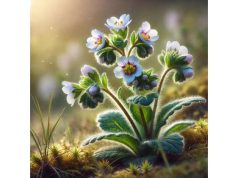
Eutrochium purpureum, better known in herbal medicine as gravel root or sweet Joe-Pye weed, is a tall North American plant with a long history of traditional use for the urinary tract. Older herb books usually place it under the former botanical name Eupatorium purpureum, so modern readers often meet it through two names at once. The root and rhizome are the main medicinal parts, prized historically for easing urinary discomfort, encouraging urine flow, and supporting the body during “gravel,” a traditional term that referred to small urinary stones or sediment.
What makes Eutrochium interesting today is the contrast between strong traditional reputation and limited modern clinical proof. Laboratory work suggests anti-inflammatory activity and identifies compounds such as cistifolin, euparin, and euparone, while newer chemical studies also show aromatic compounds in the aerial parts. Yet this is not a well-standardized mainstream herb, and safety concerns, especially around possible pyrrolizidine alkaloids, call for restraint. Used thoughtfully, Eutrochium is best approached as a niche, short-term herbal remedy rather than a general wellness supplement.
Quick Facts
- Eutrochium is used mainly as a traditional urinary herb for bladder irritation, urinary “gravel,” and short-term fluid movement.
- Its most credible modern support is preclinical anti-inflammatory research rather than large human trials.
- A cautious traditional decoction often starts at 1 to 2 g dried root per cup, taken 1 to 3 times daily for short-term use.
- Long-term internal use is not a good fit because safety data are limited and pyrrolizidine alkaloid concerns remain.
- People who are pregnant, breastfeeding, have liver disease, or are treating kidney pain on their own should avoid self-directed use.
Table of Contents
- What is Eutrochium
- Key ingredients and medicinal properties
- Does Eutrochium help the urinary tract
- Other traditional uses and how to use it
- How much Eutrochium per day
- Side effects, interactions, and who should avoid it
- What the evidence really says
What is Eutrochium
Eutrochium purpureum is a perennial flowering plant in the daisy family, Asteraceae. It is native to eastern and central North America and grows best in moist meadows, woodland edges, and streamside habitats. In the garden, it is often admired for its tall purple-pink flower clusters and its value to pollinators. In herbal medicine, however, the interest is not mainly in the flowers. The most commonly used medicinal part is the root and rhizome, which is why the old herbal name gravel root became so persistent.
That common name tells you a lot about its traditional purpose. “Gravel” was an older term for urinary sediment, painful urination, or the small stone-like material associated with kidney and bladder complaints. Traditional herbalists used Eutrochium to increase urine output, reduce irritation in the urinary tract, and support people with discomfort that today might be described more carefully as mild urinary inflammation or stone-related irritation. It was also used in folk practice for rheumatic pain, gout, and intermittent fever.
A modern reader has to navigate several naming issues with this plant:
- Eutrochium purpureum is the current accepted botanical name.
- Eupatorium purpureum is the older name still found in many herb books and research papers.
- Joe-Pye weed can refer to several related species, not just this one.
- Queen of the meadow has also been used for this herb in some traditions, but that name is famously shared with meadowsweet, so it can create confusion.
That naming confusion is more than botanical trivia. It affects product labels, safety, and expectations. A supplement labeled “Joe-Pye weed” may not make it obvious which species is inside. A paper on Eupatorium purpureum may in fact be discussing what is now classified as Eutrochium purpureum. And a folk remedy described as “queen of the meadow” may not be Eutrochium at all. For a niche herb, precision matters.
Another important point is that Eutrochium is not a classic modern herbal staple with a strong regulatory monograph, standardized extract, and clear clinical dose. It sits in a different category: traditional North American urinary herb with limited modern standardization. That is both its appeal and its limitation. It carries a long story, but not a simple one.
In practical terms, Eutrochium is best understood as a root-based traditional remedy used for short-term urinary discomfort and related complaints. It is not the first herb most people need, and it is not the one to reach for casually. But for readers trying to understand old American herbalism, it is one of the most distinctive plants in that tradition.
Key ingredients and medicinal properties
The medicinal chemistry of Eutrochium is one reason the plant continues to interest herbal researchers even though its clinical record is thin. Most of the older medicinal work centers on the rhizome, while some newer chemical studies look at the aerial parts and essential oil profile. Those two perspectives are worth separating, because the compounds and likely effects are not identical.
In the root and rhizome, the most discussed constituents are benzofuran derivatives, especially cistifolin, along with compounds such as euparin, euparone, and related benzofuran molecules. These names matter because they help explain why gravel root gained a reputation beyond simple diuretic use. Experimental research suggests that cistifolin can interfere with cell-adhesion processes involved in inflammation, which gives the plant a plausible anti-inflammatory profile in laboratory and animal models.
That does not mean Eutrochium behaves like a modern anti-inflammatory drug. It means the plant contains compounds with biological activity that lines up with some of its traditional uses, especially those involving inflamed urinary tissues and rheumatic discomfort. This is quite different from herbs that are used mainly for volatile oils or soothing mucilage.
Studies on the aerial parts show a different chemical angle. Essential-oil analysis has identified major volatile components such as:
- (2E)-hexenal
- hexanal
- eugenol
- methyl salicylate
These compounds add another layer to the plant’s profile. Eugenol is well known from clove and has aromatic, antimicrobial, and mild analgesic associations. Methyl salicylate is the wintergreen-like compound often linked to topical pain products. The presence of these compounds is interesting, but it does not automatically mean the whole herb should be treated like a pain-relief oil. In fact, traditional medicinal use of Eutrochium still focuses more on the root than on essential-oil preparations.
Taken together, Eutrochium’s core medicinal properties are best described as:
- Diuretic
Traditionally used to encourage urine flow and help move fluid through the urinary tract. - Anti-inflammatory
Supported mainly by preclinical work on root constituents such as cistifolin. - Mild antirheumatic
Historically used in rheumatic and gout-like complaints, probably because of both fluid-moving and anti-inflammatory effects. - Modestly aromatic and antimicrobial in vitro
More relevant to chemistry and exploratory lab work than to everyday internal use.
This chemical profile also explains why Eutrochium should not be discussed the same way as a more thoroughly studied joint herb such as boswellia for inflammatory support. Boswellia has human trials and clearer product standardization. Eutrochium has interesting constituents and a good traditional story, but it still lives closer to the edge of herbal evidence.
One more ingredient issue deserves honesty: possible pyrrolizidine alkaloid contamination or presence. Related research has detected potentially toxic dehydropyrrolizidine alkaloids in some related Eupatorium materials and in Eutrochium samples at low levels. That does not prove every preparation is dangerous, but it does weaken the case for routine long-term internal use.
So the medicinal personality of Eutrochium is clear enough: it is a traditional urinary and inflammatory herb with active benzofuran chemistry, modest aromatic compounds, and a real need for cautious use.
Does Eutrochium help the urinary tract
This is the main reason people search for Eutrochium. Gravel root has long been used for urinary complaints, especially those involving burning, difficult urination, bladder irritation, or the old idea of “gravel.” In traditional terms, it was considered a herb that helped move urine while easing tissue irritation in the lower urinary tract.
There are a few reasons that use makes sense. First, Eutrochium has a traditional diuretic reputation, meaning it may help promote urine flow. Second, the plant’s anti-inflammatory constituents create a plausible explanation for why it was used when urination felt painful, tight, or irritated. Third, many old urinary formulas used it alongside other soothing or flushing herbs, suggesting it was seen as part of a urinary strategy rather than a magic plant on its own.
The realistic question is not “Does it cure kidney stones?” but rather “What kind of urinary support might it offer?” The most reasonable traditional expectations are:
- mild support for urinary flow,
- help with bladder or urethral irritation,
- supportive use in urinary discomfort historically associated with sediment or small stones,
- use as part of a broader short-term urinary formula.
What it likely does not do reliably is dissolve established kidney stones, eradicate a urinary infection, or replace medical treatment for severe urinary pain. This distinction matters because urinary symptoms are easy to underestimate. Burning, urgency, flank pain, fever, blood in the urine, or inability to pass urine are not problems to manage casually with an herb alone.
Eutrochium also differs from more direct antimicrobial urinary herbs. For example, uva ursi in urinary herbal care is typically discussed for urinary antiseptic action, while gravel root is more often framed as a diuretic and anti-irritant support herb. That makes Eutrochium feel more mechanical and tissue-oriented than strongly antimicrobial.
Traditional urinary use often fits one of three real-world situations:
- Mild urinary irritation
The sense of discomfort, pressure, or incomplete ease during urination. - Urinary sediment or stone-prone history
Especially in formulas meant to increase urinary movement and reduce stagnation. - Post-inflammatory urinary recovery
Not as a cure, but as supportive care after the acute cause has been assessed.
That does not mean everyone with urinary symptoms should try it. In fact, the herb is probably least appropriate when symptoms are intense or uncertain. The stronger the pain, the stronger the need for diagnosis. A stone, infection, obstruction, or kidney problem should not be rebranded as a “natural detox” opportunity.
A fair summary is that Eutrochium may help the urinary tract in a traditional, supportive, short-term way, especially where fluid movement and tissue irritation are central. But the gap between tradition and proof remains wide. The herb belongs in the category of “historically meaningful and possibly helpful,” not “clinically established urinary treatment.” That difference is the most useful thing a modern reader can keep in mind.
Other traditional uses and how to use it
Although urinary support defines Eutrochium’s reputation, it has never been only a bladder herb. Traditional sources also describe it for rheumatic pain, gout-like complaints, intermittent fever, and generalized inflammatory discomfort. Those uses are easier to understand when you remember how older herbal medicine grouped symptoms. A plant that moved fluids, eased irritation, and modestly reduced inflammatory tension could be used across several patterns that today would be separated into very different diagnoses.
For rheumatic or gout-like discomfort, Eutrochium was likely valued for two overlapping reasons. It was seen as a diuretic, which fit old models of helping the body clear irritating wastes, and it also showed anti-inflammatory activity in experimental work. That does not turn it into a modern arthritis treatment, but it helps explain why it shows up in older antirheumatic formulas. Readers looking for a more directly pain-centered herb often compare it with white willow for pain-focused support, but Eutrochium is less established and more niche.
For feverish states, especially in older North American herbalism, Joe-Pye weed appears as a supporting herb rather than a primary antipyretic. The common theme seems to be constitutional discomfort with urinary or inflammatory features, not fever alone.
How it is used matters at least as much as why it is used. The root and rhizome are the classic medicinal materials, and the most common forms are:
- Decoction
Best suited to dried root. This is the most traditional preparation. - Tincture
Used when a more concentrated liquid form is desired, though quality can vary widely. - Capsule or powder
Less traditional and often harder to dose intelligently unless the product is well described. - Combination formulas
Historically paired with other urinary herbs, especially in stone or irritation blends.
A practical way to use Eutrochium is to treat it as a short-term herb for a specific reason rather than a daily tonic. It is most often prepared as a root decoction, simmered gently so the denser material has time to extract. Tinctures may be more convenient, but they also introduce more variation between brands and herbal traditions.
It is also often grouped with other urinary herbs. In old-style urinary formulas, one might see it alongside hydrangea in classic stone-support combinations or gentler herbs used to soothe the tract while urine flow is encouraged. That combination logic reflects something important: Eutrochium is not usually the whole plan by itself.
The best modern use cases are narrow:
- short-term urinary irritation support after serious causes are ruled out,
- occasional use in a practitioner-guided urinary formula,
- historical or targeted use in inflammatory discomfort, not as a daily anti-inflammatory supplement.
This is not a herb that rewards casual experimentation. It works better when the question is clear, the preparation is simple, and the duration is brief.
How much Eutrochium per day
There is no modern clinically validated dose of Eutrochium purpureum that can be presented with the confidence used for well-studied supplements. That is the first and most important dosage fact. Most dosage guidance comes from traditional herbal practice, not from modern trials. Because of that, the safest approach is conservative, short-term, and product-aware.
For dried root decoction, a cautious traditional starting range is often around:
- 1 to 2 g dried root per 250 mL water, simmered for 10 to 15 minutes,
- taken 1 to 3 times daily for short-term use.
Some herbalists express the same range as about 1 teaspoon of cut dried root per cup, though spoon measures vary depending on how coarse the herb is. That is why gram-based language is better when possible.
For tinctures, published traditions vary widely, but a modest adult range often falls around:
- 1 to 2 mL, up to 3 times daily
when using a standard herbal tincture. Because extract strength differs from one producer to another, label instructions matter. A tincture should never be treated like a universal dose form.
For capsules or powders, there is even less certainty. Product labels may list root powder amounts, but unless the material is well sourced and clearly identified, capsule dosing tells you less than it seems. With a niche herb like Eutrochium, form quality matters as much as quantity.
Timing and duration are just as important as amount. Good practice usually means:
- using Eutrochium for days, not months,
- choosing it for a specific complaint rather than vague wellness,
- stopping if the symptom changes, worsens, or does not improve,
- not increasing the dose simply because the herb feels “natural.”
A practical framework looks like this:
- Start at the low end of traditional dosing.
- Use it only for a clear short-term purpose.
- Do not combine it casually with several other strong diuretics.
- Reassess quickly if urinary pain, fever, or blood appears.
There are also reasons not to chase higher doses. One is that evidence does not show a clear benefit from taking more. Another is safety: the ongoing concern about pyrrolizidine alkaloids makes long-term or heavy internal use a poor strategy. In other words, even if an old source lists a broader range, the modern safety mindset argues for the smallest useful amount and the shortest useful duration.
So how much Eutrochium per day is sensible? The honest answer is: only a modest traditional amount, for a brief period, in a clearly identified product, and only when the reason for using it is limited and appropriate. That may sound cautious, but with this herb, caution is not a weakness. It is part of responsible use.
Side effects, interactions, and who should avoid it
Eutrochium deserves more safety respect than its gentle folk image suggests. The biggest reason is the ongoing concern about dehydropyrrolizidine alkaloids, compounds associated with liver toxicity in some plants. Analytical work has detected these compounds in related species and in Eutrochium materials, although levels may vary and plant identity, hybridization, and contamination complicate the picture. That uncertainty is exactly why long-term internal use is a poor idea.
Possible side effects from internal use include:
- nausea,
- stomach upset,
- loose stools or digestive discomfort,
- dizziness or lightheadedness if too much fluid loss occurs,
- allergic reactions in sensitive people, especially those reactive to Asteraceae plants.
The more serious concern is not common short-term stomach upset. It is the theoretical and potentially real liver risk from pyrrolizidine alkaloids with repeated internal use. That is why many modern herbal references treat gravel root as a herb that should be used only cautiously, if at all, for internal self-care.
People who should avoid self-directed use include:
- pregnant or breastfeeding adults,
- children,
- people with liver disease or a history of liver injury,
- people taking other liver-stressing drugs or heavy alcohol,
- people with significant kidney disease or unexplained flank pain,
- anyone with blood in the urine, fever, or urinary retention.
Interactions are not well studied, but a few prudent cautions make sense. Because Eutrochium is used as a diuretic herb, it may not combine well with:
- prescription diuretics,
- medicines affected by hydration status,
- herbs or drugs that already stress the liver.
It is also not a good herb for people who equate more urination with better cleansing. Excessive fluid movement is not always helpful, especially in people who are ill, dehydrated, or taking multiple medications.
One subtle safety issue is self-diagnosis. Urinary herbs can create false reassurance. A person with a kidney stone, urinary tract infection, prostate problem, or obstruction may keep treating “bladder irritation” when the real issue needs examination. Eutrochium should not be used to delay care for:
- severe or one-sided back pain,
- fever and chills,
- painful urination with blood,
- inability to urinate,
- repeated vomiting,
- persistent swelling.
Compared with gentler fluid-moving herbs such as dandelion in everyday herbal use, Eutrochium carries more uncertainty and less routine safety comfort. That does not make it unusable, but it does move it out of the “harmless daily herb” category.
The safest modern position is simple: short-term use only, modest amounts only, and avoid internal use entirely if liver safety, pregnancy, childhood, or serious urinary symptoms are part of the picture.
What the evidence really says
Eutrochium purpureum has enough evidence to remain interesting, but not enough to justify confident therapeutic claims. That balance is the key to understanding the herb properly.
The strongest support comes from a blend of traditional use and preclinical research. Traditional North American herbalism used gravel root mainly for urinary complaints, rheumatic pain, and feverish inflammatory states. Modern laboratory studies on the rhizome have isolated compounds such as cistifolin and shown anti-inflammatory effects in cell-based and animal models. These findings matter because they do not merely repeat folklore. They show that the plant contains identifiable molecules with real biological activity.
Newer research on the aerial parts adds another layer. Essential-oil analysis has identified compounds like hexanal, (2E)-hexenal, eugenol, and methyl salicylate, and in vitro testing suggests modest antifungal activity. This broadens the chemical picture, but it does not establish the aerial parts as the standard medicinal preparation. In fact, traditional internal use still points more clearly toward the root and rhizome.
The weakest part of the evidence is the part most readers usually want: human clinical outcomes. There are no large, modern, well-designed trials showing that Eutrochium reliably helps kidney stones, urinary tract infections, bladder inflammation, gout, or arthritis in ordinary patients. That means the herb’s most popular claims remain plausible but unproven. It may help. It may fit a traditional formula. But it has not earned the kind of confidence that comes from repeated human trials.
Safety evidence also complicates the picture. Research on dehydropyrrolizidine alkaloids in related Eupatorium materials and Eutrochium samples provides a real reason for caution. The evidence does not say that every product is highly toxic. It says there is enough uncertainty to make long-term internal use hard to justify.
A grounded evidence summary looks like this:
- Most believable: short-term traditional urinary support and preclinical anti-inflammatory activity.
- Interesting but limited: benzofuran chemistry and cell-adhesion effects.
- Exploratory: essential-oil and antifungal findings from aerial parts.
- Not established: clinical treatment of kidney stones, urinary infection, gout, or arthritis.
- Clearly important: safety caution around long-term internal use.
That final point shapes the whole modern reading of Eutrochium. This is not a bad herb. It is a narrow herb with an uneven evidence base. In the right context, it may still be useful. But the best version of the article is the honest one: Eutrochium is a distinctive traditional remedy, strongest in urinary folklore and preclinical anti-inflammatory science, and weakest when people try to turn it into a proven modern cure. That may be less dramatic than herbal marketing, but it is far more helpful.
References
- A comprehensive review on herbal approaches for treatment of urinary tract infections: Scope and challenges 2025 (Review)
- Volatile Compositions and Antifungal Activities of Native American Medicinal Plants: Focus on the Asteraceae 2020 (Research Article)
- Potentially toxic pyrrolizidine alkaloids in Eupatorium perfoliatum and three related species. Implications for herbal use as boneset 2018 (Safety Study)
- Antiinflammatory activity of the antirheumatic herbal drug, gravel root (Eupatorium purpureum): further biological activities and constituents 2001 (Research Article)
- Cistifolin, an integrin-dependent cell adhesion blocker from the anti-rheumatic herbal drug, gravel root (rhizome of Eupatorium purpureum) 1998 (Research Article)
Disclaimer
This article is for educational purposes only and is not medical advice. Eutrochium purpureum is a traditional herb with limited human clinical evidence and meaningful safety uncertainty, especially for long-term internal use. It should not be used to diagnose, treat, or delay care for urinary pain, infection, kidney stones, fever, liver problems, or unexplained swelling. Speak with a qualified healthcare professional before using this herb if you are pregnant, breastfeeding, taking medications, or living with liver or kidney disease.
If you found this guide helpful, please share it on Facebook, X, or your preferred platform so others can find a careful, practical, and safety-aware overview of Eutrochium.