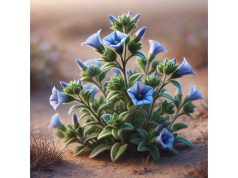
Evening primrose is a yellow-flowering plant whose medicinal reputation comes mostly from its seeds, not its petals. The seed oil—commonly sold as evening primrose oil or EPO—is rich in essential fatty acids, especially linoleic acid and gamma-linolenic acid, a compound often linked to skin comfort, inflammatory balance, and women’s health concerns. That is why people often search for it in relation to eczema, breast pain, premenstrual symptoms, hot flashes, and even labor preparation. Yet evening primrose sits in a category where popularity has moved faster than proof. Some uses are biologically plausible and mildly promising, while others remain inconsistent or disappointing when tested against placebo. The practical value of this herb lies in understanding that difference. It is best approached as a targeted seed-oil supplement with specific fatty-acid actions, not as a cure-all. For the right person, it may be a reasonable short-term trial for selected symptoms. For the wrong goal—or in the wrong setting, especially pregnancy near labor—it can be overused, poorly chosen, or simply not worth the effort.
Core Points
- Evening primrose oil is mainly used for its gamma-linolenic acid content, which may support skin barrier function and some inflammatory symptoms.
- Evidence is mixed for breast pain, premenstrual symptoms, and hot flashes, so it is better viewed as a possible adjunct than a proven treatment.
- Common oral study ranges are about 1 to 4 g per day, with dose and duration varying by product and purpose.
- Stomach upset, nausea, headache, and loose stools are the most common side effects.
- People with bleeding disorders, seizure disorders, planned surgery, or pregnancy-related plans to start labor on their own should avoid self-use.
Table of Contents
- What is evening primrose?
- Key ingredients and actions
- Does evening primrose help skin?
- Breast pain, PMS, and menopause
- How evening primrose is used
- How much evening primrose per day?
- Side effects and evidence limits
What is evening primrose?
Evening primrose, Oenothera biennis, is a biennial plant native to North and South America and now naturalized in many other regions. It is easy to recognize once you know its rhythm: the yellow flowers tend to open in the evening, which explains the common name. Traditionally, different parts of the plant were used in folk practice for minor skin problems, bruising, throat irritation, and digestive complaints. Modern interest, however, is focused much more narrowly on the seeds and the oil pressed from them.
That distinction matters. When people talk about “evening primrose benefits,” they almost always mean evening primrose oil rather than teas, leaf preparations, or home remedies made from the whole plant. The medicinal identity of this herb is therefore unusually tied to one form. In practical use, evening primrose is less like chamomile, where the flower itself is central, and more like a fatty-acid supplement built around a plant source.
What makes it attractive is its essential-fatty-acid profile. The oil contains a high proportion of linoleic acid and a smaller but clinically interesting amount of gamma-linolenic acid, often shortened to GLA. GLA is the part that drives most supplement claims. It is often described as helpful for inflammation, skin barrier health, breast tenderness, and hormone-related discomfort, although the evidence varies a great deal depending on the condition.
This variation is where many readers get frustrated. Evening primrose sounds simple because it is sold over the counter, but the questions around it are not simple at all. The same oil is marketed for eczema, arthritis, PMS, breast pain, menopause, and labor support, yet those uses do not have equal scientific backing. Some have modest biological logic but weak trials. Others have a long reputation but poor real-world proof. That means the smart approach is not to ask whether evening primrose is “good,” but whether it matches a specific goal well enough to justify the cost, time, and risk.
Another useful point is that evening primrose is not the only GLA-rich plant oil. This matters because some people are really looking for a fatty-acid strategy rather than a loyalty to one herb. In that broader context, evening primrose belongs to a small cluster of oils used for similar reasons, especially skin and inflammatory balance. Still, it has remained one of the best-known names in this category because of its long association with women’s health and cyclical symptoms.
For most adults, the most accurate starting description is this: evening primrose is a seed-oil supplement with a long herbal history, a modern identity shaped by GLA, and a reputation that is broader than the evidence fully supports.
Key ingredients and actions
The most important thing to know about evening primrose is that its usefulness comes from the seed oil’s fatty-acid profile. The two headlining compounds are linoleic acid and gamma-linolenic acid. Linoleic acid usually makes up the larger share, while GLA appears in a smaller but still meaningful proportion. In commercial and clinical discussions, GLA is the reason the oil attracts attention.
GLA matters because it can be converted in the body into dihomo-gamma-linolenic acid, or DGLA, a fatty acid involved in producing signaling molecules linked to inflammatory balance. That does not mean evening primrose automatically acts like a painkiller or anti-inflammatory drug. It means the oil may shift some of the body’s raw materials for cell membranes and immune signaling over time. That is why its effects, when they occur, tend to be gradual rather than dramatic.
Alongside those fatty acids, evening primrose oil also contains smaller amounts of saturated and monounsaturated fats, plus minor compounds such as phenolics and flavonoid-related constituents. These minor compounds are not usually the main reason people buy it, but they help explain why the oil is sometimes described as more than just a simple fat source. Even so, most supplement labels and most clinical interest come back to one question: how much GLA does the product provide?
This is also why product choice matters more than many people realize. Two capsules can look similar on a shelf and still deliver different amounts of active fatty acids. Some formulas emphasize total oil weight, while others emphasize GLA content. A 1,000 mg softgel does not automatically tell you how much GLA you are getting unless the label breaks that out clearly. For a consumer, that is one of the easiest ways to buy the wrong product for the right reason.
In functional terms, the main actions people care about fall into three buckets:
- Skin barrier support, because essential fatty acids are part of healthy skin structure.
- Inflammatory signaling support, especially in mild or cyclical conditions.
- Hormone-adjacent symptom support, not because the oil is a hormone, but because inflammatory mediators and tissue sensitivity may influence symptoms such as breast tenderness or hot flashes.
This last point deserves care. Evening primrose is often marketed as if it directly “balances hormones,” but that phrase is too loose to be useful. The better explanation is that it may influence some downstream processes tied to tissue comfort and inflammation. That is a more accurate and less exaggerated way to understand its possible role.
If you want a comparison point, another commonly discussed GLA-rich option is another GLA-rich seed oil. The overlap is real, but evening primrose remains the more familiar choice for people who are specifically exploring breast pain, cyclical symptoms, or menopause-related questions.
Does evening primrose help skin?
Skin is one of the most searched uses for evening primrose, and it is also one of the easiest areas to misunderstand. The theory behind its use is reasonable. Healthy skin depends on a strong barrier, and that barrier depends partly on lipids. Because evening primrose oil supplies linoleic acid and GLA, it has long been promoted for dryness, itching, rough texture, and eczema-like symptoms. But theory and proof are not the same thing.
For eczema or atopic dermatitis specifically, the evidence is not very encouraging. Large reviews have not shown reliable benefit over placebo for oral evening primrose oil. That means a person with true eczema should not expect evening primrose to work like a dependable treatment. It should not replace moisturizers, trigger control, topical anti-inflammatory treatment, or dermatologist-guided care. This is one of the clearest examples of evening primrose’s reputation outrunning its evidence.
That said, the story is not entirely negative. Some smaller findings suggest that evening primrose oil may help with general skin comfort, hydration, or barrier-related dryness in selected people, especially outside the narrow diagnosis of eczema. This is a softer claim, but it is still useful. Someone with dry, tight, easily irritated skin may be asking a different question from someone with established inflammatory dermatitis. In that setting, a gradual improvement in moisture retention or comfort may be more realistic than expecting a visible change in disease severity.
The practical difference looks like this:
- Poor fit: moderate to severe eczema, infected flares, or worsening skin disease that clearly needs medical treatment.
- Possible fit: mild dryness, barrier stress, reactive skin, or a broader plan that includes moisturizer, gentle cleansing, and dietary support.
- Uncertain fit: acne, psoriasis, or chronic inflammatory skin disease where data remain small or inconsistent.
Even when evening primrose does help, it is usually slow. Fatty-acid-based strategies are rarely quick fixes. A fair test often means several weeks of consistent use while keeping the rest of the routine stable. If someone changes cleanser, moisturizer, diet, weather exposure, and supplement use all at once, it becomes hard to know what actually helped.
Another reason results vary is that skin symptoms are often influenced by more than one system at a time. Barrier weakness, stress, allergens, friction, and diet can all interact. A seed oil may be supportive, but it is rarely the main lever. That is why evening primrose works best in skin discussions when it is framed as an adjunct, not a hero.
People looking for a broader anti-inflammatory strategy sometimes compare it with other inflammation-focused botanical options. That comparison helps because the mechanism is different. Evening primrose works as a fatty-acid support tool, while many herbal extracts are used more like targeted phytochemical interventions. Knowing which category you actually want can save time and disappointment.
Breast pain, PMS, and menopause
This is the section where evening primrose has built much of its public reputation. It is commonly recommended for cyclical breast pain, premenstrual discomfort, and menopausal hot flashes. Yet these three use cases are not equally convincing, and readers benefit from separating them rather than treating them as one broad “women’s health” claim.
Breast pain, especially cyclical mastalgia, is the most established traditional use. Many clinicians and patients have tried evening primrose for this purpose because the symptom is uncomfortable, often recurrent, and frustratingly hard to manage. The problem is that when researchers have pooled randomized trials, evening primrose has not consistently outperformed placebo or standard comparators. That does not mean nobody feels better on it. It means the overall evidence is weaker than its reputation suggests. For some women it may still be a reasonable trial, but it should be approached with modest expectations.
Premenstrual syndrome is similar, though even less secure. Evening primrose is frequently marketed for irritability, bloating, breast tenderness, and menstrual discomfort, but the evidence is scattered and methodologically thin. If PMS is mostly defined by breast pain and mild inflammation-related discomfort, the rationale is understandable. But if the main symptoms are mood shifts, severe cramps, or cycle irregularity, evening primrose is a much less convincing first choice.
Menopause is more nuanced. Some recent analyses suggest that evening primrose may reduce the severity of hot flashes in certain short-term settings, but not necessarily their frequency or duration. That means a person may feel that flashes are less intense without having fewer of them. Even that modest benefit is not consistent enough to count as a proven treatment. For women who want a nonhormonal option and cannot or do not want to use hormone therapy, evening primrose might be explored as a cautious adjunct, but not as a predictable solution.
One reason the menopause discussion can be confusing is comparison with other herbs. In direct comparisons, evening primrose has not always performed especially well. If your main concern is hot flashes rather than cyclical breast pain, it may make more sense to explore a symptom-specific discussion such as black cohosh for menopause relief instead of assuming evening primrose is the default herbal answer.
There is one more high-profile use that deserves a very careful warning: labor preparation and cervical ripening. Evening primrose has been used orally or vaginally near the end of pregnancy in attempts to support cervical readiness or labor onset. This is not a routine self-care use. The evidence remains inconsistent, and systematic reviews do not support recommending it for parturition outside professional supervision. This is one of the clearest places where social popularity and internet advice are ahead of reliable guidance.
The practical takeaway is simple. Evening primrose may deserve a short, measured trial for selected cyclical breast discomfort or mild menopausal symptom support, but it should not be treated as a proven hormonal remedy, and it should not be used casually for labor induction.
How evening primrose is used
In modern practice, evening primrose is used mainly as seed oil. That point sounds basic, but it shapes almost every practical decision around the herb. The flower itself may be attractive, and the plant has a broader folk history, but when people use evening primrose medicinally today, they usually mean one of four forms:
- Softgels or capsules
- Liquid seed oil
- Topical oil blends or skin products
- Less commonly, specialized oral or vaginal use in clinical or obstetric contexts
For everyday supplement use, softgels are the most common form because they make dosing easier and protect the oil from oxidation. Liquid oil can also be used, but fats are sensitive to heat, light, and air, so quality and storage matter. Topical products are sometimes marketed for dry skin or barrier support, but oral use remains the main form in the clinical literature.
The best use cases are usually practical and narrow. Someone might choose evening primrose because they want to test a GLA-rich oil for breast tenderness, mild hot flashes, or dry, reactive skin. In that setting, the oil is usually added to a broader plan rather than used alone. For example, a skin-focused approach may include gentle cleansing, fragrance-free moisturizers, and a stable diet. A cyclical-symptom approach may include cycle tracking, sleep support, caffeine review, and stress management alongside the supplement.
What evening primrose is not especially good for is casual improvisation. It is often bought because it sounds gentle and feminine, but that branding can obscure the need for product awareness. A smart buyer checks four things:
- The oil form, ideally in a protected capsule or a well-stored bottle.
- The stated GLA content, not just the total oil weight.
- Freshness and storage guidance, because oils degrade.
- Whether the intended use is actually one with any real evidence behind it.
Another practical rule is to match the form to the goal. If the concern is internal and cyclical, oral use is the form most often studied. If the concern is simple skin feel, topical use may be more intuitive, though that is a different conversation from using the supplement itself. If the concern is labor preparation, the correct response is not to self-select a form, but to talk to an obstetric clinician.
People sometimes compare evening primrose with broader fatty-acid strategies such as other nutrition-centered oil approaches. That comparison is useful because it reminds you that evening primrose is not the only way to think about lipid support. Still, its niche remains distinctive because of GLA and the way it is marketed for cyclical and skin-related symptoms.
Used well, evening primrose is not a miracle product. It is a focused oil supplement whose value depends on choosing the right indication, the right product, and the right expectations.
How much evening primrose per day?
There is no single universal dose of evening primrose that works for every purpose, and that is one reason online advice can feel inconsistent. The research uses vary by condition, product strength, study design, and duration. What is more helpful than chasing one perfect number is understanding the common clinical range and how to interpret a label.
Across studies, oral evening primrose oil has often been used in the range of about 1 to 4 grams per day. Some menopausal studies have used lower daily amounts, such as 500 mg per day, while breast-pain trials have commonly used 1 to 4 g per day for periods ranging from about 2 months to 12 months. That is a wide spread, and it shows why copying someone else’s capsule count is not a good strategy.
A better dosing framework starts with three ideas:
- Think in terms of both total oil and GLA content.
- Match the dose to the purpose rather than the broad reputation of the supplement.
- Give enough time to judge it fairly, because fatty-acid strategies are usually gradual.
In practical terms, many adults who choose to try evening primrose begin in the lower end of the common research range and take it with food. Taking it with a meal may help reduce stomach upset. Dividing the dose can also make sense when the total daily amount is higher. The most important habit is consistency. A supplement taken irregularly is very hard to evaluate.
Timing depends on the goal. For cyclical breast pain or PMS-type symptoms, people often think in menstrual-cycle terms and track changes over at least two or three cycles. For skin comfort, a fair trial may be closer to 6 to 12 weeks because barrier changes are slow. For menopausal hot flashes, a short trial may be reasonable, but it should be stopped if the benefit is unclear and the product is simply adding cost or side effects.
A few practical rules help avoid common mistakes:
- Do not judge it after three or four days.
- Do not raise the dose too quickly just because the product feels gentle.
- Do not ignore the label’s fatty-acid breakdown.
- Do not use pregnancy-related dosing advice from the internet as a substitute for obstetric guidance.
Evening primrose is not one of those supplements where more is automatically better. Once stomach upset, bloating, headache, or loose stools show up, higher dosing often becomes less useful rather than more useful. For people whose main issue is cycle-related symptom support, it may also be worth comparing whether a more targeted cycle-focused herb such as vitex-based support is a better fit than simply increasing evening primrose further.
Side effects and evidence limits
Evening primrose oil is generally well tolerated in adults, but “generally well tolerated” should not be confused with “risk free.” The most common side effects are gastrointestinal. These include abdominal discomfort, nausea, loose stools, bloating, and occasional diarrhea. Headache can also occur. In many cases these effects are mild and dose-related, which is one reason taking the oil with food and avoiding unnecessary high doses makes practical sense.
The people who should be most careful are not hard to identify. If you have a bleeding disorder, use anticoagulant or antiplatelet medicines, have a seizure disorder, are preparing for surgery, or are considering evening primrose during pregnancy—especially to start labor or ripen the cervix—this is not a supplement to use casually. Pregnancy is the clearest example of why context matters. Although some sources describe evening primrose as probably safe in some pregnancy-related settings, the better real-world message is more cautious: self-use for labor preparation is not well established and should not be treated like harmless folklore.
There are also evidence limits that change how this herb should be discussed. Evening primrose has a large reputation because it sits at the intersection of skin health, inflammation, and women’s health. But a large reputation is not the same as strong clinical certainty. Several patterns come up again and again in the literature:
- The biologic rationale is often stronger than the clinical proof.
- Trial quality is uneven, with small studies and inconsistent comparators.
- Benefits, when present, are often modest rather than dramatic.
- Some popular uses, especially eczema and breast pain, do not hold up well against placebo in pooled analyses.
- Product composition and dose reporting are not always consistent enough to make one study easily comparable to another.
That does not mean evening primrose is useless. It means the right standard is modest, selective use rather than hype. A person who tries it for a clear reason, tracks the outcome, uses a sensible dose, and stops if nothing meaningful changes is using it intelligently. A person who takes it because it is said to help “hormones, skin, inflammation, and menopause” all at once is far more likely to be disappointed.
The cleanest conclusion is this: evening primrose is best seen as a sometimes-helpful GLA-rich oil with limited but real practical relevance, not as a proven therapy for every condition it is marketed for. Its greatest value comes from careful matching between symptom, product, dose, and expectation.
References
- Evening Primrose Oil: Usefulness and Safety | NCCIH 2024
- The effect of Oenothera biennis (Evening primrose) oil on inflammatory diseases: a systematic review of clinical trials – PMC 2024 (Systematic Review)
- A Systematic Review and Meta-Analysis of the Efficacy of Evening Primrose Oil for Mastalgia Treatment – PMC 2021 (Systematic Review and Meta-Analysis)
- Evening Primrose Oil for Menopause Hot Flashes: Systematic Review and Meta-Analysis – PMC 2024 (Systematic Review and Meta-Analysis)
- Systematic Review of Evening Primrose (Oenothera biennis) Preparations for the Facilitation of Parturition – PMC 2022 (Systematic Review)
Disclaimer
This article is for educational purposes only and is not a diagnosis, treatment plan, or substitute for medical advice. Evening primrose and evening primrose oil may interact with medicines and may not be appropriate during pregnancy, before surgery, or in people with bleeding or seizure risks. If you are considering it for a medical condition, menopause symptoms, breast pain, or pregnancy-related use, review the exact product and dose with a qualified clinician.
If this article helped you, please share it on Facebook, X, or another platform you use.