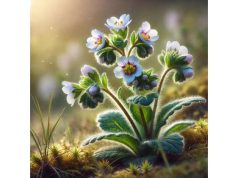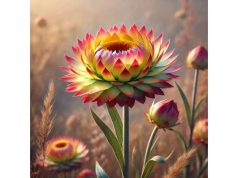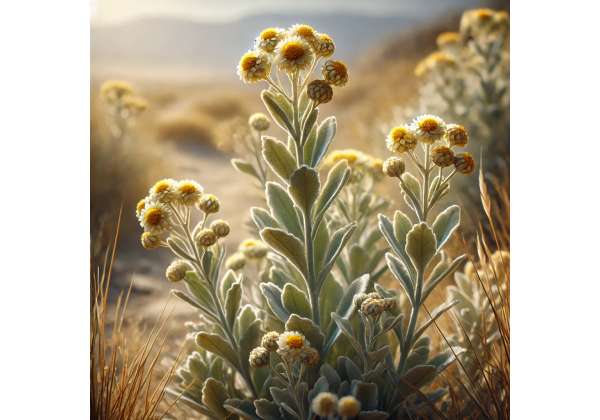
Everlast, better known botanically as Helichrysum arenarium and often called sandy everlasting, is a bright yellow flowering herb with a long history in European herbal medicine. It has been used most often for digestive discomfort, a feeling of fullness after meals, and mild biliary sluggishness. In traditional practice, the dried flower heads are prepared as infusions or decoctions and taken before meals to support digestion and ease bloating.
What makes this herb distinctive is its flavonoid-rich flower chemistry. Compounds such as isosalipurposide, naringenin derivatives, apigenin, luteolin, and kaempferol help explain why the plant has attracted interest for cholagogue, antioxidant, anti-inflammatory, and antimicrobial effects. At the same time, Everlast is not a cure-all. Its strongest modern use remains fairly narrow and practical: mild digestive and biliary support based on long-standing traditional use, not broad clinical proof.
That balance matters. Helichrysum arenarium is a real medicinal herb with a meaningful pharmacological profile, but it is best approached with clear expectations. Used well, it fits digestive herbalism nicely. Used carelessly, it can be the wrong choice for people with gallstones, bile duct problems, or active liver disease.
Key Takeaways
- Everlast is best known for easing fullness, bloating, and mild digestive sluggishness, especially when symptoms follow meals.
- Its flavonoids appear to drive much of its traditional bile-flow and digestive-support reputation.
- A practical adult range is 1.5 g as a decoction 2 to 3 times daily, or 3 g as an infusion 1 to 3 times daily.
- Avoid use with bile duct obstruction, cholangitis, gallstones, or active liver disease unless a clinician approves it.
- Pregnancy, breastfeeding, and use in people under 18 are not recommended because safety data are limited.
Table of Contents
- What is Helichrysum arenarium
- Key compounds in everlast
- What can everlast help
- How to use it well
- How much per day
- Safety and who should avoid it
- What the evidence actually says
What is Helichrysum arenarium
Helichrysum arenarium is a perennial herb in the daisy family, Asteraceae. It grows naturally in dry sandy soils and grasslands across parts of Europe and Asia, and its compact golden flower heads are the medicinal part most often collected. The plant is commonly called sandy everlasting because the flowers keep their shape and color well after drying. That preserved appearance gave rise to names such as everlast, everlasting, and immortelle in different traditions.
In herbal medicine, the dried flower heads are used far more often than the leaves or stems. Traditional systems in Central and Eastern Europe have long valued the plant for digestion, bile flow, and gallbladder-related discomfort. In everyday practice, it was often chosen when meals sat heavily, when the upper abdomen felt tight or full, or when a person complained of sluggish digestion without a clear acute illness. That makes Everlast less like a broad tonic and more like a focused digestive herb.
This older use pattern still matters because it aligns closely with the narrow indication modern regulators recognize today: digestive disorders marked by fullness and bloating. In other words, Helichrysum arenarium is not famous because it was used for everything. It is notable because one part of its traditional reputation has held together reasonably well over time.
A useful way to understand Everlast is to place it among other digestive and biliary herbs. It belongs in the same general conversation as bitters and bile-supportive plants such as artichoke, though the sensory profile is different. Artichoke is strongly bitter and leaf-driven. Everlast is flower-driven, less aggressively bitter, and more clearly associated with flavonoid-rich infusions.
Traditionally, Everlast has been described with several overlapping actions:
- Cholagogue support, meaning it may help promote bile movement
- Choleretic support, meaning it may encourage bile secretion
- Mild spasm-relieving effects in the digestive tract
- Support for fullness, bloating, and sluggish post-meal digestion
- Broader folk uses for liver, bladder, and inflammatory complaints
The last group is where modern readers need to slow down. Just because older texts mention gallbladder, liver, gout, rheumatism, or cystitis does not mean the herb is now well established for all of those conditions. Some of those uses remain historical or regional rather than evidence-based.
Helichrysum arenarium is also a conservation plant in some parts of Europe. Wild populations have declined in several regions because of habitat loss and harvesting pressure. That matters practically because high-quality cultivated material is often a better choice than loosely sourced wild-collected flowers.
So what is Everlast in modern terms? It is a traditional medicinal flower, especially relevant for mild digestive and biliary complaints, with a chemistry centered on flavonoids rather than strong volatile oils alone. It is more focused than many people expect, and that focus is part of its value.
Key compounds in everlast
The main medicinal interest in Helichrysum arenarium comes from its flavonoids and related phenolic compounds. These are widely regarded as the most important active constituents in the dried flower heads, and older pharmacological work linked them directly to the plant’s cholagogue activity. That makes Everlast a good example of an herb whose traditional use is not based only on taste or folklore, but also on a fairly coherent phytochemical profile.
The best-known compounds include:
- Isosalipurposide, a characteristic chalcone and one of the plant’s signature constituents
- Naringenin
- Naringenin-5-O-glucoside
- Apigenin and apigenin-7-O-glucoside
- Luteolin and luteolin-7-O-glucoside
- Kaempferol and kaempferol glycosides
- Astragalin
- Quercetin glycosides in smaller amounts
- Other phenolic compounds and minor volatile constituents
Among these, isosalipurposide stands out as especially distinctive. It is often described as a dominant marker compound of the inflorescence. Naringenin derivatives and apigenin-related flavonoids matter because they help explain why researchers keep returning to the plant when discussing bile flow, spasm relief, antioxidant activity, and inflammation-related effects.
A practical way to think about the chemistry is to separate the plant into functional layers.
The first layer is digestive and biliary activity.
Flavonoids appear to be central here. Older experimental data and later reviews suggest that these compounds contribute to bile-related effects and possibly to the mild antispasmodic action traditionally associated with the herb.
The second layer is antioxidant support.
Phenolic compounds and flavonoids can scavenge free radicals and may help explain why Everlast is studied not only as a digestive herb but also as a plant with broader protective potential.
The third layer is anti-inflammatory and antimicrobial interest.
The flower extracts and, in some studies, the essential-oil fraction show activity against selected microbes and inflammatory pathways. This does not automatically translate into clinical treatment, but it does support the plant’s broader pharmacological interest.
One helpful comparison is with chamomile. Both are flower-based herbs with notable flavonoid content, and both have a reputation for gentle digestive use. The difference is that chamomile leans more toward soothing inflammation and calming spasm across a broad everyday range, while Everlast is more closely tied to bile movement and hepatobiliary-style digestive complaints.
There is also an important nuance: not every preparation highlights the same compounds equally. Traditional water-based preparations emphasize the flavonoid-rich fraction. Essential-oil studies reveal other interesting constituents, but essential oils are not the primary traditional or regulatory form for this plant. That means the chemistry most relevant to actual herbal use is not necessarily the most volatile or aromatic part.
In short, Everlast is a flavonoid herb first. Its key compounds help justify its reputation as a digestive and cholagogue flower, while also opening the door to research on antioxidant, anti-inflammatory, and antimicrobial effects. That said, phytochemistry explains plausibility, not certainty. A promising compound profile is one reason to take the herb seriously, not a reason to exaggerate what it can do.
What can everlast help
The clearest and most defensible use of Everlast is mild digestive discomfort marked by fullness, bloating, and a sluggish feeling after meals. That is where the traditional record, regulatory recognition, and underlying pharmacology line up most cleanly. If a person eats and then feels heavy, puffy, or tight in the upper abdomen, Helichrysum arenarium is a more realistic candidate than if someone is dealing with acute gallbladder pain, fever, jaundice, or ongoing unexplained symptoms.
Its most plausible benefit areas are these.
- Post-meal fullness and bloating
This is the herb’s strongest modern fit. It is most often used when digestion feels slow rather than inflamed or infected. - Mild biliary sluggishness
Traditional herbal systems often positioned Everlast where bile flow seemed reduced or digestion of heavier foods felt inadequate. - Digestive spasm or upper abdominal discomfort
Some older pharmacological work suggests mild spasm-relieving effects, especially through certain flavonoid fractions. - Supportive antioxidant and anti-inflammatory effects
These make the plant scientifically interesting, but they are not yet the main reason most people would choose it.
There are also more exploratory areas that deserve a careful tone rather than confidence:
- metabolic health support through infusion use
- microbiota-related effects
- antimicrobial activity
- hepatoprotective interest
- anticancer laboratory findings
These areas are promising enough to mention, but not mature enough to lead the article. A good herbal guide should keep the plant anchored in what it is actually best known for.
In practical terms, a person may notice the most benefit from Everlast when:
- Meals feel too heavy or fatty
- Bloating appears quickly after eating
- Fullness lingers longer than expected
- There is no sign of acute disease or obstruction
- The herb is taken consistently but briefly, not indefinitely
By contrast, Everlast is not a good self-care answer for:
- sharp right-upper-abdominal pain
- gallstone attacks
- fever with digestive symptoms
- jaundice
- known bile duct blockage
- persistent nausea or unexplained weight loss
That difference is important because Everlast is often described as a “liver and gallbladder herb,” and that phrase can mislead people into using it in situations that need diagnosis rather than tea.
It also helps to compare it to gentler digestive herbs such as dandelion. Dandelion often fits broader bitter-digestive use and everyday digestive toning. Everlast is a bit more specific and a bit more tied to biliary-style complaints. That does not make it stronger in every case, only more targeted.
A fair summary is that Everlast can probably help when the problem is mild, functional, and meal-related. It is less convincing when the goal becomes “detox,” liver cleansing, or treatment of named disease. The herb’s real strength lies in modest digestive correction, not in dramatic promises.
How to use it well
Helichrysum arenarium is best used as a traditional flower infusion or decoction, not as a trendy extract chosen at random. This is one of those herbs where the old preparation style is still the most practical one. The dried flower heads are steeped or gently simmered in water, then taken shortly before meals or when symptoms arise. That method matches both the traditional use pattern and the forms described in official monographs.
The two most relevant preparation styles are:
- Infusion
Pour boiling water over the dried flowers and let them steep. This is usually the gentler, more familiar tea-style approach. - Decoction
Simmer the herb briefly in water, then strain. This is often used when a slightly stronger extraction is desired.
The timing matters more than many readers expect. Everlast is usually taken 15 to 30 minutes before a meal or when symptoms first appear. That fits its digestive role because the goal is to prepare the system or respond early, not to use it as an all-day beverage.
A practical way to use it well includes a few simple rules:
- Choose it for a specific digestive reason, not as a vague wellness tea.
- Use it for short courses rather than indefinitely.
- Avoid combining it with many other bile-moving herbs unless you know exactly why.
- Stop and reassess if symptoms worsen or shift from fullness to pain.
- Use high-quality flower material from a reliable source.
One reason this matters is that Everlast has a narrower sweet spot than herbs like ginger. Ginger works across nausea, cold digestion, mild cramping, and general stomach discomfort. Everlast is more specialized. It is best when the digestive picture points toward fullness, bloating, and bile-related heaviness.
The herb also appears in regional mixtures for hepatobiliary and gastric support. While those combinations can be reasonable in trained hands, they can also make it harder for a reader to know what is helping or irritating them. For home use, single-herb preparation is often better at first.
Forms that deserve more caution include:
- concentrated tinctures with unclear standardization
- essential-oil style products marketed under related immortelle language
- mixed “liver cleanse” products where Helichrysum arenarium is one of many ingredients
That last point matters because Everlast can be confused with other Helichrysum species, especially Helichrysum italicum, which is better known in aromatic oil and skin-care markets. They are not interchangeable in practical herbal use.
In short, the best use of Everlast is modest, defined, and traditional. It is a flower tea herb for digestive fullness, not a universal liver tonic. When readers keep the indication narrow and the preparation simple, the herb makes much more sense.
How much per day
The most useful dosage guidance for Everlast comes from traditional-use monographs rather than from a large body of clinical trials. For adults and older adults, two practical preparation ranges are commonly cited.
- Decoction: 1.5 g of comminuted herbal substance in 150 to 250 mL of water, simmered for about 10 minutes, taken 2 to 3 times daily
- Infusion: 3 g of comminuted herbal substance in 150 to 200 mL of boiling water, taken 1 to 3 times daily
These doses are usually taken 15 to 30 minutes before meals or when symptoms appear. That timing is not incidental. It supports the herb’s digestive purpose and gives the plant a chance to work before fullness or bloating becomes more pronounced.
This yields a practical adult daily range roughly like this:
- Light use: about 3 g per day as infusion
- Moderate use: about 4.5 to 6 g per day through repeated decoctions
- Higher traditional use: up to about 9 g per day in divided infusion doses
The form matters because 1.5 g as decoction is not the same experience as 3 g as infusion. The decoction is a smaller herb weight but is simmered. The infusion uses more herb but a simpler extraction. In real life, both fit traditional herbal logic, and individual tolerance often determines which feels better.
Duration also matters. If symptoms persist longer than two weeks, medical advice is recommended rather than continuing indefinitely. This is an important boundary because herbal digestive complaints can sometimes hide gallstones, bile duct problems, ulcers, or other conditions that need assessment.
A sensible home strategy looks like this:
- Start with the infusion form if the symptoms are mild.
- Use it before the meal most likely to provoke fullness.
- Watch how the upper abdomen responds over several days.
- Do not escalate automatically just because the herb is traditional.
- Stop and seek evaluation if the problem changes character.
People often make two dosage mistakes with Everlast. The first is underdosing it into irrelevance by using a token pinch in a large mug. The second is treating it like a harmless daily tonic and continuing despite ongoing symptoms. The herb works best in a middle zone: enough to match the traditional preparation, but used with a defined purpose and stopping point.
It is also worth noting what the dosage section does not support. It does not support use in children or adolescents under 18, because data are considered insufficient. It also does not support unsupervised use in pregnancy or breastfeeding.
So how much per day? Enough to reflect the actual traditional preparation, not so much that the herb becomes a reflex. Everlast is one of those plants where the dose, the timing, and the reason for use all matter equally.
Safety and who should avoid it
Helichrysum arenarium is not generally regarded as a highly dangerous herb when used appropriately, but it has more meaningful contraindications than many readers expect. The main issue is its possible stimulation of bile secretion. That is part of why the herb can be helpful in the right setting, but it is also why it can be inappropriate in the wrong one.
The clearest groups who should avoid Everlast unless a qualified clinician advises otherwise are people with:
- bile duct obstruction
- cholangitis
- gallstones
- active liver disease
- known allergy to Asteraceae family plants
That list is not optional background information. It is central to safe use. A plant that encourages bile-related activity can be the wrong choice when bile flow is blocked or when the biliary system is inflamed.
Pregnancy and breastfeeding are also not recommended settings for self-use because adequate safety data are lacking. The same is true for children and adolescents under 18. That does not prove harm in every case, but it does mean a responsible guide should not normalize use in those groups.
The herb appears to be reasonably well tolerated in ordinary adult use, and official monographs list no well-established undesirable effects. Even so, “none known” is not the same as “incapable of causing problems.” Real-world reactions can still include:
- allergy in people sensitive to Asteraceae plants
- worsening discomfort if a gallbladder or bile duct problem is already present
- lack of benefit that delays appropriate care
- digestive irritation from overuse or overly concentrated preparations
There is also a more subtle safety issue: people may interpret a “liver and gallbladder herb” as automatically appropriate for any liver or gallbladder symptom. In reality, the opposite can be true. Everlast is safest when the complaint is mild fullness and bloating, not when there is pain, fever, jaundice, or known structural disease.
One useful comparison is with milk thistle. Milk thistle is often chosen in a broader “liver support” context. Everlast is much more specific and much more dependent on bile-flow suitability. They should not be treated as interchangeable.
A few practical safety rules are worth keeping simple:
- Do not use it to self-treat severe gallbladder symptoms.
- Do not use it in pregnancy or breastfeeding.
- Do not give it medicinally to children.
- Do not keep taking it when symptoms persist beyond two weeks.
- Stop if symptoms become sharper, more painful, or more systemic.
This is a good example of a herb that is neither trivial nor alarming. Used in the right adult with the right symptom pattern, it can be sensible. Used in the wrong setting, it can be a distraction from proper care.
What the evidence actually says
The evidence for Everlast is strongest where tradition, pharmacology, and modest clinical observation overlap. That means digestive support is still the center of gravity. Modern regulators recognize Helichrysum arenarium as a traditional herbal medicinal product for digestive disorders with fullness and bloating, based on long-standing use rather than on a large body of high-powered clinical trials. That distinction matters because it sets the tone correctly: this is a plausible, historically supported herb, not a conclusively proven modern drug.
The chemistry and experimental literature are more expansive than the clinical literature. Reviews describe:
- cholagogue and choleretic activity
- antioxidant properties
- anti-inflammatory effects
- antimicrobial activity
- possible hepatoprotective and metabolic-support potential
- cytotoxic or anticancer interest in laboratory models
That broader literature makes the plant scientifically attractive, but it should not be confused with settled clinical evidence. A flower rich in flavonoids can look impressive in vitro and still remain only modestly proven in everyday human use.
One of the more interesting modern human signals comes from a randomized comparative study in adults with traits of metabolic syndrome, where Helichrysum arenarium infusion was investigated alongside Helichrysum italicum. The study design is useful because it moves the herb out of pure tradition and into a controlled human setting. Even so, it was relatively small and not designed to settle all the major therapeutic questions readers may have.
This creates a familiar evidence pattern:
- Strongest support: traditional digestive use, especially fullness and bloating
- Moderate support: plausible cholagogue, antioxidant, and anti-inflammatory activity
- Emerging support: microbiota and metabolic-related effects
- Exploratory support: antimicrobial and anticancer directions
This means the herb is worth taking seriously, but not worth exaggerating. The best evidence does not currently justify presenting Everlast as a proven hepatoprotective cure, a universal gallbladder herb, or a broad detoxifying agent.
It is also worth stressing that older regional uses such as cystitis, arthritis, rheumatism, and gout do not have the same modern support as the digestive indication. Those uses may be part of the plant’s history, but they are not equally strong in present-day evaluation.
A good evidence-based conclusion is therefore modest and practical. Helichrysum arenarium seems most useful as a traditional digestive flower for adults with mild fullness and bloating, particularly when symptoms suggest sluggish meal handling rather than acute disease. Its phytochemistry is rich enough to justify continued research, and its broader experimental profile is promising. But the herb’s modern place is still narrower than some supplement marketing suggests.
In herbal medicine, that is not a weakness. A plant does not need to do everything to be valuable. Everlast’s likely best role is focused, not universal.
References
- European Union herbal monograph on Helichrysum arenarium (L.) Moench, flos 2016 (Monograph)
- Helichrysum arenarium: From Cultivation to Application 2022 (Review)
- Helichrysum italicum (Roth) G. Don and Helichrysum arenarium (L.) Moench Infusion Consumption Affects the Inflammatory Status and the Composition of Human Gut Microbiota in Patients with Traits of Metabolic Syndrome: A Randomized Comparative Study 2022 (Randomized Comparative Study)
- Chemical Profile and Antimicrobial Activity of the Essential Oils of Helichrysum arenarium (L.) Moench. and Helichrysum italicum (Roth.) G. Don 2022
- Phytochemical Profile and Anticancer Potential of Helichrysum arenarium Extracts on Glioblastoma, Bladder Cancer, and Breast Cancer Cells 2025
Disclaimer
This article is for educational purposes only and is not medical advice. Everlast may not be appropriate for people with gallstones, bile duct obstruction, cholangitis, liver disease, pregnancy, breastfeeding, or age under 18. Digestive symptoms that are severe, persistent, painful, or accompanied by fever, jaundice, vomiting, or weight loss need medical assessment. Do not use Helichrysum arenarium as a substitute for diagnosis or prescribed treatment.
If this article helped you, please share it on Facebook, X, or any platform where readers interested in herbs and evidence-based natural health may find it useful.