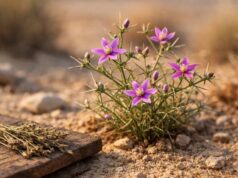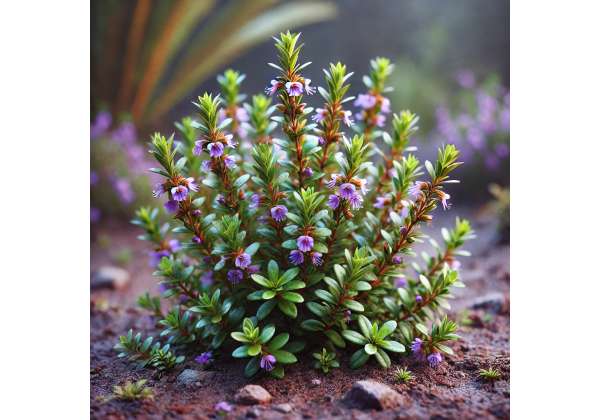
False heather, botanically known as Cuphea hyssopifolia, is a small flowering shrub best known as an ornamental plant, especially in warm gardens and containers. It is also called Mexican heather, Hawaiian heather, and elfin herb, although it is not a true heather. What makes it interesting from a medicinal perspective is not a long history of mainstream herbal use, but a small, intriguing body of research showing that its aerial parts contain phenolic compounds, flavonoids, tannins, and other bioactive molecules with antioxidant and laboratory-tested biological activity.
That sounds promising, but the practical message needs balance. False heather is not a well-established medicinal herb with standardized products, human dosing guidelines, or strong clinical trials. Traditional use points mainly to stomach complaints, while modern studies focus more on phytochemistry, antioxidant activity, and early experimental effects such as hepatoprotective and cytotoxic actions in lab or animal settings. For readers, the most helpful approach is to treat false heather as a plant of research interest and limited traditional use, not as a proven home remedy for serious illness.
Essential Insights
- False heather contains polyphenols, flavonoids, and tannin-like compounds that may help explain its antioxidant and anti-inflammatory potential.
- Traditional use centers mainly on infusions of the aerial parts for stomach upset rather than on broad, proven medicinal use.
- Experimental animal studies used leaf extract doses of 200–400 mg/kg, but no validated human oral dose exists.
- Do not use nursery or landscaping plants medicinally, because ornamental stock may carry pesticide residues not meant for ingestion.
- Pregnant or breastfeeding people, children, and anyone treating liver disease or cancer should avoid self-use.
Table of Contents
- What is False Heather
- Key ingredients and medicinal properties
- Does False Heather have benefits
- How False Heather is used
- How much False Heather per day
- Safety, side effects, and who should avoid it
- What the evidence really shows
What is False Heather
False heather is a compact, many-branched subshrub native to Mexico and Central America. Gardeners know it for its fine-textured leaves, long flowering season, and small purple, pink, or white blooms that can make it look like a miniature heather. The resemblance explains the common name, but botanically it belongs to the genus Cuphea in the loosestrife family, not the heather family. That distinction matters because people sometimes assume plants with similar common names share the same chemistry or medicinal traits. False heather does not.
From a medicinal point of view, false heather sits in an unusual category. It is not a staple herb like chamomile, peppermint, or ginger, yet it is not just a decorative plant either. Research and traditional records suggest that at least some communities have prepared infusions from its aerial parts for stomach complaints. That folk use lines up with broader interest in the Cuphea genus, which contains species studied for polyphenols, tannins, flavonoids, and other compounds with biological activity.
Another point that often gets missed is that false heather is usually sold as an ornamental, not as a food or medicinal crop. That changes how it should be handled. A potted nursery plant may have been treated with fungicides, insecticides, or growth regulators that are acceptable for landscaping but not appropriate for tea or tincture making. For practical safety, any medicinal discussion should assume that commercially landscaped false heather is unsuitable for internal use unless it was specifically grown as clean botanical material.
The plant also appears under several common names, including Mexican heather, Hawaiian heather, and elfin herb. This makes internet searching harder than it looks. Some references focus on horticulture, others on the wider Cuphea genus, and only a smaller set discuss Cuphea hyssopifolia itself. That is why many online claims about false heather feel vague or recycled. The better way to understand it is as a lightly documented medicinal plant with ornamental popularity, limited traditional digestive use, and a chemistry profile that is more interesting than its mainstream reputation suggests.
Key ingredients and medicinal properties
The most useful way to think about false heather is as a polyphenol-rich plant rather than a herb with one famous “active ingredient.” Studies on Cuphea hyssopifolia have identified several notable compounds in the aerial parts and extracts, including quercetin, quercetin glycosides, methyl gallate, ursolic acid, penta-galloyl glucose, mannitol, and other phenolic or flavonoid-related molecules. Earlier work also isolated macrocyclic ellagitannins such as cuphiin D1, cuphiin D2, and oenothein B from aqueous extracts. More recent cultivation studies suggest the plant can also contain measurable phenols, flavonoids, and apigenin, with growing conditions influencing the final profile.
These compounds matter because they suggest likely medicinal properties, even when human evidence is still missing. Flavonoids and phenolic acids are commonly associated with antioxidant behavior, meaning they can help neutralize unstable reactive molecules in laboratory models. Ursolic acid is often discussed in herbal research for anti-inflammatory and tissue-protective potential. Ellagitannins are especially interesting because they have shown immunologic and cytotoxic effects in preclinical work, though that does not mean the plant itself should be treated as an anticancer therapy.
A practical way to frame false heather’s chemistry is by functional groups:
- Flavonoids such as quercetin derivatives may contribute antioxidant and anti-inflammatory effects.
- Galloyl compounds and ellagitannins may support astringent, antimicrobial, and experimentally cytotoxic actions.
- Ursolic acid may add membrane-protective and inflammation-related effects.
- Total phenols and apigenin help explain why the plant keeps appearing in antioxidant discussions.
This profile makes false heather chemically more comparable to polyphenol-focused herbs and teas than to resinous or strongly aromatic herbs. Readers familiar with green tea polyphenols and antioxidant signaling will recognize the general pattern: a complex mixture of plant phenolics may be more important than any one isolated molecule.
Still, “interesting chemistry” is not the same as a finished herbal monograph. The medicinal properties that can be discussed responsibly are potential antioxidant, anti-inflammatory, astringent, and tissue-protective actions suggested by its constituents and early experiments. What cannot yet be claimed with confidence are standardized effects in people, reliable symptom outcomes, or dose-specific therapeutic results. False heather has enough chemical depth to justify attention, but not enough clinical depth to justify confident promises.
Does False Heather have benefits
False heather appears to have potential benefits, but they need to be ranked honestly. The strongest support is not from human trials. It comes from traditional stomach-use reports, phytochemical studies, antioxidant assays, and a small number of laboratory and animal experiments. That means the plant may deserve a place in research discussions, while still remaining a weak choice for self-directed treatment.
The most plausible benefit areas are these:
- Digestive support in traditional use. In Oaxaca, infusions of the aerial parts have been used for stomach disorders. That makes digestive discomfort the clearest traditional use signal for this species.
- Antioxidant activity in extracts. Laboratory testing has shown strong free-radical scavenging behavior in some false heather preparations, which fits the plant’s phenolic and flavonoid content.
- Hepatoprotective potential in animals. One rat study found that leaf extract reduced markers of paracetamol-induced liver injury at experimental doses.
- Cytotoxic and immunologic activity in preclinical work. Isolated ellagitannins from the plant have shown effects against tumor cell lines and immune cells in research settings.
Those points are interesting, but they do not all carry the same practical value. A traditional stomach infusion has some relevance to real-world use, though it still lacks standard dosing and clinical confirmation. Antioxidant activity is chemically important, but “antioxidant” alone rarely tells a patient what they will actually feel. Cytotoxic effects in a lab can sound dramatic, yet many plant extracts show such effects outside the body without becoming useful or safe medicines in people.
So what can a reader realistically expect? At most, false heather may offer mild digestive support if prepared traditionally and handled cautiously, and it may eventually prove useful as a source of bioactive molecules. What it cannot yet be trusted to do is treat liver disease, prevent cancer, or function like a standardized modern herb.
That is why readers seeking a proven everyday digestive herb are usually better served by peppermint for clearer digestive comfort evidence. False heather belongs more in the category of “promising but preliminary” than “reliably effective.” Its benefits are best described as plausible, historically grounded, and experimentally interesting, but not clinically established.
How False Heather is used
Historically, false heather has been used mainly as an infusion of the aerial parts for stomach complaints. That is the clearest medicinal preparation linked to the species. Unlike resinous roots, essential oils, or standardized capsules, false heather seems to belong to the simple-plant-preparation tradition: dried or fresh above-ground material steeped in water and used as a folk drink. The problem for modern readers is that the tradition is documented more as a use pattern than as a reproducible formula.
In research settings, the plant has been prepared in several different ways. Scientists have worked with aqueous extracts, methanolic leaf extracts, and fractionated organic extracts. Each method pulls out a somewhat different set of compounds. This is one reason consumer-style advice is so difficult. A tea, an alcohol tincture, and a lab extract are not interchangeable, even when they come from the same plant.
In practical terms, false heather today is used in four very different ways:
- As an ornamental shrub in gardens, borders, and containers.
- As a folk infusion in limited traditional settings.
- As a phytochemical research plant for phenols, flavonoids, and tannins.
- As a preclinical extract source in experimental pharmacology.
That separation matters because many readers unconsciously blur these categories. A landscaping plant is not automatically a medicinal-grade herb. A lab extract is not a tea recipe. A traditional infusion is not a validated treatment plan. The safest modern interpretation is that false heather can be discussed as a traditional stomach herb and a research plant, but not as a mainstream self-care supplement.
This is also where sourcing becomes crucial. If someone truly intends to explore false heather as a botanical, they should not start with nursery stock from a garden center. Ornamental production often emphasizes appearance, shelf life, and pest control, not ingestible purity. Clean botanical sourcing is far more important here than it would be for a well-regulated tea herb.
For readers who mainly want a gentle infusion routine rather than an obscure research plant, chamomile as a better-known calming and digestive tea usually makes more practical sense. False heather’s real value is less about convenient daily use and more about the way it bridges folk practice and early phytochemical science. It can be used, but it should be approached with more caution and less confidence than common household herbs.
How much False Heather per day
There is no validated human dosage for false heather. That is the single most important dosing fact. No established clinical monograph sets out the right amount for tea, capsules, tincture, or extract. No controlled human trials define an effective daily range. No consensus body recommends timing, duration, or treatment goals. Because of that, false heather should not be treated like a plug-in herbal supplement.
The one dosage range that does exist comes from animal research, not from routine human use. In a rat hepatoprotective study, methanol leaf extract was given at 200 mg/kg and 400 mg/kg. Those numbers are useful for understanding the experimental design, but they are not direct self-care instructions. Animal doses cannot be copied into human use by simple body-weight math, because extraction method, metabolism, safety margin, and intended outcome all differ.
For readers trying to turn that information into a sensible decision, the most realistic guidance is route-based:
- For general self-care, there is no reliable oral dose to recommend.
- For experimental reading, 200–400 mg/kg refers to animal leaf extract, not tea or raw herb.
- For traditional use, infusions are described, but precise standardized amounts are not.
- For topical or food-style use, no validated dose framework exists either.
That means the safest unsupervised oral target is effectively 0 mg per day until better human data are available. This is not because false heather has been proven dangerous at low doses. It is because the line between “active,” “ineffective,” and “irritating” has not been mapped well enough in people.
A second dosing issue is plant variability. Flower color, growing conditions, drying method, harvest timing, and extraction solvent may all change the chemical profile. Recent cultivation research even suggests that phenol, flavonoid, and apigenin levels can shift depending on how the plant is grown. In other words, one batch may not resemble another closely enough for a home-made dosage rule to mean very much.
A good rule with poorly standardized herbs is simple: if research uses extracts and the public mostly has access to ornamental plants, real-life dosing confidence is low. False heather fits that pattern. Until species-specific human studies exist, it is better discussed in terms of research doses and traditional preparation styles than in terms of a recommended daily intake.
Safety, side effects, and who should avoid it
False heather should be treated as a low-information herb from a safety standpoint. That does not automatically make it high-risk, but it does mean there is not enough human data to assume it is harmless. The plant contains biologically active compounds, and preclinical work suggests it can influence oxidative stress, liver markers, immune signaling, and cell behavior. Any plant with that kind of activity deserves respectful caution.
The most important practical safety issue is not a dramatic toxic reaction. It is inappropriate sourcing. Many false heather plants sold to the public are ornamental stock. They may be sprayed or treated in ways that are acceptable for landscaping but not for ingestion. This makes “garden-to-teacup” use especially questionable unless the plant was grown specifically as clean herbal material.
Possible safety concerns include:
- Stomach irritation or nausea from concentrated or poorly prepared extracts.
- Unpredictable interactions because the medication-interaction profile is largely unstudied.
- Potential overconfidence based on laboratory anticancer or liver-protective findings.
- Allergy or irritation in sensitive individuals, especially with fresh plant handling.
Certain groups should avoid self-use altogether:
- Pregnant and breastfeeding people, because safety data are not established and some Cuphea species have a reproductive-use history in folk medicine.
- Children, because no pediatric dose or safety framework exists.
- People with liver disease, because preclinical liver activity does not equal proven safety in human liver disorders.
- People using prescription medicines on a daily basis, especially when clinician review is not available.
- Anyone attempting to manage cancer, severe infection, or chronic gastrointestinal disease without medical care.
Topical experimentation should also be conservative. If someone handles a clean plant extract externally, a small patch test is far wiser than broad application. False heather is not a standard topical herb, and there is too little route-specific safety data to assume skin use is trouble-free. People who want a plant with a much clearer tradition of skin-focused application are usually better served by calendula in well-established skin-supportive use.
The best safety summary is this: false heather is promising enough to study, but not established enough to use casually. The less evidence there is, the more careful the user should be about source, route, dose, and expectations.
What the evidence really shows
The evidence for false heather is real, but it is early-stage and uneven. The best-supported facts are botanical identity, species-specific phytochemistry, and preclinical biological activity. We have documented compounds, measurable antioxidant behavior, laboratory cytotoxic findings, and at least one animal hepatoprotective model. We also have traditional reports linking the plant to stomach-disorder infusions. What we do not have is the kind of evidence most readers actually need before using an herb with confidence: human trials, standardized products, routine safety studies, and reproducible dosing guidance.
That gap explains why false heather can sound more impressive in abstracts than in practical healthcare. A study showing a strong antioxidant extract or a tannin fraction that affects tumor cells is scientifically valuable, but it does not tell a patient whether a home infusion will help, how much to take, or who is likely to be harmed. In herbal medicine, this is a common transition point where a plant becomes interesting to researchers long before it becomes dependable for everyday use.
The evidence can be ranked roughly like this:
- Strongest for identity and chemistry.
The plant is well described, and multiple studies support the presence of phenols, flavonoids, tannins, and related compounds. - Moderate for preclinical biological activity.
Antioxidant, cytotoxic, immune-related, and hepatoprotective signals exist in lab or animal work. - Limited for traditional digestive relevance.
There is ethnobotanical support for stomach-use infusions, but little modern validation. - Weak for routine human treatment.
Human clinical evidence is essentially absent or too sparse to support standard recommendations.
This is why false heather should not be marketed as a proven detox herb, cancer herb, liver tonic, or daily supplement. The fairest description is narrower and more useful: it is a phytochemically interesting ornamental plant with some traditional stomach use and several preclinical signals worth further study.
For readers, that evidence summary leads to a simple conclusion. False heather may deserve scientific attention, but it has not yet earned routine medicinal confidence. It is a plant to learn about carefully, not one to use aggressively just because a few promising studies exist.
References
- Cuphea Genus: A Systematic Review on the Traditional uses, Phytochemistry, Pharmacology, and Toxicology 2024 (Systematic Review)
- The Genus Cuphea P. Browne as a Source of Biologically Active Phytochemicals for Pharmaceutical Application and Beyond—A Review 2023 (Review)
- Bioactive Compounds of Endemic Medicinal Plants (Cuphea spp.) Cultured in Aquaponic Systems: A Short Study 2023
- Effects of Methanol Leaf Extract of Cuphea Hyssopifolia Kunth on Liver Enzymes Activity and Antioxidant Indices of Paracetamol-Induced Hepatotoxicity in Wistar Rats 2020 (Animal Study)
- Constituents of Organic Extracts of Cuphea hyssopifolia 2011
Disclaimer
This article is for educational purposes only and is not medical advice. False heather is not a well-validated medicinal herb, and its human safety, dosing, and effectiveness remain insufficiently defined. Do not use it as a substitute for professional diagnosis or treatment, especially for liver problems, cancer, severe digestive symptoms, or during pregnancy and breastfeeding. Always consult a qualified healthcare professional before using unfamiliar plant material internally or topically.
If you found this article helpful, please share it on Facebook, X, or another platform where careful, evidence-aware herbal information is valued.