Fenugreek is a fragrant culinary and medicinal herb whose seeds and leaves have been used for centuries across the Mediterranean, North Africa, the Middle East, and South Asia. Botanically known as Trigonella foenum-graecum, it belongs to the legume family and is best known today for its role in blood sugar support, digestive comfort, and traditional women’s health formulas. The seeds have a bittersweet, maple-like aroma and contain a dense mix of soluble fiber, saponins, alkaloids, and amino acids that help explain why fenugreek attracts so much modern research.
What makes fenugreek especially interesting is that it sits at the border between food and herbal medicine. It can be used as a spice in cooking, brewed into tea, taken as powder, or concentrated into capsules and extracts. Yet that flexibility can also create confusion, because seed powder, tea, and standardized extracts do not behave the same way. The most practical way to approach fenugreek is to see it as a useful but not magical herb: promising for some goals, overrated for others, and safest when matched carefully to the person, the form, and the reason for using it.
Core Points
- Fenugreek may modestly improve fasting glucose, HbA1c, and some lipid markers in adults with insulin resistance, prediabetes, or type 2 diabetes.
- It may also help some people with menstrual cramps, but evidence for increasing milk supply is mixed and still uncertain.
- Common supplemental ranges are about 500 to 1,000 mg/day of extract or 5 to 25 g/day of seed powder, depending on the form and the goal.
- Gas, diarrhea, nausea, low blood sugar, and a maple-like body odor are the most common reasons people stop using it.
- Avoid medicinal doses during pregnancy, and use extra caution if you take diabetes medicines, warfarin, or have a legume allergy.
Table of Contents
- What is fenugreek?
- Fenugreek active compounds
- Does fenugreek help blood sugar and cholesterol?
- Fenugreek for digestion, cramps, and milk supply
- How to use fenugreek
- How much fenugreek per day?
- Side effects, interactions, and who should avoid it
- What the research actually says
What is fenugreek?
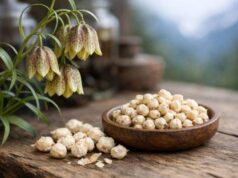
Fenugreek is an annual plant in the legume family, valued both as a food and as a traditional remedy. The part most people know is the seed: hard, yellow-brown, angular, and intensely aromatic when crushed or cooked. The leaves are also edible and appear in some cuisines as a bitter green herb. In many households, fenugreek is first a spice and only second a supplement, which is one reason it has a more food-like safety profile than some stronger botanicals.
The plant is native to a broad Old World belt that includes the Mediterranean region, western Asia, and parts of South Asia. Over time, it became deeply woven into Ayurveda, Unani, Arabic medicine, and regional food traditions. In practical use, fenugreek has been turned to for several recurring goals: improving appetite and digestion, supporting glucose balance, easing menstrual discomfort, and, more controversially, increasing milk supply during breastfeeding.
A useful way to understand fenugreek is to separate its culinary identity from its therapeutic identity. In food, it appears in curries, spice blends, flatbreads, pickles, and sprouted seed dishes. At those amounts, it behaves mostly as a nutrient-rich bitter spice. In medicinal use, however, doses often rise sharply, especially when people use seed powder, concentrated extracts, or multi-capsule formulas. That difference matters because a sprinkle in food is not the same as taking 10 or 20 grams of seed daily.
Fenugreek is also one of those herbs that is often marketed too broadly. It is promoted for blood sugar, testosterone, libido, milk supply, appetite control, menopause, cholesterol, and even body composition. Some of those claims have a real research base. Others rely on small studies, extract-specific results, or supplement advertising that runs far ahead of evidence. Readers do better when they treat fenugreek as a targeted herb with a few stronger use cases, not an answer to every metabolic or hormonal complaint.
Another practical point is that fenugreek comes in many forms that are not interchangeable:
- Whole or crushed seeds used in food or tea
- Defatted seed powder
- Seed fiber preparations
- Standardized extracts rich in saponins or other fractions
- Multi-herb blends for lactation or metabolism
That variation explains why one product may affect digestion, another may influence post-meal glucose, and another may be marketed for male performance. The herb name stays the same, but the preparation changes the outcome.
At its best, fenugreek is a bridge herb: familiar enough to use as food, active enough to matter as a supplement, and complex enough to deserve thoughtful use rather than casual hype.
Fenugreek active compounds
Fenugreek’s reputation comes from a dense mix of nutrients and phytochemicals rather than from one single “hero” ingredient. That is why it can affect digestion, post-meal glucose handling, satiety, and lipid metabolism at the same time.
One of the most important components is soluble fiber, especially galactomannan. This thick, gel-forming fiber slows gastric emptying and can blunt the speed at which carbohydrates are absorbed after a meal. In plain language, it helps turn a sharp glucose rise into a flatter curve. That mechanism is one reason fenugreek is often discussed alongside other fiber-forward tools and soluble fiber actions rather than only as a “blood sugar herb.”
A second major group is the steroidal saponins, especially diosgenin-related compounds. These are often linked to cholesterol handling, bile interactions, and some of the endocrine interest around fenugreek. The presence of diosgenin helps explain why fenugreek is sometimes marketed in hormone-support formulas, though that marketing often exaggerates what the studies actually prove.
Another widely discussed compound is 4-hydroxyisoleucine, an unusual amino acid associated with insulin-related effects. It appears to support glucose regulation in ways that have made it especially interesting to metabolic researchers. Trigonelline, an alkaloid also found in fenugreek, adds to the plant’s glucose and antioxidant profile. Together, these compounds help explain why fenugreek can influence several metabolic markers at once.
Fenugreek seeds also contain:
- Mucilage, which soothes the digestive tract and adds bulk
- Flavonoids and polyphenols, which contribute antioxidant activity
- Proteins and peptides that may influence appetite and metabolism
- Minerals such as iron, magnesium, and potassium in modest amounts
- Volatile compounds responsible for the herb’s strong aroma
That maple-like smell deserves a quick note. Fenugreek contains sotolon, an aromatic compound that gives the seed its characteristic scent. It is pleasant in food, but at higher doses it can make sweat, urine, and even breast milk smell maple-like. That is harmless for many users, but surprising if you are not expecting it.
The most important practical lesson is that fenugreek’s chemistry explains both its benefits and its limits. A fiber-rich seed behaves differently from a purified extract. A saponin-rich capsule may not produce the same digestive effects as a tea. A seed powder that works well for post-meal glucose may cause more bloating than a lower-fiber extract. This is why product labels that simply say “fenugreek” often do not tell you enough.
So when people ask what the “key ingredients” in fenugreek are, the best answer is not one compound. It is a functional cluster: galactomannan fiber for slowing absorption, 4-hydroxyisoleucine and trigonelline for metabolic interest, saponins such as diosgenin for lipid and hormonal relevance, and polyphenols for general antioxidant support. Fenugreek works more like a chemical team than a solo performer.
Does fenugreek help blood sugar and cholesterol?
This is where fenugreek has its strongest modern case. Across multiple clinical trials and meta-analyses, fenugreek has shown modest but meaningful potential to improve fasting glucose, HbA1c, post-meal glucose, and some lipid markers, especially in adults with prediabetes, type 2 diabetes, or insulin resistance. That does not make it a replacement for medication, diet change, or medical follow-up. It does make it one of the more credible food-like herbs in the metabolic category.
The expected effect is usually moderate, not dramatic. Fenugreek seems most useful as an adjunct, meaning it works best when layered onto an overall treatment plan that already includes eating changes, physical activity, weight management, and, when needed, prescription therapy. This is similar to how people should think about cinnamon for blood sugar support: helpful in some contexts, but not a stand-alone fix.
The main ways fenugreek may help include:
- Slowing carbohydrate absorption through viscous soluble fiber
- Improving insulin sensitivity in some settings
- Reducing fasting blood glucose over weeks rather than hours
- Supporting lower triglycerides and LDL cholesterol in some trials
- Increasing fullness after meals, which may indirectly help calorie control
One subtle but important point is that the form matters a great deal. Traditional seed powder and fiber-rich preparations may work partly because of bulk and viscosity. Some standardized extracts aim for different mechanisms, such as saponin or amino acid content. That means a capsule marketed for “male vitality” cannot automatically be assumed to do what a fiber-rich seed powder does for glucose.
Cholesterol effects are promising but should also be described carefully. Fenugreek may reduce total cholesterol, LDL, and triglycerides in some users, particularly those with metabolic dysfunction. These changes are usually not large enough to justify stopping statins or other prescribed treatment. The practical role of fenugreek is more realistic as a complement to diet quality and medical care.
There is also interest in weight and appetite. Because fenugreek fiber expands and slows digestion, some people feel fuller and snack less when using it before meals. But fenugreek is not a proven weight-loss herb in the simple, direct sense. Any weight effect is more likely to be indirect and modest.
The best candidates for fenugreek’s metabolic use are adults who:
- Have prediabetes or type 2 diabetes and want adjunctive support
- Tolerate fiber well
- Can monitor glucose responses consistently
- Are willing to use it for weeks, not expect a one-day result
The worst candidates are those who want a quick cure, do not monitor blood sugar, or are already on several glucose-lowering drugs without medical guidance. Fenugreek can help, but the right expectation is support, not rescue.
Fenugreek for digestion, cramps, and milk supply
Fenugreek’s older uses go well beyond blood sugar. In traditional practice, the seeds were often taken for sluggish digestion, appetite problems, menstrual discomfort, and breastfeeding support. Modern evidence is uneven across these uses, but some parts of the tradition are more plausible than others.
For digestion, fenugreek makes intuitive sense. The seeds contain mucilage and soluble fiber, which can soften and bulk intestinal contents, while their bitter and aromatic qualities may stimulate digestive activity. Some people find fenugreek tea or soaked seeds helpful when meals feel heavy, bowel regularity is inconsistent, or appetite feels flat. That said, the same fiber that helps one person can cause bloating or gas in another, especially if the dose rises too fast.
Menstrual support is one of fenugreek’s more interesting secondary uses. Small studies and reviews suggest fenugreek may reduce the severity of primary dysmenorrhea in some users. The likely benefit is less about hormones in a dramatic sense and more about inflammation, cramping, and overall symptom intensity. For readers comparing traditional options, yarrow for menstrual support is another herb often discussed in this space, though the plants work differently and are not interchangeable.
Milk supply is the most popular and the most misunderstood use. Fenugreek is widely sold as a galactagogue, yet the evidence remains mixed. Some mothers report a noticeable increase in milk output, especially early postpartum. Others notice no change at all, or stop because of side effects in themselves or the baby. What complicates the picture is that many breastfeeding formulas combine fenugreek with several other herbs, making it hard to know what is doing what.
Here is the balanced view:
- Digestive support is plausible and often practical at food-like doses
- Menstrual cramp relief has some encouraging but still limited evidence
- Milk-supply support is uncertain, with mixed results across studies
- The stronger the claim, the more important it is to look at the exact form and dose
A practical insight that often gets missed is that fenugreek may feel more useful when the goal is functional rather than diagnostic. For example, “I want gentler digestion after meals” is a better fenugreek question than “I want to treat IBS on my own.” Likewise, “I want to see whether a carefully monitored lactation herb helps a little” is more realistic than “This will solve low milk supply regardless of cause.” When there are latch problems, poor milk transfer, thyroid issues, severe pain, or infant weight concerns, herb use should never delay proper lactation support.
Fenugreek can be genuinely useful in the symptom-support category. The safest way to think about it is as a supportive herb for selected goals, not as a substitute for clinical assessment when symptoms are persistent, severe, or complicated.
How to use fenugreek
Fenugreek can be used in several ways, and the best form depends on your goal. This is one of those herbs where preparation changes experience dramatically. A person using fenugreek in food may notice warmth and digestive comfort. A person using a fiber-rich powder may notice fuller meals and flatter glucose peaks. A person using a concentrated extract may be aiming for a more specialized research-based effect.
Common practical forms include:
- Whole seeds in cooking
- Soaked or sprouted seeds
- Ground seed powder
- Tea made from crushed or simmered seeds
- Capsules of powder or extract
- Multi-ingredient formulas for metabolism, performance, or lactation
For daily culinary use, fenugreek seeds are often lightly toasted or simmered before eating because raw whole seeds are very hard and quite bitter. Ground seed can be added to curries, stews, yogurt sauces, or flatbread dough in small amounts. This route gives the herb a food role first and tends to be gentler than jumping straight into high-dose supplements.
Tea is a popular traditional form. Crushed seeds can be steeped, though many people find a short simmer works better because the seeds are dense. The result is earthy, slightly bitter, and unmistakably fenugreek. Some users blend it with ginger or rotate it with fennel seed teas for digestion when they want a milder flavor profile.
Capsules and extracts are more convenient, but they also create the biggest disconnect between label and expectation. Two fenugreek capsules may look identical on a shelf while being very different in fiber content, saponin standardization, and clinical relevance. That is why it helps to match the product type to the reason for use:
- For digestion or food-based metabolic support, seed powder or seed tea often makes more sense.
- For studies targeting glycemic markers, products modeled after trial doses are more relevant than vague “herbal blend” capsules.
- For lactation or performance formulas, ingredient lists and total daily doses matter more than brand slogans.
Timing can also change how fenugreek feels. Many people use it with meals or shortly before meals, especially for appetite and glucose support. Taking it on an empty stomach may increase nausea in sensitive users. Taking larger amounts late in the day can be uncomfortable for people who already struggle with bloating.
The most useful mindset is food-like but measured. Fenugreek is accessible enough to use at home, but active enough that the form, timing, and reason should be intentional.
How much fenugreek per day?
There is no single “correct” fenugreek dose because the herb is used in very different forms. Still, there are practical ranges that make sense based on culinary use, clinical trials, and supplement labels.
For food use, the amount is small. A half teaspoon to 1 teaspoon of seeds per day, roughly 1 to 3 grams, is common in cooking. At this level, fenugreek acts more like a medicinal food than a full supplement.
For tea, a practical range is often 2 to 5 grams of lightly crushed seeds per cup, taken once to three times daily depending on tolerance and purpose. Simmering the seeds for 10 to 15 minutes usually extracts more than a quick steep. This form is often used for digestion or as a gentler entry point before trying capsules or powder.
For seed powder, much larger amounts appear in metabolic studies. A typical evidence-informed range is about 5 to 25 grams per day, often divided with meals. Some clinical research has used even higher amounts, but that does not mean higher is better in everyday life. In fact, the most practical lesson from fenugreek dosing is that tolerability often sets the upper limit before theoretical benefit does.
Standardized extracts are usually dosed lower by weight because they are concentrated. Many products fall in the 500 to 1,000 mg/day range, though some specialty formulas use 600 mg/day or more, and others split doses morning and evening. The key is not to compare extract milligrams directly with seed grams. They are not equivalent.
A sensible dosing framework looks like this:
- Food use: 1 to 3 g/day in meals
- Tea: 2 to 5 g seeds per cup, 1 to 3 times daily
- Powder for metabolic goals: around 5 to 25 g/day in divided doses
- Extracts: follow the exact product label and standardization details
Timing usually works best with meals or 10 to 20 minutes before meals, especially when the goal is appetite, satiety, or post-meal glucose control. For menstrual support, some people begin fenugreek shortly before the expected start of symptoms and continue through the first days of bleeding. For lactation use, self-escalation is a poor idea because higher dosing does not guarantee better results and may increase side effects.
Duration matters too. Most metabolic trials run for several weeks to a few months. Fenugreek is not a herb that should be judged after one dose. At the same time, indefinite use at high doses without checking glucose, digestion, or medication interactions is not wise.
Start low, go slowly, and tie the dose to a clear purpose. That simple rule prevents most fenugreek dosing mistakes.
Side effects, interactions, and who should avoid it
Fenugreek is often described as safe because it is also a food, but that statement needs context. It is broadly well tolerated in culinary amounts, yet medicinal doses can produce side effects and meaningful interactions.
The most common problems are digestive. These include:
- Gas
- Bloating
- Loose stools or diarrhea
- Nausea
- A sense of heaviness if the dose is too large too quickly
A second well-known effect is body odor. Fenugreek can make sweat, urine, and breast milk smell maple-like. This is usually harmless, but it can be surprising and is sometimes mistaken for another problem.
Low blood sugar is a more important issue. Fenugreek can modestly improve glycemic control on its own, which means it may push blood sugar lower when combined with insulin, sulfonylureas, metformin-centered regimens, or multiple glucose-support supplements. People already using layered metabolic products should be especially careful rather than stacking fenugreek casually on top.
Allergy is another real concern. Because fenugreek is a legume, cross-reactivity can occur in people sensitive to peanuts, chickpeas, or other legumes. Symptoms may range from mild itching to more serious allergic reactions. Anyone with a strong legume allergy history should not test fenugreek lightly.
Pregnancy is a major caution area. Medicinal amounts of fenugreek are generally avoided during pregnancy because of concerns about uterine activity and developmental risk signals reported in the literature. Food amounts are one thing; concentrated supplemental use is another. Breastfeeding is more nuanced: fenugreek is widely used, but evidence for benefit is mixed and safety data at medicinal doses are not as complete as many people assume.
Interaction-wise, the main areas to respect are:
- Diabetes medicines and insulin, because fenugreek may add to glucose lowering.
- Anticoagulants and antiplatelet drugs, especially warfarin, because case-based concerns and bleeding caution exist.
- Multi-supplement stacks aimed at metabolism, performance, or hormones.
- Any situation where digestive side effects would be especially disruptive.
Who should avoid fenugreek or use it only with professional guidance?
- Pregnant people
- People with serious legume allergy
- Anyone with unstable blood sugar or recurrent hypoglycemia
- People on warfarin or complex anticoagulant regimens
- Those with severe digestive sensitivity
- Breastfeeding parents using high-dose products without lactation support
The bigger the dose and the more “supplement-like” the product, the more important these cautions become. Fenugreek is not a high-risk herb for most adults at food levels. It becomes a more serious decision when used in concentrated, repeated, or layered medicinal doses.
What the research actually says
Fenugreek has more human research than many herbs, but the literature still has some clear weaknesses. The strongest evidence supports metabolic effects, especially for glycemic markers in people with impaired glucose regulation. The next most plausible areas are lipid support and primary dysmenorrhea. Evidence for milk supply remains mixed, and evidence for testosterone, libido, or body composition is far more product-specific than advertisements usually admit.
One reason the literature can be hard to interpret is heterogeneity. Studies differ in:
- Seed powder versus extract
- Whole seed versus isolated fractions
- Doses from very small to very large
- Trial length
- Whether participants had prediabetes, type 2 diabetes, obesity, PCOS, or no major condition
- Whether fenugreek was used alone or combined with lifestyle advice or medication
That matters because “fenugreek works” is not a precise scientific conclusion. A more accurate statement is that certain fenugreek preparations, in certain populations, appear to improve some outcomes modestly over weeks or months.
The best-supported claims are these:
- Fenugreek can modestly improve fasting glucose and HbA1c in some adults with metabolic dysfunction.
- It may improve some lipid markers, especially triglycerides and LDL cholesterol.
- It may reduce menstrual pain severity in some users.
- It may or may not increase milk supply, and the certainty there remains low.
Where the science gets thinner is in the more commercial claims. There are trials on exercise performance, libido, and testosterone-related outcomes, but many are small, extract-specific, or not easy to generalize to ordinary seed powder. That does not make them worthless. It simply means the evidence is narrower than the marketing suggests.
A particularly important research insight is that fenugreek looks better as an adjunct than as a stand-alone treatment. The clinical effect is usually not dramatic enough to replace standard care, but it may be useful as part of a broader plan. That framing protects readers from two common mistakes: dismissing fenugreek as useless because it is not a cure, or overselling it because it is natural.
So where does the evidence leave a thoughtful reader? In a practical middle ground. Fenugreek is not folklore only. It has enough clinical support to take seriously, especially for blood sugar and related metabolic measures. But it is also not so consistently studied that every traditional or commercial claim should be treated as proven. The most honest conclusion is that fenugreek is one of the better-supported multipurpose herbs, yet still a herb that works best when used with modest expectations, clear goals, and attention to form, dose, and safety.
References
- Bioactive Potential and Health Benefits of Trigonella foenum‐graecum L.: A Comprehensive Review 2025 (Review)
- The effects of fenugreek (Trigonella foenum-graecum) seed on glycemic parameters: An updated systematic review and meta-analysis of randomized controlled trials 2025 (Systematic Review and Meta-Analysis)
- The Effect of Fenugreek in Type 2 Diabetes and Prediabetes: A Systematic Review and Meta-Analysis of Randomized Controlled Trials 2023 (Systematic Review and Meta-Analysis)
- Exploring the Adverse Effects of Fenugreek in Humans: A Scoping Review 2026 (Scoping Review)
- Fenugreek – Drugs and Lactation Database (LactMed®) – NCBI Bookshelf 2026 (Reference Database)
Disclaimer
This article is for educational purposes only and is not a substitute for medical advice, diagnosis, or treatment. Fenugreek may affect blood sugar, digestion, allergy risk, pregnancy safety, and the way some medicines work. Do not use it to replace prescribed treatment for diabetes, high cholesterol, severe menstrual pain, or breastfeeding problems without guidance from a qualified healthcare professional. Seek prompt medical advice if you are pregnant, breastfeeding, have a legume allergy, take blood thinners or glucose-lowering medicines, or develop symptoms such as rash, wheezing, faintness, severe diarrhea, or repeated low blood sugar.
If this article helped you, please share it on Facebook, X, or your preferred platform so others can find accurate, balanced information about fenugreek.