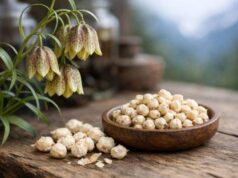
Feverfew is a small daisy-like herb in the Asteraceae family that has been used for centuries in European herbal medicine. Today, it is best known for one reason above all others: migraine prevention. Botanically called Tanacetum parthenium, feverfew contains a distinctive mix of sesquiterpene lactones, flavonoids, volatile oils, and phenolic compounds, with parthenolide drawing the most scientific attention. These compounds help explain the herb’s anti-inflammatory profile and its long-standing reputation in headache care.
Modern use, however, is more focused than folklore. Feverfew is not a broad cure-all, and it is not especially useful as an on-the-spot treatment for an active migraine attack. Its most realistic role is as a daily preventive herb, usually taken in capsules or tablets over several weeks. It also carries meaningful precautions, including possible mouth irritation, digestive upset, allergy risk in sensitive people, and important limits for pregnancy, breastfeeding, and blood thinner use. The most helpful way to understand feverfew is to see it as a targeted herbal option with a narrow but potentially useful clinical lane.
Key Takeaways
- Feverfew is used mainly to help prevent migraine headaches rather than to stop an attack that has already started.
- Standardized products may modestly reduce migraine frequency in some adults when taken consistently for several weeks.
- A common adult range is 50 to 600 mg per day of dried herb top or leaf, often standardized to 0.2 to 2% parthenolide.
- Fresh leaves and some oral products can cause sore mouth, mouth ulcers, and stomach discomfort.
- Avoid feverfew if you are pregnant, breastfeeding, under 18, or taking blood thinners unless a clinician advises otherwise.
Table of Contents
- What Is Feverfew
- Key Ingredients in Feverfew
- Does Feverfew Help Migraines
- How to Use Feverfew
- Feverfew Dosage and Timing
- Side Effects and Who Should Avoid It
- What the Research Actually Says
What Is Feverfew
Feverfew is a flowering herb native to southeastern Europe and western Asia, though it is now cultivated widely and appears in gardens far beyond its original range. It belongs to the daisy family and has finely cut leaves with small white petals and yellow centers. The parts used medicinally are usually the aerial portions of the plant, especially the leaves and flowering tops. In modern products, these are typically dried, powdered, or extracted for use in tablets and capsules.
Historically, feverfew had a much broader reputation than it does now. Traditional texts describe it for fever, headache, digestive upset, menstrual discomfort, inflammatory aches, and even toothache. That broad use is part of the reason the herb’s common name survived so well. Yet modern evidence has narrowed the main practical conversation to migraine prevention. When people look up feverfew today, they are usually not asking whether it helps ordinary fever. They are asking whether it can lower the number of migraine attacks or make them less disruptive over time.
It is also important to understand what feverfew is not. It is not the same as chamomile, although the flowers may look similar at a glance. It is not tansy, even though the two share a genus history and some overlapping chemistry. And it is not an acute pain reliever in the way a rescue medicine is. Feverfew works, if it works for a given person, as a preventive herb taken regularly rather than as a fast remedy taken after the migraine has fully arrived.
The plant’s modern identity is shaped by standardization. Fresh leaves were used traditionally, but chewing them is far less appealing than it sounds and is now discouraged by many practitioners because it often causes soreness, swelling, or ulcers in the mouth. Commercial preparations are more predictable, easier to dose, and less likely to produce that kind of irritation. Even then, the quality can vary widely from one product to another, especially when the label does not explain the amount of parthenolide or the type of preparation used.
A practical way to think about feverfew is this:
- It is a targeted herbal preventive, not a general wellness tonic.
- It is more relevant to recurrent migraine than to routine tension headaches.
- It works best when used with consistency, good product selection, and realistic expectations.
- It is one of those herbs where safety and formulation matter almost as much as the plant itself.
That balance between tradition and restraint is what makes feverfew worth understanding carefully.
Key Ingredients in Feverfew
Feverfew’s medicinal profile is built around a cluster of compounds rather than one single magic constituent. Still, one name appears more than any other: parthenolide. This sesquiterpene lactone is widely treated as feverfew’s signature compound, and many commercial products use it as a standardization marker. Parthenolide matters because laboratory research suggests it can influence inflammatory signaling, including pathways linked to nuclear factor kappa B, cytokine release, and vascular or platelet-related responses that may be relevant to migraine biology.
Parthenolide is not the whole story, though. Feverfew also contains other sesquiterpene lactones, along with flavonoids, phenolic acids, and volatile oils. These components likely contribute to the plant’s broader pharmacology. Flavonoids such as apigenin- and luteolin-related compounds may support antioxidant and anti-inflammatory effects. Phenolic compounds help explain some of the herb’s radical-scavenging activity. Volatile oils may add minor aromatic and biologic effects, though they are not usually the main reason a product is chosen.
The most practically useful ingredient groups are:
- Sesquiterpene lactones, especially parthenolide
- Flavonoids
- Phenolic acids
- Volatile oils and related minor aromatics
For consumers, the key issue is not memorizing those classes. It is understanding what they mean for product quality. Two feverfew supplements can be made from the same species and still behave very differently. One may be standardized to a defined parthenolide range, while another is simply powdered herb with no clear potency. A fresh-leaf product may carry a different irritation profile than a dried standardized capsule. An ethanolic extract may emphasize different compounds than a simple powdered tablet. Those differences help explain why older studies often looked inconsistent: they were not always testing the same kind of feverfew.
Chemically, feverfew is often described as an anti-inflammatory herb, but that phrase can be too broad. Its better-described actions involve modulation of signaling rather than a simple direct pain-killing effect. In migraine terms, that makes sense. Feverfew is usually discussed as a preventive herb because its constituents appear more relevant to longer-term inflammatory and vascular regulation than to rapid symptom shutdown during an active attack.
This is also why standardization matters so much more in feverfew than in some gentler herbal teas. If the therapeutic conversation revolves around parthenolide and related compounds, then the amount, stability, and preparation method matter. Without that information, “feverfew” on a label tells you less than many buyers assume.
Some readers compare its chemistry with other digestive or nausea-support herbs. That comparison can be useful, especially because migraine often includes nausea, but feverfew itself is not the main herb for that symptom. In that context, ginger for nausea support plays a very different role, with different active compounds and a more direct fit for acute stomach upset.
Does Feverfew Help Migraines
This is the central question, and the most honest answer is that feverfew may help some adults reduce migraine frequency, but the effect is usually modest and not universal. That balance matters. Feverfew is not a miracle preventive, yet it is not empty folklore either. Its best case is a smaller number of attacks over time, sometimes with somewhat shorter or less disruptive episodes.
The strongest use case is migraine prevention, not acute migraine treatment. In other words, feverfew is something a person takes daily for weeks rather than only on the day a migraine starts. When it helps, the benefit usually shows up as fewer migraine days or fewer full attacks in a month. Some people also report less reliance on rescue medication, but that is a secondary outcome rather than a guaranteed result.
Realistic benefits may include:
- Fewer migraine attacks per month
- Shorter average attack duration in some users
- Less disruption from recurring migraine patterns
- A preventive option for people who prefer a botanical approach
Benefits that are less reliably supported include:
- Strong relief once a migraine has already started
- Major reduction in migraine pain intensity
- Consistent relief of associated symptoms such as photophobia or nausea
- Broad treatment value for non-migraine headaches
That last point is worth stressing. People often blur together migraine, tension headache, sinus headache, and general headache. Feverfew has been studied mainly for migraine prophylaxis, especially recurrent migraine. It is not especially persuasive as a general headache herb for every pain pattern.
The herb’s traditional reputation also extends to fever, arthritis, and menstrual complaints, but modern evidence is much thinner there. Those uses belong more to herbal history than to current clinical confidence. Readers who encounter sweeping claims that feverfew “treats inflammation everywhere” should be cautious. The more evidence-based conversation stays narrow and centered on migraine prevention.
It is also helpful to place feverfew among other migraine-support options. Some readers compare it with butterbur for migraine prevention, while others look at magnesium, riboflavin, or coenzyme Q10. Feverfew’s advantage is that it has a long traditional record and a clear migraine focus. Its disadvantage is inconsistency across products and only moderate overall evidence. It is often best thought of as one option in a broader migraine plan rather than a stand-alone solution.
A practical test of success is to define the goal before starting. For example:
- Track monthly migraine days for four weeks before use.
- Use a consistent feverfew product at a stable dose.
- Continue long enough to allow a preventive effect.
- Reassess whether attacks are at least meaningfully lower in frequency.
That last step matters because “natural” options can drift into indefinite use without clear benefit. Feverfew is most useful when the result is measured rather than guessed.
How to Use Feverfew
The best modern way to use feverfew is as a standardized oral product taken daily and consistently. Capsules and tablets are the most common forms, and they usually contain either powdered herb or a standardized preparation. This is very different from the older practice of chewing fresh leaves. Fresh leaf use still appears in herbal lore, but it is one of the least practical and least comfortable ways to use the plant because it can irritate the mouth and trigger sores or swelling.
When choosing a product, look for a few features that matter:
- Clear labeling of the plant name, Tanacetum parthenium
- Identification of the plant part, usually herb top or leaf
- A stated daily amount in milligrams
- Standardization details, especially parthenolide content when available
- A form designed for daily oral use, such as capsules or tablets
Routine and timing matter because feverfew is a preventive herb. It should be taken regularly rather than only when symptoms flare. Many monograph-style directions recommend taking it with or after food, which can reduce stomach irritation. Consistency is more important than the exact hour of the day. Morning or evening is usually less important than taking the product the same way every day.
Practical use works best like this:
- Choose one product and avoid switching brands early.
- Take it with or after food unless the label says otherwise.
- Keep a migraine diary with days, intensity, duration, and triggers.
- Give the herb enough time to show a preventive effect.
- Reassess rather than increasing indefinitely.
This is also where expectations need discipline. Feverfew is not a rescue medicine. If a migraine begins, feverfew is unlikely to work like a fast-acting treatment. People prone to migraine-associated nausea sometimes confuse that issue and reach for feverfew during the attack itself, when a more targeted symptom-support herb or medication may be more useful. For example, ginger for nausea support often makes more practical sense during the digestive phase of a migraine than feverfew does.
Another important point is formulation quality. Many older feverfew studies were hard to compare because they used different preparations. A standardized tablet may deliver a more predictable experience than a loose powder or an unlabeled “whole herb blend.” This is why product selection is part of the therapy rather than an afterthought.
Finally, feverfew should not replace medical evaluation when headaches are changing in pattern, becoming more severe, or showing neurologic features such as weakness, speech changes, or sudden explosive onset. Feverfew belongs in self-care for known recurrent migraine patterns, not in the self-diagnosis of a new serious headache.
Feverfew Dosage and Timing
Feverfew dosing depends on the preparation, but the most practical adult reference range for migraine prevention is 50 to 600 mg per day of dried herb top or leaf. Standardized products are often adjusted to 0.2 to 2% parthenolide, with a commonly cited ceiling of 4 mg parthenolide per day. Single doses are often kept at or below 200 mg when products are taken in divided amounts. Those ranges describe product-monograph style use rather than a guarantee that every person needs the highest amount.
A helpful way to interpret the range is this:
- Lower range: 50 to 250 mg per day for milder or standardized products
- Broader migraine-prevention range: 50 to 600 mg per day
- Standardization target: 0.2 to 2% parthenolide
- Maximum commonly cited parthenolide amount: 4 mg per day
Timing is simple. Take feverfew daily, preferably with or after food. What matters most is steadiness, not an exact clock time. Splitting the dose may suit some products, especially if the label recommends divided use or if the user gets mild stomach upset with a larger single dose.
The bigger issue is duration. Feverfew is not expected to show its preventive effect immediately. A fair trial usually means at least 4 to 6 weeks before judging whether it is helping. That waiting period is one reason some users abandon it too quickly. Preventive herbs and preventive migraine medicines alike need time to show their value.
A practical timing plan looks like this:
- Start at the label-guided dose or a lower end of the standard range.
- Take it daily with meals or after meals.
- Track migraine days, duration, and rescue-medication use.
- Reassess after 4 to 6 weeks.
- Continue only if the benefit is clear enough to justify ongoing use.
Longer use deserves more caution. Product-monograph guidance often suggests asking a clinician before using feverfew beyond about 8 weeks at higher daily amounts or beyond about 16 weeks at lower amounts. That does not mean the herb suddenly becomes unsafe after those time points. It means extended use should be more intentional and monitored rather than casual.
Stopping also deserves a note. Feverfew is one of the few herbs for which gradual reduction is commonly advised instead of abrupt discontinuation. This is partly because some users report unpleasant return symptoms when they stop suddenly. A taper is a sensible approach if the product has been used consistently for weeks or months.
The practical lesson is that feverfew dosing is less about chasing a large number and more about matching the right product, daily consistency, and a long enough trial window. It should feel structured, not improvised.
Side Effects and Who Should Avoid It
Feverfew is generally described as tolerable in adults when used in standard oral amounts, but that should not be confused with being risk-free. Most side effects are mild, yet they are common enough to matter in real life, and some people should avoid the herb entirely unless a clinician specifically recommends it.
The most characteristic side effects are:
- Sore mouth
- Mouth ulcers or oral irritation
- Swollen or tender lips or tongue
- Stomach discomfort
- Nausea or loose stools in some users
- Allergy symptoms in sensitive individuals
The mouth-related effects are particularly associated with fresh leaves and poorly tolerated oral exposure. That is one reason modern use favors capsules or tablets over traditional chewing. Even with packaged products, some people notice gastric discomfort, especially when taking the herb on an empty stomach. Taking it with food often improves tolerability.
Allergy risk deserves closer attention than many supplement labels suggest. Feverfew is in the Asteraceae family, so people who are sensitive to ragweed, daisies, chrysanthemums, or even chamomile and related Asteraceae herbs may be more likely to react. The reaction can be mild, such as itching or rash, or more obvious, such as swelling or worsening oral irritation. Anyone with a known plant-family allergy should be cautious.
The people who should avoid unsupervised feverfew use include:
- Pregnant people
- Breastfeeding people
- Children and adolescents under 18
- People taking blood thinners
- People with significant plant-family allergies
- Anyone with a history of severe oral sensitivity to fresh herbs
The pregnancy warning is especially important. Modern monograph guidance advises against use in pregnancy, and some products extend that caution to breastfeeding depending on the dose. There is also a reasonable precaution around blood-thinning effects. Feverfew has been discussed in connection with platelet activity, so combining it with anticoagulants or antiplatelet medicines should be done only with professional advice.
Another practical point is withdrawal. A number of herbal references caution against abrupt discontinuation after sustained use. Even if the mechanism is not fully mapped, tapering gradually is a prudent approach and is reflected in formal monograph-style product directions.
Use extra caution if headaches are changing, worsening, or not clearly diagnosed as migraine. In that case, the safety issue is not just the herb. It is the risk of masking a pattern that needs medical evaluation. Feverfew belongs in a structured migraine-prevention plan, not in unexplained chronic headache self-treatment.
What the Research Actually Says
The research on feverfew is encouraging but uneven. That is the fairest summary. Feverfew has been studied for migraine prevention for decades, and the overall picture suggests a modest preventive effect in some adults, especially when standardized products are used consistently. At the same time, the evidence is not clean enough to place feverfew in the same category as a uniformly reliable first-line medical preventive.
The strongest signal in the research is reduction in migraine frequency. A recent meta-analysis found that feverfew may lower attack frequency and may also shorten duration to some extent. That is meaningful, but it came with important limits: the studies were not identical, product types differed, and the quality of the evidence was constrained by bias and heterogeneity. In plain language, the signal is real, but it is not perfectly stable from one trial to the next.
Why are the studies so mixed? A large part of the answer is formulation. Older trials used different preparations, different doses, and different plant materials. Some used stable extracts, while others used powdered herb. Since parthenolide content and preparation methods matter, the word “feverfew” does not always mean the same intervention in clinical research. That alone can blur the results.
What the evidence supports best:
- Feverfew is more plausible for prevention than for acute treatment.
- Benefits are usually modest rather than dramatic.
- Product standardization appears important.
- A consistent trial over several weeks is more realistic than occasional use.
What the evidence does not strongly support:
- Reliable relief during an active migraine attack
- Strong benefit for associated symptoms like photophobia and nausea
- Broad claims for arthritis, fever, or generalized inflammatory disorders
- The idea that any feverfew product will work the same way
The research also supports a cautious safety profile. Oral irritation, sore mouth, mouth ulcers, and gastrointestinal discomfort are recurring adverse effects. Pregnancy avoidance and caution with anticoagulant-type therapy remain sensible boundaries. One of the more useful findings from formal monographs is not dramatic efficacy but practical clarity: feverfew has a defined traditional indication for migraine prophylaxis, an adult dosage framework, and clear reasons to avoid indiscriminate use.
So where does that leave feverfew in real-world practice? It leaves it in a respectable middle position. It is not hype, and it is not settled enough to promise strong results to every migraine sufferer. For adults with recurrent migraine who want a structured botanical trial, feverfew is a rational option. For those wanting instant relief, broad anti-inflammatory benefits, or guaranteed success, it is the wrong herb to overstate.
References
- European Union herbal monograph on Tanacetum parthenium (L.) Schultz Bip., herba 2020 (Monograph)
- NATURAL HEALTH PRODUCT FEVERFEW – TANACETUM PARTHENIUM 2025 (Official Monograph)
- Exploring the Phytochemistry, Signaling Pathways, and Mechanisms of Action of Tanacetum parthenium (L.) Sch.Bip.: A Comprehensive Literature Review 2024 (Review)
- Systematic review and meta-analysis of Tanacetum parthenium: evaluating its efficacy in migraine relief 2025 (Systematic Review and Meta-analysis)
- The efficacy and safety of Tanacetum parthenium (feverfew) in migraine prophylaxis–a double-blind, multicentre, randomized placebo-controlled dose-response study 2002 (RCT)
Disclaimer
This article is for educational purposes only and is not medical advice. Feverfew may be helpful for migraine prevention in some adults, but it is not a substitute for diagnosis, emergency evaluation, or prescribed treatment. New, severe, or changing headaches require medical assessment. Do not use feverfew during pregnancy, and do not combine it casually with blood thinners or other medicines without professional guidance. A qualified healthcare professional can help decide whether feverfew is appropriate for your migraine pattern, medical history, and current medications.
Please share this article on Facebook, X, or another platform you prefer if you found it useful.