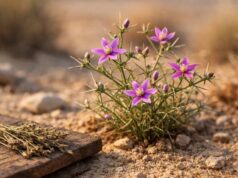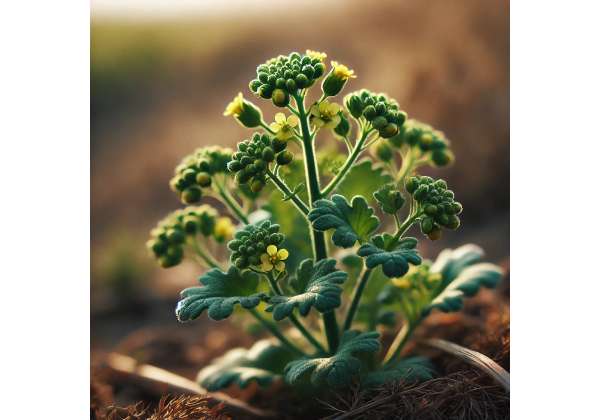
Fleawort mustard, botanically known as Sisymbrium officinale, is a pungent member of the mustard family with a long history in European herbal practice. It is better known in many traditions as hedge mustard or the “singer’s plant,” a name earned from its old reputation for soothing hoarseness, dry cough, throat irritation, and temporary voice strain. The aerial parts and seeds contain glucosinolates, volatile isothiocyanates, flavonoids, and other plant compounds that help explain its warming, stimulating, and throat-focused actions.
What makes this herb interesting today is not that it promises dramatic respiratory effects, but that it may offer a very specific kind of support: relief for irritated throats and overused voices. That narrower focus matters. Fleawort mustard is not a broad immune tonic, and it is not a substitute for medical care when symptoms are severe. Its best use is short-term, targeted, and practical, especially in lozenges, teas, and throat formulas. The most helpful way to understand it is as a traditional voice and throat herb with promising chemistry, modest evidence, and clear boundaries around safety and expectations.
Quick Overview
- Fleawort mustard is best known for short-term support in hoarseness, throat irritation, and dry cough.
- Its key compounds include glucosinolates and volatile isothiocyanates that may stimulate throat sensation and salivation.
- Standardized dry extract is commonly used at 82.5 mg, 3 to 4 times daily, or in lozenges at 7.5 to 10 mg, 10 to 12 times daily.
- Avoid using it as a self-treatment for fever, shortness of breath, or purulent sputum.
- Pregnancy, breastfeeding, and prolonged use in young children should be avoided unless a clinician advises otherwise.
Table of Contents
- What is fleawort mustard?
- Fleawort mustard active compounds
- Does fleawort mustard help hoarseness and voice strain?
- Fleawort mustard for dry cough and throat irritation
- How to use fleawort mustard
- How much fleawort mustard per day?
- Side effects, interactions, and who should avoid it
- What the research actually says
What is fleawort mustard?
Fleawort mustard, or Sisymbrium officinale, is an annual or short-lived biennial herb in the Brassicaceae family. It grows easily in disturbed soils, roadsides, field margins, and urban wild spaces, which helps explain why it became a familiar folk remedy rather than a rare apothecary plant. The herb is slender, branching, and often unassuming in appearance, with small yellow flowers and narrow pods. Despite its plain look, it has carried a very specific medicinal reputation for centuries.
In older European herbal practice, fleawort mustard was used mainly for the mouth, throat, and upper respiratory tract. It became especially associated with aphonia, hoarseness, throat dryness, and dry cough. That focus gave rise to its enduring nickname, the “singer’s plant.” Singers, speakers, actors, and clergy were said to drink the infusion before performances or periods of heavy voice use. Whether every historic claim was accurate is less important than the pattern itself: across regions and texts, the herb kept returning to the same theme of voice and throat support.
That consistency makes the plant more credible than many herbs that have been assigned dozens of unrelated uses. Sisymbrium officinale is not traditionally famous for digestion, sleep, hormone balance, or circulation. Its identity is much narrower. It belongs to the class of herbs that are most useful when the symptom pattern is clear. If the issue is an irritated, tired, overused throat, the herb fits. If the problem is chest infection, severe laryngitis, asthma, or unexplained vocal loss, it does not replace diagnosis.
Another practical point is naming. Fleawort mustard is also called hedge mustard, and older literature may place it under Erysimum officinale. These names can confuse readers who assume they refer to different plants. In modern herbal and botanical usage, Sisymbrium officinale is the accepted name, and hedge mustard is the most common English herbal name. “Fleawort mustard” is less widely used, but it points to the same plant.
The herb also sits in an unusual space between medicinal plant and culinary green. Its leaves and seeds have been eaten in some traditional settings, and the pungent mustard-family taste reflects its sulfur-rich chemistry. That culinary side helps explain why it appears in drinks, teas, lozenges, and throat-supportive foods rather than only in capsules.
So what is fleawort mustard, in the most useful sense? It is a traditional throat herb, a mild upper-respiratory support plant, and one of the few botanicals whose historical identity is closely tied to the human voice.
Fleawort mustard active compounds
Fleawort mustard’s medicinal profile is shaped by mustard-family chemistry, especially glucosinolates and the volatile compounds formed from them. These constituents give the herb its sharp, warming, slightly biting taste and likely explain much of its traditional use for the throat and voice.
The most important starting point is glucosinolates. Sisymbrium officinale contains several of them, including glucoputranjivin, glucocochlearin, and indole-derived glucosinolates such as glucobrassicin-related compounds. On their own, glucosinolates are relatively stable. When the plant is crushed, chewed, steeped, or otherwise processed, enzymes and conditions such as pH and temperature can convert them into isothiocyanates and related volatile sulfur compounds. These breakdown products are much more active from a sensory standpoint.
That matters because the throat effects of fleawort mustard may depend less on bland coating and more on controlled stimulation. Volatile isothiocyanates such as isopropyl isothiocyanate and sec-butyl isothiocyanate are thought to activate sensory pathways linked to pungency and local irritation signaling. In practical terms, a properly prepared hedge mustard lozenge or infusion may create a mild warming, salivating, throat-awakening effect rather than the soft, slippery feel people expect from a demulcent herb like marshmallow root for throat comfort.
The plant also contains flavonoids and phenolic compounds, which widen its profile beyond pungency alone. These compounds may contribute antioxidant and anti-inflammatory actions, and newer metabolomic work has identified flavonoid glycosides as possible contributors to the herb’s anti-inflammatory potential. That is important because it suggests the herb’s action may not come only from the mustard bite. It may also include a quieter background effect from polyphenols.
Other relevant compounds include:
- Volatile sulfur-containing constituents released from glucosinolates
- Minor phenolic acids and related antioxidants
- Nutritional plant compounds typical of edible Brassicaceae greens
- Trace cardenolides, which regulatory documents limit tightly in medicinal preparations
That last point is easy to miss. Regulatory assessment has paid attention to cardenolide content in hedge mustard preparations, and reputable medicinal products are expected to keep it extremely low. This is a useful reminder that even humble throat herbs are not chemically simple.
One of the most practical insights about fleawort mustard is that preparation changes activity. A cold preparation, a lozenge, a tea, and a fresh crushed plant will not release the same amount or balance of volatile compounds. Heat, pH, grinding, fermentation, and the plant part used all affect how much active pungent chemistry is available.
So when people ask what the “key ingredients” are, the best answer is this: glucosinolates and their volatile isothiocyanates drive the herb’s signature throat activity, while flavonoids and phenolic compounds likely provide supporting anti-inflammatory and antioxidant value. It is a pungent throat herb, not a bland mucilage herb, and its chemistry reflects that clearly.
Does fleawort mustard help hoarseness and voice strain?
This is the question that has kept Sisymbrium officinale alive in herbal practice: can it actually help a tired, rough, or strained voice? The honest answer is yes, possibly, but with more tradition than strong clinical proof behind it.
Fleawort mustard has one of the most specific herbal reputations in Europe. It has been used for aphonia, hoarseness, vocal dryness, and temporary voice disability for so long that the historical pattern itself deserves respect. Unlike many herbs that were recommended for nearly everything, hedge mustard kept returning to one narrow theme: people who rely on the voice. That consistency gives the herb more practical credibility than broad, vague folklore.
Modern researchers have tried to explain this tradition rather than dismiss it. One theory is that the volatile isothiocyanates released from the herb stimulate sensory receptors in the mouth and throat, increasing local awareness, salivation, and perhaps a feeling of easier voice use. This is different from saying the herb “heals the vocal cords” in a direct medical sense. The more cautious interpretation is that it may make a dry, irritated, under-lubricated throat feel better and function more comfortably.
There is also limited clinical signal. A small study on perceived vocal tract disability suggested improvement in Voice Handicap Index scores after hedge mustard use. That sounds encouraging, but the evidence remains preliminary. The study was not strong enough to transform traditional use into high-certainty clinical proof. It does, however, support the idea that the herb is worth further study rather than being treated as pure folklore.
In real life, fleawort mustard is most plausible for situations like these:
- Mild hoarseness after speaking, teaching, singing, or cheering
- Voice fatigue during periods of heavy use
- Dry, scratchy throat sensations that make speaking less comfortable
- Temporary loss of vocal ease after irritation from overuse
It is not a good fit for:
- Severe or sudden voice loss
- Hoarseness lasting more than two weeks
- Vocal symptoms with fever, breathing trouble, or marked pain
- Suspected nodules, reflux injury, infection, or neurologic causes
That boundary matters because voice problems are easy to underestimate. A singer may assume the issue is “just strain” when it is actually reflux, infection, or overuse injury. Fleawort mustard belongs in the category of comfort and short-term support, not diagnostic self-management.
Compared with more coating herbs, hedge mustard is more stimulating than soothing. If someone wants a softer, more protective throat herb, licorice for throat soothing may feel more directly demulcent. Fleawort mustard is different. It tends to suit the person who feels dry, rough, and vocally “stuck,” rather than someone seeking a bland coating tea.
So does it help? It may. The best expectation is that it can support comfort and voice ease in mild, temporary, overuse-related situations. That is a meaningful benefit, even if it is not the same as a proven therapeutic cure.
Fleawort mustard for dry cough and throat irritation
Fleawort mustard’s second major traditional role is relief of throat irritation with dry cough. This use is so central that European traditional-use recognition still frames the herb around “throat irritation such as hoarseness and dry cough.” That wording is important. It is not promoted for deep chest congestion, bacterial infection, or chronic lung disease. It is aimed at the irritated upper airway.
This distinction helps avoid a common mistake. Many readers see “cough herb” and assume expectorant, bronchodilator, or infection-fighting action. Hedge mustard seems better suited to the kind of cough that begins in the throat: dry, tickly, annoying, and tied to irritation, overuse, or the early stages of a cold. In that setting, the herb may help reduce the urge to clear the throat repeatedly and may ease the raw sensation that makes speaking uncomfortable.
Its likely mechanisms are mixed. The pungent compounds may stimulate sensory pathways in a way that changes throat perception, while the polyphenol fraction may help moderate local inflammation. This is a more nuanced action than simple coating. Fleawort mustard may act a bit like a “sensory reset” herb, using mild pungency to alter discomfort rather than only blanketing the tissues.
For mild upper-airway irritation, that can be useful. The herb may fit when symptoms include:
- Dry cough without much mucus
- Hoarse or scratchy throat
- Repeated throat clearing
- Mild irritation at the start or end of a cold
- Voice discomfort during seasonal dryness or heavy talking
It is less suitable when symptoms include:
- Thick or purulent sputum
- High fever
- Shortness of breath
- Wheezing from known asthma
- Deep chest pain
- Persistent cough lasting weeks without explanation
This is where comparison helps. Herbs like horehound for cough support and mullein are more often discussed for respiratory formulas broadly, especially where mucus is involved. Fleawort mustard is narrower and more laryngeal. It belongs higher in the throat than deeper in the lungs.
Another useful point is timing. The herb likely works best early, when irritation is mild and localized. It is not a rescue herb for symptoms that have already become severe. In traditional use, people often reached for it at the first sign of roughness or throat dryness rather than waiting until speaking was nearly impossible.
Readers should also know that “dry cough” does not automatically make a herb appropriate. A dry cough from reflux, medication side effects, or uncontrolled airway disease may need a different plan entirely. Fleawort mustard is best kept in the lane of mild, self-limited, throat-centered irritation.
So where does it help most? Probably in the overlap between mild cough and voice discomfort, where the throat feels dry, inflamed, and overused rather than heavily infected or deeply congested.
How to use fleawort mustard
Fleawort mustard is used in several forms, but the form matters more here than with many other herbs. Because its activity depends partly on glucosinolates and the volatile compounds released from them, preparation changes the experience and probably the effect.
The most common modern forms are lozenges, tablets, dry extracts, syrups, and teas. In older practice, infusions of the flowering aerial parts were common, especially before or during voice use. Today, lozenges may make the most practical sense because they keep the plant in prolonged contact with the mouth and throat, which suits a herb intended for local irritation and voice support.
A useful way to think about the forms is this:
- Lozenges or tablets are best when the goal is throat contact over time
- Teas or infusions are best for gentle, traditional self-care
- Syrups may help when dryness and repeated throat clearing are present
- Dry extracts are best when using a standardized product with clear labeling
This herb does not fit perfectly into the typical “just make a strong tea” model. Temperature, grinding, pH, and plant part all influence how much volatile isothiocyanate chemistry is actually available. That is one reason standardized lozenges and prepared products became so common in voice-oriented use. They are easier to repeat consistently than homemade extracts.
In real life, good use usually means matching the form to the situation:
- For singers, teachers, and public speakers, lozenges or slow-dissolving tablets often make the most sense.
- For mild throat irritation at home, tea can be a practical option.
- For travel or performance settings, portable throat tablets are easier than carrying infusions.
- For general respiratory discomfort with mucus, other herbs may be a better first choice.
This is where people sometimes overreach. Because Sisymbrium officinale is in the mustard family, some assume more pungency means more benefit. That is not a good rule. Overly concentrated or badly prepared pungent herbs can irritate rather than help. Fleawort mustard works best as controlled local support, not as an aggressive stimulating remedy.
A practical comparison may help. Someone who wants a moistening, softer herbal tea may prefer great mullein for gentler respiratory support. Fleawort mustard is more targeted to hoarseness and throat dryness, especially when the voice itself feels impaired.
The best use pattern is short-term and symptom-specific. Reach for it when the throat is rough, dry, or vocally tired. Do not turn it into a daily tonic simply because it once helped before a demanding speaking day. Like many good throat herbs, it works best when there is a clear reason for using it and a clear point at which to stop.
How much fleawort mustard per day?
The most reliable modern dosing guidance comes from the European monograph, and it focuses on specific dry-extract preparations rather than on loose folk tea recipes. That is important because it means dose should be discussed by product type, not by vague “cups per day” advice.
For oromucosal use, meaning lozenges or tablets that dissolve in the mouth, adult and older adolescent traditional dosing is listed as:
- Dry extract, water-based, 10 mg, 10 to 12 times daily
- Dry extract, water-based, 7.5 to 10 mg, 10 to 12 times daily
For oral use of one water-based dry extract preparation, adults and older adolescents are listed at:
- 82.5 mg, 3 to 4 times daily
For children, the official traditional-use guidance is more restricted:
- Oromucosal solid forms are not recommended under age 6
- Oral use is not recommended under age 3
- Medical advice is appropriate sooner in younger children with throat symptoms
These figures show something useful about the herb: it is often dosed in repeated small amounts, especially when the goal is local throat contact. That makes sense. A throat herb used 10 to 12 times daily as a lozenge is behaving less like a once-daily supplement and more like targeted local support.
Traditional tea use exists, but it is less standardized. Some herbal sources describe small infusions of the dried aerial parts taken once or several times daily, especially for hoarseness. The challenge is that homemade teas vary a lot in strength, plant quality, and release of active compounds. For this reason, standardized preparations often make more sense for people seeking predictable results.
Timing is also practical. Fleawort mustard is commonly used:
- Before heavy voice use
- During the day when throat irritation recurs
- At the first sign of hoarseness or dry cough
- In short courses rather than indefinitely
Duration matters. If symptoms persist longer than about one week during use, the monograph recommends medical advice. That is a very sensible limit. Hoarseness and dry cough are often harmless, but persistent symptoms can signal reflux, infection, overuse injury, allergy, or something more serious.
A few good dosing rules:
- Follow the exact product form rather than converting one dose into another.
- Do not mix several Sisymbrium products just because each seems “small.”
- Prefer labeled, standardized products if throat symptoms are a recurring issue.
- Stop using it as a self-care herb if symptoms worsen instead of improving.
The best dosage mindset is local, repeated, and short-term. This herb is not built for a “high dose once a day” approach. It works more like a carefully repeated throat aid than like a generalized botanical supplement.
Side effects, interactions, and who should avoid it
Fleawort mustard is generally framed as a traditional throat herb with a fairly simple safety profile, but that does not mean it should be used casually by everyone. The main issue is not that it is known to be highly toxic. The issue is that safety data are limited, the plant is chemically active, and persistent throat symptoms are easy to misjudge.
Known and likely side effects appear mild, but they can include:
- Throat or mouth irritation in sensitive users
- Stomach discomfort or nausea if the preparation is too strong
- Hypersensitivity reactions in people who do not tolerate the herb
- Possible irritation from frequent lozenge use, especially if the throat is already very inflamed
The official contraindication is hypersensitivity to the active substance, which sounds obvious but matters. A plant in the mustard family can be stimulating, and not every throat tolerates pungent herbs equally well. Some people feel better quickly; others may find the same preparation too sharp.
The biggest practical warnings are symptom-based rather than side-effect based. Medical advice should be sought promptly if hoarseness or cough comes with:
- Shortness of breath
- Fever
- Purulent sputum
- Worsening rather than improving symptoms
- Persistent symptoms beyond a short self-care window
That list is valuable because it keeps the herb in the right place: mild self-care, not serious respiratory management.
Pregnancy and breastfeeding are also important caution areas. Safety has not been established, and use is not recommended in the absence of sufficient data. This is a good example of how a mild traditional herb can still be inappropriate simply because proper safety studies are missing.
Children require age-specific caution. Solid oromucosal forms are not recommended under age 6, and oral internal use is not recommended under age 3. Beyond that, even older children with persistent throat symptoms may need medical evaluation sooner than adults do.
Interaction data are limited. No specific interactions are strongly established in the official monograph, but “not reported” is not the same as “impossible.” A sensible approach is to be cautious if using:
- Several throat products at once
- Strongly pungent herbal preparations
- Medicines for chronic cough or respiratory disease without diagnosis
- Any regimen in which recurrent hoarseness may actually be due to reflux or inhaled medication
This herb also highlights a common mistake in self-care: assuming that a “singer’s herb” is automatically safe for every voice problem. It is not. Repeated voice loss, chronic throat clearing, one-sided throat pain, swallowing difficulty, or persistent hoarseness deserve professional evaluation.
Fleawort mustard is safest when used briefly, in the right person, for the right kind of symptom. Its main risk is not dramatic toxicity. Its main risk is being used too casually for symptoms that need a clearer explanation.
What the research actually says
The research on Sisymbrium officinale is promising, but still narrow. That is the most honest summary. The plant has a strong traditional identity, a chemically plausible mechanism, and a few early human signals, but it does not yet have the kind of clinical evidence that would justify bold, modern therapeutic claims.
What looks strongest is the phytochemistry. Researchers have characterized glucosinolates and volatile isothiocyanates in different plant parts and shown that processing conditions change the release of those compounds. This is more than an academic detail. It helps explain why the herb has such a specific sensory and throat-related reputation. Modern work also supports the presence of flavonoid glycosides and other metabolites with anti-inflammatory potential, which broadens the picture beyond mere pungency.
The next strongest layer is mechanism-focused work. A 2021 food-and-drink analysis explored volatile isothiocyanates in model preparations and connected them to sensory-active throat chemistry. A 2025 metabolomics study identified flavonoid glycosides as potential anti-inflammatory agents. Older pharmacological work also suggested tracheal smooth-muscle effects in laboratory settings. Together, these findings make the traditional uses scientifically plausible.
Where the evidence becomes weak is in robust human clinical outcomes. The European traditional-use framework still treats Sisymbrium officinale as a traditional herbal medicinal product rather than a well-established, clinically proven medicine. That distinction matters. It means the indications for hoarseness and dry cough are accepted on the basis of long-standing use, not because multiple high-quality randomized trials have settled the question.
The small vocal-tract disability study is worth mentioning because it supports further research, but it is not strong enough to transform practice on its own. The best interpretation is that it gives the tradition a useful signal, not a final verdict.
A practical evidence ranking would look like this:
- Strongest: traditional use for hoarseness and dry cough
- Strong: phytochemistry involving glucosinolates and volatile isothiocyanates
- Moderate: mechanistic and preclinical support for anti-inflammatory and throat-related actions
- Weak: direct modern human clinical evidence
- Unresolved: long-term routine use and comparative effectiveness against other throat herbs
This is why fleawort mustard is best framed as a focused traditional throat herb rather than a fully validated clinical treatment. That does not diminish it. In fact, it makes the herb more useful. It tells readers exactly where the plant may fit: mild hoarseness, throat irritation, dry cough, and temporary voice strain.
Used in that modest, realistic way, Sisymbrium officinale makes sense. Used as a catch-all upper-respiratory cure, it goes beyond what the evidence can currently support.
References
- Final European Union herbal monograph on Sisymbrium officinale (L.) Scop., herba 2014 (Monograph)
- Addendum to Assesment report on Sisymbrium officinale (L.) Scop., herba 2023 (Regulatory Addendum)
- Sisymbrium officinale, the Plant of Singers: A Review of Its Properties and Uses 2020 (Review)
- Sisymbrium Officinale (the Singers’ Plant) as an Ingredient: Analysis of Somatosensory Active Volatile Isothiocyanates in Model Food and Drinks 2021
- Untargeted Metabolomics and in Silico Screening of Sisymbrium officinale: Identification of Flavonoid Glycosides as Potential Anti-inflammatory Agents 2025
Disclaimer
This article is for educational purposes only and does not replace medical advice, diagnosis, or treatment. Fleawort mustard is a traditional herb for short-term throat and voice support, but it should not be used to self-treat severe hoarseness, prolonged cough, fever, breathing difficulty, or symptoms that may require medical evaluation. Do not use it during pregnancy or breastfeeding unless advised by a qualified clinician. Seek prompt medical care if voice loss is sudden, symptoms last longer than about one week, or cough is accompanied by shortness of breath, fever, or purulent sputum.
If you found this article helpful, please share it on Facebook, X, or your preferred platform so more readers can find accurate, practical information about fleawort mustard.