Fringe tree, or Chionanthus virginicus, is a small North American tree with a long but somewhat forgotten place in traditional herbal medicine. Most modern gardeners know it for its airy white spring flowers, yet herbalists historically valued the bark—especially the root bark—for bitter, liver-centered formulas aimed at sluggish digestion, gallbladder discomfort, constipation, and a heavy feeling after rich meals. That reputation has kept fringe tree in niche tinctures and herbal references even though it has never become a mainstream modern supplement.
What makes the plant especially interesting is the gap between tradition and evidence. Fringe tree contains lignans and secoiridoids such as phillyrin, oleuropein, ligustroside, and related compounds, which help explain why researchers remain curious about its antioxidant and phytochemical profile. At the same time, strong human clinical evidence is still very limited, and many of its best-known uses rest more on Eclectic medicine, homeopathic history, and practitioner tradition than on modern trials. That means the herb deserves a careful, realistic overview—one that respects its medicinal past without overstating what today’s evidence can actually confirm.
Core Points
- Fringe tree is mainly a traditional bitter herb used for digestive heaviness, bile-related support, and occasional constipation rather than a well-proven modern liver remedy.
- Its key compounds include lignans and secoiridoids such as phillyrin, oleuropein, and ligustroside, which show antioxidant activity in laboratory research.
- Traditional tincture use often falls around 1–2 mL up to three times daily, but no well-standardized modern clinical dose exists.
- Avoid self-treating jaundice, gallstone pain, or suspected bile duct blockage with fringe tree.
- Pregnant or breastfeeding people, children, and anyone with known gallbladder obstruction should generally avoid medicinal use.
Table of Contents
- What is fringe tree
- Key compounds and medicinal properties
- What can it help with
- How is fringe tree used
- How much fringe tree per day
- Side effects, interactions, and who should avoid it
- What does the research actually show
What is fringe tree
Fringe tree is a deciduous shrub or small tree native to the eastern and southeastern United States. It belongs to the olive family, Oleaceae, which is a useful clue to its chemistry. Several plants in this family contain iridoid or secoiridoid compounds, and fringe tree follows that pattern. Botanically, it is Chionanthus virginicus, though common names include American fringe tree, old man’s beard, and grancy greybeard.
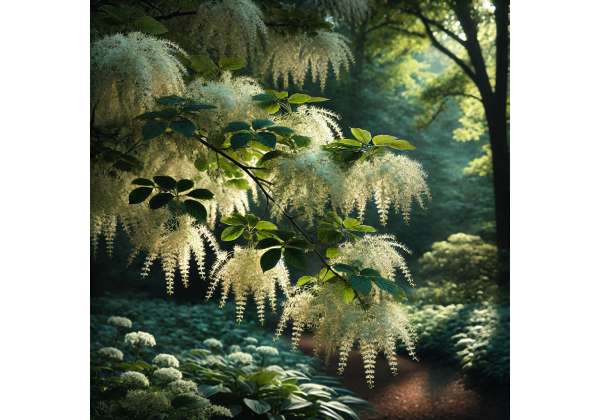
As an ornamental, it is best known for its soft, cloud-like white flowers that appear in late spring. As an herb, however, the medicinal part is not the flower. Traditional preparations focused mainly on the bark, especially the root bark, and in some later discussions the stem bark as well. That distinction matters because a flowering landscape tree and a medicinal bark tincture are very different things, even though they come from the same species.
Historically, fringe tree had a stronger reputation in Eclectic and older American herbal medicine than it does now. It was often described as a bitter, cholagogue, or hepatic stimulant. In plain language, that meant practitioners used it when they believed bile flow was sluggish or when a person felt weighed down by rich food, constipation, coated tongue, headache, or a heavy discomfort under the right ribs. Some traditional uses also extended to jaundice, gallbladder pain, rheumatic states, and certain skin or wound applications, though these broader claims are not strongly supported by modern evidence.
It is important to separate fringe tree from two common misunderstandings. First, it is not the same as Chinese fringe tree, which is a different species. Second, it should not be treated as a proven treatment for gallstones, liver disease, or hepatitis simply because older texts used those words. The language of historical herbalism often grouped very different conditions under broad labels such as “biliousness” or “liver congestion.”
In the modern marketplace, fringe tree appears mostly in small-batch herbal tinctures and occasional homeopathic products. That alone tells you something about its current place: it is a niche herb, not a mainstream evidence-based supplement. Compared with better-studied digestive bitters or liver-focused botanicals, fringe tree remains more historical than contemporary.
Still, it would be a mistake to dismiss it as pure folklore. The plant does contain identifiable bioactive compounds, and modern phytochemical work shows that its bark has a real and measurable medicinal profile. The better conclusion is that fringe tree is a genuine traditional herb with limited modern clinical confirmation, rather than a fake remedy or a proven one.
Key compounds and medicinal properties
Fringe tree’s medicinal identity comes mainly from its lignans and secoiridoids. These are not just technical words added for effect. They are the compounds that help explain why the bark drew attention in both historical practice and modern laboratory research.
Among the best-described constituents are:
- Phillyrin
- Phillyrin-2-O-β-D-glucoside
- Phillyrin-6-O-β-D-glucoside
- Pinoresinol-related glucosides
- Oleuropein
- Ligustroside
- Angustifolioside B
- Excelside B
This compound list is one of the more interesting features of fringe tree. Oleuropein, for example, is also known from olive-family chemistry, which gives fringe tree a recognizable botanical logic. Phillyrin and related lignans are often discussed in the context of antioxidant potential and broader plant defense mechanisms. In fringe tree, these molecules appear concentrated in the bark and help explain why researchers have looked at radical-scavenging and antioxidant activity in extracts.
From a medicinal point of view, fringe tree has traditionally been described as:
- Bitter
- Cholagogue
- Choleretic
- Mild laxative
- Hepatic
- Alterative
- Occasionally diuretic in older texts
Those older categories need some translation. Bitter means it may stimulate digestive secretions and appetite signaling in the same general way other bitter herbs do. Cholagogue and choleretic are terms tied to bile movement and bile production. Hepatic means it was traditionally aimed at liver-related patterns. Alterative is a historical herbal term that usually implied gradual support for metabolism, elimination, or chronic sluggish states rather than a sharp immediate action.
Modern chemistry gives a more grounded interpretation. The bark seems to offer antioxidant activity and a pattern of bitter constituents that could plausibly support digestive signaling. That does not prove the herb treats liver disease, but it does support the idea that fringe tree is pharmacologically active.
A useful comparison is with dandelion as a classic bitter digestive herb. Both herbs sit in the broad bitter-and-bile tradition, but fringe tree is much less studied, much less commonly used, and more dependent on older materia medica than on modern clinical data. That is why its medicinal properties should be framed as traditional and plausible rather than settled and proven.
Another important detail is plant part. Much of the older literature refers to root bark, but later work suggests stem bark may contain the same major groups of lignans and secoiridoids. That matters for sustainability, because harvesting root bark can damage or kill the plant. In practice, that makes stem bark the more responsible material to discuss, even when old sources mention root bark more often.
The best summary is that fringe tree contains a real bitter-phytochemical profile, with lignans and secoiridoids at the center. Those compounds support laboratory interest and help justify historical use, but they do not automatically validate every traditional claim attached to the herb.
What can it help with
Fringe tree is one of those herbs that sounds more dramatic in old herbal texts than it does under modern evidence standards. The most useful way to discuss its benefits is to divide them into traditional uses, plausible modern applications, and claims that remain unproven.
The strongest traditional use is for sluggish digestion tied to bile and rich food. In practical terms, this means fringe tree was often used when a person felt heavy, full, constipated, or headachy after eating fatty meals, or when the tongue was coated and the digestive system seemed stalled. This kind of use fits the herb’s bitter reputation and the language of older American botanical medicine.
A second traditional area is gallbladder and liver support. That sounds impressive, but it needs to be handled carefully. Historical texts often grouped many symptoms under liver or gallbladder complaints without the diagnostic precision we expect now. So while fringe tree was used for jaundice, bilious headaches, gallstone pain, and enlarged liver patterns, those uses do not count as proof that it treats hepatitis, stones, or liver injury in a modern clinical sense.
A realistic benefit list looks like this:
- Mild support for sluggish digestion
- Traditional support for post-meal heaviness
- Possible help with constipation when that constipation overlaps with low bile output or poor digestive tone
- Traditional use in bilious headaches and bitter digestive formulas
- Possible antioxidant support from bark constituents
What it is not good to claim:
- That it dissolves gallstones reliably
- That it treats hepatitis
- That it reverses jaundice safely at home
- That it is a proven liver detox herb
- That it has strong human evidence for chronic gallbladder disease
This is where comparison can help. Readers looking for a better-supported bile-support herb may find artichoke leaf for digestion and bile flow more evidence-aligned than fringe tree. Fringe tree belongs more to the historical and specialist side of herbal practice, while artichoke has a clearer modern role for post-meal heaviness and digestive discomfort.
There is also a small but meaningful antioxidant angle. Laboratory work on fringe tree bark and other plant parts suggests antioxidant activity linked to phenolics, lignans, and secoiridoids. That makes the herb scientifically interesting, but antioxidant activity in the lab should not be confused with a guaranteed health benefit in people.
So what are realistic outcomes if someone uses fringe tree appropriately? The most honest answer is modest change. If the herb helps, it is more likely to reduce the sense of digestive stagnation than to create a dramatic before-and-after result. It fits mild, functional complaints better than clear disease states.
The practical takeaway is that fringe tree may be useful for the narrow traditional pattern it was known for: bitter, sluggish, constipated, and heavy digestion with a gallbladder-style component. Outside that zone, the evidence becomes much thinner, and the case for using it weakens quickly.
How is fringe tree used
Fringe tree is not a food herb, and it is not commonly used as a casual tea in the way peppermint, chamomile, or lemon balm might be. Its traditional use is more specialized and usually revolves around bark preparations. That alone changes how it should be approached: it behaves more like a niche bitter botanical than an everyday kitchen herb.
The main traditional forms include:
- Bark decoction or strong infusion
- Liquid tincture
- Fluid extract in older herbal practice
- Homeopathic mother tincture or later potencies
- Occasionally combined formulas with other bitters
In modern practice, tincture is the form people are most likely to encounter. This makes practical sense. Bark is bitter, somewhat astringent, and not especially pleasant as a beverage. Tinctures also allow the herb to be used in small measured amounts, which suits a bark-based botanical better than large-volume daily tea.
Historically, fringe tree was often paired with other digestive and hepatic herbs rather than used completely alone. That combination logic still makes sense today. A bitter bark used in a multi-herb formula may work more as one supporting piece than as a stand-alone star. Many traditional bitter formulas relied on layering: one herb for bitterness, one for motility, one for liver or bile tone, and one for cramping or pain.
In the same broader category, gentian as a classic bitter tonic is much easier to place because its digestive-bitter role is clearer and more widely recognized. Fringe tree shares some of that bitter strategy, but with more emphasis on old hepatic and gallbladder patterns.
The preparation method matters too. Root bark was historically prominent, but modern sustainability concerns have shifted attention toward stem bark where possible. Using root bark repeatedly can damage the plant population. That is not just a botanical side note. It affects how ethically the herb can be sourced and whether traditional harvesting makes sense today.
A few practical use principles are worth keeping in mind:
- Use clearly labeled Chionanthus virginicus bark rather than vague “fringe tree” products.
- Favor tinctures from reputable herbal companies over unclear raw bark sources.
- Do not assume a homeopathic product and an herbal tincture are the same thing.
- Avoid treating it like a daily wellness tonic without a clear purpose.
- Match the herb to the narrow symptom pattern it historically fits best.
The distinction between herbal and homeopathic use is especially important. A mother tincture still contains plant material, while high homeopathic potencies may contain little or none. That means the phrase “fringe tree product” can describe very different types of preparations with very different expectations.
In real-world herbal practice, fringe tree is best viewed as a targeted bitter bark used in small doses for selected digestive patterns. It is not a general wellness herb, not a culinary botanical, and not a good choice for improvisation. The narrower the goal, the more sensible its use becomes.
How much fringe tree per day
Dosage is one of the weakest and most complicated parts of the fringe tree conversation. There is no well-established, evidence-based modern clinical dose supported by robust human trials. Most dosing guidance comes from older herbal texts, practitioner tradition, and current tincture labeling rather than from modern clinical studies. Because of that, the safest dosing advice is conservative.
For tinctures, a practical traditional range is often around 1 to 2 mL up to three times daily. Some products suggest a little less, and some go somewhat higher, but that range captures the most common practitioner-style guidance without drifting into aggressive dosing. If a formula is very concentrated or combined with other bitters, lower amounts may be enough.
For older fluid extracts or strong decoctions, historical dosing sometimes appears in larger-sounding measurements, but these are harder to translate cleanly into current products. Since most modern readers will encounter a tincture rather than a fluid extract prepared in an apothecary style, tincture guidance is more useful than trying to recreate old dispensatory dosing exactly.
A careful dosing approach looks like this:
- Start at the low end rather than the midpoint
- Use only one fringe tree product at a time
- Take it before meals or between meals if the goal is digestive stimulation
- Stop if nausea, frontal headache, vomiting, or unusual weakness appears
- Do not continue long term without a clear reason
Timing matters. Since fringe tree is traditionally positioned as a bitter digestive herb, it makes the most sense before food or between meals rather than after a heavy dinner when symptoms are already intense. The goal is to support digestive signaling, not to overpower pain that may need medical assessment.
Duration matters just as much as dose. Fringe tree is not well suited to open-ended daily use. A short trial of one to two weeks is much more defensible than using it indefinitely. If a person needs ongoing digestive or biliary support, it is often wiser to step back and ask whether the pattern is actually better matched to diet changes, medical workup, or better-studied herbs.
The most important dosing warning concerns symptomatic gallbladder disease. If sharp right-upper abdominal pain, fever, jaundice, vomiting, or pale stools are present, this is not the time to experiment with a bitter herb. Bile-moving herbs can be a poor fit when obstruction is possible.
In comparison, better-known liver or digestive herbs such as milk thistle for liver-focused support tend to offer clearer modern product standardization. Fringe tree does not. That is one reason conservative use matters so much here.
The best dosing philosophy is to treat fringe tree as a low-volume, short-duration, pattern-specific herb. The right dose is not the largest tolerated dose. It is the smallest amount that helps a clearly defined issue without provoking side effects or delaying proper diagnosis.
Side effects, interactions, and who should avoid it
Fringe tree is often framed gently in traditional herb catalogs, but it should not be treated as automatically safe. Its safety data are limited, its modern clinical use is narrow, and several older sources describe side effects when the herb is overused. That does not make it highly toxic in ordinary small doses, but it does mean caution is justified.
The main adverse effects described historically include:
- Nausea
- Vomiting
- Frontal headache
- Digestive upset
- Slowness of pulse in overdose reports
- General intolerance to strong bitter bark preparations
Those effects fit the profile of a herb that acts strongly enough to be felt but not predictably enough to be casual. A bark bitter can move from “digestive stimulant” to “too irritating” quickly, especially in people with sensitive stomachs.
The biggest safety concern is not a known modern toxic syndrome. It is misuse in the wrong condition. Fringe tree has long been associated with bile and gallbladder complaints, which can tempt people to self-treat pain that should instead be evaluated. That includes gallstone attacks, obstructive jaundice, acute cholecystitis, or liver inflammation. These are not do-it-yourself situations.
Who should generally avoid medicinal use?
- Pregnant or breastfeeding people
- Children
- Anyone with suspected bile duct obstruction
- Anyone with severe or acute gallbladder pain
- Anyone with jaundice that has not been medically evaluated
- People with recurrent vomiting or significant GI irritation
- People using multiple herbs aimed at bile stimulation at the same time
Interaction research is limited, so the safest position is practical caution. Use extra care with:
- Medications processed through the liver when liver status is already uncertain
- Other strong bitters or choleretic herbs
- Laxatives if loose stools are already a problem
- Sedating or cardiologically active therapies when unexplained pulse slowing is present
This is another reason fringe tree is not ideal for casual self-experimentation. With a better-known herb, gaps in evidence can sometimes be balanced by long modern use and clearer safety data. Fringe tree does not have that advantage.
For people mainly seeking gentle digestive or bitter support, alternatives may be easier to use safely. A herb like dandelion root for digestion and mild liver support is generally more familiar and more flexible in food-like or tea-like use, even though it is not a direct substitute for fringe tree’s historical niche.
The practical red flags are straightforward. Stop using the herb and seek care if you notice worsening abdominal pain, vomiting, yellowing of the skin or eyes, dark urine, pale stools, fever, or unusual pulse changes. Those symptoms point away from self-care and toward medical assessment.
In short, fringe tree is best treated as a specialty herb with modest but real risk if misapplied. Its narrow usefulness is not a problem. The problem comes when historical reputation is mistaken for broad modern safety.
What does the research actually show
The research on fringe tree is far thinner than its historical reputation might suggest. There is real phytochemical work, some antioxidant and constituent analysis, and a small amount of modern discussion about quality control and plant-part substitution. What there is not, at least in any convincing modern sense, is a strong body of human clinical evidence proving fringe tree works for liver disease, gallstones, jaundice, or chronic biliary problems.
That point is essential. Fringe tree is a good example of an herb with respectable chemistry but weak clinical confirmation. Researchers have identified lignans and secoiridoids in the bark and shown antioxidant activity in laboratory settings. They have also developed quality-control methods for measuring key compounds such as oleuropein and phillyrin. Those are meaningful contributions, because they establish that the herb is chemically real and not an empty traditional label.
The evidence becomes much weaker when the question changes from “What compounds are in it?” to “Does it help patients?” Most of the better-known medicinal claims still trace back to:
- Older Eclectic and dispensatory literature
- Historical reports
- Homeopathic usage patterns
- Small modern overviews that mostly summarize older claims
- Laboratory rather than clinical findings
That means the evidence supports a cautious summary:
- Fringe tree contains measurable bioactive compounds.
- The bark shows antioxidant potential in preclinical work.
- Historical use for liver and gallbladder patterns is well documented.
- Modern proof for those uses in humans is minimal.
- Claims of treating stones, hepatitis, or jaundice remain unproven.
This distinction matters because fringe tree is often marketed with very confident language about the liver and gallbladder. The chemistry can justify ongoing interest, but the marketing often outruns the data. In practice, the strongest modern takeaway is not that fringe tree is a proven remedy. It is that the plant is phytochemically interesting enough to deserve respect, while still being clinically under-evidenced.
If a reader wants a liver- or bile-focused herb with a more modern evidence base, options such as artichoke leaf for bile-related digestive support are easier to justify. Fringe tree may still have a role in the hands of a knowledgeable practitioner who understands the historical pattern it fits. But it is not the first-line herb for most people seeking evidence-based digestive or hepatic support.
The fairest conclusion is that fringe tree lives in the space between tradition and proof. It is more credible than a purely mythic remedy because its chemistry has been mapped in meaningful detail. Yet it remains much less certain than the average consumer might guess from bold gallbladder-and-liver claims on niche products.
That is not a reason to dismiss the herb outright. It is a reason to use it narrowly, cautiously, and without turning historical prestige into clinical certainty. In herbal medicine, some plants earn trust because they are strongly proven. Fringe tree earns interest mainly because it is historically important and chemically intriguing, while still waiting for better human evidence.
References
- Comparative Assessment of Antioxidant Activity and Functional Components of Chionanthus virginicus and Chionanthus pubescens from the Andean Region of Ecuador 2023
- Therapeutic utility of Chionanthus virginicus–An overview 2022 (Overview)
- Chionanthus virginicus L.: phytochemical analysis and quality control of herbal drug and herbal preparations 2011
- Lignans and secoiridoids from the root bark of Chionanthus virginicus L.: isolation, identification and HPLC analysis 2005
- Note on the Use of Chionanthus Virginiana in Diseases of the Liver 1913 (Historical Report)
Disclaimer
This article is for educational purposes only and is not a substitute for medical advice, diagnosis, or treatment. Fringe tree is a traditional specialty herb with limited modern clinical evidence, and it should not be used to self-treat jaundice, gallstones, hepatitis, severe abdominal pain, or other possible liver and biliary disorders. Always consult a qualified healthcare professional before using fringe tree, especially if you are pregnant, breastfeeding, taking medications, or have a history of gallbladder or liver disease.
If this article was helpful, please share it on Facebook, X, or your preferred platform.