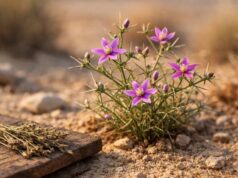
Fringed spiderflower, botanically known as Cleome rutidosperma, is a small flowering herb that grows widely in tropical and subtropical regions and is often treated as a common weed. In traditional medicine, though, it has been anything but ordinary. Folk practices in parts of Africa and Asia have used the leaves, sap, and whole aerial parts for pain, skin irritation, minor wounds, earache, spasms, and inflammatory complaints. Modern laboratory research adds another layer of interest by showing antioxidant, anti-inflammatory, antimicrobial, and analgesic activity in extracts from the plant.
What makes this herb worth a closer look is not strong human clinical proof, but a combination of long traditional use and a surprisingly active phytochemical profile. Cleome rutidosperma contains flavonoids, phenolic compounds, terpenoids, alkaloids, saponins, and a phytol-rich volatile fraction that may help explain several of its reported effects. At the same time, dosing is not standardized, human safety data are limited, and some traditional uses are far ahead of the evidence. That means the most helpful guide is a balanced one.
Quick Facts
- Fringed spiderflower shows the strongest promise for topical soothing, mild pain support, and inflammation-related uses in preclinical research.
- Leaf and aerial-part extracts also show antioxidant and antimicrobial activity, but human trials are still lacking.
- A cautious traditional infusion often starts around 1–2 g dried aerial parts in 150–250 mL hot water.
- Do not drip homemade leaf juice into the ear or use the herb to self-treat seizures, severe skin infections, or high fever.
- Pregnant or breastfeeding people, children, and anyone using seizure, diabetes, or diuretic medicines should generally avoid unsupervised medicinal use.
Table of Contents
- What is fringed spiderflower
- Key compounds and medicinal properties
- What can it help with
- How is fringed spiderflower used
- How much fringed spiderflower per day
- Side effects, interactions, and who should avoid it
- What does the research actually show
What is fringed spiderflower
Fringed spiderflower is an annual herb in the Cleomaceae family. Its botanical name is Cleome rutidosperma, and it is also called purple cleome in some regions because of its small violet to purple flowers. The plant grows readily in disturbed ground, roadsides, gardens, farms, and moist open places, which is why it is often described as a weed. Yet many plants with strong medicinal histories have lived in this same “common but overlooked” category, and Cleome rutidosperma fits that pattern well.
The plant is native to tropical Africa and has naturalized widely across South and Southeast Asia, the Caribbean, and other warm regions. In household medicine traditions, especially in parts of West Africa and India, the leaves and other aerial parts have been used for pain, inflammation, irritated skin, earache, convulsions, and wound care. In some communities the leaves are also eaten cooked, which adds another layer of complexity: this is a plant that can function as food, folk remedy, and local weed at the same time.
For medicinal purposes, the most commonly discussed parts are the leaves and whole aerial herb. Some older sources also describe root use, especially for wound care or other stronger applications. That matters, because the part of the plant used often changes the balance of compounds and the likely effect. A fresh leaf sap, a dried herb infusion, and a concentrated alcoholic extract are not interchangeable preparations.
Fringed spiderflower should also not be confused with other Cleome species. Cleome gynandra, for example, is a more widely studied edible spiderflower, while Cleome viscosa has its own separate herbal literature. Grouping them together can make the evidence sound stronger than it really is. When the discussion is about medicinal use, the label should specifically identify Cleome rutidosperma.
One of the most interesting features of the herb is how local and practical its traditional use has been. Rather than appearing mainly in classic European herb books or modern supplement aisles, it shows up in community medicine: leaf sap, leaf paste, fresh plant material, and simple decoctions used for everyday complaints. That can make the herb sound approachable, but it can also hide an important fact. Local use is not the same as standardized use, and long tradition is not the same as proven safety.
So the best way to understand fringed spiderflower is as a traditional tropical medicinal herb with a real phytochemical profile, a broad folk reputation, and a limited modern evidence base. It is intriguing, useful to know, and worth studying, but it should not be treated as a fully validated modern remedy.
Key compounds and medicinal properties
The medicinal interest in Cleome rutidosperma comes from a diverse mix of phytochemicals rather than a single signature compound. Different extracts of the plant have shown the presence of flavonoids, phenolic acids, alkaloids, tannins, terpenoids, saponins, glycosides, and other secondary metabolites. In practical herbal terms, that helps explain why the plant shows activity across several different laboratory models instead of only one.
A few compound groups matter most.
- Flavonoids and phenolic compounds
These are strongly linked to antioxidant activity and may contribute to some of the plant’s anti-inflammatory potential. Studies comparing plant parts have found relatively high phenolic and flavonoid levels, especially in the leaves. - Terpenoids and related volatile compounds
These compounds likely contribute to antimicrobial and anti-inflammatory actions. Some older phytochemical reports also link terpenoid-rich fractions to pain-relieving and diuretic effects. - Alkaloids, tannins, and saponins
These appear in several screenings and may help explain the plant’s broad biological activity, though their specific contributions are not fully mapped. - Volatile oil constituents, especially phytol
The essential oil yield from Cleome rutidosperma is low, but one study found the volatile fraction to be rich in oxygenated diterpenes, with phytol as the dominant constituent. That is notable because phytol has been studied for antimicrobial, antioxidant, and anti-inflammatory effects in other contexts.
This chemistry supports a list of medicinal properties that appears often in reviews and preclinical papers:
- Anti-inflammatory
- Analgesic
- Antioxidant
- Antimicrobial
- Antipyretic
- Mild diuretic
- Wound-supportive
- Antispasmodic in traditional use
The important phrase here is “supports,” not “proves.” A compound-rich herb can look very impressive in a lab assay and still have limited practical value in people. That is especially true when different studies use different plant parts, different solvents, and different test systems.
Another useful detail is that whole-plant and leaf extracts do not always behave the same way. Some studies focus on aerial parts, some on leaves, and a few on roots or volatile fractions. That creates a common herbal evidence problem: a real plant with real activity, but too much variation in preparation to make simple promises.
Readers who are used to more established anti-inflammatory herbs may find it helpful to compare this profile with boswellia for better-studied inflammation support. Boswellia has a clearer modern evidence base, while fringed spiderflower remains earlier in the pipeline, with much of its value still resting on traditional knowledge and preclinical signals.
So what do the key ingredients actually mean in plain language? They mean the plant is medicinally active enough to deserve respect. They also mean it is complex enough that “one herb, one guaranteed effect” is not a realistic way to think about it. Cleome rutidosperma is chemically interesting, but its medicinal properties are best understood as plausible and partly supported, not fully settled.
What can it help with
Fringed spiderflower has a wide traditional reputation, but the most realistic benefits cluster around pain, inflammation, skin support, and antimicrobial activity. In other words, its strongest case is not as a daily tonic or a cure-all, but as a practical herb for common inflammatory and topical complaints.
Pain and inflammation are the most frequently repeated themes. Animal studies using ethanolic extracts of the aerial parts found analgesic, anti-inflammatory, and antipyretic effects, while cell-based work showed that extracts could reduce inflammatory signaling pathways. This does not prove the herb works like an over-the-counter pain reliever in humans, but it does make the traditional use for aches, swelling, and irritated tissues more plausible.
Topical support is another area where the herb makes sense. Folk use includes leaf applications for irritated skin and minor wounds, and preclinical research in the broader literature points toward antioxidant and antimicrobial actions that may help explain why. That does not mean a fresh leaf poultice is always wise, but it does mean the plant’s reputation for skin-related use is not random.
A third area is mild antimicrobial support. Extracts and volatile fractions have shown activity against several microorganisms in laboratory settings. This is one reason the herb is often described in folk medicine as useful for skin problems, surface irritation, and minor infections. Still, laboratory antimicrobial activity is not a reason to replace proper care for infected wounds, spreading rashes, or ear conditions.
Other reported or traditional uses include:
- Earache and ear inflammation
- Fever
- Spasms and convulsions
- Diuretic support
- Blood sugar support in animal work
- General antioxidant support
These are the areas where caution matters most. Earache is a good example. Traditional leaf sap use is well documented, but putting homemade plant juice into the ear is not a safe modern recommendation because it can irritate tissue, introduce contamination, or delay diagnosis. The same logic applies to convulsions: traditional use exists, but no one should self-treat seizure-like symptoms with this herb.
For readers comparing options, the herb’s likely sweet spot is simple, low-level support rather than first-line treatment. If the main goal is pain relief, willow bark for plant-based pain support has a clearer modern identity. Cleome rutidosperma is more niche and more tradition-driven.
So what benefits are realistic? The most grounded answer is this:
- Mild relief of inflammatory discomfort may be possible
- Topical support for minor skin irritation is plausible
- Antioxidant and antimicrobial effects are supported in preclinical work
- Broader claims for seizures, diabetes, ear disease, or major infection remain unproven
This is a plant where modest expectations are a strength, not a weakness. It may be useful as part of traditional external care or cautious short-term herbal practice, but its benefit profile should be described as promising and limited rather than dramatic and certain.
How is fringed spiderflower used
Fringed spiderflower is used in several different ways, and the form matters more than many readers might expect. Traditional practice often relies on fresh plant material, especially leaves, while modern herbal discussions are more likely to mention dried herb, tinctures, or research extracts. Those are not the same thing, and their effects are unlikely to be identical.
The most common traditional forms include:
- Fresh leaf sap
- Crushed leaf paste or poultice
- Decoction or infusion of aerial parts
- Whole-plant or leaf extract
- Alcohol-based tincture
- Cooked leaves as a food plant in some regions
Topical use is probably the easiest to understand because it fits both tradition and the evidence. A leaf paste or external preparation has been used for irritated skin and minor wounds. In modern terms, a cautious external approach makes more sense than improvising internal high-dose use. Even so, fresh plant applications can vary widely in strength and cleanliness, so they are not automatically safer just because they are traditional.
Oral use is more complicated. Some traditions use decoctions or extracts for pain, fever, digestive complaints, or other internal purposes, but human dosing is not standardized. This makes loose advice like “drink it as a tea” less helpful than it sounds. A mild infusion is very different from a concentrated extract, and a cooked edible portion is different again.
The edible side of the plant is important. In some places the leaves are cooked and eaten as a pot herb. That suggests at least some degree of practical familiarity, but it does not automatically validate medicinal self-dosing. Plenty of edible plants have medicinal effects at one dose and unwanted effects at another.
A careful modern use pattern would favor:
- Clearly identified Cleome rutidosperma material
- External use over internal use when the goal is skin comfort
- Short-term, mild preparations rather than strong concentrated products
- Avoidance of ear instillation and other high-risk folk methods
- Simple single-herb use before trying complex blends
If the goal is minor skin support, many readers will find that calendula for gentle skin support offers a more established route. Fringed spiderflower is more of a specialist folk herb than a standard modern topical botanical.
There is also a product-quality issue. Since this herb is not widely commercialized in standardized form, sourcing can be inconsistent. Wild-harvested material may vary in identity, freshness, contamination risk, and phytochemical strength. That makes careful identification especially important.
In practical terms, the herb works best when its use stays close to its strongest evidence: mild, simple, often external, and not overconfident. It is not the kind of plant that benefits from aggressive dosing or creative experimentation. The more serious the condition, the less appropriate it becomes as a self-care first step.
How much fringed spiderflower per day
This is the hardest section to write with confidence, because Cleome rutidosperma does not have a well-established human dosing standard. Most of the published efficacy data come from animal or laboratory studies, and those do not translate directly into safe home use. So the right starting point is honesty: there is no universally accepted evidence-based daily dose for fringed spiderflower.
Traditional use suggests that when the herb is taken internally, it is usually done as a mild infusion, decoction, or small-amount extract rather than as a large daily supplement. A cautious practical starting point for a dried aerial-part infusion is about 1 to 2 g of herb in 150 to 250 mL of hot water, typically used once or twice daily for a short period. This is not a clinically validated dose. It is a conservative, tradition-informed range intended to keep exposure modest.
For tinctures, standardization is even more difficult. Products vary greatly in strength, solvent ratio, and plant part used. If a reputable herbal product provides a manufacturer serving size, that is more reliable than trying to guess an equivalent dose from whole-herb studies. Even then, the wiser choice is to begin below the label maximum and watch for tolerance.
For topical use, dosage is less about milligrams and more about concentration, skin tolerance, and frequency. A diluted external preparation or a small patch application makes more sense than repeated heavy coating, especially on broken or highly sensitive skin.
A few dosing rules help keep the herb in proportion:
- Start low rather than jumping to the top of any suggested range
- Use one preparation at a time
- Keep internal use short term unless guided by a qualified practitioner
- Avoid combining oral and strong topical use on the same day at first
- Stop promptly if nausea, rash, diarrhea, or unusual drowsiness appears
Animal studies often used extract doses around 200 to 400 mg/kg, but those figures should not be converted casually into human self-dosing. Experimental models are useful for showing activity, not for giving direct consumer instructions.
Timing depends on the goal. If someone is using a mild infusion for general discomfort, taking it after food may reduce the chance of stomach irritation. If the aim is topical relief, external use can be spaced based on skin response rather than on a clock.
For many readers, the most important dosing lesson is that no strong reason exists to use this herb heavily. Because the evidence base is modest and human safety data are limited, the smartest dose is the smallest dose that meets a narrow purpose. If someone needs a clearer, easier-to-dose external herb, plantain for simple topical support may be a more practical first choice.
With fringed spiderflower, restraint is not a weakness. It is part of safe use.
Side effects, interactions, and who should avoid it
Fringed spiderflower has a broad traditional reputation, but its safety profile is not well defined by modern human studies. That means the right approach is not fear, but caution. A plant can be traditionally familiar and still be poorly standardized, especially when fresh leaf sap, crude extracts, and different plant parts are all used in different ways.
The most likely side effects are the common herbal ones:
- Mild stomach upset
- Nausea
- Loose stools
- Skin irritation or rash with topical use
- Allergy-like reactions in sensitive people
Fresh topical use may carry an extra risk because the plant material is not sterile and the concentration is unknown. What feels soothing to one person may irritate another, especially on inflamed skin, around the eye, or in an already damaged ear canal.
The biggest practical safety issue is misuse. Some of the herb’s traditional claims involve symptoms that should not be handled with home remedies alone. Earache, convulsions, spreading skin lesions, persistent fever, or suspected infection all belong in a medical setting when symptoms are significant or ongoing. Homemade leaf sap in the ear is especially hard to justify in modern use because contamination, tissue irritation, and delayed diagnosis are all real concerns.
Interaction data are limited, but a cautious reader should pay attention to the plant’s reported pharmacology. Since preclinical studies suggest anti-inflammatory, diuretic, glucose-lowering, and possible central nervous system effects, extra caution is reasonable with:
- Diuretic medicines
- Diabetes medicines
- Sedatives or seizure medicines
- Anti-inflammatory drug regimens
- Multiple herbs with overlapping pharmacologic effects
This does not mean every interaction is proven. It means the plant has enough biological activity that stacking it casually with medication is not wise.
Who should generally avoid medicinal use of fringed spiderflower?
- Pregnant or breastfeeding people
- Young children
- People with seizure disorders
- People with active ear disease or ear injury
- People with severe kidney, liver, or metabolic disease unless supervised
- Anyone with a history of strong plant-skin reactions
- Anyone using multiple medicines for diabetes, fluid balance, or nervous system conditions
A second issue is identification. Because Cleome rutidosperma grows wild and resembles other small weedy herbs to the untrained eye, mistaken identity is a real risk. That is another reason this is not a great herb for casual foraging-based self-treatment.
If the main concern is minor topical antimicrobial care, tea tree for topical antimicrobial support is much better defined as a modern product category, though it also requires careful dilution and skin awareness.
The safest summary is simple. This herb may be appropriate for cautious, limited use in the right context, but it is not well suited to unsupervised use in high-risk groups or for serious symptoms. When an herb’s evidence is still mostly preclinical, the burden of safety has to come from conservative use.
What does the research actually show
The research on Cleome rutidosperma is best described as promising but early. There is enough evidence to say the plant is pharmacologically active. There is not enough evidence to say it is a proven treatment for the conditions it is traditionally used for.
The strongest part of the evidence base comes from preclinical work. Animal studies have shown analgesic, anti-inflammatory, and antipyretic effects from ethanolic extracts of the aerial parts. Cell studies have found anti-inflammatory actions tied to pathways such as NF-κB, JNK, and phase II enzyme regulation. Other laboratory work has reported antioxidant, antibacterial, and antimicrobial activity in several extracts and fractions.
Phytochemical studies add depth to that picture. Research has identified high phenolic and flavonoid content in some plant parts, and essential-oil analysis found a phytol-rich volatile fraction with interesting antimicrobial behavior. This does not prove clinical benefit, but it gives the plant a credible chemical foundation rather than leaving its folk reputation unsupported.
The limits of the evidence are just as important:
- Human clinical trials are essentially absent
- Preparations vary widely across studies
- Plant parts differ in chemistry
- Traditional methods are not standardized
- Safety data in humans are sparse
This is why some claims need to stay in the “possible” category. Earache relief, anticonvulsant use, antidiabetic effects, wound support, and diuretic action all appear somewhere in the literature, but mostly as animal data, in vitro findings, or traditional reports. That is useful for hypothesis-building. It is not enough for confident clinical recommendations.
The research therefore supports three careful conclusions.
First, Cleome rutidosperma is a real medicinal plant, not just a folkloric curiosity. Its chemistry and repeated preclinical findings justify continued interest.
Second, the herb’s most believable areas are pain, inflammation, antioxidant activity, and topical-support logic. These are the places where traditional use and experimental data overlap most clearly.
Third, the gap between research and real-world use is still wide. A plant can inhibit bacteria in a dish, reduce inflammation in rodents, and still have no proven role as a home remedy for human disease.
That makes fringed spiderflower a classic example of a herb that deserves respect without exaggeration. It is more evidence-backed than a purely anecdotal remedy, but much less established than modern herbal standards like chamomile, peppermint, or calendula. Its future may be in standardized extracts, better topical formulations, or targeted compound research rather than in broad all-purpose folk use.
The practical message for readers is that this herb is interesting enough to study, potentially useful in limited ways, and still too under-tested to market with certainty. That is not a disappointing conclusion. It is an honest one, and honesty is what makes an herbal guide actually useful.
References
- A Review on Bioactive Compounds and Pharmacological Properties of Cleome rutidosperma DC: A review on Cleome rutidosperma 2023 (Review)
- Comparative antioxidant, antibacterial and phytochemical analysis of roots, stems, leaves and seeds from Cleome rutidosperma DC 2022
- Phytochemistry and polypharmacology of cleome species: A comprehensive Ethnopharmacological review of the medicinal plants 2022 (Review)
- Cleome rutidosperma and Euphorbia thymifolia Suppress Inflammatory Response via Upregulation of Phase II Enzymes and Modulation of NF-κB and JNK Activation in LPS-Stimulated BV2 Microglia 2016
- Analgesic, anti-inflammatory and antipyretic activities of the ethanolic extract and its fractions of Cleome rutidosperma 2007
Disclaimer
This article is for educational purposes only and does not replace medical advice, diagnosis, or treatment. Fringed spiderflower is a traditional medicinal herb with limited human clinical evidence, and it should not be used to self-treat seizures, ear disease, severe skin infections, high fever, or chronic inflammatory illness. Consult a qualified healthcare professional before using it medicinally, especially if you are pregnant, breastfeeding, taking prescription medicines, or managing a chronic health condition.
If this article helped you, please share it on Facebook, X, or any platform you prefer.