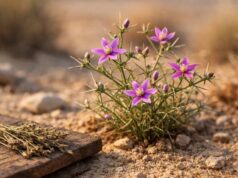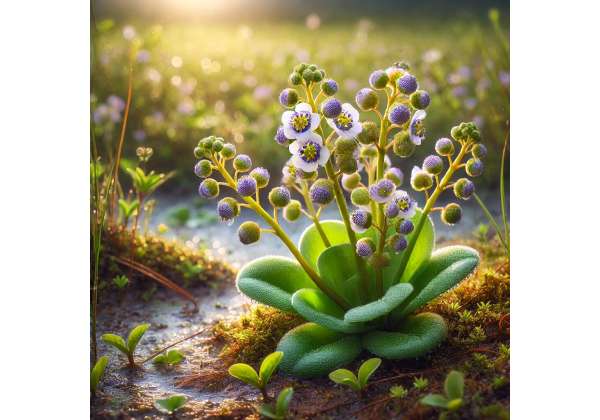
Frogfruit, botanically known as Phyla nodiflora, is a creeping herb that grows close to the ground in warm, moist places and has a long history in traditional medicine across South and Southeast Asia. It is also known in older literature as Lippia nodiflora, and that synonym still appears in many research papers. What makes Frogfruit interesting is the gap between its humble appearance and its surprisingly rich chemistry. The aerial parts contain flavonoids, phenylethanoid glycosides, terpenes, tannins, and other plant compounds linked in early research to antioxidant, skin-protective, anti-inflammatory, and metabolic effects.
Traditional use is broad. Folk systems describe Frogfruit in teas, juices, poultices, and washes for skin irritation, coughs, mild digestive complaints, dandruff, feverish states, and liver-related discomfort. Modern evidence is more selective. The strongest support still comes from laboratory and animal studies rather than from human trials. That means Frogfruit is best approached as a promising traditional herb with real phytochemical value, but not as a proven stand-alone treatment for major disease.
Essential Insights
- Frogfruit is most plausibly used for mild skin support, gentle digestive comfort, and traditional anti-inflammatory use rather than for aggressive self-treatment.
- Its better-known compounds include eupafolin, hispidulin, nodifloretin, verbascoside, and related flavonoids with antioxidant activity.
- A cautious tea range is about 1 to 2 g dried aerial parts in 200 to 250 mL hot water, once or twice daily to start.
- Avoid concentrated use during pregnancy, breastfeeding, and in children because human safety data are limited.
- Do not forage Frogfruit from polluted drains, roadsides, or industrial runoff areas, even if the plant looks healthy.
Table of Contents
- What is Frogfruit?
- Key compounds and actions
- What can Frogfruit help with?
- How to use Frogfruit
- How much should you take?
- Safety, interactions, and who should avoid it
- What the research actually shows
What is Frogfruit?
Frogfruit is a low-growing perennial herb in the Verbenaceae family. It spreads by creeping stems that root at the nodes and produce small rounded flower heads, usually white or pale pink to lavender. Botanically, it is Phyla nodiflora, though many herbal and pharmacology sources still use the older name Lippia nodiflora. Both names refer to the same plant, and readers will see both in reference lists, herbal formulas, and research databases.
The herb grows naturally in tropical and subtropical regions, especially in wet ground, field edges, drainage zones, and disturbed soils. That ecological adaptability partly explains why it became a folk remedy. Plants that are easy to find often become part of everyday medicine, and Frogfruit has a long ethnobotanical footprint in Ayurveda, Siddha, village medicine, and regional household remedies.
Traditional uses are wide-ranging and include:
- cough and simple respiratory discomfort
- feverish or inflammatory states
- dandruff and scalp irritation
- mild digestive complaints and diarrhea
- liver-related folk uses
- skin irritation and wound washing
- swelling and general inflammatory discomfort
That broad reputation can make the herb sound more proven than it is. In reality, many of these uses come from traditional practice and preclinical investigation rather than from well-designed human trials. Still, the plant’s historical use is important because it points modern researchers toward the areas that most deserve testing.
Frogfruit is also a good example of a plant that sits between food, folk medicine, and pharmacology. In some traditions it is used as a fresh juice, herbal drink, or leaf paste. In others, it appears as a decoction or as part of a blended formula. This means the plant is not tied to one rigid medicinal form. Instead, it behaves like many village herbs: it is prepared in the simplest form available and matched to the immediate problem.
One practical point matters more than most people realize: where the herb grows affects whether it is safe to use. Frogfruit often thrives in wet, neglected, or contaminated places. That makes casual foraging risky. A medicinal plant growing in roadside runoff or polluted drainage water is not a good herbal source, no matter how authentic the species is.
If you want a simple working definition, Frogfruit is a traditional creeping herb with a broad folk reputation, especially for skin, digestion, and inflammation-related comfort. It is scientifically interesting because it contains active flavonoids and related compounds, but it is still best viewed as a modest support herb rather than a clinically settled treatment.
Key compounds and actions
Frogfruit is chemically richer than its small size suggests. The plant contains a layered mix of flavonoids, phenylethanoid glycosides, terpenoids, tannins, and other secondary metabolites. These compounds are likely responsible for the herb’s reported antioxidant, skin-related, anti-inflammatory, and metabolic effects in preclinical work.
The key constituents most often discussed include:
- eupafolin
- hispidulin
- nodifloretin
- 6-hydroxyluteolin and related flavonoids
- verbascoside
- arenarioside
- terpenes and terpenoids
- tannins
- sterols such as beta-sitosterol
- various volatile and phenolic compounds depending on extraction method
The most important action profile seems to center on flavonoid-driven antioxidant activity. This is one of the best-supported parts of the plant’s chemistry. Several studies have isolated and measured antioxidant constituents from the aerial parts, and Frogfruit consistently shows radical-scavenging potential in laboratory models. That does not automatically make it a powerful human antioxidant therapy, but it gives a strong rationale for why the plant is repeatedly investigated.
A second major theme is skin-related activity. Frogfruit is unusually interesting here. Some of its compounds, especially eupafolin and related flavonoids, have been studied for antimelanogenesis, keratinocyte protection, and irritation-related pathways. This helps explain why the herb appears in traditional skin care, dandruff use, and modern experimental dermatology.
A third theme is inflammation modulation. The herb has a long traditional reputation as an anti-inflammatory plant, and several isolated compounds appear to affect signaling pathways relevant to oxidative stress and inflammatory response. That said, the evidence is far stronger in cells and animals than in patients.
A fourth theme is metabolic or enzyme-modulating activity. Some Frogfruit compounds have been studied in relation to uric acid metabolism and related pathways. This suggests the plant may have more specific pharmacology than a general wellness herb, though that area still needs careful human validation.
The exact chemistry depends on the preparation. A methanolic extract is not the same as a household tea. An ethyl acetate fraction is not the same as a fresh leaf paste. This matters because people often talk about “the herb” as if every form behaves identically. In practice, extraction method changes which compounds are concentrated and how strongly they act.
Readers who want more context on one of Frogfruit’s best-known antioxidant flavonoids may find it useful to compare the broader role of plant flavonoids such as quercetin, even though Frogfruit is not a quercetin herb in the narrow sense. The comparison helps explain why flavonoid-rich plants often show overlapping antioxidant and tissue-protective patterns.
Overall, Frogfruit should be thought of as a flavonoid-forward medicinal herb with a meaningful but still incomplete pharmacological profile. Its promise is real, but it comes from chemistry and preclinical evidence more than from standardized human herbal practice.
What can Frogfruit help with?
The most useful answer is a restrained one. Frogfruit may help with several mild, traditional, or supportive goals, but most of the better-looking claims are still based on animal studies, cell work, or older ethnobotanical use. That means the herb is best suited to low-risk, short-term, modest expectations.
The most plausible uses are these:
- mild skin and scalp support
- gentle digestive support
- traditional anti-inflammatory use
- simple respiratory folk use
- exploratory support in formulas aimed at uric acid or metabolic balance
Skin and scalp support is one of the clearest traditional-modern overlaps. Frogfruit has a history of use for dandruff, skin irritation, and simple topical care, and modern research on its flavonoids supports real antioxidant and skin-protective potential. This does not mean it is a proven treatment for eczema, psoriasis, melasma, or chronic dermatitis. It does mean that a traditional wash, compress, or scalp formula is one of the more realistic uses.
Digestive support is also credible, especially in traditional settings. Ethnomedicinal reports connect Frogfruit with diarrhea, indigestion, stomach discomfort, and bowel complaints. That does not mean it is a primary digestive herb like peppermint or ginger. Instead, it may fit short-term folk use where the aim is mild calming or balancing rather than a strong stimulant or laxative effect.
Inflammatory discomfort is a broad but plausible category. Frogfruit is repeatedly described as anti-inflammatory in preclinical work, and its chemistry supports that direction. Even so, the herb should not be marketed as a proven natural replacement for prescription anti-inflammatory drugs. A more realistic expectation is that it may contribute gentle support in formulas or in traditional use.
Respiratory folk use appears in older medicine systems as well. The plant has been used for cough, feverish states, and simple airway discomfort. In practical terms, that suggests a warming or soothing household herb, not a stand-alone treatment for asthma, pneumonia, or severe infection.
One of the more specific experimental lines involves uric acid regulation and hyperuricemia models. Some Frogfruit flavonoids have shown promising effects in animal research. This is interesting, but it remains far from a clinical recommendation. A plant that looks good in a rat model is not automatically useful or appropriate for gout self-treatment in a person.
This is why expectation-setting matters. Frogfruit may be reasonable for:
- a simple skin-support wash
- a short tea trial for mild digestive discomfort
- a traditional anti-inflammatory support herb
- inclusion in a broader herbal formula
- careful exploratory use when standard care is not being delayed
It is not reasonable to treat Frogfruit as proven therapy for gout, liver disease, chronic inflammatory disease, severe diarrhea, or major skin conditions.
A helpful comparison is calendula in topical herbal care. Calendula is better known and easier to standardize for skin use, while Frogfruit is more obscure but pharmacologically intriguing. If your main interest is simple skin soothing, that comparison is useful. If your interest is research novelty, Frogfruit becomes more interesting.
In short, Frogfruit may help in the same way many traditional herbs help: not by acting dramatically, but by offering modest support where irritation, inflammation, or mild functional imbalance is the issue.
How to use Frogfruit
Frogfruit has traditionally been used in fairly simple forms, and that is still the safest way to think about it. Because there is no strong clinical standardization for the plant, low-complexity preparations are usually more sensible than concentrated modern extracts.
Common traditional and practical forms include:
- tea or infusion from the aerial parts
- decoction
- fresh juice
- leaf paste for external use
- scalp wash
- poultice or compress
- blended traditional formula
For internal use, a tea or light decoction is the easiest entry point. This is the most transparent way to try the herb because the preparation is simple and the dose can stay modest. A tea makes the most sense when the goal is short-term digestive support, mild inflammatory comfort, or general traditional use.
For topical use, Frogfruit is especially interesting. A cooled infusion can be used as a wash or compress, and a fresh leaf paste is part of older folk practice for scalp or skin complaints. This does not mean fresh paste is always the best option. Modern hygiene standards matter, and raw plant material can irritate or contaminate already damaged skin if it is not handled carefully.
A cautious external-use method often looks like this:
- Prepare a fresh, clean infusion from reliable plant material.
- Let it cool fully.
- Apply to a small area first.
- Stop if redness, burning, or itching increase.
- Do not use on deep wounds or infected skin without medical care.
For scalp use, a strained decoction or wash is often more practical than a thick paste. That keeps the preparation cleaner and easier to rinse out. This is one of the reasons Frogfruit is often mentioned in relation to dandruff or simple scalp irritation rather than to severe dermatologic disease.
The fresh juice approach appears in traditional medicine, but it is harder to standardize and harder to use safely unless you have high confidence in plant identity, plant cleanliness, and handling. For most people, dried herb tea or topical wash is the better place to start.
A few practical rules help:
- Use clean, correctly identified material.
- Avoid herbs gathered from polluted wet ground.
- Start with one form at a time.
- Do not combine strong extracts and fresh juice on the same day.
- Match the form to the reason you are using it.
If the goal is digestion, the tea form makes more sense. If the goal is skin or scalp support, the wash or compress form makes more sense. If the goal is respiratory comfort, a warm tea may be more appropriate than a paste or topical application.
For readers interested in a more familiar digestive herb for comparison, peppermint for digestive and respiratory comfort offers a clearer and better-studied use pattern. Frogfruit is the more ethnobotanical option, not the more standardized one.
That distinction is important. Frogfruit works best when treated as a careful traditional herb, not as a highly engineered supplement with guaranteed consistency.
How much should you take?
There is no validated modern human dose established specifically for Phyla nodiflora. That is the most important dosing fact. Any practical range used today should be understood as conservative, traditional-style guidance rather than as a clinically confirmed prescription.
For adults using a tea or light decoction, a cautious starting range is:
- 1 to 2 g dried aerial parts
- in 200 to 250 mL hot water
- once or twice daily to start
If that is tolerated and there is a clear reason to continue, some people may move toward:
- 2 to 3 g dried herb per serving
- once or twice daily
That still keeps the plant in a moderate range and respects the lack of human clinical data. Because Frogfruit is not a mainstream standardized herbal supplement, there is little reason to assume that pushing the dose higher will create better results.
For fresh juice, dosage is much less reliable. Potency varies by plant age, growing conditions, and preparation method. For that reason alone, juice is better handled in traditional settings than in casual self-experimentation.
For topical use, the important issue is not grams swallowed but concentration on the skin. A wash or compress made from a stronger tea is usually safer than applying a crude paste to compromised skin. Start gentle. Skin problems often worsen when people assume that stronger plant material means faster healing.
Timing also matters. If you are trying Frogfruit for digestion, take it after or between meals depending on tolerance. If you are using it for a mild inflammatory goal, consistent short-term daily use makes more sense than random large doses. If you are using it topically, freshness and cleanliness matter more than clock timing.
A few situations justify starting at the very low end:
- small body size
- sensitivity to herbs
- fragrance or plant allergy history
- multiple medications
- reactive stomach
- uncertain plant source
A few situations do not justify increasing the dose on your own:
- persistent diarrhea
- joint swelling with redness
- severe scalp inflammation
- fever
- worsening skin lesions
- symptoms that have lasted more than a short self-care window
The most honest dosing advice for Frogfruit is: start small, stay simple, and stop early if the herb does not clearly suit you. This is not a herb with a robust, evidence-based dose ladder.
If you want a broader benchmark for how gentle herbs are often introduced, dandelion in simple tea practice offers a useful comparison. The lesson is similar: low dose first, clear reason for use, and no assumption that more is better.
In practical terms, one cup of a mild Frogfruit infusion once daily for a few days is a safer trial than jumping straight into concentrated or improvised preparations.
Safety, interactions, and who should avoid it
Frogfruit has a promising reputation, but its safety profile is still not well mapped in humans. That means caution is not optional. The biggest risks come from poor sourcing, overconfident dosing, limited human data, and the assumption that a traditional herb is automatically harmless.
The first safety issue is environmental contamination. Frogfruit commonly grows in wet, disturbed, or polluted places. This is more than a botanical detail. It means the plant can accumulate contaminants or be exposed to sewage, runoff, industrial waste, heavy metals, and agricultural chemicals. In some ways, this is the herb’s most practical safety problem.
The second issue is lack of human clinical safety data. Animal and lab findings are useful, but they are not enough to guarantee safety during long-term or concentrated use. For an herb without strong human dosing standards, caution should increase when the preparation becomes more potent.
The third issue is topical irritation. Although Frogfruit is often discussed for skin use, raw plant paste or crude extracts can irritate some people, especially if the skin barrier is already damaged. Patch-testing matters.
The fourth issue is medication uncertainty. There is not enough detailed interaction research to map Frogfruit confidently against common drug classes. Because the plant contains active flavonoids and glycosides, people taking multiple medicines should not assume interaction-free use.
Who should avoid Frogfruit, or use it only with professional guidance:
- pregnant or breastfeeding people
- children
- people taking multiple prescription medicines
- those with major liver or kidney disease
- anyone using herbs gathered from contaminated environments
- people with unexplained severe digestive, skin, or inflammatory symptoms
Possible side effects may include:
- stomach upset
- nausea
- loose stools
- headache
- topical redness
- itching
- intolerance to fresh juice or raw paste
There is also a broader safety rule: Frogfruit is not the right herb for serious self-treatment. It should not be used in place of care for:
- severe diarrhea or dehydration
- high fever
- spreading or infected skin lesions
- acute gout flare needing evaluation
- significant liver symptoms
- shortness of breath or chest symptoms
In many cases, the herb’s risk is less about inherent toxicity and more about misuse. A mild tea from clean, properly identified material is a very different situation from a strong extract taken daily for weeks, or a plant collected from contaminated water channels.
If your primary interest is simple skin support rather than experimenting with a less standardized herb, a safer comparison may be aloe vera in more familiar topical care. Frogfruit may still be valuable, but it should be used with more caution and more respect for quality control.
The most reliable safety mindset is simple: treat Frogfruit as promising but under-validated, and let that shape every decision about sourcing, dose, and duration.
What the research actually shows
The research on Frogfruit is more impressive than many obscure herbs, but it is still mostly preclinical. That means the plant has real scientific credibility, yet not the kind of human evidence that would support bold therapeutic claims.
What the evidence supports reasonably well:
- Frogfruit contains multiple bioactive flavonoids, glycosides, terpenes, and phenolic compounds.
- Extracts show antioxidant activity in several laboratory systems.
- The plant has measurable anti-inflammatory and skin-related pharmacological potential.
- Some compounds show promising activity in keratinocyte, melanogenesis, and oxidative-stress models.
- Animal work suggests possible roles in uric acid regulation and other metabolic pathways.
- Traditional use across multiple medical systems is well documented.
What the evidence supports only cautiously:
- meaningful clinical benefit in humans for skin disease
- reliable effects on gout or hyperuricemia in patients
- direct benefit for chronic inflammatory disease
- confident long-term oral safety
- standardized therapeutic dosing
- routine use alongside complex medication regimens
One of the strongest modern themes is skin biology. Frogfruit flavonoids, especially eupafolin-related fractions, have shown protective effects in models of oxidative stress and keratinocyte injury. This is one reason the plant keeps appearing in dermatology-adjacent research. It does not prove that Frogfruit tea or topical wash will produce dramatic cosmetic or medical outcomes in everyday use, but it makes the traditional skin use more plausible.
Another strong theme is antioxidant chemistry and quality profiling. Studies have isolated active flavonoids and developed analytical fingerprints for the plant. That matters because it shows Frogfruit is not a vague folk medicine with unknown ingredients. Its chemistry is identifiable, repeatable, and increasingly measurable.
A third theme is targeted pharmacology, especially in animal models. The herb has shown interesting effects in hyperuricemia, liver-related models, and inflammation-related systems. These findings are valuable, but they still sit in the gap between promising mechanism and human proof.
A balanced evidence ranking looks like this:
- strongest: phytochemistry and antioxidant evidence
- moderately strong: skin-protective and anti-inflammatory preclinical evidence
- promising but limited: metabolic and uric-acid-related animal studies
- weakest: well-designed human clinical outcomes
That ranking leads to a clear conclusion. Frogfruit is not an empty traditional claim. It is a legitimate medicinal plant with enough chemistry and early pharmacology to deserve attention. But it is also not a clinically settled herbal medicine with reliable standardized guidance.
For most readers, that means the right use is modest and realistic. Frogfruit may be worth exploring as a short-term traditional herb for skin, digestion, or mild inflammatory support when the source is clean and the preparation is simple. It is not yet a herb that justifies confident claims about treating major chronic conditions.
That distinction is not a weakness. It is the difference between thoughtful herbal practice and marketing hype.
References
- Chemical composition of organic extracts of Phyla nodiflora L. in Syria by GC-MS 2024.
- Jalpippali (Lippia nodiflora Mich): A comprehensive review of ethnobotany, phytochemistry and pharmacology 2025. (Review)
- Flavonoid-rich Phyla nodiflora fraction promotes Keap1 degradation and Nrf2/HO-1 activation to attenuate particulate matter-induced oxidative stress in human keratinocytes 2026.
- HPLC-Fingerprints and Antioxidant Constituents of Phyla nodiflora 2014.
- Flavonoids and phenylethanoid glycosides from Lippia nodiflora as promising antihyperuricemic agents and elucidation of their mechanism of action 2015.
Disclaimer
This article is for educational purposes only and does not replace medical advice, diagnosis, or treatment. Frogfruit is an under-studied medicinal herb with limited human clinical data, no well-established standard dose, and real variability based on how and where it is grown. Most of the stronger evidence comes from laboratory and animal research, not from large human trials. Use extra caution with fresh foraged material, concentrated extracts, and self-treatment of skin, digestive, liver, or inflammatory symptoms that are severe, persistent, or worsening.
If this article was useful, please share it on Facebook, X, or your preferred platform so more readers can find careful, evidence-aware herbal information.