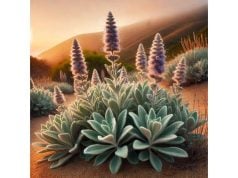
Fuller’s Teasel, Dipsacus sativus, is an unusual herb because it is known as much for craftsmanship as for medicine. For centuries, its dried flower heads were used in textile fulling to raise the nap on wool cloth, which is how the plant earned its common name. Yet behind that industrial history lies a lesser-known medicinal tradition. In older herbal records and modern phytochemical work, Fuller’s Teasel appears as a teasel species with iridoids, phenolic acids, and flavonoids that may help explain antioxidant, tissue-supportive, and mild anti-inflammatory effects.
The most important point is perspective. Fuller’s Teasel is not one of the better-studied medicinal teasels, and much of what people assume about it is borrowed from broader Dipsacus research or from closely related teasel species. That means it deserves careful, realistic handling. It may have value in traditional tea use, mild digestive or tissue support, and exploratory herbal practice, but it is not a well-validated modern remedy. The smartest way to approach it is with curiosity, modest expectations, and strong attention to preparation quality and safety.
Core Points
- Fuller’s Teasel is better supported as a traditional and phytochemical herb than as a clinically proven treatment.
- Its leaves and roots are associated with iridoids, chlorogenic acid, saponarin, isovitexin, and related phenolic compounds.
- A cautious tea-style range is about 1 to 2 g dried herb in 200 to 250 mL hot water, once daily to start.
- Avoid self-treatment during pregnancy, breastfeeding, in children, and when using important prescription medicines.
- Do not mistake broader teasel or Chinese Dipsacus research for direct proof about Dipsacus sativus.
Table of Contents
- What is Fuller’s Teasel?
- Key compounds and actions
- What can it realistically help with?
- How to use Fuller’s Teasel
- How much should you take?
- Safety, interactions, and who should avoid it
- What the research actually shows
What is Fuller’s Teasel?
Fuller’s Teasel, Dipsacus sativus, is a biennial teasel species or cultivated teasel form in the Caprifoliaceae family. Botanically, it sits very close to common teasel, and some sources treat it as closely allied to or overlapping with Dipsacus fullonum. In practical herbal writing, that closeness matters because many modern studies focus on other Dipsacus species, while direct medicinal data on Dipsacus sativus are much thinner.
Historically, the plant became famous not in pharmacies but in workshops. Its dried, spiny seed heads were mounted onto frames and rollers to tease, lift, and finish woven wool. That textile use was so important that it overshadowed the herb’s medicinal side for many readers. Still, older medicinal records and ethnobotanical references do mention teasel plants, including Fuller’s Teasel, in relation to digestive support, appetite, liver obstruction, skin problems, and general tonic-style applications. In some regional traditions, leaf tea was also associated with cardiovascular folk use.
That background immediately suggests caution. Fuller’s Teasel is not a mainstream herbal medicine with standardized monographs, widely accepted clinical dosing, or an extensive human trial record. Its medicinal identity is more fragmentary. It rests on three pillars:
- older folk and regional herbal use
- phytochemical analysis of its leaves and extracts
- broader evidence from the Dipsacus genus and related teasel species
This means readers should not approach the herb as though it were equivalent to a well-established pharmacopoeial botanical. Instead, it makes more sense to think of it as a historically interesting teasel with plausible medicinal properties, but with an evidence base that remains incomplete.
The plant itself is tall, prickly, and striking. Like other teasels, it develops a basal rosette before sending up a flower stem. The leaves can form water-catching cups around the stem, and the flower heads become the rigid structures historically valued by textile workers. That dramatic appearance sometimes leads people to assume strong medicinal action, but morphology does not predict clinical usefulness.
One useful mental model is this: Fuller’s Teasel is a heritage plant whose most famous application was mechanical, while its medicinal profile survived in the margins. Today, that profile is being revisited through chemistry and biological screening. Readers interested in more familiar structural or tissue-support herbs may compare it loosely with horsetail in traditional connective-tissue herbalism, though the two plants differ greatly in chemistry and evidence.
In practical terms, Fuller’s Teasel is best treated as a cautiously promising herbal species, not as a proven cure or a first-line remedy.
Key compounds and actions
What makes Fuller’s Teasel botanically interesting is not a famous essential oil or a single signature alkaloid, but a layered profile of iridoids, phenolic acids, and flavonoids. Modern analyses of Dipsacus sativus leaves and related teasel species suggest that these compounds help explain the plant’s antioxidant, tissue-supportive, and mild anti-inflammatory potential.
The compounds most often linked with Dipsacus sativus or closely overlapping teasel chemistry include:
- saponarin
- isovitexin
- isoorientin
- chlorogenic acid
- loganic acid
- loganin
- sweroside
- cantleyoside
- sylvestroside-type iridoids
- caffeoylquinic acid derivatives
This chemistry matters because it points to a recognizable medicinal pattern. The flavonoids and phenolic acids suggest antioxidant and free-radical-scavenging potential. The iridoids suggest a broader set of biological effects often associated with tissue protection, inflammatory balance, and modulation of plant-defense-related chemistry.
From a practical herbal perspective, the likely action profile of Fuller’s Teasel can be grouped into four areas.
First, antioxidant activity. This is the clearest modern theme. Studies on Dipsacus sativus extracts and closely related teasel leaves show measurable antioxidant activity. That does not mean a cup of teasel tea transforms oxidative stress in the clinical sense. It means the plant contains compounds that behave in useful ways under laboratory testing and may contribute to general phytochemical support.
Second, mild anti-inflammatory plausibility. This claim is more modest than marketing language often suggests. Iridoids and caffeoylquinic acid derivatives are commonly discussed in relation to inflammatory pathways, and teasel research supports this direction. But in Fuller’s Teasel, direct human proof is lacking.
Third, tissue and structural support. The wider Dipsacus genus is famous in some traditional systems for bone, tendon, and connective-tissue support. That reputation belongs more strongly to species such as Dipsacus asper than to Dipsacus sativus, but it still influences how people interpret teasel as a whole. This is one of the clearest examples of why species-specific accuracy matters.
Fourth, mild antimicrobial or biological screening potential. Related teasel species have shown interesting antibacterial, anti-yeast, and anti-Borrelia findings in vitro. That does not prove Fuller’s Teasel works the same way in people, but it suggests the genus has more pharmacological depth than its textile history implies.
A useful comparison point is flavonoid-rich herbs and their broader antioxidant logic. Fuller’s Teasel is not defined by quercetin alone, but it belongs to the same general class of polyphenol-rich medicinal plants whose value is often cumulative rather than dramatic.
The most honest conclusion is that Fuller’s Teasel has credible chemistry and enough bioactive compounds to justify interest. What it does not yet have is a mature clinical profile. That is why its compound story is stronger than its outcome story.
What can it realistically help with?
The key word here is realistically. Fuller’s Teasel may have a medicinal role, but the role is narrow and uncertain compared with herbs that have clearer clinical traditions. Most of its believable benefits come from older folk use, leaf-tea traditions, and biological plausibility rather than from direct human trials.
The most realistic possibilities are these:
- mild antioxidant support
- general traditional tonic use
- gentle digestive support
- modest tissue-support formulas
- exploratory inflammatory or antimicrobial interest
Gentle digestive use is one of the more sensible traditional interpretations. Older herb lore around teasel includes appetite support, liver-related obstruction language, and stomachic use. Modern readers should translate that carefully. It likely points to a mild digestive-support role rather than to any proven effect on liver disease or major gastrointestinal disorders. A weak infusion may be more believable here than a strong extract.
General tissue support is another area people often ask about, but this is where exaggeration is common. Some teasel species are traditionally discussed for bones, tendons, and recovery after strain. Fuller’s Teasel may be mentioned in that broader teasel context, but it is not the best-documented member of the genus for those goals. It is safer to describe it as a plant of possible supportive value, not as a proven structural-repair herb.
Topical or skin-related folk use also appears in older records. Teasel plants have been associated with warts, ringworm, and skin complaints in older herbal traditions. Again, the evidence is not strong enough to recommend Fuller’s Teasel as a primary modern dermatologic herb. If the goal is straightforward topical soothing, a better-established option such as calendula for gentle skin support is usually easier to justify.
Antimicrobial curiosity is one of the most tempting but most overread areas. Research on related teasel species has shown antibacterial and anti-Borrelia activity in vitro. This makes the genus interesting, but it does not mean a household Fuller’s Teasel preparation should be used to self-treat Lyme disease or stubborn infections. That leap is much larger than the evidence allows.
Cardiovascular folk use deserves a brief mention because a 2023 review cites leaf tea use for cardiovascular diseases in ethnomedicinal context. That is noteworthy, but still too thin to support practical claims about blood pressure, circulation, or heart protection.
A reasonable benefit profile looks like this:
- It may serve as a low-intensity herbal tea in traditional practice.
- It may contribute antioxidant and polyphenol-rich support.
- It may fit experimental or heritage herbal use better than mainstream clinical use.
- It should not be expected to produce rapid, obvious symptom reversal.
In that sense, Fuller’s Teasel resembles some older village herbs that are used more for broad support than for a single dramatic target. Readers looking for more direct digestive action may find ginger a far clearer digestive herb, while those drawn to teasel specifically should keep expectations measured and species distinctions in mind.
How to use Fuller’s Teasel
If Fuller’s Teasel is used medicinally at all, it is best used simply. The plant does not have a well-developed modern market of standardized extracts, and its traditional uses point more toward infusion, decoction, and folk topical preparations than toward concentrated capsules or aggressive self-experimentation.
Possible forms include:
- dried leaf tea
- root decoction
- weak tincture, if properly identified
- external wash
- blended herbal formula
For most people, leaf tea is the safest traditional entry point. A light infusion of dried leaves reflects the ethnomedicinal use described in broader teasel literature and allows a conservative trial. Because the evidence base is limited, this simple form is more defensible than trying to mimic high-potency formulas discussed online.
A root decoction is also part of the broader teasel tradition, but it carries more uncertainty in Fuller’s Teasel specifically. Root chemistry in related teasel species can differ meaningfully from leaf chemistry, and modern users are often working without species-specific product standardization. That makes root use more expert-dependent and less suitable for casual self-use.
For topical applications, a strained cooled infusion is the least risky approach. This fits the old logic of washes or compresses better than rubbing crude plant material onto irritated skin. If the skin problem is inflamed, broken, or clearly infected, self-treatment is not the right next step.
A cautious use pattern might look like this:
- Source correctly identified material.
- Start with one simple form, not several.
- Use a mild preparation first.
- Observe for stomach, skin, or allergic reactions.
- Stop if the herb feels irritating, stimulating, or simply unhelpful.
One important note is that Fuller’s Teasel should not be approached the way people sometimes approach Chinese Dipsacus species in supplement culture. The best-studied medicinal teasel traditions often center on other species entirely. Fuller’s Teasel has its own identity, but not the same clinical foundation.
Another practical issue is quality. Because the plant has such a strong historical association with textile use, seeds and plant material may be sold for ornamental, ecological, or heritage-craft purposes rather than for medicinal quality. That means medicinal use requires extra care in sourcing. Not every dried teasel product is intended for internal use.
Blended use may be more reasonable than solo use in some cases. A mild digestive or tissue-support formula might include Fuller’s Teasel alongside a clearer companion herb. For readers seeking a more familiar everyday tonic herb, dandelion in simple tea practice is a good contrast because its use is easier to standardize and easier to feel practically.
In short, Fuller’s Teasel is best used in modest, traditional-style preparations. It does not reward improvisation, and it is not a good candidate for “stronger must be better” thinking.
How much should you take?
There is no well-validated human dose established specifically for Dipsacus sativus. That is the most important dosing fact, and it should shape everything that follows. Any dosage guidance for Fuller’s Teasel is approximate, conservative, and rooted more in traditional herb handling than in clinical trial evidence.
For dried leaf tea, a cautious starting range is:
- 1 to 2 g dried leaves
- in 200 to 250 mL hot water
- steeped 10 to 15 minutes
- once daily to start
If this is tolerated and there is a sensible reason to continue, some people may use:
- 1 cup once or twice daily
- or a slightly stronger infusion using up to 2 to 3 g per serving
That still keeps the herb in a modest range. Because Fuller’s Teasel is not a mainstream medicinal herb with a strong safety dossier, there is little reason to push beyond mild daily tea use in unsupervised practice.
For root preparations, the range is harder to justify because the evidence is thinner and root use is often borrowed from broader teasel traditions. If root is used at all, it should remain conservative and ideally under skilled guidance rather than internet folklore.
For tinctures, the problem is not just dose but identity. If the product does not clearly state the species, plant part, and extraction ratio, it becomes almost impossible to translate traditional use into modern dosing with confidence.
Timing can stay practical:
- take after food if you are prone to stomach irritation
- avoid combining with many other new herbs at once
- keep the trial short, such as several days to two weeks
- stop rather than escalate if symptoms worsen
A few situations justify staying at the lowest end:
- small body size
- highly sensitive digestion
- polypharmacy
- chronic medical conditions
- uncertain source material
- previous plant-allergy history
A few situations should stop self-dosing entirely rather than increase it:
- severe joint or tissue pain
- swelling with redness or fever
- neurological symptoms
- suspected tick-borne illness
- persistent digestive symptoms
- unexplained rash
This matters because teasel has become attached to a surprising amount of speculative internet use, especially around Lyme disease and chronic inflammatory problems. Fuller’s Teasel does not have the evidence needed to support those aggressive self-treatment patterns.
For perspective, if your goal is simply a gentle antioxidant herb tea, something like green tea has a far clearer evidence base and a far better-understood dose range. Fuller’s Teasel belongs in the category of exploratory heritage herbs, not evidence-rich daily staples.
The safest overall rule is simple: start low, use briefly, and do not infer medical effectiveness from the fact that the plant was historically important for something else.
Safety, interactions, and who should avoid it
Fuller’s Teasel does not have a robust modern human safety profile. That does not automatically make it dangerous, but it does mean uncertainty should be treated as a real safety factor. The main concerns are lack of direct clinical data, source quality, plant-part variability, and the risk of using broader teasel claims as if they apply fully to Dipsacus sativus.
The first issue is limited human evidence. Without solid dosing and safety trials, it is difficult to know how the herb behaves in vulnerable groups or with long-term repeated use. This makes conservative dosing more important than with better-characterized herbs.
The second issue is source and identity. Fuller’s Teasel is sometimes sold as a heritage or ornamental plant, and teasel products may not always distinguish between Dipsacus sativus, Dipsacus fullonum, or other teasel material. This matters because using the wrong species undermines both safety and accuracy.
The third issue is plant-part differences. Leaves and roots do not carry identical chemistry. In related teasel studies, leaves often show stronger polyphenol and antioxidant patterns, while roots may differ in iridoid balance and other activities. So a statement about leaf extract should not be casually applied to root decoctions, and vice versa.
Possible side effects are not well mapped, but reasonable concerns include:
- stomach upset
- nausea
- loose stools
- headache
- skin irritation with external use
- allergic reactivity to plant material
Potential interactions are also underdefined. Since teasel extracts contain active phenolics and iridoids, caution is sensible for people taking multiple prescription drugs, especially those with narrow therapeutic windows. This does not mean Fuller’s Teasel is known to be highly interactive. It means the absence of interaction data is not the same as proof of safety.
Who should avoid it, or only use it with professional guidance:
- pregnant or breastfeeding people
- children
- people taking multiple daily medications
- those with significant liver or kidney disease
- anyone using it for suspected Lyme disease
- people with severe or unexplained inflammatory symptoms
- those with known sensitivity to new herbs or complex tinctures
A special caution belongs here: do not use Fuller’s Teasel as a substitute for medical treatment of tick-borne illness. Teasel’s online reputation in that area is much louder than the evidence. Laboratory findings in related species or genus-wide discussions do not justify delaying diagnosis or antibiotics when those are needed.
For topical comparison, a more predictable plant such as aloe vera in familiar skin care is usually easier to use safely. For internal inflammatory support, better-studied herbs often make more sense than experimenting with Fuller’s Teasel unless there is a very specific reason for doing so.
The most honest safety summary is this: Fuller’s Teasel is probably low-risk when used mildly and briefly, but the uncertainty around it is large enough that confidence should stay low and caution should stay high.
What the research actually shows
The research on Fuller’s Teasel is a mix of direct and indirect evidence. Direct evidence on Dipsacus sativus exists, but it is limited. Broader Dipsacus research is much larger. That means the strongest scientifically honest position is to separate what is known specifically about D. sativus from what is only inferred from related teasel species.
What is supported more directly for Dipsacus sativus:
- accepted botanical identity and historical medicinal use
- leaf tea use in ethnomedicinal reports
- flavonoid-rich leaf chemistry
- antioxidant activity of leaf extracts
- presence of compounds such as saponarin and isovitexin
What is supported mainly by broader Dipsacus evidence:
- stronger antimicrobial claims
- anti-Borrelia interest
- tissue-support traditions
- antiacetylcholinesterase activity
- more detailed iridoid profiling in roots and leaves
- several inflammation-related biological effects
The 2023 review of Dipsacus and Scabiosa species is especially helpful because it explicitly mentions Dipsacus sativus rather than speaking only at genus level. It notes that leaf tea has been used for cardiovascular diseases in ethnomedicine and places D. sativus within the genus-wide context of iridoids, phenolic acids, flavonoids, and biological activity. Still, even this review makes clear that some species are much better studied than others.
The direct phytochemical work on Dipsacus sativus leaves is important because it moves the herb beyond vague folklore. It identifies marker compounds and shows antioxidant activity in tested extracts. That gives the species a real, evidence-based chemical fingerprint. But chemistry alone does not equal clinical effect.
The broader Dipsacus studies on Dipsacus fullonum are also informative because they show what related teasel plants can do in the lab. Those studies report antioxidant, antibacterial, anti-yeast, anticholinesterase, and anti-Borrelia effects, plus detailed quantification of iridoids and polyphenols. Yet they are still not species-specific proof for Fuller’s Teasel.
A balanced evidence ranking looks like this:
- strongest: taxonomy, traditional use, and phytochemical plausibility
- moderately strong: antioxidant activity of Dipsacus sativus leaf extracts
- suggestive: genus-wide antimicrobial, anti-inflammatory, and tissue-support research
- weakest: direct human therapeutic evidence for Dipsacus sativus
That ranking leads to a clear conclusion. Fuller’s Teasel is not a medically empty curiosity, but it is also not a validated modern botanical medicine. It has enough evidence to justify careful traditional use and enough gaps to rule out strong claims.
The best use of the current research is not to oversell the herb. It is to understand its place accurately: a historically notable teasel with real chemistry, modest direct evidence, and a wider halo of related-species findings that should be interpreted carefully, not borrowed carelessly.
References
- Dipsacus sativus (L.) Honck. | Plants of the World Online | Kew Science 2026.
- Dipsacus and Scabiosa Species—The Source of Specialized Metabolites with High Biological Relevance: A Review 2023. (Review)
- Extraction and Fractionation of Bioactives from Dipsacus fullonum L. Leaves and Evaluation of Their Anti-Borrelia Activity 2022.
- Roots and Leaf Extracts of Dipsacus fullonum L. and Their Biological Activities 2020.
- Studies on Chemical Constituents from Leaves of Dipsacus sativus 2010.
Disclaimer
This article is for educational purposes only and does not replace medical advice, diagnosis, or treatment. Fuller’s Teasel is an under-studied herbal plant with limited direct human evidence, uncertain modern dosing, and important overlap with broader teasel traditions that do not always apply specifically to Dipsacus sativus. Use extra caution with tinctures, root preparations, and self-treatment of chronic or infectious conditions. Seek professional guidance before use if you are pregnant, breastfeeding, taking prescription medications, or dealing with severe pain, tick exposure, unexplained neurological symptoms, or persistent digestive or inflammatory problems.
If this guide was useful, please share it on Facebook, X, or your preferred platform to help more readers find careful, evidence-aware herbal information.