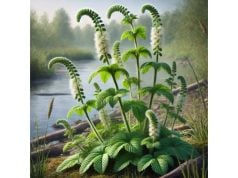
Galangal is a fragrant rhizome from the ginger family, prized in Southeast Asian cooking and traditional herbal practice for its sharp, citrusy warmth and its long history as a digestive and warming herb. The species covered here, Alpinia galanga, is often called greater galangal. It is not the same as common ginger, even though the two look related and are sometimes used in similar ways. Modern analysis shows that galangal contains a distinctive mix of pungent phenylpropanoids, flavonoids, and volatile oils, including 1′-acetoxychavicol acetate, galangin, and 1,8-cineole, which help explain its antimicrobial, antioxidant, anti-inflammatory, and possible neuroactive effects.
In practical terms, galangal is best understood as a culinary herb with medicinal potential rather than a miracle remedy. Its strongest traditional uses center on digestion, appetite, and post-meal comfort. Early human studies also suggest possible benefits for mental alertness and, in a much narrower context, sexual function in men with SSRI-related erectile dysfunction. The bigger story, however, is balance: galangal may be useful, but dose, form, and safety matter.
Quick Overview
- Galangal is most convincing as a digestive and culinary herb, with early evidence for short-term alertness.
- Its best-known actives include 1′-acetoxychavicol acetate, galangin, and aromatic oils with antimicrobial and anti-inflammatory activity.
- Studied supplemental doses usually fall around 300 to 500 mg per day of extract, not counting ordinary food use.
- Concentrated forms may irritate a sensitive stomach and should not replace care for persistent pain, reflux, or unexplained symptoms.
- Pregnant or breastfeeding people, and anyone taking regular prescription medicines, should avoid self-prescribing medicinal doses.
Table of Contents
- What is galangal and how is it different?
- Key ingredients and medicinal properties
- What benefits is galangal best known for?
- How to use galangal
- How much galangal should you take?
- Side effects, interactions, and who should avoid it
- What the research actually shows
What is galangal and how is it different?
Galangal is the underground rhizome of Alpinia galanga, a tropical plant in the Zingiberaceae family. In kitchens across Thailand, Indonesia, Malaysia, and other parts of Asia, it is valued for a flavor that is sharper, woodier, and more camphor-like than ginger. In traditional herbal systems, that same rhizome has been used as a warming agent for digestion, sluggish appetite, discomfort after meals, and a range of respiratory or inflammatory complaints. The rhizome is the part most often studied and the part most often sold in powders, teas, extracts, and capsules.
One reason galangal confuses readers is naming. “Galangal” may refer to more than one plant in commerce, especially greater galangal (Alpinia galanga) and lesser galangal (Alpinia officinarum). This article focuses on Alpinia galanga. That matters because the chemistry, traditional indications, and research record are not interchangeable. The same caution applies when people compare galangal to common ginger. Both are rhizomes in the same family, but ginger is richer in gingerols and shogaols, while galangal stands out for compounds such as 1′-acetoxychavicol acetate and galangin. In real life, ginger is usually chosen for nausea and broader digestive use, while galangal is more often chosen for aromatic, warming, and antimicrobial-style applications.
Fresh galangal is usually pale cream to light yellow inside, with a firmer, more fibrous texture than ginger. Dried galangal becomes more concentrated and woody. Powdered galangal is convenient, but it loses some of the fresh rhizome’s high-note aroma over time. Extracts are different again: they may concentrate only part of the plant’s chemistry, which is one reason a capsule dose cannot be assumed to equal a slice of rhizome in soup.
This difference between food and extract is central to using galangal well. In food, galangal acts like a medicinal spice: subtle, supportive, and generally gentle. In standardized supplements, it behaves more like a targeted botanical ingredient. That is where more caution is needed.
A useful way to think about galangal is this: it sits between kitchen spice and herbal concentrate. Its everyday role is culinary. Its more ambitious claims belong to extracts and early-stage research, which means readers should separate tradition, plausibility, and proof rather than treating them as the same thing.
Key ingredients and medicinal properties
Galangal’s medicinal reputation comes from a mix of volatile oils, pungent phenylpropanoids, and flavonoids rather than a single “magic” compound. Among the best-known constituents are 1′-acetoxychavicol acetate, galangin, 1,8-cineole, α-fenchyl acetate, β-farnesene, β-bisabolene, and other aromatic terpenes. Different extraction methods pull out different proportions of these compounds, which helps explain why fresh rhizome, powdered spice, essential oil, and standardized extract do not behave the same way.
1′-Acetoxychavicol acetate is often treated as a signature galangal compound. In laboratory work, it shows anti-inflammatory, antimicrobial, and signaling effects that make it one of the main candidates for galangal’s traditional warming and medicinal properties. Galangin, a flavonol, is studied for antioxidant and inflammation-modulating effects. Volatile components such as 1,8-cineole contribute both aroma and part of the herb’s respiratory, digestive, and antimicrobial profile. When people describe galangal as pungent, stimulating, or clearing, they are often responding to this volatile fraction.
Galangal’s main medicinal properties are usually grouped into four broad areas:
- Digestive support. The rhizome behaves like a carminative and warming spice, encouraging saliva, gastric secretions, and a sense of post-meal movement.
- Antimicrobial and food-protective activity. Lab studies show activity against several bacteria and fungi, which helps explain its traditional use in food and oral care.
- Antioxidant and anti-inflammatory activity. This is one of the most repeated findings in preclinical work, though it does not automatically translate into a clinical outcome.
- Possible neuroactive effects. A few studies suggest that standardized extracts may influence alertness, attention, and neurotransmitter-related pathways.
A practical nuance often missed in herbal articles is that galangal’s chemistry overlaps with, but does not duplicate, that of other rhizomes in the family. It shares a botanical neighborhood with curcuma relatives, ginger, and cardamom-like spices, but its strongest compounds and sensory signature are its own. That is why substituting one rhizome for another may work in a recipe but not in a clinical claim.
Another important point is synergy. Whole galangal contains multiple compounds that likely work together. A food-based preparation exposes you to that full matrix, while a standardized extract may emphasize only one portion of the plant. Neither approach is automatically better. Food is usually safer and more traditional; extracts are more consistent for research, but they are also more likely to act strongly enough to raise questions about dose, tolerance, and interactions.
For readers trying to make sense of key ingredients, the simplest takeaway is this: galangal is not just hot and aromatic. Its chemistry is rich enough to justify real scientific interest, but not uniform enough for every product to be treated as equivalent.
What benefits is galangal best known for?
Galangal’s most believable benefits are still its traditional ones: digestive comfort, appetite support, and a warming effect that many people find helpful after heavy meals. Like other pungent culinary herbs, it can make food feel lighter, stimulate saliva and digestive secretions, and reduce the sense of post-meal stagnation. This is the area where culinary use, traditional logic, and modern plausibility line up best. It is also the safest place to keep expectations: galangal may help mild discomfort, but it is not a treatment for ulcers, persistent abdominal pain, or unexplained digestive symptoms.
A second benefit cluster involves antimicrobial and oral-supportive effects. In laboratory settings, galangal extracts and constituents show antibacterial and antifungal activity, and this helps explain why the herb has been used in food preservation, aromatic mouth preparations, and traditional formulas for throat and oral discomfort. That said, antimicrobial activity in a lab is not the same as curing infection in a person. A realistic translation is that galangal may be a helpful supportive spice, especially in the same broad culinary-medicinal category as clove, but it should not replace diagnosis or treatment when infection is suspected.
The most interesting modern data are in mental alertness. In a randomized placebo-controlled study in healthy adults, a proprietary Alpinia galanga extract improved alertness measures, and the combination with caffeine appeared to support sustained attention while softening the sense of a caffeine crash. This does not prove that every galangal tea or powder will sharpen focus, but it does suggest that standardized extracts may have genuine short-term cognitive effects.
There is also a narrower human finding in sexual function. A 2023 randomized triple-blind clinical trial in men taking SSRIs found better erectile-function scores with Alpinia galanga extract than with placebo after four weeks. This is promising, but it applies to a very specific setting: adult men with SSRI-related erectile dysfunction using a defined extract. It should not be inflated into a general claim that galangal is a universal libido herb.
Beyond those areas, much of the benefits language around galangal comes from preclinical work: antioxidant effects, anti-inflammatory activity, anticancer signaling, metabolic benefits, and possible neuroprotection. These findings are worth knowing about because they explain why researchers keep studying the herb. They are not strong enough, however, to justify disease claims in routine self-care.
So what is galangal best known for in the real world? Think modestly and specifically: digestive support, aromatic culinary use, possible alertness from certain standardized extracts, and intriguing but early research in other areas. That framing is more useful than hype, and more consistent with the evidence we actually have.
How to use galangal
Galangal can be used as a food, a tea herb, or a supplement, and the best form depends on the goal. For everyday wellness, food use makes the most sense. Fresh galangal is often sliced, crushed, or grated into soups, curries, broths, stir-fries, and braised dishes. Because the rhizome is firm and fibrous, many cooks bruise thick slices to release aroma and then remove them before serving. This approach gives flavor plus a gentle medicinal effect without pushing the plant into high-dose territory.
For digestive support, a simple infusion or light decoction is the next step up. Fresh slices or dried pieces can be simmered in water and sipped before or after meals. The taste is sharper and more resinous than ginger tea, so many people combine it with ingredients such as lemongrass, cardamom, or citrus peel. If you enjoy warm digestive blends, pairing galangal with cardamom can make the formula both more pleasant and more traditionally aligned.
Powdered galangal is convenient for spice mixes, capsules, and quick drinks, but quality matters more here. Powder oxidizes faster than whole rhizome, so aroma fades and batch quality varies. If you buy powder, look for a clear botanical name, a recent packaging date, and a strong aromatic scent rather than a flat, dusty smell.
Supplement extracts are different from culinary galangal. They may be standardized, water-soluble, ethanol-based, or designed around a branded ingredient. That matters because extract studies do not automatically translate to home cooking. If a product is marketed for alertness or energy, read the label carefully for the actual amount of Alpinia galanga extract, whether it is standardized, and whether it is combined with caffeine or other stimulants.
A practical checklist for choosing a form looks like this:
- Use fresh or dried rhizome when your goal is food-based digestive support.
- Use tea or decoction when you want a stronger culinary-herbal effect without jumping to capsules.
- Use a standardized extract only when you want a specific supplement-style purpose and can judge the label critically.
One helpful principle is to match intensity to need. Start with the mildest form that makes sense. In food, galangal is easy to integrate and usually well tolerated. In capsules, especially blends with stimulants or bioavailability enhancers such as black pepper, the effect can be stronger and less predictable.
Short-term use is the most sensible default. Try it for a defined purpose, such as meal-related discomfort or early-day focus, then reassess. If the problem is persistent, the answer is not usually more galangal.
How much galangal should you take?
Galangal does not have one universally accepted dose that fits every form. That is the first point to get right. Fresh rhizome in soup, dried powder in capsules, and a proprietary extract in a clinical trial are not equivalent. The most honest dosing approach is to separate culinary use, traditional whole-rhizome use, and studied extract use.
For whole rhizome, older herbal monograph-style guidance has listed roughly 2 to 4 g of rhizome or tincture as a traditional range. That is a useful historical anchor, but it should be read as old herbal guidance rather than a modern, fully standardized therapeutic dose.
For modern extract products, human research gives more concrete numbers:
- 300 mg/day of proprietary extract has been used in alertness studies.
- 500 mg/day of extract was used in the 2023 clinical trial on SSRI-induced erectile dysfunction.
Those figures are helpful because they show the range actually tested in people, but they still do not create a universal dosing rule. A branded, water-soluble, or standardized extract may behave very differently from a generic powder capsule.
In practice, dosing should follow the goal:
- For food and digestion: keep galangal in the meal or in a mild tea. Think in slices, small amounts, and taste tolerance rather than chasing a milligram target.
- For alertness-style supplements: use the labeled studied dose, preferably early in the day, and avoid doubling up with several stimulant products.
- For narrow clinical purposes: do not self-experiment beyond studied amounts, and do not assume that a different product is equivalent.
Timing matters too. For meal-related comfort, galangal is usually best taken with food or shortly before eating. For focus or energy, earlier in the day is more sensible, especially if the formula is combined with caffeine. Duration also matters. Most reasonable self-trials are short: a few days for food tolerance, or one to four weeks for a defined supplement trial. Longer use deserves a clearer rationale.
A cautious starting strategy is simple: choose one form, start at the low end, stay consistent, and track whether you notice anything meaningful. Signs you have gone too high include stomach irritation, throat burn, reflux, or feeling overstimulated. Children, pregnant people, and anyone on multiple medications should not improvise with concentrated galangal products.
The most useful dosing mindset is not “How much can I take?” but “What is the smallest amount that matches the purpose?” That question usually leads to safer and more realistic use.
Side effects, interactions, and who should avoid it
In ordinary food amounts, galangal is usually well tolerated. Problems are more likely when the herb is concentrated into extracts, taken daily in capsules, or combined with other active botanicals or stimulants. The most plausible side effects are the familiar ones seen with strong aromatic rhizomes: stomach irritation, heartburn, reflux, a burning feeling in the mouth or throat, nausea, or loose stools in sensitive people. People with a history of gastritis, active peptic irritation, or strong reflux often do better starting with food use rather than supplements.
Pregnancy and breastfeeding deserve extra caution. Safety data in these groups are too limited to support medicinal-dose use, and older reviews also describe Alpinia galanga in traditional terms such as emmenagogue and abortifacient. That does not prove the same effect in routine human use, but it is more than enough reason to avoid self-prescribed medicinal doses during pregnancy and lactation. Culinary exposure in normal food is a different question, but concentrated use is not worth the uncertainty.
Drug interactions are less clearly mapped than many websites suggest, but less clearly mapped does not mean impossible. Interaction data are incomplete, and that is exactly why caution matters. Recent reviews of Alpinia species note a possible increase in warfarin effect with A. galanga, which is a practical red flag for anyone on anticoagulant therapy. Beyond that, concentrated galangal should be reviewed carefully if you take daily prescription medicines, especially drugs with narrow safety margins, stomach-acid therapies, or multiple central nervous system medications.
People who should avoid medicinal-dose galangal unless a clinician says otherwise include:
- Pregnant or breastfeeding people.
- Children and adolescents.
- Anyone taking anticoagulants or several prescription medicines.
- Anyone with strong reflux, active ulcer symptoms, or marked stomach sensitivity.
- Anyone planning surgery or managing a complex chronic condition without professional guidance.
Allergy is possible, though not common. If galangal causes rash, wheezing, mouth swelling, or worsening digestive pain, stop using it and seek care.
One of the better ways to think about galangal safety is to compare it with other food-derived botanicals such as garlic preparations: food use is one category, concentrated extracts are another. Once a spice becomes a supplement, the safety standard should become stricter.
The bottom line is conservative and practical. Galangal is not unusually alarming, but it is active enough that concentrated products deserve respect. When in doubt, stay closer to the kitchen version and farther from the more is better mindset.
What the research actually shows
The research picture for galangal is interesting, but still uneven. There is a large amount of laboratory and animal work, a smaller amount of human research, and a major standardization problem across products. That means the herb is scientifically promising, but not clinically settled. The strongest evidence does not support sweeping claims such as “galangal cures inflammation,” “galangal kills infections,” or “galangal prevents cancer.” It supports something more modest: the plant contains biologically active compounds, and certain standardized extracts may produce specific effects in defined settings.
The best human data so far fall into two narrow categories. First, short-term mental alertness: one randomized placebo-controlled study found improvements in alertness and sustained attention measures with a proprietary Alpinia galanga extract, especially in relation to caffeine. Second, sexual function in a specific clinical population: a 2023 trial found improvement in erectile-function scores among men using SSRIs who took galangal extract for four weeks. These are meaningful findings, but they are not broad enough to justify general-purpose claims for every galangal product on the market.
The preclinical literature is much wider. Studies describe antioxidant, antibacterial, anti-inflammatory, anticancer, metabolic, and neuroactive effects. This literature is valuable for understanding mechanisms and identifying active constituents, but it is still one step removed from patient care. A compound that works in a cell line or a mouse model may fail to translate into a useful human outcome. That gap is especially important in herbs, where extraction method, plant part, and dose vary so much.
Safety evidence is also only partial. The 2022 subchronic toxicology study is reassuring for one standardized extract, but it does not certify every galangal supplement as equally safe. Branded extracts, raw powders, tinctures, and essential-oil-rich products should not be treated as interchangeable. Better trials would ideally compare forms, report exact marker compounds, and look at outcomes that matter to real users, such as digestive symptoms, tolerability, sleep, and medication compatibility.
So where does that leave a careful reader? In a sensible middle ground. Galangal is more than folklore, but less than a proven therapeutic mainstay. Its best-supported role remains that of a medicinal spice and targeted adjunct, especially for digestion and possibly alertness when a studied extract is used. Everything beyond that should be treated as early-stage, product-specific, and open to revision as better trials arrive.
That kind of evidence summary may sound less exciting than bold marketing, but it is far more useful. It tells you where galangal may genuinely fit, where it does not, and why form and context matter as much as the herb itself.
References
- Phytochemical analysis, antioxidant, anticancer, and antibacterial potential of Alpinia galanga (L.) rhizome 2024
- Assessing the effect of Alpinia galanga extract on the treatment of SSRI-induced erectile dysfunction: A randomized triple-blind clinical trial 2023 (RCT)
- Subchronic toxicological evaluation of EnXtra™ (standardised extract of Alpinia galanga rhizome) in rats 2022 (Safety Study)
- Effect of Alpinia galanga on Mental Alertness and Sustained Attention With or Without Caffeine: A Randomized Placebo-Controlled Study 2017 (RCT)
- A Review on Phytochemical and Pharmacological Potential of Alpinia galanga 2018 (Review)
Disclaimer
This article is for educational purposes only and is not a substitute for medical advice, diagnosis, or treatment. Galangal may affect digestion, medication response, and tolerance differently depending on the form used. Do not use it to self-treat chronic digestive symptoms, sexual dysfunction, infection, or any serious condition. Seek guidance from a qualified healthcare professional before using medicinal doses of galangal, especially during pregnancy or breastfeeding, if you take prescription medicines, or if you have an ongoing medical condition.
If this guide helped you, please consider sharing it on Facebook, X, or any platform you prefer.