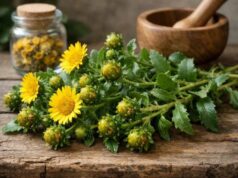
Garden heliotrope, in this context, refers to Valeriana officinalis—better known as valerian or garden valerian. It is not the same plant as the ornamental heliotrope often grown for fragrance. For herbal medicine, the useful parts are the root and rhizome, which have a strong earthy aroma and a long history of use for sleep trouble, nervous tension, and restlessness.
What makes valerian interesting is not one miracle compound but a mix of constituents that may influence calming pathways in the nervous system. That is why people often use it as a bedtime herb rather than a fast-acting sedative. Some people report falling asleep a little faster, waking less often, or feeling less mentally wound up in the evening. Others notice very little.
The practical value of valerian lies in knowing what it can realistically do, how to take it, and where caution matters. The strongest use case is mild sleep difficulty or tension, especially when a person wants a short-term, lower-intensity option and understands that product quality and response can vary.
Essential Insights
- Valerian is mainly used for mild sleep complaints and nervous tension, not as a rapid knockout remedy.
- A common adult range is 300 to 600 mg of a standardized extract, often taken 30 to 60 minutes before bed.
- Drowsiness, stomach upset, vivid dreams, and next-day grogginess can occur, especially with higher doses or mixed products.
- Pregnant or breastfeeding people, children under 12, and anyone using sedatives should generally avoid unsupervised use.
Table of Contents
- What Is Garden Heliotrope
- Key Compounds and Actions
- Does Valerian Help Sleep and Stress
- How to Use Valerian Well
- How Much Per Day
- Side Effects Interactions and Who Should Avoid It
- What the Evidence Really Says
What Is Garden Heliotrope
Valeriana officinalis is a tall, flowering perennial native to Europe and parts of Asia and now grown more widely in North America as well. In herbal practice, the medicinal material comes from the underground parts, especially the dried root and rhizome. These parts have a famously pungent smell that many people find musky, woody, or slightly sour. That scent is one clue that the plant contains a complex mixture of volatile and nonvolatile compounds.
The common name “garden heliotrope” can confuse readers because another ornamental plant is also widely called heliotrope. In herbal writing, it is safer to think of this plant as valerian. That helps avoid mistakes when buying teas, capsules, tinctures, or dried root.
Historically, valerian was used for restlessness, poor sleep, mild anxiety, and digestive discomfort linked to nervous tension. Modern supplement marketing often expands those claims too far. A more grounded view is this: valerian is best understood as a traditional calming herb with modest, variable effects that tend to be more noticeable with consistent use than with a single dose.
A few details matter when choosing a product:
- The root is the part most often used medicinally.
- Products vary widely in extraction method, dose, and standardization.
- Some formulas contain valerian alone, while others mix it with hops, lemon balm, lavender, or chamomile.
- Tea, tincture, capsule, tablet, and liquid extract forms can feel different in practice because their concentration and absorption differ.
Valerian is not usually taken for an immediate dramatic effect. Instead, many people use it as part of an evening routine when they want the nervous system to settle gradually. That pattern fits traditional monographs, which describe it more as a support for mild sleep disturbance and nervous tension than as a strong hypnotic.
This matters for expectations. If someone has severe insomnia, frequent nighttime panic, heavy snoring, chronic pain, or medication-related sleep disruption, valerian is unlikely to solve the root problem by itself. But for milder cases—especially stress-linked sleep onset trouble—it remains one of the better-known herbal options.
Key Compounds and Actions
Valerian works as a whole-plant preparation, but a few compound groups get most of the attention. The best known are valerenic acids, valepotriates, volatile oils, and smaller amounts of flavonoids and lignans. When you see a valerian product standardized to valerenic acids, that is an attempt to make the formula more consistent from batch to batch.
Valerenic acid is often treated as the marker compound because it appears closely tied to valerian’s calming profile. Researchers have looked at its interaction with GABA-related pathways, which help regulate inhibitory signaling in the brain. In plain language, that means valerian may support the brain’s “slow down” side rather than the “speed up” side. This is one reason it is grouped with bedtime herbs.
That said, valerian is not just valerenic acid. The plant’s overall effect likely comes from several compounds acting together. This may explain why one extract can perform differently from another even when the label says “valerian root.” Extraction solvent, drying conditions, plant genetics, harvest timing, and storage can all change the chemical profile.
Key groups to know include:
- Valerenic acids: often used as marker compounds in standardized extracts.
- Valepotriates: iridoid compounds that may contribute to activity but are relatively unstable.
- Volatile oils: part of valerian’s distinctive odor and possibly part of its calming effect.
- Flavonoids and lignans: minor compounds that may add supportive activity.
Mechanistically, valerian is often discussed in relation to sleep latency, subjective sleep quality, and evening tension. Some studies suggest it may help people feel sleepier or more settled; others suggest the main change is in perceived sleep quality rather than hard objective sleep measures. That distinction matters because feeling more relaxed at bedtime can still be meaningful even if a sleep lab records only modest changes.
A practical takeaway is that product form matters. A standardized extract may offer more predictable results than loose powder from an unknown source. Even so, “standardized” does not mean guaranteed. It simply means the maker has aimed for a repeatable level of one or more marker compounds.
People interested in broader calming herbs often compare valerian with lemon balm for gentle daytime calming. The difference is that valerian is usually chosen when sleep support is the main goal, while gentler herbs may suit afternoon tension better.
Because the chemistry is complex and not every constituent is fully mapped, valerian should be viewed as a traditional phytomedicine with partially understood mechanisms, not as a single-ingredient drug.
Does Valerian Help Sleep and Stress
This is the question most people actually care about: can valerian help you sleep, and does it calm stress enough to matter? The most honest answer is yes for some people, but not reliably for everyone.
The clearest use case is mild sleep difficulty linked to mental tension, evening overstimulation, or trouble unwinding. In that setting, valerian may help by reducing sleep latency a bit, improving perceived sleep quality, or making bedtime feel less mentally noisy. Some users also report fewer awakenings during the night or feeling more refreshed in the morning. These effects tend to be modest rather than dramatic.
Valerian may also help with mild nervous tension outside sleep. Traditional herbal frameworks place it in the category of calming, settling herbs for restlessness. That does not make it a first-line treatment for generalized anxiety disorder, panic disorder, depression, or trauma-related sleep problems. Those conditions deserve a broader care plan.
Realistic outcomes may include:
- falling asleep a little faster,
- feeling less wound up in the evening,
- sleeping a bit more deeply on some nights,
- or needing less effort to transition into a bedtime routine.
Less realistic expectations include instant sedation, reliable treatment of severe insomnia, or guaranteed benefit after a single capsule.
A useful nuance is that valerian may work best when the main problem is hyperarousal—racing thoughts, inner tension, or that “tired but alert” state. It may work less well when sleep trouble is driven by pain, sleep apnea, alcohol use, shift work, reflux, late caffeine, or a medication side effect.
Some people prefer valerian alone. Others do better with combination formulas. In bedtime blends, it is often paired with hops, passionflower, lemon balm, or chamomile. Each herb has a slightly different feel. Readers comparing options may also want to explore passionflower for stress and sleep, which is often used when tension and mental overactivity are prominent.
One more point: stress relief and sleep support are related but not identical. A person might feel calmer on valerian without sleeping longer. Another might sleep better without noticing much change in daytime anxiety. That is normal and reflects the limits of herbal medicine in a very individual nervous system.
Used well, valerian is best thought of as a supportive tool. It may nudge the body toward rest, but it works better alongside basic sleep hygiene: consistent bedtime, reduced late caffeine, dimmer light, and less screen stimulation before bed.
How to Use Valerian Well
The best form of valerian depends on what you need most: convenience, predictability, or ritual. Capsules and tablets are easiest for dosing. Tinctures act quickly for some people and are easy to adjust drop by drop. Teas feel soothing as part of a bedtime routine, though the taste and smell are strong enough that not everyone enjoys them.
Common forms include:
- dried root for infusion or tea,
- capsules with powdered root,
- standardized extracts in capsules or tablets,
- alcohol-based tinctures,
- and blended sleep formulas.
For many adults, a standardized extract is the most practical starting point because it offers clearer dosing and better consistency than raw powder. Tea can still be useful, especially if the act of slowing down to prepare and drink it is part of what helps you sleep.
A few usage tips improve the odds of success:
- Choose one form first. Do not mix tea, tincture, and capsules on night one.
- Start with a moderate dose. More is not always better.
- Take it early enough. Valerian is often used 30 to 60 minutes before bed.
- Give it several nights. Some monographs suggest the best effect may emerge over 2 to 4 weeks.
- Track what changes. Note sleep latency, awakenings, dreams, and next-day grogginess.
Valerian also works best when the rest of the evening supports sleep. If you take it after alcohol, after a late espresso, or while scrolling brightly lit screens in bed, the herb is working against stronger opposing signals.
Combination products deserve extra caution. A blend with multiple calming herbs can be effective, but it can also make side effects harder to trace. If you wake groggy, it is useful to know whether valerian alone caused that or whether the product also contained hops, melatonin, magnesium, or another sedating ingredient. People who like multi-herb bedtime formulas often compare valerian with hops-based sleep blends, which are common in European-style preparations.
When using tea, the ritual itself is part of the therapeutic effect. Preparing a cup, dimming the lights, and stepping away from mentally stimulating tasks may matter almost as much as the plant. This does not mean valerian is “just placebo.” It means herbs often work best in a behavioral context that reinforces the desired outcome.
If you need daytime calm without sedation, valerian may not be the best fit. In that case, a gentler herb or a non-sedating approach may be better.
How Much Per Day
Valerian dosage depends on the form, the extract strength, and the goal. That is why labels can look inconsistent. One product may recommend 300 mg once nightly, while another suggests 450 to 600 mg of extract or several milliliters of tincture. The label is not enough by itself unless you know whether the product is a plain powder, a dry extract, or a liquid preparation.
For general adult use, a practical bedtime range is:
- 300 to 600 mg of a standardized extract,
- usually 30 to 60 minutes before bed.
Traditional monographs also describe several other dose forms, including tea and liquid extracts. For tea, a common preparation uses roughly 0.3 to 3 g of the comminuted herb in hot water. That is a very wide range, which tells you something important: herbal dosing is less standardized than prescription dosing.
A sensible way to approach valerian is:
- Start near the lower end.
- Use the same product for several nights.
- Increase only if you are tolerating it well and not noticing next-day dullness.
- Stop escalating once you get the desired effect.
Duration matters too. Valerian is not usually framed as a “take once and it will definitely work tonight” remedy. Traditional European guidance notes that the effect may build over 2 to 4 weeks of continued use. At the same time, many general safety resources describe short-term use—often up to 6 weeks—as the range with the best comfort level for self-care.
Timing can be adjusted based on the problem:
- For trouble falling asleep, take it closer to bedtime.
- For evening tension that starts earlier, some people take one earlier dose and one dose closer to bed.
- For a sensitive stomach, taking it with a light snack may help.
What often goes wrong is not the dose itself but the mismatch between product and expectation. Someone may buy a low-strength root powder and expect the effect of a concentrated extract. Another may take a high-potency blend too late and wake groggy.
Use more caution when combining valerian with other sedating products, including nighttime antihistamines, melatonin, cannabis, alcohol, or multi-ingredient sleep gummies. Even if each item is “natural” or sold over the counter, the total sedating load can become too much.
If you are also using calming herbs such as chamomile preparations, treat the combination as additive rather than neutral. Start lower, not higher.
Side Effects Interactions and Who Should Avoid It
Valerian is generally considered reasonably well tolerated for short-term use in healthy adults, but “generally safe” does not mean risk-free. The most commonly reported problems are mild and reversible, yet they matter because the herb is usually taken at night, when even mild sedation can spill into the next morning.
Possible side effects include:
- drowsiness,
- vivid dreams,
- headache,
- stomach upset,
- nausea or abdominal cramping,
- mental dullness,
- uneasiness,
- and next-day grogginess.
These effects are more likely with higher doses, mixed sleep formulas, alcohol use, or individual sensitivity. Some people also dislike valerian simply because the smell and taste are so strong.
Interaction risk deserves more attention than labels sometimes suggest. Formal monographs report limited confirmed interaction data, but caution is still wise because valerian may add to the effects of:
- alcohol,
- benzodiazepines,
- prescription sleep medicines,
- sedating antihistamines,
- opioids,
- some anticonvulsants,
- and other calming herbs or supplements.
If you wake feeling slowed, foggy, or off-balance, do not assume the herb is harmless just because it is plant-based. That effect matters if you need to drive, operate machinery, or make decisions early in the morning.
Who should avoid valerian or use it only with medical guidance:
- children under 12,
- pregnant people,
- breastfeeding people,
- anyone using sedative medication,
- people with significant liver concerns,
- people with upcoming surgery,
- and anyone with severe insomnia symptoms that may signal a deeper disorder.
There have also been rare reports of liver injury in the broader valerian supplement context, often when multiple herbal ingredients were involved. That does not prove valerian alone was the cause, but it is enough reason to avoid low-quality complex formulas from unreliable brands.
A good rule is to stop and reassess if you notice:
- worsening insomnia,
- palpitations,
- unusual agitation,
- persistent morning sedation,
- digestive pain,
- or any new symptom after adding the herb.
People who want a floral calming herb sometimes compare valerian with lavender-based relaxation support. The main practical difference is that valerian is more directly associated with bedtime sedation, while lavender may feel lighter for some users.
What the Evidence Really Says
The research story on valerian is mixed, and that is the most important thing to understand before using it. The plant has a long traditional reputation, some encouraging trials, and plausible mechanisms. But it also has inconsistent study quality, variable products, and results that do not always line up across reviews.
Here is the balanced reading of the evidence:
- Some randomized trials report improvements in subjective sleep quality, sleep latency, or related sleep complaints.
- Some reviews find small benefits for how people rate their own sleep.
- Objective sleep measures are less consistently improved.
- Major guidelines have not treated valerian as a well-supported treatment for chronic insomnia.
That last point is critical. A newer clinical study using a standardized valerian extract found meaningful improvement in selected participants with mild sleep complaints. That is encouraging. But when broader reviews pool the full body of evidence, the overall conclusion remains cautious. In short, one good trial is not enough to erase years of heterogeneity.
Why the evidence is hard to interpret:
- valerian products differ widely,
- doses vary,
- treatment length varies,
- some studies include healthy volunteers while others include people with insomnia,
- outcomes are measured differently,
- and placebo effects are especially strong in sleep research.
This leaves valerian in an unusual middle ground. It is not well supported enough to call a proven insomnia treatment, but it is not empty folklore either. The most defensible conclusion is that valerian may help certain people with mild, tension-linked sleep complaints, especially when a standardized product is used consistently and expectations are modest.
That makes valerian better suited to self-limited, lower-stakes problems than to chronic, severe, or medically complex insomnia. If poor sleep lasts more than a few weeks, or includes loud snoring, gasping, depression, pain, or marked daytime impairment, formal evaluation matters more than another supplement trial.
In practical terms, the evidence supports valerian as an option, not a solution. It is one tool in a sleep-support toolkit that should also include regular sleep timing, reduced evening stimulation, and treatment of any underlying cause. That is the most honest, useful way to place valerian in modern self-care.
References
- Does valerian work for insomnia? An umbrella review of the evidence – PubMed 2024 (Systematic Review)
- Standardized Extract of Valeriana officinalis Improves Overall Sleep Quality in Human Subjects with Sleep Complaints: A Randomized, Double-Blind, Placebo-Controlled, Clinical Study – PubMed 2024 (RCT)
- Herbal and Natural Supplements for Improving Sleep: A Literature Review – PubMed 2024 (Literature Review)
- Clinical Practice Guideline for the Pharmacologic Treatment of Chronic Insomnia in Adults: An American Academy of Sleep Medicine Clinical Practice Guideline – PubMed 2017 (Guideline)
- European Union herbal monograph on Valeriana officinalis L., radix 2016 (Herbal Monograph)
Disclaimer
This article is for educational purposes only and is not medical advice. Herbal products can affect sleep, alertness, and medication response, and quality varies widely between brands and formulations. Valerian should not replace professional care for chronic insomnia, anxiety disorders, depression, breathing-related sleep problems, pregnancy-related concerns, or medication management. If you have a medical condition, take prescription drugs, or are considering valerian for a child, speak with a qualified healthcare professional first.
If this guide was useful, please share it on Facebook, X, or your preferred platform so others can find clear, safety-focused information on valerian.