Garden rue is one of those herbs that asks for a more careful reading than its long folk history might suggest. Ruta graveolens has been used for centuries as a bitter aromatic plant in traditional medicine, ritual practice, and occasional culinary settings, especially in parts of the Mediterranean, Latin America, and East Africa. It is known for its pungent scent, blue-green leaves, and chemistry rich in flavonoids, alkaloids, and furanocoumarins. Those compounds help explain why rue has attracted interest for digestive complaints, menstrual disorders, inflammation, topical use, and antimicrobial activity. They also explain why the plant deserves real caution.
The modern evidence does not support casual, broad self-treatment with garden rue. Its most discussed benefits remain largely traditional or preclinical, while its best-established real-world concerns include phototoxic skin reactions, pregnancy risk, and possible systemic toxicity at high doses. That makes rue unusual among common herbal topics: it is medically interesting, but not a simple wellness herb. The most helpful way to approach it is with respect for both its pharmacology and its limits.
Core Points
- Garden rue contains bitter and aromatic compounds that may support digestion and show antimicrobial and anti-inflammatory activity in early research.
- Fresh rue can trigger phototoxic skin reactions after sun exposure, especially when sap contacts bare skin.
- No modern evidence-based oral dose is established; one historical external preparation used 10 to 15 g fresh aerial parts in hot water.
- Pregnant or breastfeeding people should avoid medicinal use because rue has been linked to uterine stimulation and abortifacient risk.
- For routine self-care, rue is better viewed as a high-caution herb than a general daily supplement.
Table of Contents
- What is garden rue
- Key ingredients and medicinal properties
- What benefits is rue known for
- How garden rue is used
- Is there a safe garden rue dose
- Side effects, interactions, and who should avoid it
- What the evidence actually says
What is garden rue
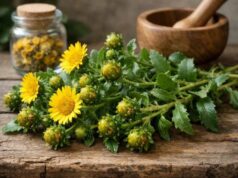
Garden rue is a perennial herb in the Rutaceae family, the same broader plant family that includes citrus. Its botanical name is Ruta graveolens, and the plant is recognized by its bluish foliage, strong penetrating aroma, and yellow flowers. In older herbals, rue appears as a warming, bitter, stimulating herb used for digestion, menstrual complaints, bruises, sprains, and external skin applications. In folk medicine it has also carried a reputation as a protective plant, which helped preserve its importance far beyond the clinic.
What makes rue different from many better-known culinary herbs is that its tradition runs alongside a clear toxicology story. Historically, it was not only used as a bitter or antispasmodic herb. It was also used to provoke menstruation and, in some regions, to induce abortion. That history matters because it helps explain why modern safety discussions around rue are much stronger than with gentler household herbs. A reader looking for “benefits” alone can miss the real point: rue has active chemistry potent enough to create both interest and harm.
In culinary terms, rue has been used in very small amounts because its taste is sharply bitter and resinous. It has appeared in some regional alcohols, bitter preparations, and flavoring traditions, but it never became a broadly used kitchen herb in the way rosemary, mint, or fennel did. That limited food use is practical as much as cultural. Rue is powerful, and even small changes in amount can move it from aromatic to unpleasant.
The plant parts used medicinally are mainly the aerial parts: leaves, young stems, and sometimes preparations made from the whole herb. These can be used fresh, dried, infused, extracted, or distilled into essential oil. The form matters enormously. A weak tea, a fresh-plant compress, and a concentrated oil are not remotely equivalent in strength or risk.
The most realistic modern description of garden rue is this: it is a historically important medicinal herb with genuine bioactive compounds, but it is not a casual wellness plant. It sits in a category where traditional relevance is real, pharmacology is intriguing, and safety demands restraint. Anyone reading about rue should understand that the plant’s reputation as “strong” is not a metaphor. It is a practical warning built into the herb’s history.
Key ingredients and medicinal properties
Garden rue owes its effects to a chemically dense profile rather than to one standout molecule. Modern reviews describe a broad mixture of flavonoids, alkaloids, coumarins, furanocoumarins, lignans, quinones, and volatile compounds. Among the names most often discussed are rutin, psoralen, bergapten, xanthotoxin, chalepensin, chalepin, and alkaloids such as graveoline. That mix helps explain why rue has been explored for digestive, antimicrobial, anti-inflammatory, fertility-related, and neurologic effects.
Rutin is one of the best-known flavonoids in rue. It is often discussed for antioxidant and vascular-supportive actions, though rue is not the only or even the best-known source of rutin. Its presence adds to the plant’s antioxidant profile, but it does not cancel out the risks carried by other compounds in the herb. That balance is important: a beneficial constituent does not make the whole plant automatically safe.
The most clinically relevant compounds for safety are the furanocoumarins. These include psoralen, bergapten, isopimpinellin, and related molecules. They are the main reason rue can cause phototoxic skin reactions. When plant sap or extract touches the skin and is followed by ultraviolet exposure, especially UVA, those compounds can trigger redness, blistering, burning, and later dark pigmentation. That means rue’s chemistry is not just interesting in a lab. It can produce visible and sometimes severe effects on real skin.
Rue also contains alkaloids and volatile components that may contribute to smooth-muscle effects, antimicrobial activity, and nervous-system signaling. This is one reason traditional texts describe the herb as stimulating, bitter, warming, and menstrual-moving. It is also why older uses for cramps, sluggish digestion, and reproductive effects kept repeating across cultures.
A practical way to think about rue’s medicinal properties is to divide them into two groups:
- Plausible therapeutic properties: bitter digestive stimulation, mild antispasmodic action, antimicrobial activity, antioxidant activity, and topical counterirritant effects.
- Risk-linked properties: phototoxicity, uterine stimulation, fertility-related effects, and potential systemic toxicity at higher exposures.
That second group is what changes the conversation. With many herbs, risk is mainly about allergy or stomach upset. With rue, the chemistry itself is central to both the promise and the danger.
Another useful point is that rue’s medicinal profile is not uniform across preparations. Fresh herb exposes the user to plant juices and phototoxic compounds at the skin level. Dried herb may reduce some volatility but not remove the core chemical concerns. Essential oil is far more concentrated and generally the least forgiving form. Extracts may emphasize certain fractions over others. This variability is why broad claims about “rue benefits” often mislead. The plant is chemically active, but the form determines how that activity shows up.
What benefits is rue known for
The benefits most often associated with garden rue come from traditional use first and research second. Historically, the herb was used for digestive sluggishness, abdominal discomfort, appetite loss, menstrual problems, bruises, joint pain, headaches, and some skin complaints. Modern reviews confirm that these uses are well documented in ethnobotanical records, but they also make clear that verified human outcomes are limited.
For digestion, rue fits the old category of bitter aromatics. Its taste can stimulate saliva and digestive secretions, which may be part of why traditional systems used it for poor appetite, post-meal heaviness, and intestinal discomfort. This is one of the few benefit areas that makes practical sense from both a traditional and pharmacologic perspective. Still, that does not mean rue is the best first-choice digestive herb. A better-studied option such as peppermint is usually more appropriate for routine self-care.
Rue is also known for antimicrobial and anti-inflammatory potential. Laboratory studies show that extracts and isolated compounds can inhibit some bacteria, fungi, inflammatory mediators, and oxidative pathways. This supports the long-standing use of rue in external applications and in traditional formulas meant for irritation or minor inflammatory states. The key limitation is translation. Activity in a cell or petri dish does not prove that a home infusion or supplement will create a safe, meaningful benefit in a person.
Another benefit cluster centers on the nervous system. Rue has attracted interest because of its flavonoids, alkaloids, and other constituents that may interact with oxidative stress pathways and neurochemical signaling. Some preclinical papers describe possible neuroprotective or neural-plasticity effects. This is scientifically interesting, especially for future drug discovery, but it remains far from routine clinical use.
There is also repeated discussion of reproductive effects, which needs careful wording. Traditional sources used rue for menstrual stimulation and fertility control, and modern toxicology literature treats that history seriously because it points toward real uterine and reproductive activity. That does not make rue a safe or acceptable self-treatment for menstrual problems. In fact, it is a reason for caution, not an endorsement.
For topical use, rue has sometimes been applied in folk practice for sprains, bruises, or skin complaints. The logic is understandable: aromatic herbs that feel warming or irritating are often applied to sore tissue. But with rue, topical use is complicated by the plant’s phototoxicity. A preparation that seems soothing at first can become a problem if sunlight follows.
So what is rue actually “known for” in the most honest sense? It is known for being a traditionally important herb with bitter, antimicrobial, anti-inflammatory, and reproductive effects, but with much stronger safety concerns than most readers expect. Its benefits are best described as plausible and historically rich, not broadly confirmed or easy to use without risk.
How garden rue is used
Garden rue has been used in several forms: fresh herb, dried aerial parts, infusions, decoctions, tinctures, topical washes, compresses, essential oil, and highly diluted homeopathic preparations. Those forms should not be treated as interchangeable. In real-world practice, the difference between a mild external wash and a concentrated internal extract can be the difference between a cautious traditional application and an unsafe experiment.
Historically, internal use was often aimed at digestion, menstrual flow, and general stimulation. External use was directed toward sore joints, bruises, eczema-like complaints, and insect or bite-related folklore applications. The modern problem is that the same chemical profile that created these uses also creates risk. Fresh rue is especially important here because the sap can increase the chance of a phototoxic reaction when skin is later exposed to sunlight.
If someone encounters rue in a practical context today, it is usually in one of four settings:
- As a garden plant valued for ornament, tradition, or insect-repelling reputation.
- As a folk herb in teas, tinctures, or cultural remedies.
- As a topical ingredient in old-style herbal preparations.
- As a homeopathic product that uses the plant name but not the same pharmacologic dose profile as the crude herb.
For safe handling, the garden context matters more than many people realize. Pruning or crushing fresh rue with bare hands and then going into the sun is one of the most predictable ways people get into trouble with this plant. Gloves, handwashing, and sun avoidance after contact are practical precautions, not excessive ones.
In terms of sensible use, rue is not a herb to improvise with. Essential oil is especially problematic because concentration amplifies both irritation and toxicity concerns. Internal medicinal use is not a good entry-level self-care practice, and topical use on broken or sun-exposed skin is unwise. If a reader is considering rue for minor skin comfort, a gentler topical herb such as calendula usually makes more sense.
Homeopathic rue deserves a separate note. Human studies involving “Ruta graveolens” often use homeopathic dilutions or mixed protocols rather than the crude herbal plant. That distinction matters. A homeopathic pellet and a rue tincture are not comparable in chemistry, dose, or risk. Confusing the two leads to unrealistic expectations and poor safety decisions.
The most practical modern use of garden rue may actually be educational rather than therapeutic: understanding it as a historically respected herb that illustrates how traditional benefit and real toxicity can coexist in the same plant. That is a more useful lesson than trying to force rue into the role of a general daily remedy.
Is there a safe garden rue dose
This is the most important question for rue, and the most honest answer is also the least convenient one: there is no well-established modern evidence-based oral dose of garden rue that can be recommended for general self-care. That sets rue apart from milder herbs where practical dosing ranges are relatively well accepted.
Older traditional sources describe rue in teas, powders, and tinctures, but these references do not amount to a validated safety framework. Modern reviews repeatedly note that clinical evidence is sparse, doses in experimental work are often high or poorly standardized, and the herb’s toxicity profile limits casual internal use. In other words, the main dosing problem is not just uncertainty. It is uncertainty combined with meaningful risk.
One historical preparation cited in recent review literature involves 10 to 15 g of fresh stems and leaves steeped in boiling water for an external eczema-related use. That number is useful mainly as context. It shows that traditional dosage language exists, but it does not establish a safe oral dose for unsupervised use today. It also describes an external folk application, not a modern therapeutic standard.
A careful dosage framework for rue looks like this:
- For internal self-use: no routine medicinal oral dose can be responsibly recommended.
- For topical self-use: caution is still required because contact plus sunlight can trigger phototoxic injury.
- For essential oil: self-dosing is a poor idea because concentration increases the margin for harm.
- For homeopathic products: follow product labeling, but do not assume the claims validate crude herbal rue.
Timing and duration matter too. Even if a person tolerates a small exposure once, that does not prove safety with repeat use. Cumulative irritation, delayed phototoxicity, and idiosyncratic reactions can change the picture quickly. Fresh plant use is particularly unpredictable because the exact chemical load varies by plant part, season, handling, and extraction.
For readers trying to turn rue into a practical supplement, the better question is not “How much should I take?” but “Should I be self-treating with this herb at all?” In many cases, the answer is no. Rue is best handled with a clinician’s input or avoided in favor of herbs with wider safety margins and clearer dosing patterns.
That may sound conservative, but with rue it is the appropriate conclusion. A plant can be pharmacologically active and still fail the test of being a good everyday self-care herb. Rue does fail that test for most people. Its traditional strength is real, but strength alone is not a dosing guide.
Side effects, interactions, and who should avoid it
Garden rue’s safety profile deserves more space than its benefit profile, because that is where the herb becomes clinically meaningful. The best-known adverse effect is phytophotodermatitis, a phototoxic skin reaction caused by contact with rue followed by exposure to sunlight, especially UVA. This can lead to burning, redness, blistering, peeling, and later dark pigmentation. The reaction may not happen instantly, which is one reason people do not always connect it to the plant.
Skin risk is highest with fresh rue because sap can contact the skin directly. Gardeners, herbal handlers, and people using fresh compresses are at particular risk. Wearing gloves, washing thoroughly after handling, and avoiding sun exposure after contact are sensible precautions.
The second major safety issue is reproductive toxicity. Rue has a long history as an emmenagogue and abortifacient, and modern toxicology literature continues to treat pregnancy exposure as unsafe. This is not a mild precaution. Pregnant people should avoid medicinal rue entirely. The same caution reasonably extends to breastfeeding, those trying to conceive, and anyone using the herb for menstrual manipulation without medical supervision.
Systemic toxicity is also part of the record. Published case literature describes severe poisoning after rue ingestion, including bradycardia, kidney injury, electrolyte problems, and coagulopathy. Such cases do not prove that every low exposure is dangerous, but they do confirm that the plant has real toxic potential when misused.
Possible side effects and harms include:
- Stomach pain, nausea, vomiting, or diarrhea.
- Burning or irritation of the mouth and throat.
- Redness, blistering, and lasting pigmentation after skin contact plus sun.
- Uterine bleeding or cramping.
- Liver, kidney, cardiac, or hematologic toxicity in serious exposures.
Interaction data are not as complete as many supplement guides would like, but caution is still warranted. Because rue contains bioactive compounds that may affect cytochrome activity and because severe poisoning has involved coagulation abnormalities, people taking anticoagulants, antiplatelet drugs, hepatotoxic medicines, or photosensitizing drugs should not self-prescribe medicinal rue. Anyone with liver disease, kidney disease, seizure disorders, heavy menstrual bleeding, or a history of severe skin reactions should avoid it as well.
Groups that should avoid medicinal rue include:
- Pregnant or breastfeeding people.
- Children and adolescents.
- People trying to conceive.
- Anyone on blood thinners or multiple prescription medicines.
- Anyone with liver, kidney, or serious heart disease.
- Anyone with known photosensitivity or frequent sun exposure as part of work.
A useful comparison is this: some herbs invite a “start low and see how you feel” approach. Rue usually does not. Even in the evidence summary, safety problems are too central to ignore. For most readers, the safest relationship with garden rue is careful handling in the garden and avoidance as a self-prescribed medicinal herb.
What the evidence actually says
The evidence on garden rue is broad in topic but narrow in reliable clinical depth. There is substantial traditional documentation, a growing body of phytochemical work, many laboratory and animal studies, and relatively little high-quality human evidence using the crude herb in a way that translates directly to self-care.
What the research supports best is that rue is chemically active. Reviews consistently show that the plant contains dozens of pharmacologically relevant constituents, including rutin, acridone and quinoline alkaloids, coumarins, and furanocoumarins. Preclinical studies report antimicrobial, antioxidant, anti-inflammatory, antiproliferative, fertility-related, and neuroactive effects. These findings justify scientific interest, especially in isolated compounds and drug-development pathways.
What the research does not support well is routine therapeutic use by the public. Human studies are limited, often small, and in some cases based on homeopathic preparations or mixed protocols rather than ordinary herbal rue. That makes it difficult to draw practical conclusions about crude teas, tinctures, or capsules. Even when older or pilot human work looks interesting, it does not overcome the bigger issue of inconsistent preparations and safety concerns.
The strongest real-world evidence may actually concern harm. Phototoxic reactions are well grounded biologically and clinically. Pregnancy risk is supported by traditional use patterns plus toxicology concern. Serious poisoning cases, while uncommon, show that adverse systemic effects are possible. This shifts the evidence balance. Rue is not a plant where uncertain benefit can be discussed separately from safety. The two have to be judged together.
That is why the most useful evidence summary is a restrained one:
- Chemistry: strong and well documented.
- Traditional use: extensive and cross-cultural.
- Preclinical promise: real, especially for antimicrobial, anti-inflammatory, and neuroactive research.
- Human clinical proof: limited and not robust enough for general recommendations.
- Safety signal: strong enough to shape decision-making.
Compared with more clinically studied botanicals such as ginger, rue remains far closer to the research bench and the historical text than to a dependable modern supplement framework. For most people, that means the evidence supports curiosity, not routine use.
The clearest bottom line is simple. Garden rue is an important medicinal plant in the history of herbal medicine, but history is not the same as a green light. Its benefits are plausible, its compounds are impressive, and its risks are substantial enough that self-treatment should be the exception, not the rule.
References
- Traditional Uses, Phytochemistry, Pharmacology and Toxicology of Ruta graveolens L.: A Critical Review and Future Perspectives 2024 (Review)
- Exploring the Genus Ruta: Traditional Uses, Pharmacology, and Safety Concerns 2025 (Review)
- New Insights Concerning Phytophotodermatitis Induced by Phototoxic Plants 2024 (Review)
- Toxicities of Herbal Abortifacients 2023 (Review)
- Ruta Graveolens intoxication 2007 (Case Report)
Disclaimer
This article is for educational purposes only and is not a substitute for medical advice, diagnosis, or treatment. Garden rue is not an appropriate self-care herb for pregnancy, abortion, or unexplained digestive, skin, or menstrual symptoms. Because rue may cause phototoxic reactions and systemic toxicity, medicinal use should be discussed with a qualified healthcare professional before use, especially if you are pregnant, breastfeeding, taking prescription medicines, or managing a chronic medical condition.
If this article was useful, please share it on Facebook, X, or any other platform you prefer.