Period cramps can turn an ordinary day into something narrow and exhausting. For some people, the pain is a dull ache that responds to a heating pad and patience. For others, it is sharp, nauseating, and disruptive enough to interfere with school, work, sleep, or exercise. Ginger has become one of the most talked-about natural options for menstrual pain, and unlike many wellness trends, it has a real evidence base behind it. Still, the details matter. The form of ginger, the dose, and the timing all affect how useful it is likely to be.
The most important thing to know is that ginger is not a cure for every kind of period pain. It seems most helpful for primary dysmenorrhea, meaning cramps that happen without an underlying pelvic disease. It is also best viewed as one tool, not the whole plan. This guide explains what ginger may actually help with, which forms make the most sense, how much people typically use, and when cramps deserve a medical workup instead of home treatment alone.
Top Highlights
- Ginger may reduce the intensity and duration of period cramps, especially when started early in the cycle.
- The best-studied forms are ginger powder and ginger capsules rather than tea, chews, or random “wellness blends.”
- Many study protocols used roughly 750 mg to 1,500 mg of ginger daily, divided across the day for the first 3 to 4 days of bleeding.
- Ginger can irritate the stomach and may not be a good fit for people with reflux, bleeding disorders, or certain medication interactions.
- If cramps are severe, getting worse, or paired with heavy bleeding, pain outside the period, or pain with sex, ginger should not delay evaluation.
Table of Contents
- Why Ginger Can Help
- Best Forms to Try
- How Much to Use
- How It Compares
- Side Effects and Warnings
- When Cramps Need a Workup
Why Ginger Can Help
Ginger is not just a kitchen ingredient with a good reputation. It contains biologically active compounds, including gingerols and shogaols, that appear to influence inflammation and pain signaling. That matters for menstrual cramps because primary dysmenorrhea is strongly linked to prostaglandins, chemical messengers made in the uterine lining that increase uterine contractions and reduce local blood flow. When prostaglandin activity is high, the uterus contracts harder and more painfully. That is one reason cramps often peak during the first day or two of bleeding.
The reason ginger gets compared with more familiar cramp remedies is that it may act on some of the same pain pathways. It does not work exactly like a nonsteroidal anti-inflammatory drug, but it seems to have enough anti-inflammatory and antiprostaglandin activity to make a meaningful difference for some people. That is why research on ginger for primary dysmenorrhea has consistently drawn interest rather than fading as a one-season trend.
What seems most realistic is not that ginger erases all pain, but that it may lower pain intensity, shorten how long the pain lasts, or reduce the need for additional pain medication. Some people notice that cramps feel less sharp, arrive more gradually, or become easier to manage when ginger is started early rather than after pain is already severe.
It helps to be precise about the type of pain in question. Ginger is most often discussed for primary dysmenorrhea, meaning cramping pain around menstruation without a structural pelvic cause. That is different from secondary dysmenorrhea, where pain is driven by conditions such as endometriosis, adenomyosis, fibroids, pelvic inflammatory disease, or other pathology. In secondary dysmenorrhea, ginger may still provide some symptom relief, but it should not be mistaken for treatment of the underlying condition.
There is also a practical reason ginger appeals to many people: it feels approachable. It can be taken as a capsule, steeped as tea, added to warm food, or used alongside heat and rest. That flexibility makes it easy to try. The tradeoff is that “easy to try” is not the same as “easy to dose well.” Much of the published evidence comes from fairly specific preparations and schedules, not from loosely guessing with whatever ginger product happens to be in the pantry.
That is where many people go wrong. They hear that ginger helps cramps, drink one mug of light ginger tea after pain is already intense, and conclude it does nothing. The evidence suggests it is more useful when taken in a measurable dose, on a deliberate schedule, and ideally early in the cramping window. In other words, ginger works best when it is used like a treatment plan rather than like a comforting afterthought.
Best Forms to Try
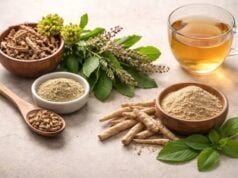
Not all ginger products are equally useful for period cramps. The strongest evidence is for oral ginger powder or ginger capsules, usually taken in divided doses over several days. That matters because these forms are easier to standardize. If you are trying to follow the evidence, capsules and measured powder are the closest match to what has actually been studied.
Capsules are the most practical option for many people. They make it easier to know how much you are taking and to spread the dose across the day. They also avoid the problem of weak or inconsistent tea. For someone who wants a “try it properly” approach, capsules are often the most sensible starting point.
Powdered ginger can also work, especially if you are comfortable measuring it. It may be stirred into warm water, added to a smoothie, or taken in food. The downside is that taste and stomach tolerance can become limiting at higher amounts.
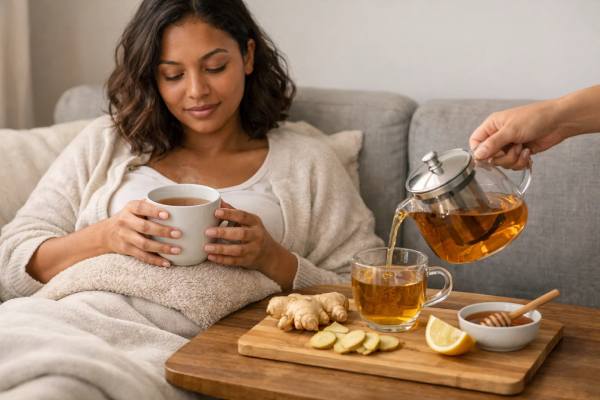
Fresh ginger tea is popular and may still be worth trying, especially for people who also feel nauseated during their period. Warm fluid plus ginger can be soothing. But tea is harder to dose with confidence. The strength depends on how much ginger you use, how finely it is cut, how long it steeps, and how much liquid you are drinking. That does not make tea useless. It just makes it less predictable.
Ginger chews, gummies, and wellness shots are usually the least reliable for cramp treatment. Some contain very little actual ginger. Others are mostly sweetener, flavoring, or a proprietary blend that hides the amount of active ingredient. These products may be convenient, but they are rarely the best match for the research.
A practical hierarchy looks like this:
- Best studied: capsules and measured powder
- Reasonable but less precise: strong homemade tea
- Least useful for evidence-based dosing: chews, candies, and blends with unclear amounts
There is also the question of comfort versus control. If a capsule causes less taste fatigue and lets you follow a regular schedule, it may be more effective in real life than tea you stop drinking after one cup. On the other hand, if swallowing capsules is unpleasant or your stomach feels better with warm liquids, strong tea may still fit you better even if the exact dose is harder to pin down.
Another important detail is that ginger is not the only non-drug option people explore for menstrual pain. Heat, regular movement, and sleep support are often part of the same strategy. If cramps overlap with broader cycle symptoms, some people also look into options such as magnesium support for PMS and sleep, though that serves a different role than ginger and should not be treated as a direct substitute.
The best form is usually the one that balances three things: reliable dosing, good stomach tolerance, and a routine you can actually follow on day one of your period rather than only in theory.
How Much to Use
Dose is where ginger shifts from “interesting idea” to “practical remedy.” The published studies do not all use exactly the same protocol, but a fairly consistent pattern appears: ginger is usually taken in divided doses totaling roughly 750 mg to 1,500 mg daily, and sometimes up to about 2 grams daily, for the first several days of the menstrual period. Many trials used ginger powder in capsules rather than food-based preparations.
A very practical approach is to think in smaller repeated doses rather than one large amount at once. Common study-style schedules include:
- 250 mg four times daily
- 500 mg three times daily
- similar divided regimens starting just before or at the onset of bleeding
For many people, a reasonable trial looks like this:
- Start at the first sign that cramps are coming, or 1 day before your period if your cycle is predictable.
- Take a measured ginger dose with food.
- Continue divided doses through the first 2 to 4 days of bleeding, which is usually when prostaglandin-driven pain is strongest.
- Track whether pain intensity, duration, nausea, or rescue medication use improves over two or three cycles.
That last point matters. One cycle can be unusually mild or unusually rough. A fair trial is usually at least two cycles, assuming side effects are minimal.
Timing may matter as much as dose. Ginger seems more helpful when it is started early, before pain is fully established. That fits the biology. Once cramping is intense, nausea is high, and sleep has already been disrupted, almost any remedy becomes less effective than if it had been started sooner.
Tea users run into a different challenge: how much ginger in one mug equals a studied capsule dose? There is no simple conversion because brewing strength varies so much. If you prefer tea, make it stronger than a casual flavor infusion. Using several slices or grated fresh ginger and simmering rather than briefly steeping may produce a more therapeutic result, but it still will not be as exact as a labeled capsule.
A few practical tips make ginger easier to tolerate:
- take it with food if it upsets your stomach
- split the dose rather than taking it all at once
- avoid assuming “more is better”
- be consistent during the highest-pain days rather than taking it randomly
People often ask whether ginger can replace other measures entirely. Sometimes it may be enough on its own for milder primary dysmenorrhea. For others, it works better as part of a layered plan that includes heat, hydration, rest, and sometimes NSAIDs. If nausea, bloating, and other period symptoms rise alongside cramps, you may need to think beyond pain alone. In people with very heavy or irregular bleeding, the conversation may need to widen toward possible causes of heavy periods rather than simply increasing the ginger dose.
The clearest dosing message is this: use a measurable form, start early, divide the dose, and evaluate the result over more than one cycle.
How It Compares
A common question is whether ginger works well enough to replace ibuprofen, naproxen, or other standard cramp treatments. The most honest answer is that ginger appears promising, but it is not automatically the better first choice for everyone.
For primary dysmenorrhea, NSAIDs remain the most established first-line treatment because they directly reduce prostaglandin production, which is central to the pain mechanism. They also work quickly and predictably for many people. Ginger seems to help in a similar clinical space, but the evidence base is smaller, and product quality is less standardized. That does not make ginger weak. It makes it less uniform.
In real life, people tend to fall into three groups:
- those whose cramps are mild enough that ginger may be enough on its own
- those who prefer to start with ginger and add other measures only if needed
- those whose pain is too strong or disruptive to rely on ginger alone
Ginger may be especially appealing if:
- you want a non-prescription option
- you dislike frequent NSAID use
- you also get nausea with cramps
- you prefer to start with something gentler and escalate only if necessary
On the other hand, ginger may be less practical if:
- your cramps come on suddenly and intensely
- you need very fast relief
- you have already tried it at a real dose and it did not help
- your pain pattern suggests secondary dysmenorrhea rather than ordinary menstrual cramps
It is also worth comparing ginger with other non-drug measures. Heat therapy often works surprisingly well and pairs naturally with ginger. A heating pad or heat patch can reduce cramping while ginger handles some of the inflammatory side of the pain. Exercise and regular physical activity appear helpful for some people over time, though they are usually more about long-term symptom reduction than immediate rescue once cramps are already severe. Rest, sleep, and hydration do not treat prostaglandins directly, but they can make pain feel more manageable.
One useful way to think about ginger is as a bridge option. It may help enough to avoid or reduce medication in some cycles, and in other cycles it may simply lower the amount of additional treatment needed. That still counts as success. Pain relief does not have to mean “nothing hurts at all” to be worthwhile.
Where ginger should not be overpraised is in severe, escalating, or disabling menstrual pain. If someone is regularly vomiting, fainting, missing work, or curled up in bed despite structured use of ginger, heat, and over-the-counter pain treatment, the problem is no longer choosing the perfect home remedy. It is figuring out why the pain is that intense.
The best comparison is not ginger versus everything else in a competition. It is ginger as one option on a ladder of care. For some people it is enough. For others it works best in combination. For a smaller group, it is simply not the right tool because the pain pattern points to a more serious cause.
Side Effects and Warnings
Ginger is widely used and often described as safe, but “natural” does not mean side-effect free. Most problems are mild and digestive, yet they still matter, especially if you are using ginger in higher amounts than you would normally eat in food.
The most common issues include:
- heartburn
- stomach burning or upper abdominal discomfort
- reflux
- loose stools
- nausea from taking too much at once
- an unpleasant warming or peppery aftertaste
People with sensitive stomachs often do better when ginger is taken with food and split into smaller doses. This is one reason capsules can be easier than swallowing a large amount of concentrated tea or raw ginger all at once.
There are also a few situations where extra caution makes sense.
If you use blood thinners or have a bleeding disorder, speak with a clinician or pharmacist before using ginger in supplement-style doses. While ordinary culinary use is different from therapeutic dosing, higher supplemental amounts raise more concern about additive bleeding effects.
If you have significant reflux or ulcer symptoms, ginger may aggravate burning even if it helps cramps.
If you have gallbladder disease or a complicated gastrointestinal history, it is worth checking whether concentrated ginger is a wise fit.
If you are preparing for surgery, many clinicians prefer that supplements with possible blood-thinning effects be reviewed in advance.
This is also the place to be clear about expectations. Ginger is not a harmless excuse to ignore severe symptoms for month after month. Pain that is worsening, one-sided, accompanied by heavy bleeding, or extending well beyond the period is not something ginger should simply cover over.
Product quality is another issue. Supplements are not all identical. Some ginger capsules contain a clear amount of ginger root powder. Others contain extracts, blends, or additional herbs that change the experience and may create more interaction risk. Simpler products are usually easier to reason about than “period relief” formulas that combine five or six ingredients with unclear doses.
A few practical safety rules help keep things sane:
- Start with a moderate, measured dose rather than jumping to the highest amount you can find.
- Use one ginger product at a time so you know what is affecting you.
- Do not stack capsules, shots, chews, and tea without realizing the total intake.
- Stop if you develop significant digestive upset, rash, or other unexpected symptoms.
- Reassess if the product is doing nothing after a fair two- to three-cycle trial.
For many people, ginger lands in the “worth trying, low drama” category. But that only stays true when it is used thoughtfully. The goal is symptom relief with minimal downside, not an all-natural experiment that leaves you nauseated, burned by reflux, or falsely reassured about pain that should be evaluated.
When Cramps Need a Workup
Ginger can be useful for ordinary primary dysmenorrhea, but some cramp patterns should push the conversation out of the kitchen and into a medical visit. The key question is not just “How bad is the pain?” but “Does the pattern still look like straightforward primary menstrual pain?”
Cramps deserve a closer look when they are:
- getting worse over time after years of milder periods
- no longer controlled by usual measures
- paired with very heavy bleeding
- starting well before bleeding and lasting well after it ends
- associated with pain during sex
- associated with bowel pain or urination pain during periods
- linked to fertility difficulties
- causing missed school, work, or repeated vomiting
- suddenly different after an IUD placement or another pelvic change
Those features raise concern for secondary dysmenorrhea, where an underlying condition is driving the pain. Common examples include endometriosis, adenomyosis, fibroids, pelvic infection, congenital uterine outflow issues, or less common structural causes.
Endometriosis deserves special mention because it is a frequent reason severe cramps are normalized for too long. People are often told they simply have a “low pain tolerance” or “bad periods,” especially if they began having painful cycles as teenagers. But when cramps are severe, progressive, resistant to basic treatment, or linked with pain outside the period window, it is reasonable to think about conditions beyond primary dysmenorrhea.
Heavy flow changes the picture too. If pads or tampons are being saturated quickly, clots are large, or bleeding is prolonged, it helps to think beyond cramp relief and consider when irregular or abnormal bleeding needs evaluation. Pain plus abnormal bleeding often points to a broader gynecologic workup rather than a supplement problem.
There are also moments when urgent care matters more than self-treatment. Seek prompt medical attention if pelvic pain is severe and sudden, comes with fever, fainting, unusual discharge, possible pregnancy, or one-sided pain that feels unlike a usual period. Those scenarios can point to problems far more urgent than primary dysmenorrhea.
A useful self-check is this: If ginger, heat, rest, and a reasonable over-the-counter pain plan still leave you repeatedly unable to function, the next step is not a stronger tea recipe. It is an evaluation. Pain is a symptom, not a moral challenge to endure.
The right workup may include a pelvic history, exam, ultrasound, medication review, and discussion of whether hormonal suppression or further testing is needed. Sometimes the outcome is reassuring: primary dysmenorrhea can simply be severe. But sometimes the same evaluation finds something important that would not have improved with more patience or more ginger.
The real value of ginger is that it may help many people with uncomplicated cramps. The real limit of ginger is that it should never become a reason to delay recognizing when the pain no longer looks uncomplicated.
References
- Ginger for Pain Management in Primary Dysmenorrhea: A Systematic Review and Meta-Analysis 2024 (Systematic Review and Meta-Analysis)
- Efficacy of Ginger in the Treatment of Primary Dysmenorrhea: A Systematic Review and Meta-analysis 2021 (Systematic Review and Meta-analysis)
- Dysmenorrhea, a Narrative Review of Therapeutic Options 2024 (Review)
- ESHRE Guideline Endometriosis 2022 (Guideline)
- Effect of Zingiber officinale R. rhizomes (ginger) on pain relief in primary dysmenorrhea: a placebo randomized trial 2012 (RCT)
Disclaimer
This article is for educational purposes only and is not a substitute for personal medical advice, diagnosis, or treatment. Period pain can be primary dysmenorrhea, but it can also reflect conditions such as endometriosis, adenomyosis, fibroids, or other pelvic disorders. Speak with a qualified clinician before using ginger in supplement-style doses if you take anticoagulants, have bleeding or gastrointestinal conditions, are preparing for surgery, or have severe or changing pelvic pain.
If this article helped you make sense of ginger for period cramps, consider sharing it on Facebook, X, or another platform so someone else can find a practical, evidence-based starting point.