Goat’s rue, or Galega officinalis, is a traditional European herb with a far larger reputation than most people realize. It has been used for centuries for low milk supply, sluggish metabolism, fluid retention, and symptoms that would now be recognized as linked to blood sugar imbalance. Today, it is best known for two reasons: its long history as a galactagogue and its chemical link to the story behind metformin, one of modern medicine’s most important glucose-lowering drugs.
That combination makes goat’s rue fascinating, but it also calls for caution. This is not a gentle kitchen herb that can be treated like a harmless tonic. Its aerial parts contain guanidine-related compounds, including galegine, along with flavonoids and other phytochemicals that appear to affect glucose handling and metabolic signaling. Some traditional uses remain plausible, but the human evidence is still limited and uneven.
The most useful way to approach goat’s rue is with clear expectations. It is a historically important medicinal herb with real pharmacologic activity, possible benefits in lactation and metabolic support, and enough uncertainty around dosing and safety to deserve careful, informed use.
Quick Summary
- Goat’s rue is most often discussed for low milk supply and blood sugar support, but neither use is backed by strong modern clinical evidence.
- Its most notable compound is galegine, a guanidine-related constituent linked historically to the development of biguanide diabetes drugs.
- Traditional use has included about 1 to 2 mL of tincture up to three times daily or tea made from about 1 teaspoon dried herb twice daily, but standardized dosing is lacking.
- Goat’s rue may lower blood sugar and should be used carefully with diabetes medicines.
- Pregnant people, anyone with recurrent hypoglycemia, and those using glucose-lowering medication should avoid unsupervised use.
Table of Contents
- What Is Goat’s Rue
- Key Compounds and Actions
- What Can It Really Help With
- How to Use Goat’s Rue
- How Much Per Day
- Side Effects Interactions and Who Should Avoid It
- What the Evidence Actually Says
What Is Goat’s Rue
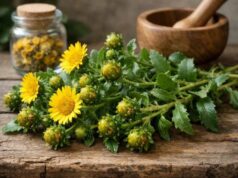
Goat’s rue is a flowering perennial in the legume family, native to parts of Europe and western Asia and now naturalized in other regions as well. It has upright stems, bluish-purple to pale lilac flowers, and pinnate leaves that give it a delicate appearance. Medicinally, the above-ground parts are the ones most often used, especially the leaves and flowering tops. These are dried and made into teas, tinctures, powders, tablets, and mixed herbal formulas.
Historically, goat’s rue occupied several roles at once. It was used as a galactagogue to encourage milk flow, as a diuretic, as a fever herb, and as a support for people with the excessive thirst and urination that are now recognized as classic symptoms of hyperglycemia. That last association turned out to be especially important, because the herb’s guanidine-related chemistry helped inspire later work on biguanides and, eventually, metformin.
That history often leads to a common misunderstanding. People hear that goat’s rue helped inspire metformin and assume the herb must work like a natural form of the drug. It does not. The connection is historically important, but it does not mean a tea or capsule of goat’s rue is interchangeable with a modern prescription medicine. The herb is less studied, less standardized, and much less predictable.
It also should not be confused with rue, a different plant with its own safety profile. The similar name causes needless mistakes in online shopping and herbal discussions, so accuracy matters.
A few points define goat’s rue best:
- It is a traditional European medicinal herb, not a modern standardized therapy.
- The aerial parts are usually used, not the root.
- It is most closely associated with lactation support and glucose-related history.
- Its chemistry is potent enough to matter, which means safety deserves real attention.
Another useful point is that goat’s rue sits in a category of herbs that are famous partly because of what they led to in medicine. That gives it a special place in herbal history, but it can also distort expectations. A plant can be historically important without being clinically proven for every claim now attached to it.
For readers comparing it with better-known lactation herbs, fenugreek for milk supply and metabolic support is often more familiar and more commonly discussed in current herbal practice. Goat’s rue remains relevant, but mostly as a narrower, more pharmacologically interesting herb rather than a first-choice household remedy.
The best starting view is simple: goat’s rue is a traditional herb with a real medicinal identity, but it is one that belongs in the “use carefully” category rather than the “daily wellness booster” category.
Key Compounds and Actions
Goat’s rue owes its medicinal interest to a relatively small but important group of compounds, especially guanidine derivatives. The best known of these is galegine, a constituent that helped shape scientific thinking about plant-based glucose-lowering substances in the early twentieth century. Galegine itself is not metformin, and it is not used in the same way, but the herb’s chemistry clearly influenced the drug-development story.
Beyond galegine, goat’s rue contains several other classes of compounds that help explain its broader reputation. These include flavonoids, quinazoline alkaloids, hydroxycinnamic acids, saponins, tannins, and related phenolic compounds. Recent analytical studies show that different extraction methods yield different profiles, which is one reason one goat’s rue product may behave differently from another.
The most relevant compound groups include:
- Guanidine derivatives, especially galegine, which are most closely linked with hypoglycemic interest
- Flavonoids, including rutin, quercetin derivatives, and kaempferol-related compounds
- Hydroxycinnamic acids, which contribute antioxidant activity
- Quinazoline alkaloids, smaller but pharmacologically relevant constituents
- Saponins and tannins, which may contribute supportive physiologic effects
These compounds are often discussed in relation to three main actions.
The first is glucose regulation. Goat’s rue has long been associated with lowering blood sugar, and modern preclinical work suggests that both galegine and polyphenol-rich fractions may contribute. Some studies suggest effects on carbohydrate-digesting enzymes, insulin sensitivity, and glucose handling in tissues. This is the area where the herb’s modern scientific interest is strongest.
The second is metabolic and antioxidant support. Flavonoids and phenolic acids in goat’s rue appear to have antioxidant and methylglyoxal-trapping properties in laboratory work. That sounds technical, but the practical meaning is that the plant may help influence some of the oxidative and carbonyl stress pathways that become relevant in metabolic disease.
The third is lactation-related traditional use. This is the area most consumers ask about, but it is also the area where chemistry alone tells only part of the story. A herb can have a historical reputation as a galactagogue without strong modern proof that it reliably increases milk supply in real-world postpartum use.
A helpful comparison is that goat’s rue is often discussed alongside bitter melon in glucose-focused herbal traditions, but the two plants are not chemically or clinically interchangeable. Goat’s rue is more historically tied to guanidine chemistry and the story of antidiabetic drug development, while bitter melon is more often framed as a direct food-herb metabolic support.
One of the most important practical lessons from goat’s rue chemistry is that the herb is not inert. It contains compounds with genuine biologic activity. That is why it can sound promising, and that is also why product quality, dosing, and user context matter much more than they do with a simple culinary herb.
What Can It Really Help With
The most honest answer is that goat’s rue may help in a few targeted areas, but the evidence is far thinner than many supplement labels suggest. Its traditional uses are broad, yet modern human data remain limited. That means the herb is better described as plausible and historically important than as proven.
The two main areas people search for are lactation and blood sugar support.
For lactation, goat’s rue is widely known as a galactagogue. It appears in many breastfeeding teas and multi-ingredient formulas, and its very name reflects the historical idea of “leading to milk.” But the modern clinical record is weak. Older uncontrolled studies and observational reports suggest possible benefit, yet stronger trials are lacking, and when goat’s rue appears in a formula, it is usually mixed with several other herbs. That makes it hard to know whether goat’s rue itself is doing anything meaningful.
For metabolic support, the herb’s case is stronger in theory than in clinical proof. Preclinical research supports hypoglycemic and antioxidant effects, and the historical path from goat’s rue to metformin makes the glucose story more credible than pure folklore. Even so, this is still not enough to recommend the herb as a stand-alone therapy for diabetes. At most, it belongs in the category of a traditional herb with promising metabolic signals.
Other uses that appear in traditional herbal writing include:
- mild diuretic support
- metabolic sluggishness
- appetite reduction in some contexts
- fever support in older European practice
- general “alterative” or system-balancing use in older herbal language
These broader uses are much harder to support confidently today. They belong more to historical context than to evidence-based self-care.
A realistic reader takeaway looks like this:
- Goat’s rue may have a place in lactation support, but the direct human evidence is weak.
- It has a more biologically convincing metabolic story than many herbs, but not enough clinical proof for disease treatment claims.
- Its strongest modern relevance is not that it is proven, but that it is pharmacologically interesting.
For people specifically exploring blood sugar herbs, gurmar for more targeted sugar-related support is often discussed more directly in metabolic contexts than goat’s rue. Goat’s rue still matters, but mainly as a historical and preclinical bridge between traditional herbal medicine and modern glucose pharmacology.
There is also a subtle but important point about outcomes. Even if an herb lowers glucose in animals or inhibits carbohydrate enzymes in a lab, that does not guarantee a safe, meaningful benefit in a human taking mixed supplements, eating an ordinary diet, and possibly using prescription medicine. That gap between mechanism and outcome is where many herbal articles become misleading.
So what can goat’s rue really help with? Most likely, it may offer modest support in carefully selected lactation or metabolic situations. What it should not be sold as is a dependable milk-supply fix, a natural metformin replacement, or a broadly proven remedy for modern endocrine disorders.
How to Use Goat’s Rue
Goat’s rue is usually used as a tea, tincture, powdered herb, or capsule. Traditional practice relies most heavily on the dried aerial parts, while modern commercial use often favors standardized-looking tablets or blends designed for lactation or metabolic support. The problem is that many of these products are not truly standardized in a clinically meaningful way.
That makes form selection important.
Tea or infusion is the most traditional approach. It is often used for lactation support and is usually made from the dried herb rather than a concentrated extract. This form is relatively easy to dose conservatively, but it also varies the most from batch to batch.
Tincture offers more convenient dosing and is common in Western herbal practice. This is often the most practical way to use goat’s rue when a short trial is being considered, because it is easier to measure than loose herb.
Capsules and tablets are popular for metabolic or convenience-focused use, but they may create a false sense of precision. A capsule tells you weight, not necessarily the amount of galegine or the full phytochemical profile.
Multi-herb formulas are especially common in lactation products. These may include fennel, fenugreek, milk thistle, anise, lemon grass, or other herbs. The drawback is obvious: if the product seems to help or causes side effects, it is difficult to identify which ingredient is responsible.
A practical use framework looks like this:
- choose one form first rather than stacking several
- use a clearly labeled product
- define the reason for taking it before starting
- keep the trial short and deliberate
- stop if symptoms suggest low blood sugar or poor tolerance
For lactation, goat’s rue should never replace basic breastfeeding assessment. Positioning, latch, feeding frequency, infant transfer, maternal stress, and postpartum health often matter more than any herb. This is why professional lactation guidance remains central, and why any herb should be viewed as secondary support rather than primary treatment.
Goat’s rue is often paired with fennel in classic lactation tea blends, but that pairing also illustrates a major evidence problem: once several herbs are combined, the specific contribution of goat’s rue becomes unclear.
A final point worth emphasizing is that goat’s rue is not a good “background herb.” It makes more sense as a short, intentional trial for a defined goal than as an open-ended daily supplement. Its pharmacologic activity, uncertain standardization, and potential effect on blood sugar all argue for targeted use rather than vague routine use.
That cautious style of use may sound less exciting, but it is far more consistent with what the evidence actually supports.
How Much Per Day
There is no well-established, evidence-based standard dose for goat’s rue. That is the most important fact to understand before looking at any numbers. Traditional herbal practice offers rough ranges for tea and tincture, and older lactation studies used fixed preparations, but none of this adds up to a modern, universally accepted clinical dosage.
Traditional use has often included:
- tea made from about 1 teaspoon dried herb in 1 cup of water, taken twice daily
- tincture in the range of 1 to 2 mL up to three times daily
In one older lactation-related trial, women received 15 mL of a 5 percent infusion three times daily for 10 days. That study did not provide strong evidence of benefit, but it does show the type of dose that has been used historically in research settings.
These numbers need context.
First, tea, tincture, powder, and extract are not interchangeable. A capsule with a given weight does not automatically correspond to a cup of tea or a milliliter of tincture. Second, many goat’s rue products are marketed for very different goals, which means their formulation choices vary widely. Third, if the user is also taking glucose-lowering medication, even a modest herbal dose may matter more than expected.
A practical dosing strategy should be conservative:
- start with the lowest labeled dose
- use only one product at a time
- take it consistently for a short period rather than escalating quickly
- monitor for shakiness, sweating, weakness, headache, or unusual hunger
- stop if any sign of poor tolerance appears
There is also a strong case for avoiding long-term unsupervised use altogether. Goat’s rue is not well studied enough to justify indefinite self-medication, especially in people with metabolic disease. The more serious the condition, the less appropriate it is to experiment casually with a herb that may influence glucose dynamics.
For readers exploring herbal metabolism support more broadly, goat’s rue should be thought of as more pharmacologically sharp than a loose wellness tea, but less clinically defined than a treatment-grade product. That middle zone is exactly where dosing uncertainty becomes most important.
This is why goat’s rue is not the kind of herb where “a little more” is a good strategy. Because galegine-related activity can contribute to hypoglycemic effects, a dose that seems harmless in theory may become less harmless when combined with fasting, exercise, illness, or prescription medication.
The safest summary is this: traditional dosing exists, but modern standardized dosing does not. If goat’s rue is used at all, it should be used conservatively, for a clear reason, and with more caution than the average over-the-counter herbal blend deserves.
Side Effects Interactions and Who Should Avoid It
Goat’s rue is often marketed in gentle language, especially in breastfeeding products, but its safety profile is more complex than that tone suggests. The herb contains galegine and other active compounds that may lower blood sugar. In therapeutic use, that is exactly why people become interested in it. In real life, it is also the main reason the herb requires caution.
The most important concern is hypoglycemia. A person using insulin, metformin, sulfonylureas, or other glucose-lowering drugs may be more sensitive to even moderate herbal effects. This is especially relevant when appetite is low, meals are irregular, or physical activity is high.
Possible side effects or concerns include:
- shakiness or weakness suggestive of low blood sugar
- headache
- dizziness
- diarrhea or digestive upset
- product-related variability from mixed or poorly labeled supplements
- uncertain safety in prolonged use
The lactation context adds another layer. Goat’s rue is commonly sold to breastfeeding mothers, yet the evidence for its benefit is weak and the safety data are limited. Official lactation references stress that galactagogues should never replace assessment of modifiable causes of low milk production. In other words, even when the herb is traditionally used in nursing mothers, it should not be treated as automatically appropriate.
Another useful safety perspective comes from outside human herbalism. Goat’s rue is a known toxic plant in livestock when eaten in large amounts, especially by grazing animals. That does not mean a normal herbal dose in a human is equivalent to pasture poisoning. But it does underline an important point: this is a biologically active plant, not a neutral wellness garnish.
Who should avoid unsupervised use:
- people taking diabetes medication
- anyone prone to recurrent hypoglycemia
- pregnant people
- those with significant chronic illness unless a clinician approves use
- people using multiple metabolic or lactation herbs at the same time
- anyone with unclear symptoms who has not yet had medical evaluation
It is also wise to avoid goat’s rue before surgery or during periods when food intake is unstable, because blood sugar shifts may be harder to anticipate. Although evidence for some other interactions is limited, uncertainty should be treated as a reason for caution, not as proof of safety.
A subtle but important issue is false reassurance. Many herbal products frame goat’s rue as traditional, plant-based, and natural, which can make people underestimate it. But a herb can be natural and still interact with physiology meaningfully. That is especially true when its historical significance includes helping inspire drug development.
Used carefully, goat’s rue may be tolerated. Used casually, especially in the setting of diabetes medicines or unexamined lactation problems, it can become more trouble than benefit.
What the Evidence Actually Says
The evidence for goat’s rue is a classic example of why traditional reputation and modern proof are not the same thing. The herb has a long medicinal history, a chemically plausible mechanism, and a major place in the historical path toward metformin. Yet the direct clinical evidence for using the plant itself remains limited.
The strongest modern support exists in three areas.
First, there is historical and mechanistic support for metabolic effects. Goat’s rue clearly contains active guanidine-related compounds, and multiple laboratory and animal studies suggest hypoglycemic and antioxidant potential. This gives the herb real scientific credibility, especially compared with purely anecdotal metabolic herbs.
Second, there is credible phytochemical evidence. Recent studies have done a better job identifying what is actually in goat’s rue and how different extracts behave. These studies support the idea that both galegine and polyphenol-rich fractions contribute to the plant’s biologic activity.
Third, there is continuing interest in lactation support, but the evidence here is notably weaker. Reviews of galactagogues repeatedly conclude that high-quality human trials are scarce. When goat’s rue is studied, the data are often old, uncontrolled, or entangled with multi-herb products. This means that its popularity in breastfeeding circles exceeds the strength of the evidence behind it.
The weakest part of the evidence is the one many consumers assume is strongest: direct, reliable proof that goat’s rue clearly increases milk supply in a predictable way. That proof is still missing.
A balanced reading of the literature leads to several practical conclusions:
- goat’s rue is pharmacologically real, not merely folkloric
- its glucose-related tradition is more credible than many casual summaries suggest
- its lactation reputation is long-standing, but the clinical support remains poor
- the herb itself is far less studied and less standardized than the drug history it helped inspire
This is why the most responsible description of goat’s rue is not “proven” and not “myth.” It sits in the middle. It is a historically important medicinal herb with promising metabolic activity, incomplete clinical validation, and enough safety uncertainty to rule out casual recommendation.
That middle-ground conclusion is actually useful. It means the herb may be worth discussing in targeted contexts, especially when a skilled clinician or herbal practitioner is involved. It also means it is not appropriate to market it as a reliable solution for low milk supply, as a natural diabetes treatment, or as a metformin substitute.
In evidence-based herbal writing, precision matters more than enthusiasm. Goat’s rue deserves attention because its story is medically important. It also deserves restraint because the evidence for the herb itself still falls short of its reputation.
References
- Goat’s Rue – Drugs and Lactation Database (LactMed®) – NCBI Bookshelf 2026 (Official Database)
- Metformin: Therapeutic profile in the treatment of type 2 diabetes – PubMed 2024 (Review)
- Optimizing antidiabetic properties of Galega officinalis extract: Investigating the effects of foliar application of chitosan and salicylic acid – PMC 2024 (Preclinical Study)
- In vitro antidiabetic and antioxidant activities of Galega officinalis extracts – PMC 2024 (Preclinical Study)
- A Review of Herbal and Pharmaceutical Galactagogues for Breast-Feeding – PMC 2016 (Review)
Disclaimer
This article is for educational purposes only and is not medical advice. Goat’s rue is a biologically active herb that may influence blood sugar and should not replace professional care for diabetes, hypoglycemia, low milk supply, or other health concerns. Breastfeeding difficulties often need hands-on lactation assessment, and metabolic symptoms need proper medical evaluation. Speak with a qualified healthcare professional before using goat’s rue if you are pregnant, breastfeeding, taking prescription medicine, or managing any endocrine or metabolic condition.
If you found this article useful, please share it on Facebook, X, or your preferred platform so more readers can access careful, evidence-aware herbal information.