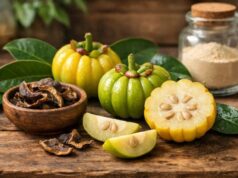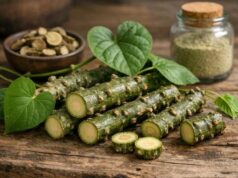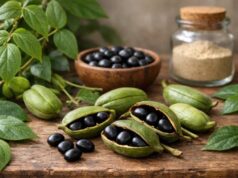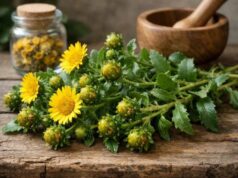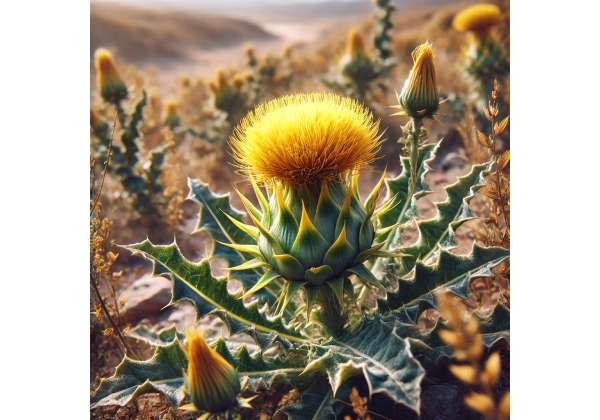
Golden thistle is one of those Mediterranean plants that sits naturally between food and herbal medicine. Botanically known as Scolymus hispanicus, it is a prickly wild edible in the daisy family, gathered for its tender inner leaf ribs, stems, and sometimes roots. In several Mediterranean food traditions, it is cooked like a seasonal vegetable. In folk medicine, it has also been used as a bitter digestive herb, a mild diuretic, and a plant associated with liver and intestinal comfort.
What makes golden thistle especially interesting is that its practical value still begins with the kitchen. Modern research suggests the plant contains fiber, phenolic compounds, flavonoids, tannins, sterols, and triterpenes that may help explain its antioxidant, antimicrobial, anti-inflammatory, and metabolic effects. Even so, most of the evidence remains preclinical or food-based rather than strongly clinical. That means golden thistle is better viewed as a nutritious wild herb-vegetable with medicinal promise, not as a standardized therapeutic supplement. Used thoughtfully, it may support digestion, dietary variety, and gentle metabolic health while adding depth to bitter-green cuisine.
Essential Insights
- Golden thistle is mainly a food-first medicinal herb, with the strongest support around digestion, antioxidant value, and traditional bitter-tonic use.
- Its key compounds include phenolic acids, flavonoids, tannins, triterpenes, sesquiterpenes, and sterols linked to anti-inflammatory and metabolic effects.
- A practical food serving is about ½ to 1 cup cooked cleaned stems or inner ribs, or about 150 to 250 mL of a light traditional infusion.
- Oral medicinal dosing is not standardized, so concentrated extracts should not be used casually.
- People with Asteraceae allergies, bile duct problems, pregnancy-related concerns, or poor plant identification should avoid self-directed medicinal use.
Table of Contents
- What is golden thistle
- Key compounds in golden thistle
- What can golden thistle help with
- How to use golden thistle
- How much per day
- Safety and who should avoid it
- What the evidence actually says
What is golden thistle
Golden thistle is a prickly Mediterranean wild plant in the Asteraceae family. It grows in fields, roadsides, disturbed ground, and traditional gathering areas across southern Europe, North Africa, and parts of the eastern Mediterranean. The plant is easy to overlook at first because of its thorny outer structure, but people who know it well value the tender inner ribs, peeled stems, and young parts as seasonal food.
Its identity matters because golden thistle is not primarily known as a capsule herb or commercial extract. It is first a wild edible vegetable. In Spain, Italy, Turkey, Morocco, and nearby regions, it has long been gathered and cooked in broths, sautéed vegetable dishes, egg-based meals, and regional spring foods. The food use is so established that efforts have been made to cultivate and market it more widely as a ready-to-eat or value-added product.
That culinary role helps explain its medicinal reputation. Bitter edible plants often become digestive herbs because people learn, over time, that they stimulate appetite, lighten heavy meals, and fit well into liver-and-gut traditions. Golden thistle followed that same path. Traditional descriptions commonly frame it as:
- A bitter tonic for appetite
- A digestive and carminative plant
- A mild diuretic
- A choleretic-style herb linked to bile flow
- A supportive plant for liver and intestinal complaints
Those uses should be taken seriously, but not exaggerated. Golden thistle is not one of the better-standardized medicinal bitters with a large human evidence base. Its practical role is closer to that of a functional wild vegetable that happens to have medicinal overlap.
Another reason it deserves a food-first introduction is plant-part variation. The tender inner ribs and stems are used very differently from crude extracts in a lab study. When readers search for “golden thistle benefits,” they often expect a supplement-style answer. What they really need is a better question: is this best used as food, tea, or extract? For golden thistle, food is usually the best starting point.
A useful comparison is artichoke, another Mediterranean bitter plant associated with digestion and bile-related comfort. Golden thistle is less standardized and more rustic, but the general pattern is similar: a bitter edible with traditional digestive value, moderate medicinal promise, and strongest relevance when used in ordinary culinary life.
Key compounds in golden thistle
Golden thistle contains a mix of nutrients and phytochemicals that make it more than just a bitter wild vegetable. Modern studies describe the plant as a source of dietary fiber, macro- and micronutrients, phenolic compounds, flavonoids, tannins, triterpenes, sesquiterpenes, and sterol-type molecules. This combination helps explain why it shows up in research on antioxidant, antimicrobial, anti-inflammatory, and metabolic activity.
Among its better-known compound groups are phenolic acids and flavonoids. These are important because they often underpin antioxidant and tissue-protective effects in plant foods. Reported phenolic compounds in golden thistle include chlorogenic acid, caffeic acid, ferulic acid, sinapic acid, gallic acid, and related molecules. Flavonoids such as catechin and rutin have also been reported. These compounds are not unique to golden thistle, but their presence gives the plant a credible biochemical basis for several of its traditional uses.
Golden thistle also contains tannins, which may contribute to both antimicrobial activity and its slightly drying bitter quality. Then there are the lipophilic compounds identified in more specialized studies, including triterpenes and sterols such as:
- Lupeol
- Lupeol acetate
- Oleanolic acid
- Stigmasterol
- Sesquiterpene-related metabolites such as iso-japonicolactone
These are especially interesting because they move golden thistle beyond simple nutrition. Compounds like oleanolic acid and lupeol are often studied for anti-inflammatory and protective actions. In golden thistle, they help explain why the plant has been investigated not only as a wild edible but also as a potential source of bioactive molecules.
There is also a practical chemistry point that matters for readers: the plant part changes the profile. Roots, stems, leaves, flowers, and whole aerial extracts are not interchangeable. A cooked peeled rib eaten as food is chemically and functionally different from a hydromethanolic extract used in a cell study. This is one reason some articles overstate the plant’s benefits. They blur together food chemistry and extract pharmacology as if they were the same thing.
From a nutritional angle, golden thistle appears especially valuable as a fibrous, mineral-rich wild food. That helps support its role in dietary diversity and traditional spring eating. From a pharmacologic angle, the more concentrated fractions suggest why researchers keep testing it for anti-inflammatory, hypoglycemic, and antimicrobial actions.
For readers familiar with other bitter wild greens, dandelion offers a helpful comparison. Both plants bridge nutrition and traditional digestive use, but golden thistle adds a more spiny, thistle-like identity and a somewhat stronger culinary reputation in certain Mediterranean regions.
What can golden thistle help with
Golden thistle may help in several realistic ways, but the strongest claims are still the modest ones. Its most credible benefits sit in the overlap between traditional bitter-vegetable use and modern preclinical research. That means digestive comfort, antioxidant support, food-based metabolic value, and early anti-inflammatory potential are all fair topics. Broad disease-treatment claims are not.
The first likely benefit is digestive support. This is where the plant’s bitter profile matters most. Traditional use consistently describes golden thistle as a plant that can stimulate appetite, support bile secretion, reduce flatulence, and improve digestion. That makes sense in a food context. Bitter plants often work best before or with meals, and golden thistle fits that pattern better than it fits modern supplement marketing.
A second likely benefit is antioxidant support. Golden thistle contains phenolic acids, flavonoids, tannins, and other compounds associated with antioxidant activity. In practice, this means the plant may support a healthier oxidative balance as part of a plant-rich diet. It does not mean a serving of golden thistle “detoxes” the body or reverses chronic disease, but it does support its place among protective Mediterranean wild foods.
There is also promising anti-inflammatory and metabolic research. Extract studies suggest golden thistle may help reduce inflammatory markers, influence glucose handling, and support lipid balance. Animal work has explored effects on hepatic steatosis and metabolic syndrome, while cell studies suggest reduced glucose absorption and lower inflammatory signaling under experimental conditions. These are encouraging findings, but they do not yet translate into a clear self-care protocol for people with diabetes, fatty liver disease, or chronic inflammation.
Golden thistle may also help with dietary fiber intake and gut regularity simply because it is an edible plant with meaningful fiber content. That matters more than people sometimes realize. Many functional herbs become valuable not because they act like drugs, but because they help build a more protective eating pattern.
Realistically, the plant may support:
- Appetite before meals
- Post-meal digestive comfort
- Mild bloating or heaviness
- A more fiber-rich diet
- Antioxidant intake from diverse plant foods
- Food-based support for metabolic health
The least realistic use is treating significant disease on its own. Golden thistle should not replace medical management for diabetes, liver disease, gallbladder disease, or inflammatory bowel problems.
A good comparison is chicory, another bitter plant often used for digestive and liver-centered support. Chicory has a clearer modern identity because of inulin and prebiotic use, while golden thistle remains more rooted in traditional wild-food practice. Both are useful, but golden thistle is the more niche and less standardized option.
So what can it help with most credibly? Digestion first, nutrition second, and pharmacologic promise third.
How to use golden thistle
The best use of golden thistle begins with preparation. Because the plant is prickly, it is not a grab-and-go herb. It requires cleaning, trimming, and some respect for the edible inner portions. That is one reason it remained a traditional regional food rather than an easy global supermarket vegetable for so long.
The most established route is culinary. Tender inner leaf ribs, peeled stems, and selected young parts are cooked as vegetables. Depending on local tradition, they may be simmered in broths, sautéed with garlic and olive oil, folded into egg dishes, or combined with meat and legumes. Cooking softens bitterness and helps make the plant more practical as food.
Common food-style uses include:
- Boiled or stewed inner ribs
- Sautéed stems with olive oil and garlic
- Added to soups and spring vegetable dishes
- Combined with eggs or grain-based meals
- Ground into flour-like preparations in food innovation settings
Traditional internal medicinal use also exists. Decoctions and infusions made from aerial parts or roots have been used in folk medicine for digestion, bile flow, and general internal cleansing. But that route is less secure today than the food route, because product quality and standardized dose are inconsistent.
A sensible modern hierarchy looks like this:
- Properly prepared food use
- Mild traditional infusion or decoction
- Professionally produced extract or formulated product
- Experimental high-strength use only with expert guidance
This order matters because golden thistle appears to work best as a food-herb rather than as an aggressive extract. Much of its value comes from the way bitter taste, fiber, and phytochemicals arrive together.
Preparation also affects tolerability. Very bitter plants are often easier to handle when:
- Cooked instead of eaten raw
- Combined with fats such as olive oil
- Served with protein or starch
- Used in moderate portions instead of large bowls
That is one reason traditional cuisine often understood these plants better than modern wellness trends do. The goal was not to take the maximum amount. The goal was to make the plant useful, edible, and repeatable.
For a household herbal approach, a light infusion can also make sense, especially if the purpose is digestive support. But it is wise to think of it as a mild bitter tea, not a concentrated medicinal extract.
If you already use fennel or other digestive kitchen herbs, golden thistle can be understood in the same spirit: practical, meal-linked, and best integrated into normal eating rather than isolated as a stand-alone treatment.
How much per day
Golden thistle does not have a standardized medicinal oral dose supported by major clinical trials. That is the most important point in any dosage discussion. The plant is better defined as an edible wild vegetable with traditional medicinal use than as a standardized supplement with a universal daily amount.
For food use, a practical serving is about ½ to 1 cup cooked cleaned stems, ribs, or other edible prepared parts as part of a meal. This reflects how the plant is traditionally used: in ordinary portions, cooked, and combined with other foods. Large repeated servings are not necessary to get its culinary or bitter-tonic value.
For traditional infusion use, a cautious household range is about 150 to 250 mL of a light infusion once or twice daily, especially around meals. Because the plant is bitter and because its internal medicinal evidence is still limited, stronger and more frequent decoctions are harder to justify without experienced guidance.
Extract use is where caution increases. Preclinical studies have used aqueous and hydromethanolic extracts in cell and animal settings, and one animal study used an aqueous extract at 100 mg/kg in a rat model. That finding is scientifically interesting, but it should not be converted directly into a home human dose. Research doses in animals are not consumer guidance.
A practical dosage framework looks like this:
- As food: ½ to 1 cup cooked prepared plant
- As a light traditional infusion: 150 to 250 mL once or twice daily
- As an extract: only according to product labeling and preferably with guidance
- As a long-term daily medicinal supplement: not established
Timing matters too. Golden thistle makes the most sense:
- Before or with meals if using it as a bitter digestive herb
- In short runs when digestive heaviness is the main concern
- As part of seasonal eating rather than indefinite heavy daily use
Duration should stay reasonable. If the goal is digestive support, days to a few weeks makes more sense than many months of self-prescribed use. If symptoms are chronic, recurrent, or progressively worse, a bitter herb is not enough.
A useful rule is to let food lead and medicine follow. If you tolerate the plant well as food, a mild infusion may make sense. If you do not even know how your body handles the cooked plant, jumping to concentrated extract use is not the best path.
Compared with gentian, which is a much more clearly defined bitter herb, golden thistle has a softer medicinal identity and a stronger food identity. That is why dosage should stay moderate and practical.
Safety and who should avoid it
Golden thistle appears relatively safe when used as a properly prepared edible plant, but that does not make every form equally safe. The key safety issue is route and context. Food use is the most established. Concentrated medicinal use is the least certain.
One encouraging point from the research is that acute toxicity studies of crude extracts have not suggested major immediate toxicity in the tested animal models, with reported LD50 values above 5000 mg/kg in one study. That is reassuring at a broad level, but it should not be read as permission for casual high-dose extract use. Acute toxicity is not the same as long-term human safety, drug interaction safety, or safety in vulnerable groups.
The most relevant practical concerns are these:
- Misidentification of the plant
- Poor cleaning and preparation
- Use of heavily concentrated extracts
- Allergy or sensitivity to Asteraceae plants
- Use in people with bile-related disorders or medication-sensitive conditions
People who should be especially cautious include:
- Anyone with allergies to Asteraceae plants
- Pregnant or breastfeeding people
- Children
- People with bile duct obstruction, active gallbladder disease, or severe reflux to bitter herbs
- People taking glucose-lowering medicines
- Anyone using the plant medicinally instead of treating persistent symptoms properly
Because golden thistle is associated with appetite stimulation, bile flow, and possible metabolic effects, it makes sense to be cautious with gallbladder conditions and with diabetes medications. The evidence is not strong enough to define exact interactions, but it is strong enough to avoid careless combinations.
There are also physical handling issues. The plant is thorny. Anyone preparing it fresh should wear gloves or handle it carefully to avoid minor punctures and irritation. That may sound basic, but food safety begins with preparation safety.
Another overlooked issue is source quality. Wild edible plants can accumulate contaminants depending on where they grow. Roadside or polluted-site collection is a poor choice, especially for a plant used both as food and as folk medicine.
If your goal is mild digestive support and you want a better-known safety profile, dandelion is often easier to identify, source, and use correctly. Golden thistle may still be useful, but it asks for more knowledge from the user.
The safest way to think about golden thistle is this: edible, useful, and promising, but still better in the realm of prepared food and mild traditional use than in unsupervised concentrated medicinal dosing.
What the evidence actually says
Golden thistle has a better evidence base than many overlooked wild edible plants, but it is still not a high-evidence clinical herb. Most of what we know comes from phytochemical work, food science, in vitro models, and animal studies. That combination is enough to make the plant interesting and credible. It is not enough to turn every traditional use into a proven clinical indication.
The strongest evidence supports four broad points.
First, golden thistle is a genuine edible plant with food value. Research and commercial work around ready-to-eat products, flour development, and food safety confirm that it has real potential beyond folklore. This matters because some medicinal plants are marginal foods, while golden thistle clearly belongs on the edible side of the border.
Second, the plant contains meaningful bioactive compounds. Its phenolics, flavonoids, tannins, triterpenes, sesquiterpenes, and sterols help explain why it repeatedly shows antioxidant, antimicrobial, anti-inflammatory, and metabolic promise in preclinical work.
Third, the most interesting pharmacologic signals relate to inflammation and metabolism. Cell studies suggest reduced glucose transport and inflammatory markers. Animal work suggests antioxidant, lipid-lowering, hypoglycemic, hepatoprotective, and anti-inflammatory effects in experimental settings. These are important leads, but they are still leads.
Fourth, human clinical evidence is thin. This is the main limitation. There are no major modern trials that clearly establish an adult dose, treatment duration, and real-world clinical outcome for routine therapeutic use. That means golden thistle should not be marketed as a proven remedy for fatty liver disease, diabetes, or inflammatory bowel disorders.
The evidence summary, in plain language, is this:
- Strong as a traditional and emerging functional food
- Good phytochemical rationale
- Promising preclinical digestive and metabolic relevance
- Encouraging anti-inflammatory findings
- Limited direct human treatment evidence
- Not yet standardized as a medicinal herb
That is still a positive profile. In fact, it is often how good food-herbs begin: first valued in regional diets, then studied for chemistry, then explored for broader health applications. Golden thistle may continue down that path.
A fair comparison is artichoke, which already has a much clearer modern digestive reputation. Golden thistle is not there yet, but it moves in a similar direction: bitter, edible, Mediterranean, and potentially useful for digestive-metabolic support.
So what does the evidence actually say? Golden thistle deserves respect as a wild edible with medicinal promise. It does not yet deserve overconfident claims that outrun the science.
References
- Quality and Safety of Ready-to-Eat Golden Thistle (Scolymus hispanicus L.): A New Product for Traditional Italian Dishes 2023 (Food Safety Study)
- Golden thistle (Scolymus hispanicus L.) hydromethanolic extracts ameliorated glucose absorption and inflammatory markers in vitro 2023 (Preclinical Study)
- Scolymus hispanicus (Golden Thistle) Ameliorates Hepatic Steatosis and Metabolic Syndrome by Reducing Lipid Accumulation, Oxidative Stress, and Inflammation in Rats under Hyperfatty Diet 2021 (Preclinical Study)
- Anti-inflammatory activity of the lipophilic metabolites from Scolymus hispanicus L 2020 (Preclinical Study)
- Phytochemical screening, nutritional value, antioxidant and antimicrobial activities and acute toxicity of Scolymus hispanicus: A wild edible plant in Morocco 2023 (Research Article)
Disclaimer
This article is for educational purposes only and is not medical advice, diagnosis, or treatment. Golden thistle is an edible Mediterranean plant with traditional digestive use and promising preclinical research, but there is no well-established clinical oral dose for routine medicinal use. Do not rely on it to treat liver disease, diabetes, chronic digestive symptoms, or gallbladder problems without medical guidance. Use only correctly identified, clean plant material or professionally prepared products, and seek professional advice before medicinal use if you are pregnant, breastfeeding, take prescription medicines, or have chronic illness.
If you found this article helpful, please share it on Facebook, X, or your preferred platform.