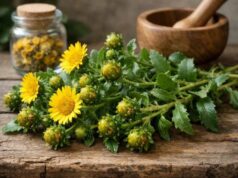
Greek mountain tea is the traditional herbal infusion made from the flowering aerial parts of Sideritis scardica, a Balkan plant often called ironwort, shepherd’s tea, Olympus tea, or Mursalski tea. It is naturally caffeine-free, pleasantly aromatic, and widely valued as both a daily beverage and a medicinal herb. People most often reach for it when they want a warming tea that feels gentler than coffee or black tea, yet more functional than plain herbal blends.
Its reputation rests on three main strengths. First, it has a long traditional history for mild cold-related cough and digestive discomfort. Second, it contains a rich mix of polyphenols, flavonoids, and phenylethanoid glycosides that help explain its antioxidant and anti-inflammatory profile. Third, newer studies are exploring possible effects on attention, mood, circulation, and oxidative balance.
Still, Greek mountain tea is best approached with measured expectations. It is a credible traditional herb with promising modern research, but it is not a substitute for medical treatment. Used thoughtfully, it fits well as a daily infusion or short-term supportive remedy.
Key Facts
- Greek mountain tea is best supported for mild cold-related cough, digestive discomfort, and gentle everyday wellness support.
- It is naturally caffeine-free and may suit people who want a calmer herbal drink with antioxidant-rich compounds.
- A common tea range is 2–4 g dried herb in 150–200 mL hot water, taken 2–3 times daily.
- Avoid concentrated use during pregnancy, breastfeeding, and in children or adolescents under 18 unless a clinician advises otherwise.
- People with allergy to Lamiaceae herbs should use extra caution or avoid it.
Table of Contents
- What is Greek mountain tea
- Key compounds and properties
- Does Greek mountain tea help cognition
- Traditional and everyday uses
- How to brew and use it
- How much per day
- Safety, interactions, and evidence
What is Greek mountain tea
Greek mountain tea usually refers to an infusion made from species in the Sideritis genus, especially Sideritis scardica. The plant grows naturally in rocky, high-altitude areas of the Balkans, including parts of Greece, Bulgaria, and North Macedonia. In markets, the dried flowering stems are often sold whole, tied in bundles, or cut for loose tea. The part used is the aerial herb, not the root.
One reason this herb attracts so much interest is that it sits at the crossroads of food and medicine. For many people in southeastern Europe, it is an everyday household tea. At the same time, it has a long medicinal reputation for seasonal colds, throat irritation, mild cough, stomach discomfort, and general recovery. That dual role matters because Greek mountain tea is not usually treated as a high-intensity remedy. It is more often used as a steady, soothing plant with broad supportive actions.
The flavor also helps explain its appeal. Good-quality Greek mountain tea has a soft, resinous, lightly floral taste with hints of sage, wild herbs, and sun-dried hay. It is milder than many bitter medicinal herbs and, importantly for many readers, it contains no caffeine. That makes it suitable for people who want a warm drink later in the day without the stimulation of coffee or caffeinated tea.
The name can be confusing, though. “Greek mountain tea” is a common umbrella term, and several related Sideritis species are used regionally. This article focuses on Sideritis scardica, one of the best-known and most studied forms. When buying it, that botanical name matters. A package labeled only “mountain tea” may still be perfectly good, but it may not be the same species used in human studies.
A few practical shopping points can save frustration:
- Look for the full botanical name, ideally Sideritis scardica.
- Prefer products that specify “aerial parts” or flowering tops.
- Whole stems and flowering clusters often keep aroma better than dusty cut tea.
- Choose suppliers that mention harvest region and storage conditions.
Greek mountain tea is sometimes framed as a “longevity tea” or “brain tea,” but that can overstate the evidence. Its most dependable identity is simpler: a traditional, caffeine-free Balkan herbal tea with credible digestive and respiratory uses, and promising but still developing research on cognition, mood, vascular function, and oxidative stress.
If you want a gentler herbal tradition rather than a high-stimulation tonic, Greek mountain tea fits that role well. It feels restorative, but its main value lies in regular, thoughtful use rather than dramatic short-term effects.
Key compounds and properties
Greek mountain tea works as a whole-herb infusion, which means its effects come from a network of compounds rather than one dominant molecule. That is part of its strength and also part of the reason it can be hard to summarize in a single sentence. The chemistry is broad, with many polyphenols and flavonoids contributing overlapping antioxidant, anti-inflammatory, and tissue-supportive effects.
Among its best-known constituents are phenylethanoid glycosides such as verbascoside, along with caffeic acid derivatives, chlorogenic acid, ferulic acid, and several flavone glycosides including isoscutellarein, hypolaetin, and apigenin-related compounds. These names may sound technical, but the practical point is straightforward: this is a polyphenol-rich herb with a chemistry profile that helps explain why it has been valued for irritated tissues, seasonal wellness, and gentle nervous-system support.
Its medicinal properties are usually described in these broad ways:
- Antioxidant
- Mild anti-inflammatory
- Gastroprotective
- Mild antimicrobial
- Relaxing without being strongly sedating
- Possibly vasodilatory or circulation-supportive
Those properties line up well with traditional use. A tea rich in aromatic and phenolic compounds can make sense for sore throats, mild cough, unsettled digestion, and periods of physical or mental strain. Newer research also suggests that certain compounds in Sideritis scardica may influence blood flow, oxidative balance, and pathways relevant to cognitive performance.
Still, this is where precision matters. “Antioxidant” does not automatically mean major clinical benefit. Many herbs test well in lab assays. What matters is whether those compounds are present in meaningful amounts in a brewed cup, how well they are absorbed, and whether the finished effect is strong enough to matter in real life. Greek mountain tea looks promising on that front, but not every lab finding translates into a clear health outcome.
Preparation also changes chemistry. A home infusion pulls out water-soluble compounds very well, especially phenolics and glycosides. A standardized extract may concentrate certain fractions and produce stronger effects than an ordinary cup of tea. That is why extract studies should not be read as proof that a casual mug of tea will do the same thing.
Another helpful way to think about this herb is by contrast. Compared with green tea as a caffeinated polyphenol drink, Greek mountain tea offers a gentler, caffeine-free profile. Compared with classic calming herbs, it is less sedating and more tonic in feel. That combination gives it a distinctive place: clear enough for daytime, gentle enough for evening, and complex enough to be interesting beyond simple hydration.
So when people talk about the “key ingredients” of Greek mountain tea, what they really mean is a layered botanical chemistry that supports traditional uses and gives modern researchers several plausible reasons to study it more closely.
Does Greek mountain tea help cognition
Cognition is one of the most talked-about modern uses of Greek mountain tea, and it is also the area where expectations need the most careful framing. The short version is this: there is interesting early human research, supported by preclinical studies, but the evidence is not strong enough to treat Greek mountain tea as a proven nootropic or dementia-prevention therapy.
Why does this topic come up so often? Partly because Sideritis scardica appears to affect several systems that are relevant to mental performance. Some of its compounds show antioxidant and neuroprotective activity in lab research. Other studies suggest effects on cerebral blood flow, anxiety state, and attention-related performance. Together, these findings create a plausible “brain-supportive” profile.
In human trials, extract forms of Sideritis scardica have shown encouraging but modest results. Higher-dose extracts have been linked with improvements in selected attention and recognition tasks, reduced state anxiety, and measurable changes in cerebral blood flow markers. Another recent extract study in healthy adults found changes in blood pressure, resting heart rate, and redox markers, which adds to the idea that vascular effects may be part of the story.
That said, several limits matter:
- Most studies use extracts, not ordinary tea bags or home infusions.
- The participant groups are relatively small.
- The measured benefits are selective, not broad across every cognitive test.
- Study duration is short, usually days to weeks rather than years.
So what can a regular user realistically expect? For most people, Greek mountain tea is more likely to feel like a calm, clear herbal beverage than a dramatic brain booster. The most believable benefits are softer and more functional:
- A steadier mood during mentally demanding days
- Less “wired but tired” feeling than caffeinated drinks
- A useful tea for focus routines that do not rely on stimulation
- A calming effect that may indirectly help concentration
That last point is important. Sometimes a herb supports cognition by reducing background strain rather than by directly speeding the brain. If anxiety, tension, or poor recovery are part of why focus feels harder, Greek mountain tea may help through that side door.
In this sense, it may suit people who want gentler cognitive support than high-caffeine beverages provide. If your main goal is sharper mental energy, herbs with a more direct reputation for mental performance may be a better fit, such as sage for cognitive and digestive support. Greek mountain tea feels subtler. It is not a stimulant. It is more of a clear-headed, low-friction tea.
For healthy adults, that may be exactly the appeal. It can sit in the space between comfort and function: enough personality to feel useful, not so much force that it becomes harsh or activating. That makes it a reasonable part of a daily routine for reading, desk work, or evening unwinding, but it should not be oversold as a stand-alone cognitive treatment.
Traditional and everyday uses
Traditional use is where Greek mountain tea has the deepest roots. In European herbal practice, especially in Greece and the Balkans, it is most closely associated with mild cold-related cough, throat irritation, digestive discomfort, and general convalescence. These are not glamorous uses, but they are often the most meaningful ones in daily life.
For respiratory support, Greek mountain tea is usually taken warm and slowly sipped. It is commonly used when someone feels chilled, has a scratchy throat, or is dealing with a mild seasonal cough. The steam, warmth, fluid intake, and aromatic compounds all likely contribute to why it feels useful. This does not mean it treats serious respiratory illness. Rather, it fits the everyday zone of “I am coming down with something” or “my throat feels irritated and I want a soothing herbal tea.”
Its digestive role is just as established. Greek mountain tea has long been used for mild gastrointestinal discomfort, post-meal heaviness, and a tense or unsettled stomach. Here again, the effect is not usually dramatic. People tend to value it because it feels calming, non-greasy, and easier to tolerate than stronger bitter tonics. It is the kind of tea many people can drink after lunch or dinner without feeling overstimulated or overly medicated.
Common practical uses include:
- A warm tea during mild colds
- A soothing drink for scratchy throat days
- A post-meal herbal tea for mild digestive discomfort
- A caffeine-free daily beverage during stressful periods
- A gentle “reset” tea when coffee feels too sharp
There is also a cultural side to its use that deserves mention. Greek mountain tea is not only about symptoms. It is often part of a slower, restorative style of care: warm drink, rest, light food, and a more relaxed pace. That context likely strengthens the experience. A herb that invites you to pause can be helpful even before any specific compound starts working.
For people who enjoy everyday herbal routines, Greek mountain tea can replace or rotate with other gentle options. If your aim is a softer bedtime or stress-support tea, lemon balm for calm and gentle mood support may overlap more directly. Greek mountain tea, by contrast, often feels a little brighter and more daytime-friendly.
Where it is less convincing is in bigger claims. It is not a proven treatment for major depression, chronic bronchitis, irritable bowel disease, or metabolic disease. Some emerging research points toward broader potential, but the most honest modern use still tracks closely with tradition: mild respiratory comfort, mild digestive support, and a restorative daily beverage that may do a little more than plain herbal tea.
That combination is part of why the herb has endured. It is practical, pleasant, and easy to use regularly without feeling like a burdensome supplement routine.
How to brew and use it
Greek mountain tea is usually best as an infusion, not a decoction. The plant part used is the dried aerial herb, which is delicate enough for steeping and aromatic enough that boiling it too hard can flatten the flavor. A careful brew preserves both the pleasant scent and much of the water-soluble chemistry that makes the herb appealing.
The simplest traditional method is:
- Use 2–4 g of dried herb per serving.
- Pour 150–200 mL of hot water over it.
- Cover the cup or pot.
- Steep for about 5–10 minutes.
- Strain and drink warm.
Covering matters more than many people think. Greek mountain tea contains volatile aromatic compounds, and keeping the cup covered during steeping helps hold those in the infusion. If you want a more aromatic cup, use whole flowering tops and a slightly longer steep rather than overheated water for too long.
People often ask whether it should be taken plain or with additions. Both are reasonable. It can be used:
- Plain, for the clearest taste and most traditional style
- With a little honey when the goal is throat comfort
- With lemon when used during colds
- As an iced infusion in warm weather
- In a mixed herbal blend, though many people prefer it alone
A practical everyday use pattern depends on the goal. For respiratory comfort, warm tea taken slowly tends to make the most sense. For digestion, a cup after meals is often preferred. For general wellbeing or a caffeine-free workday drink, one cup in the morning and one later in the day can work well.
Tea quality makes a noticeable difference. Good Greek mountain tea should smell lively and herbal, not dusty or stale. If the bundle looks gray-brown, crumbles into powder, or has almost no aroma, the finished cup is likely to be disappointing. When possible, buy a batch that still shows stems, flowering tops, and a fresh resinous scent.
This herb also fits well into routines where people want a non-caffeinated beverage that still feels purposeful. Compared with softer comfort herbs such as chamomile for digestion and wind-down support, Greek mountain tea usually feels a little less sleepy and a little more tonic. That makes it especially useful for late afternoon or early evening, when many people want calm without heaviness.
As for timing, it is flexible. Because it is caffeine-free, most adults can use it morning, afternoon, or evening. The best timing is the one that matches your reason for using it. Post-meal for digestion, warm and frequent for mild cold support, or regular daily cups if you simply enjoy how it makes you feel.
How much per day
For tea made from dried Sideritis scardica herb, the most practical traditional adult range is 2–4 g per serving in 150–200 mL of hot water, taken two to three times daily. That puts the usual daily total at roughly 4–12 g of dried herb. This is the clearest dosage range available for ordinary infusion use and the one most aligned with traditional medicinal guidance.
That range works well because it gives room for different goals. A lighter approach may suit casual daily drinking, while the fuller range makes more sense when the tea is being used more intentionally for a cold, throat discomfort, or digestive upset.
A good way to think about dosage is by purpose:
- General daily use: 1–2 cups a day at the lower end
- Digestive support: 1 cup after meals, one to three times daily
- Mild cold-related support: 2–3 warm cups through the day
- Short focused use: the upper end for several days to two weeks, depending on the reason
Duration also matters. For mild cough associated with a cold, it makes sense to reassess after about a week. For mild digestive discomfort, reassessment after up to two weeks is reasonable. A tea that helps should make the direction of change clear. If symptoms persist, worsen, or keep returning, that is the point to stop treating it as a simple herbal issue and look for a medical explanation.
Extract dosing is less straightforward. Human studies have used specific extract amounts such as 475 mg, 950 mg, and 1500 mg per day, but those numbers should not be treated as universal consumer doses. Extracts vary widely in concentration, solvent method, and standardization. A 500 mg capsule from one manufacturer may not resemble a 500 mg capsule from another.
If using an extract rather than tea, these rules are sensible:
- Follow the label from a reputable manufacturer.
- Start at the low end.
- Do not assume extract dosing equals tea dosing.
- Give it a defined trial period rather than taking it indefinitely.
- Reassess after 2–4 weeks.
Some people also ask whether more is better. Usually not. Greek mountain tea is a good example of an herb that often works best within a moderate range. Once the cup becomes very strong, the flavor can turn rougher without clearly improving the effect. With extract products, pushing higher without a reason only makes safety and interaction questions harder.
So the cleanest dosage takeaway is this: for most adults, tea use in the range of 2–4 g per cup, two to three times daily, is the most traditional and practical place to start. Extracts belong to a more cautious, product-specific conversation.
Safety, interactions, and evidence
Greek mountain tea is generally considered a gentle herb, especially in tea form, but “gentle” should not be confused with “risk-free.” Safety depends on the user, the preparation, the dose, and the length of use. The available information is reassuring overall, yet there are still important limits.
The main safety points are relatively clear. Pregnancy and breastfeeding are the first. Because safety data are insufficient, concentrated medicinal use is not recommended during pregnancy or lactation. The same caution applies to children and adolescents under 18, largely because the data are limited rather than because clear harm has been established. Adults with known allergy to plants in the mint family, or Lamiaceae, should also be cautious.
Possible side effects appear uncommon and usually mild, but may include:
- Stomach upset in sensitive people
- Allergic reactions in those prone to herb sensitivities
- Lightheadedness if taken as part of a broader blood-pressure-lowering routine
- Unwanted effects from concentrated extracts rather than ordinary tea
Interaction concerns are modest but worth respecting. Traditional monograph sources report no established major interactions, which is reassuring. At the same time, one human study on metabolic enzymes suggests that usual tea intake is unlikely to cause important herb-drug interactions for most people, though a possible interaction involving CYP2A6 substrates in males was noted. In plain language, ordinary tea seems low-risk, but concentrated extract use deserves more caution if you take prescription medications.
Extra care makes sense if you:
- Take multiple medicines processed through liver enzyme pathways
- Use blood-pressure-lowering medication
- Are highly sensitive to new herbal products
- Want to use standardized extracts rather than simple tea
The evidence base also needs an honest summary. Greek mountain tea has three levels of support. First, traditional use is strong, especially for mild cough with colds and mild gastrointestinal discomfort. Second, its chemistry and preclinical data are impressive enough to justify research interest. Third, human clinical studies are promising but still limited in number, size, and duration.
That means the herb lands in a credible middle ground. It is stronger than folklore alone, but not yet backed by the kind of large, definitive trials that would justify strong disease claims. A few findings deserve cautious optimism:
- Extracts may help selected aspects of cognition and anxiety state.
- Vascular and oxidative-stress markers may improve in some settings.
- Tea remains a sensible traditional option for mild cough and digestive discomfort.
But limits remain just as important:
- Tea and extracts are not interchangeable.
- Most outcomes studied are modest, not dramatic.
- Long-term disease prevention claims remain speculative.
- Product quality and species identity still matter a great deal.
The fairest conclusion is that Greek mountain tea is a well-rooted traditional herb with attractive chemistry and early clinical promise. It is most convincing as a daily functional tea and a short-term supportive remedy, not as a miracle plant for complex disease.
References
- European Union herbal monograph on Sideritis scardica Griseb.; Sideritis clandestina (Bory and Chaub.) Hayek; Sideritis raeseri Boiss. and Heldr.; Sideritis syriaca L., herba 2016 (Monograph)
- A Comprehensive Phytochemical Analysis of Sideritis scardica Infusion Using Orbitrap UHPLC-HRMS 2023
- Characterization of the Sideritis scardica Extract SidTea+TM and Its Effect on Physiological Profile, Metabolic Health and Redox Biomarkers in Healthy Adults: A Randomized, Double-Blind, Placebo-Controlled Study 2024 (RCT)
- Herba Sideritis: A putative adaptogen for reducing the risk of age-related cognitive decline and neurodegenerative disorders 2024 (Review)
- The Acute and Chronic Cognitive and Cerebral Blood Flow Effects of a Sideritis scardica (Greek Mountain Tea) Extract: A Double Blind, Randomized, Placebo Controlled, Parallel Groups Study in Healthy Humans 2018 (RCT)
Disclaimer
This article is for educational purposes only and is not medical advice, diagnosis, or treatment. Herbal teas and plant extracts can affect people differently, and concentrated products may not have the same safety profile as a traditional cup of tea. Speak with a qualified healthcare professional before using Greek mountain tea medicinally if you are pregnant, breastfeeding, under 18, take prescription medicines, have low blood pressure, or have known allergy to Lamiaceae herbs. Seek medical care for persistent cough, fever, breathing trouble, severe digestive pain, vomiting, or symptoms that do not improve.
If you found this article useful, please consider sharing it on Facebook, X, or another platform you prefer.