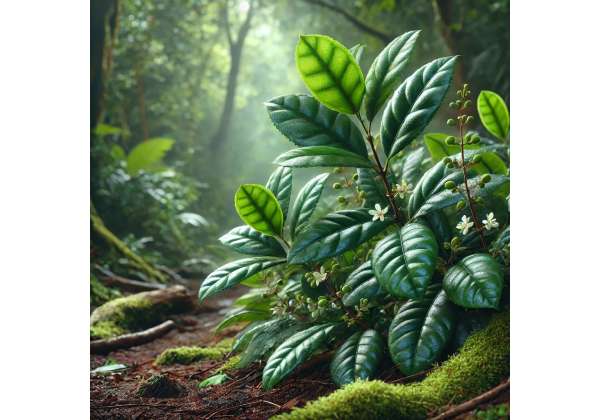
Guayusa is a traditional Amazonian leaf tea made from Ilex guayusa, an evergreen holly tree native to Ecuador and nearby parts of the western Amazon. For many readers, the first point of interest is energy: guayusa contains caffeine, yet it is usually described as smoother and less bitter than coffee, with a gentler flavor than many strong teas. That appeal is real, but guayusa is more than a caffeine source. Its leaves also contain chlorogenic acids and other polyphenols, plus smaller amounts of related methylxanthines such as theobromine, which help explain its antioxidant and functional-food reputation.
What makes guayusa especially interesting is the overlap between traditional use and modern performance-focused interest. Indigenous communities in the Amazon have long used it in pre-dawn rituals, social gatherings, and everyday tea drinking, while recent studies have examined guayusa extracts for mood, attention, reaction time, and cardiovascular effects. The most honest way to understand it is as a culturally rooted caffeinated botanical with plausible cognitive and antioxidant benefits, modest but growing human evidence, and safety limits that look much like other caffeine-containing beverages.
Quick Summary
- Guayusa is best known for steady energy, alertness, and antioxidant-rich leaf chemistry centered on caffeine and chlorogenic acids.
- Its most evidence-backed use is as a caffeinated tea or extract for short-term focus and reduced fatigue, not as a treatment for disease.
- A practical range is about 1.5 to 3 g dried leaves per 240 mL cup, or 600 to 650 mg of standardized extract in acute human studies.
- Too much guayusa can raise blood pressure, worsen jitteriness, and disturb sleep, especially in caffeine-sensitive users.
- People who are pregnant, breastfeeding, anxious, highly caffeine-sensitive, or taking stimulant or blood pressure medicines should avoid medicinal-style use without guidance.
Table of Contents
- What Is Guayusa
- Key Ingredients and Medicinal Properties
- What Benefits May Guayusa Offer
- Does Guayusa Help with Energy and Focus
- How to Use Guayusa
- How Much Guayusa per Day
- Safety, Interactions, and What Evidence Says
What Is Guayusa
Guayusa is a tea-like beverage made from the leaves of Ilex guayusa, a member of the holly family rather than the true tea plant, Camellia sinensis. It is native to the western Amazon, especially Ecuador, with documented traditional use among Kichwa, Achuar, Shuar, and other Indigenous peoples. In these communities, guayusa is not just a stimulant drink. It has also been part of social, ceremonial, and medicinal life, especially in pre-dawn gatherings where the tea may be brewed strong and consumed before the day’s work begins.
That cultural context matters because guayusa is often marketed today as a “clean energy” herb, which captures only part of the picture. Traditionally, it has been used for alertness, dream recall, digestive discomfort, pain, fever, and steam-bath style cleansing rituals. Some ethnobotanical accounts also describe much larger-volume ceremonial intake than would make sense for a modern casual tea drinker. Those older patterns should not be copied mechanically, but they do show that guayusa has a long, continuous history of human use rather than being a newly invented trend ingredient.
Botanically and functionally, guayusa is often compared with yerba mate as a fellow Ilex-based caffeinated drink. That comparison is useful, but the plants are not identical. Guayusa is usually described as milder in bitterness and sometimes easier to drink plain, while yerba mate has a broader clinical footprint and a stronger global market history. Guayusa’s value lies in its own profile: substantial caffeine, meaningful polyphenol content, and a sensory character that many people find smoother than coffee or bitter green teas.
A practical way to think about guayusa is to separate its forms:
- Traditional leaf tea or decoction
- Loose-leaf or bagged commercial tea
- Standardized extracts used in studies and performance products
- Energy-drink blends that include guayusa but may also contain other stimulants
That last category is important because many consumers think they are evaluating guayusa when they are really evaluating a formula built around guayusa plus other compounds. The leaf itself is the most straightforward form to understand. Once it becomes part of a concentrate, its dose, caffeine load, and side-effect profile can change substantially.
Key Ingredients and Medicinal Properties
Guayusa’s best-known active compounds are methylxanthines and polyphenols. In plain language, that means stimulant alkaloids such as caffeine and theobromine, together with antioxidant compounds such as chlorogenic acids and related caffeoylquinic acid derivatives. Reviews of guayusa consistently describe caffeine as the dominant alkaloid, while chlorogenic acid, neochlorogenic acid, isochlorogenic acids, and other phenolic compounds appear repeatedly in the leaf and infusion chemistry.
Caffeine is the easiest part to understand. It blocks adenosine receptors, which helps reduce sleepiness and increase alertness. That is the main reason guayusa feels energizing. Theobromine may contribute a slightly different stimulant profile, although it is present in much smaller amounts than caffeine. Guayusa extracts used in human studies have also been standardized to include substantial chlorogenic acids, which is important because chlorogenic acids may influence antioxidant activity, glucose handling, and some aspects of mood or cognitive response. In the 2024 dose-response study, the tested extract contained about 20% caffeine and 30% chlorogenic acids.
The phenolic side of guayusa is what makes it more than “just natural caffeine.” A 2024 infusion study identified 29 phenolic compounds and found chlorogenic acid and its derivatives to be predominant in guayusa tea infusions. That matters because chlorogenic acids are already well known from coffee and other plant foods as antioxidant-active compounds. Guayusa also contains quercetin derivatives, kaempferol derivatives, and other flavonoid-related compounds, especially in certain extracts and digested infusions.
Its main medicinal properties are usually described as:
- Stimulant and wakefulness-promoting
- Antioxidant
- Mildly anti-inflammatory in preclinical work
- Potentially glucose-modulating
- Potentially antimicrobial in laboratory assays
The crucial phrase there is “in preclinical work.” Guayusa certainly has meaningful phytochemistry, but not every interesting laboratory effect translates into a clinically important effect in humans. The most reliable and repeatable property is stimulation through caffeine. Antioxidant potential is also strongly supported in vitro. The anti-inflammatory, antimicrobial, and antidiabetic themes are promising, but they still sit on a much thinner human evidence base.
One helpful comparison is with green tea as another caffeinated polyphenol-rich beverage. Both offer caffeine plus antioxidant compounds, but green tea’s research base is much broader and more mature. Guayusa’s advantage is not stronger proof. It is a different balance of flavor, cultural history, and phytochemicals that may suit people who want a tea-like stimulant but dislike the bitterness of other options.
What Benefits May Guayusa Offer
Guayusa’s most realistic benefits fall into four areas: alertness, reduced fatigue, antioxidant support, and the practical convenience of a caffeinated tea that many people find easier to tolerate than coffee. That last point may sound less scientific, but it matters. A functional beverage only helps in the real world if people can actually drink it consistently without disliking the taste or feeling over-stimulated. Guayusa’s milder flavor profile is one reason it has become commercially interesting beyond the Amazon.
Its first major benefit is wakefulness. That is not speculative. Guayusa contains caffeine in meaningful amounts, and caffeine is one of the most reliable, well-characterized ergogenic and cognitive stimulants in the diet. In small human studies using standardized guayusa extracts, participants showed improvements in selected measures of attention, reaction time, mental performance, vigor, or fatigue compared with placebo. That is encouraging, though the trials are still small and heavily tied to proprietary extracts rather than ordinary household tea brewing.
Its second likely benefit is antioxidant support. Guayusa infusions are rich in phenolics, and the infusion study literature repeatedly shows strong antioxidant capacity, especially when water-based infusions are prepared longer or hotter. This does not mean a cup of guayusa “detoxes” the body in a dramatic sense. It means the tea contributes bioactive plant compounds that plausibly support the body’s broader oxidative balance, much as other polyphenol-rich beverages do.
There is also early interest in metabolic support. Reviews discuss possible anti-inflammatory, hypoglycemic, and lipid-related effects based on preclinical studies and identified compounds such as chlorogenic acids and triterpenes. But this is a good place to slow down. The human evidence is not strong enough to present guayusa as a blood-sugar herb, weight-loss tea, or anti-inflammatory treatment. It is more accurate to say that guayusa is chemically compatible with those research questions and worthy of further study.
Practical benefits people often look for include:
- Morning alertness without coffee
- Better focus for mentally demanding work
- Reduced subjective fatigue
- A tea-based alternative to energy drinks
- A polyphenol-rich beverage for a plant-forward routine
Compared with guarana as a stronger stimulant-oriented Amazonian plant, guayusa usually makes more sense as a beverage herb than as a high-intensity caffeine delivery tool. Guarana is often used precisely because it is highly caffeinated. Guayusa tends to fit better when the goal is steady tea drinking, moderate stimulation, and a more food-like or ritualized experience.
The key is expectation. Guayusa can probably help you feel more awake and mentally engaged. It may also contribute antioxidant benefits through regular intake. What it has not yet proven is large, disease-specific benefit in humans. Used with that level-headed expectation, it looks genuinely useful rather than overhyped.
Does Guayusa Help with Energy and Focus
Yes, this is the area where guayusa has the strongest direct human support, though the evidence is still small. The clearest reason is obvious: guayusa delivers caffeine. But the more interesting question is whether guayusa behaves differently from synthetic caffeine or other natural caffeine sources. A 2016 crossover clinical trial in healthy adult males compared 200 mg caffeine delivered from guayusa extract, green coffee extract, and synthetic caffeine. The study found similar pharmacokinetics and no major acute safety signal, while the guayusa extract produced a lower rise in epinephrine than the synthetic control. That does not prove guayusa is “jitters-free,” but it does provide one plausible reason why some users perceive it as smoother.
More recent cognition studies point in the same general direction. In a 2023 randomized crossover study, a single 650 mg dose of guayusa extract improved several cognitive-performance measures compared with placebo in healthy adults. In a 2024 dose-response study, 600 mg appeared to optimize some mood and cognition outcomes, while 1200 mg improved certain motor-cognitive measures but also increased jitteriness in women and raised blood pressure by about 4 to 5 mmHg. That is exactly the kind of nuance consumers need: guayusa can help with alertness and performance, but the “more is better” assumption does not always hold.
So what can a reader reasonably expect from guayusa for focus?
- Faster mental wake-up than a noncaffeinated herbal tea
- Better perceived energy and reduced fatigue
- Some improvement in attention or simple task performance
- Possible smoother feel than coffee for some people
- Side effects if the dose climbs too high or the user is caffeine-sensitive
A useful comparison is with coffee as the benchmark caffeinated drink. Coffee often delivers a stronger and faster stimulant hit, especially when brewed robustly. Guayusa may feel gentler because it is consumed as a leaf tea and because its phenolic profile differs. But a gentler feel is not a guaranteed outcome. If the total caffeine dose is high enough, guayusa can still raise blood pressure, worsen sleep, and make susceptible people feel overstimulated.
This is also where marketing often outruns evidence. Claims that guayusa boosts creativity, enhances meditation, sharpens dream recall, or supports “calm focus” in a unique way are not all equally supported by modern trials. The traditional dream and pre-dawn ritual associations are culturally important, but they should not be flattened into universal performance claims. What the human data supports best is simpler: guayusa extract can acutely improve some aspects of mood and cognition, likely because of caffeine plus its accompanying polyphenols, with the exact effect depending on dose, sex, and the outcome being measured.
How to Use Guayusa
Guayusa is most commonly used as a tea. That is still the clearest and most traditional way to consume it. Loose dried leaves or tea bags are steeped in hot water, usually for longer than delicate green teas but often shorter than the large ceremonial decoctions described in ethnobotanical literature. The resulting drink is amber to deep brown, mildly earthy, slightly sweet, and usually less bitter than yerba mate or black tea.
The simplest home use is a standard leaf infusion. For many adults, that means a morning or early afternoon cup prepared from dried leaves and hot water. Because guayusa is caffeine-containing, timing matters. It usually makes sense earlier in the day, before heavy evening fatigue or insomnia become more likely. People who are highly caffeine-sensitive may prefer it with food or in smaller servings rather than as a strong first-thing stimulant.
Modern use forms include:
- Loose-leaf tea
- Tea bags
- Bottled ready-to-drink beverages
- Standardized extracts in energy or nootropic products
- Powdered blends combined with other botanicals
These forms are not equivalent. A bottled “guayusa drink” may also contain sugar, additional caffeine, flavorings, or other stimulants. A standardized extract may be much more concentrated than tea. That is why practical use should begin with the leaf beverage whenever possible. It is the form most closely aligned with traditional use and easiest to dose conservatively.
If you are mainly looking for a ritualized caffeinated tea rather than a concentrated performance supplement, guayusa is often best used like yerba mate in a measured daily beverage routine. One or two servings can fit into a morning workflow, a study session, or an alternative-to-coffee routine. Once intake starts climbing into energy-shot territory, the experience becomes less about the plant and more about total caffeine load.
A simple use routine looks like this:
- Start with a moderate leaf tea rather than an extract.
- Drink it earlier in the day.
- Avoid stacking it with coffee, guarana, or high-caffeine pre-workout products.
- Assess how it affects your mood, heart rate, and sleep.
- Stay within a repeatable, food-like pattern rather than a stimulant-chasing one.
Traditional accounts also describe much stronger decoctions, sometimes consumed in large communal volumes before dawn. Those practices are culturally meaningful, but they are not a useful template for modern casual dosing. What works in a ceremonial or identity-based setting does not automatically map onto office work, workouts, or late-night productivity. That is one of the most important distinctions in using guayusa intelligently.
How Much Guayusa per Day
There is no universally accepted medical dose for guayusa leaves, so the safest way to think about dosage is through caffeine exposure, study amounts, and brewing strength. For tea, a practical range is about 1.5 to 3 g dried leaves per 240 mL cup. The lower end roughly aligns with traditional ratios described in ceremonial decoctions when scaled down, while the upper end reflects a more distinctly stimulating modern cup. Depending on the leaf material and extraction efficiency, the actual caffeine content can still vary substantially.
For extract products, the published human studies give clearer anchors. A 2023 cognition study used 650 mg guayusa extract. A 2024 dose-response trial compared 600 mg and 1200 mg guayusa leaf extract, with the lower dose generally looking better for mood and some cognitive outcomes, while the higher dose seemed more performance-oriented but also more likely to increase jitteriness in women and to raise blood pressure. Those numbers are helpful because they come from controlled studies rather than marketing claims.
A practical dosing framework looks like this:
- Tea: 1.5 to 3 g dried leaves per 240 mL cup
- Frequency: 1 to 2 cups earlier in the day for most people
- Standardized extract: around 600 to 650 mg as a cautious acute reference point
- Higher extract use: 1200 mg may be more stimulating but also more side-effect prone
Another useful way to judge dose is total caffeine. The 2016 clinical trial used 200 mg caffeine from guayusa extract, and that amount behaved much like other caffeine sources in absorption and vital-sign monitoring. For many adults, staying well below 400 mg total caffeine per day from all sources is a sensible ceiling. If you drink guayusa plus coffee plus an energy drink, the issue stops being “How much guayusa?” and becomes “How much caffeine?”
A few practical rules help:
- Start low if you are new to guayusa
- Do not judge it cup-for-cup against coffee without considering caffeine differences
- Avoid late-day use if sleep is fragile
- Choose one form at a time rather than combining tea and extract
- Increase only if the current amount is clearly tolerated
Compared with green tea in a daily tea routine, guayusa often sits in a similar or somewhat stronger stimulant zone depending on brew strength and extract use. That makes it suitable for morning focus, but not ideal for casual all-day sipping unless each cup is kept light. The best guayusa dose is the one that improves alertness without spilling into nervousness, elevated blood pressure, or sleep disruption.
Safety, Interactions, and What Evidence Says
Guayusa appears reasonably safe when used as a moderate caffeinated tea, and it also has a documented history of traditional consumption. Modern reviews describe a long history of use in Ecuadorian Amazon communities, while safety-focused reviews and toxicology work have not identified a risk profile that appears greater than other caffeinated teas when guayusa is consumed in appropriate forms. That said, “generally safe as a tea” is not the same as “risk-free in any dose.”
The main safety issue is caffeine. In human studies, guayusa extract did not show major acute safety problems at tested doses, but it did raise blood pressure modestly in the 2024 dose-response study, and higher doses increased jitteriness in women. Like other caffeinated products, guayusa can also worsen anxiety, palpitations, reflux, tremor, and sleep disturbance in susceptible users. That makes dose and timing more important than marketing language about “clean energy.”
People who should be especially cautious include:
- Pregnant or breastfeeding people
- Children and adolescents using stimulant products
- People with anxiety disorders or panic symptoms
- People with uncontrolled hypertension, arrhythmias, or severe insomnia
- Anyone taking other stimulant-rich products or large amounts of caffeine
Potential interactions are mostly caffeine-style interactions rather than guayusa-specific mysteries. Guayusa can plausibly add to the effects of coffee, guarana, pre-workouts, decongestants, and some ADHD stimulants. It may also make it harder to manage blood pressure or sleep when combined with other activating compounds. Claims that guayusa uniquely prevents jitters or protects against caffeine side effects are not supported strongly enough to override these ordinary stimulant precautions.
So what does the evidence actually say overall? It says guayusa is promising, but still under-studied. There is strong support for traditional use, well-described leaf chemistry, meaningful caffeine content, strong in vitro antioxidant potential, and a small but real human literature on cognition and acute safety. There is weaker support for anti-inflammatory, antidiabetic, antimicrobial, and broader disease-related claims in humans. In other words, guayusa looks most convincing as a culturally rooted caffeinated functional tea, not as a fully validated medicinal herb for chronic disease.
That is still a good place for it to stand. A plant does not need to cure disease to be useful. Guayusa already offers a legitimate combination of alertness, phytochemical richness, and traditional continuity. What it needs now is better long-term human research, clearer real-world dose data for brewed tea, and less exaggeration in commercial messaging. Until then, the smartest use is moderate, tea-centered, and guided by the same respect you would give any other caffeine-containing botanical.
References
- Guayusa (Ilex guayusa Loes.) Ancestral Plant of Ecuador: History, Traditional Uses, Chemistry, Biological Activity, and Potential Industrial Uses 2025 (Review)
- Acute Effects of Naturally Occurring Guayusa Tea and Nordic Lion’s Mane Extracts on Cognitive Performance 2023 (RCT)
- Acute, dose–response effects of guayusa leaf extract on mood, cognitive and motor-cognitive performance, and blood pressure, heart rate, and ventricular repolarization 2024 (RCT)
- The Safety, Pharmacokinetics, and Nervous System Effects of Two Natural Sources of Caffeine in Healthy Adult Males 2016 (Clinical Trial)
- A critical review of the composition and history of safe use of guayusa: a stimulant and antioxidant novel food 2019 (Safety Review)
Disclaimer
This article is for educational purposes only and does not replace medical advice, diagnosis, or treatment. Guayusa is a caffeinated botanical and may affect blood pressure, sleep, anxiety, and medication tolerance. It should not be used as a substitute for prescribed treatment for fatigue, mood symptoms, metabolic disease, or any other medical condition. Speak with a qualified healthcare professional before using guayusa regularly if you are pregnant, breastfeeding, caffeine-sensitive, take stimulant or blood pressure medication, or have a cardiovascular or anxiety-related condition.
Please share this article on Facebook, X, or any platform where thoughtful evidence-based herbal writing is useful.