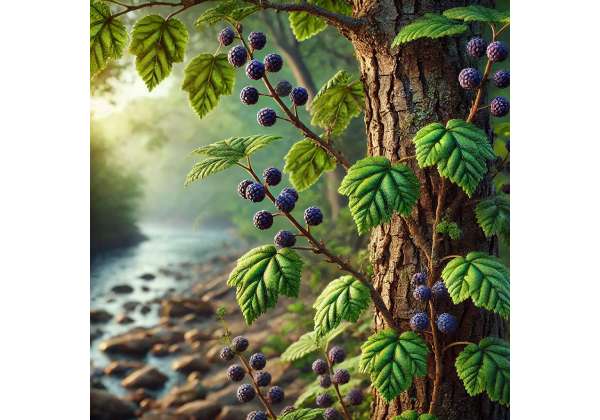
Hackberry is a lesser-known North American tree whose small purple-brown fruits have long been used as seasonal food and, in some traditions, as simple folk medicine. Botanically, the fruit is a drupe rather than a true berry, with a thin sweet outer layer wrapped around a large seed. What makes hackberry interesting is not that it is a proven modern herbal remedy, but that it sits at the intersection of wild nutrition, ethnobotany, and early-stage phytochemical research.
The fruit can add fiber, small amounts of vitamins and minerals, and plant compounds with antioxidant activity to the diet. Leaves and twigs have also drawn attention because they contain flavonoids, phenolic compounds, and other bioactives that may help explain traditional uses for sore throat, digestive complaints, and inflammation-related discomfort. Still, the evidence is uneven. Most of what sounds promising comes from lab work, animal studies, and related Celtis species rather than strong human trials in common hackberry itself.
That makes hackberry best understood as a useful wild food with medicinal potential, not a replacement for standard care.
Key Facts
- Hackberry fruit can contribute fiber, minerals, and antioxidant plant compounds, but its main value is nutritional rather than strongly medicinal.
- Early lab and animal research suggests antioxidant and anti-inflammatory activity, though human clinical evidence is still very limited.
- No standardized medicinal dose exists; for food use, start with about 1 to 2 tablespoons of dried hackberry powder or roughly 1/4 cup ripe fruit.
- Pregnant or breastfeeding people, children, and anyone considering bark, leaf, or concentrated extract use should avoid medicinal dosing without clinician guidance.
- Stop using hackberry if it causes stomach upset, mouth irritation, or allergy-like symptoms.
Table of Contents
- What is hackberry
- Hackberry key ingredients
- Does hackberry have health benefits
- How is hackberry used
- How much hackberry per day
- Hackberry side effects and interactions
- What does the research say
What is hackberry
Hackberry, or Celtis occidentalis, is a deciduous tree native to much of eastern and central North America. It is often planted as a hardy street or landscape tree because it tolerates heat, wind, city stress, and a wide range of soils. Its medicinal reputation, however, comes less from modern herbalism and more from traditional and regional use.
The tree produces small, berry-like drupes that ripen from late summer into fall and often remain on the tree well into winter. These fruits are usually dull orange-brown to dark purple when mature. Each one has a thin layer of sweet flesh around a hard seed, which is why hackberry does not eat like a juicy supermarket fruit. Its flavor is mild, date-like, and earthy rather than bright or tart.
Historically, hackberry served first as food. The ripe fruits could be eaten fresh, dried, or mashed into cakes and travel foods. In some traditional uses, other parts of the plant, especially bark and leaves, were prepared as simple remedies for sore throat, menstrual discomfort, jaundice, or minor digestive complaints. Those uses are part of its ethnobotanical story, but they should not be treated as proof of effectiveness.
One reason hackberry gets overlooked is that it sits in an unusual category. It is not a classic kitchen herb like mint or thyme, and it is not a mainstream supplement like turmeric or elderberry. It is better thought of as a wild edible tree fruit with medicinal interest. That difference matters, because the safest and most defensible way to use hackberry today is as food first.
It also helps to separate common hackberry from other species in the Celtis genus. A fair amount of published research involves Mediterranean or Asian relatives, especially Celtis australis. Those studies are useful for understanding the genus, but they do not automatically prove that Celtis occidentalis works the same way in people.
For practical readers, the main takeaway is simple: hackberry is real, edible, and historically used, but it is not a clinically standardized medicinal herb. If you are exploring it, start from that grounded perspective. Treat it as a nutrient-rich seasonal wild food with potential benefits, not as a miracle remedy.
Hackberry key ingredients
The most interesting part of hackberry is its mix of nutritional components and phytochemicals. The fruit is small, but it can contain a useful package of fiber, sugars, minerals, carotenoid pigments, tocopherols, and phenolic compounds. Different plant parts contain different compounds, which helps explain why fruit, leaves, and twigs are discussed separately in research.
In the edible fruit, the major points of interest are these:
- Fiber: Hackberry fruit can add roughage and satiety, especially when the dried fruit is ground whole.
- Minerals: Studies on related hackberry fruits report meaningful amounts of potassium, calcium, magnesium, and trace minerals.
- Carotenoids and tocopherols: These include pigments such as lutein, beta-carotene, and zeaxanthin, along with vitamin E compounds that support antioxidant defenses.
- Phenolic compounds: These include flavonoids and phenolic acids that may help reduce oxidative stress.
- Natural sugars and small amounts of fat and protein: This is one reason dried hackberries were valued as a concentrated trail food.
Leaves, bark, and twigs are chemically different from the fruit. Research on Celtis occidentalis and related species has identified flavonoids, tannins, terpenoid-type compounds, and phenolic amides. Some papers specifically highlight antioxidant tyramine and octopamine derivatives in Celtis occidentalis twigs. These are not nutrients in the usual sense, but they matter because they may influence inflammation, oxidation, and cellular signaling in lab models.
A few compounds and groups show up repeatedly across Celtis research:
- Flavonoids
- Phenolic acids
- Tannins
- Carotenoids
- Tocopherols
- Phenolic amides
That combination gives hackberry a profile that looks more like a functional wild food than an empty-calorie fruit. At the same time, it is not as chemically mapped or clinically studied as better-known plant foods such as mulberry.
Another point worth noting is that hackberry chemistry varies. Fruit ripeness, growing region, climate, harvest time, and the plant part used can all change the balance of compounds. A ripe dried fruit eaten as food is not equivalent to a methanolic leaf extract used in an animal experiment. Readers often miss that distinction, and it is one of the main reasons herbal claims can sound stronger than the actual evidence.
So when people talk about hackberry’s “key ingredients,” the honest summary is this: the fruit offers fiber, minerals, carotenoid pigments, tocopherols, and antioxidant phenolics, while non-fruit parts contain additional flavonoids and phenolic amides that are mainly of research interest. That is promising, but it is still a long way from standardized medicinal dosing.
Does hackberry have health benefits
Hackberry may offer real benefits, but the size of those benefits depends on how it is used and what claim is being made. As a food, the benefits are more believable and more modest. As a medicine, the benefits are still mostly preliminary.
The clearest likely benefit is nutritional support. Ripe hackberry fruit can add fiber, plant pigments, and small amounts of fat, protein, and minerals to the diet. For people who enjoy wild foods, that makes it a practical seasonal ingredient rather than just a botanical curiosity.
The next most plausible benefit is antioxidant support. Laboratory work on Celtis occidentalis and related species shows that extracts can scavenge free radicals and contain multiple antioxidant-active compounds. In everyday terms, that suggests hackberry may help buffer oxidative stress at a cellular level. That is not the same as proving it prevents disease, but it does make the fruit and extracts biologically interesting.
There is also some basis for anti-inflammatory and antimicrobial potential. Studies across the genus report activity against selected microbes and inflammation-related pathways. This could help explain why hackberry relatives appear in folk medicine for throat irritation, stomach complaints, minor infections, and general discomfort. Still, the word to emphasize is could. Most of this evidence comes from test tubes or animal models, not from rigorous human trials.
A fourth possible benefit is digestive support, mainly from whole-fruit use rather than extracts. Fiber can improve stool regularity and slow digestion. Traditional systems also describe digestive uses for Celtis plants, but modern proof in humans is thin.
What hackberry probably does not deserve is overconfident marketing for major outcomes such as cancer prevention, kidney protection, blood sugar control, or menstrual treatment. There are signals in the literature, but the signals are early. Even where there is encouraging data, it usually comes from isolated compounds, related species, or nonhuman research.
A realistic benefit hierarchy looks like this:
- Most believable: nutrient density and added dietary variety
- Reasonably plausible: antioxidant support
- Possible but unproven: mild anti-inflammatory or digestive support
- Too early to promise: targeted treatment of medical conditions
That is why hackberry should not be placed in the same evidence category as bilberry or other botanicals with stronger human data for specific outcomes. Hackberry is interesting, useful, and likely underrated as a food, but the medicinal case is still developing.
For readers who want a plain conclusion, here it is: yes, hackberry may have health benefits, but today those benefits are best framed as nutritional and exploratory rather than clinically established.
How is hackberry used
Hackberry is used in two main ways: as a wild edible fruit and, much less commonly, as a traditional plant remedy. The food use is far easier to justify. The medicinal use needs more caution because there is no well-established modern standard for preparation, potency, or safety.
As food, hackberries are most often used when fully ripe. Because the flesh is thin and the stone is relatively large, people rarely treat them like table grapes or blueberries. Instead, they tend to work better in these forms:
- Fresh ripe fruit
Eaten straight from the tree in small amounts, usually after checking ripeness and removing stems. - Dried whole fruit
This is one of the most practical traditional forms because the fruit stores well and becomes easier to use in trail mixes or snack blends. - Ground fruit meal or powder
Dried hackberries can be ground and mixed into porridge, yogurt, smoothies, or baked foods. This is often the easiest way to get both the fruit flesh and the seed’s nutrient value. - Fruit paste or energy balls
The dried fruit can be blended with nuts, oats, or seeds into compact snacks. - Preserves or cooked preparations
Although hackberry is less juicy than cranberry, it can still be incorporated into sauces, fruit leathers, and rustic jams when combined with water or other fruits.
Traditional medicinal use is broader on paper than in modern practice. Bark or leaf decoctions have been used for sore throat, menstrual complaints, jaundice, or stomach problems. That does not mean those preparations are well validated or automatically safe. In fact, the lack of standardized dosing is one reason many herbalists would reserve non-fruit use for research or expert-guided practice.
If you want to try hackberry practically, food use is the best entry point. A safe approach looks like this:
- Harvest only fully ripe fruit from a clean, confidently identified tree.
- Wash well and discard moldy or damaged fruit.
- Start with a small amount to test taste and tolerance.
- Use dried or ground forms if the hard seed texture is bothersome.
Hackberry is also a good example of a plant that benefits from being used in context. It shines most when treated as a seasonal, low-intervention ingredient rather than as a cure-all supplement. That mindset reduces the risk of overuse and keeps expectations realistic.
In modern wellness terms, hackberry is better suited to “food as part of health” than “herbal product for disease treatment.” That distinction is one of the most important practical lessons in the whole article.
How much hackberry per day
There is no standardized, evidence-based medicinal dose for hackberry in humans. That is the starting point, and it matters. No major guideline sets a daily amount for Celtis occidentalis fruit, bark, leaf tea, tincture, or extract. Because of that, dosing should be divided into food use and medicinal-style use.
For food use, a cautious practical range is:
- First trial: 1 tablespoon dried hackberry powder or about 1/4 cup whole ripe fruit
- Common food amount: 1 to 2 tablespoons dried powder, or about 1/4 to 1/2 cup whole ripe fruit
- Frequency: once daily or a few times per week, depending on tolerance and availability
That range is meant for culinary use, not for treating disease. Starting low is smart because hackberry is fibrous, seed-heavy, and unfamiliar to many people.
For leaf, bark, or twig tea, there is no clinically validated daily amount. Traditional preparations exist, but potency varies too widely to give a confident general dose. If someone is using those parts medicinally, the safest answer is that routine self-dosing is not well supported.
For extracts or capsules, caution is even more important. Some research uses concentrated preparations in laboratory or animal settings, but those doses cannot be translated directly into a safe human regimen. A rabbit study using leaf extract, for example, is not a usable consumer dosing guide.
A practical way to think about timing is:
- Take hackberry with food if you are new to it.
- Use it earlier in the day if you are trying it in powdered food form, simply because that makes it easier to notice how your digestion responds.
- Reassess after 1 to 2 weeks of occasional use rather than assuming more is better.
A few additional dosing rules help keep things sensible:
- Do not escalate quickly.
- Do not combine several hackberry preparations at once.
- Do not use concentrated extracts to self-treat serious symptoms.
- Do not assume traditional use equals safe long-term dosing.
If your goal is nutritional variety, food amounts are enough. If your goal is treatment of throat pain, jaundice, heavy bleeding, kidney symptoms, or chronic inflammation, hackberry is not a strong self-care choice because the human dosing data are too weak.
So the clean summary is this: there is no standardized medicinal dose, but a small food-first range of about 1 to 2 tablespoons of dried powder or 1/4 to 1/2 cup of ripe fruit is a reasonable place to begin.
Hackberry side effects and interactions
Hackberry appears fairly low risk when the ripe fruit is eaten in normal food amounts, but that does not make every form or every user low risk. Safety depends heavily on the plant part, the amount, and the person using it.
The most likely side effects from fruit are simple:
- Stomach upset
- Bloating or digestive heaviness
- Mouth irritation from rough texture
- Dislike of the hard stone and gritty mouthfeel
Because the seed is hard, whole-fruit use may also be a poor fit for small children, people with swallowing difficulty, or anyone with fragile teeth or dental work. Ground or blended forms are usually easier.
Allergy is possible, though not commonly documented. Anyone with a history of reactions to unfamiliar fruits, tree pollens, or wild plant foods should start very cautiously. If itching, swelling, wheezing, rash, or throat tightness occurs, stop using it immediately.
The bigger safety questions involve non-fruit medicinal use. Leaves, bark, and concentrated extracts are less studied in humans. For that reason, these groups should avoid medicinal dosing unless a qualified clinician says otherwise:
- Pregnant people
- Breastfeeding people
- Children
- People with multiple chronic conditions
- People taking several prescription medicines
Drug interactions are not well mapped. That means the safe position is not “there are none,” but rather “we do not know enough.” Extra caution makes sense if you take medicines for blood sugar, blood pressure, kidney disease, liver disease, or any drug with a narrow therapeutic range.
There are also practical wildcrafting risks. Hackberries are often planted along roads, parking lots, and city edges. Fruit gathered from polluted ground, heavy traffic corridors, or chemically treated landscapes may carry contaminants. Correct identification matters too. Even though hackberry is fairly recognizable once you know the tree, careless foraging is never worth the risk.
A sensible safety checklist is:
- Use only ripe fruit from a correctly identified tree.
- Harvest from clean areas away from contamination.
- Start with food amounts, not extracts.
- Avoid bark, leaf, and twig self-medication during pregnancy, breastfeeding, or childhood.
- Seek medical care for serious symptoms instead of experimenting with hackberry.
The last point is important. Hackberry should never delay evaluation of jaundice, persistent sore throat, abnormal bleeding, severe abdominal pain, or kidney symptoms. In those situations, the risk is not just side effects from the plant. It is the risk of treating the wrong problem too casually.
What does the research say
The research on hackberry is promising in places, but it is not strong enough to support bold medical claims. The cleanest way to understand the evidence is to rank it by strength.
Strongest evidence: food chemistry and phytochemical mapping
Researchers have done a respectable job identifying what hackberry and related Celtis fruits contain. Across the genus, fruits and other plant parts show fiber, minerals, carotenoids, tocopherols, flavonoids, tannins, phenolic acids, and other antioxidant-active compounds. That gives a solid foundation for saying hackberry is nutritionally interesting.
Moderate evidence: lab activity
Cell-based and chemical assays repeatedly show antioxidant activity. Some studies also report antimicrobial, cytotoxic, anti-inflammatory, or enzyme-related effects. These findings help explain why traditional uses persisted. Still, lab activity is only an early signal. Many plants look impressive in vitro and never become meaningful therapies in humans.
Early evidence: animal models
Animal work on Celtis occidentalis is beginning to suggest specific actions, including antioxidant and anti-inflammatory effects in kidney-injury models. That is useful for hypothesis building, but it is still preclinical. Animal outcomes do not guarantee human benefit, and the extracts used in those studies are not everyday food preparations.
Weakest evidence: human clinical trials
This is the real gap. There is very little high-quality human research on common hackberry itself. No strong body of randomized clinical trials currently supports routine use for sore throat, digestive disease, kidney protection, menstrual problems, or chronic inflammatory conditions.
There is another limitation that matters a great deal: a substantial share of the literature involves Celtis australis or genus-level reviews rather than Celtis occidentalis alone. That helps researchers spot patterns, but it also means some claims about common hackberry are partly inferred from its relatives.
The most defensible interpretation of the literature is this:
- Hackberry is a legitimate edible wild fruit.
- It contains bioactive compounds worth scientific attention.
- Its antioxidant profile is real.
- Its traditional uses are historically meaningful.
- Its direct human medicinal evidence is still thin.
So, does the research support using hackberry? Yes, for curiosity, food diversity, and cautious exploration. No, if the question is whether it has already earned a place as a proven therapeutic herb. At this stage, hackberry is best described as a plant with a strong ethnobotanical background, a useful nutrient profile, and early pharmacological promise that still needs much better human evidence.
References
- Celtis genus (Cannabaceae): A comprehensive review of the ethnomedicinal use, food value, phytochemistry, biological activities, valuable compounds, and insight into mechanisms of action 2025 (Review)
- A comprehensive account on ethnobotany, phytochemistry and pharmacological insights of genus Celtis 2024 (Review)
- Effect of Celtis occidentalis L. extract on induced nephrotoxicity by mitigating inflammation, oxidative stress, and nephrotoxic nephritis in rabbits 2025 (Animal Study)
- Evaluation of hackberry (Celtis australis L.) fruits as sources of bioactive compounds 2023
- UHPLC-DPPH method reveals antioxidant tyramine and octopamine derivatives in Celtis occidentalis 2020
Disclaimer
This article is for educational purposes only and does not replace medical advice, diagnosis, or treatment. Hackberry is best approached as a food with emerging medicinal interest, not a proven therapy. Seek prompt medical care for jaundice, persistent sore throat, heavy or unusual bleeding, kidney symptoms, allergic reactions, or ongoing digestive complaints. Talk with a qualified healthcare professional before using hackberry medicinally if you are pregnant, breastfeeding, managing a chronic illness, or taking prescription medication.
If you found this article useful, please share it on Facebook, X, or your preferred platform.