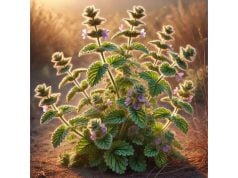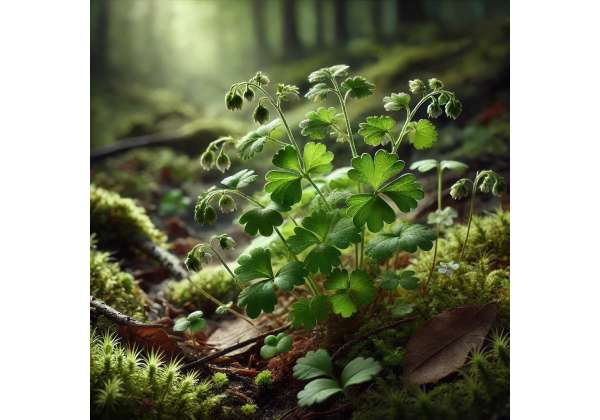
Hairy bittercress is the kind of plant many people pull up before realizing it is edible. This small mustard-family herb appears in garden beds, pots, cracks, and damp lawn edges, where it forms a low rosette and then sends up thin stems with tiny white flowers. Its flavor is not intensely bitter so much as peppery, fresh, and slightly mustard-like. That taste matters, because it hints at the same sulfur-rich chemistry that makes many cruciferous plants nutritionally interesting.
From a health perspective, Cardamine hirsuta is best understood as a wild edible green with promising phytochemicals rather than a proven medicinal herb. Young leaves may offer antioxidants, vitamin C, beta-carotene, and other protective plant compounds, while early laboratory and animal work suggests possible blood-sugar, antioxidant, and enzyme-inhibiting effects. Still, the evidence is thin, human trials are lacking, and no standard therapeutic dose has been established.
That means the smartest approach is practical and moderate: use it as a clean, correctly identified food first, stay cautious with concentrated preparations, and pay extra attention if you have thyroid issues, kidney-stone risk, or take medication affected by leafy green intake.
Quick Overview
- Hairy bittercress is an edible peppery brassica that may offer antioxidant and digestive-supporting compounds, but human evidence is still limited.
- Its most realistic benefit is as a nutrient-rich spring green rather than as a stand-alone remedy for disease.
- No validated human medicinal dose exists; experimental extract doses were 125–500 mg/kg in rats, not a self-care dose for people.
- Avoid harvesting from sprayed lawns, roadsides, or contaminated soil, even if the plant itself is correctly identified.
- People with iodine deficiency, active thyroid disease, recurrent kidney stones, or pregnancy should avoid medicinal-style use and keep intake conservative.
Table of Contents
- What is hairy bittercress
- Key compounds and nutrients
- Potential benefits and realistic uses
- How to use hairy bittercress
- How much per day
- Safety, interactions, and who should avoid it
- What the research really shows
What is hairy bittercress
Hairy bittercress is a small annual or short-lived biennial in the Brassicaceae family, the same broad plant group that includes mustard, broccoli, radish, and cress. It usually begins as a low rosette of rounded leaflets, then quickly sends up slender flowering stems. Once the seed pods mature, they burst and scatter seed with surprising force, which explains why gardeners often know the plant as an aggressive volunteer.
Despite its reputation as a weed, the young plant is edible. The best parts are the tender leaves and soft tops harvested before the stems toughen and before the seed pods fully develop. Flavor-wise, it sits closer to cress and mild mustard than to classic bitter herbs. In fact, many people who expect harsh bitterness are surprised by its clean peppery bite. Unlike watercress, which is an aquatic or semi-aquatic green, hairy bittercress is usually found in moist soil, containers, paths, beds, and lawn edges.
Its value comes from three overlapping roles. First, it is a seasonal food. Second, it is a traditional or local-use herb in some regions where wild greens are routinely eaten. Third, it has attracted modern interest because many brassicas contain glucosinolates and related compounds with antioxidant, pungent, and defense-related activity.
Still, it is important not to over-romanticize it. Hairy bittercress is not a mainstream pharmacopoeial herb with a long record of standardized extracts, dosage protocols, or clinical trials. It belongs in the category of “wild functional food” more than “established medicinal plant.” That distinction matters because it changes expectations. A handful of clean young leaves in a salad is one thing. Treating it like a concentrated blood-sugar herb, detox tonic, or anticancer remedy is something very different.
For most readers, the sensible takeaway is simple: hairy bittercress can be a useful, flavorful, nutrient-bearing spring green when correctly identified and harvested from safe places. It is worth knowing, but it should be approached with the same care you would use for any wild edible plant: confirm identification, harvest young growth, and avoid areas exposed to herbicides, heavy traffic, animal waste, or contaminated runoff.
Key compounds and nutrients
The chemistry of hairy bittercress helps explain both its taste and its potential health interest. Because it is a brassica, its most important compound family is glucosinolates. These sulfur-containing molecules are part of the plant’s defense system. When the leaves are crushed, chopped, or chewed, glucosinolates can break down into pungent compounds such as isothiocyanates and related products. That is the same basic flavor logic that gives many mustard-family plants their sharp, peppery character.
A plant-chemistry study on Cardamine hirsuta leaves found a varied glucosinolate pattern rather than a single dominant compound. That matters because complex glucosinolate mixtures may influence flavor, digestive response, and biological activity differently from one isolated constituent. In practical terms, hairy bittercress is chemically closer to other sulfur-rich brassicas such as mustard greens than to soft aromatic herbs like mint or basil.
Beyond glucosinolates, early extract research points to a second layer of interesting compounds: phenolics and flavonoid-related molecules. In one preclinical study, hydro-methanolic extract of Cardamine hirsuta was profiled by RP-UHPLC-MS, and compounds such as mulberrofuran-M and quercetin 3-(6″-caffeoylsophoroside) were highlighted as possible contributors to antioxidant and enzyme-related effects. These findings are promising, but they come from extract work, not from ordinary salad use.
Nutritionally, the fresh plant appears modest but worthwhile. Extension material describes the tender leaves as sources of vitamin C, calcium, magnesium, and beta-carotene. That does not make hairy bittercress unique, but it supports the idea that it can contribute useful micronutrients when eaten as part of a mixed diet.
At the same time, the plant is not made only of “good” compounds. A food-composition study on traditionally consumed wild vegetables that included Cardamine hirsuta also found anti-nutritional factors such as oxalates, saponins, tannins, phytates, and alkaloids in the dried material. That is not a reason to fear the plant, but it is a reason to avoid exaggerated “superfood” claims. Many edible plants contain both helpful and limiting compounds, and the health effect depends on dose, context, preparation, and the person eating them.
Taken together, the key ingredients in hairy bittercress are best viewed as a matrix: glucosinolates for pungency and possible metabolic signaling, phenolic compounds for antioxidant potential, and a modest set of vitamins and minerals that make the plant nutritionally useful when eaten fresh. The chemistry is interesting enough to justify more research, but not yet strong enough to justify strong medicinal promises.
Potential benefits and realistic uses
Hairy bittercress may have health value, but the realistic benefits are narrower than the title of many internet herb pages suggests. The strongest case for it today is as a nutritious, pungent wild green that may support health in small, practical ways. The weakest case is as a proven treatment for serious disease.
The most plausible benefits fall into a few categories:
- Mild antioxidant support. Its brassica chemistry and phenolic compounds suggest some ability to help counter oxidative stress, at least in laboratory systems.
- Digestive stimulation. Peppery, slightly bitter greens often increase salivary flow and make meals feel more lively and appetizing.
- Micronutrient contribution. Fresh leaves may add vitamin C, beta-carotene, and minerals to a spring diet.
- Possible metabolic support. Animal work suggests the plant may influence blood glucose, oxidative stress markers, and related biochemical measures.
- Experimental antimicrobial and anticancer potential. These signals exist in laboratory studies, but they are far from clinical proof.
The most discussed medicinal angle is blood sugar. In a 2023 rat study, Cardamine hirsuta extract showed antioxidant activity, alpha-amylase inhibition, and improvements in blood-glucose-related measures under experimental conditions. That is interesting, especially because alpha-amylase inhibition is one way plants may slow carbohydrate breakdown. But there are two large limits. First, rats are not humans. Second, the study used a hydro-methanolic extract, not the same thing as eating a few leaves with lunch.
Another area of interest is anticancer and antimicrobial activity. Here again, the data are preliminary. Some laboratory work used leaf extract to help produce silver nanoparticles that then showed antimicrobial and antiproliferative activity in test systems. That does not mean the raw herb itself works as an anticancer therapy. It means the plant contains reducing and capping compounds useful in a research model. Those are very different claims.
So what can readers reasonably expect? Not a cure, not a detox miracle, and not a substitute for evidence-based care. What they can expect is a peppery edible weed that may:
- broaden dietary variety,
- add phytochemical complexity to meals,
- offer mild appetite and digestive interest,
- and serve as a low-cost seasonal green for people who enjoy foraging or kitchen gardening.
That is still meaningful. A food does not have to be a medicine in the strict clinical sense to be valuable. Hairy bittercress probably fits best in the same mental category as other supportive wild greens: useful, flavorful, chemically interesting, and worth eating in moderation, but not something to lean on for major therapeutic outcomes.
How to use hairy bittercress
The best way to use hairy bittercress is usually the simplest one: treat it as a fresh culinary herb or young salad green. The flavor is brightest when the plant is young, before flowering advances too far and before the stems become stringy. At that stage, the leaves are tender enough to use raw, and the peppery note is clean rather than harsh.
Common practical uses include:
- mixed into salads with mild lettuce or baby spinach,
- scattered over eggs, soups, grain bowls, or roasted vegetables,
- blended into pesto with milder greens,
- folded into salsa, yogurt dips, or herb butter,
- or used as a sandwich and wrap accent, much like garden cress.
A good beginner method is to use it as a seasoning green rather than as the whole salad base. That lets you enjoy the flavor without overdoing the pungency.
A simple approach looks like this:
- Harvest only young rosettes or tender upper growth from a clean, unsprayed area.
- Rinse very thoroughly, especially if the plant came from low ground or a muddy container edge.
- Remove tough stems, yellowing leaves, and any seed pods that feel fibrous.
- Chop finely and start by mixing a small amount into a larger bowl of milder greens.
- Taste, then adjust upward only if you enjoy the bite.
Cooking is possible, but it changes the plant. Heat softens the peppery edge and can make the leaves collapse quickly, so cooked use is best as a late addition to soups, omelets, sautés, or brothy dishes. If you simmer it hard for too long, much of the fresh character disappears.
What about tea, tincture, or capsules? In truth, these are not the best-supported uses. Hairy bittercress does not yet have a well-established tradition of standardized medicinal preparations in modern practice, and there is no well-defined human dosing protocol for extracts. A tea made from the fresh herb is possible, but it should be thought of as an experimental culinary infusion, not a proven remedy.
Wild-food context also matters. This plant is most useful when it is fresh, seasonal, and part of a meal. That setting reduces the risk of overuse and keeps expectations realistic. If you are drawn to the plant mainly for health reasons, the most evidence-responsible path is to use it as a clean, correctly identified food and stop there unless better data emerge.
How much per day
There is no clinically established human dose for hairy bittercress. That is the central fact to keep in mind. Any article that gives a confident medicinal dose in capsules, tincture drops, or grams of dried herb is moving beyond the evidence.
The most useful way to talk about dosage is to separate culinary use from experimental extract use.
For culinary use, moderation is the right standard. Because the plant is pungent, a small amount goes a long way. A practical starting range is about 5 to 15 g of fresh leaves at a time, which is roughly a few sprigs up to a small loose handful, depending on leaf size and moisture. That is not a proven therapeutic dose. It is simply a conservative food-sized amount that matches how the plant is usually enjoyed.
A sensible progression would be:
- Start with 1 to 2 tablespoons chopped fresh leaves mixed into a meal.
- If well tolerated, increase to a small handful used occasionally in salads or as a garnish green.
- Keep intake modest and varied rather than eating large daily bowls for weeks.
Taking it with food is usually the gentlest option, especially for people who are sensitive to peppery or sulfur-rich plants. Raw use preserves flavor best, but if raw brassicas upset your stomach, lightly wilted or stirred into hot food at the end of cooking may feel easier.
For research extracts, the picture is very different. In the best-known animal study, rats received oral doses of 125, 250, and 500 mg/kg body weight for 30 days. Those numbers are not human self-dosing guidance. They are experimental doses in a controlled model and should not be copied directly.
Duration also matters. Since no long-term human safety data exist for concentrated use, hairy bittercress is better treated as a seasonal food than as a daily medicinal regimen. A few weeks of culinary use during its growing season makes more sense than long-term extract-style consumption.
The main variables that change “dose” in real life are plant age, preparation, and source. Older plants are tougher and sometimes harsher. Raw use keeps more pungency. Clean harvesting matters as much as quantity, because contamination from lawns, runoff, or chemicals may pose more risk than the plant itself.
In plain terms: use a little, use it as food, and be wary of anyone pretending there is already a validated medicinal daily dose for humans.
Safety, interactions, and who should avoid it
For most healthy adults, hairy bittercress is likely low-risk in normal culinary amounts when it is correctly identified and harvested from a clean location. That said, “edible” does not mean “risk-free,” especially with wild greens.
The first safety issue is source. A perfectly edible plant becomes a poor food if it grows in a sprayed lawn, along a busy roadside, beside treated ornamental beds, or in soil contaminated by runoff, pets, or heavy metals. With foraged greens, environmental contamination is often a bigger problem than plant chemistry itself.
The second issue is concentration. Hairy bittercress belongs to a group of cruciferous plants that contain goitrogen-related compounds. In people with adequate iodine intake, moderate amounts of cruciferous foods are usually not a major concern. But in people with iodine deficiency, marginal iodine status, or poorly controlled thyroid disease, very high or frequent raw intake is a less comfortable idea. This is one reason to keep use food-like and moderate.
A third issue is kidney-stone risk. Food-composition research on Cardamine hirsuta found oxalates in the dried plant material. That does not mean everyone should avoid it, but people with a history of calcium-oxalate stones should be especially cautious with regular large servings of oxalate-containing greens.
Other points to consider:
- Large raw servings may cause stomach upset, bloating, or mouth irritation in sensitive people.
- Mustard-family allergy is uncommon but possible, so anyone with known sensitivity to related plants should be careful.
- People taking anticoagulants should avoid big swings in leafy-green intake, even though exact vitamin K content for hairy bittercress is not well standardized.
- Pregnancy and breastfeeding are not good times for improvised medicinal dosing of a wild plant with limited human safety data.
- Children should only eat it when an experienced adult has identified the plant and the harvest site is clearly safe.
Who should avoid medicinal-style use altogether?
- people with active thyroid disease or known iodine deficiency,
- people with recurrent kidney stones,
- pregnant or breastfeeding adults,
- anyone on complex medication regimens without clinician guidance,
- and anyone who cannot identify the plant with confidence.
If you are already comfortable with edible weeds such as dandelion, the same broad rule applies here: clean source, correct identification, and modest quantity matter more than excitement about “natural” remedies.
What the research really shows
The evidence for hairy bittercress is intriguing but early. The cleanest way to summarize it is to place the data on an evidence ladder.
At the bottom, there is culinary and local-use knowledge. We know the plant is edible, peppery, and used as a spring green in some settings. That tells us it can fit into food culture, but it does not prove therapeutic outcomes.
Above that, there is composition work. Studies show that Cardamine hirsuta contains glucosinolates, nutrient compounds, and some anti-nutritional factors. This is helpful because it explains why the plant tastes the way it does and why researchers think it deserves attention. Still, chemistry alone is not clinical evidence.
Above that, there are laboratory and plant-biology studies. These show complex glucosinolate patterns, antioxidant behavior, and other biologically active features. They support plausibility, not treatment claims.
Then come animal studies. The 2023 rat study on a hydro-methanolic extract is the strongest direct medicinal signal so far, suggesting possible antidiabetic and oxidative-stress-related effects under controlled conditions. That is meaningful, but it remains preclinical. Many plants look promising in rodents and never translate into useful human therapies.
There are also in vitro findings, including antimicrobial and anticancer-related research involving Cardamine hirsuta leaf extract in nanoparticle systems. These are interesting for pharmacological exploration, but they are even further removed from the real-world question most readers care about: what happens when a person eats the plant?
What is missing is decisive human evidence. There are no established clinical trials showing that hairy bittercress lowers blood sugar in patients, improves inflammation in routine use, prevents cancer, or deserves a standardized herbal dosage. There is also no well-developed safety database for long-term concentrated use.
So where does that leave it? In a sensible middle ground. Hairy bittercress is not a fake plant and not a miracle plant. It is a real edible brassica with real chemistry, plausible functional-food value, and early preclinical signals worth watching. The strongest present-day recommendation is to use it as a modest wild food if you identify it correctly and source it safely.
If future research brings human trials, better standardization, and clearer safety data, its role may expand. For now, the most honest conclusion is this: hairy bittercress deserves curiosity, not hype.
References
- In Vitro, In Silico, and In Vivo Studies of Cardamine hirsuta Linn as a Potential Antidiabetic Agent in a Rat Model 2023 (Animal Study)
- Root JA Induction Modifies Glucosinolate Profiles and Increases Subsequent Aboveground Resistance to Herbivore Attack in Cardamine hirsuta 2018 (Plant Chemistry Study)
- Amino acid profiles and anti-nutritional contents of traditionally consumed six wild vegetables 2019 (Composition Study)
- Investigation of In Vitro Anticancer and Apoptotic Potential of Biofabricated Silver Nanoparticles from Cardamine hirsuta (L.) Leaf Extract against Caco-2 Cell Line 2023 (In Vitro Study)
- Iodine – Health Professional Fact Sheet 2024 (Guideline)
Disclaimer
This article is for educational purposes only and does not diagnose, treat, or replace medical care. Hairy bittercress is an edible wild plant with limited human research, no validated medicinal dose, and important safety considerations related to source quality, thyroid health, kidney-stone risk, and medication use. Speak with a qualified healthcare professional before using it in medicinal amounts, especially if you are pregnant, breastfeeding, managing a chronic condition, or taking prescription medicines.
If this article was useful, please share it on Facebook, X, or any other platform you prefer.