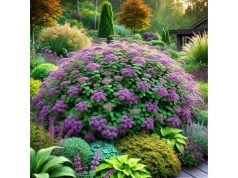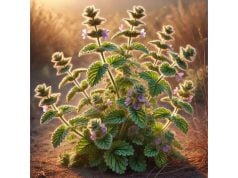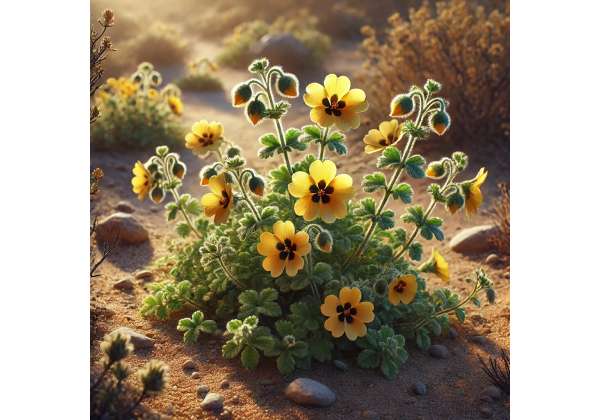
Halimium, usually referring here to Halimium lasianthum, is a Mediterranean rockrose shrub that sits in an unusual place in herbal medicine. It is not a mainstream supplement, and it does not have the long clinical paper trail of chamomile, peppermint, or green tea. Still, it has attracted interest because its aerial parts and roots contain flavonoids, phenolic acids, tannin-like compounds, and related plant chemicals that can show antioxidant, antimicrobial, anti-inflammatory, and enzyme-inhibiting activity in the lab. Traditional records also suggest that parts of the plant were occasionally eaten in rural Iberian settings.
That mix of folk use and early science makes Halimium interesting, but it also calls for restraint. The best way to approach it is as a promising but lightly studied herb, not a proven treatment. This guide explains what Halimium is, which compounds seem most relevant, what benefits are realistic, how it is used, what a cautious dosage range looks like, and where the safety gaps still matter most.
Essential Insights
- Halimium shows promising antioxidant, antimicrobial, and anti-inflammatory activity in laboratory extract studies.
- Its most relevant compounds appear to be flavonoids, phenolic acids, catechin-related compounds, and tannin-like polyphenols.
- No standardized medicinal dose has been established; a cautious tea-style range is about 1 to 2 g dried aerial parts per 200 to 250 mL water.
- Avoid concentrated self-experiments if you are pregnant, breastfeeding, giving herbs to a child, or managing liver, kidney, or complex medication issues.
- Start low, use short term, and stop if it causes stomach irritation, rash, headache, or unusual symptoms.
Table of Contents
- What is Halimium
- Key ingredients and what they do
- Does Halimium have real benefits
- How Halimium is used
- How much Halimium per day
- Side effects, interactions, and who should avoid it
- What the research actually says
What is Halimium
Halimium lasianthum is a small shrub in the rockrose family, Cistaceae, native to parts of the western Mediterranean region. In practical terms, it is better known as a hardy wild shrub than as a common household remedy. That matters because many people searching for herb benefits assume a plant must already have a stable medicinal tradition, standard preparations, and a recognized safety profile. Halimium does not fit that pattern.
Botanically, it is valued as a resilient plant of dry, sunny landscapes. Herbally, interest comes from two places. First, researchers studying related Mediterranean shrubs have been drawn to their dense polyphenol content. Second, a few ethnobotanical records show that Halimium was not entirely ignored in local tradition. In one Iberian survey, its flowering buds or immature fruits were reported as being chewed as a snack. That is not the same as a formal medicinal system, but it does show direct human use.
What makes Halimium especially interesting is that different plant parts do not behave the same way. In laboratory work, aerial parts and roots showed different profiles, and parasitized versus non-parasitized plants also differed. That means “Halimium extract” is not one uniform thing. The plant part, extraction method, harvest conditions, and even ecological context may all change the final chemistry.
For readers trying to decide whether this herb is worth exploring, the simplest summary is this: Halimium is a niche Mediterranean botanical with interesting lab data, light traditional use, and major evidence gaps. It is better approached as a cautiously used experimental herb than as a first-line wellness staple. If you enjoy studying tannin-rich, polyphenol-heavy plants, it may be worth learning about. If you want a well-established herb with predictable dosing and broader clinical use, Halimium is not there yet.
That distinction is important throughout the rest of this article. Many of its “benefits” are better described as plausible actions suggested by plant chemistry and in vitro testing, not outcomes confirmed in human trials.
Key ingredients and what they do
The most useful way to understand Halimium is through its polyphenol profile. In the available extract study, Halimium samples were especially associated with flavonoids rather than the hydrolysable tannin dominance seen in the related parasitic plant studied alongside it. That distinction helps explain why people discussing Halimium often emphasize antioxidant and skin-related potential.
Compounds reported in Halimium extracts included:
- Apigenin-C-hexoside
- (+)-Catechin
- 5-O-caffeoylquinic acid
- Mangiferin
- Taxifolin-O-hexoside
- Myricetin derivatives
- Quercetin derivatives
- Isorhamnetin-O-glucuronide
- Kaempferol-linked glycosides
These names matter because they point to likely actions. Flavonoids and phenolic acids are often studied for four broad effects: antioxidant activity, inflammatory signaling control, membrane-level antimicrobial actions, and mild astringent behavior. In simple language, they may help neutralize reactive compounds, influence how cells respond to stress, interfere with some microbial growth patterns, and create a tightening or drying effect on tissues.
Catechin-like and quercetin-like compounds are especially relevant when people ask why a plant might help irritated skin or mild inflammatory states. Myricetin, kaempferol, apigenin, and taxifolin families are also frequently examined in broader phytochemistry research for their redox and signaling effects. That does not prove Halimium itself works in people, but it gives a rational basis for why its extracts behave the way they do in lab assays.
Another key point is synergy. Herbal activity rarely comes from one isolated molecule. A polyphenol-rich shrub may work through a layered effect in which flavonoids, phenolic acids, and tannin-like compounds reinforce one another. That is one reason whole extracts can behave differently from purified ingredients.
At the same time, plant chemistry is not destiny. A strong flavonoid profile does not automatically translate into a strong clinical effect. Bioavailability, metabolism, extraction strength, dose, timing, and tolerance all shape what a human body actually experiences. That is why it helps to compare Halimium’s chemistry mindset to better-known green tea polyphenols: the compounds may be promising, but the practical effect depends heavily on form and dose.
So when people ask for Halimium’s “active ingredients,” the best answer is not one miracle compound. It is a polyphenol-rich matrix led by flavonoid glycosides, catechin-related compounds, and phenolic acids that together create its most plausible medicinal profile.
Does Halimium have real benefits
Yes, Halimium appears to have real bioactivity. No, that does not yet mean it has proven clinical benefits. The difference is crucial.
The strongest current case for Halimium is in laboratory testing of extracts. In that setting, certain aerial and root extracts showed antioxidant activity, antimicrobial effects against selected bacteria and fungi, anti-inflammatory activity in cell-based testing, and tyrosinase inhibition. In plain language, the plant showed the kind of behavior researchers look for when screening botanicals for skin care, preservation, inflammation-related applications, or future phytopharmaceutical use.
The most realistic benefit categories are these:
- Antioxidant support potential
Some Halimium extracts performed well in oxidative stress assays. That suggests the plant may be a useful source of redox-active compounds, especially in preparations designed for research, topical care, or formulation work. - Mild antimicrobial potential
Extracts inhibited several tested microbes in vitro. That does not mean Halimium can replace an antibiotic, but it does make it interesting as a complementary plant source in the study of natural antimicrobials. - Anti-inflammatory potential
Certain root extracts showed better anti-inflammatory activity than aerial parts in the available screening model. This suggests that plant part matters and that the root may concentrate different functional compounds. - Skin and pigmentation relevance
Because Halimium extracts also showed tyrosinase inhibition, there is tentative interest in cosmetic or dermal applications. That points more toward topical formulation research than toward drinking large amounts of tea. - Traditional edible interest
Ethnobotanical reporting suggests limited direct use of buds or immature fruits as a snack. That supports the idea that the plant has at least some history of human contact, though not a robust medicinal dosing tradition.
What benefits should not be promised? Halimium should not be marketed as a proven treatment for infections, cancer, metabolic disease, inflammatory disorders, or pigmentation conditions. The extract data are interesting, but they are not outcome trials. A lab result tells you a plant has potential; it does not tell you how well it works in the body, what dose is best, or who is most likely to benefit.
A more grounded way to think about it is to place Halimium near other astringent, polyphenol-rich botanicals used in skin and surface care, such as witch hazel for topical care. That comparison is about category, not equivalence. Halimium may share some astringent and anti-irritant logic, but it does not yet have the same real-world validation.
So, does it have real benefits? It has real promise and measurable lab activity. Clinical benefit remains plausible, but unproven.
How Halimium is used
Because Halimium is not a standardized commercial herb, “use” is more practical than formal. Most people who explore it do so in one of three ways: as a simple tea-style infusion, as a cooled topical rinse or compress, or as a research-style extract discussed in scientific papers.
The most conservative approach is to focus on dried aerial parts rather than roots or concentrated extracts. Aerial parts are easier to prepare, easier to dose gently, and more aligned with the way everyday herbs are usually handled. A tea or infusion is the lowest-risk entry point for most adults who are simply curious and otherwise healthy.
Common practical forms include:
- Mild infusion
Dried aerial parts steeped in hot water for a short time. This is the best choice for cautious first exposure. - Cooled wash or compress
A stronger infusion cooled fully and applied to intact skin with cloth or cotton. This fits the plant’s astringent and skin-relevant profile better than aggressive internal use. - Hydroethanolic extract
This is the form used in much of the published lab work. It is not the same as homemade tea and should not be assumed to behave the same way. - Folk edible use
Historical reports of chewing flowering buds or immature fruits exist, but that is not a modern dosage protocol and should not be copied casually from wild plants.
Preparation matters. Strong extraction pulls more tannins and polyphenols, which may increase desired astringency but also raise the chance of stomach upset or a harsh taste. Steeping longer is not always better. Neither is concentrating the brew until it becomes intensely bitter.
For topical use, clean sourcing and careful patch testing matter more than strength. If a cooled Halimium rinse is going to irritate you, doubling the concentration rarely solves the problem. It usually makes it worse. Use on intact skin only, avoid eyes and mucous membranes, and stop if burning or redness increases.
If you want a practical reference point, use Halimium more like a modest herbal infusion than like a potent supplement. Think closer to the careful tea habits people use with chamomile tea, not like a high-dose capsule experiment.
Finally, do not wild-harvest this plant unless you are absolutely certain of identification, local legality, and contamination status. Mediterranean shrubs can be confused with related species, and roadside or fire-affected plants may not be suitable for personal use.
How much Halimium per day
There is no clinically established daily dose for Halimium lasianthum. That is the most important dosage fact to know.
Since no standard medical monograph or human trial protocol defines a validated dose, the safest approach is to use a conservative tea-style range rather than a concentrated extract-level dose. A sensible working range for adults is:
- 1 to 2 g dried aerial parts per 200 to 250 mL hot water
- Steep for about 5 to 10 minutes
- Start with 1 cup daily for several days
- If well tolerated, consider up to 2 cups daily for short-term use
For topical use, a somewhat stronger preparation can make sense:
- 2 to 4 g dried aerial parts per 250 mL water
- Steep 10 to 15 minutes
- Cool fully
- Use once or twice daily as a brief compress or rinse on intact skin
Duration matters just as much as dose. Because this is a tannin-rich, lightly studied herb, short-term use is the sensible rule. A practical window is 5 to 14 days, followed by a break and a review of whether it actually helped. Long, continuous use is harder to justify because both efficacy and safety data are limited.
Timing can also improve tolerance:
- Take between meals if using for a more concentrated herbal effect.
- Take after food if you have a sensitive stomach.
- Separate from iron supplements, mineral supplements, or medications by at least 2 to 3 hours as a precaution, since tannin-heavy herbs may affect absorption.
Common dosing mistakes include using roots without guidance, brewing the herb extremely strong, combining it with many other astringent botanicals at once, or assuming that a promising lab extract justifies a strong home tincture. It does not.
If you are choosing between more and less, choose less. With Halimium, the goal is not to hit a “therapeutic maximum.” The goal is to stay in a range that is mild enough to observe tolerance and useful enough to notice whether the herb suits you at all.
Side effects, interactions, and who should avoid it
Halimium appears reasonably usable in small, cautious amounts, but its safety profile is incomplete. That means your best protection is conservative use.
Possible side effects are mostly inferred from its chemistry and from how tannin-rich, polyphenol-dense herbs often behave. The most likely problems are:
- Stomach irritation, nausea, or a dry, rough feeling in the mouth
- Constipation or digestive heaviness if taken strong and often
- Headache or general intolerance in sensitive users
- Skin irritation if used topically without patch testing
- Bitter aftertaste and poor palatability with over-steeped preparations
Interactions are not well mapped, but caution is sensible with:
- Iron supplements
- Mineral supplements
- Oral medications that already have narrow absorption windows
- Multiple herbs with strong tannin or astringent effects
- Heavy alcohol use or preexisting liver stress
Who should avoid Halimium unless a clinician specifically approves it:
- Pregnant or breastfeeding people
- Children
- People with significant liver or kidney disease
- People with active stomach ulcers, severe reflux, or inflammatory bowel flares
- Anyone with a known allergy to rockrose-family plants or unexplained reactions to herbal teas
- People taking many prescription drugs, especially when timing and absorption matter
Topical use also deserves limits. Do not apply to broken skin, deep wounds, or infected areas as a substitute for proper care. Do not use near the eyes. If redness, stinging, or swelling worsens, wash it off and stop.
A helpful way to frame Halimium safety is to compare it to other tannin-heavy, surface-oriented herbs such as oak bark. The value of these plants often lies in measured, situational use, not daily heavy intake. With Halimium, that measured approach matters even more because the research base is still thin.
The safest rule is simple: use mild forms, use them briefly, and stop early if the herb does not clearly agree with you.
What the research actually says
The research story on Halimium is promising but small. That is the honest bottom line.
What the literature supports best right now is phytochemical characterization and in vitro bioactivity. Researchers identified a meaningful flavonoid-rich profile in Halimium extracts and measured antioxidant, antimicrobial, tyrosinase-inhibiting, cytotoxic, and anti-inflammatory effects in laboratory models. Some of the numbers were strong enough to justify further study, especially for topical or cosmetic directions.
What the literature does not yet support is routine therapeutic use in humans. There are no major human clinical trials showing that Halimium tea improves symptoms, shortens illness, protects skin in real-world patients, or safely treats a chronic condition. There is also no robust standardized dose, no long-term safety framework, and no clear commercial preparation with evidence-backed instructions.
That gap between bioactivity and clinical proof is not a flaw unique to Halimium. It is common in early botanical research. But for readers, it means expectations should stay realistic.
The most evidence-based conclusions are these:
- Halimium is chemically interesting.
Its flavonoid and phenolic profile gives it a credible scientific reason for further study. - Some extracts show useful lab effects.
Antioxidant, antimicrobial, anti-inflammatory, and enzyme-inhibiting results are real findings, not folklore alone. - Preparation matters.
Plant part and extraction method change the outcome, so not all forms should be treated as equivalent. - Human evidence is still missing.
That limits any strong claim about medical effectiveness, ideal dosing, or broad safety. - The best present use is cautious and exploratory.
Small amounts, short duration, and topical or tea-style use make more sense than concentrated self-treatment.
So, what does the research actually say? It says Halimium deserves attention, not hype. It is a plant with interesting chemistry and early functional signals, but it is still at the stage where careful curiosity is wiser than confident claims.
References
- Evaluation of parasite and host phenolic composition and bioactivities − The Practical Case of Cytinus hypocistis (L.) L. and Halimium lasianthum (Lam.) Greuter 2022 (Research Article)
- Traditional knowledge of wild edible plants used in the northwest of the Iberian Peninsula (Spain and Portugal): a comparative study 2007 (Ethnobotanical Study)
- Therapeutic Potential of Phenolic Compounds in Medicinal Plants—Natural Health Products for Human Health 2023 (Review)
- Flavonoids: Antioxidant Powerhouses and Their Role in Nanomedicine 2024 (Review)
Disclaimer
This article is for educational purposes only. Halimium lasianthum is not a proven medical treatment, and current evidence is limited mainly to phytochemical, ethnobotanical, and laboratory research. It should not replace diagnosis, prescription treatment, or urgent care. Anyone who is pregnant, breastfeeding, managing a chronic illness, taking prescription medicines, or considering concentrated herbal extracts should speak with a qualified healthcare professional before use.
If this article helped you, please share it on Facebook, X, or your preferred platform.