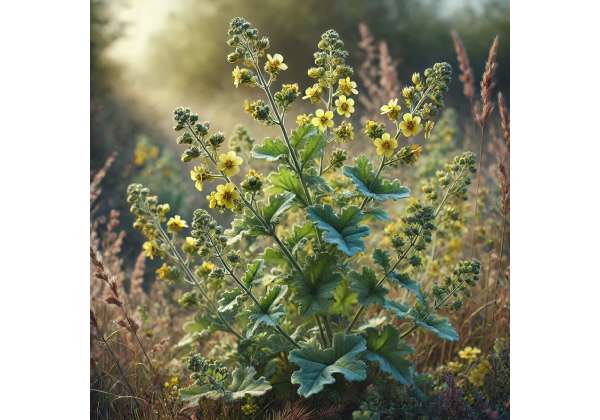
Hedge mustard, known botanically as Sisymbrium officinale, is a peppery wild herb in the cabbage and mustard family that has earned a long-standing reputation as the “singer’s plant.” Traditional herbalists have used it for centuries when the throat feels scratchy, the voice sounds tired, or a dry cough lingers after talking, singing, or a mild upper-airway irritation. Its appeal comes from a useful mix of pungent mustard-family compounds, bitter notes, and soothing plant constituents that seem to work best where the mouth, throat, and upper airway meet.
Today, hedge mustard sits in an interesting middle ground between folk remedy and modern phytotherapy. It is not a miracle herb, and it is not a replacement for medical care when symptoms are severe. Still, it remains a practical option for minor throat discomfort, temporary hoarseness, and voice strain, especially when used in lozenges, mild infusions, or other traditional preparations. The key is to understand what it can realistically do, how to use it well, and where caution matters most.
Quick Facts
- Traditionally used for throat irritation, temporary hoarseness, and dry cough.
- Its most relevant benefits are voice comfort and mild soothing support for the upper throat.
- Adult lozenge products are often used at 7.5–10 mg dry extract per lozenge, 10–12 times daily.
- Avoid use during pregnancy and breastfeeding unless a clinician advises otherwise.
- Children under 6 should not use lozenges without professional guidance.
Table of Contents
- What is hedge mustard
- Key compounds and actions
- Does hedge mustard help the throat?
- How to use hedge mustard
- How much hedge mustard per day
- Safety, side effects, and interactions
- What the evidence really shows
What is hedge mustard
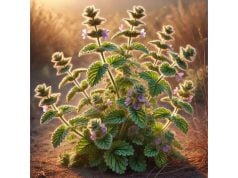
Hedge mustard is a modest-looking annual or biennial herb from the Brassicaceae family, the same broad plant group that includes cabbage, broccoli, arugula, and culinary mustards. It grows easily along roadsides, field edges, walls, and disturbed ground, which helps explain why it has followed people for so long in Europe, North Africa, and parts of Asia. The plant produces narrow leaves, small yellow flowers, and thin seed pods. Although it does not look dramatic, its taste gives away its family ties: peppery, slightly bitter, and distinctly mustard-like.
Historically, the aerial parts of the plant, especially the flowering tops, were valued more than the root. The herb became associated with singers, speakers, teachers, preachers, and anyone who relied on the voice for long stretches. That reputation was not based on modern clinical trials. It came from repeated traditional use for hoarseness, dry throat, and a strained voice after use. Even now, hedge mustard is still best understood as a throat herb first and a broader wellness herb second.
The plant also has a food side. Young leaves and seeds have been used in salads, herbal mixtures, and mustard-like preparations. That culinary history matters because it reminds us that hedge mustard is not just a medicinal extract in a tablet. It is also a living member of the pungent edible greens tradition, with flavor and function linked together.
What makes hedge mustard stand out is its very specific niche. Many herbs are promoted as general immune boosters, detoxifiers, or all-purpose anti-inflammatory plants. Hedge mustard is narrower and, in a way, more useful because of that. Its strongest traditional identity is tied to local comfort in the mouth and throat. People usually reach for it when the voice feels rough, when frequent talking causes dryness, or when a mild dry cough adds friction to the throat.
It also helps to separate hedge mustard from exaggerated claims. It is not established as a cure for infection. It is not a proven treatment for asthma, bronchitis, or cancer. And it should not be used to delay medical evaluation when symptoms are serious. A more realistic view is this: hedge mustard is a traditional herb for temporary throat discomfort, mild voice fatigue, and minor upper-airway irritation, with a culinary background that fits its mustard-family chemistry. If you already know herbs such as horehound for cough and throat support, hedge mustard belongs in a similar practical category, though its voice-centered reputation is even more distinctive.
Key compounds and actions
Hedge mustard’s chemistry explains why it feels different from bland throat herbs. Like many Brassicaceae plants, it contains glucosinolates, a family of sulfur-containing compounds stored in plant tissue. When the plant is crushed, chewed, or processed with water, enzymes can help convert those glucosinolates into isothiocyanates and related breakdown products. These are the same kinds of mustard-family compounds that create sharpness, bite, and that familiar warming-pungent sensation in the nose and throat.
In hedge mustard, glucoputranjivin is often highlighted as a key marker compound, and several related glucosinolates and volatile isothiocyanates also appear in the plant. These compounds matter because they may contribute to the herb’s sensory effects, especially the way it seems to “wake up” the throat. Rather than acting like a heavy sedative coating, hedge mustard may work partly through a light stimulating, pungent, and locally active profile.
That does not mean the herb is simply irritating. The plant also contains flavonoids and other polyphenolic constituents that may contribute antioxidant and anti-inflammatory activity in laboratory settings. In addition, traditional monograph work has suggested that mucilage content may also play a role in why some preparations feel soothing in the throat. This combination is one reason hedge mustard is so interesting: it is not only sharp and mustard-like, but also potentially softening in the right form and dose.
Preparation changes the chemistry in practical ways. Whole fresh or dried plant material behaves differently from a standardized lozenge. Heat, grinding, moisture, storage, and pH can change how much pungent volatile material is released. A tea, syrup, pastille, tincture, and fresh-plant preparation are not interchangeable. That is one reason experiences vary so much from person to person. Someone using a mild infusion may notice only gentle throat comfort, while another using a concentrated lozenge may feel a clearer warming action in the mouth and pharynx.
A useful way to think about hedge mustard is as a local throat herb with mustard-family signaling compounds. Its actions seem most relevant where sensory perception, inflammation, and superficial tissue comfort overlap. This is also why it is often described as better for hoarseness, roughness, dryness, or voice fatigue than for thick mucus or deep chest congestion. It tends to fit irritation more than heaviness.
Because these compounds resemble those found in other peppery herbs and greens, readers who are interested in related plant chemistry often compare hedge mustard with garden cress and other pungent Brassicaceae herbs. The overlap is real, but hedge mustard has a more specialized history in voice care. In plain terms, its best-known compounds help explain its peppery taste, local throat feel, and the early scientific interest in its possible anti-inflammatory and sensory effects.
Does hedge mustard help the throat?
For most readers, this is the main question, and the most honest answer is yes, possibly and often usefully, but mainly for mild problems and mostly on the basis of traditional use plus early supporting research. Hedge mustard is best matched to throat irritation, temporary hoarseness, a dry cough, and that worn-out feeling that comes after long speaking or singing. These are local, everyday complaints, not major diseases, and that distinction matters.
The clearest traditional use case is voice strain. People have long used hedge mustard before public speaking, rehearsals, performances, or after prolonged talking. The goal is not to numb the throat. It is to make the throat feel more comfortable and the voice easier to use. When it helps, users often describe less scratchiness, less friction on swallowing, and a smoother return of the voice after overuse.
Dry cough is another common reason people reach for it. Here again, the best fit is a dry, irritating cough that seems to start in the upper throat, not a severe lower-respiratory illness. If the cough comes with fever, chest pain, wheezing, or shortness of breath, hedge mustard belongs in the background, not center stage. But if the problem is minor and local, it may be a reasonable traditional option.
There is also a practical benefit that does not get enough attention: the herb may encourage self-care earlier in the symptom cycle. Sipping a warm infusion, using a lozenge slowly, resting the voice, and staying hydrated often work better together than any one measure alone. Hedge mustard fits well into that small-but-smart approach.
That said, not every sore throat is the same. Hedge mustard is less convincing when the main issue is thick phlegm, major infection, strong acid reflux, or severe allergy symptoms. In those cases, other approaches may fit better. For a dry, irritated throat, some people also explore softer demulcent herbs such as marshmallow root for a more coating style of relief. Hedge mustard is different. It is often a little livelier, a little sharper, and more voice-oriented.
A realistic benefit list would include:
- mild soothing support for throat irritation
- temporary help with hoarseness
- easier voice use after strain
- support for a dry, scratchy cough
- possible local comfort during recovery from minor upper-airway irritation
A less realistic benefit list would include curing infections, replacing prescribed treatment, or preventing vocal injury on its own. Used wisely, hedge mustard seems most helpful as an early, local, throat-focused herb with a long history and modest but credible practical value.
How to use hedge mustard
Hedge mustard can be used in several forms, but the best choice depends on your goal. If you want gentle throat comfort at home, a warm infusion is often the easiest starting point. If you want portable, repeated contact with the mouth and throat, lozenges or pastilles usually make more sense. If you want culinary use, the young leaves and seeds can be included in small amounts for their peppery flavor.
A simple home infusion is the most traditional everyday preparation. Many people use the dried aerial parts, often about 1 teaspoon per cup of hot water, steeped for around 10 minutes. Because the herb can be somewhat pungent and slightly bitter, it is often taken warm rather than very hot, sometimes with honey if that fits the person’s needs. The key is slow sipping. Fast swallowing misses much of the point. Local contact with the throat matters.
Lozenges and pastilles are often more practical for hoarseness because they dissolve slowly in the mouth. That allows repeated contact with the tissues of the mouth and throat. This delivery style also explains why standardized commercial products are frequently preferred in traditional European herbal practice. They offer more predictable dosing than a home tea made from variable plant material.
Some products combine hedge mustard with other throat herbs. This can be useful, but it also changes the safety profile. A formula that includes liquorice, thyme, anise, or soothing roots may work differently from hedge mustard alone. Readers who already use licorice in throat lozenges and syrups should remember that combination products are not the same as single-herb preparations, especially if blood pressure, sodium balance, or medication interactions are concerns.
Culinary use is a quieter option. Tender leaves can be added sparingly to mixed greens, and seeds can contribute a mustard-like note. This is not the same as targeted medicinal use, but it can be a gentle way to explore tolerance and flavor. Food use also makes sense for people who dislike herbal formulas yet enjoy bitter-pungent greens.
A few practical tips improve results:
- Use it early, when irritation first appears, rather than waiting until the throat is severely inflamed.
- Take small repeated exposures instead of one large dose.
- Sip or dissolve slowly so the herb contacts the throat.
- Pair it with hydration and voice rest.
- Stop if it feels too sharp, too drying, or upsetting to the stomach.
Hedge mustard works best when used in a way that matches its local action. It is less about flooding the body and more about repeated, sensible contact where the discomfort is.
How much hedge mustard per day
Dosage is one of the hardest parts of hedge mustard because the herb exists in very different forms. A homemade tea, a commercial lozenge, and a liquid extract do not deliver the same amount or the same concentration of active compounds. That is why there is no single universal “daily dose” for all situations.
For standardized traditional products, the clearest dosing guidance comes from water-extract preparations used as lozenges, pastilles, or oral liquids. Adult lozenge-style use is often repeated rather than concentrated: small amounts taken many times through the day. That pattern makes sense for a throat herb because the goal is frequent local exposure. In practice, the most cited adult lozenge range is 7.5–10 mg dry extract per dose, used 10–12 times daily. For oral liquid preparations, adult use has also been described at 82.5 mg of a water extract taken 3–4 times daily. For children, lower age-specific schedules are used, and very young children should not be given adult-style products.
For home herbal use, dosing is necessarily less exact. A common conservative approach is:
- 1 teaspoon dried herb per cup of water for a mild infusion
- up to 2 or 3 cups daily for short-term use
- small, frequent sips rather than large, rushed servings
This kind of home use is best for temporary support over several days, not open-ended daily use for months. If symptoms continue beyond about a week, it is better to reassess the reason for the irritation instead of simply extending the herb.
Timing also matters. Hedge mustard usually works best:
- before heavy voice use, if hoarseness tends to recur
- during the day in repeated small doses
- early in the course of throat irritation
- between meals if a lozenge is being used for local effect
Common variables that change the effective dose include plant quality, extract strength, whether the product is standardized, and whether it is taken as a quick swallow or a slow-dissolving form. This is why one person may do well with a mild tea while another notices little until using a pastille.
If you already use other voice or cough herbs, keep the comparison fair. A concentrated throat formula can feel stronger than a simple single-herb infusion. For example, products built around thyme in respiratory preparations may seem more expectorant, while hedge mustard often feels more throat-local and voice-centered.
The best dosage rule for hedge mustard is simple: use the smallest effective amount for the shortest useful time, and choose a form that matches the problem.
Safety, side effects, and interactions
Hedge mustard is usually discussed as a low-risk traditional herb when used in appropriate forms and short courses, but low risk does not mean risk-free. Safety depends on the preparation, the age of the user, the sensitivity of the throat and stomach, and the reason the herb is being used in the first place.
The first group who should avoid hedge mustard is anyone with a known allergy to mustard-family plants or to ingredients in a commercial formula. Although true reactions are not common for every user, mustard-family sensitivity can be serious in susceptible people. If you have ever reacted strongly to mustard, cress, or related foods, caution is essential.
The second group is pregnant and breastfeeding women. Traditional regulatory guidance does not establish safety here, so the practical recommendation is to avoid routine use unless a qualified clinician advises otherwise. The same cautious logic applies to children. Lozenges are generally not recommended for children under 6, and oral liquid use is not recommended for children under 3 without professional input.
Possible side effects are usually mild and local when they happen. These may include:
- throat or mouth irritation if the preparation is too strong
- stomach upset
- nausea
- increased reflux symptoms in sensitive people
- dislike of the bitter-pungent taste, leading to poor tolerance
Because hedge mustard is often used for cough and throat discomfort, it is important not to let it hide warning signs. Seek medical advice promptly if symptoms come with fever, shortness of breath, purulent mucus, chest tightness, blood, or worsening pain. A minor dry throat and a true respiratory illness are not the same thing.
Interaction data are limited, which means confidence is limited too. No well-established major interaction profile has been defined, but caution still makes sense with complex medication regimens. Some older monograph discussions mention only theoretical concerns around cardiac glycosides or marked potassium problems rather than confirmed clinical interactions. In practical terms, people taking digoxin, using multiple heart medicines, or managing significant electrolyte issues should not self-experiment casually.
Combination products deserve special attention. Once hedge mustard is paired with other herbs, sugars, alcohol, essential oils, or cough medicines, the safety picture changes. A throat syrup that also contains demulcents, aromatics, or stimulant herbs may be more effective, but it may also bring more contraindications. That is true whether the partner herb is anise, thyme, or something as familiar as plantain leaf in soothing throat blends.
Used properly, hedge mustard is a sensible short-term herb for minor throat complaints. Used carelessly, or used in place of diagnosis when symptoms are serious, it becomes much less safe.
What the evidence really shows
This is the section that matters most for balanced decision-making. Hedge mustard has a genuine traditional role, and some modern studies support scientific interest in the plant, but the human evidence is still limited. That means the herb deserves respectful caution, not hype.
The strongest overall conclusion is that hedge mustard has been accepted in traditional herbal practice for minor throat irritation, hoarseness, and dry cough, especially in standardized mouth-throat preparations. That gives it a credible traditional foundation. However, traditional use is not the same as proof from large clinical trials.
Modern research has mainly focused on three areas. First, phytochemistry: investigators have identified glucosinolates, isothiocyanates, flavonoids, and related constituents that help explain the herb’s pungent taste and possible biological activity. Second, laboratory work: extracts and isolated compounds have shown interesting effects in cell models and other non-human systems, including anti-inflammatory signals, sensory receptor activity, and some tracheal-relaxant or antimicrobial observations. Third, preliminary human observations: a small voice-related study suggested that some users reported reduced perceived vocal disability after short-term use.
That is promising, but it is still not enough to claim strong clinical proof. The gaps are important:
- there are no large, high-quality randomized trials showing clear patient benefit
- product forms vary too much to compare easily
- the best outcomes may depend on local delivery rather than systemic absorption
- many claims remain based on mechanism, not confirmed real-world effect
In other words, the science supports interest, not certainty. Hedge mustard looks more plausible than many obscure folk remedies because its chemistry is coherent and its traditional use is narrow and consistent. But that same narrowness should guide expectations. It is most believable as a local herb for minor throat complaints, not as a broad respiratory cure-all.
A careful evidence-based takeaway would sound like this: hedge mustard may be worth trying for short-term, mild throat irritation, hoarseness, and dry cough, especially when used in a slow-dissolving or slow-sipped form. It should be viewed as supportive, not definitive, and it should not replace evaluation when symptoms are intense, prolonged, or medically concerning.
That is actually a strong place for an herb to stand. It means hedge mustard can be useful without being exaggerated. For readers who value traditional herbs but also want honesty about limits, that is exactly the kind of profile that makes sense.
References
- Untargeted Metabolomics and in Silico Screening of Sisymbrium officinale: Identification of Flavonoid Glycosides as Potential Anti-inflammatory Agents 2025 (Research Article)
- Glucosinolates of Sisymbrium officinale and S. orientale 2022 (Research Article)
- Sisymbrium Officinale (the Singers’ Plant) as an Ingredient: Analysis of Somatosensory Active Volatile Isothiocyanates in Model Food and Drinks 2021 (Research Article)
- Sisymbrium officinale, the Plant of Singers: A Review of Its Properties and Uses 2020 (Review)
- Sisymbrii officinalis herba – herbal medicinal product | European Medicines Agency (EMA) 2023 (Regulatory Monograph Page)
Disclaimer
This article is for educational purposes only and does not diagnose, treat, or replace medical care. Herbal products can affect people differently based on age, allergies, pregnancy status, health conditions, and medications. Speak with a qualified healthcare professional before using hedge mustard if you are pregnant, breastfeeding, taking prescription medicines, or managing persistent respiratory or throat symptoms.
If you found this article useful, please share it on Facebook, X, or your preferred platform to help more readers find reliable herbal guidance.