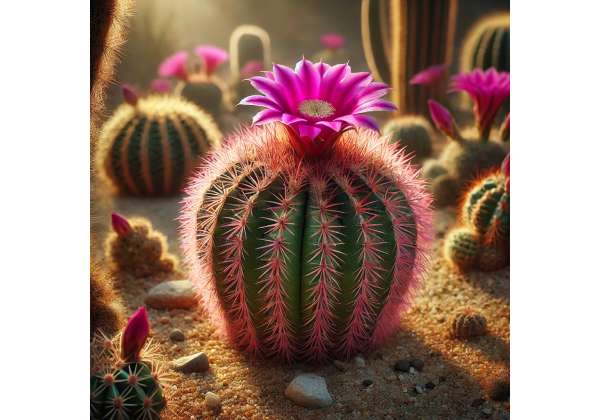
Hedgehog cactus, Echinocereus engelmannii, is a striking desert cactus best known for its vivid magenta flowers and small red fruits that have long been gathered as food in parts of the American Southwest and northern Mexico. It is not a mainstream medicinal herb in the modern supplement world, yet it has a real ethnobotanical history. Traditional use centers on two parts of the plant: the ripe fruit, valued as an edible seasonal food, and the inner flesh, which was sometimes applied to irritated skin and minor injuries. That history makes hedgehog cactus interesting, but it also calls for balance. The plant has promising nutritional features and a meaningful place in desert food traditions, yet direct human research on Echinocereus engelmannii itself remains very limited.
The most realistic health value of hedgehog cactus lies in three areas: nutrient-rich fruit, antioxidant plant compounds, and carefully framed traditional topical use. It is better understood as a desert food plant with possible wellness benefits than as a proven medicinal remedy. Used thoughtfully, it can be useful, flavorful, and culturally important without being overstated.
Desert Plant Quick Facts
- The ripe fruit may offer fiber, natural sugars, and antioxidant pigments that support general dietary variety.
- Traditional use includes the inner flesh for soothing minor skin irritation, but this is not backed by strong clinical trials.
- A cautious food-level range is about 30 to 80 g of peeled ripe fruit pulp per day, roughly 1 to 2 small fruits.
- Pregnant or breastfeeding people, young children, and anyone using it for deep wounds or serious skin problems should avoid medicinal-style use.
Table of Contents
- What is hedgehog cactus?
- Which compounds and nutrients matter?
- Does hedgehog cactus help health?
- How can you use it?
- Hedgehog cactus dosage and timing
- Hedgehog cactus safety
- What the research really shows
What is hedgehog cactus?
Hedgehog cactus is a clustering cactus native to arid parts of the southwestern United States and adjacent northern Mexico. It grows in rocky desert settings, dry slopes, and sandy or gravelly soils where water is scarce and temperatures can swing sharply. The plant forms low, rounded clumps of ribbed stems covered in dense spines, which is why it earned the common name “hedgehog cactus.” In spring, it produces large, vivid flowers, often in pink to magenta tones, followed by small fleshy fruits.
From a health and use perspective, the fruit matters most. The ripe fruit has been described as pleasantly sweet or sweet-sour, and in traditional use it was eaten fresh after the spines and outer husk were removed. In some regions, fruits from Echinocereus species were also stored briefly, sold seasonally, or turned into simple sweets and frozen treats. That puts hedgehog cactus in an interesting category: not a classic kitchen staple, but not just an ornamental desert plant either.
The plant also has a documented traditional topical role. Historical desert use included the inner flesh for sunburns, blisters, cuts, abrasions, and stings. That does not automatically make it a validated wound herb, but it does show that local communities saw practical value in its moist inner tissue. In that way, hedgehog cactus belongs to a wider group of dryland plants that served as food first and household medicine second.
A useful distinction is that hedgehog cactus is not the same as prickly pear, even though both are cacti with edible parts. Prickly pear is much more widely researched and commercialized. Hedgehog cactus remains more local, more seasonal, and less standardized. That means readers should expect less modern evidence and more reliance on ethnobotanical knowledge.
Its main appeal today is therefore threefold:
- It is an edible native cactus fruit with cultural significance.
- It may provide useful plant compounds and micronutrients.
- It has a small but real traditional topical history.
What it is not, at least based on current evidence, is a proven treatment for chronic disease. Framing it that way keeps the article honest and makes the plant more interesting, not less. Hedgehog cactus is most compelling when seen as a traditional desert food and folk-use plant rather than as a miracle remedy.
Which compounds and nutrients matter?
The chemistry of Echinocereus engelmannii itself is not nearly as well mapped as that of some better-known cactus fruits. Still, the available evidence, combined with broader cactus-fruit research, points to a sensible nutrient profile: natural sugars, fiber, organic acids, minerals, colorful antioxidant pigments, and seed fats. That combination helps explain why the fruit was valued as a seasonal food rather than treated as mere emergency forage.
The first point to understand is that ripe cactus fruits are not just watery sweets. They often deliver a compact mix of carbohydrates, minerals, and antioxidant compounds. In hedgehog cactus, traditional descriptions emphasize the fruit’s sweetness and note that it is rich in fats and sugar, likely reflecting both pulp sugars and the nutritional contribution of the seeds. For people living in dry landscapes, that combination would have made the fruit both pleasant and practical.
The most likely health-relevant compounds include:
- Phenolic compounds, which contribute to antioxidant activity.
- Betalain pigments, the red to purple plant pigments found across several cactus fruits.
- Carotenoids, present in varying amounts in cactus fruits and associated with color and antioxidant function.
- Minerals, especially potassium and calcium in related cactus fruits.
- Fiber, which supports fullness and digestive regularity.
- Seed lipids, which may add energy density and a modest amount of beneficial fatty acids.
Because species-specific assays for hedgehog cactus are limited, some of this picture is inferred from closely studied cactus fruits rather than directly measured in Echinocereus engelmannii. That distinction matters. It is fair to say the fruit is likely nutritionally useful and antioxidant-rich. It is not fair to assign it a fully standardized phytochemical label that has not been proven for this species.
This is also where comparison helps. If you already know the broader conversation around prickly pear cactus fruit, hedgehog cactus fits a similar but smaller niche. It is a desert fruit with color, sugars, plant pigments, and ethnobotanical value, but it has much less direct clinical and food-industry research behind it.
A practical takeaway is that the fruit’s “key ingredients” are better understood as a pattern than as a supplement panel. Think antioxidant pigments, naturally occurring sugars, fiber, and desert-adapted fruit chemistry. That pattern supports sensible claims such as dietary variety, mild antioxidant support, and use as a nutrient-bearing wild food. It does not support inflated claims about detox miracles, cancer cures, or standardized medicinal potency.
In other words, the chemistry is interesting enough to justify respect, but not precise enough to justify hype.
Does hedgehog cactus help health?
It may help, but mainly in realistic, food-based ways. Hedgehog cactus appears most useful as a seasonal edible fruit with traditional topical value, not as a well-proven medicinal intervention. That distinction keeps expectations grounded.
The strongest likely benefit is nutritional support. A ripe cactus fruit that provides natural sugars, some fiber, minerals, and antioxidant pigments can be a helpful addition to a diverse diet. In practical terms, that means hedgehog cactus may contribute to energy intake, mild digestive support, and general antioxidant exposure when eaten as food. None of those effects are dramatic on their own, but together they make sense.
The second plausible benefit is oxidative-stress support. Cactus fruits as a group often contain phenolics, carotenoids, and betalain pigments that help neutralize free radicals in laboratory models. For readers, the useful interpretation is simple: colorful cactus fruits are more than decorative. Their pigments may have protective value, especially when they replace highly processed snacks or sugary desserts.
The third possible benefit is gentle digestive support. The fruit’s fiber and soft pulp may help some people feel satisfied and support normal bowel movement patterns. That does not make hedgehog cactus a laxative or digestive remedy in the way psyllium or senna might be, but it fits within the broader idea of whole fruits helping gut regularity.
Then there is the topical tradition. Historical use of the inner flesh for sunburns, abrasions, blisters, and stings suggests a soothing, moistening role. The logic is easy to understand: desert plant tissue that holds water and forms a cooling pulp can feel relieving on hot, irritated skin. Still, this is one area where modern readers need caution. Traditional use is meaningful, but it is not the same as proof. A poultice that feels soothing is not automatically sterile, standardized, or appropriate for deeper wounds.
That leads to the most honest benefit statement for hedgehog cactus:
- As a fruit, it may support hydration, antioxidant intake, and dietary diversity.
- As a traditional topical plant, it may offer temporary soothing for very minor surface irritation.
- As a medicine, it remains under-researched and should not be relied on for disease treatment.
That last point matters most. Some cactus research is promising, but much of it comes from other species, general cactus-fruit literature, or laboratory studies. Hedgehog cactus itself has not earned strong, condition-specific health claims. Readers looking for a desert plant with moderate wellness potential may appreciate it. Readers looking for clinically proven medicine should keep their expectations low and their standards high.
How can you use it?
The safest and most practical use of hedgehog cactus is as food. If you have access to properly identified, legally harvested, ripe fruit, the best approach is to treat it as a small, seasonal cactus fruit rather than as a concentrated remedy. That means careful cleaning, modest portions, and a focus on culinary use.
The fruit can be used in several ways:
- Eaten fresh after all spines and irritating outer parts are removed.
- Mashed and strained to make a bright pulp.
- Stirred into jam, syrup, or desert-fruit sauces.
- Blended into small-batch beverages.
- Mixed with other fruits to soften its seediness and sharpen its flavor balance.
Handling matters. The fruit should be fully ripe, carefully peeled or cleaned, and checked for any remaining spines or bristles. This is not the kind of fruit you should rinse casually and bite into. Mechanical irritation is the first hazard, not plant chemistry. Good gloves, tongs, and a deliberate prep method matter as much as the recipe.
A second use is topical, but this is where restraint is important. Traditional practice used the inner flesh on minor irritation. A modern, cautious interpretation would be limited to very small, intact areas of skin after the plant has been cleaned thoroughly. Even then, it is better viewed as a folk soothing measure than as a true wound treatment. For routine skin soothing, most people will be better served by better-studied topical options such as aloe vera gel.
If you do explore traditional topical use, keep the rules narrow:
- Use only on clean, superficial irritation.
- Never apply to deep, infected, bleeding, or puncture wounds.
- Stop immediately if stinging, rash, or worsening redness develops.
- Do not use it as a substitute for proper burn or wound care.
One more practical note: hedgehog cactus is not a good candidate for aggressive homemade extraction. There is no standardized tincture tradition with clear evidence, and concentrated preparations create more uncertainty than benefit. The fruit already makes sense as food. Pushing it into a supplement-style role adds risk without adding much confidence.
So how should most people use it? Think small, fresh, and seasonal. A little fruit in the kitchen is sensible. A large bottle of self-made cactus extract is not. That difference is the line between respectful use and avoidable experimentation.
Hedgehog cactus dosage and timing
There is no clinically established medicinal dose for Echinocereus engelmannii. That should guide every recommendation in this section. Because the evidence base is thin, dosage is best framed as a cautious food-use range, not a therapeutic prescription.
For ripe fruit, a conservative adult range is:
- 30 to 80 g of peeled ripe pulp per day
- Roughly 1 to 2 small fruits, depending on size
- Best taken with food or as part of a meal
That amount is enough to explore the fruit’s flavor and nutritional value without assuming that more is better. For first-time use, even less is reasonable. Starting with half a fruit or a few spoonfuls of pulp is smart, especially if the fruit is new to you or if you are sensitive to fibrous or seeded fruits.
If the fruit is turned into juice or strained pulp, a modest range is:
- 30 to 60 mL once daily
- Ideally diluted or mixed with another beverage
- Used for short, occasional intake rather than every day for months
Timing is simple. Use it earlier in the day or with lunch if you are trying it for the first time. That gives you time to notice digestive comfort, seed tolerance, or any skin or mouth irritation from poor cleaning. There is no known reason it must be taken on an empty stomach, and taking it with food is usually gentler.
For topical use, there is no standardized dose either. If someone chooses to use fresh inner flesh on minor intact skin, the cautious approach would be a small patch application for a short period, such as 5 to 10 minutes, followed by rinsing and observing the area. Longer use or repeated use is hard to justify without stronger evidence.
A few helpful rules keep dosing sensible:
- Use the fruit seasonally, not as a daily long-term protocol.
- Increase slowly rather than starting with a large serving.
- Avoid concentrated extracts unless supervised by someone with real expertise.
- Stop if mouth irritation, abdominal discomfort, or skin reactions appear.
This is one plant where moderation is part of the dosage advice. Because hedgehog cactus is under-studied, conservative use is not a weakness in the guidance. It is the strongest form of guidance available. In practice, that means treating the plant like a niche edible fruit with traditional value, not like a tested supplement with fixed milligram instructions.
Hedgehog cactus safety
Hedgehog cactus is not known as a highly toxic plant, but “not highly toxic” does not mean risk-free. Its main safety concerns are physical injury, contamination, misjudged self-treatment, and the uncertainty that comes from limited human research.
The first risk is obvious: spines. Fruit and plant surfaces can retain spines or fine irritating structures that are easy to miss and unpleasant to remove. Mouth, lip, tongue, throat, and hand irritation are much more likely than a serious chemical reaction. That is why careful handling matters more here than with ordinary fruit.
The second risk is digestive discomfort. Even edible wild fruits can cause trouble if eaten in excess, swallowed with irritating outer material, or consumed by people who are not used to seeded, fibrous desert fruits. A large serving may lead to bloating, stomach upset, or bowel irregularity, especially if the seeds are not strained.
The third risk is inappropriate topical use. Traditional application to sunburns and minor abrasions does not mean it belongs on every skin problem. Fresh plant material is not sterile. Using it on open wounds, infected areas, significant burns, or puncture injuries can delay proper treatment and may increase irritation. For simple skin support, better-characterized options such as topical astringent plant products or medical wound care products are usually the better choice.
People who should avoid medicinal-style use include:
- Pregnant or breastfeeding people, because safety data are lacking.
- Young children, especially for topical or concentrated use.
- Anyone with a known allergy to cactus fruits or related plant materials.
- People with significant digestive sensitivity.
- Anyone with a serious wound, burn, or infected skin condition that needs medical care.
There are also practical and ecological safety points. Wild harvesting should only happen where it is legal, sustainable, and botanically certain. Some desert cacti are protected locally, and many grow in fragile habitats. Even when harvest is legal, polluted roadsides, pesticide drift, and misidentification can turn a traditional wild food into a bad idea.
So the safety profile is best summarized this way:
- Food use: generally reasonable in small, well-cleaned amounts
- Topical folk use: possible, but limited and cautious
- Medicinal use: not well established
- High-risk behavior: large amounts, poor cleaning, open wounds, and concentrated self-made remedies
That is not a negative profile. It is simply the profile of a traditional desert plant that deserves care, context, and restraint.
What the research really shows
The research on hedgehog cactus is best described as interesting but incomplete. There is enough information to support cultural significance, edibility, plausible nutritional value, and a few mechanistic leads. There is not enough to support confident medical claims for humans.
The evidence falls into four levels.
First, ethnobotanical evidence. This is one of the plant’s strongest foundations. Multiple sources document that Echinocereus fruits were gathered and eaten, and official plant-use sources note traditional topical uses of the inner flesh. Ethnobotanical evidence matters because it tells us how a plant was actually used by people, often over long periods. It is a meaningful starting point, but it does not prove efficacy in the way a randomized clinical trial does.
Second, general cactus-fruit nutrition research. This is also fairly strong. Research on cactus fruits more broadly shows a pattern of antioxidants, minerals, pigments, and useful food chemistry. That supports cautious statements about hedgehog cactus fruit being a worthwhile seasonal food. It does not, however, tell us that Echinocereus engelmannii has identical composition to prickly pear or other commercial cactus fruits.
Third, phytochemical and mechanism-based research. Reviews on cactus pigments such as betalains strengthen the case for antioxidant and anti-inflammatory potential. This helps explain why colorful cactus fruits attract interest in nutrition science. Still, mechanism is not outcome. A compound can look promising in a paper and still have modest real-world impact.
Fourth, species-specific lab research. A 2025 study connected with Echinocereus engelmannii examined bacterial endophyte extracts associated with the cactus and found in vitro anti-glioblastoma activity. That is scientifically interesting, but it is far from proof that the cactus fruit or flesh treats cancer in people. The study involved cell models and associated microorganisms, not ordinary dietary use in humans. This is exactly the kind of research that should spark curiosity without fueling hype.
So what can we responsibly say?
- Hedgehog cactus has a real traditional use history.
- Its fruit is likely a legitimate nutrient-bearing wild food.
- Related cactus chemistry supports antioxidant interest.
- Direct clinical evidence for medicinal benefit is weak to absent.
That last sentence is the key to the whole article. Hedgehog cactus is valuable enough without exaggeration. As a seasonal desert fruit with ethnobotanical depth, it deserves appreciation. As a modern medicinal herb, it still needs much better evidence before strong claims are justified.
References
- Cacti / Desert Succulents – Tonto National Monument (U.S. National Park Service) 2021 (Official Source)
- Ethnobotanical biocultural diversity by rural communities in the Cuatrociénegas Valley, Coahuila; Mexico 2021 (Research Article)
- Betalains: A Narrative Review on Pharmacological Mechanisms Supporting the Nutraceutical Potential Towards Health Benefits 2024 (Review)
- Biochemical, nutritional, and nutraceutical properties of cactus pear accessions 2025 (Research Article)
- In Vitro Anti-Glioblastoma Activity of Echinocereus engelmannii- and Echinocereus pectinatus-Associated Bacterial Endophyte Extracts 2025 (Laboratory Study)
Disclaimer
This article is for educational purposes only and should not be used as a substitute for medical advice, diagnosis, or treatment. Hedgehog cactus is an edible traditional desert plant, but it does not have established medicinal dosing or strong human clinical evidence for treating disease. Do not use fresh cactus material on serious wounds, infected skin, or major burns, and speak with a qualified healthcare professional before using it medicinally if you are pregnant, breastfeeding, managing a health condition, or taking medication.
If this article helped you, please share it on Facebook, X, or any platform where thoughtful plant knowledge can reach the right readers.