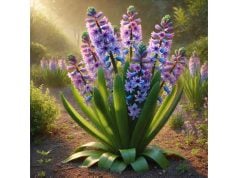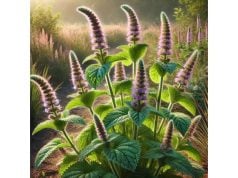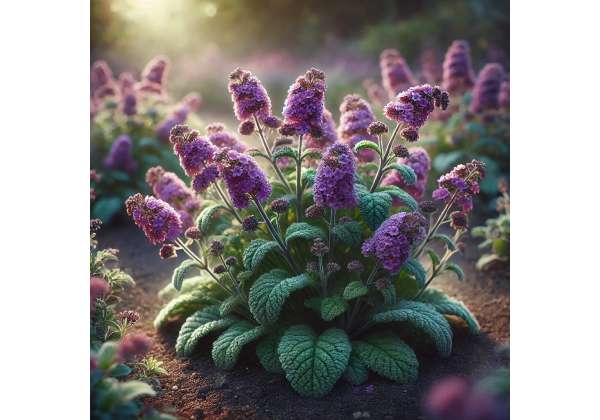
Heliotrope, botanically known as Heliotropium arborescens, is a sweetly fragrant flowering shrub prized more often for its perfume-like blooms than for modern clinical herbal use. Native to western South America and commonly called garden heliotrope or vanilla flower, it has a long folk reputation in parts of Latin America for headache, fever, mucus relief, menstrual discomfort, and topical soothing. Its chemistry helps explain why it attracted attention: the plant contains aromatic esters and aldehydes that create its signature scent, along with phenolic compounds and pyrrolizidine alkaloids that may influence inflammation, microbes, and tissue response. Yet heliotrope is not a simple wellness herb. The same plant family chemistry that gives it pharmacologic interest also raises real safety concerns, especially for the liver. That makes heliotrope a plant best approached with curiosity and caution, not casual experimentation. For most readers, the most useful takeaway is this: heliotrope has intriguing traditional and laboratory signals, but it is mainly an ornamental plant, not a proven self-care herb for internal use.
Quick Facts
- Heliotrope shows antioxidant and antibacterial activity in early laboratory research, especially in leaf extracts.
- Traditional reports describe use for headache, fever, mucus relief, and menstrual discomfort, but clinical confirmation is lacking.
- No validated oral dose in mg or g has been established for safe self-treatment.
- Avoid internal use during pregnancy, breastfeeding, childhood, liver disease, or when taking medicines that may strain the liver.
Table of Contents
- What is heliotrope really
- Key compounds and actions
- What can it actually help with
- How heliotrope is used
- How much heliotrope per day
- Safety, interactions, and avoidance
- What the evidence really says
What is heliotrope really
Heliotrope is one of those plants that can mislead readers at first glance. Because it smells soft, sweet, and almost dessert-like, many people assume it belongs with gentle tea herbs or edible flowers. In reality, Heliotropium arborescens is better understood as a fragrant ornamental with a complicated medicinal profile. It is a member of the Boraginaceae family, a group that includes several species known for both useful phytochemicals and potentially harmful pyrrolizidine alkaloids. That dual character is the key to understanding heliotrope well.
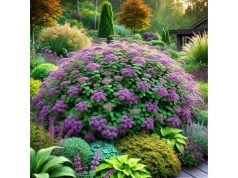
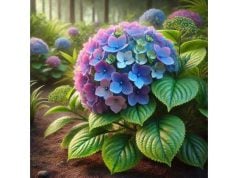
The plant is widely recognized by its tight clusters of purple, lavender, blue, or white flowers and its warm vanilla-and-cherry scent. That fragrance explains why it became popular in cottage gardens and perfumery-inspired planting schemes. It also explains why heliotrope is often discussed in a softer, more romantic language than many other herbs. But attractive scent does not equal ingestive safety. In practical herbal terms, heliotrope deserves the same caution you would use with any plant whose traditional uses overlap with known hepatotoxic chemistry.
Traditional reports describe aerial-part infusions and local applications for complaints such as headache, fever, excess mucus, menstrual pain, and a few other folk indications. These uses tell us the plant was valued as more than decoration, especially in regional traditional medicine. Even so, there is a big difference between historical use and modern endorsement. Many plants once used for difficult symptoms are now approached differently because better toxicology and safer alternatives are available.
Another important point is species confusion. “Heliotrope” can refer to more than one plant in common speech. Some articles online blur Heliotropium arborescens with other Heliotropium species, and those species do not all share the same risk profile, traditional context, or research base. That matters because readers may search for “heliotrope benefits” and unknowingly land on data from a different species entirely. If the discussion is specifically about garden heliotrope, the evidence base is thinner and the safety conversation matters more.
A useful modern summary is this: heliotrope is primarily an ornamental plant with a modest but interesting record of folk medicinal use, limited species-specific laboratory evidence, and a nontrivial toxicology concern. If what you want most is a fragrant herb for low-risk everyday relaxation, plants such as lavender fit that role much better. Heliotrope belongs in a narrower category: beautiful, aromatic, historically used, but not a casual home remedy.
Key compounds and actions
The key ingredients in heliotrope fall into three broad groups: aromatic compounds, phenolic compounds, and alkaloids. Together, they explain both the plant’s appeal and its limits.
The first group is the fragrance chemistry. Heliotrope flowers contain aromatic esters and benzaldehyde-related compounds that create the sweet, powdery, vanilla-like scent the plant is famous for. Compounds such as heliotropin, benzyl acetate, benzaldehyde, p-anisaldehyde, and vanillin-related notes help give the flowers their confection-like aroma. These compounds matter less as medicinal drivers than as sensory ones, but they are still part of the plant’s identity. They shape how heliotrope has been used in gardens, floral compositions, and scent traditions.
The second group is the phenolic fraction. Species-level reviews and laboratory work point to phenolic acids and related antioxidant molecules such as caffeic acid and lithospermic acid, along with broader biophenolic content in leaf extracts. These compounds are the main reason heliotrope gets discussed for antioxidant potential. In lab settings, phenolic-rich extracts can help neutralize free radicals and may contribute to antibacterial effects. That does not automatically translate into a health product, but it does provide a plausible basis for some of the plant’s older soothing and protective claims.
The third group is the most important clinically: pyrrolizidine alkaloids. This is where heliotrope becomes much less straightforward. Heliotrope species are known for alkaloids such as heliotrine, and Heliotropium arborescens has also been associated with toxic pyrrolizidine alkaloids including indicine-related compounds in older phytochemical work. These alkaloids are not just botanical trivia. They are the reason internal use cannot be discussed casually. Unsaturated pyrrolizidine alkaloids are associated with liver injury, genotoxicity concerns, and strict caution in herbal products.
So what do these compounds seem to do?
- Aromatic compounds mainly contribute scent and sensory value.
- Phenolics contribute antioxidant and some antimicrobial potential.
- Pyrrolizidine alkaloids contribute pharmacologic activity but also the most important safety risk.
This combination produces a plant with an unusual profile. It can smell gentle, show interesting antioxidant signals, and still be a poor choice for unsupervised oral use. That is a useful reminder that herbal medicine is not just about benefits. It is about the total equation: active compounds, target tissue, likely outcome, and margin of safety.
One more nuance matters here. Heliotrope’s compounds are not evenly distributed or clinically standardized the way drug ingredients are. Leaves, stems, and flowers may not behave the same way, and home-prepared material can vary with cultivar, growing conditions, and handling. That means the chemical story is real, but precision is limited. In practice, heliotrope’s phytochemistry supports scientific interest more than it supports confident self-medication.
What can it actually help with
If you strip away folklore and marketing language, heliotrope’s realistic benefit profile is fairly narrow. The best-supported possibilities come from traditional use reports and early laboratory findings, not human clinical trials. That distinction matters because many herbs sound impressive until you separate historical reputation from tested outcomes.
Traditional sources describe heliotrope for headache, fever, excess mucus, menstrual discomfort, diarrhea, and certain pressure-like stomach complaints. Some reports also mention diuretic use and topical or local applications. These uses suggest that the plant was historically treated as a symptom-focused remedy rather than a general tonic. In practical terms, the folk pattern points toward three main themes: soothing discomfort, managing inflammatory-type complaints, and helping with secretions or congestion.
Modern species-specific research is far more limited, but one recent leaf-extract study does give the plant some grounding. Ethanolic leaf extracts showed antioxidant activity and moderate antibacterial activity in vitro. That means heliotrope may contain compounds capable of slowing oxidative reactions and inhibiting certain bacteria under laboratory conditions. Those are meaningful findings, but they remain early-stage. Lab activity does not prove that a tea, tincture, capsule, or topical product will deliver the same effect in the human body.
For readers who want a straight answer, the most realistic potential benefit clusters are these:
- mild antioxidant support at the extract level,
- limited antibacterial potential in laboratory testing,
- traditional use for headache, mucus-related discomfort, and feverish states,
- historical use for menstrual discomfort and some topical soothing contexts.
What should not be claimed is just as important. Heliotrope is not a proven liver remedy, not a validated headache treatment, not an established antimicrobial therapy, and not a trustworthy option for self-treating serious infections, hypertension, cancer, or gynecologic conditions. Some older sources list dramatic or wide-ranging uses, but broad folk claims are not the same as evidence.
This is where judgment matters. A plant can show enough activity to spark scientific curiosity while still falling short of responsible home use. Heliotrope fits that pattern. It may have a place in ethnobotanical history and in the lab, but it does not have the kind of human evidence that supports routine use for common symptoms.
For topical calming or skin-supportive needs, gentler herbs such as calendula are usually easier to justify in everyday herbal practice. Heliotrope’s practical value today lies more in research interest and traditional context than in reliable over-the-counter benefit. In other words, it can help us learn something, but that is not the same as proving it should be used.
How heliotrope is used
The most accurate modern answer is that heliotrope is used far more confidently as an ornamental and fragrance plant than as an ingestible medicinal herb. That simple point keeps the whole discussion grounded.
Historically, folk records mention aerial-part infusions and local applications. In some traditions, the above-ground parts were prepared as an infusion for symptom relief. These accounts help explain why heliotrope appears in medicinal plant compilations even though it is better known in gardening books. Still, the presence of a traditional preparation does not answer the modern question of whether it is wise to repeat that use at home. Because of pyrrolizidine alkaloid concerns, the answer is usually no for internal self-treatment.
Today, heliotrope use falls into four practical categories.
- Ornamental planting
This is the safest and most established role. Heliotrope is grown for scent, color, and pollinator appeal. - Fragrance appreciation
The flowers are valued for their vanilla-like aroma, which is part of the plant’s historic charm. - Folk medicinal reference
Ethnobotanical and traditional medicine literature records infusion and local-use traditions, but these should be read as history, not automatic instructions. - Homeopathic or niche alternative products
These exist in some markets, but they do not provide a robust evidence base for efficacy, and they do not resolve the toxicology issue for crude-plant internal use.
That decision tree leads to a practical rule: admire it, smell it, grow it, but be very cautious about ingesting it.
There is also an important difference between “use” and “exposure.” Gardeners often handle heliotrope routinely without thinking of it as a medicinal plant at all. That is fine for ordinary ornamental contact in most people, though sensitive skin is always possible with plant handling. The bigger concern begins when people convert a decorative plant into a homemade tea, tincture, powder, or concentrated extract. Once ingestion or repeated therapeutic exposure enters the picture, the safety discussion changes sharply.
Could heliotrope be used externally? Historically, yes, in limited folk settings. But even topical use should be cautious because damaged skin, repeated exposure, and contaminated homemade preparations complicate the risk profile. It is not the kind of flower I would place in the same low-risk class as a mild culinary or tea herb.
A smart practical lens is this: the plant’s strongest modern use is sensorial, not medicinal. If someone wants a soothing evening infusion, herbs such as chamomile have a much clearer tradition of safe daily use. Heliotrope may belong in the garden and in research notes, but it rarely belongs in a self-made herbal routine.
How much heliotrope per day
This is the section where honesty matters most: there is no well-established, evidence-based oral dose for Heliotropium arborescens that can be recommended for safe self-treatment. That is not a gap to fill with guesswork. It is the central dosage fact.
Readers often expect a clean answer such as “take 1 to 3 grams” or “drink one cup twice daily.” With heliotrope, that kind of advice would sound useful but would not be responsible. The available literature gives us folk preparation history, species chemistry, and some laboratory findings, but it does not provide a clinically validated human dosing framework that balances benefit against pyrrolizidine alkaloid risk. Because of that, the safest practical oral dose for self-prescribed use is none.
Why is the dosage question so difficult here?
First, the plant is chemically active in ways that are not uniformly desirable. The same genus that offers interesting phenolics and antimicrobial signals also contains compounds linked to serious liver risk.
Second, the human evidence is poor. We do not have the kind of controlled clinical studies that would support a confident dose, schedule, duration, or safety window.
Third, folk references to infusion do not tell us enough. Traditional “aerial-part infusion” is not the same as a modern dosing standard. It leaves out critical details such as exact plant weight, extraction strength, alkaloid variability, duration of use, and patient selection.
Fourth, concentrated products change exposure dramatically. A capsule, tincture, or homemade reduction is not equivalent to a light infusion, and none of those forms can be translated safely without robust standardization.
So what can readers use instead of a numeric dose? A practical safety framework:
- do not self-dose heliotrope by mouth,
- do not improvise from garden material,
- do not assume that small amounts are harmless,
- do not translate laboratory concentrations into human use,
- do not combine it casually with other strong herbs.
If someone still encounters heliotrope in a specialist traditional setting, that decision should be managed by a qualified clinician or practitioner who understands alkaloid risk and duration limits. Even then, the bar for justification should be high.
This may feel unsatisfying, but it is more useful than a false precision. Many herbal dosing problems come from forcing a number where the science does not support one. With heliotrope, caution is the better answer. If the goal is a plant that can actually be dosed in an everyday way, options such as peppermint or chamomile are far more practical and transparent.
Safety, interactions, and avoidance
Safety is the defining issue with heliotrope. Any honest article about this plant has to put risk near the center, not at the margins. The reason is straightforward: Heliotropium species are associated with pyrrolizidine alkaloids, and these compounds are linked to liver toxicity, genotoxicity concerns, and long-term risk management in herbal and food products.
What does that mean in plain language? It means heliotrope is not a herb to treat like a casual infusion, edible flower, or harmless garden experiment. Even when a plant has traditional medicinal uses, the presence of unsaturated pyrrolizidine alkaloids changes the threshold for acceptable exposure. Regulatory and toxicology guidance treats these compounds seriously for a reason.
The main concerns include:
- liver injury with repeated or meaningful exposure,
- cumulative risk from unsupervised internal use,
- greater concern in children and people with smaller body mass,
- added risk in pregnancy and breastfeeding,
- uncertainty around long-term low-dose exposure,
- variable alkaloid content across plant material and preparations.
Who should avoid heliotrope completely for internal use?
- pregnant people,
- breastfeeding people,
- children and adolescents,
- anyone with liver disease or unexplained abnormal liver tests,
- anyone who drinks heavily,
- anyone using medicines with known liver burden,
- anyone with a history of sensitivity to poorly standardized herbal products.
Possible interaction patterns also deserve attention. Heliotrope does not have a neatly mapped drug-interaction chart, but that should not be mistaken for safety. The wiser approach is to think in mechanisms. Any plant with liver-toxic potential deserves extra caution alongside acetaminophen overuse, alcohol, anabolic agents, some antifungals, certain anticonvulsants, methotrexate, and other hepatotoxic exposures. People taking multiple prescription medicines should be especially careful because a weak evidence base plus possible toxicity is a poor combination.
Topical use is not automatically risk-free either. Repeated use on damaged skin, homemade extracts, or untested preparations can create their own problems. For most readers, there is little reason to choose heliotrope over safer, better-understood herbs.
A helpful comparison is with milk thistle, which is often explored precisely because liver safety matters. Heliotrope sits on the opposite side of that conversation: not a liver-friendly experiment, but a plant that raises liver questions first.
The bottom line is simple. Heliotrope is beautiful, historically interesting, and chemically active, but safety is the filter through which every possible benefit must be viewed. If a plant’s most important modern fact is “be careful not to injure the liver,” that plant should not be treated as a beginner herb.
What the evidence really says
The evidence for heliotrope is best described as suggestive, species-limited, and safety-constrained. That may sound cautious, but it is the clearest summary.
Here is what the evidence does support. First, Heliotropium arborescens has a documented folk history and identifiable phytochemical profile. Second, its leaves and flowers contain compounds that plausibly explain fragrance, antioxidant activity, and some antimicrobial behavior. Third, at least one recent species-specific study found antioxidant and moderate antibacterial activity in ethanolic leaf extract. These are real findings, and they justify scientific interest.
Here is what the evidence does not support. We do not have strong human trials showing that heliotrope reliably improves headaches, fever, mucus complaints, menstrual pain, gastrointestinal discomfort, or skin symptoms. We do not have validated oral dosing standards. We do not have the kind of safety-and-efficacy package that would justify recommending it as a modern self-care herb. And because pyrrolizidine alkaloids are part of the conversation, the usual “it might be worth a try” language is much harder to defend.
That imbalance shapes the final judgment. Many plants with light clinical evidence still find a place in herbal practice because their safety margin is broad. Heliotrope does not have that luxury. With heliotrope, uncertainty about benefit sits next to nontrivial concern about harm. That does not erase its ethnobotanical value, but it does narrow its practical role.
A useful way to rank the evidence is this:
- strongest: ornamental value, fragrance chemistry, and species identity,
- moderate: traditional use records and phytochemical plausibility,
- early: in vitro antioxidant and antibacterial findings,
- weak: clinically actionable human therapeutic evidence,
- unacceptable for self-care: confident oral dosing advice.
This is why heliotrope is best framed as a plant of research interest rather than a plant of routine use. It teaches a broader herbal lesson too: not every traditional herb belongs in modern self-medication, and not every attractive flower belongs in a cup.
For readers making real-world decisions, that leads to a practical conclusion. If your interest is horticultural, heliotrope is delightful. If your interest is fragrance, it is memorable. If your interest is evidence-based herbal treatment, it remains a niche and caution-heavy option with better-studied alternatives available for almost every symptom it has traditionally been used to address. For respiratory soothing, skin comfort, or digestive ease, gentler herbs such as great mullein, calendula, chamomile, or peppermint are usually easier to justify. Heliotrope earns respect as a fascinating plant, but not as a first-choice medicinal herb.
References
- Exploring Plants with Flowers: From Therapeutic Nutritional Benefits to Innovative Sustainable Uses 2023 (Review)
- Biophenolic compounds and metal ions associated with the antioxidant and antibacterial activity of the ethanolic extract of Heliotropium arborescens L. leaves from the Andean region of Ayacucho-Peru 2024 (Research Article)
- Heliotropium; a genus rich in pyrrolizidine alkaloids: A systematic review following its phytochemistry and pharmacology 2021 (Systematic Review)
- Pyrrolizidine Alkaloids in Foods, Herbal Drugs, and Food Supplements: Chemistry, Metabolism, Toxicological Significance, Analytical Methods, Occurrence, and Challenges for Future 2024 (Review)
- Use of herbal medicinal products containing toxic, unsaturated pyrrolizidine alkaloids (PAs) – Scientific guideline 2021 (Guideline)
Disclaimer
This article is for educational purposes only and does not replace medical advice, diagnosis, or treatment. Heliotrope is not a well-established self-care herb, and internal use may carry meaningful safety risks because Heliotropium species can contain pyrrolizidine alkaloids. Do not use this plant medicinally during pregnancy, breastfeeding, childhood, or with liver disease unless a qualified healthcare professional specifically advises it.
If you found this article useful, please share it on Facebook, X, or any platform your audience prefers.