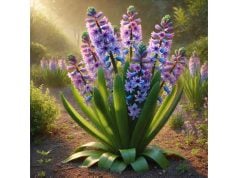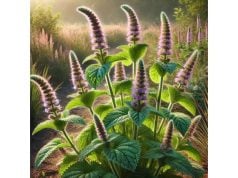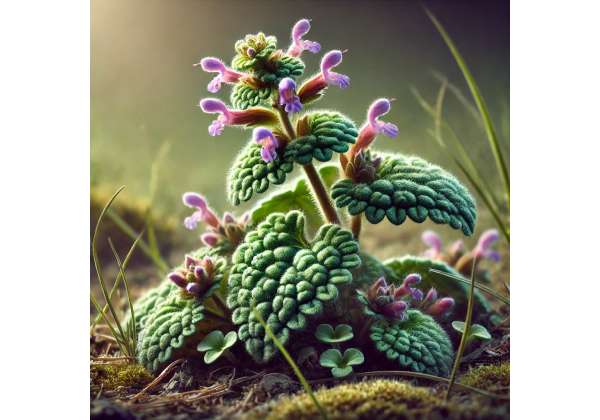
Henbit, botanically known as Lamium amplexicaule, is a small spring herb in the mint family that many people notice first as a lawn weed and only later recognize as an edible and traditionally useful plant. Its soft leaves, purple-pink flowers, and non-stinging nature place it among the dead-nettles rather than the true nettles. That distinction matters, because henbit is gentler, more food-like, and much less studied than better-known medicinal herbs.
What makes henbit interesting is its mix of practicality and promise. It has been eaten as a seasonal wild green, used in simple teas, and applied in folk remedies for minor skin irritation and inflammatory discomfort. Modern laboratory work suggests that the plant contains flavonoids, iridoids, phenolic compounds, and volatile constituents with antioxidant and antimicrobial activity. At the same time, the evidence is still early. Most of what we know comes from phytochemical studies, ethnobotanical records, and in vitro experiments rather than strong human trials.
That means henbit is best approached as a cautious, traditional support herb and edible wild plant, not a proven treatment.
Core Points
- Henbit shows antioxidant potential because it contains flavonoids, phenolic compounds, and iridoid-related constituents.
- Its most realistic traditional uses are as a mild edible spring green, light herbal tea, and simple topical herb for minor skin irritation.
- A cautious tea range is about 1 to 2 g dried aerial parts per 240 mL hot water, once daily at first.
- Pregnant or breastfeeding adults, very young children, and anyone harvesting from sprayed lawns or roadsides should avoid medicinal use.
Table of Contents
- What is henbit and whats in it
- What can henbit realistically help with
- How do you use henbit
- Can you eat henbit as food
- How much henbit should you use
- Side effects interactions and who should avoid it
- What the evidence actually says
What is henbit and whats in it
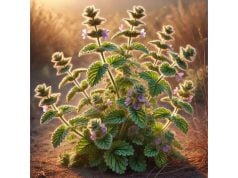
Henbit is a low-growing annual herb in the Lamiaceae family, the same broad family that includes mint, rosemary, lemon balm, and sage. Its square stems, rounded leaves that clasp the stem, and whorls of pink to purple tubular flowers make it easy to recognize once you know what to look for. It is often called henbit deadnettle because it resembles nettles in outline but does not sting. That point is more than botanical trivia. Many readers assume “nettle” means the same kind of chemistry or medicinal effect as stinging nettle, but henbit is a different plant with a different profile.
Traditionally, henbit has occupied a humble place. It has been gathered as a spring edible, stirred into soups and herb dishes, and used in simple folk preparations in parts of Asia, the Middle East, and the Mediterranean region. In practical terms, it behaves more like a mild seasonal green with medicinal potential than a strongly standardized therapeutic herb.
Its chemical profile helps explain that reputation. Studies on Lamium amplexicaule have identified several groups of compounds of interest:
- Flavonoids and flavonol glycosides, which are often linked with antioxidant activity
- Iridoid glucosides such as lamioside and related compounds
- Phenolic compounds, including chlorogenic acid in some extracts
- Sterols and fatty-acid-related constituents
- Volatile compounds in the essential oil, including trans-phytol, caryophyllene oxide, spathulenol, and related aroma-active molecules
These compounds matter because they give henbit a plausible mechanistic foundation. Flavonoids and phenolic acids are often investigated for free-radical scavenging and protective effects. Iridoids are common in plants valued for tissue-calming and defense chemistry. Volatile compounds may contribute to mild antimicrobial action. Some isolated henbit compounds have also shown tyrosinase inhibition in laboratory work, which is one reason the herb occasionally appears in discussions of skin and pigment-related botanical research.
The plant’s chemistry also depends on how it is prepared. A fresh leaf, a hot-water infusion, an ethanolic extract, and an essential-oil fraction are not equivalent. Water tends to favor more polar constituents. Alcohol brings out a broader set of phenolics and other compounds. Volatile fractions emphasize aroma and oil-soluble components. This is why two people can both say they “used henbit” and mean very different things.
A helpful comparison is other antioxidant-rich mint-family herbs. Henbit shares the family tendency toward aromatic and polyphenolic complexity, but it has a much thinner clinical record than the better-known members of that group.
So what is henbit, really? It is an edible deadnettle with a traditional medicinal identity, a chemically interesting profile, and a modern evidence base that is still developing. That combination makes it worth understanding, but it also means it should be used with modest expectations and careful plant identification.
What can henbit realistically help with
Henbit’s real value becomes clearer when you separate folk use from clinically proven effect. The plant has a long traditional reputation for helping with inflammation, aches, digestive discomfort, and minor skin trouble. Modern laboratory findings support parts of that story, but not all of it. The most honest answer is that henbit may offer gentle support in a few low-risk situations, while the stronger claims remain unproven.
The most realistic potential benefits are these:
- Mild antioxidant support from its flavonoids and phenolic compounds
- Modest antimicrobial potential shown in laboratory testing
- Topical soothing for small areas of minor irritation in traditional use
- Food-like nourishment when eaten as a seasonal wild green
That list is intentionally restrained. Henbit is not a clinically established anti-inflammatory treatment, and it is not a proven remedy for chronic pain, infection, eczema, arthritis, or metabolic disease. Still, its chemistry gives researchers reasons to keep studying it.
For skin, henbit makes sense as a light-support herb rather than a heavy-duty intervention. A simple wash, compress, or fresh poultice from clean plant material may be useful for a minor sting, scratch, or area of irritation when the goal is comfort. That is very different from saying it can treat infected wounds, severe dermatitis, or persistent inflammatory skin problems. For those situations, the gap between traditional use and medical evidence is too large to ignore.
For general wellness, henbit is probably most useful in the same category as many spring wild greens: it offers small, cumulative value rather than dramatic medicinal action. If you gather a handful for soup, blend a little into an herb spread, or drink a light infusion, you are using the plant in a way that fits both its history and its current evidence level.
There is also an interesting cosmetic angle. In vitro work on isolated henbit flavonol glycosides suggests antioxidant and tyrosinase-related activity, which may partly explain why the plant has been discussed in skin-brightening or complexion-support conversations. Still, this is early laboratory evidence, not proof that henbit cream can visibly even skin tone in real people.
Traditional reports also mention uses for rheumatic pain, feverish states, and digestive imbalance. These are worth acknowledging because they are part of the herb’s cultural record. But they should be treated as ethnobotanical history, not modern therapeutic proof.
In practical terms, henbit may help most when the goal is small and specific:
- You want a safe, edible, spring herb from a clean source.
- You want a light tea rather than a potent medicinal extract.
- You want a simple folk topical for minor skin discomfort.
- You understand that the effect may be subtle or absent.
A good comparison is calendula for gentle skin support. Calendula has a stronger and more familiar skin-care reputation, while henbit is more of a modest traditional option that still needs better human evidence.
So what can henbit realistically help with? Mild everyday needs, not major disease. It belongs in the realm of cautious herbal support, not bold curative claims.
How do you use henbit
Henbit is best used in simple forms. Because it is lightly studied and not standardized as a modern herbal medicine, the more practical the preparation, the better. In most cases, people use the young aerial parts: tender leaves, stems, and flowering tops collected before the plant becomes coarse.
The common ways to use henbit include:
- Fresh as a wild edible green
- Dried or fresh in a mild herbal infusion
- Crushed into a simple poultice for minor topical use
- Added in small amounts to blended herb preparations
For tea, the idea is gentle extraction, not intensity. A light infusion keeps the plant in a food-like range and is less likely to irritate. The flavor is usually mild, green, and faintly mint-like, though not as strong as peppermint or lemon balm. Because henbit is a soft herb rather than a woody, resinous one, it does not need long simmering.
A basic traditional-style infusion usually follows this pattern:
- Rinse fresh henbit well or use dried herb from a clean source.
- Add a small amount to a cup or teapot.
- Pour hot water over it.
- Cover and steep briefly.
- Strain and drink warm.
Topically, fresh clean leaves can be crushed and laid over a very small area of intact or lightly irritated skin. This is best understood as folk first aid, not wound medicine. It may feel cooling or soothing, but it should never replace proper cleaning, sterile dressings, or medical attention when there is significant pain, swelling, pus, spreading redness, or a deep break in the skin.
Another sensible use is as a cooled rinse or compress. This works well for people who want to explore the plant’s traditional skin use without rubbing raw leaves directly on the skin. In that sense, henbit behaves somewhat like other classic poultice herbs used for minor skin discomfort, though it has a much thinner formal evidence base.
Harvesting matters as much as preparation. Henbit often grows in places that look convenient but are poor choices for medicinal use:
- Chemically treated lawns
- Road edges
- Dog-walk areas
- Field margins exposed to herbicides
- Industrial or contaminated urban soils
If the plant is not clean, the preparation is not clean. That is one of the biggest mistakes people make with common “weeds.” A safe plant from an unsafe site is not a safe herb.
Drying is possible, but the herb loses some freshness quickly. For food and tea, young fresh tops are often the best choice. For storage, dry only clean, healthy material and keep it away from moisture and direct light.
Henbit is not a plant that needs complicated extraction to be useful. In fact, the less aggressive the preparation, the more appropriate it usually is. Food, mild tea, and modest topical use are the grounded ways to work with it. Strong tinctures, concentrated oils, or long medicinal courses are harder to justify because the dosing and safety data are too limited.
Can you eat henbit as food
Yes, henbit can be eaten, and this may be the most practical way to use it. In ethnobotanical records, Lamium amplexicaule appears as a wild edible herb whose young aerial parts and leaves are used in soups, herb stews, mixed rice dishes, and other seasonal foods. That culinary identity is important because it places henbit closer to the category of useful spring green than to that of potent medicinal product.
The best edible parts are the youngest tops, leaves, and tender stems. These are softer in texture and milder in taste than mature plants. Older henbit can become stringy, dull, or slightly fuzzy in a way that makes it less appealing.
Common food uses include:
- Mixing young tops into salads in small amounts
- Adding chopped henbit to omelets or egg dishes
- Folding it into soup near the end of cooking
- Sautéing it lightly with other spring greens
- Blending it into savory herb mixtures or rustic pestos
The flavor is usually green and faintly herbal, sometimes with a subtle earthiness. It is not strongly minty, despite belonging to the mint family. That makes it easy to combine with more flavorful greens rather than using it alone as the star ingredient.
For many people, henbit works best as a supporting ingredient. A handful mixed with chickweed, wild mustard greens, or tender plantain leaves often tastes better than a large bowl of henbit by itself. In that sense, it behaves much like other edible yard herbs used in small spring mixes.
Food use also has an important safety advantage: it keeps the plant in modest amounts. That is useful because henbit does not have a well-established medicinal dosing system. Eating a small portion of a clean, young spring herb is very different from taking a concentrated extract every day.
That said, food safety still matters. Do not eat henbit from:
- Heavily trafficked roadsides
- Lawns treated with herbicides or pesticides
- Areas contaminated by animal waste
- Sites you cannot identify with confidence
Always wash it well. If you have never eaten henbit before, try a small amount first. Even edible wild plants can upset digestion in some people if eaten in large portions, especially when raw.
One subtle point is worth remembering: edible does not automatically mean medicinally effective. A plant can be safe to eat and still have weak or uncertain therapeutic effects. Henbit is a good example. Its food use is well supported by ethnobotanical records, but that should not be confused with strong evidence that it treats disease.
For readers who enjoy wild food traditions, henbit offers something appealing: it is accessible, seasonal, and versatile. It also invites a different mindset. Instead of chasing a dramatic herbal effect, you can use it the way many traditional cultures used local plants in the first place, as small, fresh contributions to daily food and seasonal routines.
How much henbit should you use
This is the point where precision becomes difficult, because henbit does not have a standardized clinical dosage. There are no major human trials that define an optimal medicinal dose, no widely accepted monograph that sets a daily range, and no strong safety database for concentrated long-term use. That means any dose guidance should be conservative, practical, and clearly labeled as traditional rather than clinically established.
For tea, a cautious starting range is:
- 1 to 2 g dried aerial parts per 240 mL hot water
If you are using fresh herb, a loose small handful for one cup is a reasonable food-like equivalent. For most people, once daily at first is enough to test tolerance. If there is no irritation or stomach upset, some may choose to use it up to twice daily for a short period. That remains a traditional-use approach, not an evidence-based prescription.
For food, portion size does not need to be exact. The simplest rule is moderation:
- Use henbit as part of a mixed dish rather than a very large single-herb serving
That might mean a small handful in soup, a few tablespoons chopped into eggs, or a modest amount mixed with other greens. Food use is generally the most sensible route because it is naturally self-limiting.
For topical folk use, avoid “more is better” thinking. A small amount of clean fresh plant or cooled infusion applied to a limited area for a short period is a more responsible approach than repeated heavy application. If the skin becomes redder, itchier, or more irritated, stop.
A practical self-care plan looks like this:
- Start with the mildest form, usually food or tea.
- Keep the quantity low for the first use.
- Wait to see how your body responds.
- Increase only slightly, not dramatically.
- Stop if you notice no benefit or any irritation.
Duration matters too. Because henbit is under-studied, prolonged medicinal use is harder to justify than short trials. A few days to 2 weeks is a more reasonable self-care window than taking it indefinitely.
What should you not do?
- Do not swallow concentrated essential-oil-style products marketed under vague “deadnettle” labels.
- Do not assume that a stronger extract is safer because it is plant-based.
- Do not use uncertain homemade tinctures in large daily doses.
- Do not use large medicinal doses in children, during pregnancy, or while taking multiple medications.
A useful comparison is how people approach well-known herbal teas used for digestive comfort. Henbit should be treated more cautiously than those better-studied herbs, not less.
The most honest dosage summary is this: henbit has no validated medical dose, so keep it modest, food-like, and short term. If you are looking for something stronger or more predictable, henbit is probably not the right herb for that goal.
Side effects interactions and who should avoid it
Henbit appears to be a relatively low-risk herb when eaten in modest food amounts from a clean source, but that is not the same as having a complete safety profile. The real issue is not that henbit is known to be highly dangerous. It is that formal human safety data are sparse, especially for concentrated or medicinal use.
The most likely unwanted effects are mild:
- Digestive upset if too much raw plant is eaten
- Throat or stomach irritation from strong infusions
- Skin irritation from direct topical contact
- Allergy-like reactions in sensitive people
Because henbit belongs to the mint family, anyone who reacts strongly to other Lamiaceae plants should be careful. That does not mean cross-reactivity is guaranteed, but it is a sensible reason to start with a small amount and avoid aggressive experimentation.
There are also practical safety concerns that have nothing to do with the plant’s chemistry. Henbit often grows where contamination is the bigger hazard:
- Herbicide-treated turf
- Polluted soil
- Pet waste exposure
- Runoff-prone roadside areas
In many cases, the safest advice is not “avoid henbit,” but “avoid dirty henbit.”
Who should avoid medicinal use or use only with professional guidance:
- Pregnant or breastfeeding adults
- Children
- People with known herb or mint-family allergies
- Anyone taking several prescription medicines
- Anyone with chronic gastrointestinal sensitivity
- Anyone using henbit from an uncertain source
Drug interactions are not well documented for henbit. That sounds reassuring, but it really means the research is too thin to be definitive. For under-studied herbs, lack of recorded interaction is not proof of no interaction. If someone is taking anticoagulants, diabetes medicines, seizure medicines, sedatives, or medications with a narrow safety range, a conservative approach is wise. Food use is usually one thing; medicinal dosing is another.
Topical use deserves similar caution. A fresh leaf compress on clean, intact skin is one thing. Putting crushed plant material on a deeper cut, spreading rash, or suspicious bite is another. If irritation worsens, the herb is not helping.
This is also where comparison can be useful. People sometimes reach for “natural astringents” or soothing weeds interchangeably, but herbs behave differently. For example, witch hazel used topically for tightening and irritation is more established in modern topical products, while henbit remains a folk option with less formal safety data.
The safest overall message is simple: henbit is probably best treated as a modest edible herb first and a medicinal herb second. If you stay within food-like amounts, use clean plant material, and stop early when your body objects, the risk is likely low. Once you move into concentrated, repeated, or medically ambitious use, uncertainty rises much faster than confidence.
What the evidence actually says
The research on henbit is intriguing, but it is far from mature. Most of the evidence comes from ethnobotanical reports, phytochemical studies, extraction analyses, and laboratory testing of isolated compounds or plant fractions. That is enough to justify interest. It is not enough to justify strong clinical claims.
Here is what the evidence supports best.
First, henbit clearly contains biologically active compounds. Researchers have identified flavonol glycosides, iridoid glucosides, phenolic compounds such as chlorogenic acid in some extracts, and volatile constituents in the essential oil. That chemical richness gives the plant a believable basis for antioxidant and antimicrobial activity.
Second, some isolated henbit compounds have shown meaningful laboratory actions. Antioxidant and tyrosinase-inhibitory findings help explain why the plant attracts attention in cosmetic and protective-health discussions. Other work has identified metabolites from the aerial parts with notable anti-MRSA activity in vitro. Those are real and interesting findings.
Third, ethnobotanical evidence supports henbit as both food and folk medicine. It has been documented as an edible wild herb and as a traditional remedy in several regions. This matters because traditional use often points researchers toward plants worth studying further. It does not, by itself, prove efficacy.
What remains weak is the human clinical layer. There are no well-established randomized clinical trials showing that henbit reliably improves inflammation, wound healing, digestive complaints, pain, or skin disease in real-world patients. That gap is the central limitation of the herb.
A fair evidence summary looks like this:
- Chemistry: promising
- Traditional use: meaningful
- Laboratory activity: real
- Human proof: limited
- Standardized dosage: lacking
That profile should shape expectations. Henbit is not unsupported folklore, but it is also not an evidence-rich mainstream herbal medicine. It sits in the middle: a plant with credible phytochemistry and plausible traditional value that still needs stronger translational research.
One overlooked strength is that henbit’s best uses do not require inflated claims. As a safe seasonal green, a light herbal infusion, or a simple folk topical, it already has practical value. The evidence becomes problematic only when marketers or enthusiasts stretch it into a cure for chronic disease, infection, or complex inflammatory conditions.
In other words, henbit is most convincing when it stays close to what the current evidence can actually support: a modest, edible, traditional herb with antioxidant and antimicrobial potential, not a proven medical therapy. That may sound less dramatic than promotional language, but it is a much better foundation for safe and useful herbal practice.
References
- Ethnobotanical study of wild edible plants in the mountainous regions of Semnan Province, Iran 2024 (Ethnobotanical Study)
- Identification and resolving of trace and co-eluted components of Lamium amplexicaule essential oil using two chemometric methods-assisted GC-MS 2024 (Phytochemical Study)
- THE EFFECT OF EXTRACTION METHOD ON THE CHEMICAL COMPOSITION OF Lamium amplexicaule .L ETHANOL EXTRACT DETERMINED BY HPLC/MS-MS 2022 (Phytochemical Study)
- The Botanical, Chemical and Ethnobotanical Diversity of Southern African Lamiaceae 2021 (Review)
- Evaluation and understanding the molecular basis of the antimethicillin-resistant Staphylococcus aureus activity of secondary metabolites isolated from Lamium amplexicaule 2018 (Experimental Study)
Disclaimer
This article is for educational purposes only and is not a substitute for medical advice, diagnosis, or treatment. Henbit has traditional uses and interesting laboratory data, but it does not have a strong human clinical evidence base or a standardized medical dosage. Speak with a qualified healthcare professional before using henbit medicinally if you are pregnant, breastfeeding, taking prescription medicines, managing a chronic condition, or planning to use concentrated herbal products.
If this guide was helpful, please share it on Facebook, X, or another platform you prefer.