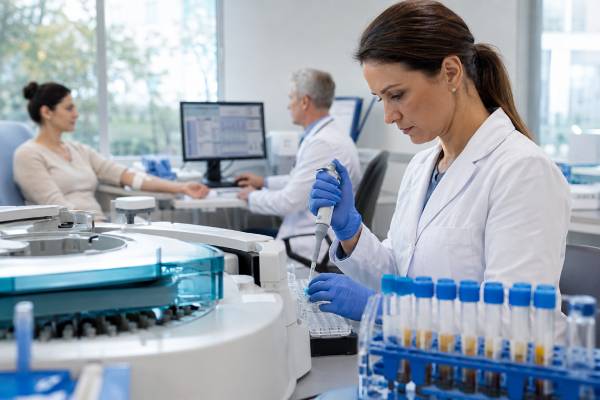
A high fibrinogen blood test usually points to inflammation, tissue injury, infection, pregnancy, estrogen exposure, smoking, obesity, or another condition that has activated the body’s repair and clotting systems. Fibrinogen is a clotting protein made by the liver. When bleeding starts, the body changes fibrinogen into fibrin, the thread-like material that helps form a stable clot. The same protein also rises during inflammation, so a high result often acts more like an inflammation signal than a stand-alone clotting diagnosis.
A single high fibrinogen result does not prove that a dangerous clot is present. It does deserve context. The meaning changes with symptoms, pregnancy status, recent surgery or injury, infection, autoimmune disease, cancer history, kidney disease, smoking, estrogen therapy, and other blood tests such as CRP, ESR, D-dimer, PT, aPTT, platelet count, and liver tests.
- A fibrinogen test measures clotting factor I, a liver-made protein needed to form fibrin, the structural mesh of a blood clot.
- A typical adult reference range is about 200–400 mg/dL, equal to 2.0–4.0 g/L, though some laboratories use wider ranges such as 150–430 mg/dL.
- High fibrinogen most often reflects an acute-phase response, meaning the body is reacting to inflammation, infection, tissue damage, trauma, or pregnancy.
- Persistent high fibrinogen links with higher cardiovascular and clotting risk, but it does not diagnose a heart attack, stroke, deep vein thrombosis, or pulmonary embolism by itself.
- No special preparation is usually needed, but anticoagulants, sample handling, pregnancy, and acute illness affect interpretation.
- Urgent care matters when high fibrinogen appears with clot symptoms, such as one-sided leg swelling, chest pain, shortness of breath, sudden weakness, or trouble speaking.
Table of Contents
- What a Fibrinogen Blood Test Measures
- High Fibrinogen Ranges and What They Usually Mean
- Common Causes of High Fibrinogen
- Inflammation, Thick Clots, and Clotting Risk
- Test Methods, Preparation, and Accuracy Issues
- Related Tests and Follow-Up After a High Result
- How High Fibrinogen Is Usually Lowered
- When to Seek Medical Care
What a Fibrinogen Blood Test Measures
A fibrinogen blood test measures the amount or activity of fibrinogen in plasma. Fibrinogen is also called factor I, because it is one of the core proteins in the coagulation system. The liver makes it and releases it into the bloodstream, where it circulates until the body needs to stop bleeding or respond to injury.
When a blood vessel is damaged, clotting proteins activate in a sequence often called the coagulation cascade. Near the end of that cascade, thrombin changes soluble fibrinogen into insoluble fibrin. Fibrin strands then form a mesh that traps platelets and blood cells. This mesh strengthens the clot so bleeding stops.
Fibrinogen also helps platelets stick together. Platelets are small cell fragments that gather at an injury site. Fibrinogen acts like a bridge between activated platelets, helping the early platelet plug become stronger. Because of this dual role, fibrinogen matters in both bleeding and clotting problems.
The test is ordered in several settings:
- unexplained or excessive bleeding
- abnormal PT, aPTT, or thrombin time
- suspected disseminated intravascular coagulation, often shortened to DIC
- severe trauma or major surgery
- liver disease evaluation
- pregnancy complications involving bleeding or suspected placental problems
- monitoring selected patients receiving fibrinolytic therapy
- evaluation of rare inherited fibrinogen disorders
- assessment of inflammation or clotting tendency in selected clinical situations
A high result usually means there is more fibrinogen than expected, not that the protein is working abnormally. A low result raises a different concern: the body might not have enough fibrinogen to form stable clots. A normal quantity with poor function points toward dysfibrinogenemia, a rare condition where fibrinogen is present but does not work properly.
Fibrinogen differs from D-dimer. Fibrinogen helps build clots. D-dimer reflects breakdown of cross-linked fibrin after a clot has formed and started dissolving. Both tests relate to clotting, but they answer different questions.
High Fibrinogen Ranges and What They Usually Mean
Most adult reference ranges place fibrinogen near 200–400 mg/dL, which equals 2.0–4.0 g/L. Some laboratories use different intervals because of their method, equipment, reagents, and patient population. A lab result should always be compared with the reference range printed on that report.
A result slightly above range often reflects a recent inflammatory trigger. A markedly high or repeatedly high result deserves more attention, especially when the person has chest pain, shortness of breath, leg swelling, neurological symptoms, active cancer, autoimmune disease, kidney disease, diabetes, smoking, or a history of clots.
| Fibrinogen result | Approximate value | Usual interpretation |
|---|---|---|
| Low | Below about 150–200 mg/dL | Raises concern for reduced production, consumption, severe liver disease, DIC, fibrinolysis, major bleeding, or inherited deficiency. |
| Typical adult range | About 200–400 mg/dL | Often consistent with adequate fibrinogen for ordinary clot formation, though function and clinical context still matter. |
| Mildly high | Just above the lab’s upper limit, often 400–500 mg/dL | Common with recent infection, inflammation, smoking, obesity, pregnancy, estrogen exposure, or recovery from injury. |
| Moderately high | About 500–700 mg/dL | Suggests a stronger inflammatory or physiological driver and usually warrants review with symptoms and related tests. |
| Markedly high | Above about 700 mg/dL | Needs prompt medical interpretation, especially with cardiovascular risk factors, clot symptoms, cancer, autoimmune disease, or severe inflammation. |
These cutoffs are practical guideposts, not universal diagnostic rules. Fibrinogen changes over time. It rises after inflammatory stimulation and falls as the trigger resolves. Its plasma half-life is roughly several days, so a result taken during flu, pneumonia, a flare of inflammatory disease, a recent operation, or a major injury often looks different from a result repeated after recovery.
Pregnancy needs separate interpretation. Fibrinogen normally rises during pregnancy as the body prepares to prevent heavy bleeding during delivery. A value that looks high in a nonpregnant adult can be expected in late pregnancy. In contrast, low or falling fibrinogen during pregnancy, especially with bleeding, placental abruption, severe preeclampsia, HELLP syndrome, or DIC, is more concerning.
High fibrinogen also differs from a diagnosed hypercoagulable disorder. It signals that the body has more clot-building material available and often more inflammation. It does not identify the location of a clot, prove that a clot exists, or replace imaging tests when symptoms suggest deep vein thrombosis, pulmonary embolism, stroke, or heart attack.
Common Causes of High Fibrinogen
High fibrinogen has many causes because fibrinogen belongs to a group of proteins called positive acute-phase reactants. Positive acute-phase reactants rise when inflammatory signals tell the liver to increase production. This response helps the body repair tissue and contain injury, but it also changes how blood clots form.
Inflammation, infection, and tissue injury
The most common reason for a high fibrinogen result is inflammation. Acute infections such as pneumonia, influenza, urinary tract infection, skin infection, and severe viral illness often raise fibrinogen. So do inflammatory flares from rheumatoid arthritis, inflammatory bowel disease, lupus, vasculitis, and other immune-mediated conditions.
Tissue injury also raises fibrinogen. Recent surgery, burns, fractures, trauma, and wound healing all activate clotting and repair pathways. Fibrinogen rises because the body needs clotting material and inflammatory proteins for healing.
In these situations, a high result often improves when the illness or injury improves. A repeat test after recovery gives a clearer picture of the person’s baseline.
Pregnancy and estrogen exposure
Pregnancy raises fibrinogen as part of a broader shift toward clot readiness. This shift reduces the chance of severe bleeding during delivery but also contributes to the higher clot risk seen during pregnancy and the postpartum period.
Estrogen-containing medications also influence clotting proteins. Combined oral contraceptives and some hormone therapy regimens increase several procoagulant factors in susceptible people. Fibrinogen is only one part of that change. A high fibrinogen result in someone using estrogen-containing medication should be interpreted with age, smoking, migraine with aura, blood pressure, personal clot history, family clot history, and other risk factors.
Smoking, obesity, insulin resistance, and metabolic inflammation
Smoking raises inflammation inside blood vessels and shifts the blood toward clot formation. Fibrinogen often runs higher in smokers than nonsmokers. The effect is stronger when smoking occurs with high LDL cholesterol, high blood pressure, diabetes, or chronic kidney disease.
Obesity and insulin resistance also promote low-grade inflammation. Fat tissue releases inflammatory signals, and the liver responds by producing more acute-phase proteins. In this setting, high fibrinogen often travels with higher CRP, high triglycerides, fatty liver, high blood pressure, and elevated blood sugar.
A high result in this pattern is less about a single disease and more about a long-term inflammatory environment. The most useful follow-up usually looks at cardiovascular and metabolic risk as a whole.
Autoimmune disease, kidney disease, and cancer
Autoimmune and inflammatory diseases raise fibrinogen during active inflammation. Rheumatoid arthritis is a common example because systemic inflammation increases both cardiovascular risk and acute-phase proteins. Inflammatory bowel disease, lupus, polymyalgia rheumatica, and vasculitis also fit this pattern.
Kidney disease can raise fibrinogen, especially nephrotic syndrome, where large amounts of protein leak into the urine. The liver responds by making more proteins, including some clotting factors. This contributes to the increased clot risk seen in nephrotic syndrome.
Cancer can also raise fibrinogen. Tumors create inflammation, activate clotting pathways, and increase the risk of venous thromboembolism. A high fibrinogen result alone does not diagnose cancer. It becomes more meaningful when paired with unexplained weight loss, anemia, persistent symptoms, abnormal imaging, abnormal blood counts, or a known malignancy.
Recent cardiovascular events
Heart attack, stroke, and severe vascular inflammation can raise fibrinogen. This does not mean fibrinogen caused the event. It often rises as part of the body’s response to tissue injury and inflammation. Still, people with persistently high fibrinogen tend to have a less favorable cardiovascular risk profile, especially when other risk factors are present.
| Pattern | Typical clues | Common follow-up focus |
|---|---|---|
| Acute infection | Fever, cough, urinary symptoms, high white blood cell count, high CRP | Treat infection and repeat after recovery if needed. |
| Inflammatory disease | Joint swelling, bowel symptoms, rash, fatigue, high ESR or CRP | Assess disease activity and control inflammation. |
| Pregnancy | Second or third trimester, postpartum period | Use pregnancy-specific clinical context, especially if bleeding or clot symptoms occur. |
| Metabolic inflammation | Obesity, insulin resistance, diabetes, fatty liver, high triglycerides | Review cardiovascular, liver, and metabolic risk markers. |
| Smoking-related elevation | Current tobacco use, vascular risk factors | Smoking cessation and cardiovascular risk reduction. |
| Kidney or cancer-associated elevation | Protein in urine, swelling, known cancer, unexplained symptoms | Evaluate kidney function, urine protein, blood counts, and cancer-specific context. |
Inflammation, Thick Clots, and Clotting Risk
High fibrinogen sits at the meeting point between inflammation and clotting. During inflammation, the body increases proteins that help repair tissue, trap microbes, and control bleeding. That response is useful after injury. Problems arise when the signal is intense, prolonged, or combined with other clotting risks.
Fibrinogen affects clotting in several ways. More fibrinogen gives the body more raw material for fibrin. It also helps platelets aggregate. Higher fibrinogen levels are linked with denser clot structure, thicker blood flow properties, and reduced ease of clot breakdown in some settings. These changes do not guarantee a dangerous clot, but they help explain why persistent elevation is taken seriously.
Cardiovascular risk interpretation needs nuance. High fibrinogen is associated with atherosclerotic cardiovascular disease, including coronary artery disease, stroke, and peripheral artery disease. It is also tied to inflammation, which itself contributes to plaque formation and plaque instability. The difficult part is separating marker from mediator. In plain language: high fibrinogen might help drive clotting risk, or it might mostly reflect the inflammation that drives that risk. In real clinical care, both possibilities matter.
A high fibrinogen result becomes more concerning when it appears with:
- high CRP or ESR
- high LDL cholesterol or high lipoprotein(a)
- diabetes or insulin resistance
- high blood pressure
- smoking
- chronic kidney disease
- obesity with metabolic syndrome
- atrial fibrillation or known vascular disease
- active cancer
- recent surgery, hospitalization, or immobility
- estrogen therapy or pregnancy
- previous deep vein thrombosis, pulmonary embolism, heart attack, or stroke
Fibrinogen also behaves differently from emergency clot markers. D-dimer rises when cross-linked fibrin breaks down, so it is often used in the evaluation of possible venous thromboembolism when the clinical setting is appropriate. Troponin helps evaluate heart muscle injury. Brain imaging helps evaluate stroke. Leg ultrasound helps evaluate deep vein thrombosis. CT pulmonary angiography or other imaging helps evaluate pulmonary embolism. Fibrinogen does not replace those tests.
A high fibrinogen result is best viewed as a signal to look for the reason behind the elevation and to review overall clotting and cardiovascular risk. The result is rarely useful in isolation.
Test Methods, Preparation, and Accuracy Issues
A fibrinogen test uses a blood sample, usually collected into a light-blue-top tube containing sodium citrate. Sodium citrate prevents the sample from clotting before the laboratory measures it. The tube must be filled correctly because coagulation tests depend on the right ratio of blood to citrate.
Most people do not need to fast. The blood draw itself is like other routine venous blood tests. Mild bruising, soreness, or brief lightheadedness can occur. People with bleeding disorders or those taking anticoagulants need extra care at the puncture site.
Functional fibrinogen versus antigen fibrinogen
The most common test is a functional fibrinogen activity test, often performed with a Clauss method. In simple terms, the lab adds thrombin to diluted plasma and measures how quickly a clot forms. Faster or slower clot formation helps estimate functional fibrinogen activity.
A fibrinogen antigen test measures the amount of fibrinogen protein, not how well it works. This distinction matters when doctors suspect dysfibrinogenemia. In that condition, the amount of fibrinogen antigen might be normal, but the functional activity is low because the protein does not form fibrin properly.
Some laboratories also report PT-derived fibrinogen, an estimate calculated from changes during the prothrombin time test. PT-derived results are not always interchangeable with Clauss fibrinogen results. They need caution, especially in unusual clotting disorders, very low fibrinogen, dysfibrinogenemia, and certain clinical situations.
Factors that affect the result
Several issues influence accuracy and interpretation:
- Acute illness: Infection, inflammation, trauma, and surgery raise fibrinogen, so testing during illness often reflects the acute event.
- Pregnancy: Fibrinogen rises normally, especially later in pregnancy.
- Estrogen exposure: Combined hormonal contraception and some hormone therapy regimens affect clotting proteins.
- Anticoagulants and thrombin inhibitors: Some medications interfere with clot-based assays.
- Fibrin breakdown products: High levels can interfere with clot formation in the tube.
- Hemolysis or lipemia: Broken red cells or very fatty samples can interfere with some methods.
- High hematocrit: When hematocrit is above about 55%, the citrate amount in the tube needs adjustment for accurate coagulation testing.
- Underfilled citrate tube: Too much citrate relative to blood can distort clotting results.
Because of these variables, one unexpected high value often leads to repeat testing. Repeating the test after an acute illness has resolved often gives a better baseline. The best timing is individualized, but many clinicians repeat inflammatory markers and coagulation markers after a few weeks if the first result was drawn during infection, injury, or a flare.
Related Tests and Follow-Up After a High Result
Follow-up starts with the clinical picture. A high fibrinogen result in a healthy person recovering from bronchitis has a different meaning from the same result in a person with chest pain, swollen calf, active cancer, or uncontrolled rheumatoid arthritis.
Doctors often pair fibrinogen with other tests to decide whether the elevation reflects inflammation, clotting activation, liver disease, kidney disease, pregnancy-related change, or a rare fibrinogen disorder.
| Test | What it helps assess | Why it matters with high fibrinogen |
|---|---|---|
| CRP | Current inflammation | High CRP supports an inflammatory driver. |
| ESR | Inflammation over time | Fibrinogen itself raises ESR, so both often move together. |
| CBC | Anemia, infection clues, platelet count | High platelets plus high fibrinogen suggests inflammation or reactive clotting tendency. |
| PT and aPTT | Clotting pathway timing | Abnormal results guide evaluation for factor problems, anticoagulant effect, liver disease, or DIC. |
| D-dimer | Fibrin clot breakdown | Used in selected patients when clot symptoms or clinical probability justify it. |
| Liver panel | Liver injury and synthetic function | The liver makes fibrinogen and many other clotting factors. |
| Kidney function and urine protein | Chronic kidney disease or nephrotic syndrome | Protein-losing kidney disease increases clot risk and can raise fibrinogen. |
| Lipids, A1c, fasting glucose | Cardiometabolic risk | Persistent high fibrinogen often clusters with vascular risk factors. |
A careful history is as important as the lab panel. Useful details include recent infection, fever, injury, surgery, hospitalization, pregnancy, postpartum status, medications, smoking, estrogen use, autoimmune symptoms, cancer history, leg swelling, chest pain, shortness of breath, neurological symptoms, abnormal bleeding, and family history of clots.
Follow-up often falls into one of these paths:
- Temporary elevation: A clear recent trigger exists, such as infection, surgery, trauma, or pregnancy. The clinician treats or monitors the trigger and repeats the test if needed.
- Inflammatory pattern: Fibrinogen rises with CRP, ESR, platelets, or symptoms of inflammatory disease. The next step is to identify and control the inflammatory condition.
- Cardiometabolic pattern: Fibrinogen is persistently high with obesity, diabetes, fatty liver, high blood pressure, smoking, or abnormal lipids. The focus shifts to vascular risk reduction.
- Clot-symptom pattern: Symptoms suggest DVT, pulmonary embolism, stroke, or heart attack. Imaging and emergency tests take priority over repeating fibrinogen.
- Bleeding or rare disorder pattern: Low functional fibrinogen, abnormal thrombin time, abnormal reptilase time, or mismatch between activity and antigen points toward specialized hematology evaluation.
A hematologist becomes especially useful when fibrinogen results are very abnormal, unexplained, repeatedly abnormal, paired with unusual bleeding, paired with recurrent clots, or inconsistent across test methods.
How High Fibrinogen Is Usually Lowered
High fibrinogen is usually lowered by treating the cause rather than by targeting fibrinogen alone. The body raises fibrinogen for a reason. Removing the trigger often lowers the result naturally.
When infection is the cause, treatment and recovery reduce inflammatory signals. When autoimmune disease is active, better control of inflammation often improves fibrinogen along with CRP and ESR. When smoking contributes, quitting reduces vascular inflammation and clotting strain over time. When obesity, insulin resistance, fatty liver, or diabetes are involved, metabolic improvement often reduces low-grade inflammation.
Practical steps that support lower inflammation and healthier clotting include:
- stopping tobacco and avoiding secondhand smoke
- treating high blood pressure
- improving LDL cholesterol and triglycerides when elevated
- managing diabetes and insulin resistance
- treating sleep apnea when present
- maintaining regular physical activity as medically appropriate
- reducing long periods of immobility, especially during travel or recovery
- following a heart-healthy eating pattern rich in vegetables, fruits, legumes, whole grains, fish, nuts, and unsaturated fats
- limiting highly processed foods, refined starches, and excess added sugar
- reviewing estrogen-containing medication risks with a clinician when other clot risks exist
- keeping inflammatory diseases well controlled
- following cancer, kidney disease, or liver disease treatment plans when relevant
Medication decisions depend on the person’s diagnosis, not the fibrinogen number alone. Doctors do not usually prescribe anticoagulants simply because fibrinogen is high. Blood thinners carry bleeding risk and are reserved for clear indications such as confirmed clots, atrial fibrillation in selected patients, mechanical heart valves, some high-risk cancer situations, or specific thrombophilia-related decisions.
Aspirin is also not a simple “high fibrinogen treatment.” It affects platelet function, not fibrinogen production. Aspirin decisions depend on cardiovascular history, age, bleeding risk, and clinician guidance.
Supplements marketed for “thin blood” are risky without medical review, especially when combined with aspirin, anticoagulants, surgery, pregnancy, liver disease, kidney disease, or bleeding disorders. The safer approach is to identify the driver of high fibrinogen and treat that condition directly.
When to Seek Medical Care
A high fibrinogen result should be reviewed with a healthcare professional, especially if it is clearly above the lab range, persists on repeat testing, or appears with abnormal CRP, ESR, D-dimer, platelet count, kidney tests, liver tests, or clotting times.
Seek urgent medical care right away if high fibrinogen appears with symptoms of a possible clot or cardiovascular emergency:
- sudden chest pain, pressure, or pain spreading to the arm, jaw, back, or shoulder
- sudden shortness of breath
- coughing blood
- fainting or severe unexplained dizziness
- one-sided leg swelling, pain, warmth, or redness
- sudden weakness or numbness on one side of the body
- trouble speaking, confusion, facial droop, or sudden vision loss
- severe sudden headache unlike usual headaches
- new severe abdominal pain with vomiting or bloody stool
Pregnancy and the postpartum period deserve extra caution. Sudden shortness of breath, chest pain, severe headache, vision changes, one-sided leg swelling, heavy bleeding, severe abdominal pain, or reduced fetal movement needs urgent medical assessment. Fibrinogen normally rises in pregnancy, but symptoms decide urgency.
Also seek prompt care for bleeding symptoms, even though this article focuses on high fibrinogen. Heavy uncontrolled bleeding, black stools, vomiting blood, large unexplained bruises, prolonged bleeding after minor cuts, or bleeding after surgery or childbirth requires medical review. A person can have a high fibrinogen result and still have another bleeding problem, such as platelet dysfunction, anticoagulant effect, severe liver disease, or a separate clotting factor disorder.
For nonurgent follow-up, bring the full lab report rather than only the fibrinogen number. The reference range, units, test method, and related results help the clinician interpret it accurately. Also bring a medication list, including birth control, hormone therapy, blood thinners, aspirin, anti-inflammatory medicines, supplements, and recent antibiotics or steroids.
References
- Fibrinogen blood test 2025 (Official Page)
- Fibrinogen blood test 2025 (Official Page)
- Fibrinogen 2025 (Review)
- International council for standardisation in haematology recommendations on fibrinogen assays, thrombin clotting time and related tests in the investigation of bleeding disorders 2024 (Guideline)
- Fibrinogen and Atherosclerotic Cardiovascular Diseases—Review of the Literature and Clinical Studies 2021 (Review)
- 001610: Fibrinogen Activity | Labcorp 2026 (Test Directory)
Disclaimer
This article is educational and does not replace care from a qualified healthcare professional. A high fibrinogen result needs interpretation with symptoms, medical history, medications, pregnancy status, and other lab results. Seek urgent care for symptoms of a blood clot, stroke, heart attack, severe bleeding, or pregnancy-related emergency.