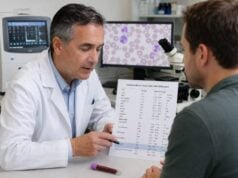
A high red blood cell count means your blood sample contains more red blood cells than expected for your age, sex, hormone status, altitude, and the lab’s reference range. Red blood cells carry oxygen from the lungs to the body, so the count may rise when the body is trying to deliver more oxygen, when the blood is concentrated from low fluid volume, or when the bone marrow is making too many cells. The result is often found on a complete blood count before symptoms appear.
A mildly high RBC count is not always dangerous. Dehydration, smoking, living at high altitude, sleep apnea, testosterone therapy, and lung or heart disease can all raise the count. Less often, the cause is polycythemia vera, a bone marrow disorder that can increase clot risk. The safest next step is to compare the RBC count with hemoglobin, hematocrit, oxygen level, symptoms, medications, and prior CBC results.
- A high RBC count usually means erythrocytosis, which is an increased concentration or true increase of red blood cells.
- Common adult reference ranges are about 4.0–5.4 million/µL for females and 4.5–6.1 million/µL for males, but lab ranges vary.
- Dehydration can make RBC count look high because plasma volume falls, concentrating the blood without creating extra red cells.
- Polycythemia vera is less common but important because it can raise red cells, white cells, platelets, and blood clot risk.
- Follow-up often includes repeat CBC, hemoglobin, hematocrit, oxygen saturation, erythropoietin, and JAK2 testing when results stay high.
- Urgent care is needed for chest pain, stroke symptoms, severe shortness of breath, one-sided leg swelling, or sudden vision loss.
Table of Contents
- What a High RBC Count Means
- Normal Ranges and Related CBC Markers
- Common Causes of High RBC Count
- Polycythemia Vera and Secondary Erythrocytosis
- Symptoms and When to Seek Care
- Follow-Up Testing and Diagnosis
- Treatment and Next Steps
- Common Mistakes When Reading Results
What a High RBC Count Means
A high RBC count means the number of red blood cells in a measured volume of blood is above the lab’s reference range. The medical term is erythrocytosis. Some reports or older articles may use polycythemia more broadly, but doctors often reserve “polycythemia vera” for a specific bone marrow disease.
Red blood cells contain hemoglobin, the iron-rich protein that carries oxygen. When red cells increase, hemoglobin and hematocrit often rise too. Hematocrit is the percentage of blood volume made up by red blood cells. For example, a hematocrit of 50% means about half the blood sample volume is red cells.
A high RBC count can happen in two broad ways:
- Relative erythrocytosis: The body has not made extra red cells. The blood is simply more concentrated because plasma, the liquid part of blood, is reduced. Dehydration is the classic example.
- Absolute erythrocytosis: The body has truly made more red blood cells. This can happen as a response to low oxygen, medication effects, excess erythropoietin, or a bone marrow disorder.
The distinction matters because the treatment is different. Drinking fluids may correct a dehydration-related result, but it will not fix persistent erythrocytosis from sleep apnea, lung disease, testosterone therapy, kidney disease, or polycythemia vera.
A single high value also needs context. A result just above range after vomiting, intense sweating, a long flight, or fasting before blood work may not mean the same thing as a steadily rising RBC count over several CBCs. Your clinician usually looks at the pattern, not one number alone. A complete blood count gives that wider pattern by showing red cells, white cells, platelets, hemoglobin, hematocrit, and red cell indices together.
Normal Ranges and Related CBC Markers
RBC count is usually reported as million cells per microliter or as ×10¹²/L. These are essentially the same scale: 5.0 million/µL equals 5.0 ×10¹²/L.
Reference ranges differ by lab, age, pregnancy status, sex, hormone therapy, and altitude. Many adult labs use ranges close to these:
| Group | Typical RBC range | How it may appear on a lab report |
|---|---|---|
| Adult females or people with lower testosterone levels | About 4.0–5.4 million/µL | 4.0–5.4 ×10¹²/L |
| Adult males or people with higher testosterone levels | About 4.5–6.1 million/µL | 4.5–6.1 ×10¹²/L |
| Children | Varies by age | Use the pediatric range on the report |
The range printed on your own result is the most relevant one. A number may be flagged high by one lab and normal by another, especially near the cutoff.
RBC count, hemoglobin, and hematocrit are related but not identical
RBC count tells you how many red cells are present. Hemoglobin tells you how much oxygen-carrying protein is in the blood. Hematocrit estimates how much of the blood volume is made of red cells. These markers usually move in the same direction, but not always.
For example, a person with small red cells from iron deficiency may have a high or high-normal RBC count while hemoglobin is not very high. This pattern can also appear in some thalassemia traits. Another person may have a high hematocrit mainly because of dehydration, even if the true red cell mass has not increased.
The relationship between hemoglobin and hematocrit is especially useful when deciding whether a high RBC count is mild, significant, or possibly misleading.
Red cell indices can change the interpretation
The CBC includes red cell indices that describe red cell size and hemoglobin content:
- MCV shows average red cell size. Low MCV means smaller cells; high MCV means larger cells.
- MCH estimates hemoglobin per red cell.
- MCHC estimates hemoglobin concentration inside red cells.
- RDW shows how much red cell size varies.
A high RBC count with low MCV may point toward thalassemia trait, iron deficiency, or polycythemia vera with iron deficiency. A high RBC count with high hemoglobin and high hematocrit is more likely to reflect true erythrocytosis or concentrated blood. A dedicated RBC count reference range can help with the basic number, but the CBC pattern gives the medical meaning.
Common Causes of High RBC Count
High RBC count has many possible causes. Some are temporary and low risk. Others need medical evaluation because they raise the risk of blood clots, strain the heart or lungs, or point to kidney or bone marrow disease.
| Cause | Typical clue | Usual meaning |
|---|---|---|
| Dehydration | Recent vomiting, diarrhea, sweating, poor fluid intake, or diuretic use | Relative erythrocytosis from concentrated blood |
| Smoking or carbon monoxide exposure | Smoking history, indoor combustion exposure, headache, low oxygen delivery | Body makes more red cells to compensate for impaired oxygen carrying |
| Sleep apnea | Loud snoring, pauses in breathing, morning headaches, daytime sleepiness | Repeated nighttime low oxygen can stimulate red cell production |
| Lung or heart disease | Low oxygen saturation, shortness of breath, cyanosis, known COPD or heart defect | Secondary erythrocytosis from chronic low oxygen |
| High altitude | Living or training at altitude for weeks | Normal adaptation to thinner air |
| Testosterone, anabolic steroids, or erythropoietin | Medication or performance-enhancing drug use | Drug-stimulated red cell production |
| Kidney disease or certain tumors | Abnormal kidney imaging, high erythropoietin, blood in urine, unexplained symptoms | Excess erythropoietin may drive RBC production |
| Polycythemia vera | Low erythropoietin, JAK2 mutation, high hematocrit, sometimes high platelets or WBCs | Bone marrow makes too many blood cells |
Dehydration and low plasma volume
Dehydration is one of the simplest explanations for a mildly high RBC count. When plasma volume falls, the same number of red cells becomes packed into less liquid. Hemoglobin, hematocrit, albumin, total protein, and blood urea nitrogen may also look higher than usual.
This pattern can happen after heavy sweating, fever, vomiting, diarrhea, inadequate fluid intake, or use of diuretics. It can also occur after an overnight fast before morning blood work, especially in people who avoided water.
A repeat CBC after normal hydration may return to baseline. Persistent elevation after hydration needs more investigation.
Low oxygen signals
The kidneys make erythropoietin, often called EPO, when oxygen delivery is low. EPO tells the bone marrow to make more red blood cells. This response can be helpful at high altitude or in chronic lung disease, but it can also thicken the blood when the stimulus is long lasting.
Common oxygen-related causes include:
- Chronic obstructive pulmonary disease
- Pulmonary fibrosis or other scarring lung diseases
- Some congenital heart diseases
- Obstructive sleep apnea
- Heavy smoking
- Carbon monoxide exposure
Sleep apnea deserves special attention because daytime oxygen readings can be normal. The oxygen drop happens repeatedly during sleep, so a person may have a high RBC count with a normal office pulse oximeter reading.
Medications and hormones
Testosterone therapy can raise RBC count, hemoglobin, and hematocrit. The effect is more likely with higher doses, injectable forms, older age, sleep apnea, smoking, and dehydration. Anabolic steroid use and erythropoietin use can also raise red cell production.
Never stop prescribed hormone therapy on your own because of one abnormal CBC. Instead, contact the prescribing clinician. They may repeat the CBC, check hematocrit, adjust the dose, change the formulation, or evaluate for sleep apnea and other risk factors.
Polycythemia Vera and Secondary Erythrocytosis
Polycythemia vera and secondary erythrocytosis can both produce a high RBC count, but they are different conditions.
Polycythemia vera, often shortened to PV, is a chronic bone marrow disorder in the myeloproliferative neoplasm family. In PV, the marrow produces too many red blood cells and may also produce too many white blood cells and platelets. Most people with PV have a JAK2 gene mutation in blood-forming cells. This mutation is acquired during life; it is not usually inherited from a parent.
Secondary erythrocytosis means the bone marrow is reacting to another signal, most often increased erythropoietin. The marrow itself is not the primary problem. The driver may be low oxygen, medication use, kidney disease, or a tumor that makes erythropoietin.
Clues that suggest polycythemia vera
PV becomes more likely when several findings appear together:
- High RBC count with high hemoglobin or high hematocrit
- Low or low-normal erythropoietin
- Positive JAK2 V617F or JAK2 exon 12 mutation
- High platelet count, high white blood cell count, or both
- Enlarged spleen
- Itching after a hot shower or bath
- Burning redness in the hands or feet
- Blood clots, especially in unusual veins such as abdominal veins
PV is important because thicker blood and abnormal blood cell behavior can increase the risk of clots. Clots may occur in arteries or veins and can lead to stroke, heart attack, deep vein thrombosis, pulmonary embolism, or abdominal vein thrombosis.
A high platelet count can appear with PV, but high platelets can also come from inflammation or iron deficiency. When platelets and RBCs are both high, clinicians often look at the whole CBC pattern rather than treating each marker as a separate problem. A related platelet pattern is discussed in high platelet count causes.
Clues that suggest secondary erythrocytosis
Secondary erythrocytosis becomes more likely when erythropoietin is high or when a clear oxygen-related trigger is present. Examples include low oxygen saturation, known lung disease, untreated sleep apnea, smoking, recent altitude exposure, testosterone therapy, or kidney abnormalities.
The RBC count can be high in secondary erythrocytosis, but white blood cells and platelets are often normal unless another condition is present. The spleen is usually not enlarged from the erythrocytosis itself. Treatment focuses on the cause, such as improving oxygen levels, treating sleep apnea, changing medication, or investigating kidney-related EPO production.
Why iron deficiency can hide or complicate PV
Iron deficiency can make red blood cells smaller. In PV, this may create a confusing pattern: RBC count may be high, MCV may be low, and hemoglobin may look less dramatic than expected. This is one reason doctors may check ferritin and iron studies during the evaluation.
Iron should not be taken casually when PV is suspected or diagnosed. In iron deficiency anemia, iron can be necessary. In PV, iron replacement may fuel more red cell production unless a hematologist specifically recommends it for a clear reason.
Symptoms and When to Seek Care
A high RBC count may cause no symptoms, especially when it is mild or temporary. When symptoms occur, they often come from thicker blood, reduced oxygen delivery, the underlying lung or heart condition, or PV-related blood vessel changes.
Possible symptoms include:
- Headache
- Dizziness or lightheadedness
- Blurred vision or visual spots
- Fatigue or weakness
- Shortness of breath
- Red or flushed face
- Ringing in the ears
- Itching after a warm shower or bath
- Burning, redness, or pain in the hands or feet
- High blood pressure
- Gout-like joint pain in some people with PV
Symptoms do not prove the cause. Headache and dizziness can happen with dehydration, sleep apnea, high blood pressure, migraine, anxiety, anemia, or many other conditions. The combination of symptoms, exam findings, oxygen level, and CBC pattern guides the workup.
Seek urgent medical care if a high RBC count is accompanied by symptoms that could signal a clot, heart problem, stroke, or severe oxygen problem. These include:
- Chest pain, pressure, or pain spreading to the arm, back, neck, or jaw
- Sudden weakness, facial droop, trouble speaking, confusion, or severe sudden headache
- New one-sided vision loss or sudden major vision change
- Severe shortness of breath or blue lips
- Coughing blood
- One-sided leg swelling, warmth, redness, or calf pain
- Fainting or near-fainting with shortness of breath or chest discomfort
A non-urgent but timely appointment is reasonable when the RBC count remains high on repeat testing, hematocrit is clearly above range, hemoglobin is high, or there are PV-like symptoms such as aquagenic itching, enlarged spleen, or unexplained clots.
Follow-Up Testing and Diagnosis
Follow-up usually starts with confirming the result. Lab variation, temporary dehydration, and recent illness can shift a CBC. A repeat test helps separate a one-time change from a persistent pattern.
A typical evaluation may include:
- Repeat CBC. This checks whether RBC count, hemoglobin, hematocrit, white blood cells, and platelets remain high.
- Review of prior CBCs. A long-standing mild elevation has a different meaning from a new sharp rise.
- Medication and exposure review. Testosterone, anabolic steroids, erythropoietin, diuretics, smoking, carbon monoxide, and altitude exposure can all matter.
- Oxygen assessment. Pulse oximetry, overnight oximetry, sleep study, lung testing, or heart evaluation may be used when low oxygen is possible.
- Erythropoietin level. Low EPO points more toward PV; high EPO points more toward secondary erythrocytosis.
- JAK2 mutation testing. This is central when PV is suspected.
- Iron studies. Ferritin, serum iron, transferrin saturation, and TIBC can uncover iron deficiency or iron restriction.
- Kidney and liver evaluation. Blood tests, urinalysis, or imaging may be used if EPO is high or symptoms suggest an organ-related cause.
A peripheral blood smear may help when the CBC pattern is unusual, when red cell size is abnormal, or when white cells and platelets are also abnormal. A bone marrow biopsy may be used when PV or another marrow disorder remains likely after blood testing.
How doctors separate relative from absolute erythrocytosis
Relative erythrocytosis improves when plasma volume normalizes. Clues include dehydration symptoms, recent fluid loss, diuretic use, and other concentrated chemistry markers.
Absolute erythrocytosis persists and usually shows a stronger pattern across RBC count, hemoglobin, and hematocrit. EPO and JAK2 testing then help separate PV from secondary causes. Direct red cell mass measurement can do this more formally, but it is not widely available in many settings.
Questions that help narrow the cause
Before the appointment, it helps to write down:
- Your last several RBC, hemoglobin, and hematocrit results
- Whether you were fasting or dehydrated before the draw
- Smoking, vaping, or carbon monoxide exposure
- Sleep symptoms, including snoring and witnessed pauses in breathing
- Testosterone, steroid, EPO, or diuretic use
- Altitude travel or altitude training
- Lung, heart, kidney, or liver history
- Any clotting events, miscarriages, severe itching, or enlarged spleen history
This information can prevent unnecessary testing and can also reveal causes that a lab result alone cannot show.
Treatment and Next Steps
Treatment depends on why the RBC count is high. The aim is not simply to lower the number; it is to reduce the health risk caused by the underlying problem.
For dehydration-related results, the next step is usually rehydration and repeat testing. This does not mean forcing excessive water. It means correcting the fluid loss and returning to normal intake unless a clinician has given fluid restrictions for heart, kidney, or liver disease.
For smoking-related erythrocytosis, stopping smoking reduces carbon monoxide exposure and improves oxygen delivery. It may also reduce clot and cardiovascular risk for reasons beyond the RBC count.
For sleep apnea, treatment may include weight management when relevant, reducing alcohol near bedtime, side sleeping, dental devices, or CPAP therapy. Treating sleep apnea can improve oxygen dips, daytime fatigue, blood pressure, and sometimes elevated red cell markers.
For testosterone-related erythrocytosis, the prescribing clinician may lower the dose, pause therapy, change the delivery method, lengthen the dosing interval, or evaluate for sleep apnea and smoking. Hematocrit is often the marker that drives safety decisions. A related discussion of high hemoglobin causes may help when both hemoglobin and RBC count are flagged.
For secondary erythrocytosis from lung, heart, or kidney disease, treatment targets the condition. Oxygen therapy, pulmonary care, heart evaluation, kidney imaging, or medication changes may be needed depending on the cause.
How polycythemia vera is treated
PV treatment is usually managed by a hematologist. Common elements include:
- Phlebotomy: Removing blood lowers hematocrit and reduces blood thickness. It is similar to donating blood but done as a medical treatment.
- Low-dose aspirin: This may reduce clot risk in selected patients, but it is not safe for everyone, especially people with bleeding risk or certain platelet problems.
- Cytoreductive therapy: Medicines that reduce blood cell production may be used for higher-risk PV, older age, prior clotting, very high counts, or poor tolerance of phlebotomy.
- Risk factor control: Blood pressure, cholesterol, diabetes, smoking, and weight all affect clot risk.
- Symptom management: Itching, burning hands or feet, headaches, and spleen symptoms may need targeted treatment.
For many people with PV, hematocrit control below 45% is a major treatment target. Your clinician may individualize the plan based on sex, symptoms, clot history, pregnancy plans, age, cardiovascular risk, and treatment tolerance.
Do not start aspirin, iron, or supplements to “fix” a high RBC count without medical guidance. Aspirin can increase bleeding risk in some settings, and iron can worsen red cell overproduction in PV.
Common Mistakes When Reading Results
A high RBC count is easy to overread or underread. The most common mistakes come from looking at the number in isolation.
Mistake 1: Assuming a high RBC count always means polycythemia vera. PV is important, but dehydration, smoking, sleep apnea, testosterone, altitude, and chronic low oxygen are more common explanations in many primary care settings.
Mistake 2: Ignoring hematocrit. Clot risk decisions often rely heavily on hematocrit, especially in PV. RBC count is useful, but hematocrit shows how much of the blood volume is red cells.
Mistake 3: Comparing your result with someone else’s range. Adult ranges differ by sex, hormone status, lab method, age, pregnancy, and altitude. Use the range printed on your report.
Mistake 4: Treating hydration as the answer before confirming it. Dehydration is common, but a persistent high RBC count after normal hydration deserves evaluation.
Mistake 5: Taking iron because red blood cells are involved. Iron can help iron deficiency, but high RBC count is not the same as anemia. In PV, iron may increase red cell production. Iron decisions should be based on ferritin, transferrin saturation, symptoms, and the suspected diagnosis. An iron panel is more informative than guessing.
Mistake 6: Missing sleep apnea. People often think sleep apnea only matters if they are very sleepy. Morning headaches, resistant high blood pressure, loud snoring, nighttime choking, and a high RBC count can all point toward nighttime oxygen drops.
Mistake 7: Forgetting medications. Testosterone, anabolic steroids, erythropoietin, and diuretics can change RBC-related results. Bring a full medication and supplement list to the appointment.
A useful home approach is to gather the CBC report, mark RBC count, hemoglobin, hematocrit, MCV, white blood cells, and platelets, then compare them with prior results. If RBC count, hemoglobin, and hematocrit are all repeatedly high, or if symptoms are present, medical follow-up is the right next step.
References
- Red Blood Cell (RBC) Count 2024 (Official Page)
- Diagnosis and Treatment of Polycythemia Vera: A Review 2025 (Review)
- Polycythemia vera: 2024 update on diagnosis, risk-stratification, and management 2024 (Review)
- Novel Therapies for Polycythemia Vera 2024 (Review)
- Secondary Erythrocytosis – Blood Disorders – Merck Manual Consumer Version 2025 (Official Page)
- Cardiovascular Events and Intensity of Treatment in Polycythemia Vera 2013 (RCT)
Disclaimer
A high RBC count can be temporary, but it can also reflect conditions that need diagnosis and treatment. This information is for education and should not replace care from a qualified clinician who can interpret your CBC, symptoms, medications, oxygen status, and medical history. Seek urgent care for chest pain, stroke symptoms, severe shortness of breath, sudden vision loss, or one-sided leg swelling.