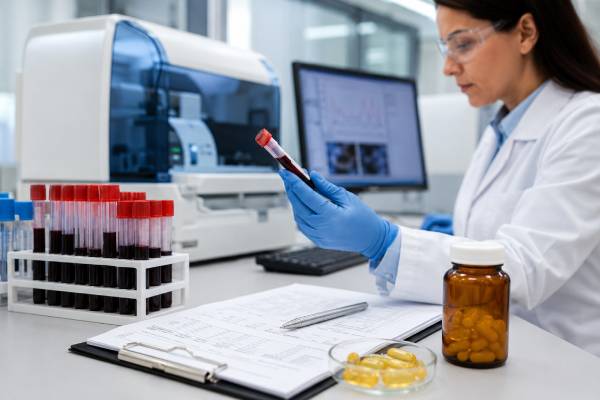
A high transferrin blood test usually means the body has increased its iron-carrying capacity. Transferrin is a protein made mainly by the liver, and its main job is to bind iron and move it through the blood to the bone marrow, muscles, liver, and other tissues. When iron stores fall, the liver often makes more transferrin so the body can capture and transport as much available iron as possible. That is why high transferrin is most often seen with iron deficiency, especially when ferritin is low and transferrin saturation is low.
High transferrin can also happen during pregnancy or with estrogen-containing birth control because iron demand and hormone effects can raise transferrin and total iron-binding capacity. The result should never be read alone. It makes the most sense when compared with ferritin, serum iron, TIBC, transferrin saturation, hemoglobin, red blood cell size, symptoms, pregnancy status, and possible blood loss.
- High transferrin most often points to iron deficiency, especially when ferritin and transferrin saturation are low.
- A common adult transferrin reference range is roughly 200–360 mg/dL, but ranges vary by lab and method.
- Pregnancy and estrogen therapy can raise transferrin or TIBC even when the pattern is partly physiologic.
- High transferrin with low serum iron, low ferritin, and low TSAT is a classic iron deficiency pattern.
- Men, postmenopausal women, pregnant people, and anyone with anemia symptoms should follow up rather than treating the number alone.
- Urgent care is needed for severe shortness of breath, chest pain, fainting, black stools, heavy bleeding, or very low hemoglobin.
Table of Contents
- What a High Transferrin Result Means
- Why Transferrin Rises When Iron Is Low
- Common Causes of High Transferrin
- How to Read High Transferrin With Other Iron Markers
- High Transferrin in Pregnancy
- Symptoms and When to Follow Up
- What to Do After a High Result
- Common Mistakes When Interpreting High Transferrin
What a High Transferrin Result Means
A high transferrin result means there is more transferrin protein in the blood than expected for that lab’s reference range. Transferrin is the main iron transport protein in blood plasma. It picks up iron absorbed from food or released from storage sites, carries it safely through the bloodstream, and delivers it to cells that need iron.
The most common reason transferrin rises is low available iron. When iron stores are running down, the body often responds by producing more transferrin. This creates more open binding sites for iron, much like adding more empty seats on a bus when there are not enough passengers. The body is trying to catch and move every bit of iron it can.
High transferrin is closely related to high total iron-binding capacity, or TIBC. TIBC is an indirect measure of how much iron the blood could bind if transferrin were fully loaded. Because transferrin provides most of that binding capacity, high transferrin and high TIBC often move together. For a deeper comparison, TIBC and transferrin measure related but not identical parts of an iron panel.
A high result does not automatically mean severe anemia. Some people have high transferrin while hemoglobin is still normal. This can happen early in iron deficiency, before the body has lost enough iron to reduce red blood cell production. Others may have high transferrin together with anemia, low MCV, high RDW, fatigue, shortness of breath, or restless legs.
Typical adult transferrin ranges often sit around 200–360 mg/dL, sometimes reported as about 2.0–3.6 g/L. Some labs use different ranges, units, age categories, pregnancy ranges, or assay methods. The lab’s own reference interval should be used first. A result just above the range is not the same as a result far above it, and the pattern around the result matters more than the number by itself. For more detail on units and reference intervals, see transferrin blood test normal ranges.
High transferrin is usually not a sign of iron overload. In iron overload, transferrin may be normal or low, while transferrin saturation is often high because many binding sites are filled with iron. In iron deficiency, transferrin is often high, but transferrin saturation is low because the extra transferrin is mostly empty.
Why Transferrin Rises When Iron Is Low
Iron is essential for hemoglobin, the protein in red blood cells that carries oxygen. The body does not make iron, so it must come from food, supplements, recycled red blood cells, or stored iron. When iron intake, absorption, or storage cannot keep up with demand, the body starts making adjustments.
One of those adjustments is increased transferrin production. The liver senses changes in iron balance and responds through several iron-regulating pathways. When the body needs more usable iron, it often raises transferrin and TIBC. At the same time, transferrin saturation usually falls because there is less iron available to fill the added binding sites.
Ferritin is usually the first major storage marker to fall. Ferritin reflects stored iron, although it can rise during inflammation, infection, liver disease, or other stress states. A person can have low ferritin and normal hemoglobin for a while. This is often called iron deficiency without anemia. In that situation, transferrin may already be high because the body is trying to compensate before anemia appears. This is why low ferritin with normal hemoglobin can still be clinically meaningful.
The next change is often a drop in serum iron and transferrin saturation. Serum iron measures circulating iron at the time of the blood draw, but it can vary during the day and after supplements or meals. Transferrin saturation, often shortened to TSAT, estimates the percentage of transferrin binding sites filled with iron. A low TSAT, often below about 15–20% depending on the lab and clinical setting, means much of the transferrin is empty.
As iron deficiency progresses, the bone marrow receives less iron for red blood cell production. Hemoglobin may fall, red blood cells may become smaller, and the CBC may show microcytosis, low MCH, or high RDW. At that point, high transferrin is no longer an isolated clue. It becomes part of a broader iron deficiency anemia pattern.
The body’s response is different in inflammation. In chronic inflammatory disease, infection, kidney disease, cancer, or some autoimmune conditions, the hormone hepcidin can trap iron inside storage cells and reduce iron absorption from the gut. In that pattern, serum iron and TSAT may be low, but ferritin may be normal or high, and transferrin or TIBC may be low or normal rather than high. This is one reason a full pattern is safer than reading transferrin alone. For a broader iron-status approach, ferritin and transferrin saturation are often interpreted together.
Common Causes of High Transferrin
High transferrin is usually caused by iron deficiency, increased iron demand, or hormonal effects. The most likely explanation depends on age, sex, pregnancy status, diet, bleeding history, digestive health, medications, and the rest of the iron panel.
Iron deficiency from blood loss
Blood loss is one of the most common causes of iron deficiency. Blood contains hemoglobin, and hemoglobin contains iron. When blood loss continues for weeks or months, the body can lose iron faster than it replaces it.
Common sources include heavy menstrual bleeding, frequent blood donation, gastrointestinal bleeding, ulcers, inflammatory bowel disease, colon polyps, colon cancer, hemorrhoids, and long-term use of medications that raise bleeding risk in some people, such as aspirin or anticoagulants. Men and postmenopausal women with iron deficiency usually need careful evaluation for gastrointestinal blood loss because they do not have monthly menstrual losses to explain the pattern.
Heavy menstrual bleeding is a frequent cause in adolescents and premenopausal adults. Clues include bleeding longer than seven days, soaking pads or tampons quickly, passing large clots, needing double protection, or symptoms that worsen around periods. Even when hemoglobin is normal, low ferritin and high transferrin can show that iron stores are being drained.
Low iron intake or limited iron absorption
Some diets provide less absorbable iron. Heme iron from meat, poultry, and fish is usually absorbed more efficiently than non-heme iron from plants. Vegetarian and vegan diets can still meet iron needs, but they often require more attention to legumes, soy foods, seeds, nuts, fortified grains, leafy greens, vitamin C-rich foods, and meal timing.
Iron absorption can also be reduced by celiac disease, inflammatory bowel disease, bariatric surgery, chronic gastritis, certain stomach conditions, or long-term use of acid-suppressing medicines in some situations. Calcium, tea, coffee, and phytates in some grains and legumes can reduce non-heme iron absorption when taken at the same time as iron-rich meals or supplements.
A high transferrin result with low ferritin and low TSAT can appear when intake looks reasonable but absorption is poor. In those cases, simply increasing iron-rich foods may not be enough. The underlying absorption problem may need testing or treatment.
Increased demand during growth, training, or recovery
Iron needs rise during periods of growth and higher red blood cell production. Adolescents, pregnant people, endurance athletes, and people recovering from blood loss may need more iron than usual. If intake and absorption do not keep up, transferrin can rise.
Endurance athletes may lose small amounts of iron through sweat, gastrointestinal microbleeding, foot-strike hemolysis, and higher training-related demand. Female endurance athletes with menstrual blood loss are especially vulnerable. The pattern can be subtle: normal hemoglobin, low ferritin, rising transferrin, low-normal TSAT, and reduced performance or fatigue.
Pregnancy or estrogen exposure
Pregnancy commonly raises transferrin and TIBC. Estrogen-containing birth control pills or hormone therapy can also increase transferrin in some people. This does not mean the result should be ignored, because pregnancy also raises iron needs. A physiologic rise and true deficiency can overlap.
Less common explanations
A mildly high transferrin result may sometimes reflect lab variation, dehydration-related concentration changes, or a temporary shift that does not persist on repeat testing. Rarely, interpretation is complicated by unusual genetic or liver-related protein patterns. More often, however, a clearly high transferrin result becomes understandable once ferritin, serum iron, TSAT, CBC results, pregnancy status, and bleeding history are reviewed.
Low transferrin has a different meaning and is more often associated with inflammation, liver disease, nephrotic syndrome, protein loss, or malnutrition. That is why high and low transferrin should not be treated as opposite versions of the same problem. They often come from different physiology.
How to Read High Transferrin With Other Iron Markers
High transferrin becomes much more useful when it is read as part of an iron panel. A typical iron panel may include ferritin, serum iron, TIBC, transferrin, UIBC, and transferrin saturation. A CBC adds hemoglobin, hematocrit, MCV, MCH, RDW, platelets, and other clues.
The most common iron deficiency pattern is high transferrin or high TIBC, low ferritin, low serum iron, and low TSAT. In early deficiency, hemoglobin and MCV can still be normal. In more advanced deficiency, hemoglobin drops, MCV often falls below the reference range, and RDW may rise.
| Pattern | Transferrin or TIBC | Ferritin | Serum iron | TSAT | Common meaning |
|---|---|---|---|---|---|
| Classic iron deficiency | High | Low | Low | Low | Iron stores are depleted and transport capacity has increased |
| Early iron deficiency | High or high-normal | Low | Normal or low | Low-normal or low | Iron stores are low before clear anemia appears |
| Pregnancy or estrogen effect | High | Variable | Variable | Often lower | May be physiologic, iron deficiency, or both |
| Anemia of inflammation | Low or normal | Normal or high | Low | Low | Iron is restricted by inflammation rather than simple depletion |
| Iron overload tendency | Low, normal, or sometimes normal-high | Normal or high | High | High | Too much iron is occupying transferrin binding sites |
| Liver disease or protein loss | Low or normal | Variable | Variable | Variable | Transferrin production or protein balance may be reduced |
Ferritin deserves special attention. Low ferritin is one of the strongest signs of depleted iron stores. However, normal or high ferritin does not always rule out iron deficiency if inflammation is present. In that case, C-reactive protein, ESR, chronic disease history, TSAT, soluble transferrin receptor, reticulocyte hemoglobin content, and clinical context may help.
Serum iron is useful but variable. It can change with recent iron supplements, time of day, meals, and short-term illness. A single serum iron value can mislead if it is read alone. A low serum iron result becomes more informative when paired with high transferrin or high TIBC and low TSAT. For this pattern, low serum iron is usually interpreted with ferritin, TIBC, and TSAT rather than by itself.
TIBC usually rises in iron deficiency because it reflects increased binding capacity. If transferrin is high and TIBC is also high, the results are reinforcing each other. If transferrin is high but TIBC is not, check units, assay method, albumin, liver status, and whether the values came from the same draw. The related pattern is covered in more detail under high TIBC and iron deficiency.
TSAT adds a direct view of how much transferrin is actually loaded with iron. The formula is usually serum iron divided by TIBC, multiplied by 100. A TSAT around 20–45% is often considered typical in adults, but the lab’s range should be used. Low TSAT means transferrin is underfilled. High TSAT means transferrin is heavily loaded with iron. For reference ranges and interpretation, see transferrin saturation normal range.
A CBC helps show whether iron deficiency has affected red blood cell production. Low hemoglobin confirms anemia. Low MCV suggests small red blood cells, which often occurs in iron deficiency but can also occur with thalassemia trait and some chronic disease patterns. High RDW suggests varied red blood cell sizes and often appears as iron deficiency develops. Platelets may be mildly high in some iron deficiency patterns.
No single marker gives the full answer. High transferrin says the body has increased iron-binding capacity. Ferritin says something about storage. TSAT says how full transferrin is. The CBC shows whether oxygen-carrying red blood cells have been affected. The history often explains why.
High Transferrin in Pregnancy
High transferrin is common in pregnancy. Blood volume expands, the placenta and fetus require iron, and the pregnant person’s red blood cell mass increases. The body adapts by changing iron transport and storage. Transferrin and TIBC often rise, while ferritin may fall as iron stores are used.
This means a high transferrin result during pregnancy is not interpreted the same way as the same result outside pregnancy. Some increase can be expected, especially later in pregnancy. Still, pregnancy is also one of the most common times for true iron deficiency to appear. The two can happen together: transferrin rises partly because of pregnancy physiology and partly because iron stores are running low.
Iron deficiency in pregnancy matters because iron supports maternal blood volume, oxygen delivery, placental function, and fetal iron supply. Low iron can contribute to fatigue, weakness, dizziness, shortness of breath, reduced exercise tolerance, restless legs, palpitations, and anemia. Severe or untreated anemia can raise risks during delivery and postpartum recovery.
Prenatal vitamins often contain about 27 mg of elemental iron, but this amount may not correct established deficiency. Some people need additional oral iron, different dosing schedules, or intravenous iron later in pregnancy if oral iron is not tolerated or does not work. Treatment should be guided by an obstetric clinician, midwife, or other qualified professional because iron needs, hemoglobin thresholds, trimester, nausea, constipation, and other medical conditions all affect the plan.
Ferritin is often useful in pregnancy, but pregnancy-specific interpretation may be needed. A low ferritin supports depleted iron stores. Hemoglobin is also interpreted with trimester-specific cutoffs because dilution from plasma volume expansion can lower hemoglobin even in otherwise normal pregnancy. A full iron panel can be helpful when the diagnosis is unclear.
A high transferrin result in pregnancy should prompt a calm review, not panic. The clinician may check ferritin, CBC, MCV, RDW, serum iron, TSAT, diet, supplement use, bleeding, vomiting, prior pregnancies, and spacing between pregnancies. The answer may be simple iron deficiency, expected pregnancy-related change, or a mix of both.
Estrogen-containing birth control and hormone therapy can also raise transferrin or TIBC. In someone using these medications, a mildly high transferrin result may not mean the same thing as it would in someone with no estrogen exposure. Even then, low ferritin, low TSAT, symptoms, or anemia should not be dismissed as “just hormones.”
Symptoms and When to Follow Up
High transferrin itself does not usually cause symptoms. Symptoms come from the reason behind the result, most often low iron stores or iron deficiency anemia. Early iron deficiency can be quiet. Some people feel normal until ferritin is very low or hemoglobin starts to fall.
Common symptoms can include fatigue, weakness, reduced exercise tolerance, shortness of breath with activity, dizziness, headaches, fast heartbeat, cold hands and feet, restless legs, brittle nails, hair shedding, pale skin, sore tongue, cravings for ice or nonfood substances, and trouble concentrating. These symptoms are not specific to iron deficiency, but they fit the pattern when ferritin is low, TSAT is low, or anemia is present.
Follow-up is especially important when high transferrin appears with low hemoglobin, low MCV, high RDW, low ferritin, low TSAT, pregnancy, heavy menstrual bleeding, known digestive disease, unexplained weight loss, black stools, rectal bleeding, frequent blood donation, or recent surgery. A combined anemia pattern may be easier to understand with hemoglobin and ferritin interpreted together.
| Situation | Why follow-up matters |
|---|---|
| High transferrin plus low ferritin | Strongly suggests low iron stores |
| High transferrin plus low hemoglobin | May indicate iron deficiency anemia |
| High transferrin during pregnancy | May be physiologic, but iron needs are higher |
| High transferrin in a man or postmenopausal woman | Blood loss or malabsorption may need evaluation |
| High transferrin with black stools or rectal bleeding | Possible gastrointestinal bleeding needs prompt attention |
| High transferrin with heavy periods | Ongoing iron loss may continue unless bleeding is addressed |
| High transferrin with normal ferritin but inflammation | Ferritin may be masking iron deficiency |
| High transferrin after blood donation | Iron stores may need time and replacement to recover |
Urgent medical care is needed for chest pain, fainting, severe shortness of breath, confusion, rapid worsening weakness, vomiting blood, black tarry stools, heavy bleeding, or symptoms of severe anemia. A high transferrin result is not the emergency by itself, but the underlying blood loss or anemia can be.
A person should also follow up if iron studies do not improve after a reasonable trial of treatment. Lack of response can happen from missed doses, poor absorption, ongoing bleeding, wrong diagnosis, inflammatory disease, celiac disease, medication interference, or a hemoglobin disorder such as thalassemia trait.
What to Do After a High Result
The next step after high transferrin is to confirm the pattern. If only transferrin was checked, it is usually reasonable to review or order ferritin, serum iron, TIBC, transferrin saturation, and a CBC. Many clinicians prefer an iron panel that includes ferritin, serum iron, TIBC, and transferrin saturation because the markers explain each other.
Timing can matter. Serum iron is often drawn in the morning, and some clinicians prefer fasting samples because iron can vary after meals or supplements. Transferrin and ferritin are less meal-sensitive than serum iron, but consistency helps. Do not stop prescribed iron, prenatal vitamins, anticoagulants, or other medicines unless the ordering clinician tells you to.
The most useful questions are practical:
- Was ferritin low?
- Was TSAT low?
- Was hemoglobin low?
- Was MCV low or RDW high?
- Is the person pregnant or using estrogen therapy?
- Is there heavy menstrual bleeding?
- Is there any sign of gastrointestinal bleeding?
- Has there been recent blood donation, surgery, childbirth, or injury?
- Are there digestive symptoms, celiac disease risk, bariatric surgery history, or inflammatory disease?
- Is iron intake low or absorption limited?
If the pattern supports iron deficiency, treatment usually includes replacing iron and finding the reason iron became low. Oral iron is common and often effective. Many modern approaches use once-daily or every-other-day dosing because some people absorb it better and tolerate it better than multiple daily doses. Iron can cause constipation, nausea, dark stools, abdominal discomfort, or reflux. Taking it with vitamin C or a vitamin C-rich drink may help absorption for some people, while taking it with calcium, tea, coffee, or high-fiber bran can reduce absorption.
Food can support recovery but may not be enough when deficiency is established. Iron-rich foods include red meat, poultry, fish, shellfish, lentils, beans, tofu, tempeh, pumpkin seeds, fortified cereals, spinach, and other leafy greens. Combining plant iron with vitamin C-rich foods such as citrus, berries, peppers, tomatoes, or broccoli can improve non-heme iron absorption.
Treatment response should be monitored. Hemoglobin often starts improving within a few weeks if the diagnosis is correct and absorption is adequate, but ferritin takes longer to rebuild. Many people need to continue iron after hemoglobin normalizes so stores recover. The exact duration depends on the cause, degree of deficiency, tolerance, and follow-up labs.
Intravenous iron may be considered when oral iron is not tolerated, absorption is poor, deficiency is severe, anemia needs faster correction, pregnancy timing is late, chronic kidney disease is present, inflammatory bowel disease is active, or ongoing losses are substantial. IV iron should be given under medical supervision because dosing, product choice, monitoring, and rare reactions need professional oversight.
If high transferrin is linked to pregnancy or estrogen exposure without clear deficiency, the plan may be monitoring rather than treatment. But if ferritin is low or TSAT is low, the result should be taken seriously. A “normal hemoglobin” does not always mean iron stores are healthy.
Common Mistakes When Interpreting High Transferrin
One common mistake is assuming high transferrin means high iron. It usually means the opposite: the blood has more carrying capacity because the body is trying to capture scarce iron. The question is not only how much transferrin is present, but how much iron is attached to it.
Another mistake is ignoring ferritin because hemoglobin is normal. Iron stores can be low before anemia appears. A person may have fatigue, restless legs, hair shedding, or poor exercise tolerance with low ferritin and normal hemoglobin. Whether treatment is appropriate depends on the full picture, but the pattern deserves attention.
A third mistake is using serum iron alone. Serum iron can swing from day to day and hour to hour. A normal serum iron result does not always rule out iron deficiency, especially if ferritin is low or TSAT is low. A low serum iron result can also occur with inflammation, so the full panel is needed.
A fourth mistake is assuming pregnancy-related high transferrin is always harmless. Transferrin and TIBC often rise in pregnancy, but pregnancy also increases iron needs. A high value may be expected, but ferritin, hemoglobin, symptoms, diet, nausea, vomiting, and bleeding still matter.
A fifth mistake is starting high-dose iron indefinitely without a diagnosis. Iron is useful when deficiency is present, but unnecessary iron can cause side effects and may be risky for people with iron overload disorders, some liver diseases, or repeated transfusions. Iron supplements can also hide the reason for blood loss if follow-up is skipped.
A sixth mistake is overlooking the cause of deficiency. Replacing iron can improve the lab values, but if the cause is heavy menstrual bleeding, gastrointestinal bleeding, celiac disease, inflammatory bowel disease, or frequent blood donation, the problem may return. The source matters as much as the supplement.
A seventh mistake is comparing results from different labs too rigidly. Transferrin may be reported in mg/dL, g/L, or µmol/L. TIBC may be reported in µg/dL or µmol/L. Reference intervals vary. Trends are most reliable when the same lab and similar conditions are used.
High transferrin is best understood as a signal to check iron balance carefully. In many people, it is an early and helpful clue that iron stores are low. In pregnancy or estrogen use, it may be partly expected. In every case, the result becomes clearest when it is read with ferritin, TSAT, serum iron, TIBC, CBC findings, symptoms, and the reason iron might be low.
References
- British Society of Gastroenterology guidelines for the management of iron deficiency anaemia in adults 2021 (Guideline)
- WHO guideline on use of ferritin concentrations to assess iron status in individuals and populations 2020 (Guideline)
- Anemia in Pregnancy: ACOG Practice Bulletin, Number 233 2021 (Guideline)
- Iron deficiency 2021 (Review)
- Interventions for treating iron deficiency anaemia in inflammatory bowel disease 2021 (Systematic Review)
Disclaimer
A high transferrin result should be interpreted by a qualified healthcare professional who can review the full iron panel, CBC, symptoms, pregnancy status, medications, and possible sources of blood loss. Do not start or continue high-dose iron long term without medical guidance, especially if you have liver disease, a history of iron overload, repeated transfusions, or unclear test results. Seek urgent care for severe shortness of breath, chest pain, fainting, black stools, vomiting blood, heavy bleeding, or rapidly worsening weakness.