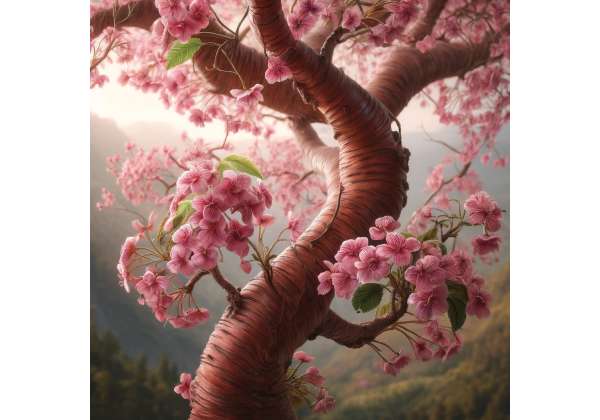
Himalayan cherry, Prunus cerasoides, is best known as a striking mountain tree with pink blossoms, but in traditional medicine it has a deeper story. In Himalayan and Ayurvedic practice, its heartwood, bark, flowers, leaves, and fruit have been used for skin health, wound care, fever, urinary complaints, inflammatory discomfort, and general tissue support. The tree is often called Padmaka in classical contexts, and unlike many modern wellness plants, it is valued as much for its astringent wood and bark as for its edible fruit.
What makes Himalayan cherry interesting today is the way old use and newer science begin to overlap. Studies suggest that its fruit and flowers contain anthocyanins, flavonoids, phenolic acids, and other antioxidant compounds, while bark and wood fractions appear to offer anti-inflammatory, antimicrobial, and tissue-protective potential. At the same time, the evidence remains mostly preclinical. That means Himalayan cherry is promising, but it should be used with measured expectations, modest doses, and careful attention to form, quality, and safety.
Quick Overview
- Himalayan cherry is traditionally used for skin support, mild inflammatory complaints, and urinary discomfort.
- Its fruit, flowers, and wood contain antioxidant and polyphenol-rich compounds with preclinical anti-inflammatory potential.
- Traditional adult use is modest, often around 1 to 3 g daily of powdered heartwood or similar preparations.
- Medicinal self-use is best avoided during pregnancy, breastfeeding, childhood, and in anyone sensitive to stone fruits or bitter Prunus seeds.
Table of Contents
- What is Himalayan cherry
- Key compounds in Himalayan cherry
- What does Himalayan cherry help with
- Skin wound and bone uses
- How to use Himalayan cherry
- How much Himalayan cherry per day
- Safety and what research says
What is Himalayan cherry
Himalayan cherry is a deciduous tree in the rose family that grows across the Himalayan belt and nearby upland regions of South and Southeast Asia. It is especially familiar in Nepal, northern India, Bhutan, Myanmar, and parts of Thailand and China. Many people first notice it for its brilliant flowers, but in traditional medicine the more important parts are often the heartwood, bark, leaves, flowers, gum, and fruit.
In Ayurvedic language, Himalayan cherry is often associated with Padmaka or Padmakastha, terms that usually point to the wood or heartwood rather than the fruit alone. That distinction matters because the medicinal profile of this plant is not limited to a sweet cherry-like food use. In fact, classical and folk use often treats it more like an astringent, cooling, tissue-supportive herb than a simple edible berry tree.
Across Himalayan ethnomedicine, different parts of the tree have been used in different ways:
- bark or stem preparations for wounds, toothache, and fracture care
- decoctions for fever and inflammatory discomfort
- leaves and flowers in formulas for urinary complaints and gravel
- wood or heartwood in powdered form for short-term internal use
- fruit as both food and mild medicinal support
That broad range of use tells us something important. Himalayan cherry is not a single-purpose herb. It sits at the intersection of food, forest medicine, and regional household care. In one setting it may be used as a gentle internal remedy. In another, it is applied externally to support injured tissue. In yet another, the fruit is simply eaten.
There is also a practical issue of plant identity. The tree has synonyms and overlapping traditional names, and some commercial material may not clearly distinguish fruit, bark, and heartwood. For the consumer, that creates two important rules: know which part is being sold, and do not assume every product labeled Himalayan cherry has the same chemistry or the same intended use.
From a modern herbal point of view, Himalayan cherry is best understood as a traditional mountain medicinal tree with several active plant parts, moderate astringency, and a strong polyphenol profile. It is not a clinically established mainstream supplement, but it is not merely a decorative blossom tree either. When used thoughtfully, it belongs in the same broad category as other regionally valued, phenolic-rich botanicals that bridge food and medicine. Its fruit chemistry, for example, shares useful themes with anthocyanin-rich berries, while its bark and wood point toward more classical herbal applications.
Key compounds in Himalayan cherry
The medicinal interest in Himalayan cherry comes from a mix of polyphenols, flavonoids, pigments, and structural plant compounds rather than from one famous “signature” molecule. That is both a strength and a limitation. It means the plant has broad biological potential, but it also means whole-plant preparations can vary widely by part used, harvest time, and extraction method.
The fruit is especially relevant for antioxidant chemistry. Studies on Himalayan wild edible berries that included Prunus cerasoides identified a large range of polyphenols, including anthocyanins, phenolic acids, flavonoids, ellagitannins, and related compounds. Among the commonly discussed molecules are:
- cyanidin derivatives, especially cyanidin-3-O-glucoside
- quercetin
- kaempferol
- rutin
- caffeic acid
- ferulic acid
- gallic acid
- myricetin
These compounds help explain why the fruit draws attention for antioxidant and inflammation-related benefits. Anthocyanins and flavonols are known for their ability to help neutralize oxidative stress, influence inflammatory signaling, and support vascular and tissue resilience.
The flowers appear to have a somewhat different profile. Flower extracts studied for skin and pigment effects showed meaningful phenolic and flavonoid content, along with fatty acid-like constituents and other small molecules that may contribute to tyrosinase-related activity. This makes the flowers more interesting for topical and cosmetic research than many readers might expect.
The wood and bark bring yet another layer. Reviews of Prunus cerasoides describe flavones, isoflavones, chalcones, terpenoids, glycosides, sterols, carotenoids, and phenylpropanoids across different plant parts. These are the fractions most often associated with traditional Ayurvedic use, especially where the plant is used as a powder or decoction rather than as a fresh fruit.
There is even a gum fraction. Older work on the gum exudate found a high carbohydrate content and notable antioxidant activity, suggesting that the plant’s non-fruit materials may have functional value beyond folk tradition.
What do these compounds likely do in real use?
- Anthocyanins and flavonoids support antioxidant and inflammation-balancing activity.
- Phenolic acids contribute to free-radical control and may add mild antimicrobial effects.
- Tannic and astringent compounds help explain traditional wound and skin use.
- Sterols and terpenoid fractions may contribute to tissue-calming and broader pharmacologic actions.
- Pigment-related flower compounds help explain the recent interest in skin-brightening research.
The most practical lesson is this: Himalayan cherry is chemically rich, but different parts do different jobs. Fruit is not the same as wood. Flower is not the same as bark. If you keep that in mind, the plant becomes much easier to understand and far less likely to be overhyped.
What does Himalayan cherry help with
Traditional use and modern research point to several plausible benefit areas for Himalayan cherry, but the plant works best when described as supportive rather than definitive. It may help with certain patterns of discomfort or tissue stress, yet current evidence does not justify grand claims.
The first major theme is oxidative and inflammatory stress. Fruit and flower extracts show strong antioxidant potential in laboratory testing, and immune-cell work suggests the fruit extract may help regulate inflammation-related signaling. In practice, this means Himalayan cherry may be relevant where the goal is to calm low-grade tissue irritation rather than to act like a fast-acting painkiller.
The second theme is skin and tissue support. Traditional records describe use for wounds, injuries, sprains, discoloration, and irritated skin. This makes sense when you consider the plant’s astringent character and polyphenol content. Astringent botanicals often tighten tissue slightly, reduce surface moisture, and create a protective feel that suits minor skin issues.
The third theme is urinary and gravel-related use. In regional practice, the leaves and flowers are sometimes used for urinary discomfort, gravel, or stone-related complaints. This is still more traditional than clinically proven, but it is a recurring theme worth noting. The likely mechanism is not a dramatic stone-dissolving effect; it is more likely gentle support through fluid movement, mild inflammation reduction, and complementary use in early or minor symptoms.
The fourth theme is fever and body heat. Several traditional sources describe decoctions for feverish states, burning sensations, and general inflammatory heat. This suggests Himalayan cherry was historically seen as a cooling or balancing plant, particularly when paired with other herbs.
Realistically, the benefits are best framed like this:
- mild antioxidant support from fruit and flower compounds
- complementary anti-inflammatory activity
- topical support for minor skin issues
- traditional short-term use for urinary discomfort
- restorative support in sprains, strains, or external injuries
What it probably does not do well is replace targeted medical treatment. It is not a proven therapy for kidney stones, infected wounds, fractures, severe eczema, or persistent inflammatory disease. That distinction is essential. A plant can be useful without being sufficient on its own.
Another useful way to think about Himalayan cherry is by “best fit.” It seems most appropriate when the problem is early, mild, superficial, or part of a larger supportive care plan. For example, a topical preparation may help an irritated area feel calmer. A short course of a mild internal preparation may support comfort during inflammatory complaints. A fruit-based preparation may add polyphenols to the diet in the same spirit as other polyphenol-rich urinary-support foods.
That balanced view is the right one. Himalayan cherry appears promising, especially for antioxidant, skin, and inflammation-related uses, but it remains a traditional botanical with emerging science, not a fully validated clinical remedy.
Skin wound and bone uses
One of the most distinctive things about Himalayan cherry is how often it appears in traditional external care. While many readers will focus on the fruit, much of the older medicinal use centers on bark, stem, wood, and flower applications for injuries and visible tissue problems.
Ethnobotanical records describe crushed bark being applied to injuries, stem or bark preparations being used around fractures, and local use for toothache and painful tissue. These are important clues. They suggest the plant was valued not mainly as a tonic, but as a practical household remedy for damage, soreness, and surface healing.
There are several reasons this makes herbal sense. First, astringent plants tend to feel “tightening” and protective on tissue. Second, polyphenols can help limit oxidative stress around irritated areas. Third, some extracts from Himalayan cherry have shown antimicrobial and anti-inflammatory activity in preclinical work. Together, these features support the traditional idea that the plant may help wounded or inflamed tissue settle down.
Modern interest in the flowers adds another layer. A 2023 study found that flower extracts reduced tyrosinase activity and melanin synthesis in a cell model, which suggests possible value for hyperpigmentation-focused cosmetic products. That is not the same as saying Himalayan cherry treats skin disease, but it does widen the plant’s skin profile. It may have relevance not only for raw irritation but also for appearance-focused topical use.
Practical topical uses may include:
- a diluted wash or decoction for cleansing minor irritated skin
- a paste-like external preparation for localized discomfort
- inclusion in traditional soothing blends for sprains or bruised areas
- cosmetic use of flower-based extracts in brightening or tone-evening formulations
Still, there are limits. A plant with astringent and antioxidant properties can support skin, but it cannot replace proper wound cleaning, closure, or infection management. Open wounds, deep cuts, expanding redness, pus, fever, or suspected fracture all need professional care. External use should stay conservative and should not cover serious injury.
There is also the issue of product quality. A topical botanical is only as good as its preparation. Fresh, clean plant material matters. So does mild extraction. Overly concentrated home preparations, especially from unknown bark material or bitter seeds, are not a good idea. They raise irritation risk without guaranteeing better results.
A reasonable way to position Himalayan cherry is as a traditional tissue-supportive plant that may fit minor external needs, especially when paired with rest, hygiene, and low-intervention care. In that sense, it belongs beside other classic topical-support herbs, including skin-soothing botanicals used for gentle recovery rather than aggressive self-treatment.
How to use Himalayan cherry
How Himalayan cherry is used depends heavily on the plant part and the goal. This is not a herb where every part should be treated the same. Fruit, flower, bark, and heartwood belong to different traditions and require different levels of caution.
For everyday use, the fruit is the simplest form. It may be eaten as a local wild fruit where traditionally used, or processed in small culinary amounts. In this form, Himalayan cherry functions more like a polyphenol-containing food than a concentrated medicine.
For classical herbal use, the heartwood or wood powder is more typical. This is the part most often associated with Padmaka in Ayurveda. It is usually taken in small amounts, sometimes mixed with warm water or used in compound formulas rather than as a stand-alone, long-term supplement.
The flowers are more specialized. Their use is increasingly interesting in cosmetic and topical research, especially for antioxidant and pigment-related effects. For internal self-use, however, flower products are less standardized and should be approached carefully.
The bark or stem tends to appear more often in external folk use. Decoctions, washes, and pastes are common in traditional settings for injury care, skin support, or localized discomfort.
A practical approach looks like this:
- Choose the right part.
Fruit for gentle food-like use, wood for classical internal use, bark for traditional external use, and flowers mainly for topical or specialized preparations. - Keep preparations mild.
Himalayan cherry does not appear to require heavy dosing. In fact, lighter use is usually more appropriate because the plant is not clinically standardized. - Use it for short periods.
This is best viewed as a short-course support herb, not a daily indefinite supplement. - Do not use the seeds medicinally.
Many Prunus species carry cyanogenic compounds in seeds or bitter kernels. Even when the fruit is edible, the seed is not the same thing. - Match the form to the problem.
Internal use for mild inflammatory or urinary support. External use for minor skin or tissue concerns. Food use for general antioxidant value.
A few common mistakes are worth avoiding:
- using unidentified plant material
- confusing fruit use with bark or wood use
- assuming “natural” means safe at any amount
- taking strong extracts for serious conditions
- using bitter seeds or kernels because they seem potent
The best modern use of Himalayan cherry is modest and intentional. Think of it as a regional medicinal tree with useful chemistry, not as a universal cherry supplement. If the goal is gentle support, this plant has a place. If the goal is self-treatment of a serious problem, it is the wrong tool.
How much Himalayan cherry per day
The most honest answer is that there is no well-established clinical dose for Himalayan cherry. No high-quality human trials define an ideal daily amount for inflammation, skin health, urinary support, or any other medical use. Because of that, dosage has to be framed as traditional or regulatory-use guidance, not as proven therapeutic dosing.
For adult use, the most conservative traditional-style ranges are small. Powdered wood or heartwood preparations are commonly described in the low-gram range, and flower material is typically used in even smaller amounts. This matches the plant’s profile: useful in modest doses, but not something that needs aggressive intake.
A practical range often used for discussion is:
- powdered heartwood or wood: about 1 to 3 g daily
- flower powder or similar dried flower use: about 1 to 2 g daily
- mild decoction: a low-strength preparation taken once or twice daily for short periods rather than concentrated, prolonged use
Timing matters less than moderation. Many people choose:
- once daily with food for internal use
- once or twice daily for short-course decoction use
- topical use once or twice daily on a limited area if tolerated
Duration also matters. Himalayan cherry should generally be treated as a short-term herb, especially if you are using bark, wood, or a concentrated extract rather than simply eating the fruit. A sensible self-care window is usually several days up to about two weeks, followed by reassessment.
Different forms change the meaning of “dose”:
- fruit is more food-like and is better judged by serving size and tolerance
- powder is more concentrated and should stay low
- extracts vary too much to assume equivalence
- topical products need dilution and patch testing rather than higher amounts
Several factors may justify staying at the low end:
- smaller body size
- a history of plant sensitivity
- first-time use
- use alongside other herbs or supplements
- uncertain product quality
The biggest dosage mistake is copying another cherry product. Himalayan cherry is not tart cherry concentrate, black cherry extract, or a standardized sports-recovery supplement. Its medicinal use is more traditional, more part-specific, and less clinically mapped.
A sensible starting strategy is simple: begin low, use a clearly identified plant part, keep the course short, and stop if there is any stomach upset, rash, headache, or unusual symptom. When a herb has limited human dosing research, restraint is a sign of good practice, not caution taken too far.
Safety and what research says
Himalayan cherry appears promising, but the safety picture is still incomplete because human clinical research is sparse. That means the safest approach is to treat it as a traditional herb with interesting preclinical evidence, not as a thoroughly mapped supplement.
The first safety issue is part selection. The fruit is not the same as the seed. This matters because Prunus species are well known for cyanogenic compounds in bitter seeds or kernels. While that does not mean the edible parts are inherently dangerous, it is a strong reason to avoid casual medicinal use of seeds, especially bitter ones.
The second issue is lack of pregnancy and breastfeeding data. Because there is no reliable modern safety profile for medicinal-dose Himalayan cherry in these groups, avoidance is the prudent choice. The same applies to young children, where even mild herbs can behave unpredictably.
The third issue is allergy and irritation. People sensitive to stone fruits, rose-family plants, or astringent botanicals may react with stomach upset, mouth irritation, rash, or topical discomfort. Flower and bark preparations should always be patch-tested when used externally.
The fourth issue is overreliance on preclinical findings. A plant may show antioxidant, anti-inflammatory, antimicrobial, neuroprotective, or anti-melanogenic effects in cells or animals and still fail to translate into reliable human benefit. That is the current situation here.
What research looks strongest right now?
- phytochemical evidence for a broad polyphenol and flavonoid profile
- antioxidant activity in fruit, flower, and gum-related studies
- anti-inflammatory effects in immune-cell models
- neuroprotective signals in a mouse ischemia model
- skin-pigment modulation in flower-extract experiments
What research is still weak?
- controlled human trials
- standardized dosing studies
- formal interaction studies
- long-term safety data
- product standardization across plant parts
This leads to a balanced bottom line. Himalayan cherry is scientifically interesting and traditionally respected, but it is not yet clinically mature. The evidence supports careful language such as “may help,” “shows promise,” and “has traditional use.” It does not support certainty.
Who should avoid medicinal self-use unless advised by a qualified clinician?
- pregnant or breastfeeding people
- children
- anyone with a known stone-fruit allergy
- people planning to use seeds or bitter kernels
- people with persistent urinary pain, fever, fracture, infected wounds, or severe skin disease
For the average adult, short-term use of a clearly identified, properly prepared, modest-dose product is the most reasonable path. For serious conditions, Himalayan cherry belongs in the background as a possible complementary herb, not in the foreground as the main treatment. That distinction keeps its promise grounded in reality.
References
- An Insight Review on Phytochemistry, Pharmacological Evidences, and Biosynthesis of Key Metabolites of Indian Himalayan Cherry (Prunus cerasoides Don.) with Emphasis on its Safety and Use in Tradtional Phytomedicine 2025 (Review)
- Prunus cerasoides Extract and Its Component Compounds Upregulate Neuronal Neuroglobin Levels, Mediate Antioxidant Effects, and Ameliorate Functional Losses in the Mouse Model of Cerebral Ischemia 2021 (Preclinical Study)
- Polyphenolic composition and antioxidant potential of underutilized Himalayan wild edible berries by high-performance liquid chromatography coupled with electrospray ionization quadrupole time-of-flight mass spectrometry 2021 (Phytochemical Study)
- Melanogenesis Inhibitory Activity, Chemical Components and Molecular Docking Studies of Prunus cerasoides Buch.-Ham. D. Don. Flowers 2023 (Preclinical Study)
- Prunus cerasoides fruit extract ameliorates inflammatory stress by modulation of iNOS pathway and Th1/Th2 immune homeostasis in activated murine macrophages and lymphocytes 2018 (Preclinical Study)
Disclaimer
This article is for educational purposes only and is not medical advice. Himalayan cherry has a meaningful traditional history and several promising laboratory and animal studies, but there is still very little human clinical research on its effectiveness, ideal dose, long-term safety, or interactions. Do not use it to self-treat fractures, kidney stones, infected wounds, persistent fever, severe skin disease, or any condition that needs medical evaluation. Seek professional care promptly for worsening pain, bleeding, swelling, rash, urinary blockage, or signs of infection.
If this article helped you, please share it on Facebook, X, or any platform your readers prefer.