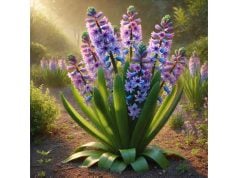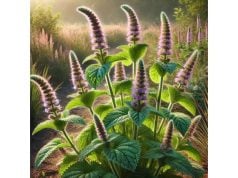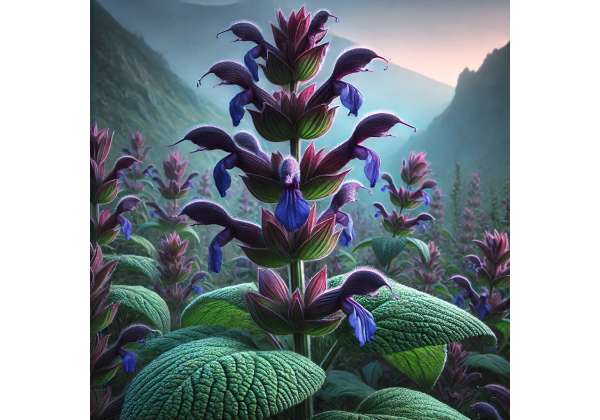
Himalayan Sage, or Salvia hians, is a lesser-known mountain sage with a strong traditional identity and a much smaller research base than culinary sage or Chinese medicinal salvias. Native to Himalayan regions, it appears in ethnobotanical records as a plant used for coughs, colds, anxiety, digestive complaints, joint discomfort, skin irritation, and certain eye-related uses. That gives it real herbal interest, but it also demands restraint. The plant is promising because it belongs to a pharmacologically rich genus and because species-specific studies have identified antibacterial essential-oil constituents and distinctive terpenoid chemistry. At the same time, the evidence is still thin, dosage is not standardized, and some of the most striking traditional uses, especially eye applications, should not be copied casually at home.
The most honest way to understand Himalayan Sage is as a culturally important medicinal herb with early scientific support, not as a fully validated modern remedy. It may offer useful respiratory, antimicrobial, and anti-inflammatory potential, but safe use depends on careful expectations, conservative dosing, and clear attention to formulation.
Key Insights
- Traditionally used for coughs, colds, and related respiratory discomfort in Himalayan communities.
- Studied essential oil shows antibacterial activity and a sesquiterpene-rich chemical profile.
- No standardized oral clinical dose exists; one field report documents 1–3 drops of fresh leaf extract in local eye use.
- Avoid self-use in pregnancy, breastfeeding, children, and anyone considering homemade eye preparations.
- Best viewed as a traditional and research-interest herb rather than a routine daily supplement.
Table of Contents
- What is Himalayan Sage?
- Key compounds in Salvia hians
- What does it help with?
- How is it used?
- How much per day?
- Side effects and who should avoid it
- What research actually shows
What is Himalayan Sage?
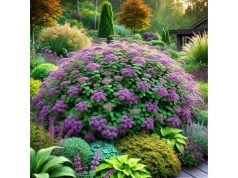
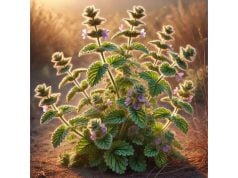
Himalayan Sage, Salvia hians, is a perennial herb in the mint family, Lamiaceae, and belongs to the large and medicinally important Salvia genus. It is associated with high-elevation Himalayan landscapes and appears in field studies from Kashmir and neighboring mountain regions, where local communities continue to use wild plants as part of everyday primary care. In ornamental horticulture, the species is also admired for its large violet-blue flowers and broad leaves, but its medicinal identity is where most readers will focus.
What makes this plant especially interesting is that it sits between two worlds. On one side, it is a regional ethnomedicinal herb. On the other, it is a relatively under-researched species compared with famous salvias such as Salvia officinalis or Salvia miltiorrhiza. That gap matters. It means the plant has a real traditional footprint, yet the scientific map around it is still incomplete.
Ethnobotanical surveys suggest that Salvia hians has been used for several kinds of complaints, especially respiratory and eye-related ones. Reports from Kashmir and adjacent Himalayan areas describe leaf-based preparations for cough, colds, anxiety, and eye disease. Broader ethnobotanical summaries also place the species within digestive, musculoskeletal, dermatologic, and neurologic use patterns. These reports are valuable because they show continuity of use across communities rather than a single isolated folk mention.
Still, it is important not to overread those records. A field study tells us how people use a plant. It does not prove that the plant is effective, safe, standardized, or equally suitable in all forms. This distinction is especially important for a species like Salvia hians, where the strongest modern data come from chemistry and antibacterial testing rather than clinical trials.
Another useful way to understand Himalayan Sage is to see it as a “local specialist” rather than a mainstream commercial herb. It appears often enough in regional literature to matter, but not with the level of consensus, product standardization, or clinical validation seen in better-known medicinal plants. That tends to be the profile of herbs that remain culturally significant yet scientifically emerging.
For readers, the takeaway is simple. Himalayan Sage is not just “another sage.” It is a distinct species with a specific Himalayan medicinal record, a recognizable but still limited chemistry profile, and a need for careful interpretation. Its story is real, but it is still being assembled.
Key compounds in Salvia hians
The chemistry of Himalayan Sage is one of the most useful places to slow down and be specific. Many herbal articles drift into generic Salvia chemistry and start borrowing claims from other species. That would be misleading here. Salvia hians does appear to share the broad medicinal richness of the genus, but the best species-level data currently available are still fairly narrow.
The clearest published chemistry comes from the plant’s essential oil. In the most cited species-specific analysis, the oil from wild Salvia hians was found to be rich in sesquiterpene hydrocarbons. Sixty-four compounds were identified, accounting for nearly all of the oil profile. The principal constituents included gamma-cadinene, caryophyllene acetate, delta-cadinene, and cubenol. That is a meaningful result because it tells us two things at once. First, the plant is not chemically blank or folkloric in a vague way. Second, its most clearly described active profile is aromatic and terpenoid rather than centered on the better-known phenolic-acid narrative often associated with some other salvias.
This sesquiterpene-rich profile matters because these compounds often contribute to antimicrobial, anti-inflammatory, and signaling effects in essential oils. Gamma-cadinene and delta-cadinene are commonly studied as part of defense-oriented aromatic chemistry in plants. Caryophyllene-related compounds, meanwhile, are frequently discussed for their interaction with inflammatory pathways. That does not automatically mean Himalayan Sage essential oil is clinically proven for infection or inflammation, but it does help explain why local medicinal use and laboratory antibacterial findings can plausibly point in the same direction.
Older phytochemical work on the species also suggests that the roots may contain more than just volatile oil-related chemistry. In other words, the aerial aromatic part and the subterranean medicinal part may not tell the same chemical story. That is a practical insight many readers miss. When an herb is used as a leaf juice in one tradition and as a root-based medicinal material in another, the chemistry may shift enough that “the plant” is not really one preparation in any meaningful clinical sense.
That has real implications for how this species should be discussed. The active profile of a leaf juice, a dried aerial infusion, a steam-distilled oil, and a crude mixed extract can differ substantially. For a well-studied herb, those differences may be partly mapped. For Salvia hians, they are not.
A fair summary of the key ingredients would look like this:
- Sesquiterpene hydrocarbons dominate the essential oil.
- Gamma-cadinene, delta-cadinene, caryophyllene acetate, and cubenol are among the main reported constituents.
- The species likely contains additional non-volatile constituents, but the public literature is still limited.
- Plant part and preparation probably matter a great deal.
That is why Himalayan Sage should be approached as a species with promising chemistry, not fully charted chemistry. Readers who want a more established anti-inflammatory herb profile may find boswellia for inflammation support easier to evaluate, because the link between compound, extract, and clinical use is much clearer there.
What does it help with?
The most accurate answer is that Himalayan Sage may help with several categories of symptoms, but the confidence level differs sharply from one category to another. Traditional use is broad. Modern proof is not.
The best-documented traditional pattern is respiratory support. Ethnobotanical field studies from Himalayan regions report Salvia hians leaves being used for cough, colds, and related discomforts. That gives the plant a believable place among regional cold-season herbs. When that tradition is viewed alongside the essential-oil chemistry and antibacterial testing, it becomes easier to understand why the species persisted in local use. A plant that smells strongly aromatic, carries terpenoid-rich oil, and is used for respiratory complaints is not an unusual pattern in mountain medicine.
Eye-related use is the second major pattern, and it is the one that requires the most caution. A recent field study documented fresh leaf extract being used in small drops for eye disease. This is historically important, but it is not a modern sterile ophthalmic standard. That difference cannot be overstated. Traditional eye use tells us the plant was trusted locally for irritated or infected eyes. It does not mean home-prepared eye drops are safe today. In fact, the opposite lesson is often wiser: eye traditions should be respected as historical evidence while treated conservatively in modern self-care.
Digestive and musculoskeletal uses appear in broader ethnobotanical summaries as well. These include stomach-related complaints, arthritic pain, and related discomforts. The logic is not hard to see. Aromatic sages often occupy a space where digestion, circulation, mild infection, and inflammatory pain overlap. But again, this is a pattern of use, not a settled clinical outcome.
If the plant’s benefit profile is ranked by confidence, it looks something like this:
- Most plausible from combined tradition and chemistry: cough, colds, minor respiratory discomfort, and mild antimicrobial support.
- Traditionally important but modern-use sensitive: eye-related applications.
- Possible but less clearly developed: joint discomfort, mild inflammatory states, digestive complaints, and certain skin problems.
One useful way to think about Himalayan Sage is to separate “folk direction” from “clinical destination.” Folk direction tells us where the plant has been pointed for generations. Clinical destination would require controlled trials, standardized extracts, and reproducible outcomes. Himalayan Sage is still much closer to the first stage than the second.
That is not a dismissal. In fact, many valuable herbs begin this way. But it does mean the plant should not be presented as a proven multitarget remedy. It is better described as a promising regional medicinal sage whose respiratory, antimicrobial, and irritation-soothing uses are more believable than broad modern wellness claims. For mild calming support, readers will usually find a more developed evidence and safety profile in lemon balm for gentle tension relief than in a species like Salvia hians, where the data remain patchy.
How is it used?
Traditional use of Himalayan Sage is practical rather than highly standardized. Field studies do not present a single official formula. Instead, they show how communities adapt the plant by part, complaint, and preparation method. That flexibility is common in regional herbal systems, but it creates a challenge for modern readers who want one clean answer.
The most frequently reported medicinal part is the leaf. In some surveys, fresh leaf juice is taken internally for cough, colds, and anxiety-related complaints. In others, fresh leaf extract is used locally for eye conditions. That tells us the plant has historically been used in fresh, minimally processed form rather than only as a dried commercial herb. This is a key detail because fresh juice, dried tea, tincture, and essential oil are not interchangeable.
There are also indications that broader infusions, decoctions, and stimulant-type uses have been associated with the species in Himalayan traditions. Some ethnobotanical records point toward digestive or cleansing roles, while others suggest regional use for discomfort in joints or skin. This diversity suggests the plant may have been used more as a context-sensitive household herb than as a single-purpose remedy.
In modern practical terms, four use categories matter:
- Fresh leaf juice or extract in traditional local use
This is historically documented, especially for respiratory complaints and some eye-related uses. - Infusion or decoction-style preparations
These are plausible from the broader ethnobotanical record, though not well standardized. - Essential-oil or aromatic interest
This is driven more by chemical analysis and antibacterial testing than by consumer herbal practice. - Research rather than routine self-care
This is where the species currently fits best.
The eye-use tradition deserves a special note. It is tempting for readers to see “1–3 drops” in an ethnobotanical paper and treat it like a safe recipe. That would be a mistake. Field-recorded traditional practice is not the same as a validated ophthalmic preparation. Sterility, concentration, contamination risk, and plant identification all matter more when the eye is involved.
The same caution applies to essential oil. A species with antibacterial aromatic compounds can sound attractive for steam inhalation, salves, or concentrated topical use, but essential oils are pharmacologically denser than fresh leaves and much easier to misuse. Without standardized safety guidance, the gap between “interesting” and “irritating” can be small.
That is why Himalayan Sage is better approached as a documented traditional herb than a ready-made DIY remedy. If someone simply wants a familiar aromatic herb for digestive or respiratory comfort, something like peppermint for routine digestive and respiratory support is easier to use responsibly. Himalayan Sage may deserve more research, but it still asks more from the user than most popular herbs do.
How much per day?
This is the section where caution matters most, because Himalayan Sage does not have a standardized oral daily dose supported by clinical trials. There is no well-established capsule dose, no accepted extract ratio for general consumer use, and no reliable “one size fits all” daily amount the way you might see for a more commercial herb.
What we do have are scattered field-use details from ethnobotanical surveys. The clearest numeric example is not an oral dose at all. One recent field record describes fresh leaf extract being used in a range of 1–3 drops for eye disease, usually in the morning and evening until the complaint improved. That information is useful historically, but it should not be presented as a safe self-treatment guide. Eye applications require sterility, exact preparation standards, and species certainty in a way most home herbal preparations do not meet.
For internal use, ethnobotanical reports mention leaf juice and related preparations for cough, colds, and anxiety, but they do not provide the kind of reproducible dosing framework needed for modern supplement advice. That leaves an important practical conclusion: Himalayan Sage currently has traditional use data without modern consumer dosing clarity.
A sensible way to frame dosage is with three levels of confidence:
- Historically documented local practice: yes.
- Standardized herbal dose for the general public: no.
- Validated long-term supplement dose: no.
That means the question “How much Himalayan Sage per day?” does not really have a strong evidence-based answer yet. The better question is, “In what form, for what use, and under whose guidance?” For this species, those details change the safety picture more than the raw number does.
There is also a broader issue of preparation strength. A few drops of fresh leaf extract, a cup of weak leaf infusion, and a concentrated essential oil exposure are radically different doses in biological terms. Articles that collapse them into a single “herbal dose” make the plant sound more settled than it really is.
So what should readers do with that uncertainty?
- Do not assume Himalayan Sage can be dosed like common culinary sage.
- Do not copy traditional eye-use numbers as home treatment instructions.
- Do not improvise essential-oil strength.
- Treat any internal or repeated medicinal use as practitioner-guided rather than routine.
In short, Himalayan Sage is a herb where the absence of a clear dose is itself meaningful. It signals that the plant still belongs more to ethnobotanical and exploratory herbal practice than to mature self-care dosing. That is not a flaw in the plant. It is simply the current state of the evidence.
Side effects and who should avoid it
Species-specific safety data on Himalayan Sage are limited, which means any responsible safety section has to be built on a combination of what is known, what is missing, and what can be inferred from the kind of preparations involved. In herbal medicine, missing data should make advice narrower, not broader.
The first issue is irritation risk. Aromatic Salvia species often contain concentrated terpenoids in their volatile fractions, and Salvia hians is no exception. That does not automatically make it dangerous, but it does mean concentrated essential-oil or crude extract use may irritate the skin, mucous membranes, or eyes. This is one reason the traditional eye-use history should be treated so carefully. A preparation can be culturally accepted and still fail modern standards for sterility, concentration control, and contamination prevention.
The second issue is uncertainty in special populations. Because there are no robust safety trials for Salvia hians, pregnancy, breastfeeding, and pediatric use should be treated conservatively. That usually means avoidance unless a qualified practitioner with species-specific knowledge advises otherwise. The same caution applies to people with major eye disease, fragile skin, severe allergies, or multiple medicines on board.
The third issue is interaction uncertainty. Himalayan Sage has too little direct interaction research to map a confident interaction list. But the plant’s aromatic chemistry and traditional nervous-system and respiratory use patterns suggest that caution is sensible when combining it with sedatives, strong inhaled agents, eye medications, or complex topical regimens. Unknown interaction potential is still a reason to slow down.
Who should avoid self-use?
- Pregnant or breastfeeding people.
- Children.
- Anyone considering homemade eye drops, eye washes, or direct ocular use.
- People with severe eye symptoms, infection, trauma, glaucoma, or recent eye surgery.
- Anyone with a history of strong plant allergies or skin reactivity.
- People using multiple medicines without professional review.
It is also worth distinguishing between traditional respect and modern safety. Some of the most culturally valued plants are precisely the ones that need the most careful boundaries. Himalayan Sage may be gentle in some forms and irritating in others. The problem is that current evidence is too thin to tell the average user where that line sits with confidence.
That is why a more cautious comparison is helpful. For mild, everyday topical soothing, something like calendula for gentle skin support carries fewer formulation unknowns than a species such as Salvia hians. Himalayan Sage is not a panic herb, but it is not a casual experiment herb either. Until safety data improve, restraint is part of safe use.
What research actually shows
The evidence base for Himalayan Sage is real, but it is uneven. That is the most useful starting sentence because it prevents both hype and dismissal.
What research clearly supports is that Salvia hians is a genuine ethnomedicinal plant with persistent use in Himalayan communities. It shows up in multiple field studies rather than in a single anecdote, and those studies record a recognizable cluster of uses: respiratory complaints, eye disease, anxiety, digestive issues, skin problems, and joint-related discomfort. Repeated documentation matters. It tells us the species belongs to living medical tradition, not just historical rumor.
Research also supports that the plant has a defined chemical profile, at least at the essential-oil level. The sesquiterpene-rich composition and the identified major constituents give Himalayan Sage a legitimate phytochemical identity. This matters because serious herbal evaluation begins when a plant has both an ethnomedical trail and a measurable chemical trail.
The third area of support is antibacterial potential. The essential oil has shown antibacterial activity in laboratory testing, which fits neatly with the plant’s aromatic chemistry and some of its traditional uses. However, laboratory antibacterial activity should never be translated too quickly into medical claims. A petri dish result is not the same as a clinically meaningful outcome in a human throat, skin lesion, sinus tract, or eye.
Where the evidence weakens is exactly where most consumer questions begin. There are no strong human clinical trials showing that Himalayan Sage reliably improves cough severity, shortens a cold, eases anxiety, or treats eye irritation better than placebo or standard care. There are also no modern dose-finding studies good enough to support broad supplement-style use. This is the central limit on the herb.
So what does the evidence actually justify?
- It justifies calling Salvia hians a traditional Himalayan medicinal herb.
- It justifies saying the species has identified bioactive terpenoid chemistry.
- It justifies saying early antibacterial evidence exists.
- It does not justify presenting the herb as a proven modern treatment for respiratory, eye, or digestive disease.
One of the more interesting insights from the field literature is that the plant appears culturally persistent without being one of the highest-consensus herbs in every survey. That usually means a plant is valued, but its role depends on community, healer knowledge, and preparation context. In practical terms, Himalayan Sage may be a “situational herb” rather than a universal household staple.
That is a good place to leave the plant: promising, authentic, underexplored, and best discussed with precision. Himalayan Sage deserves more research, especially on formulation, antimicrobial potential, and safety. Until then, its strongest status is that of a credible traditional herb with early scientific support and clear modern limits.
References
- Ethnobotanical diversity of the genus Salvia L. (Lamiaceae): From medicinal and culinary applications to cultural importance of sage species across the globe 2026 (Review)
- Plant cultural indicators of forest resources from the Himalayan high mountains: implications for improving agricultural resilience, subsistence, and forest restoration 2024
- The local medicinal plant knowledge in Kashmir Western Himalaya: a way to foster ecological transition via community-centred health seeking strategies 2023
- Descriptive study of plant resources in the context of the ethnomedicinal relevance of indigenous flora: A case study from Toli Peer National Park, Azad Jammu and Kashmir, Pakistan 2017
- Terpenoid Composition and Antibacterial Activity of Essential oil from Salvia hians Royle ex. Benth. 2011
Disclaimer
This article is for educational purposes only and is not medical advice, diagnosis, or treatment. Himalayan Sage is a traditionally used herb with limited modern clinical evidence and incomplete safety data. Do not use Salvia hians to self-treat serious eye disease, infection, breathing difficulty, persistent anxiety, or chronic inflammatory conditions. Avoid homemade eye preparations and consult a qualified healthcare professional before using this plant medicinally, especially if you are pregnant, breastfeeding, treating a child, or taking prescription medicines.
If you found this guide useful, please share it on Facebook, X, or your preferred platform to help more readers find careful, evidence-aware herbal information.