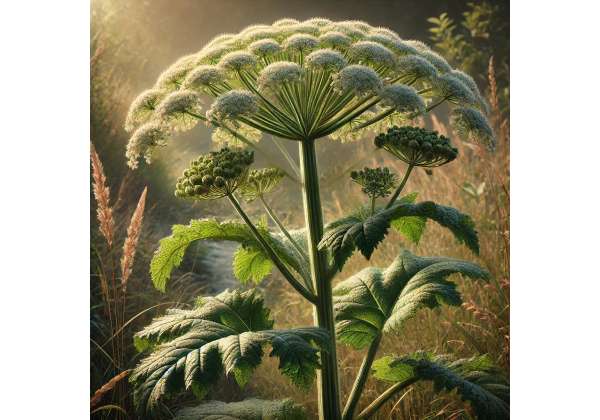
Hogsweed, better known botanically as Heracleum sphondylium and more commonly called common hogweed, is a traditional European herb from the carrot family. It has a long history as both a wild food and a folk remedy, especially for digestive discomfort, cramping, mild inflammatory complaints, and certain topical skin uses. The plant’s chemistry helps explain that interest. Its aerial parts, fruits, roots, and essential oils contain aromatic esters, coumarins, and furanocoumarins that may contribute to antimicrobial, anti-inflammatory, and antioxidant activity. At the same time, that same chemistry is the reason this herb needs more caution than many readers expect.
The most important point is practical rather than romantic. Hogsweed is not simply a gentle kitchen herb. It sits in a gray zone between edible plant, traditional remedy, and phototoxic risk. Common hogweed is usually less dangerous than giant hogweed, but it can still irritate skin and may trigger phytophotodermatitis when sap-covered skin is exposed to sunlight. That makes honest guidance essential: the herb has real traditional value, but careful identification, restrained use, and strong respect for safety matter just as much as any potential benefit.
Key Insights
- Traditional use centers on digestive cramping, bloating, and general stomach discomfort.
- Preclinical research suggests anti-inflammatory, antimicrobial, and antioxidant potential.
- Tincture labels may suggest 15 mL one to three times daily, but this is not a validated universal safe dose.
- People with plant allergy, very sensitive skin, or heavy sun exposure should avoid unsupervised use.
Table of Contents
- What is hogsweed?
- Hogsweed active compounds
- What benefits are realistic?
- How is hogsweed used?
- How much hogsweed is safe?
- Side effects and who should avoid it
- What the evidence actually says
What is hogsweed?
Hogsweed, or Heracleum sphondylium, is a biennial or short-lived perennial herb in the Apiaceae family, the same broad family that includes parsley, fennel, coriander, and angelica. It is native to much of Europe and parts of Asia and grows in meadows, hedgerows, woodland edges, roadsides, and rough grassland. In older regional traditions it has been valued not only as a medicinal plant but also as a seasonal food. Young shoots, stems, and other tender parts were gathered in some communities for soups, preserved preparations, and local recipes. That food history is one reason the plant still attracts interest today.
Yet hogsweed is also a plant that demands precision. The name “hogweed” is often used loosely, and that is where confusion begins. Common hogweed is not the same as giant hogweed, the far more notorious species associated with severe burns and invasive spread. Common hogweed usually contains lower concentrations of phototoxic compounds than the giant species, but that does not make it harmless. It still contains furanocoumarins, and sap on the skin followed by ultraviolet exposure can still produce painful reactions, blistering, and long-lasting discoloration.
Historically, folk medicine used the whole plant or selected parts for digestive complaints, cramps, loose stools, rheumatic pain, and sometimes skin problems. Some traditions also described it as warming, aromatic, or stimulating. That helps explain why the plant ended up in both household remedies and regional liqueurs or preserved foods. In practical herbal language, hogsweed was often treated as a carminative and antispasmodic plant first, with topical and tonic uses second.
What makes hogsweed especially interesting is that it is not a single-purpose herb. It sits at the overlap of wild edible, aromatic medicinal, and chemically defensive plant. That combination gives it value, but also limits. It can be useful, but it is not the kind of herb people should experiment with casually after a quick field identification. If your interest is mostly in safer digestive herbs from the same broad family, readers often find more straightforward options in fennel for digestive support and related culinary plants.
The modern way to understand hogsweed is simple: it is a historically important but pharmacologically active herb with meaningful traditional uses, moderate laboratory promise, and a safety profile that rules out carefree self-treatment. That balance matters more than any claim of miracle effects.
Hogsweed active compounds
The chemistry of hogsweed explains both its medicinal appeal and its risks. Different parts of the plant contain different groups of compounds, and that matters because a root extract, a fruit extract, a fresh stem, and an essential oil do not behave in the same way. The most important chemical families here are furanocoumarins, coumarins, volatile aromatic esters, and terpenoid-rich essential oil components.
Furanocoumarins are the most important compounds from a safety perspective. These molecules are best known for their ability to sensitize skin to ultraviolet light. In hogsweed, researchers have identified several notable compounds, including pimpinellin, isopimpinellin, sphondin, bergapten, imperatorin, and related derivatives. Some of these are concentrated more strongly in roots and fruits than in stems or leaves. That uneven distribution matters because the part of the plant used can substantially change both potential activity and risk.
From a pharmacology viewpoint, coumarin-type compounds are also the reason hogsweed is discussed in inflammation research. Recent work on a subspecies of Heracleum sphondylium isolated several coumarin derivatives from the roots, including heraclenol, byakangelicin, and glucosylated forms that showed anti-inflammatory effects in animal models. This does not prove that a homemade hogsweed preparation will reliably work the same way in people, but it does give the plant a plausible biochemical basis for its traditional reputation.
The plant also contains volatile and aromatic constituents that help explain its culinary and digestive history. Depending on the part studied, researchers have reported octyl acetate, octyl butyrate, 1-octanol, bicyclogermacrene, and other aliphatic esters and terpenes. These compounds help shape the herb’s odor profile and may contribute to antimicrobial or digestive-supportive effects. This is part of the reason hogsweed was historically treated as more than a weed. It is chemically complex, aromatic, and biologically active.
A newer phytochemical study from Romania also suggests a broad profile that includes terpenoids, fatty acids, coumarins, flavonoids, phenolic acids, phytosterols, and esters. That kind of mixed profile is common in medicinal plants with multiple traditional uses. It also explains why some laboratory studies report overlapping antioxidant, antimicrobial, and cytotoxic activity rather than one narrow biological effect.
The key lesson is that hogsweed’s benefits and hazards come from the same source: concentrated plant chemistry. A plant rich in furanocoumarins and aromatic esters may indeed do something biologically meaningful, but it also deserves more respect than a mild herbal tea plant. Readers who prefer milder aromatic kitchen herbs often do better with coriander in culinary and herbal use, where the digestive tradition is much easier to apply safely.
What benefits are realistic?
The most realistic way to talk about hogsweed benefits is to separate traditional use from clinically proven effect. Traditional use points to digestive support first. In many local systems, hogsweed was used for abdominal cramping, bloating, indigestion, and diarrhea. Its aromatic profile and coumarin-rich chemistry make that plausible. Plants with warm, pungent, volatile compounds are often used this way, especially when people perceive a problem as “stagnant digestion” rather than structural disease.
A second realistic benefit category is anti-inflammatory potential. Modern laboratory and animal studies on Heracleum species, including H. sphondylium material, support anti-inflammatory action from extracts and isolated compounds. That matters because it helps explain why the plant appears in traditions for rheumatic discomfort, aching joints, and general inflammatory complaints. Still, realistic does not mean proven. The research is interesting, but it is not yet the same as having strong human trials that show reliable symptom relief and safe dose ranges.
There is also a moderate case for antimicrobial and antioxidant potential. Some essential oil and extract studies suggest activity against bacteria, fungi, and oxidative stress models. That may help explain older topical or preservative-style uses. But again, it is important not to overstate the point. A plant showing antimicrobial activity in a lab dish does not automatically become an effective home treatment for infected skin, gastrointestinal infection, or any disease that requires medical diagnosis.
What about skin uses? This is where readers need the most nuance. Some traditional systems used hogsweed externally, but modern safety logic makes that tricky. Because the plant contains phototoxic compounds, its topical use is not as straightforward as with gentler herbs. Even if a preparation has anti-inflammatory or antimicrobial potential, the risk of sap exposure plus sunlight can outweigh the benefit in casual use. For mild, noninfected skin irritation, many people would be better served by calendula for minor skin support, which has a far friendlier risk profile.
Digestive use remains the most believable traditional niche, but even there, the herb is not a first-choice beginner remedy. If your goal is relief from bloating or cramping, herbs such as peppermint for digestive discomfort or fennel are supported by broader modern experience and easier safety guidance.
So the realistic benefits are these: possible digestive carminative effects, possible anti-inflammatory action, some antimicrobial potential, and ethnobotanical value as a wild edible and medicinal plant. The unrealistic version would be treating hogsweed as a proven all-purpose herbal remedy. The current science does not justify that. The plant may help, but the case for benefit is still much stronger in tradition and preclinical work than in controlled human outcomes.
How is hogsweed used?
Hogsweed has been used in three main ways: as a seasonal food, as a traditional internal remedy, and as a less common topical or external plant preparation. Each route has very different safety implications.
As a food plant, common hogweed has a long record in regional cuisine. Older accounts describe its use in soups, pickled preparations, liqueur-making, and other rustic dishes. Historically, tender shoots and young stems were especially valued before the plant became coarse. This food heritage is important because it shows that the plant is not inherently untouchable. At the same time, modern foragers should never let that history create false confidence. Correct identification is essential, and harvesting from roadsides, polluted sites, or mixed stands of similar Apiaceae plants is a bad idea.
As an internal remedy, hogsweed has been prepared as tea, decoction, tincture, or bitter aromatic extract. The traditional goals were usually digestive: easing cramping, reducing gas, improving appetite, or supporting sluggish digestion. Some traditions also used it more broadly for rheumatic discomfort or menstrual and nervous complaints, but those uses are less settled and often vary by region. Modern supplement marketing sometimes pushes hogsweed in hormonal or aphrodisiac language, yet the evidence for those claims is not strong enough to justify confident self-medication.
Topical use is the most misunderstood category. Because the plant has biologically active compounds, people sometimes assume it belongs in the same basket as soothing skin herbs. It does not. Fresh sap, bruised plant material, or poorly controlled extracts can increase phototoxic risk. That means homemade topical use is usually a poor idea, especially on sun-exposed skin, broken skin, or sensitive areas. If someone wants gentle external plant support for minor irritation, witch hazel for topical astringent care or calendula is far more practical.
A careful modern use framework looks like this:
- Use only correctly identified plant material.
- Favor professionally prepared products over improvised wild-harvest preparations.
- Treat food use and medicinal use as separate questions.
- Avoid fresh-sap skin contact before sun exposure.
- Do not confuse common hogweed with giant hogweed or other look-alike Apiaceae plants.
That last point is the most important one in real life. Hogsweed is a plant where enthusiasm for traditional use must be matched by botanical caution. The herb may be workable in experienced hands, but it is not an ideal choice for casual self-directed herbal experimentation. The more concentrated the preparation, the less room there is for guesswork.
How much hogsweed is safe?
This is the section where restraint matters most. There is no well-established, evidence-based universal medicinal dose for Heracleum sphondylium that can be recommended with confidence across teas, tinctures, powders, extracts, and fresh plant use. The chemistry varies by plant part, preparation method, and likely growing conditions. That alone makes neat dosing advice unreliable.
What we do know is more cautionary than reassuring. A recent analysis of hogsweed-containing food supplements found that some tincture-type products recommended one tablespoon, or 15 mL, three times daily. On paper that may sound ordinary, but laboratory testing showed that some products taken at that label dose could deliver furocoumarin exposures far above conservative harmless thresholds discussed in the same paper. In one case, estimated total furocoumarin intake reached nearly 20 mg per day. That is precisely why label directions should not be mistaken for proof of safety.
So what should readers do with that information? First, treat product-specific dosing as a manufacturer instruction, not a clinically validated standard. Second, understand that hogsweed is not a herb where “traditional” automatically means “safe at household doses.” Third, recognize that dose is not the only variable. Plant part matters. Roots and fruits may carry a different risk profile than aerial parts. Alcohol extracts can concentrate constituents in ways that water infusions do not.
A practical safety-minded approach is to think in tiers:
- Fresh plant use is the least predictable and the most dependent on proper identification.
- Homemade tinctures are risky because they can concentrate phototoxic compounds.
- Commercial products are easier to measure, but still vary and may not be standardized for furocoumarins.
- Food-level occasional use is different from medicinal concentrated use.
For that reason, the best dosage advice is conservative. If someone chooses a commercial hogsweed product despite the limitations, they should use the lowest labeled amount, avoid combining multiple hogsweed products, avoid sun exposure after handling the herb, and stop promptly if any skin or gastrointestinal reaction appears. Long-term daily use also makes less sense than short, specific use because the safety evidence is thin.
This may sound unsatisfying, but it is the honest answer. Hogsweed is not a herb with a clean modern dose range like many mainstream botanicals. Its chemistry is too variable, and its phototoxic potential changes the risk calculation. In practice, “how much is safe” often becomes “how little can be used, how briefly, and under how much caution.” That is not a flaw in the herb; it is simply the reality of the evidence.
Side effects and who should avoid it
The best-known side effect of hogsweed is phytophotodermatitis, a non-allergic skin reaction that happens when photosensitizing plant compounds come into contact with the skin and the area is then exposed to ultraviolet light. The result can range from redness and burning to blisters, swelling, and lingering dark discoloration. Common hogweed is usually less notorious than giant hogweed, but it can still do this. That alone should change how people think about the plant.
This risk is especially relevant with fresh plant handling. Crushing stems, cutting leaves, or getting sap on the hands and forearms is the classic setup for a reaction if the skin is later exposed to sunlight. The problem is not always immediate. Some people notice the burn-like change hours later, which is one reason the connection can be missed.
Potential side effects or practical problems include:
- Burning or blistering skin after plant contact and sun exposure.
- Delayed dark marks on the skin after the initial reaction fades.
- Irritation from concentrated preparations.
- Unpredictable herb-drug interactions linked to furocoumarin content.
- Excess exposure from poorly standardized supplements.
People who should avoid unsupervised use include:
- Anyone with very sensitive skin or a history of photodermatitis.
- Outdoor workers, gardeners, hikers, and others with unavoidable sun exposure.
- Pregnant or breastfeeding people, because safety data are inadequate.
- Children, who are more vulnerable to identification mistakes and skin injury.
- People taking multiple medicines, especially where metabolism interactions could matter.
- Anyone with an existing rash, broken skin, or a history of plant allergy.
There is also a more subtle safety issue: mistaken identity. Apiaceae plants can be difficult for beginners, and confusion with other species can create unnecessary risk. That is why casual foraging and improvised herbal use are poor fits for hogsweed.
If accidental skin contact happens, the practical response is simple: wash the area promptly, protect it from sunlight, and monitor for redness, pain, or blistering. If a significant reaction develops, medical care is appropriate. Readers who mainly want a plant for inflammation or pain should note that herbs with stronger clinical support, such as boswellia research for inflammation, come with much clearer benefit-risk guidance than hogsweed does.
The short version is this: hogsweed is not dangerous in every situation, but its side effects are distinctive enough that safety must lead the conversation, not follow it.
What the evidence actually says
The evidence on hogsweed is real, but it is not yet mature enough to support confident therapeutic claims for everyday self-care. Most of the modern literature sits in one of four categories: ethnobotanical reviews, phytochemical studies, in vitro antimicrobial or antioxidant work, and animal research on inflammation. Those categories are useful, but they do not replace human clinical trials.
The strongest part of the evidence base is chemistry. We have a fairly consistent picture showing that Heracleum sphondylium contains furanocoumarins, coumarins, aromatic esters, and volatile compounds that are biologically active. That is enough to explain why the herb has digestive, antimicrobial, and anti-inflammatory traditions. It is also enough to explain why safety concerns keep surfacing, especially around skin exposure and concentrated supplements.
The second strongest part of the evidence is preclinical pharmacology. Animal and laboratory work support anti-inflammatory action, and recent research has identified specific root-derived compounds that seem to drive part of that effect. Other studies suggest antioxidant, antimicrobial, and moderate cytotoxic activity. These are meaningful findings, especially for future drug discovery or standardized extract development. They show that the plant is pharmacologically active, not folkloric fantasy.
Where the evidence weakens is human use. There is very little high-quality clinical evidence showing how effective hogsweed is in real patients, in what dose, for how long, and with what net risk. That is a major limitation. A plant may be chemically rich and still remain clinically uncertain. Hogsweed fits that description well.
The newest safety-oriented evidence also pulls the conversation toward caution. Food supplement analysis shows that commercial hogsweed products can vary greatly in furocoumarin content, and some may exceed conservative exposure targets by a wide margin. That makes the gap between “sold online” and “demonstrated safe” impossible to ignore.
So what is the fair bottom line? Hogsweed deserves respect as a traditional medicinal and edible plant with genuine pharmacological potential. It does not deserve overconfident marketing. Its digestive history is plausible. Its anti-inflammatory chemistry is interesting. Its antimicrobial profile is worth further study. But its phototoxic potential, supplement variability, and lack of strong human trials keep it in the category of cautious, specialist-interest herbalism rather than broad, beginner-friendly self-care.
Compared with classic, better-characterized herbs, hogsweed remains a plant where the science is good enough to justify interest, but not yet good enough to justify casual trust.
References
- Fast Determination of Furocoumarins in Food Supplements Containing Heracleum sphondylium L. Using Capillary Electrophoresis 2025
- Anti‐Inflammatory Compounds From Roots of Heracleum sphondylium subsp. cyclocarpum 2025
- Insight into Romanian Wild-Grown Heracleum sphondylium: Development of a New Phytocarrier Based on Silver Nanoparticles with Antioxidant, Antimicrobial and Cytotoxicity Potential 2024
- New Insights Concerning Phytophotodermatitis Induced by Phototoxic Plants 2024
- Prospects of Hogweed (Heracleum sphondylium L.) as a New Horticultural Crop for Food and Non-Food Uses: A Review 2023 (Review)
Disclaimer
This article is for educational purposes only and is not medical advice. Hogsweed can cause skin injury when handled incorrectly, especially when plant sap contacts the skin and the area is later exposed to sunlight. Do not use it to diagnose, treat, or replace care for digestive disease, skin injury, infection, or chronic pain without qualified professional guidance. Proper plant identification is essential, and concentrated products should be approached with particular caution.
Please share this article on Facebook, X, or your preferred platform if you found it useful.