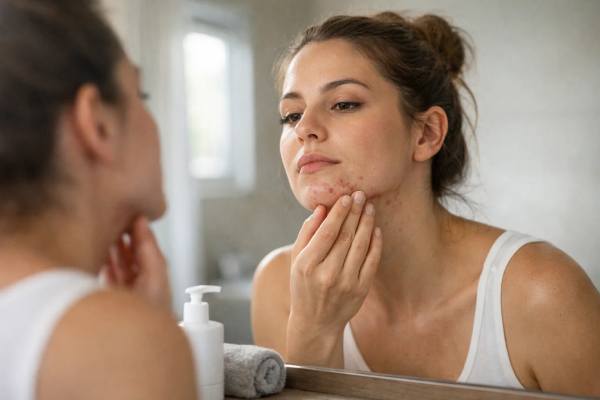
Few skin problems feel as unfairly timed as hormonal acne. It often appears just before a period, during times of stress, after stopping or starting certain hormones, or well into adulthood when acne was supposed to be over. The pattern is familiar: tender breakouts along the chin, jawline, and lower cheeks, often deeper than teenage whiteheads and slower to heal. Yet the phrase “hormonal acne” is used so loosely that it can create more confusion than clarity.
Sometimes the label fits well. Sometimes it is simply a convenient name for adult acne that flares predictably. And sometimes it is the first visible clue to a broader issue such as androgen excess or polycystic ovary syndrome. The practical question is not whether every chin breakout is hormonal. It is how to recognize the pattern, reduce the triggers you can control, and choose treatments that actually match the biology of the flare. That is where treatment gets smarter and results usually get better.
Core Points
- Hormonal acne often shows up as deeper, slower-healing bumps on the chin, jawline, and lower face, especially when flares repeat around the same point in the cycle.
- The most effective treatments usually combine pore-clearing therapy with anti-inflammatory or hormone-targeted treatment rather than relying on spot treatment alone.
- Acne alone does not always mean a hormone disorder, but irregular periods, excess facial hair, scalp thinning, or sudden severe flares make hormone evaluation more worthwhile.
- Prescription retinoids, benzoyl peroxide, spironolactone, selected birth control pills, and isotretinoin each fit different severity levels and goals.
- Give a new acne plan at least 8 to 12 weeks before judging it, unless irritation, allergy, or rapid worsening forces an earlier change.
Table of Contents
- What hormonal acne usually looks like
- Why chin and jawline breakouts happen
- Common triggers that worsen flares
- Best treatments for hormonal acne
- When acne points to a hormone problem
- How to build a better plan
What hormonal acne usually looks like
Hormonal acne is not a formal diagnosis on its own. It is a clinical pattern. The phrase usually refers to acne that seems strongly influenced by hormone shifts, especially androgens, menstrual cycling, stress-related hormone changes, or endocrine conditions that increase oil production and inflammation. In everyday life, people often use it to describe adult acne that clusters on the lower face and flares in a cyclical way.
The classic pattern includes breakouts on the chin, jawline, and around the mouth, though the cheeks and neck can be involved too. Lesions are often inflammatory rather than purely clogged pores. That means red papules, deeper tender bumps, and sometimes cyst-like lesions that sit under the skin for days or weeks. These breakouts can leave post-inflammatory marks more easily than smaller whiteheads and blackheads, especially if they are picked or repeatedly inflamed.
A few features make hormonal acne more likely:
- Flares that appear in a predictable monthly rhythm
- Deeper, sore bumps rather than mostly blackheads
- Persistent acne after the teen years
- Lower-face concentration, especially the chin and jawline
- Recurrence soon after stopping oral antibiotics
That said, the location alone does not prove the cause. Jawline acne can still be worsened by occlusive products, friction from phone screens or helmet straps, stress, and delayed treatment of regular acne vulgaris. Likewise, some truly hormone-sensitive acne appears across the cheeks, temples, chest, or back rather than only on the chin.
Adult acne is also more emotionally loaded than many people expect. A 14-year-old with acne is rarely surprised by it. A 32-year-old with recurring painful jawline breakouts often is. That difference matters because adult acne can feel more intrusive, more embarrassing, and more resistant. It often overlaps with work stress, family planning questions, changing contraceptive choices, pregnancy, postpartum shifts, or perimenopausal changes.
The most helpful way to think about hormonal acne is not as a mysterious special category, but as acne in which hormones are a major driver of oil production, follicle plugging, and inflammation. That is why treatment often has to go beyond simple spot care. If clogged pores, inflammation, and androgen sensitivity are all part of the picture, the best plan usually targets more than one of those pathways at the same time.
If acne arrives alongside excess facial hair, scalp thinning, or unusually oily skin, it may fit into a broader pattern of androgen excess symptoms rather than an isolated skin problem.
Why chin and jawline breakouts happen
The chin and jawline are not magical hormone zones, but they do seem to be common sites for adult inflammatory acne, especially in women. The reason is probably a mix of biology and pattern recognition rather than one single mechanism. Androgens increase sebaceous gland activity, and sebaceous glands are central to acne formation. When oil output rises, dead skin cells are more likely to become trapped in follicles, inflammation intensifies, and bacteria already present in the follicle gain a more favorable environment.
Hormonal shifts do not need to be dramatic to trigger this process. A person can have “normal” blood hormone levels and still have acne that is very responsive to ordinary cycle-related changes. The skin itself is hormonally active. Sebaceous glands respond to androgens, and local sensitivity may matter as much as the absolute hormone level in the bloodstream. That helps explain why some people develop lower-face acne without obvious lab abnormalities.
Cycle timing is a major clue. Many people notice flares in the week before a period, when estrogen and progesterone levels shift and oil production can become more noticeable. These breakouts are often deeper and more inflammatory than the smaller comedones seen in classic teenage acne. They also tend to heal more slowly and can recur in the same spots.
The jawline pattern can become even more pronounced in adulthood because other factors stack on top of hormone sensitivity. Stress can increase cortisol and indirectly affect inflammation and sebaceous activity. Sleep disruption can worsen skin recovery and inflammatory tone. Frequent touching of the face, pressure from phones, chin straps, masks, or sports equipment can add friction and occlusion. None of these are the root cause of hormonal acne, but they can amplify a hormonally primed flare.
Importantly, chin acne does not automatically equal PCOS or another endocrine disorder. Many people with monthly lower-face breakouts have no clinically significant hormone disease at all. Their skin is simply more reactive to normal fluctuations. That is one reason hormone testing is not recommended for every adult with acne. Pattern matters, but so do the associated symptoms.
The reverse is also true: a person can have a true hormone-driven condition without having textbook chin acne. Some develop more diffuse acne, oily skin, back acne, or worsening breakouts after stopping hormonal contraception. This is why rigid “face mapping” is less useful than people hope. It can suggest a direction, but it is not a diagnosis.
When acne clusters with irregular cycles, facial hair growth, or midsection weight changes, it may overlap with the broader metabolic and hormonal pattern described in common PCOS symptoms, especially if the breakouts are persistent rather than occasional.
Common triggers that worsen flares
Hormonal acne usually needs a hormonal tendency, but the actual flare is often pushed by everyday triggers. This is one reason breakouts can feel inconsistent. The baseline susceptibility may stay the same while the trigger load changes from month to month.
The most common trigger is the menstrual cycle. For many women, the week before bleeding starts is when deep lower-face breakouts appear. Pregnancy, postpartum hormone shifts, perimenopause, and stopping or switching hormonal contraception can create similar instability. Some people notice that acne improves on one contraceptive pill and worsens on another, depending on the progestin and the overall hormonal effect.
Stress is another big amplifier. Stress does not create acne from nothing, but it can worsen existing acne by increasing inflammatory signaling and influencing oil production. Stress also changes behavior: worse sleep, more skin picking, more sugary snacks, more missed skincare steps, and less consistency with treatment. By the time a flare appears, the visible pimple may be blamed while the stress pattern that fed it goes unnoticed.
Product choices matter more than people think. Heavy oils, greasy balms, certain hair products, thick sunscreens that do not suit acne-prone skin, and layered occlusive makeup can worsen breakouts in susceptible people. So can acne overcorrection. Harsh scrubs, drying toners, and overuse of acids can damage the barrier, increase irritation, and make the skin look both oily and inflamed at the same time.
Diet is more nuanced than social media makes it sound. Acne is not caused by one “bad” food, but some people do notice worsening with high glycemic diets or certain dairy-heavy patterns. The evidence is stronger for overall pattern than for one food villain. A diet built around frequent refined carbohydrates, sweet drinks, or repeated blood sugar spikes may influence insulin and insulin-like growth factor signaling in ways that support acne formation. That does not mean every person with acne needs a restrictive diet. It means eating patterns can be one of several modifiable contributors.
Other common flare triggers include:
- Inadequate sleep
- Skin picking or squeezing
- Friction from masks, helmets, or chin straps
- Anabolic steroids or testosterone exposure
- Some progestin-only methods
- Long delays in escalating treatment when topical care is clearly not enough
The useful takeaway is that triggers rarely act alone. Hormonal acne usually worsens when several things line up: a susceptible point in the cycle, more stress, less sleep, more friction, and a routine that is either too harsh or too inconsistent. Reducing the pileup matters.
For people who suspect food patterns are adding fuel to skin inflammation and oiliness, looking at ultra-processed foods and hormone health can be more helpful than chasing one ingredient at a time.
Best treatments for hormonal acne
The best treatments for hormonal acne depend on severity, scarring risk, pregnancy plans, skin sensitivity, and whether the acne is mostly comedonal, inflammatory, or deep and cystic. What usually does not work well is relying on spot treatments alone. Hormonal acne forms upstream, before the tender bump fully appears. That is why prevention-based treatment is more effective than chasing each lesion after it surfaces.
Topical treatment is still the foundation for most people. Strong options include:
- Topical retinoids to normalize pore turnover and prevent new clogged follicles
- Benzoyl peroxide to reduce acne-causing bacteria and inflammation
- Azelaic acid for acne plus post-inflammatory marks or sensitive skin
- Topical clascoterone as a newer antiandrogen option in selected patients
These are often better in combination than alone. A retinoid helps prevent new lesions, while benzoyl peroxide lowers bacterial load and inflammation. Improvement usually starts gradually, not overnight, and dryness in the first few weeks is common.
For moderate inflammatory acne, oral antibiotics may be used for a limited period, but they should not become a long, drifting plan. They work best as a bridge, usually alongside topical maintenance therapy, not as a standalone answer. Repeated cycles of antibiotics for recurrent jawline acne often signal that the driver has not been fully addressed.
When the pattern is clearly hormone-sensitive, two treatment categories become especially useful in women:
- Combined oral contraceptives, which can reduce androgen-driven oil production over time
- Spironolactone, an antiandrogen that can be especially helpful for deep lower-face flares, premenstrual breakouts, or acne that returns when antibiotics stop
Spironolactone is often a turning point for persistent adult female acne, but it is not for everyone. It can cause menstrual irregularity, breast tenderness, dizziness, or increased urination, and it is generally avoided in pregnancy. Retinoids also require special caution because topical retinoids are usually avoided in pregnancy, and oral isotretinoin is strongly teratogenic and tightly regulated.
Isotretinoin remains one of the best treatments for severe acne, scarring acne, or acne causing major psychosocial burden when other treatment is failing. It is not only for teenagers and not only for extreme cases. In the right person, it can be the most efficient option rather than a last-resort punishment.
A realistic treatment window matters. Most topical regimens need 8 to 12 weeks for a fair trial. Hormonal therapies often need 3 to 6 months before their full benefit becomes obvious. People quit too early all the time, then conclude nothing works.
If contraception is part of acne treatment decisions, this overview of how birth control changes hormones can help frame why some methods calm acne while others may not.
When acne points to a hormone problem
Most acne does not require an endocrine workup. That is an important point because “hormonal acne” can tempt people into ordering broad hormone panels that do not answer the real question. Acne by itself, even jawline acne, is a relatively weak predictor of a true hormone disorder. Testing becomes more useful when acne arrives with other signs of androgen excess or menstrual dysfunction.
The features that make hormone evaluation more worthwhile include:
- Irregular, infrequent, or absent periods
- Excess facial or body hair
- Scalp thinning or male-pattern hair loss
- Sudden worsening of acne after years of stable skin
- Severe inflammatory acne beginning around menarche or worsening into adulthood
- Rapid virilizing symptoms such as voice deepening, clitoral enlargement, or marked muscle changes
- Infertility concerns or known ovulatory dysfunction
- Major weight changes, especially with insulin resistance features
PCOS is the most common endocrine condition linked to acne in reproductive-age women, but it is not the only one. Thyroid disease, hyperprolactinemia, nonclassic congenital adrenal hyperplasia, Cushing syndrome, ovarian or adrenal androgen-secreting tumors, and medication effects can also alter the picture. The clue is usually not acne alone. It is acne plus a broader clinical pattern.
Timing matters here too. Testing should be guided by symptoms, not by internet curiosity. A mildly elevated androgen on a poorly timed or low-quality assay can create more confusion than clarity. The best hormone evaluation is focused: chosen for a specific question, interpreted in the right clinical context, and not overread.
It is also important to recognize what does not strongly predict a hormone disorder. Mild adult acne with regular periods and no hirsutism may still be hormonally responsive in the skin without reflecting a meaningful endocrine disease. That person may benefit from hormone-targeted treatment even if hormone testing is never needed.
On the other hand, red flags should not be minimized. Acne that becomes suddenly severe, especially with virilization or menstrual disruption, deserves more urgent evaluation. That is no longer about routine adult acne. It becomes a broader androgen-excess assessment.
A useful rule of thumb is simple: treat the skin pattern, but investigate the hormone pattern when the rest of the body starts speaking too. If acne is one symptom among several, the threshold to evaluate is lower.
For people unsure whether their breakouts belong to a bigger hormonal picture, this guide to common hormone imbalance symptoms and testing clues can help separate normal fluctuation from a pattern worth pursuing.
How to build a better plan
A better hormonal acne plan is usually less dramatic and more structured than people expect. It starts by matching treatment intensity to lesion type, not to frustration level alone. Deep inflammatory acne needs a different plan than mostly clogged pores. Scarring risk changes the urgency. Pregnancy goals change which medications are even on the table. And if hormones are clearly involved, long-term control often matters more than short bursts of improvement.
A practical framework looks like this:
- Stabilize the routine. Use a gentle cleanser, a non-comedogenic moisturizer, and one or two evidence-based actives rather than six rotating products.
- Choose a prevention treatment. A retinoid, benzoyl peroxide, azelaic acid, or a prescribed combination usually matters more than spot treatment.
- Track the pattern. Note timing with periods, stress, sleep, travel, supplements, or contraceptive changes.
- Escalate if the pattern is deeper or scarring. Painful nodules, frequent recurrence, or permanent marks are reasons to move beyond over-the-counter care.
- Reassess after a real trial. Most acne plans fail because they are changed too often, not because they were useless.
People often underestimate the role of maintenance. Even when skin improves, acne tends to return if the pore-clogging process restarts. That is why long-term gentle prevention usually works better than a cycle of intense treatment followed by complete withdrawal.
It also helps to be specific about goals. Are you trying to stop new deep lesions, fade marks, avoid antibiotics, reduce premenstrual flares, or clear the skin before pregnancy? Different goals change the best treatment choice. For example, spironolactone may be excellent for recurring lower-face acne in a woman not trying to conceive, while azelaic acid may be the more practical option during pregnancy planning.
When should you see a specialist? Dermatology input is worth it when acne is scarring, painful, resistant after a fair trial, or creating significant distress. Endocrine or gynecologic input becomes more useful when acne travels with irregular periods, hirsutism, infertility, or a sudden hyperandrogen pattern. In real life, those lines often overlap.
The good news is that hormonal acne is usually treatable, even when it is stubborn. The better news is that effective treatment rarely depends on finding one perfect trigger. It depends on identifying the main driver, picking a regimen that matches that driver, and staying with it long enough for the skin cycle to catch up.
If the pattern is persistent, multisystem, or still confusing after standard care, this guide on when to see an endocrinologist can help clarify when the problem is no longer just dermatology.
References
- Guidelines of care for the management of acne vulgaris 2024 (Guideline)
- Effectiveness of spironolactone for women with acne vulgaris (SAFA) in England and Wales: pragmatic, multicentre, phase 3, double blind, randomised controlled trial 2023 (RCT)
- Diet and acne: A systematic review 2022 (Systematic Review)
- Unveiling the Nuances of Adult Female Acne: A Comprehensive Exploration of Epidemiology, Treatment Modalities, Dermocosmetics, and the Menopausal Influence 2024 (Review)
- Recommendations From the 2023 International Evidence-based Guideline for the Assessment and Management of Polycystic Ovary Syndrome 2023 (Guideline)
Disclaimer
This article is for educational purposes only and is not a diagnosis or a substitute for personal medical care. Acne can reflect common skin biology, hormone-sensitive flares, medication effects, or, less often, an underlying endocrine disorder. Treatment choices such as topical retinoids, spironolactone, hormonal contraception, oral antibiotics, and isotretinoin have specific risks, contraindications, and pregnancy considerations that should be reviewed with a qualified clinician. Seek medical care promptly if acne is rapidly worsening, scarring, associated with irregular periods or signs of androgen excess, or causing significant emotional distress.
If this article helped you understand your breakouts more clearly, please share it on Facebook, X, or another platform where it may help someone else find a better path to treatment.