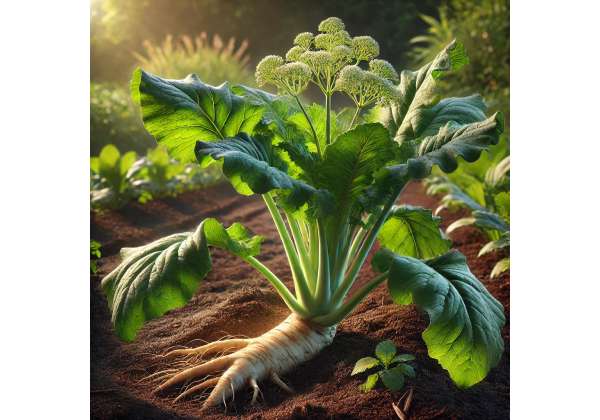
Horseradish is a hardy perennial root in the cabbage family, prized for a sharp heat that rises into the nose rather than lingering like chili pepper. That distinctive bite comes alive when the root is cut or grated, releasing sulfur-rich compounds that have long made horseradish both a food and a traditional remedy. In the kitchen, it brightens sauces, relishes, and meat dishes. In herbal practice, it has been used to stimulate digestion, clear the sinuses, and support the body during minor respiratory or urinary complaints.
What makes horseradish especially interesting is the gap between tradition and modern evidence. Its chemistry is impressive: glucosinolates, myrosinase, and isothiocyanates create a profile with antimicrobial, pungent, and tissue-stimulating effects. At the same time, the strongest human evidence is narrower than many popular articles suggest. Horseradish can be a useful culinary herb and a thoughtful short-term traditional option, but it is not a cure-all. The most helpful way to approach it is as a potent food with specific strengths, practical dosage limits, and real safety considerations.
Quick Overview
- Fresh horseradish may briefly open the nasal passages and stimulate saliva and digestive secretions.
- Its main sulfur compounds show antimicrobial and anti-inflammatory activity in laboratory research.
- Traditional adult intake commonly falls in the 2 to 20 g per day range of fresh or dried root, depending on form and tolerance.
- Avoid medicinal amounts during pregnancy and with kidney disease, stomach ulcers, active gastritis, or severe reflux.
Table of Contents
- What horseradish is
- Horseradish compounds and actions
- Does horseradish help?
- Best ways to use it
- How much per day?
- Safety and interactions
- What research really shows
What horseradish is
Horseradish is the thick white root of Armoracia rusticana, a member of the Brassicaceae family. That places it alongside cabbage, broccoli, mustard, and roots with a similar peppery edge, including radish medicinal uses. Unlike sweeter root vegetables, horseradish is not usually eaten in large pieces. It is valued in small amounts because its flavor is concentrated, volatile, and intense.
Fresh horseradish root looks plain from the outside, but once it is peeled and grated it becomes highly aromatic. The heat is different from the burn of chili peppers. Capsaicin from chili stays on the tongue. Horseradish heat rises quickly into the nose and upper throat, which is why it is often described as sinus-clearing. That effect helps explain its long association with colds, congestion, and heavy meals.
Traditionally, horseradish has been used in several ways at once. It acts as a condiment, a digestive stimulant, and a household remedy. In Central and Eastern Europe it has often been paired with vinegar, cream, apples, or beets. In herbal traditions, the fresh root has been grated into syrups, infusions, and warming rubs. Modern prepared horseradish is usually mixed with vinegar and salt, which stabilizes flavor but also changes the living chemistry of the fresh root.
One detail many people miss is that horseradish is strongest right after it is cut. Whole root has little aroma. Crushing it starts an enzyme reaction that creates its characteristic pungency. That means storage, processing, and timing matter. Fresh root, bottled prepared horseradish, dried powder, and capsules do not act exactly the same way.
Another source of confusion is wasabi. In many restaurants, the “wasabi” served with sushi is mostly horseradish blended with green coloring and mustard. The two plants are related and share similar sulfur compounds, but they are not identical herbs. True horseradish is better understood as a pungent culinary root with traditional medicinal uses, not as a mainstream dietary supplement with well-established modern dosing for every condition.
Horseradish compounds and actions
Horseradish owes most of its effects to a small group of bioactive compounds rather than to calories or macronutrients. The best-known starting compound is sinigrin, a glucosinolate stored in the root. When the root is grated, chewed, or crushed, sinigrin comes into contact with the enzyme myrosinase. That reaction creates allyl isothiocyanate, the main volatile compound behind horseradish’s piercing aroma and nasal heat.
This enzyme-triggered chemistry is the heart of horseradish’s medicinal profile. Fresh preparation matters because myrosinase is active only under the right conditions. Heat, time, and acidic ingredients can change the reaction. That is one reason freshly grated root tastes more alive than jarred versions. It is also why adding vinegar later produces a hotter condiment than adding it immediately.
The major compounds and their likely roles include:
- Sinigrin: the precursor glucosinolate that serves as raw material for pungent breakdown products.
- Myrosinase: the enzyme that activates flavor and much of the root’s biological activity after the tissue is damaged.
- Allyl isothiocyanate: the main pungent compound, associated with antimicrobial effects, strong aroma, and tissue stimulation.
- Other isothiocyanates: smaller contributors that may add antimicrobial and antioxidant effects.
- Polyphenols and flavonoids: compounds that may support antioxidant activity, though they are not the main reason horseradish feels medicinal.
- Vitamin C and minerals: useful nutritionally, but horseradish is usually eaten in portions too small to act as a major nutrient source.
This same glucosinolate-to-isothiocyanate pathway helps explain the chemistry of wasabi’s pungent compounds and other sharp Brassica plants. What makes horseradish special is how concentrated and immediately noticeable the reaction becomes in the root.
Functionally, these compounds appear to do three important things. First, they stimulate the senses and mucous membranes, which may increase saliva, tears, and nasal drainage. Second, they show antimicrobial activity in laboratory settings against a range of microbes. Third, they create a warming, irritating effect that can boost local circulation, which is why grated horseradish has historically been used in rubs and poultices.
The key practical lesson is that horseradish is a potency-dependent herb. Small changes in freshness, preparation, and quantity can produce very different experiences. A mild spoonful in sauce and a freshly grated tablespoon are not equivalent exposures. That is why thoughtful use matters more than the label “natural.”
Does horseradish help?
Horseradish may help in a few focused ways, but the realistic benefits are narrower than the more dramatic claims often seen online. Its most believable short-term effects are sensory and functional: it can briefly open the nose, stimulate saliva, sharpen appetite, and add digestive warmth to heavy foods. Many people notice these effects within minutes, and they do not require a supplement to occur.
Its traditional medicinal uses fall into three broad categories.
- Upper respiratory support: fresh horseradish can create a strong decongesting sensation. That does not mean it cures infection, but it may make breathing feel easier for a short time.
- Digestive stimulation: the pungency can increase salivation and make a meal feel easier to start digesting, especially rich or fatty foods.
- Urinary and antimicrobial support: fixed herbal products that combine horseradish root with nasturtium herb have been used in Europe for uncomplicated respiratory and urinary complaints.
Laboratory research also suggests that horseradish compounds can inhibit certain bacteria and reduce inflammatory signaling in cells. These findings support traditional use, but they do not automatically translate into proven clinical results for every person or every product. Fresh food use, homemade remedies, and standardized herbal tablets are very different exposures.
Where horseradish may be most useful is in bridging food and herbal practice. It can work as a culinary plant with a medicinal edge. For example, a modest amount with a meal may offer more than flavor alone. And the same mustard-oil family that appears in mustard seed compounds helps explain why horseradish has both culinary punch and biological activity.
At the same time, some popular claims need restraint. Horseradish is often marketed for detox, dramatic immune enhancement, fat loss, and cancer prevention. Those claims run ahead of the evidence. The active compounds are interesting, and some anticancer mechanisms appear in test-tube work, but that is not the same as a proven treatment or prevention strategy in humans.
A balanced way to think about benefits is this:
- Likely and noticeable: nasal clearing, salivation, warming sensation, flavor enhancement.
- Plausible but modest: digestive support and short-term traditional use for minor respiratory or urinary complaints.
- Promising but unproven for routine self-care: anti-inflammatory, antimicrobial, and chemoprotective effects beyond normal food use.
That makes horseradish a herb worth respecting, not exaggerating. It can be genuinely useful, but it works best when matched to the right expectation and the right dose.
Best ways to use it
The best way to use horseradish depends on whether your goal is flavor, digestive stimulation, or a more traditional short-term medicinal use. Fresh root is usually the strongest and most dynamic form. Prepared jarred horseradish is easier and more stable, but it is often less vivid because time, acid, and storage reduce its living bite.
For everyday use, these forms make the most sense:
- Fresh grated root: strongest aroma and fastest sensory effect.
- Prepared horseradish: convenient for sauces, dressings, and sandwiches.
- Dried powder or capsules: easier to dose, though activity varies by product.
- Combination herbal tablets: often paired with nasturtium in products aimed at respiratory or urinary support.
- Traditional external use: grated root poultices or compresses, which require real caution because they can irritate skin.
A practical kitchen approach works well for most people:
- Peel and grate the root finely.
- Let it stand briefly if you want a hotter result.
- Add vinegar and salt to stop the reaction and stabilize flavor.
- Use small amounts with roast meats, fish, eggs, potatoes, or yogurt-based sauces.
That timing matters. The longer the grated root sits before acid is added, the sharper the final heat tends to be. This is one of the rare herbs where preparation technique changes the experience almost immediately.
Horseradish also fits well into savory combinations. A little can lift relishes, vinaigrettes, and spreads, especially alongside ingredients with their own strong food tradition, such as garlic’s savory health applications. In practical terms, that means horseradish is often easiest to tolerate when diluted into food rather than taken straight.
For traditional wellness use, start simple. A small amount of fresh grated root with food is usually more predictable than experimenting with concentrated homemade tonics. Teas and syrups can be made, but the volatile compounds are sensitive, and harsh preparations can be harder on the stomach than expected.
Topical use is the form that deserves the most restraint. Horseradish rubs were historically used as warming agents for congestion or sore muscles, but they can irritate or even blister the skin if left on too long. They should never be used on broken skin, near the eyes, or in children without expert guidance.
In short, horseradish is usually best used as a strong food first, a short-term traditional herb second, and a topical remedy only with considerable care.
How much per day?
Horseradish dosage is best approached conservatively because the root is potent, preparations vary widely, and modern clinical dosing is not standardized across all products. Traditional adult intake commonly falls within a broad range of 2 to 20 grams per day of fresh or dried root, depending on the form used and the person’s tolerance. That wide range reflects how differently horseradish can be consumed: as food, as a grated fresh root, as an infusion, or as part of a commercial herbal preparation.
For practical use, these guidelines are more helpful than jumping straight to the upper limit:
- Food use: start with 1/2 teaspoon of prepared horseradish or a small pinch of fresh grated root with meals.
- Fresh root: many adults tolerate about 2 to 4 g at a time better than larger single doses.
- Traditional upper range: up to about 20 g per day has appeared in traditional monographs, but that is not a target most people need.
- Capsules or tablets: follow the product label, especially if the formula combines horseradish with other herbs.
- Infusions or homemade preparations: keep the strength modest, because home recipes vary too much for precise equivalence.
Timing also matters. Horseradish is generally easier on the stomach when taken with meals rather than on an empty stomach. That is especially true for people who are sensitive to spicy foods, acid reflux, or gastritis. If your goal is digestive stimulation, a small amount near the start of a meal makes more sense than a large amount afterward.
Duration should be matched to purpose. Culinary use can be ongoing if tolerated. Traditional medicinal use is better thought of as short term. For example, a few days to a couple of weeks may be reasonable for a self-limited situation, while ongoing daily high-dose use is harder to justify without professional guidance. When used specifically for its traditional diuretic effect, occasional use is more appropriate than long, uninterrupted courses.
A few common mistakes are worth avoiding:
- Using the strongest fresh root as if it were equivalent to a mild jarred condiment.
- Taking a large dose on an empty stomach.
- Assuming “natural” means there is no upper limit.
- Increasing the dose when the real problem is poor tolerance, not poor potency.
The smartest dosing strategy is simple: start low, take it with food, stay within traditional ranges, and stop if burning, nausea, reflux, or stomach pain begins to outweigh any benefit.
Safety and interactions
Horseradish is safe for many adults in normal food amounts, but medicinal use deserves more caution. The same compounds that make it interesting also make it irritating. In the mouth and nose, that usually means tearing, burning, and a strong rush of heat. In the stomach, larger amounts can cause discomfort, nausea, reflux, cramping, or loose stools. On the skin, fresh grated horseradish can cause intense redness and irritation, and prolonged contact may blister.
The people most likely to have trouble with horseradish are those who already have sensitive tissues. Medicinal amounts are best avoided or used only with professional advice if you have:
- Pregnancy
- Kidney disease
- Stomach or intestinal ulcers
- Active gastritis or stomach inflammation
- Severe reflux or excess stomach acid
- Known allergy to horseradish or other Brassica plants
Breastfeeding also deserves extra care because formal safety data are limited. Small culinary use is different from concentrated daily intake.
A less obvious concern is thyroid and medication overlap. Official monograph guidance advises caution in people with hypothyroidism and in those taking thyroid replacement medicine. It also advises caution with antacids. In practical terms, that means concentrated horseradish products are not ideal for casual self-treatment if you already manage thyroid disease or chronic upper-GI symptoms.
Children are another group where restraint matters. A tiny amount in food is one thing. Medicinal dosing is another. Because horseradish can strongly irritate mucous membranes, adult-style homemade remedies are not a good fit for children.
Topical use creates its own safety issues. A warming compress may feel traditional, but it can easily become too strong. If someone wants to use horseradish on the skin at all, the safest rule is brief contact, intact skin only, and immediate removal if burning escalates. People who are familiar with rubefacient herbs sometimes compare that surface heat to cayenne pepper uses, but horseradish can behave even more abruptly because of its volatile oils.
Seek medical care rather than self-treating with horseradish if symptoms point to something more serious, such as fever, flank pain, shortness of breath, wheezing, dehydration, blood in the urine, persistent vomiting, or chest pain. Horseradish may complement comfort measures, but it should not delay treatment when red-flag symptoms are present.
The bottom line is straightforward: food amounts are one category, medicinal doses are another, and concentrated topical or internal use should be treated with respect.
What research really shows
The research on horseradish is promising, but it is not evenly strong across all claims. The best-supported areas are phytochemistry, laboratory antimicrobial activity, and the traditional use of horseradish in fixed herbal combinations. The weaker areas are stand-alone human trials of horseradish root by itself for broad health outcomes.
What looks solid so far is the chemistry. Modern studies consistently confirm that horseradish is rich in glucosinolates, especially sinigrin, and that enzyme activation produces isothiocyanates such as allyl isothiocyanate. Research also supports the presence of vitamin C, polyphenols, and other secondary compounds, although the pungent sulfur chemistry remains the star of the plant.
The next strongest area is preclinical evidence. In cell and laboratory models, horseradish extracts and horseradish-derived isothiocyanates show antimicrobial, anti-inflammatory, and functional food potential. This helps explain why the root has persisted in traditional medicine. It also supports its use as more than a flavoring.
Human evidence is more selective. The most useful data involve horseradish root combined with nasturtium herb, especially for uncomplicated and recurrent urinary complaints. Recent observational and trial data suggest the combination may reduce recurrence and may offer a non-antibiotic option in some settings. That is encouraging, but it does not mean plain horseradish sauce from the refrigerator works the same way.
Several research limits matter:
- Combination formulas dominate the clinical literature. That makes it hard to isolate the exact contribution of horseradish alone.
- Preparations vary greatly. Fresh root, dried root, fermented extracts, tablets, and food preparations are not interchangeable.
- Short-term outcomes are easier to measure than long-term ones. We know more about immediate antimicrobial or symptom-related effects than durable health changes.
- Dose standardization is weak. Traditional ranges exist, but modern outcome-driven dosing is still incomplete.
So where does that leave the reader? In a sensible middle position. Horseradish is not a myth, and it is not a miracle. Its pungent chemistry is real, its traditional uses are plausible, and some modern clinical work is genuinely encouraging. But the herb is best used where evidence and experience overlap: as a potent food, a short-term traditional support, and a component of more structured herbal products rather than as a stand-alone answer to every infection, inflammation issue, or chronic disease goal.
That balanced reading of the evidence is more useful than hype. It lets horseradish keep its real strengths without asking it to do jobs the research has not yet proven.
References
- Horseradish – Armoracia Rusticana 2018 (Official Monograph) ([webprod.hc-sc.gc.ca][1])
- Phytochemical and functional analysis of horseradish (Armoracia rusticana) fermented and non-fermented root extracts 2022 (Review) ([PubMed][2])
- Effectiveness of a Combination of Nasturtium Herb and Horseradish Root (Angocin® Anti-Infekt N) Compared to Antibiotics in Managing Acute and Recurrent Urinary Tract Infections: A Retrospective Real-world Cohort Study 2024 (Cohort Study) ([PMC][3])
- Comprehensive Characterization of Armoracia rusticana Roots and Leaves: Physicochemical Properties, Functional Potential, and Nutritional Composition 2025 (Open Study) ([PMC][4])
- Clinical evaluation of the efficacy and safety of nasturtium herb and horseradish root versus placebo in the continuous prophylaxis of recurrent uncomplicated cystitis: a double-blind randomised clinical trial 2026 (RCT) ([PubMed][5])
Disclaimer
This article is for educational purposes only and is not medical advice, diagnosis, or treatment. Horseradish can irritate the mouth, stomach, skin, and airways, and concentrated use is not appropriate for everyone. Talk with a qualified clinician before using medicinal amounts if you are pregnant or breastfeeding, have kidney disease, ulcers, reflux, thyroid problems, or take prescription medicines. Seek prompt medical care for severe infection symptoms, breathing difficulty, chest pain, high fever, blood in the urine, or persistent vomiting.
If this article was helpful, please share it on Facebook, X, or your preferred platform so more readers can find balanced, evidence-aware information on horseradish.