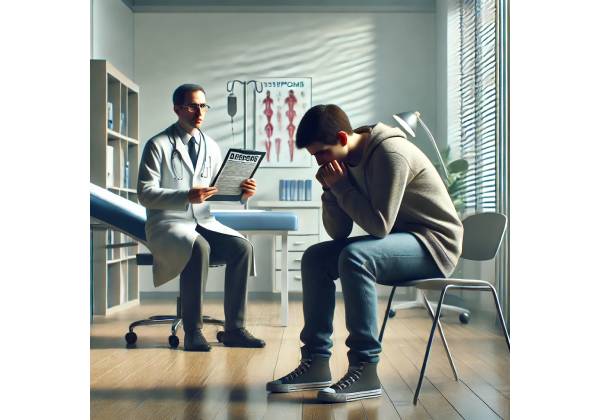
Nosophobia is an intense fear of developing a serious disease. For some people, the fear centers on one illness, such as cancer, dementia, or a contagious infection. For others, the fear shifts from one diagnosis to another but still follows the same pattern: dread, scanning for danger, avoidance, and repeated attempts to feel certain that nothing is wrong.
That fear can become life-shaping. People may avoid hospitals, medical shows, sick relatives, public places, or even routine conversations about health. Others spend hours checking sensations, reading symptoms online, or asking for reassurance. Treatment is usually effective, but it works best when the problem is understood clearly. In practice, nosophobia is often treated using the same evidence-based approaches used for specific phobias and health anxiety, with care tailored to how the fear shows up in daily life.
Table of Contents
- What nosophobia usually means clinically
- How assessment and treatment planning work
- Therapy approaches that help most
- Medication and when it may help
- Breaking avoidance, checking, and reassurance cycles
- Support at home, work, and school
- Recovery, relapse prevention, and long-term outlook
- When to seek medical or urgent help
What nosophobia usually means clinically
Nosophobia is commonly used to describe a persistent, excessive fear of getting a disease. It is not usually treated as a separate formal diagnosis with its own completely distinct treatment pathway. Instead, clinicians often understand it through one of two broader patterns.
The first is specific phobia. In this version, the main problem is fear triggered by disease-related cues. A person may panic at the sight of a hospital, avoid news about outbreaks, refuse screening tests because the topic feels unbearable, or stay away from people who seem unwell. The fear is intense, immediate, and linked to clear triggers.
The second pattern is closer to health anxiety or illness anxiety disorder. Here, the fear is less about one external trigger and more about ongoing worry that a serious illness is present or about to appear. The person may monitor normal sensations, misread harmless symptoms, seek repeated reassurance, and feel briefly relieved before the fear returns. That cycle overlaps strongly with health anxiety.
Sometimes the presentation includes features of both. A person may avoid disease-related situations and also spend hours checking their body. That overlap is one reason treatment has to be individualized instead of built around a label alone.
A careful assessment also looks at related conditions that can resemble nosophobia:
- panic attacks triggered by feared health sensations
- obsessive thoughts and compulsive checking, which may overlap with OCD symptoms
- trauma-related fear after a personal illness, medical emergency, or loss
- depression, especially when fear leads to withdrawal and hopelessness
- realistic concern about a real medical risk, which needs to be separated from excessive fear
The goal is not to argue over terminology. The goal is to understand what keeps the fear alive. Is the main problem avoidance? Catastrophic interpretation of body sensations? Reassurance seeking? Compulsive online searching? A recent bereavement? Once that pattern is clear, treatment becomes much more practical.
For many people, it is also a relief to learn that treatment does not require dismissing all health concerns as irrational. Good care takes fears seriously while helping the person respond more proportionately.
How assessment and treatment planning work
Treatment planning starts with a proper assessment, not with immediate reassurance and not with endless testing. A clinician usually wants to understand the content of the fear, how long it has been present, what situations trigger it, how much avoidance is happening, and whether the person has had appropriate medical evaluation already.
One of the most important distinctions is between reasonable medical evaluation and fear-driven repetition. If someone has a new lump, unexplained bleeding, significant weight loss, fainting, or other concerning symptoms, medical assessment comes first. If those symptoms have been evaluated appropriately and the person is still trapped in repetitive fear, the treatment focus shifts toward the anxiety cycle.
| Pattern | Typical focus | Common behaviors | Usual treatment emphasis |
|---|---|---|---|
| Specific phobia pattern | Fear of disease-related situations or reminders | Avoiding hospitals, illness news, sick people, screenings | Exposure-based therapy and fear reduction |
| Health anxiety pattern | Fear that illness is present or imminent | CBT for misinterpretation, reassurance cycles, and checking | |
| Mixed pattern | Both external triggers and internal symptom fear | Avoidance plus checking and reassurance seeking | Combined CBT and exposure work |
A good assessment often covers:
- feared illnesses and how specific the fear is
- recent triggers, such as family illness, media exposure, or a personal diagnosis scare
- body-checking habits
- internet searching and social media use
- reassurance-seeking from doctors, family, or friends
- sleep, appetite, concentration, and mood
- panic symptoms, especially if fear escalates suddenly
- alcohol, cannabis, stimulants, or other substances that may worsen anxiety
- whether the person is avoiding needed health care because of fear
Clinicians may also ask about screening and diagnosis more broadly, particularly when symptoms overlap with other anxiety problems or mood disorders. In some cases, a structured mental health evaluation or a broader overview of mental health screening can help clarify whether the main issue is a phobia, illness anxiety, OCD-related fear, panic, or a combination.
The best treatment plan is usually collaborative. It should include a clear explanation of the problem, the expected steps in therapy, how medication fits in if needed, and how to handle setbacks. Treatment works better when the person understands that the goal is not to feel 100% certain about health all the time. The goal is to tolerate uncertainty without letting fear run daily life.
Therapy approaches that help most
For most people with nosophobia, therapy is the core treatment. The best-supported approach is usually cognitive behavioral therapy, often with a strong exposure-based component.
CBT helps the person notice the chain that turns a trigger into panic or avoidance. For example:
- A headline mentions cancer.
- The person notices a normal body sensation.
- The mind jumps to a worst-case interpretation.
- Anxiety rises fast.
- The person searches symptoms or asks for reassurance.
- Anxiety falls briefly.
- The brain learns that fear must have been justified.
Therapy works by interrupting that loop. It does this in two main ways.
The first is cognitive work. This helps people identify catastrophizing, selective attention to threat, overestimation of risk, and intolerance of uncertainty. The therapist does not argue that disease is impossible. Instead, they help the person evaluate probability, evidence, alternative explanations, and the cost of fear-driven behavior.
The second is exposure work. This is often the most important part. Exposure means gradually facing feared situations, images, thoughts, or bodily sensations without escaping into avoidance or reassurance. A person might begin by reading disease-related words, later watch a medical drama scene, then sit in a clinic waiting room, and eventually attend needed preventive care without panic rituals. If the fear is strongly tied to internal sensations, exposure may also include learning not to treat every normal sensation as a danger signal.
This kind of structured treatment overlaps with broader approaches used in therapy for anxiety, but the exercises are tailored to illness fear rather than to social situations, panic alone, or generalized worry.
Other therapy approaches may also help in the right context:
- acceptance and commitment therapy, especially for uncertainty and values-based action
- mindfulness-based approaches, when body sensations trigger spiraling
- trauma-focused therapy, if the fear began after severe illness or medical trauma
- family-informed therapy, when reassurance cycles involve loved ones heavily
Therapy is not about forcing someone to become careless about health. It is about helping them respond proportionately. Many people feel better once they understand that recovery does not mean never feeling afraid again. It means fear no longer deciding where they go, what they read, whom they visit, or whether they can function.
Medication and when it may help
Medication can help, but it is usually not the first or only treatment for nosophobia. For a fear pattern that fits mainly with specific phobia, therapy is generally more central than medication. Medicines are more likely to be considered when the fear is persistent, functionally impairing, or mixed with broader anxiety, panic, depression, obsessive symptoms, or insomnia.
In practice, clinicians may consider medication when:
- the anxiety is severe enough to block therapy participation
- panic symptoms are frequent
- depression is also present
- illness fear is part of a broader anxiety disorder
- the person has tried therapy but still has marked symptoms
- access to therapy is delayed and symptoms are highly impairing
The medications most often discussed are SSRIs or SNRIs. These are commonly used across anxiety disorders and can reduce the intensity of worry, physical anxiety, and obsessive preoccupation over time. They are not instant-relief drugs. Improvement often takes several weeks, and early side effects can temporarily increase anxiety in some people.
Medication is usually used to support a larger treatment plan, not to replace one. Even when an SSRI helps, people often still need exposure work and behavior change. Otherwise, the old habits of avoidance, checking, and reassurance can keep the fear going.
Other medication points matter too:
- benzodiazepines are usually not ideal as a main strategy because they can reinforce avoidance and reliance on fast relief
- beta blockers may help in narrow situations with strong physical anxiety, but they do not treat the core fear pattern
- sleep medication may sometimes be used briefly if anxiety is disrupting rest badly
- medication choices should reflect the full clinical picture, not just the word nosophobia
This is especially important when the fear overlaps with panic. Some people interpret a racing heart, dizziness, or chest tightness as proof that a feared illness is starting, and then spiral into acute terror. In that case, treatment may need to address both illness fear and the broader cycle described in panic attacks.
A balanced medication discussion should also include limits. Medicines rarely create lasting recovery if the person continues to avoid all feared cues, check their body constantly, or ask for repeated reassurance. Medication may lower the volume of fear, but therapy teaches a different response to fear.
Breaking avoidance, checking, and reassurance cycles
Daily management matters because nosophobia is often maintained by behaviors that make sense in the moment but strengthen fear over time. The most common are avoidance, body checking, online symptom searching, asking other people for certainty, and constant monitoring of news or health content.
These behaviors reduce distress briefly. That brief relief is the trap. The brain learns, “I escaped danger,” rather than, “I can handle uncertainty.”
Treatment usually improves faster when these habits are addressed directly. Helpful strategies often include:
- setting clear limits on health-related searching
- reducing body checks to planned times, then tapering them further
- noticing reassurance questions before asking them
- delaying the urge to seek certainty by 10 to 30 minutes
- tracking triggers and the behavior that follows
- practicing exposure without safety behaviors
- keeping routines steady even when anxiety says to cancel
For example, if someone checks lymph nodes ten times a day, the early goal may not be “never check again.” It may be cutting down to three scheduled checks, then one, then none. If someone searches symptoms every night, the first step might be a firm rule of no medical searching after a certain hour, followed by reducing total frequency.
It also helps to separate information from compulsion. Reading about a doctor’s appointment once may be practical. Reading twenty pages of worst-case scenarios at 2 a.m. is usually anxiety maintenance, not problem solving.
People often need replacement skills when they stop these habits. Useful options include:
- brief grounding exercises
- slow breathing or paced exhalation
- naming the feared thought without arguing with it
- returning attention to a planned task
- writing down the urge instead of acting on it immediately
- using a therapist-designed exposure hierarchy
This is the stage where recovery starts to feel real. The person begins to notice that anxiety rises, peaks, and falls even when they do not perform the old ritual. Over time, feared cues lose some of their power. That does not happen because the person proved they are perfectly healthy every day. It happens because they stopped teaching the brain that fear requires immediate escape.
Support at home, work, and school
Support makes a meaningful difference, especially when loved ones have been pulled into the fear cycle. Family members often want to help, so they answer repeated reassurance questions, search symptoms on behalf of the person, or help them avoid triggers. That is understandable, but it can unintentionally keep the problem going.
Support works best when it is calm, consistent, and recovery-focused. Helpful responses from family or close friends often include:
- acknowledging distress without confirming the feared illness
- encouraging use of therapy tools instead of repeated reassurance
- supporting exposure goals
- avoiding debates about low-probability worst cases
- helping maintain sleep, meals, movement, and routine
- noticing progress, not just crises
A more helpful response is often, “I can see this is really scary, but let’s use the plan you and your therapist made,” rather than, “No, you definitely don’t have that disease.” The first validates emotion without feeding the reassurance cycle.
At work or school, the fear may show up as concentration problems, repeated absences, difficulty entering health-related settings, or distress after routine conversations about illness. Practical support may include temporary scheduling flexibility, predictable routines, reduced exposure to unnecessary triggering content during treatment, or permission to step out briefly and use coping skills rather than leave entirely.
Some people also benefit from reviewing lifestyle factors that raise baseline anxiety. These are not cures, but they can make treatment easier:
- steady sleep
- regular meals
- limiting excess caffeine
- reducing doomscrolling or health-content binges
- daily physical activity within medical comfort and clearance
- structured time instead of long unplanned periods for rumination
Broader strategies used for stress management can help lower overall arousal, but they should support, not replace, exposure and cognitive work.
Support also means knowing when not to normalize everything. If a person develops severe depression, stops functioning, refuses all needed medical care, or becomes suicidal, the plan needs to escalate. Good support is compassionate, but it is also realistic.
Recovery, relapse prevention, and long-term outlook
Recovery from nosophobia is usually gradual rather than dramatic. Many people do not wake up one day with zero fear of illness. Instead, they notice that fear shows up less often, lasts less long, and controls fewer decisions.
Early signs of progress often look like this:
- fewer reassurance requests
- less symptom searching
- less avoidance of disease-related topics
- more willingness to attend appointments when actually needed
- faster recovery after a trigger
- less time spent mentally reviewing bodily sensations
- greater ability to say, “I may feel uncertain, but I do not need to solve this right now”
Setbacks are common, especially after a real illness, the illness of a loved one, a media story about disease, or a new body sensation. A setback does not mean treatment failed. It usually means the old fear network was reactivated and needs a return to the same skills that helped before.
Relapse prevention often includes a written plan with:
- personal triggers
- early warning signs
- old behaviors that tend to return
- specific exposure exercises to restart
- limits on checking and googling
- when to contact a therapist or prescriber
- how family members should respond
It is also helpful to define recovery realistically. Recovery does not mean ignoring health or refusing all medical care. It means using medical care appropriately. Someone in recovery can still get screenings, discuss symptoms with a clinician, and take reasonable precautions. The difference is that these choices are based on judgment rather than fear escalation.
When the main problem has been broader health anxiety rather than a narrow phobia, ongoing maintenance work may matter more because uncertainty about health can never be removed completely. That is why some people benefit from booster therapy sessions even after major improvement.
The long-term outlook is generally favorable when the problem is recognized, treated consistently, and not fed by endless reassurance or repeated unnecessary testing. With treatment, many people regain ordinary freedoms that fear had narrowed: visiting family in hospitals, getting routine care, watching the news without spiraling, or noticing a body sensation without assuming catastrophe.
When to seek medical or urgent help
Because nosophobia involves fear of illness, this is one of the most important sections. Treatment should never teach someone to ignore all symptoms. The goal is balanced judgment.
Seek routine medical evaluation when there are genuinely new, persistent, or clinically significant symptoms. Anxiety can mimic illness, but real medical conditions also exist. A careful clinician may sometimes need to rule out problems discussed in guides on medical conditions that can mimic anxiety and depression, especially when symptoms are new, severe, or out of character.
Seek urgent help right away if there is:
- suicidal thinking or self-harm risk
- inability to eat, drink, or sleep because of anxiety
- severe panic with fainting, chest pain, or breathing distress that has not been medically assessed
- confusion, major behavior change, or inability to care for oneself
- refusal of necessary medical treatment because fear has become overwhelming
Emergency guidance may also overlap with broader advice on when to use urgent services for psychiatric or neurological symptoms, including situations covered in emergency mental health or neurological warning signs.
It is also worth getting professional help sooner rather than later if the fear is starting to shrink life. You do not have to wait until the problem is extreme. If fear of illness is changing your routines, isolating you from others, or consuming large amounts of time, treatment is already appropriate.
References
- Illness Anxiety Disorder: A Review of the Current Research and Future Directions 2024 (Review)
- Somatic Symptom Disorder and Health Anxiety: Assessment and Management 2023 (Review)
- Anxiety Disorders: A Review 2022 (Review)
- Phobias – NHS 2026
Disclaimer
This article is for general educational purposes only and is not a substitute for professional medical or mental health advice, diagnosis, or treatment. If fear of illness is causing major distress, avoiding needed care, or leading to thoughts of self-harm, seek help from a qualified clinician promptly.
If this article was useful, please share it on Facebook, X, or any platform you prefer.