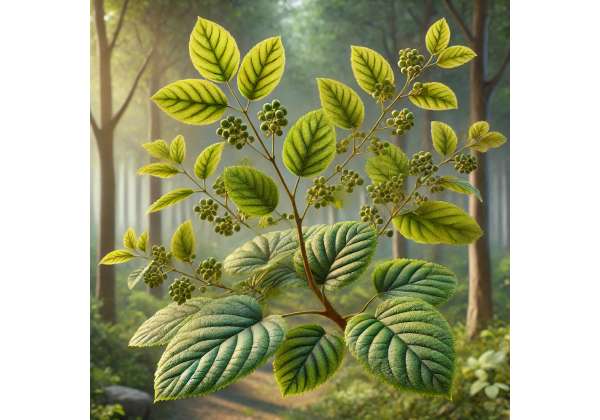
Huang Bai is the dried bark of Phellodendron chinense, a bitter yellow medicinal plant used for centuries in East Asian herbal practice. In traditional systems, it is valued for “clearing heat,” drying dampness, and easing patterns marked by burning, swelling, redness, loose stools, or irritated skin. In modern terms, interest in Huang Bai centers on its alkaloids, especially berberine, phellodendrine, palmatine, and related compounds that appear to influence inflammation, microbes, gut function, and metabolic signaling.
What makes Huang Bai especially compelling is that it sits between two worlds. On one side, it is a classic traditional herb with well-defined preparation methods and long clinical history inside multi-herb formulas. On the other, it contains compounds that now attract pharmacology research for anti-inflammatory, antimicrobial, and metabolic effects. Still, the most useful way to understand Huang Bai is with realism. It is not a general wellness tonic, and not every modern claim is equally strong. Used thoughtfully, though, it may offer focused benefits, especially when form, dose, duration, and safety are matched to the person and the goal.
Key Insights
- Huang Bai may help calm inflammatory and damp-heat patterns linked to digestive upset, irritated skin, and burning discomfort.
- Its best-known alkaloids, especially berberine and phellodendrine, show antimicrobial and anti-inflammatory activity in modern research.
- Traditional decoction use commonly falls in the 3 to 12 g per day range of dried bark.
- Avoid self-prescribing during pregnancy, breastfeeding, infancy, and when using diabetes drugs, cyclosporine, or other medicines with narrow dosing margins.
Table of Contents
- What Huang Bai is
- Huang Bai compounds and actions
- Where Huang Bai may help
- How Huang Bai is used
- How much Huang Bai per day
- Safety and interactions
- What research really shows
What Huang Bai is
Huang Bai is the dried bark of Phellodendron chinense, a tree in the citrus family. In Chinese herbal medicine, the bark is deeply bitter, cooling in character, and used for patterns described as damp-heat, fire toxicity, and deficiency heat. Those older terms can sound abstract, but they often point to recognizable symptom clusters: burning urination, diarrhea with heat signs, foul-smelling discharge, swollen gums, itchy or weeping skin, or a hot, restless feeling that seems to rise from inflammation.
One important detail is that “Huang Bai” is sometimes used loosely for more than one Phellodendron species. The bark of Phellodendron chinense and the related Phellodendron amurense have overlapping traditional uses, but they are not chemically identical. That matters because the alkaloid profile, especially the amount of berberine, can differ enough to affect both potency and expectations. For a reader trying to use the herb well, species accuracy is not academic trivia. It helps explain why one product feels sharper, stronger, or more medicine-like than another.
Traditionally, Huang Bai is not usually used alone for broad “detox” goals. It is more often matched to a specific picture. For example, a practitioner may choose it when heat and dampness seem to settle in the lower body, the gut, or the skin. That is why it often appears in formulas for dysentery-style diarrhea, urinary burning, vaginal discharge, gout-like swelling, eczema, sores, and hot inflammatory states. In that context, Huang Bai is less of a general wellness herb and more of a targeted corrector.
The bark itself is yellow inside, fibrous, and intensely bitter. That bitterness is not just a sensory detail. It often signals a dense alkaloid content and a stronger physiologic effect than the average culinary herb. Huang Bai is closer to the medicinal edge of herbalism than to the food edge.
A helpful comparison is with other bitter, berberine-rich plants such as barberry bark and root. The family resemblance is real: sharp bitterness, antimicrobial interest, digestive effects, and a need for more caution than the word “herb” might suggest.
The key takeaway is simple. Huang Bai is best understood as a potent medicinal bark with a long traditional role, a strong chemical identity, and a narrower, more purposeful use profile than many popular herb guides imply.
Huang Bai compounds and actions
Huang Bai’s effects are driven mainly by alkaloids. These are nitrogen-containing compounds with strong physiologic activity, and they explain why this herb has attracted modern pharmacology interest. The best-known is berberine, but berberine is only part of the story. Huang Bai also contains phellodendrine, palmatine, jatrorrhizine, magnoflorine, and other alkaloids, along with limonoids such as obacunone and related constituents that may contribute to the bark’s broader activity.
The major compounds and their likely roles can be understood in layers:
- Berberine: the headline alkaloid, closely associated with antimicrobial, anti-inflammatory, gut-signaling, and metabolic effects.
- Phellodendrine: another important marker compound, often discussed for immunologic and anti-inflammatory relevance.
- Palmatine and jatrorrhizine: related protoberberine alkaloids that may add antimicrobial and signaling effects.
- Magnoflorine: a quaternary alkaloid that may contribute to anti-inflammatory and neurologic modulation.
- Obacunone and related limonoids: non-alkaloid compounds that may matter for skin, immune, and anti-inflammatory actions.
What these compounds seem to do is more important than memorizing the names. Together, they create a profile that is strongly bitter, biologically active, and especially relevant to inflammation, microbial balance, mucosal irritation, and certain metabolic pathways. Berberine, for example, is often studied in relation to AMPK signaling, glucose handling, lipid metabolism, and gut microbial shifts. That does not mean the whole bark acts exactly like isolated berberine, but it helps explain why Huang Bai is so often discussed in digestive, inflammatory, and metabolic contexts.
This is also why Huang Bai overlaps conceptually with Chinese goldthread alkaloid uses. Both herbs are bitter, cooling, and rich in berberine-like compounds, though their traditional roles, plant parts, and formula pairings are not identical.
Another useful point is that Huang Bai is not chemically static. Processing changes it. In traditional pharmacy, the bark may be used raw or processed, including salt-water processing in some applications. Heat and processing can shift the relative balance of compounds and may change where the herb seems to “act” most clearly in the body. That matters for both traditional interpretation and modern pharmacokinetics.
In practical terms, Huang Bai’s chemistry tells you three things. First, this is a strong herb, not a gentle daily tonic. Second, most of its proposed benefits come from a cluster of compounds working together rather than a single magic ingredient. Third, product identity matters. Raw bark, processed bark, extract capsules, and berberine isolates do not behave in exactly the same way, even when they sound related on a label.
Where Huang Bai may help
Huang Bai is most plausibly helpful in areas where traditional use and modern mechanism overlap. That overlap is strongest in inflammatory states, digestive irritation with heat signs, certain skin complaints, and some metabolic pathways linked to berberine-rich botanicals. The key word, though, is plausibly. The herb makes the most sense when used for focused aims rather than as an all-purpose remedy.
The clearest traditional and mechanistic fit includes:
- Digestive heat and diarrhea: especially when stools feel urgent, foul, burning, or associated with intestinal irritation.
- Urinary or lower-body heat patterns: burning discomfort, dark urine, and damp inflammatory states in traditional practice.
- Skin irritation: red, itchy, weeping, or inflamed skin patterns, often as part of a broader formula or topical wash.
- Inflammatory burden: especially where bitter alkaloids may help modulate signaling rather than simply mask symptoms.
Modern readers are often most interested in its metabolic angle. That interest comes largely from berberine research rather than from a large body of Huang Bai-only human trials. Still, because the bark is rich in berberine-type alkaloids, it is reasonable to discuss healthy blood sugar and lipid support as an area of interest, especially in extract-based products. A more targeted discussion of berberine dosing and metabolic safety helps explain why this part of the story is both promising and easy to oversell.
For skin, Huang Bai is one of those herbs that is more interesting than many casual readers realize. Traditional formulas use it for damp, red, oozing, or burning lesions rather than for dry, delicate, depleted skin. That distinction matters. This is not a soft moisturizing herb. It is a bitter-cooling bark chosen when irritation and inflammatory “heat” dominate the picture. In practice, that can translate into topical formulas for eczema-like flares, fungal-prone areas, or inflamed scalp conditions, though product-specific evidence varies.
There is also a practical contrast with flavone-rich anti-inflammatory herbs such as Baikal skullcap for inflammation support. Baikal skullcap is often discussed for calmer, broader inflammatory regulation, while Huang Bai tends to feel more bitter, drying, and antimicrobial in its traditional niche.
The most grounded way to think about benefits is this:
- Huang Bai may be most useful when heat, redness, irritation, dampness, or burning are prominent.
- Its strongest support comes from traditional use plus preclinical chemistry and pharmacology.
- The more a claim shifts toward chronic disease treatment or stand-alone metabolic therapy, the more careful the reader should become.
That keeps the herb in its real lane: targeted, potent, and potentially useful, but not a shortcut around diagnosis or comprehensive care.
How Huang Bai is used
Huang Bai can be used in several forms, and the form matters almost as much as the dose. In traditional practice, the most common route is a decoction made from the dried bark. That is very different from a standardized capsule, a tincture-style extract, or a topical preparation. One reason people get mixed results with Huang Bai is that they assume all formats behave the same way. They do not.
The most common forms include:
- Decoction pieces: dried bark simmered with water, usually as part of a multi-herb formula.
- Powder or granules: concentrated preparations intended to re-create decoction use more conveniently.
- Capsules or tablets: often standardized or semi-standardized extracts, sometimes blended with other herbs.
- Topical use: washes, compresses, creams, or formula-based applications for inflamed or damp skin.
- Processed bark: especially salt-water processed Huang Bai, used differently from the raw material in some traditional settings.
For internal use, decoction remains the most classical form because it reflects how the herb has historically been prescribed. It also allows it to be balanced with other herbs that soften its bitterness, protect digestion, or direct it to a particular pattern. That balancing function matters because Huang Bai can be drying and overly cooling if used without context.
In modern self-care, capsules are common because they are easier to dose and easier to tolerate. But convenience comes with tradeoffs. Some products behave more like whole-bark extracts, while others function more like berberine delivery systems. Labels that list only “Huang Bai extract” without standardization details leave too much unanswered.
Topical use deserves more attention than it usually gets. Huang Bai is often more intuitive on irritated, weeping, or inflamed skin than in broad internal wellness use. In formulas, it may be combined with other heat-clearing, antimicrobial, or anti-itch herbs. That makes it relevant alongside traditions that also use Ku Shen for inflamed skin patterns and damp-heat complaints, though the plants are chemically different.
A few practical principles help:
- Match the form to the goal. Decoctions and formula granules make more sense for traditional pattern-based use. Extract capsules make more sense for measured modern dosing. Topicals make more sense for localized skin complaints.
- Do not improvise strong home concentrates without a reason. Bitter barks can become harsher than expected.
- Do not combine multiple berberine-rich products casually. The overlap is easy to miss.
- Processed Huang Bai is not just “stronger Huang Bai.” It may have a different traditional target and different pharmacokinetic behavior.
Used well, Huang Bai is a precise herb. Used casually, it can be more drying, more interaction-prone, and less clearly helpful than people expect.
How much Huang Bai per day
For whole-herb use, the traditional adult decoction range most often cited for Huang Bai is 3 to 12 g per day of dried bark. That range is broad enough to allow for person-to-person differences, formula context, and therapeutic intensity, but it also sets an important boundary: Huang Bai is not usually taken in large, food-like amounts.
The lower end of the range is often enough when the herb is paired with other bitter-cooling botanicals or when the person is sensitive, smaller-bodied, or using it for a short, focused purpose. The higher end tends to appear in more robust formula use, not casual supplementation. Because bitterness and alkaloid density can challenge the stomach, more is not always better.
A practical dosing framework looks like this:
- Traditional decoction: 3 to 12 g/day dried bark.
- Granules or concentrated powders: dose depends on extract ratio and manufacturer equivalence to crude herb.
- Standardized extracts: product-specific; they should not be translated directly from crude-bark grams without a true crude equivalent.
- Topical preparations: concentration varies by formula and intended use.
Timing matters too. Huang Bai is usually easier to tolerate with or after food unless a practitioner has a different reason for its use. Taking a very bitter, cooling herb on an empty stomach can magnify nausea, cramping, or digestive discomfort in people who are already sensitive. This is especially true if the formula also contains other cold, bitter agents.
Duration should be tied to purpose. Huang Bai is better suited to a defined course than to indefinite self-prescribing. In practical terms, that often means several days to a few weeks, then reassessing rather than continuing by habit. For chronic concerns, ongoing use makes more sense under clinical supervision, especially if the product is extract-based or paired with prescription medicines.
Several variables should guide dose selection:
- Form: whole bark, extract, granule, or formula.
- Goal: digestive pattern, skin pattern, urinary discomfort, or metabolic support.
- Tolerance: especially GI sensitivity and cold constitution.
- Combination use: whether Huang Bai is standing alone or paired with related alkaloid-rich herbs.
- Medication burden: more medicines usually means more caution, not more herb.
A common mistake is to convert berberine trial doses directly into a Huang Bai bark dose. That does not work cleanly, because crude bark contains multiple compounds and variable alkaloid percentages. Another mistake is assuming processed Huang Bai can be dosed exactly like raw bark without context.
The best rule is simple: use the traditional 3 to 12 g/day range as a crude-bark reference point, adjust to the form you are actually using, start conservatively, and reassess early rather than pushing upward automatically.
Safety and interactions
Huang Bai deserves more respect than many everyday herbs because it contains pharmacologically active alkaloids and is often used in concentrated preparations. For many adults, short-term use in an appropriate formula may be well tolerated. But “well tolerated” is not the same as risk-free, especially when the herb is used like a supplement rather than like a traditionally balanced medicine.
The most common problems are digestive. Because Huang Bai is intensely bitter and cooling, it can trigger:
- nausea
- abdominal discomfort
- loose stools or, in some cases, altered bowel pattern
- appetite suppression
- a drained or chilled feeling in people who are already cold or weak
These effects are more likely when the dose is high, the extract is concentrated, the stomach is empty, or the person is already prone to digestive fragility.
The biggest safety issue, though, is not stomach upset. It is overlap with berberine-related cautions. Huang Bai contains berberine and related alkaloids, so it should be approached carefully in people who are pregnant, breastfeeding, or caring for newborns and infants. It is also not a good self-care choice for those with a history of hemolytic vulnerability, neonatal jaundice concerns in the family context, or a need for especially cautious medication management.
Interaction risk deserves plain language. Use extra caution, and ideally clinician oversight, if you take:
- diabetes medicines
- cyclosporine or other immunosuppressants
- medicines with narrow therapeutic ranges
- multi-drug regimens where transporters or liver enzymes matter
- other berberine-rich herbs or berberine supplements
The reason is not that Huang Bai is uniquely dangerous. It is that its alkaloids may influence absorption, transport, metabolism, or the net physiologic effect of other therapies. That is especially relevant when people stack Huang Bai with barberry, goldthread, or straight berberine without realizing the chemical overlap.
A second kind of mismatch is constitutional rather than pharmaceutical. Huang Bai is usually a poor fit for someone who is depleted, chronically cold, low-appetite, or prone to loose stools without heat signs. In that person, the herb’s drying and cooling qualities may worsen the pattern rather than improve it.
Topical use is generally easier to localize, but it still needs judgment. Broken skin, very sensitive skin, or heavily concentrated homemade applications can irritate rather than soothe.
The cleanest safety summary is this:
- Keep self-use short and purposeful.
- Avoid casual stacking with other berberine products.
- Use special caution in pregnancy, breastfeeding, infancy, and medically complex situations.
- Stop and reassess if the herb causes more digestive strain than symptom relief.
That safety-first approach fits the herb’s actual profile: useful, potent, and not meant for careless daily use.
What research really shows
Research on Huang Bai is real and meaningful, but it is uneven. The strongest evidence sits in phytochemistry, pharmacology, and mechanistic work. In other words, scientists have done a good job showing what is in the bark and what its compounds do in cells, tissues, and animal models. The weakest area is large, high-quality human evidence for Huang Bai bark by itself as a stand-alone therapy.
That distinction matters because many herb articles blur it. Huang Bai has a strong laboratory identity. It clearly contains active alkaloids. It clearly shows anti-inflammatory, antimicrobial, and pharmacokinetic relevance. It also has compelling traditional use. But those are not the same as broad clinical proof for every modern claim.
The evidence is strongest in these areas:
- Phytochemical mapping: the alkaloid-rich identity of the bark is well established.
- Anti-inflammatory mechanisms: especially around berberine, oxyberberine, immune signaling, and tissue distribution.
- Processing science: modern work shows that salt-water processing can alter compound behavior and transporter interactions.
- Traditional plausibility: long use in defined pattern-based formulas gives the herb a meaningful clinical context.
Where evidence becomes less certain is when Huang Bai is discussed as a direct treatment for obesity, diabetes, chronic inflammatory disease, or skin disease in isolation. Some of those ideas are plausible. Some have supportive data at the compound level, especially for berberine. But the leap from “active alkaloids with promising pathways” to “the whole bark is proven for this disease” is larger than many summaries admit.
This is why the research conversation often shifts from the herb to the compound. Berberine has a much larger evidence base than Huang Bai as a crude bark. That creates an interpretive trap. Readers may assume every result from isolated berberine belongs fully to Huang Bai. It does not. The bark may deliver berberine, but it also delivers other compounds, different absorption dynamics, and much more variation across species and preparations.
The most honest conclusion is a balanced one:
- Huang Bai is a legitimate medicinal bark with a well-characterized chemical profile.
- It has credible anti-inflammatory and antimicrobial potential.
- Traditional uses for gut, lower-body damp-heat, and irritated skin are pharmacologically plausible.
- High-confidence human evidence for the whole bark alone is still limited.
- Product type, species, and processing strongly affect what the herb is likely to do.
That makes Huang Bai a good example of a herb that deserves both respect and restraint. It is stronger than a wellness trend, but not yet broad enough in human data to justify hype. Readers are best served when it is treated as a targeted traditional bark with promising science, not as a universal natural fix.
References
- Anti-Inflammatory Activation of Phellodendri Chinensis Cortex is Mediated by Berberine Erythrocytes Self-Assembly Targeted Delivery System 2022 (Open Study)
- Biological Importance of Phellodendrine in Traditional and Modern Medicines: An Update on Therapeutic Potential in Medicine 2024 (Review)
- A strategy for evaluating the impact of processing of Chinese meteria medica on meridian tropism: the influence of salt-water processing of phellodendri chinensis cortex on renal transport proteins 2025 (Open Study)
- Quality Evaluation of Phellodendri Chinensis Cortex by Fingerprint–Chemical Pattern Recognition 2018 (Open Study)
- Phellodendri Cortex: A Phytochemical, Pharmacological, and Pharmacokinetic Review 2019 (Review)
Disclaimer
This article is for educational purposes only and is not a substitute for medical advice, diagnosis, or treatment. Huang Bai is a potent medicinal bark, not a casual daily supplement, and it may interact with prescription medicines or be unsuitable in pregnancy, breastfeeding, infancy, or complex health conditions. Because form, dose, and product quality vary widely, use medicinal amounts only with qualified guidance if you have a chronic illness, take regular medication, or plan longer-term use.
If this article helped you, please share it on Facebook, X, or your preferred platform to help more readers find careful, evidence-aware herbal information.