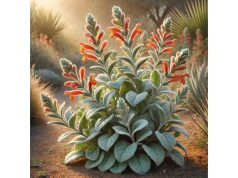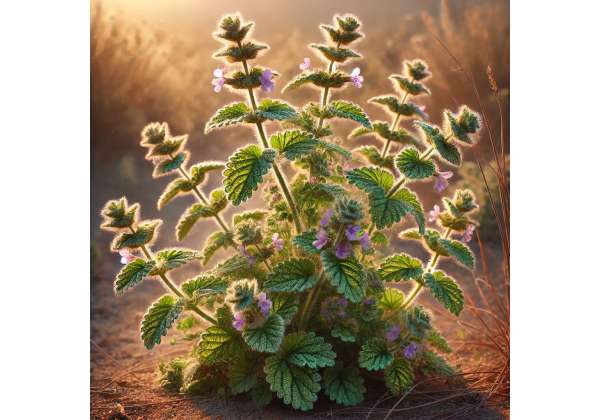
Hyptis suaveolens is an aromatic herb in the mint family that grows widely across tropical and subtropical regions, where it is known by names such as bush mint, pignut, or wild spikenard. In many communities, the leaves, flowers, seeds, and sometimes roots have been used in home remedies for stomach upset, colds, fever, skin complaints, and insect-related problems. Modern interest in the plant comes from the same place: it has a strong scent, a rich essential-oil profile, and a long list of plant compounds that suggest real biological activity.
What makes Hyptis especially interesting is the gap between tradition and evidence. The herb shows antimicrobial, antioxidant, anti-inflammatory, and gastroprotective promise in laboratory and animal research, yet strong human trials are still missing. That means it is best viewed as a promising traditional herb rather than a proven modern treatment. Used carefully, it may have practical value for short-term digestive, topical, or aromatic support. Used casually, especially as a concentrated oil, it can be overstated or misused.
Quick Summary
- Hyptis may help with short-term digestive discomfort such as gas, nausea, and diarrhea in traditional use.
- Leaf preparations and essential oil also show topical and aromatic potential for minor skin and respiratory support.
- Traditional decoction use commonly falls around 6 to 12 g of the herb for short-term use.
- Pregnant or breastfeeding people, young children, and anyone considering internal essential-oil use should avoid self-medicating with it.
Table of Contents
- What hyptis is and what it contains
- Key compounds and why they matter
- What hyptis may help with
- How to use hyptis
- How much hyptis per day
- Hyptis safety and interactions
- What the evidence actually says
What hyptis is and what it contains
Hyptis suaveolens is a strongly aromatic annual or short-lived perennial herb in the Lamiaceae family, the same large family that includes mint, basil, thyme, sage, and rosemary. Botanists now often list it under the name Mesosphaerum suaveolens, but the older name Hyptis suaveolens is still widely used in herbal writing, product descriptions, and scientific papers. If you are reading labels, articles, or research abstracts, you may see either name, and they usually refer to the same plant.
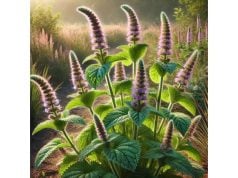
The herb is easy to recognize in the field once it is mature. It has softly hairy leaves, a pungent camphor-like aroma, and compact flower clusters. In traditional medicine, the leaves are the most commonly used part, though flowers, seeds, stems, and roots appear in regional practices too. That variation matters because Hyptis is not a single standardized preparation. A leaf tea, a seed drink, a crushed fresh poultice, and an essential oil are very different products.
The plant’s medicinal reputation comes from a layered chemistry rather than one famous active ingredient. Researchers have identified essential-oil constituents, diterpenes, triterpenes, flavonoids, phenolic acids, tannins, saponins, alkaloids, and sterols in different parts of the plant. In plain terms, that means Hyptis is chemically busy. It has aromatic compounds that move quickly and affect smell, surface activity, and antimicrobial behavior, plus less volatile compounds that may contribute antioxidant, anti-inflammatory, or protective effects.
One reason Hyptis is tricky to evaluate is that its chemistry changes with geography, climate, harvest stage, and plant part. A sample harvested in one country may be rich in sabinene, while another may show more eucalyptol or beta-caryophyllene. That helps explain why traditional uses are broad and why different studies sometimes report different strengths. It also explains why one essential oil may smell sharper and more camphorous than another.
In practical herbal terms, Hyptis sits somewhere between a digestive aromatic, a topical folk remedy, and a household medicinal weed with strong repellent value. If you already know how people compare aromatic herbs with eucalyptol-rich plants such as eucalyptus, Hyptis belongs in that wider conversation, though its uses are broader and its evidence is thinner.
The most useful starting point is to see Hyptis as a traditional multi-use herb with real phytochemical depth, not as a well-standardized modern supplement. That frame keeps expectations grounded and makes the rest of the article much easier to interpret.
Key compounds and why they matter
The chemistry of Hyptis suaveolens is the main reason researchers keep returning to it. The plant contains both volatile and non-volatile compounds, and each group helps explain a different part of its traditional reputation. The volatile fraction, usually discussed as essential oil, contributes much of the herb’s aroma and many of its antimicrobial and insect-repellent properties. The non-volatile fraction helps explain its antioxidant, anti-inflammatory, and digestive interest.
Among the better known essential-oil constituents are sabinene, eucalyptol, beta-caryophyllene, E-caryophyllene, germacrene D, and related terpenes. These compounds are not unique to Hyptis, but the way they appear together helps define the plant’s scent and activity. In one recent study, growth stage changed the oil profile quite noticeably: sabinene dominated in earlier stages, while eucalyptol became more prominent later. That is more than a chemistry detail. It means harvest timing can change how a Hyptis oil behaves.
Outside the oil, researchers have identified rosmarinic acid, quercetin, rutin, apigenin, catechin, and other phenolic compounds in the leaves. These are familiar names in herbal science because they often show antioxidant and inflammation-modulating activity in lab settings. Hyptis also contains diterpenes such as suaveolol and suaveolic acid, along with triterpenes like ursolic acid and sterol-type compounds such as beta-sitosterol.
A practical way to understand the main groups is this:
- Volatile terpenes help explain aroma, surface antimicrobial action, and the plant’s traditional use in inhaled, rubbed, or repellent forms.
- Phenolic acids and flavonoids help explain antioxidant capacity and some of the plant’s tissue-protective reputation.
- Diterpenes and triterpenes are especially important in the anti-inflammatory and gastroprotective research on Hyptis.
- Tannins and saponins may contribute astringent, mucosal, and surface effects, though they are less often the star of the conversation.
This diversity is one reason whole-plant preparations and essential oils can act quite differently. A tea made from leaves will emphasize water-soluble compounds and some mild aromatics. An ethanol extract will pull a broader range. An essential oil is narrower but much more concentrated. That is why a person cannot assume that “Hyptis is Hyptis” no matter the form.
It is also why exaggeration is risky. A plant can contain interesting molecules without being clinically proven to deliver the same effects in people. Hyptis has a promising chemistry, but chemistry is not the same thing as established therapy. The real value of its compounds is that they make traditional uses plausible and worthy of further study.
What hyptis may help with
If you strip away the hype and focus on realistic use, Hyptis suaveolens appears most relevant in four areas: digestive complaints, minor skin and wound support, aromatic respiratory comfort, and environmental use against insects. Some of these uses come mainly from tradition. Others have preclinical support. Very few are backed by strong human trials.
Digestive use is one of the most believable categories. Traditional reports describe Hyptis leaves, teas, syrups, and decoctions for stomach pain, gas, nausea, constipation, diarrhea, ulcers, and broader gastrointestinal discomfort. Animal studies add some support here. Leaf extracts and isolated compounds have shown anti-inflammatory, gastroprotective, and antidiarrheal effects in experimental models. In one line of research, the diterpene suaveolol showed more than 70 percent gastroprotection in a rat ulcer model, and a hexane fraction produced about 74 percent inhibition of induced gastric ulceration at 500 mg/kg. Those are promising numbers, though they are still not human data.
Skin and topical use also fits well. Traditional medicine uses fresh leaf paste, juice, or poultices for wounds, boils, itching, mycoses, and skin infections. This makes sense for an aromatic herb rich in terpenes, tannins, and antioxidant compounds. Still, “may support minor skin problems” is the right level of confidence. It is not a proven replacement for wound care, antibiotics, or antifungals.
Respiratory and fever-related use appears often in ethnobotanical records. Communities have used Hyptis for colds, coughs, flu-like illness, sinus symptoms, fever, and congestion. This is plausible because aromatic herbs can create a strong sensory effect around airflow, warmth, and expectoration. Some people compare this traditional lane with peppermint for combined digestive and respiratory support, though Hyptis tends to be more pungent, more medicinal, and less standardized.
Insect and environmental use is the most consistent non-medical benefit. Hyptis has long been used as smoke, crushed plant material, or oil-based repellent against insects, and modern studies repeatedly support larvicidal, insecticidal, and repellent activity. That does not automatically translate into personal therapeutic benefit, but it does help explain why the herb became part of household medicine in tropical settings.
What Hyptis may help with most realistically:
- short-term stomach upset,
- mild bloating or diarrhea,
- supportive care for minor irritated skin,
- aromatic comfort during colds,
- and non-pharmaceutical insect repellent use.
What it should not be sold as:
- a proven treatment for asthma,
- a stand-alone ulcer cure,
- a replacement for diabetes treatment,
- or a clinically validated antimicrobial medicine.
The real story is narrower but still useful. Hyptis seems most credible when used for short-term, practical support rather than for major disease claims.
How to use hyptis
Hyptis suaveolens can be used in several forms, and the safest choice depends on what you want it to do. Traditional practice includes decoctions, infusions, syrups, fresh leaf paste, seed preparations, inhaled smoke, baths, and topical applications. Modern users are more likely to encounter dried leaf, crude extracts, or essential oil. These forms are not interchangeable, and that is where many mistakes begin.
For most people, the gentlest and most rational entry point is a leaf infusion or decoction. This keeps the herb in a traditional, lower-intensity format and reduces the chance of overdoing concentrated oil. A tea or decoction makes the most sense when the goal is short-term support for digestive heaviness, mild cold symptoms, or general folk use. Because the plant is aromatic, covering the cup or pot while steeping helps preserve the lighter volatile components.
Topical use is another common route. Traditional methods include fresh crushed leaves, expressed leaf juice, and pastes for minor wounds, itching, boils, or irritated skin. In a modern setting, that is best translated as a short-term external use on small, uncomplicated areas only. If you want a skin-support herb with a gentler modern reputation, calendula for everyday topical care is often easier to work with than Hyptis, which can feel stronger and more irritating.
Essential oil use needs more caution. The oil is where much of the insect-repellent, antimicrobial, and aromatic power sits, but it is also the form most likely to cause problems if used carelessly. The oil should be diluted before skin use, and it should not be swallowed casually. Inhaling a little aroma from a diluted preparation or diffuser is very different from taking the oil internally.
A practical way to think about Hyptis forms:
- Tea or decoction for conservative internal folk use
- Fresh leaf mash or diluted topical preparation for minor external use
- Essential oil only with good dilution, a clear purpose, and extra care
General use tips matter more than elaborate recipes:
- Start with one form at a time.
- Keep the reason for use specific.
- Do not combine tea, tincture, and essential oil all at once.
- Avoid long-term daily use unless guided by someone qualified.
- Stop if the herb feels too strong, irritating, or drying.
There is also a sourcing issue many people overlook. Hyptis often grows as a roadside or disturbed-ground plant. That makes it easy to find, but not always safe to harvest. Plants from polluted roadsides, sprayed lots, or contaminated soils are poor choices for medicine.
Used thoughtfully, Hyptis can fit into a short-term herbal toolkit. Used as an all-purpose DIY remedy in every form at once, it becomes harder to use safely and easier to misjudge.
How much hyptis per day
Dosage is the weakest part of the Hyptis suaveolens evidence base, so honesty matters here. There is no standardized modern clinical dose for general adult use. What we do have are traditional preparations and a few recorded ranges from ethnopharmacological sources. That means dosing should be conservative, short-term, and clearly tied to a specific form.
The most directly reported traditional oral range is a 6 to 12 g decoction used for headaches and colds. Other traditional records mention 2 g of seeds soaked with crystalline sugar for underweight, 10 g of seed extract once daily for 3 days in a specific gynecologic use, and 4 to 7 g of leaf powder smoked for cold and nasal congestion. These latter uses are too specific, culturally bound, or impractical to be treated as general wellness guidance today. The 6 to 12 g decoction range is the most useful broad takeaway.
A sensible modern interpretation is this:
- Leaf tea or decoction: stay near the lower end first, especially if you have never used the herb
- Short-term use: think in days, not months
- Essential oil: do not convert dried-herb dosing into oil dosing, because that is not a safe or meaningful equivalence
Several variables should shape how cautious you are:
- the form being used,
- body size and sensitivity,
- whether the herb is fresh or dried,
- whether the product is a crude herb or a concentrated extract,
- and whether you are using it internally or topically.
For first-time users, the low end is the smart end. A smaller amount taken for a brief period tells you more than a maximal dose taken all at once. With Hyptis, more is not necessarily better. A strong aromatic herb can cross from helpful to irritating faster than people expect.
A practical self-trial framework looks like this:
- Pick one form only.
- Start low and keep it steady.
- Use it for a narrow goal, such as a few days of digestive upset.
- Stop if irritation, dizziness, stomach discomfort, or skin reaction appears.
The same caution applies to topical use. A dab of diluted product on a small area is better than broad application, especially with essential oil or fresh crushed leaves. Traditional use does not guarantee universal tolerance.
The key point is simple. Hyptis does have a recorded traditional dosage history, but it does not have the kind of well-established, supplement-style daily range that would justify casual long-term use. Keep it modest, keep it short, and keep the form in mind.
Hyptis safety and interactions
Hyptis suaveolens is often described online as though it were broadly safe because it is “just a weed” or “just a mint-family herb.” That is not a good standard. The herb may be useful, but safety data in humans are limited, and the strongest biologic activity often sits in the essential-oil fraction, which deserves more respect than casual home use suggests.
The safest general rule is this: the whole herb is lower risk than the concentrated oil, and short-term use is more reasonable than open-ended use.
Known or likely safety considerations include:
- skin irritation from essential oil or strong topical preparations,
- stomach discomfort from overly strong internal use,
- uncertainty around concentrated extracts,
- and the possibility of irritation when using fresh plant material on damaged skin.
One animal dermal study is somewhat reassuring: creams containing 3 percent and 10 percent essential oil did not show significant dermal toxicity over 28 days in rats, while a 30 percent concentration caused erythema in some females. That does not create a human dosing rule, but it does support a basic point: concentration matters.
Who should be cautious or avoid self-treatment:
- pregnant people, because traditional use includes labor-related and gynecologic uses
- breastfeeding people, because safety data are too limited
- young children, especially with essential oil
- people with very sensitive skin, eczema flares, or fragrance reactions
- people taking medicines for diabetes or other chronic conditions, since interaction research is sparse and some animal data suggest metabolic effects
Interaction data are not well mapped. That means a responsible article should not pretend there is a long, confirmed list. What we can say is that caution is reasonable with:
- glucose-lowering drugs,
- multiple topical actives used on irritated skin,
- and other concentrated essential oils used at the same time.
Another practical concern is product quality. Hyptis used as a crude wild herb may carry contamination risks if harvested from sprayed, dusty, or polluted locations. If the plant comes from roadsides, field margins, or urban waste ground, the herbal value may not outweigh the contamination risk.
For essential-oil style use, the comparison that helps most is tea tree and the need for proper dilution. Hyptis is not tea tree, but the safety principle is similar: strong oils can be helpful in small, appropriate amounts and irritating in careless ones.
The bottom line is not that Hyptis is dangerous. It is that the evidence does not support a casual “safe for everyone” label. Treat it like a strong traditional herb, not like a harmless garnish.
What the evidence actually says
The evidence for Hyptis suaveolens is substantial in one sense and limited in another. There is a lot of research, but most of it is not human clinical research. That distinction matters. Hyptis has been studied in phytochemistry papers, antimicrobial screens, antioxidant assays, wound models, ulcer models, anti-inflammatory experiments, larvicidal studies, and ethnobotanical reviews. What it does not yet have is a strong body of human trials showing clear therapeutic benefit in real patients.
That does not make the herb unimportant. It simply tells us what kind of confidence is justified.
What the evidence supports reasonably well:
- Hyptis contains a chemically rich essential oil and a broad range of secondary metabolites.
- Its oil and extracts show antimicrobial and antioxidant activity in preclinical settings.
- Certain compounds and extracts show anti-inflammatory and gastroprotective effects in animal models.
- Traditional use across several regions consistently points to digestive, respiratory, skin, fever-related, and insect-repellent applications.
- Essential-oil chemistry changes with geography, season, and growth stage, which likely changes biological effect too.
What the evidence does not support strongly enough yet:
- routine use as a proven treatment for ulcers,
- reliable clinical use for diabetes or infection,
- standardized dosing across products,
- or broad long-term safety claims for medicinal use.
This is also a herb where product variation can distort expectations. One paper may study a methanolic extract of leaves, another an ethanolic fraction, another a seed oil, another a steam-distilled essential oil. Those are not the same medicine. If one extract shows a nice laboratory effect, that does not mean a home tea will behave the same way.
That is why Hyptis can sound more impressive online than it really is in practice. The preclinical signal is real, but it is spread across many models and many preparations. The human evidence is still thin. For readers who want the honest takeaway, it is this:
- Hyptis is promising
- Hyptis is traditional
- Hyptis is not yet clinically settled
That middle position is the most helpful one. The herb is worth studying and may be worth careful short-term use in the right setting. But it should not be presented as a fully proven modern therapy. In herbal medicine, some plants are best understood as “strong leads with living traditions.” Hyptis suaveolens fits that description well.
References
- Traditional Uses, Phytochemistry, and Bioactivities of Mesosphaerum suaveolens (L.) Kuntze 2022 (Review)
- A review on the phytochemical and pharmacological properties of Hyptis suaveolens (L.) Poit 2021 (Review)
- Biological Activities and Traditional Use of Hyptis suaveolens in Human and Veterinary Medicine: A Review 2024 (Review)
- Influence of Hyptis suaveolens growth stage on essential oil composition, antimicrobial and antioxidant activities 2025
- An ethnopharmacological review of Hyptis suaveolens (L.) Poit 2020 (Review)
Disclaimer
This article is for educational purposes only and does not replace medical advice, diagnosis, or treatment. Hyptis suaveolens has meaningful traditional use and interesting preclinical research, but it does not have strong human clinical evidence for most claimed benefits. Do not use it as a substitute for care for ulcers, diabetes, infections, breathing problems, persistent diarrhea, or serious skin disease. Essential oil and concentrated extracts require extra caution, and pregnancy, breastfeeding, childhood use, and medication use should be discussed with a qualified clinician first.
If this guide helped you, please share it on Facebook, X, or your preferred platform so more readers can find practical, evidence-aware herbal information.