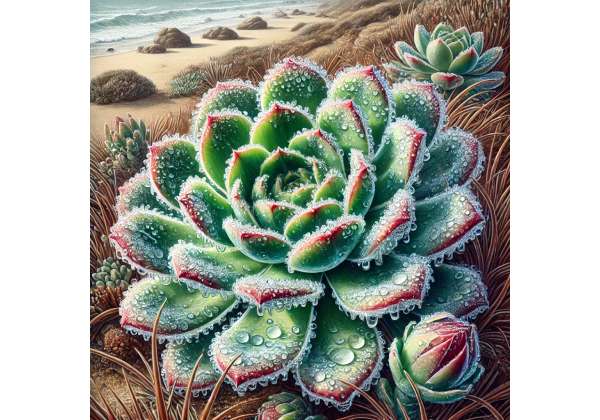
Ice plant, botanically known as Mesembryanthemum crystallinum, is a salty, crisp succulent that sits at the border between food and herbal medicine. It is best known as an edible halophyte, meaning it thrives in salty conditions, and that unusual biology helps explain both its culinary appeal and its medicinal interest. Researchers have identified minerals, polyols such as D-pinitol and inositol, carotenoids, phenolic compounds, and other phytochemicals that may contribute to antioxidant, anti-inflammatory, skin-soothing, and glucose-supportive effects. At the same time, the evidence is uneven: ice plant is promising as a functional food, but it is not yet a well-established medicinal herb with a standardized oral dose or large human trials. Topical use has a small but intriguing record in skin hydration, while oral benefits remain mostly preclinical or early-stage. For most people, the most sensible way to think about ice plant is as a nutrient-dense specialty green with potential health advantages, not as a replacement for proven medical care.
Quick Facts
- Ice plant may support antioxidant defense and mild inflammatory balance, but most evidence is still preclinical.
- Topical ice plant formulas may help skin hydration, especially in dry or sensitive skin.
- A practical food-use range is about 30 to 100 g of fresh leaves per day rather than a standardized medicinal dose.
- People on sodium-restricted diets, those prone to kidney stones, and anyone using glucose-lowering drugs should be more cautious.
- Concentrated extracts are not well studied in pregnancy, breastfeeding, or long-term self-treatment.
Table of Contents
- What is ice plant?
- Key ingredients and medicinal properties
- Health benefits and realistic uses
- How to use ice plant
- How much ice plant per day?
- Safety, side effects, and interactions
- What the evidence actually shows
What is ice plant?
Ice plant is a succulent halophyte in the Aizoaceae family, prized for its glistening leaf surface, crisp bite, and naturally briny taste. Those sparkling beads on the leaves are bladder cells that hold water and salt, which is why the plant looks frosted and tastes lightly seasoned even before dressing or cooking. In practical kitchen use, ice plant behaves more like a specialty salad green than a classic tea herb. It is eaten raw, folded into cold dishes, or added briefly to hot foods where its juicy texture can still survive. Researchers also study it as a model plant for salt tolerance, because it adapts dramatically to saline environments and shifts its metabolism in ways that affect both flavor and phytochemical content.
That dual identity matters. Ice plant is not just a botanical curiosity, and it is not just another leafy vegetable. It is increasingly discussed as a functional food because its growing conditions can shape the concentration of compounds that may matter for human health, including D-pinitol, polyphenols, flavonoids, carotenoids, and various minerals. Like purslane, it combines a succulent structure with a nutrient-focused profile, but its salty character and halophyte biology make it distinct. Ice plant is also one of those plants where source matters: hydroponic conditions, salt exposure, and fertilizer levels can significantly change the final composition of the leaves people eat.
For readers looking for what it helps with, the honest answer is that ice plant is most convincing as a nutritious food ingredient and possible supportive topical botanical. It is not yet a mainstream evidence-based herb in the same category as peppermint for digestion or psyllium for fiber support. Small skin studies, cell work, and animal studies suggest several plausible benefits, especially around hydration, oxidative stress, and glucose regulation, but none of that justifies grand claims. The right frame is promising, biologically interesting, and worth using thoughtfully, with a stronger case for everyday food use than for self-prescribed therapeutic dosing.
Key ingredients and medicinal properties
The best-known compound in ice plant is D-pinitol, a naturally occurring methylated inositol that attracts interest because of its possible role in glucose handling, osmotic balance, and metabolic resilience. Ice plant also contains inositol-related compounds, and those matter because they are part of the plant’s stress-adaptation system under salt exposure. From a human-health angle, that does not automatically mean a drug-like effect, but it helps explain why ice plant keeps appearing in research on glucose metabolism and functional foods. Moderate salinity can also increase D-pinitol accumulation, which is one reason composition varies so much between growing systems.
Beyond D-pinitol, ice plant provides phenolic compounds, flavonoids, carotenoids, amino acids, and mineral elements. Studies have reported polyphenols, flavonoid-rich fractions, beta-carotene, ferulic acid, tryptophan, tyrosine, uridine, and related small molecules in extracts. Recent phytochemical profiling has identified a broad range of compounds in ice plant extracts, with lipid and lipid-like molecules forming a major group, while isolated compounds have shown measurable antioxidant and anti-inflammatory activity in laboratory assays. That profile suggests ice plant’s medicinal properties are not driven by one single ingredient but by a network of polyols, phenolics, pigments, and lipids acting together.
Minerally, ice plant can be rich in sodium, potassium, calcium, magnesium, and other elements, but that richness is both a strength and a caveat. The same bladder-cell system that gives the plant its savory, mineral taste can push sodium levels higher than many conventional greens. Its nutrient value, then, is not simply more is better. It is context-dependent. For an active person using it as a garnish or salad component, that mineral profile may be attractive. For someone on a strict sodium-restricted plan, it may require smaller portions and a lighter hand with dressings and added salt. Compared with watercress, ice plant is usually less peppery and more saline, with a functional-food reputation tied more to halophyte chemistry than to classic cruciferous compounds.
A practical takeaway is that ice plant’s medicinal properties are best understood in three layers. First, it offers straightforward food value: texture, hydration, and micronutrients. Second, it offers phytochemical interest through polyphenols, carotenoids, and osmoprotective polyols. Third, it offers research potential in metabolic and inflammatory models. What it does not yet offer is a fully standardized, clinically validated phytomedicine profile. That gap is important, because many herbal articles skip straight from compound lists to therapeutic certainty. Ice plant does not deserve that kind of hype.
Health benefits and realistic uses
The most defensible health benefit of ice plant is broad antioxidant and anti-inflammatory support at the food and extract level. Laboratory studies show that extracts and isolated compounds can reduce inflammatory signaling and display antioxidant activity in standard test systems. Organ-by-organ analyses have also found meaningful differences between cotyledon, stem, and leaf, with high polyphenol and flavonoid content in some portions and measurable reductions in inflammatory markers under experimental conditions. That does not prove a clinical anti-inflammatory effect in people, but it does give ice plant a credible mechanistic basis for being discussed as a protective functional food.
Metabolic support is the other major area of interest. In cell and animal studies, ice plant extract and D-pinitol have been linked with better glucose-stimulated insulin secretion, improved glucose tolerance, and reductions in triglycerides and liver enzymes in diabetic models. A registered human trial in people with impaired fasting glucose has also been completed, which is encouraging because it suggests the field is moving beyond rodent data, but the published human outcome signal is still too limited for strong recommendations. So, does ice plant help with blood sugar? Possibly, but today the cautious answer is maybe, as a food or adjunctive extract under supervision, not as a proven stand-alone therapy.
Skin support is where the human evidence feels a bit more tangible, even if still small. Pilot work on topical preparations containing Mesembryanthemum crystallinum has suggested improved skin hydration, and infant skin-care research using ice-plant-containing emollient regimens reported improvements in stratum corneum hydration and overall skin condition over time. That does not mean homemade ice plant poultices are automatically wise, but it does support the idea that professionally formulated topical products may be the most evidence-aligned medicinal use at present. In that sense, ice plant resembles a gentler cousin to topical botanicals such as aloe vera, with a focus on barrier support more than strong pharmacologic action.
A final realistic benefit is dietary usefulness. Ice plant’s salty, juicy character can make simple meals feel more complete without heavy dressing, which may help some people reduce added sauces or seasonings. That is not a medical claim, but it is practical. If a food helps you enjoy more greens, diversify textures, and build satisfying meals, that has real value. For many readers, this may be the most important benefit of all.
How to use ice plant
The easiest way to use ice plant is as a fresh leafy ingredient. Rinse it well, dry it gently, and serve it raw in mixed salads, grain bowls, chilled noodle dishes, or seafood plates. Because the plant already tastes mildly salty, it pairs best with ingredients that soften or contrast that note: cucumber, avocado, radish, citrus, yogurt dressings, sesame, soft cheese, or unsalted cooked grains. A useful rule is to season the rest of the dish first, then add ice plant and taste before adding more salt. That simple step prevents a common mistake: oversalting a dish because the plant’s saline character was underestimated.
Ice plant can also be cooked, but briefly. A quick toss into a pan at the very end of cooking preserves some crunch and keeps the leaves from collapsing into a watery mass. It works well in omelets, light stir-fries, warm pasta, and brothy dishes. Longer cooking is not dangerous, but it blunts the texture that makes the plant special. Freeze-dried powders and extracts do exist, though the market is much less standardized than it is for mainstream supplements. If you buy powdered or encapsulated ice plant, treat it more like a specialty functional product than a household herb: look for clear labeling, batch information, and source transparency.
Topical use deserves a separate note. The most sensible form is a commercial moisturizer or barrier cream that includes ice plant extract or pressed juice, especially for dry or sensitive skin. That is very different from rubbing fresh leaves directly onto irritated skin. Professional formulations control preservatives, contamination risk, pH, and texture in ways that home preparations usually do not. If you want a skin benefit, use a product designed for skin rather than improvising a kitchen remedy.
In short, the main forms are:
- Fresh leaves for salads and garnishes.
- Briefly cooked greens for warm dishes.
- Powdered or extract products when the source is reputable.
- Topical creams or lotions for skin-focused use.
Used this way, ice plant is less a miracle herb and more a smart crossover ingredient: part gourmet green, part functional food, and sometimes part skin-care botanical.
How much ice plant per day?
There is no established universal medicinal dose for oral ice plant. That is the single most important dosage point. Unlike fiber supplements or standardized extracts with a strong clinical track record, ice plant still sits in an early-evidence zone. So the most responsible dosing advice starts with form. If you are eating it as food, think in culinary portions. If you are considering an extract, assume that labels vary and published human guidance is still limited.
For fresh food use, a practical range is about 30 to 50 g of fresh leaves as a starting portion, increasing toward roughly 75 to 100 g in a meal if you tolerate the salty taste and do not need to restrict sodium. That range is a practical food-use inference, not a validated therapeutic dose. It fits the way ice plant is currently used as a salad green and respects the fact that larger amounts can quickly become too salty for many people. If you are new to it, start low for both flavor and digestive comfort.
For extracts, the most concrete number available from a completed registered human study is 2,000 mg/day for 12 weeks in adults with impaired fasting glucose. That figure is useful as a research marker, but it should not automatically be generalized to self-treatment. A registered trial dose tells you what investigators chose to study, not what is proven best for the public. Until peer-reviewed human results are clearly available and replicated, it is wiser to treat concentrated ice plant extract as experimental rather than routine.
A sensible timing strategy looks like this:
- As food: with meals, especially lunch or dinner.
- As an extract: only according to product instructions or clinician guidance.
- For skin products: follow the label, often once or twice daily on intact skin.
Duration also matters. Food use can be ongoing as part of a varied diet. Concentrated oral extract use is different; it makes more sense as a time-limited trial with monitoring if blood sugar, blood pressure, or kidney-stone history is relevant. That distinction keeps dosage practical instead of theoretical.
Safety, side effects, and interactions
Ice plant is generally easiest to tolerate when eaten as a food, but edible does not mean risk-free for every person. The first issue is sodium. Because the plant stores salt in its bladder cells, some samples can carry a meaningful saline load. For healthy people using moderate portions, that may simply be part of the flavor. For people with hypertension, heart failure, kidney disease, or strict sodium goals, it may be enough reason to keep portions small and avoid heavily salted pairings.
The second issue is antinutrients. Edible halophytes can contain oxalates and nitrates, and research on halophyte cultivation repeatedly raises those as practical food-safety considerations. Ice plant is not unique in this respect, but it does mean that people with recurrent calcium oxalate kidney stones, those on medically supervised oxalate restriction, or anyone consuming large amounts of salty succulents every day should be more cautious. Buying from reputable food growers, varying your greens, and not relying on one plant as a daily staple are simple ways to reduce risk.
A third consideration is source purity. Ice plant has been studied for tolerance to harsh conditions, including heavy metals, which is one reason researchers are interested in it as a stress-adapted species. That does not mean store-bought ice plant is unsafe, but it does mean wild-harvested or poorly sourced plants from contaminated ground are a bad idea. This is not a herb to forage casually from unknown roadside or industrial areas.
As for interactions, concentrated ice plant extract may matter most for people taking glucose-lowering medications, because the plant’s metabolic effects are the main focus of oral research. Anyone with diabetes or prediabetes who wants to use an extract should monitor glucose and involve a clinician rather than assuming natural means neutral. Pregnancy, breastfeeding, and pediatric oral use also sit in a low-evidence zone, so concentrated extracts are best avoided unless a professional specifically recommends them. For topical products, occasional irritation is possible, so patch testing is sensible for very reactive skin. A mild, food-like plant can still become irritating when concentrated or applied to compromised skin.
A short who-should-avoid list is helpful:
- People on sodium-restricted diets should limit portions.
- People with recurrent kidney stones should be cautious with frequent high intake.
- Pregnant or breastfeeding users should avoid concentrated extracts.
- People on diabetes medication should not add oral extracts casually.
- Anyone with sensitive skin should patch test topical products first.
What the evidence actually shows
Ice plant has better mechanistic evidence than clinical evidence. That is the core truth. Researchers have identified a meaningful phytochemical profile, shown antioxidant and anti-inflammatory activity in cell models, documented changes in D-pinitol and other metabolites under controlled growing conditions, and reported metabolic effects in diabetic animals. This is enough to justify scientific interest and careful optimism. It is not enough to justify strong claims that ice plant prevents or treats disease in everyday users.
The human evidence splits into two different stories. Topical use has small pilot and supportive skin-care data suggesting that ice-plant-containing formulations may help hydration and barrier support. Oral use has a completed registered trial in impaired fasting glucose, which is important because it signals that human testing is underway, but the public evidence base is still too thin to treat the plant as a proven oral therapy. In other words, if you want to use ice plant in a way that best matches current evidence, food use and professionally formulated topical use sit on firmer ground than self-directed supplement use.
Another important limit is variability. The exact composition of ice plant changes with salinity, fertilizer, growing medium, and cultivation system. That means one study on hydroponic leaves grown under optimized salt conditions may not map cleanly onto a different commercial crop or an extract made elsewhere. This is one reason herbal writing can get misleading so fast: a plant with flexible chemistry is easy to oversimplify. For ice plant, the honest position is that the plant is highly promising but still context-sensitive.
So what should readers do with the evidence? Use ice plant as a smart functional food if you enjoy it. Consider topical products if your interest is skin hydration and the formula is reputable. Be careful with concentrated oral extracts, especially if you have metabolic disease or take prescription drugs. And keep expectations aligned with the science: ice plant is an interesting helper, not a shortcut or cure.
References
- LC-QTOF/MS-Based Profiling of the Phytochemicals in Ice Plant (Mesembryanthemum crystallinum) and Their Bioactivities – PMC 2024
- Comparative Analysis on Phytochemical Properties, Anti-Oxidative, and Anti-Inflammatory Activities of the Different Organs of the Common Ice Plant Mesembryanthemum crystallinum L. | MDPI 2023
- Evaluation of Sodium Chloride Concentrations on Growth and Phytochemical Production of Mesembryanthemum crystallinum L. in a Hydroponic System 2024
- The Glucose-Lowering Effect of Mesembryanthemum crystallinum and D-Pinitol: Studies on Insulin Secretion in INS-1 Cells and the Reduction of Blood Glucose in Diabetic Rats – PubMed 2025
- Commercial Cultivation of Edible Halophytes: The Issue of Oxalates and Potential Mitigation Options | MDPI 2024
Disclaimer
This article is for educational purposes only and does not diagnose, treat, or replace individualized medical care. Ice plant is an edible plant with promising functional-food and topical-skin potential, but human oral evidence remains limited, and there is no universally accepted medicinal dose. If you have diabetes, kidney disease, hypertension, a history of kidney stones, are pregnant or breastfeeding, or take prescription medicines, speak with a qualified clinician before using concentrated ice plant products.
If this article was useful, please share it on Facebook, X, or your preferred platform to help more readers find clear, evidence-aware herbal guidance.