Imbricate Phacelia is a native western North American wildflower better known to botanists, native-plant gardeners, and pollinator enthusiasts than to herbal practitioners. That difference is important. While many readers arrive expecting a classic medicinal herb profile, Phacelia imbricata does not have the same documented human-use history or clinical support as well-known plants such as chamomile, calendula, or lavender. It belongs to the broader Boraginaceae group, a family that includes species with interesting phenolics, protective plant hairs, and in some cases safety concerns involving irritation or toxic alkaloids.
So the most useful article on Imbricate Phacelia is not one that exaggerates its virtues. It is one that explains where the real interest lies, what compounds may matter, why medicinal claims remain unproven, and why self-dosing is not a good idea. In practical terms, this plant is best viewed as a botanical subject with possible bioactive potential, clear ecological value, and limited evidence for direct human therapeutic use. That honest framing helps readers make better, safer decisions.
Core Points
- No established human medicinal benefit has been confirmed for Imbricate Phacelia itself.
- The plant may contain protective secondary compounds, but related family chemistry also raises safety questions.
- There is no evidence-based oral dose, so the safest self-care dose is 0 g for medicinal ingestion.
- People with liver disease, fragrance or plant-contact allergies, pregnancy, or breastfeeding should avoid medicinal use.
Table of Contents
- What is Imbricate Phacelia
- Key compounds and properties
- Does it have real health benefits
- How is it used today
- Is there a safe dosage
- Side effects, interactions, and who should avoid it
- What the research actually shows
What is Imbricate Phacelia
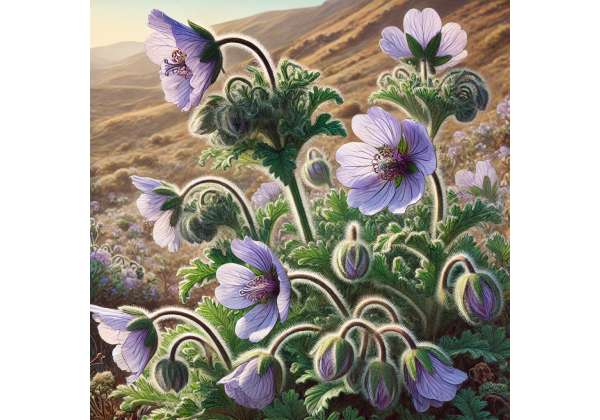
Imbricate Phacelia, or Phacelia imbricata, is a flowering herb native to dry landscapes of California and nearby western regions. It is usually recognized as a wildflower rather than a medicinal staple. Depending on local taxonomy and habitat, it may appear as a perennial or variable herbaceous plant with hairy stems and leaves, curled flower clusters, and small pale blossoms that attract pollinating insects. In gardening and restoration circles, its reputation is tied more to native habitat value than to pharmacy-style use.
That starting point matters because many herb articles assume a long record of teas, tinctures, poultices, or extracts. Imbricate Phacelia does not fit that model well. There is no widely accepted modern herbal monograph for it, no standard pharmacopeial preparation, and no recognized therapeutic range for home use. In other words, it is a plant of scientific and ecological interest first, and a medicinal herb only in a very tentative, poorly documented sense.
The family background helps explain why readers might still be curious. Phacelia sits within Boraginaceae, a plant family that has attracted attention for several reasons:
- some members contain antioxidant phenolics
- some produce mucilage or skin-active compounds
- some are used in cosmetics or folk medicine
- some also contain toxic pyrrolizidine alkaloids or irritating hairs
That mix of promise and caution is exactly why this species deserves a careful, non-hyped discussion. A plant can be chemically interesting without being appropriate for home medicine. It can also be safe to admire in a garden while still being a poor candidate for casual tea-making or extract use.
There is another practical point: “Phacelia” is a genus, not a single herb with one uniform chemistry. A claim made for one species, one pollen source, or one honey type should not be applied automatically to Imbricate Phacelia. That is a common mistake in herbal writing. A compound profile from one species may not transfer cleanly to another, especially when color, scent, habitat, and plant-part chemistry differ.
So the most accurate definition is simple. Imbricate Phacelia is a native flowering plant with ecological importance and possible phytochemical interest, but it is not an established medicinal herb for routine self-treatment. That conclusion may sound modest, yet it is genuinely useful because it keeps readers from making a risky leap from “interesting plant” to “safe remedy.”
Key compounds and properties
No detailed, standardized compound profile is available for Imbricate Phacelia in the way one might expect for major herbal species. Still, the chemistry discussion is not empty. It simply needs to be framed in terms of likelihoods, family patterns, and known caution points rather than hard therapeutic claims.
The first group to understand is phenolic compounds. In Boraginaceae and related flowering herbs, researchers often find flavonoids, phenolic acids, and other antioxidant-type molecules. These compounds may help plants defend themselves from sunlight, herbivores, pathogens, and environmental stress. When humans study such plants, these same compounds are often linked to antioxidant or soothing potential. That does not prove medical value, but it does explain why scientists sometimes screen the family for anti-inflammatory, antimicrobial, or cosmetic applications.
The second group is surface chemistry. Phacelia species are often hairy, and those hairs are not just decorative. In some species, glandular trichomes contain irritating or allergenic substances. This is one of the most practical details for readers because it changes the safety picture. A plant can look soft or harmless while its surface oils or exudates are capable of causing dermatitis in sensitive people.
The third group involves toxicology. Boraginaceae is one of the plant families associated with pyrrolizidine alkaloids in at least some taxa. These compounds are not a universal, equal-risk feature of every species, but they are important enough that they change how cautious we should be with unstudied or under-studied plants. Pyrrolizidine alkaloids are relevant because they are linked to liver toxicity, especially with repeated ingestion over time. That is why a lack of species-specific safety data should not be treated as permission to experiment.
Taken together, the likely property profile of Imbricate Phacelia looks like this:
- plausible presence of antioxidant-type plant metabolites
- possible irritant or allergenic compounds on plant surfaces
- uncertain internal-use chemistry
- no validated therapeutic standardization
- meaningful safety uncertainty for ingestion
This is also why readers should resist the urge to interpret “contains interesting compounds” as “works as medicine.” Many plants produce bioactive molecules. Far fewer become useful, evidence-based remedies. For Imbricate Phacelia, the chemistry is best understood as a reason for scientific curiosity, not a reason for confident home treatment.
That distinction also helps with product decisions. If someone wants astringent or skin-soothing plant support, a better-studied option such as witch hazel for topical use offers a much clearer record of what the active compounds do, how to apply them, and what side effects to watch for.
Does it have real health benefits
The most honest answer is that no clear, established human health benefits have been confirmed for Imbricate Phacelia itself. That may feel disappointing, but it is a far better answer than borrowing claims from unrelated herbs or from loosely related Phacelia materials such as pollen or honey.
To make sense of this, it helps to separate three levels of evidence.
The first level is species-specific evidence. This is the strongest kind for a consumer article: studies or credible traditional records on Phacelia imbricata itself. Here, the record is very thin. There is no widely accepted body of clinical research showing that the plant helps sleep, digestion, pain, skin disease, anxiety, or any other common self-care target.
The second level is genus-level evidence. Some discussions of phacelia focus on other species, especially cultivated ones used for pollinators, cover crops, honey, or bee pollen. These sources may mention antioxidant capacity, nutritional value, or antimicrobial interest. But that does not automatically mean Imbricate Phacelia behaves the same way in the body, in the same plant part, or at the same dose.
The third level is family-level plausibility. Because Boraginaceae contains species with interesting bioactive compounds, it is reasonable to say that Imbricate Phacelia might have antioxidant, cosmetic, or antimicrobial research value. But “might” is doing a great deal of work there. Plausibility is not proof.
So what benefits can be described responsibly?
The strongest benefits are indirect and practical:
- native-plant gardening can support pollinator-rich landscapes
- close contact with native flora can encourage outdoor activity and nature-based stress reduction
- the plant may contribute to biodiversity and ecological restoration
- it has scientific value as a member of a chemically interesting family
Those are real benefits, but they are not the same as medicinal effects from drinking or applying the plant.
If a reader is specifically looking for a calming herb, sleep aid, or gentle digestive tea, Imbricate Phacelia is not the plant to lead with. Better-studied choices such as passionflower for stress and sleep have much clearer traditional use patterns and more interpretable modern evidence.
The key practical outcome is this: Imbricate Phacelia should not be sold, described, or self-used as though it were a validated herbal medicine. Its most defensible “health benefit” for the average person is knowledge itself—knowing when not to use a plant can prevent harm, wasted effort, and false expectations. In YMYL topics, that kind of clarity is valuable.
How is it used today
Today, Imbricate Phacelia is used far more in ecological, horticultural, and observational settings than in medicine cabinets. That real-world pattern tells us a lot. When a plant has meaningful therapeutic traction, people usually converge on recognizable preparations such as dried aerial parts, tinctures, capsules, poultices, salves, or clinically discussed extracts. Imbricate Phacelia does not have that practical footprint.
Its current uses are better grouped into four categories.
Native landscaping and pollinator support
This is the most established use. Imbricate Phacelia can be planted in native gardens, restoration projects, and low-water landscapes where its flowers support insects and help rebuild habitat value. That is not a medicinal use, but it is an important contemporary one.
Botanical education
Because the species belongs to a family with both beneficial and risky traits, it is a good example for teaching plant identification, habitat adaptation, and the difference between ecological value and herbal suitability. This matters for foragers and beginner herbalists who may assume every attractive wildflower belongs in a tea blend.
Research interest
Scientists may care about the plant or its relatives for reasons involving phytochemistry, pollinator ecology, or plant defense compounds. That kind of use belongs in labs and formal study, not in casual self-experimentation.
Very limited folk-style exploration
A few readers may encounter broad claims online that phacelia species have soothing, antimicrobial, or anti-inflammatory potential. The problem is that most of these claims are not tied cleanly to Imbricate Phacelia, and almost none offer trustworthy preparation details or safety standards.
For practical readers, the best advice is to avoid turning this plant into a home remedy. Do not assume the leaves are safe to dry for tea. Do not make a tincture from an unstudied wild collection. Do not grind the plant into powders or topical pastes. And do not mistake “traditional-sounding” internet claims for usable guidance.
If your interest is skin-focused herbal care, a better choice is calendula for gentle topical support, which has a far clearer tradition and a better-understood role in salves, washes, and skin-comfort formulas.
A useful rule of thumb is simple: if a plant is best known in reputable sources for pollinators, habitat, or restoration rather than for standardized herbal use, it should probably stay in the garden unless a qualified expert can show otherwise. For Imbricate Phacelia, that rule fits well.
Is there a safe dosage
There is no established medicinal dosage for Imbricate Phacelia. That is the central answer, and it should not be softened. No standard oral dose, tincture strength, infusion ratio, capsule amount, or topical concentration has been validated for consumer self-use.
In a health article, the absence of a dosage is itself important information. It tells readers that the evidence is not mature enough to support common home-herbal instructions such as “steep 1 to 2 teaspoons” or “take 20 to 30 drops.” Offering such numbers without evidence would be irresponsible.
For safety, the most practical dosage guidance looks like this:
- oral medicinal dose: 0 g recommended for self-treatment
- tincture dose: no evidence-based range
- capsule dose: not established
- topical leave-on dose: not established
- duration of use: not established
Some readers may wonder whether a tiny amount makes experimentation acceptable. The problem is not only quantity. It is uncertainty. With under-studied plants, risk can come from species confusion, plant-part differences, harvesting conditions, contamination, or chemistry that changes with season and habitat. Even if the plant proved mild in one context, that would not create a reliable home protocol.
There is also a toxicology reason to stay conservative. In plant families where pyrrolizidine alkaloids are relevant, low repeated exposure may matter more than a single dramatic dose. That makes “just a little every day” a poor experiment. The absence of immediate symptoms does not prove safety.
For readers who want a benchmark, compare this with better-characterized herbs. A plant such as chamomile and its active compounds has recognizable tea ranges, a long pattern of home use, and a much clearer discussion of who should be careful. Imbricate Phacelia does not.
A few practical dosage principles follow from that:
- Do not ingest wild-collected Imbricate Phacelia for medicinal purposes.
- Do not prepare concentrated extracts at home.
- Do not use it daily in any routine wellness formula.
- If exposure occurs accidentally, monitor for irritation or digestive upset rather than assuming benefit.
Sometimes the safest dosage advice is “none unless evidence changes.” This is one of those cases. For consumers, zero is not a sign that the article failed to answer the question. It is the safest and most evidence-aligned answer currently available.
Side effects, interactions, and who should avoid it
The most relevant safety concerns with Imbricate Phacelia are skin irritation, allergic contact reactions, and uncertainty around internal chemistry. In under-studied plants, uncertainty itself is a material safety issue.
The first concern is direct skin exposure. Several Phacelia species are known for contact allergy problems linked to plant hairs and related compounds. That does not prove every individual Imbricate Phacelia plant will irritate every person, but it does mean gloves are sensible during harvesting, pruning, field study, or prolonged handling. Sensitive skin, heat, sweat, and repeated contact may increase the chance of a reaction.
Possible contact-related symptoms include:
- itching
- redness
- burning or stinging
- small rash-like bumps
- delayed eczematous reactions after repeated exposure
The second concern is ingestion. Because Boraginaceae includes taxa associated with pyrrolizidine alkaloids, internal use of an unstandardized species is not wise. The greatest long-term concern in that context is liver safety. A person would not need dramatic symptoms on day one for there to be a problem with repeated intake.
The third concern is vulnerable populations. Medicinal use should be avoided by:
- pregnant people
- breastfeeding people
- children
- anyone with liver disease
- anyone taking hepatotoxic medicines
- people with significant plant-contact allergies
- anyone with a history of unexplained herbal reactions
Interaction data are not well mapped, which is another reason to avoid “stacking” it with other herbs or supplements. When interaction studies are missing, combining a poorly characterized plant with sedatives, pain medicines, alcohol, or other botanicals only increases uncertainty.
This section also highlights a common error in herbal use: assuming that topical use is automatically safe just because oral use is discouraged. That is not true here. A plant known for contact allergy in related species may be more problematic on skin than in theory.
If your goal is mild astringency or cooling skin support, a more conventional path is usually better than experimenting with an obscure wildflower. Plants with clearer topical use histories let readers focus on the outcome rather than on detective work about hidden risk.
In short, who should avoid Imbricate Phacelia medicinally? Almost everyone outside a qualified research or expert-identification context. That may sound strict, but it matches the evidence. Good herbal practice is not about forcing every plant into a remedy. It is about using the right plant, in the right form, for the right reason, with the right margin of safety.
What the research actually shows
The research picture around Imbricate Phacelia is defined more by gaps than by confident conclusions. That is not unusual for native wildflowers. Many species are ecologically important, chemically interesting, and still poorly studied for direct human therapeutic use.
What we do know is scattered across three neighboring research areas.
The first is genus-level and agricultural research on other Phacelia species. These studies often focus on pollinator support, nectar production, honey potential, biomass, cover-crop value, and sometimes pollen or honey chemistry. That work helps explain why the genus gets attention, but it does not establish Imbricate Phacelia as a medicinal herb.
The second is family-level chemistry. Reviews of Boraginaceae show a broad range of metabolites with potential cosmetic, antioxidant, anti-inflammatory, antimicrobial, or protective interest. At the same time, the family also raises toxicology concerns, especially around pyrrolizidine alkaloids in certain members. This creates a classic “promising but caution-heavy” research landscape.
The third is dermatology literature on Phacelia contact allergy. This is one of the clearest practical findings associated with the genus. Even if the literature does not focus on Imbricate Phacelia alone, it supports a guarded handling approach.
So what should a reader conclude from the science?
- there is no strong human clinical evidence for Imbricate Phacelia as a remedy
- some related research justifies chemical curiosity, not consumer confidence
- safety concerns are concrete enough to limit casual use
- ecological value is currently clearer than medical value
That last point is worth stressing. Some plants are best appreciated for what they do in ecosystems rather than what they do in capsules. Imbricate Phacelia seems to fit that pattern. As a native species, it matters in habitat networks, flowering landscapes, and pollinator support. Those uses are real and well aligned with what the plant is already known for.
For readers who came hoping for a hidden medicinal gem, the more useful message is restraint. A plant can remain fascinating without being a practical self-care herb. And from a scientific point of view, saying “we do not yet know enough” is not a weakness. It is a sign that the evidence is being handled honestly.
That makes the bottom line straightforward: Imbricate Phacelia is botanically and ecologically valuable, chemically interesting, and currently too under-documented to recommend as a medicinal herb with confidence.
References
- Phacelia tanacetifolia Benth. as a Multifunctional Plant: Support for Pollinators and Sustainable Agricultural Practices 2025 (Review)
- Metabolites Obtained from Boraginaceae Plants as Potential Cosmetic Ingredients-A Review 2024 (Review)
- Pyrrolizidine Alkaloids—Pros and Cons for Pharmaceutical and Medical Applications 2023 (Review)
- Pyrrolizidine Alkaloids in Foods, Herbal Drugs, and Food Supplements: Chemistry, Metabolism, Toxicological Significance, Analytical Methods, Occurrence, and Challenges for Future 2024 (Review)
- Contact allergy to Phacelia spp. (Hydrophyllaceae) 1990 (Review)
Disclaimer
This article is for educational purposes only and should not be used as a substitute for medical advice, diagnosis, or treatment. Imbricate Phacelia is not an established medicinal herb, and its chemistry, safety profile, and therapeutic value for human use are not well defined. Because related plants may cause contact allergy and some members of the broader family contain toxic alkaloids, self-treatment, self-dosing, and homemade internal preparations are not recommended. Speak with a qualified healthcare professional before using any unfamiliar plant medicinally, especially if you are pregnant, breastfeeding, have liver disease, take prescription medicines, or have a history of plant allergies.
If this article helped you, please share it on Facebook, X, or another platform you trust so more readers can find a careful, evidence-aware guide to Imbricate Phacelia.