Kelumpang, Sterculia cordata, is a large tropical tree found across parts of Southeast Asia and valued more in regional traditional practice than in modern clinical herbalism. That distinction matters. Readers searching for kelumpang often expect a familiar supplement profile with fixed doses and strong human studies, but this plant does not fit that pattern. Instead, it sits in an older category of medicinal plants: species known locally for soothing sores, easing fever, and supporting traditional home remedies, yet only lightly studied in modern medicine.
The most promising modern signals come from laboratory work on the leaves, which suggests antioxidant, antibacterial, and cytotoxic activity in test systems. Traditional references point more toward roots, leaves, and seeds, with different parts used in different settings. That means any responsible guide must be careful about two things: not overstating benefits, and not pretending there is a validated human dose when there is not. Kelumpang is best understood as a traditional medicinal tree with interesting early pharmacology, not as a clinically established daily supplement.
Key Facts
- Kelumpang shows early antioxidant and antibacterial activity in laboratory studies.
- Traditional use centers on topical soothing, fever support, and seed-based folk medicine rather than modern standardized extracts.
- No standardized human dose has been established, and products without a clear plant part or extract ratio are best avoided.
- Pregnant or breastfeeding adults, children, and people taking multiple medicines should not self-treat with kelumpang.
Table of Contents
- What is kelumpang and what is in it
- Which parts of kelumpang are used
- Does kelumpang help inflammation and microbes
- Can kelumpang support skin and traditional comfort uses
- How to use kelumpang
- How much kelumpang per day
- Kelumpang safety and who should avoid it
- What the research actually shows
What is kelumpang and what is in it
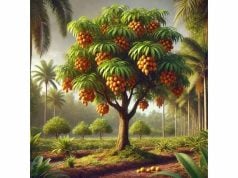
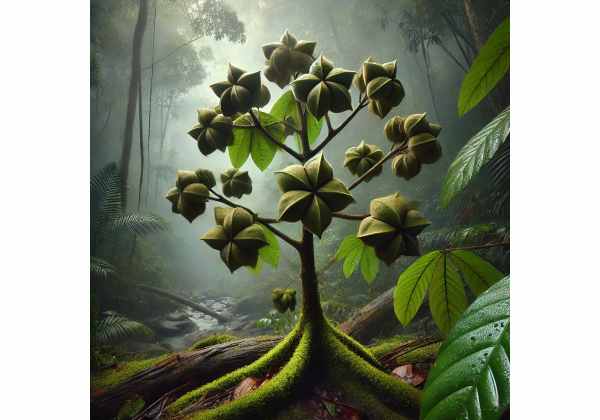
Kelumpang is the Malay common name most often applied to Sterculia cordata, a tree in the Malvaceae family. It is native to parts of Thailand, Malaysia, Indonesia, the Philippines, and nearby tropical regions. In botanical references it is described as a medium to large forest tree with heart-based leaves, hairy undersides, drooping flower clusters, and woody red follicles that split open to reveal dark seeds. That growth habit matters because kelumpang is not a classic small medicinal herb gathered for easy kitchen use. It is a tree medicine, and tree medicines often have stronger regional traditions than modern supplement histories.
One useful point for readers is that kelumpang should not be treated as interchangeable with other Sterculia species. The genus includes many trees with different chemical profiles and different folk uses. Online content often blurs these species together, which can make a plant seem better studied than it really is. For kelumpang itself, the chemistry map is still thin.
The clearest species-level laboratory data come from leaf extracts. In that work, kelumpang leaves showed the presence of several broad phytochemical classes:
- alkaloid-like compounds,
- flavonoids,
- tannins,
- terpenoids,
- phenolic compounds.
These are not rare plant chemicals, but they are medicinally meaningful. Flavonoids and other phenolics are often associated with antioxidant effects. Tannins can contribute to astringency and may partly explain traditional topical uses for irritated tissue. Terpenoids and alkaloid-like constituents are common in plants with antimicrobial or inflammatory relevance. The important limit is that the leaf study measured broad classes and activity patterns, not a fully resolved fingerprint of named lead compounds.
That is where broader genus research becomes useful. Reviews of Sterculia species suggest the group contains flavonoids, phenolic acids, coumarins, terpenoids, sterols, fatty acids, and other secondary metabolites. But readers should resist a common mistake: broader genus chemistry does not prove that kelumpang itself contains every compound found elsewhere in Sterculia. The safest interpretation is narrower. Kelumpang likely shares some of the family’s medicinal logic, but its best-supported species-specific chemistry remains basic rather than fully mapped.
The practical takeaway is that kelumpang appears chemically active enough to justify traditional interest and modern screening, but not so well characterized that anyone should market it as a precision botanical. At this stage, kelumpang is more “promising medicinal tree with identifiable phytochemical families” than “well-standardized evidence-based supplement.”
Which parts of kelumpang are used
One of the biggest sources of confusion with kelumpang is that different sources refer to different plant parts. Modern lab studies focus on the leaves. Traditional sources mention the seeds more generally. Regional ethnobotanical descriptions also point to roots and leaves in home-style uses. When a plant has this kind of split identity, the safest question is not “Does kelumpang work?” but “Which part are we talking about?”
The leaves are the best studied in laboratory work. They are the part tested for antioxidant, antibacterial, and cytotoxic activity, so most modern health claims about kelumpang are really claims about leaf extracts. That does not automatically mean fresh leaves, dried leaves, tea, tincture, and ethanol fractions all behave the same way. They do not. A laboratory ethanol fraction is much more concentrated and selective than a casual home infusion.
The seeds are the plant part most clearly mentioned in regional reference works as being used in traditional medicine. Unfortunately, many formal sources stop there and do not provide a standardized preparation method, dose, or narrow medical indication. That means the traditional record is real, but not specific enough to turn into a modern self-treatment guide without guesswork.
Some ethnobotanical descriptions also attribute uses to the roots and leaves:
- roots described in decoction-style use for fever or childbirth-related traditional care,
- leaves described as poultices for ulcerated sores,
- leaf juice described as a cooling topical lotion.
These are exactly the kinds of traditional applications that often survive in local plant knowledge long before they appear in pharmacology journals. They also fit the broader logic of plants rich in tannins and phenolic compounds. Still, they remain traditional uses, not clinically verified instructions.
For modern readers, the most important distinction is between topical tradition and internal experimentation. A plant that has been used externally in poultices or washes is not automatically a good candidate for concentrated oral dosing. This is where many internet herb profiles become misleading. They collapse all plant parts into one general idea of “kelumpang benefits,” when the evidence is actually part-specific.
A helpful way to think about kelumpang is this:
- leaf extracts are the laboratory part,
- seeds are the broadly referenced traditional medicinal part,
- roots and leaves carry the more detailed folk-use descriptions,
- none of these parts currently has a well-established modern clinical monograph.
That is why kelumpang belongs in the category of “careful ethnobotanical interest” rather than “plug-and-play supplement.” Readers who are used to more standardized herbs may find this frustrating, but it is also a mark of honesty. A plant can be real, useful, and culturally important without being neatly translated into capsule language.
Does kelumpang help inflammation and microbes
This is the most realistic benefit section because it lines up with what the early evidence can actually support. Kelumpang leaf extracts have shown antioxidant and antibacterial activity in laboratory testing, and the plant’s traditional use profile also makes anti-inflammatory and tissue-soothing effects plausible. But this is still preclinical territory. That means promising, not proven.
In the best-known kelumpang leaf study, different fractions of the ethanol extract were examined for phenolic content, flavonoid content, antioxidant activity, antibacterial effects, and cytotoxicity. The researchers found meaningful antioxidant activity and modest to moderate antibacterial effects against selected organisms. That matters because it gives kelumpang a biochemical foundation instead of leaving it as a purely folkloric plant.
The findings are most useful when interpreted conservatively:
- Antioxidant activity suggests the leaf contains compounds that can neutralize oxidative stress in lab systems.
- Antibacterial activity suggests the plant may contain constituents that interfere with the growth of some bacteria.
- Cytotoxic findings show that some fractions are biologically active in ways that deserve caution as well as curiosity.
What these results do not prove is equally important. They do not prove that kelumpang treats infections in humans. They do not prove it reduces chronic inflammation in arthritis, gut disease, or autoimmunity. They do not justify replacing antibiotics, wound care, or prescription anti-inflammatory treatment.
Still, early lab findings matter because they help explain why plants like kelumpang stay in traditional medicine for generations. Traditional healers rarely describe a plant as “antioxidant” or “antibacterial,” but they may notice that it seems helpful for irritated skin, minor sores, feverish states, or inflamed tissues. Modern lab language and traditional observation sometimes meet in the middle.
If readers want a comparison point, kelumpang’s evidence is much thinner than boswellia research for inflammation. Boswellia has human trials, standardized extracts, and a clearer clinical track record. Kelumpang does not. But kelumpang’s early data do justify further study, especially because its activity appears to come from a mix of flavonoids, tannins, terpenoids, and other secondary metabolites rather than from a single isolated compound.
A sensible bottom line is that kelumpang may have genuine anti-inflammatory and antimicrobial relevance, but current evidence supports it more as a source of future phytomedicinal interest than as a ready-made therapeutic tool. For now, the best wording is “may help” and “traditionally used,” not “is proven to treat.”
Can kelumpang support skin and traditional comfort uses
This is probably the most practical use area for kelumpang because it matches both the traditional record and the chemistry better than bold internal health claims do. Traditional descriptions of the plant include leaf poultices for ulcerated sores, leaf juice as a cooling lotion, and root preparations linked to fever-related or postpartum customary use. These uses point toward a plant valued for comfort, soothing, and topical support more than for aggressive internal dosing.
Topical traditions often survive for a reason. Plants rich in tannins and phenolic compounds frequently feel useful on irritated tissue because they can have a drying, tightening, or soothing effect. That does not mean they are magic wound treatments, but it does mean the traditional logic is not random. When communities use a leaf externally on sore or inflamed tissue across generations, it usually reflects repeated observation.
Kelumpang may therefore make the most sense in three traditional-style categories:
- minor skin soothing, where a preparation is used to calm irritated tissue,
- cooling applications, where a juice or wash is used for a more refreshing feel,
- comfort-oriented folk care, where the goal is easing a symptom rather than treating a diagnosed disease.
This is very different from claiming that kelumpang treats eczema, infected ulcers, or complicated wounds. The evidence is not there. If a skin problem is worsening, hot, spreading, very painful, or clearly infected, herbal self-treatment is too small a tool for the job.
What kelumpang may offer is the same kind of value many people seek in older topical plants: a mild, traditional, low-tech option that supports comfort while not pretending to replace medical care. In that sense it sits closer to calendula for everyday skin support than to a pharmaceutical cream. The difference is that calendula has a much broader modern wellness profile, while kelumpang remains regionally specific and sparsely studied.
The fever-related traditional uses also deserve careful wording. Some sources describe root decoctions associated with fever relief or childbirth-related practice. These are important as ethnobotanical records, but they are not an invitation to self-dose a root preparation during pregnancy, postpartum recovery, or acute illness. In fact, those are precisely the situations where unsupervised herbal experimentation is least appropriate.
So can kelumpang support skin and traditional comfort uses? Possibly, yes, especially in mild topical contexts that reflect its traditional role. But its strongest value right now is as a culturally rooted soothing plant, not as a clinically validated skin therapy. That may sound less dramatic, but it is the more useful and trustworthy conclusion.
How to use kelumpang
Kelumpang is one of those plants where “how to use it” matters more than “how much of it” because the evidence base is tied so strongly to plant part and preparation. A leaf studied as an ethanol fraction, a seed described in traditional medicine, and a root noted in ethnobotanical use are not interchangeable.
For modern readers, the safest approach is to think in terms of use category rather than supplement branding.
Topical use is the most defensible starting point because it reflects the traditional record better than concentrated oral use does. That may include:
- a mild leaf preparation used externally,
- a simple wash,
- a poultice-style traditional application,
- a test patch of a clearly labeled commercial topical product.
Internal use is much more uncertain. Because there is no clinically established oral regimen, internal preparations should be treated with caution. If a product does not clearly state the plant part, extraction method, and amount, it is not giving you enough information to use kelumpang responsibly.
A practical decision sequence looks like this:
- Confirm the species is actually Sterculia cordata.
- Confirm which plant part is included.
- Avoid products that hide the extract ratio or serving size.
- Prefer simple preparations over concentrated multi-herb blends.
- Start with the least aggressive use, especially topical rather than internal.
Another good rule is to avoid treating kelumpang like a wellness trend ingredient. Its modern evidence does not support stacking it into immune blends, detox formulas, or “biohacking” mixtures. That kind of use works against the plant’s actual profile, which is traditional, part-specific, and only lightly validated.
Readers who are used to kitchen-style medicinal plants may be tempted to approach kelumpang the way they approach ginger as a medicinal tea. That comparison is helpful precisely because it shows the difference. Ginger is a familiar culinary plant with much better human evidence and clearer home-use logic. Kelumpang is not. It demands more caution, more species certainty, and lower expectations.
If you are exploring kelumpang at all, the most responsible goal is not to chase a strong effect. It is to observe whether a very simple, clearly identified preparation seems to offer gentle support without causing irritation or other problems. For a traditional tree medicine with thin clinical evidence, that is the right scale of use.
How much kelumpang per day
This is the section where honesty matters most: there is no standardized human oral dose for kelumpang established by clinical trials. That is the answer readers deserve, even if it is less tidy than a supplement label.
Why is the dose so unclear? Because the modern evidence base is not built from human dosing studies. The most relevant kelumpang paper uses laboratory extracts of the leaves and reports antioxidant, antibacterial, and cytotoxic results. Those are not directly translatable into milligrams per day for a person. Traditional sources confirm medicinal use, especially of seeds and some regional root or leaf preparations, but they do not provide a reproducible clinical dosing framework.
So what can be said responsibly?
First, do not invent a dose from lab data. A concentration that affects bacteria in a dish does not tell you how much dried plant a person should swallow.
Second, do not borrow doses from other Sterculia species. A genus is not a dosing guide.
Third, do not assume that “natural” means freely adjustable. In fact, a plant with cytotoxic activity in screening models is one that should make users more careful, not less.
A responsible dosing framework for kelumpang therefore looks like this:
- there is no validated daily oral range,
- there is no evidence-based duration of use,
- there is no established best time of day,
- topical use is easier to approach cautiously than internal use,
- commercial products should only be considered if they clearly state species, plant part, and serving amount.
If a topical product is being tried, a small-area patch test is the most sensible first step. If an internal product is being considered, the safest limit is the lowest labeled serving only, and only when the labeling is unusually clear. Even then, it should be approached as an uncertain traditional botanical, not a standardized supplement.
This uncertainty is not a weakness in the article. It is the key safety fact. Many readers are now used to seeing confident dose ranges for every plant on the internet, but that confidence is often false. Kelumpang simply has not earned that kind of dosing certainty yet.
So the best “dose advice” is really a decision rule: if the product is vague, skip it. If the goal is serious treatment, skip self-experimentation. And if you do use kelumpang in any form, keep the use minimal, clear, and easy to stop.
Kelumpang safety and who should avoid it
Because kelumpang has limited human research, safety has to be handled by first principles rather than by a long list of confirmed interactions. That means a cautious safety section is not alarmist. It is appropriate.
The first safety issue is simple: uncertain internal dosing. When a plant lacks human dose studies, the risk is not only side effects from the plant itself. It is also the risk of using the wrong part, the wrong strength, or the wrong preparation. A seed-based folk medicine, a root decoction, and a leaf extract are not equivalent.
The second issue is that kelumpang leaf fractions have shown cytotoxic activity in screening models. That does not mean the plant is unsafe in every context. It does mean researchers are seeing biologically potent effects rather than a bland inactive material. That is exactly why concentrated internal use should not be casual.
The people most likely to be poor candidates for self-treatment with kelumpang are:
- pregnant adults,
- breastfeeding adults,
- children and teenagers,
- people with major liver, kidney, or gastrointestinal disease,
- people taking multiple prescription medicines,
- anyone using the plant for a high-stakes symptom such as fever that will not settle, infected skin, severe pain, or postpartum complications.
Topical use is not automatically risk-free either. Traditional soothing plants can still irritate sensitive skin, especially if the preparation is strong or the skin barrier is already damaged. A patch test matters. If redness, burning, itch, or worsening soreness appears, stop.
A helpful comparison is witch hazel in topical use. Many people think of it as gentle because it is plant-based, but it can still sting or irritate on the wrong skin. Kelumpang belongs in the same common-sense category: traditional does not mean universally tolerated.
There is also a broader safety lesson here. Kelumpang is better suited to mild, low-stakes experimentation than to “natural treatment” thinking. If the problem is serious, the plant is probably too under-studied to be your first move. If the product is unclear, it is not worth guessing. And if you feel tempted to escalate the amount because it seems mild at first, that is usually a sign to stop and reassess rather than to push harder.
In short, kelumpang’s best safety profile is conservative use, clear identification, and low confidence in bold claims. That may not sound exciting, but it is exactly what good herbal risk management looks like.
What the research actually shows
Kelumpang has an evidence profile that is easier to respect than to hype. There is enough to justify interest, but not enough to justify certainty.
What we have is a layered evidence picture:
- botanical and distribution data confirming the species and its accepted name,
- regional reference works recording traditional medicinal use,
- broader Sterculia reviews showing that the genus has genuine ethnopharmacological importance,
- a kelumpang leaf study showing antioxidant, antibacterial, and cytotoxic activity in laboratory models.
What we do not have is just as important:
- no human clinical trials,
- no validated oral dose,
- no standardized commercial extract tradition,
- no good human interaction studies,
- no disease-specific treatment evidence.
That means kelumpang belongs in the “traditional-use plus preclinical data” tier of medicinal plants. This is not a trivial category. Many important medicines began there. But it is still far below the standard needed for confident therapeutic claims.
A good way to interpret the evidence is to separate plausibility from proof.
Plausibility is present. Kelumpang leaves contain broad phytochemical classes associated with medicinal activity. Traditional uses are not random. Laboratory tests show measurable biological effects.
Proof is absent. We cannot say kelumpang helps real patients with skin disease, fever, infection, inflammation, or pain in a clinically reliable way. We cannot say what dose works. We cannot say which part is best for which condition under modern standards.
This is the kind of plant that can be mishandled in two opposite ways. One mistake is dismissal: assuming it has no value because it lacks clinical trials. The other is inflation: treating every traditional use and lab signal as if it were already proven medicine. The honest position sits in the middle.
Kelumpang is probably best viewed as:
- a real medicinal tree with regional traditional value,
- a reasonable candidate for further pharmacological study,
- a plant whose topical and comfort-oriented uses make more sense than bold internal claims,
- a poor choice for casual supplement marketing.
That middle position is important because it protects both scientific integrity and traditional knowledge. It allows kelumpang to be taken seriously without being oversold. For readers, that is usually the most useful conclusion: kelumpang may be meaningful, but it is still an early-stage medicinal plant, not a settled one.
References
- Sterculia cordata Blume | Plants of the World Online | Kew Science 2025
- Sterculia cordata (PROSEA) – Pl@ntUse 2016
- Sterculia and Brachychiton: a comprehensive overview on their ethnopharmacology, biological activities, phytochemistry and the role of their gummy exudates in drug delivery 2018 (Review)
- Phytochemistry, biological activities and economical uses of the genus Sterculia and the related genera: A reveiw 2016 (Review)
- Antioxidant, Antibacterial and Cytotoxic activities of Ethanol extract and its different fractions of Sterculia cordata leaves 2018 (Preclinical Study)
Disclaimer
This article is for educational purposes only and is not medical advice. Kelumpang is a traditionally used plant with limited modern clinical evidence, and no standardized human dose has been established. It should not replace professional care for fever, infection, complicated skin problems, pregnancy-related concerns, or any ongoing medical condition. Speak with a qualified healthcare professional before using kelumpang internally or on damaged skin.
If you found this article useful, please share it on Facebook, X, or another platform where it may help someone make a more careful and informed decision.